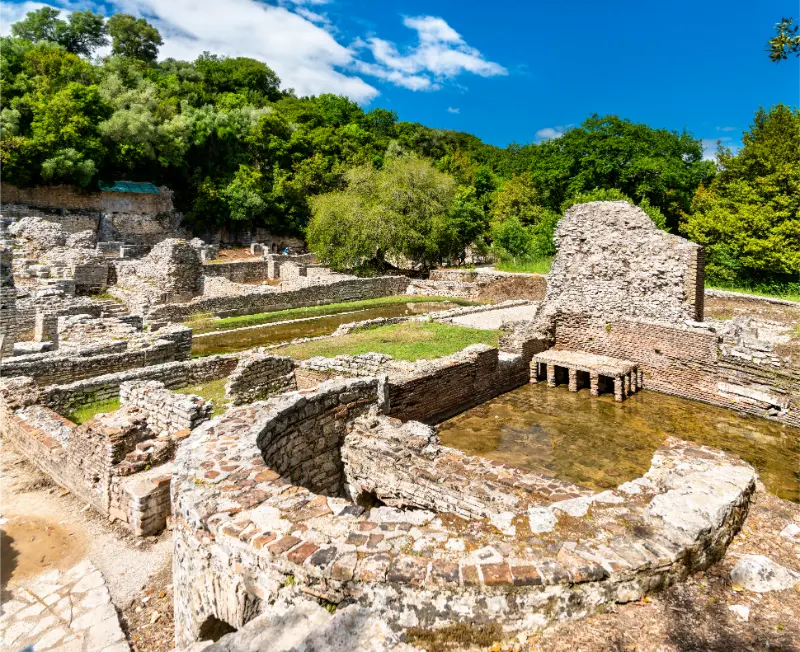
Berat is one of the easiest Albanian cities to visit badly. The map is compact, so it is tempting to arrive late, climb straight to the castle in midday heat, hurry through Mangalem and leave before the city softens in the evening. A good one-day itinerary does the opposite: it uses the cooler hours for the steepest walking and leaves the riverfront for later.
This plan assumes you can give Berat a full day and ideally one night. The city is a UNESCO World Heritage destination shared with Gjirokastër, but its character is not concentrated in a single monument. The relationship between the inhabited castle, Mangalem, Gorica and the Osum River is the experience. Start with my Berat travel guide if you need transport and broader planning details.
Quick itinerary at a glance
| Day | Morning | Afternoon | Evening |
|---|---|---|---|
| Morning | Berat Castle before the hottest hours | Onufri Museum and lanes inside the fortress | Descend toward Mangalem |
| Afternoon | Long lunch and Mangalem | Gorica Bridge and Gorica Quarter | Riverfront and golden-hour views |
| Evening | Dinner near the old town | Optional second walk along the Osum | Sleep in Berat if your route allows |
How to use this itinerary
The schedule below is built around energy, heat and geography rather than a target number of attractions. I would rather see fewer places at the right time of day than collect more names while constantly looking for parking or the next bus. Use the sequence as a framework, then adjust it for weather, opening hours and the pace of the people traveling with you.
For any time-sensitive element—museum hours, boat departures, mountain access, road works or seasonal transport—check the current information close to your travel date. Albania is developing quickly as a destination, and a timetable or access rule that was correct last season should not be treated as permanent.
Morning: put the castle first
Climb early, before the day turns into a heat test
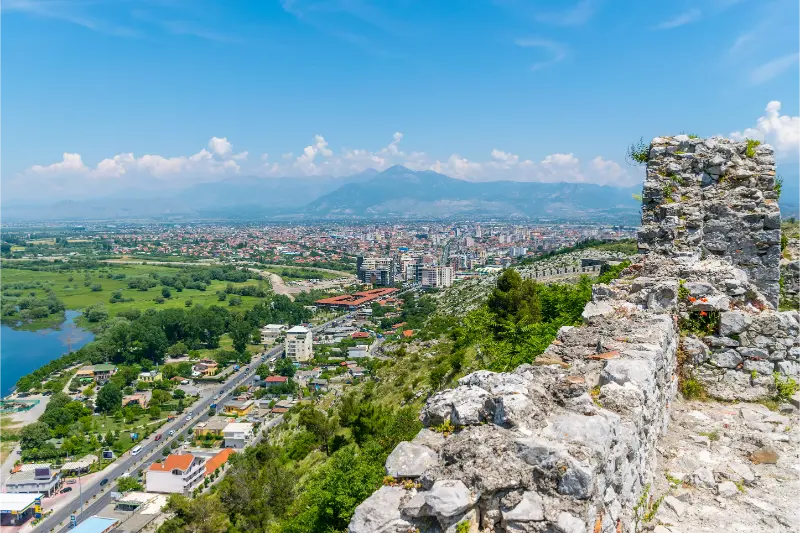
Berat Castle sits above the city and the climb is the physical part of the day. Starting early makes the ascent easier and gives you quieter lanes once inside. If walking uphill is not appropriate for your group, use a taxi to reach the upper area and save your energy for the fortress itself. The castle is not an empty ruin: people still live within the walls, and the mix of houses, churches, viewpoints and daily life is what makes it memorable.
Inside the fortress: do not reduce it to the viewpoint
Give the castle enough time to wander. Visit the Onufri Museum if it is open during your visit and you are interested in icon painting and Orthodox heritage, then continue through lanes rather than immediately heading back downhill. My Berat Castle guide and Onufri Museum guide are useful if you want to identify the churches and smaller corners before arrival.
Late morning: descend slowly toward Mangalem
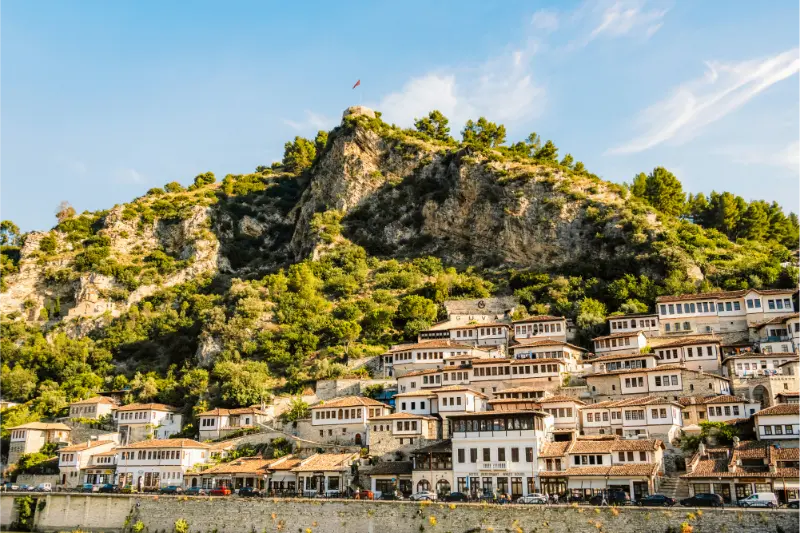
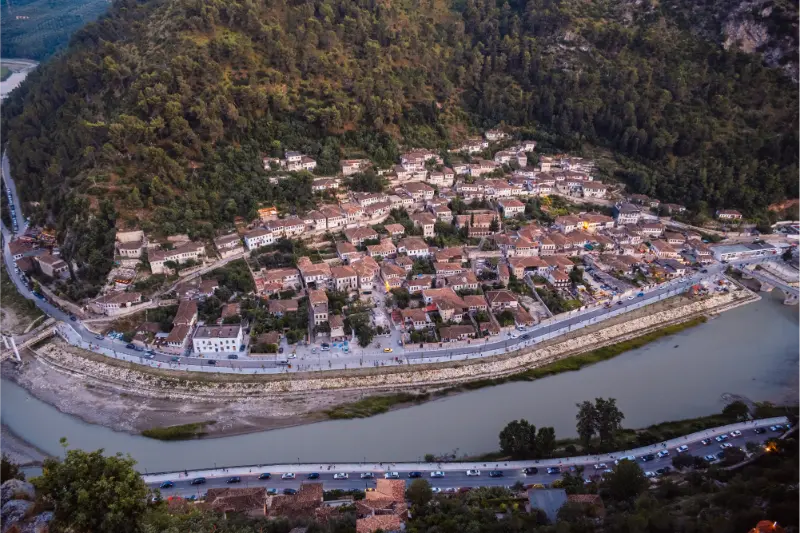
The descent gives you changing views of the white Ottoman-era houses that created Berat’s famous layered façade. Do not rush this part because it is the visual bridge between the castle and the lower old town. In warm weather, this is also the moment to stop for water before the next walking block.

Afternoon and evening: let the river organize the rest of the day
Lunch: choose shade over a perfect photo
Take a proper lunch around the lower old town rather than eating quickly so you can add another sight. Berat is small enough that slowing down does not cost much. Traditional dishes, a terrace in shade and an hour off your feet will improve the second half of the day more than squeezing in one extra minor monument.
Mangalem: look beyond the postcard façade
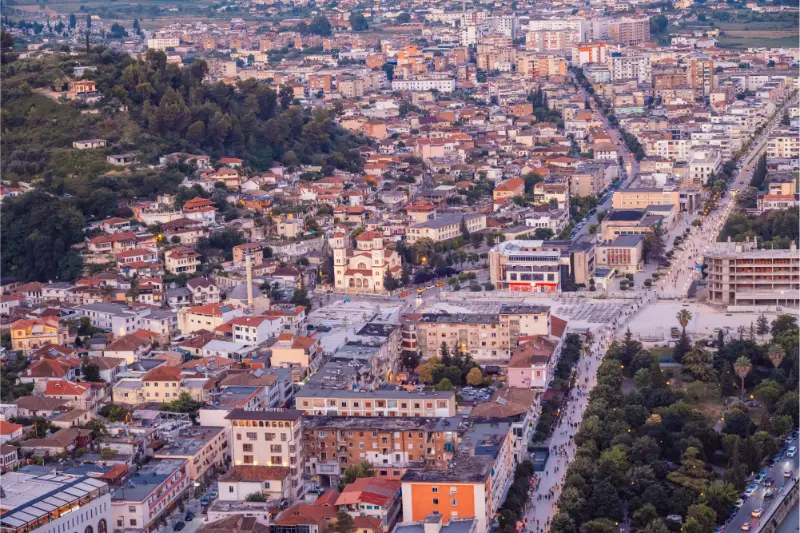
Walk the steep lanes of Mangalem after lunch, but keep the route short if the temperature is high. The neighborhood makes more sense when you notice how houses stack against the slope, how narrow passages connect levels and how the castle remains visible above. This is not a place where every lane leads to a named attraction; the urban fabric itself is the point.
Cross Gorica Bridge and change perspective
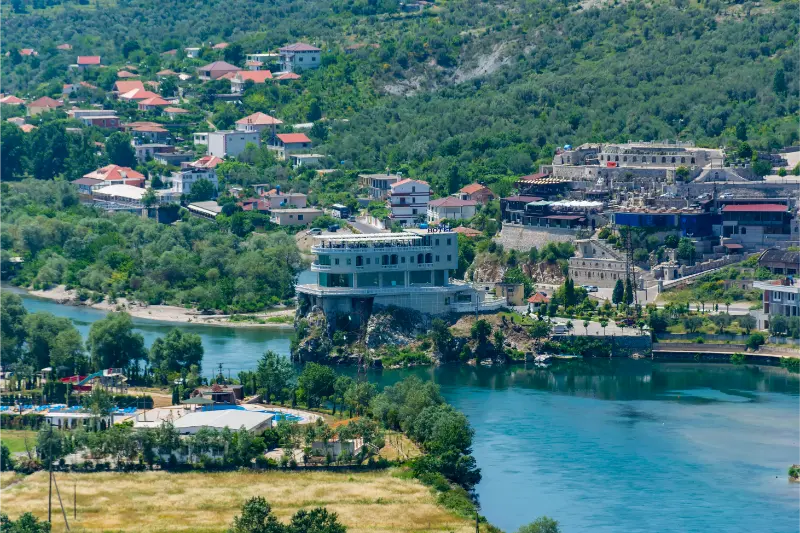
Use Gorica Bridge to cross the Osum and look back toward Mangalem. The opposite bank gives one of the clearest views of Berat’s layered architecture. Wander a little in Gorica rather than treating the bridge as a photo platform, then return toward the riverfront. The dedicated Gorica Quarter guide helps if you want a longer walk.
Golden hour: stay rather than leave
If your schedule allows, remain in Berat until late afternoon or sunset. The light on Mangalem and the castle changes the city more than another museum would. This is why I prefer spending a night here even when Berat can technically be visited as a day trip from Tirana.
Getting around
The historic center is best explored on foot, but the castle climb is steep. A taxi to the upper gate can be a sensible accessibility or summer-heat choice. If you arrive by car, do not assume accommodation in Mangalem or Gorica has easy door-to-door parking; ask for exact instructions before driving into narrow streets.
I also leave a buffer between the last substantial activity and any fixed onward transfer. A short distance on the map can hide summer traffic, a steep approach, a slow parking search or a road that is simply tiring after a full day. That buffer is particularly valuable when the next step is a ferry, airport transfer or mountain pickup that you cannot easily replace.
Where to stay for this itinerary
One night changes the rhythm of Berat because you can see the old town after day-trippers leave and avoid doing the castle at the worst time of day. Mangalem gives atmosphere, Gorica gives views and relative calm, while the modern lower town is easier for parking and luggage. Compare them in Where to Stay in Berat. When you are ready to compare live availability, check accommodation in Berat on Booking.com.

For a short itinerary, location is usually worth more than a slightly larger room far away. Check the real walking route, not only the straight-line distance. In old towns and coastal destinations, hills, stairs, pedestrian streets and limited parking can turn a cheap room into repeated daily inconvenience.
Best time to follow this plan
Spring and autumn are ideal for the uphill walking. In July and August, move the castle as early as possible and use lunch as a deliberate midday break. Winter can be atmospheric and quiet, but shorter daylight means you should not arrive too late if sunset views matter.
Whatever the month, I would check the forecast again the evening before any outdoor-heavy day. That simple habit lets you swap a museum morning with a beach afternoon, move a castle visit away from peak heat or postpone a mountain hike when conditions are not worth forcing.
Traveling with children or at a slower pace
Children often enjoy the castle more than formal museums because there is space to explore, but the uneven surfaces and heat can be tiring. For strollers or reduced mobility, expect cobbles, slopes and steps; use taxis strategically and choose accommodation with realistic access.
The easiest way to adapt the itinerary is to protect one anchor experience per day and remove the weakest secondary stop. That keeps the trip recognizable without making children, older travelers or anyone with limited stamina feel as if they are failing to keep up with a schedule designed for someone else.
What to verify or book before arrival
- Accommodation in the right part of town, especially in July and August or during major events.
- Any fixed boat trip, mountain transfer or activity that has limited departures.
- Current opening information for the one museum or archaeological site you most care about.
- Parking instructions if your hotel is in an old town, beach zone or pedestrian area.
- Your next-day transfer before dinner if you have an early bus, ferry or hiking pickup.
Common mistakes that make a short stay worse
- Planning by map distance alone. In Albania, traffic, mountain roads, summer congestion and parking can make a short-looking transfer take more energy than expected. Build the day around usable sightseeing time, not the theoretical distance.
- Putting every famous sight into the same day. A strong itinerary leaves enough time for lunch, a coffee, a swim or simply walking without checking the clock every ten minutes.
- Ignoring the hottest part of the afternoon. In summer, exposed castles, cobbled old towns and beaches can be far more enjoyable early or late in the day.
- Assuming opening times and transport never change. Seasonal services, museum hours and boat departures can vary. Recheck the details that would break the day if they changed.
- Choosing accommodation only by price. A cheaper room can cost you time every morning and evening if it is uphill, far from the old town, or awkward for parking and luggage.
If you have more or less time
With half a day, choose the castle plus a quick Mangalem/Gorica river loop. With two days, add a slower museum visit, a winery or countryside stop, or the Osum Canyon area rather than repeating the old-town circuit.
I would not add a night simply because accommodation is inexpensive. Add it when the extra day creates a different experience: a real beach day, a village excursion, a mountain hike or enough time to see the destination after day-trippers leave. Likewise, if you cut a night, remove an entire excursion rather than compressing every remaining stop.
Useful related guides
Frequently asked questions
Can I see Berat in one day?
Yes, if you have a full day. The key is to start with the castle early and keep the old town and riverfront for the afternoon and evening.
Should I stay overnight in Berat?
I recommend it when possible. The city is calmer and more atmospheric after day-trip traffic fades.
Is the castle climb difficult?
It is steep, especially in heat. A taxi to the upper area is a practical alternative for many travelers.
What is the best time for photos?
Late afternoon is excellent for views across the Osum toward Mangalem, while morning is better for a quieter castle.
Do I need a car?
No for the city itself. A car becomes useful only if Berat is part of a wider road trip or you are adding rural attractions.
Final advice
The best short itinerary is not the one with the most pins on a map. It is the one that gives each day a clear shape, leaves enough room for the place to surprise you and finishes before fatigue starts making every decision harder. Use this plan as a realistic first version, then remove anything that competes with the experience you personally came for.
Want more options? See the complete things-to-do guide for attractions and activities that do not fit this one-day route.
Staying longer? The 3-day Berat itinerary adds a deeper local day and a regional excursion without rushing.
Staying 2 days? Use the dedicated 2-day itinerary for the balanced 48-hour version.
Not sure how long to stay? Compare 1, 2 and 3 days before choosing this itinerary length.