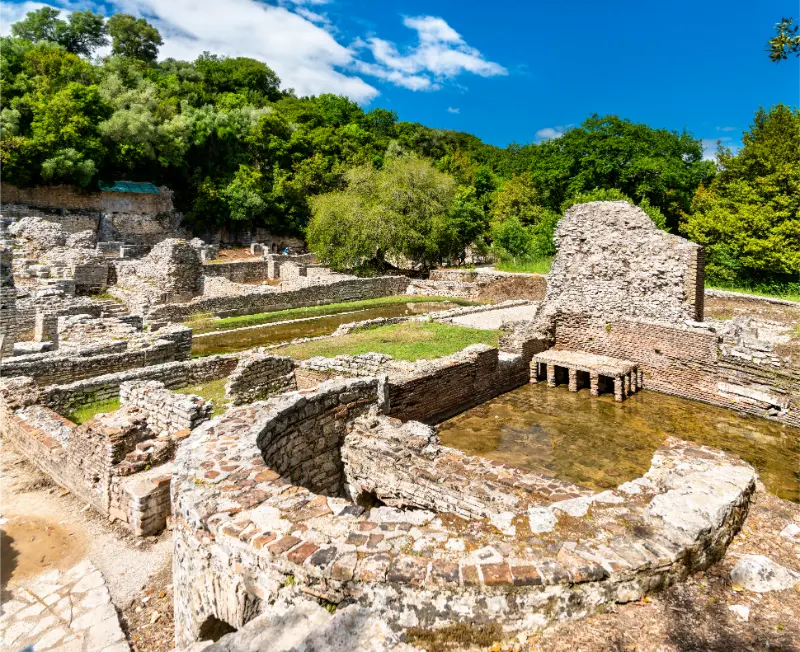
Albania has four properties on the UNESCO World Heritage List: Butrint; the Historic Centres of Berat and Gjirokastër; the Natural and Cultural Heritage of the Ohrid region; and component parts of the transnational Ancient and Primeval Beech Forests of the Carpathians and Other Regions of Europe. A one-week first trip cannot responsibly squeeze every component into a single loop, so this itinerary focuses on the three heritage areas that fit naturally into a cultural road trip.

The route begins with Berat, continues to Gjirokastër and Butrint, then crosses toward Pogradec and the Albanian side of Lake Ohrid. The beech-forest property is better treated as an extension for hikers and nature-focused travellers rather than a rushed detour merely to complete a list.
UNESCO status is not a substitute for local context. Spend enough time to understand living neighbourhoods, archaeological layers and landscape, and remember that Berat and Gjirokastër together form one serial World Heritage property rather than two separate inscriptions.
At a glance
| Days | UNESCO focus | Base |
|---|---|---|
| 1–2 | Historic Centre of Berat | Berat |
| 3 | Historic Centre of Gjirokastër | Gjirokastër |
| 4–5 | Butrint and southern cultural landscape | Sarandë |
| 6 | Albanian side of Lake Ohrid | Pogradec |
| 7 | Return / Tirana museum context | Tirana |
Days 1–2: Berat
Begin with two nights in Berat so the World Heritage area is more than a sunset photo stop. Explore Mangalem and Gorica at walking pace, cross the river repeatedly and notice how the city’s architecture changes with viewpoint. The next morning, go to Berat Castle when temperatures are comfortable and allow time for the churches, lanes and Onufri Museum rather than visiting only the panorama.
UNESCO describes Berat and Gjirokastër as rare, well-preserved examples of Ottoman-period architectural character and vernacular urban traditions. In Berat, that story is visible in the relationship between the castle, Christian monuments, mosques and merchant neighbourhoods. Read Berat Travel Guide before arrival so the city does not become just “the thousand windows” photograph.
Day 3: Gjirokastër
Drive or take a transfer south to Gjirokastër. The steep old town rewards an overnight because the bazaar, castle and traditional houses feel different after day visitors leave. Visit at least one historic house to understand the domestic architecture; the exterior skyline makes far more sense once you see how rooms, defensive elements and family life were organized.
Berat and Gjirokastër share one UNESCO listing, but they should not feel repetitive. Their terrain, house forms and urban atmosphere are distinct. Avoid treating the second city as a quick duplicate of the first.
Days 4–5: Butrint from Sarandë
Move to Sarandë and visit Butrint on a separate morning. UNESCO notes that the site preserves layers from prehistoric settlement through Greek, Roman, Byzantine and later periods within a Mediterranean cultural landscape. That combination of archaeology and wetland setting is why a rushed one-hour walk misses much of the experience.
Start early in hot months, carry water and give yourself time to read the site rather than photographing each monument and moving on. Use the second southern day for Sarandë, Ksamil or another nearby cultural stop; do not add a distant attraction simply because the map looks compact.
Day 6: Pogradec and the Albanian side of Lake Ohrid
The Natural and Cultural Heritage of the Ohrid region is a transboundary UNESCO property shared by North Macedonia and Albania. On the Albanian side, base yourself in Pogradec and explore lakeside landscapes such as Lin, Drilon and Tushemisht according to your available time. The experience is quieter and more landscape-led than Berat or Butrint.
This is a long cross-country move from the far south, so treat the road as part of the day and avoid scheduling a fixed late-afternoon museum ticket. If you want to understand the Ohrid property in depth, add a second night rather than racing back to Tirana.
Day 7: return to Tirana and put the route in context
Return to Tirana with enough daylight and use any remaining time for a museum that helps connect Albania’s archaeological, Ottoman and modern history. A heritage trip becomes more coherent when you can place Butrint, medieval churches and Ottoman towns on a broader timeline.
Compare accommodation in Tirana on Booking.com if you are flying the next day.
What about Albania’s UNESCO beech forests?
The transnational Ancient and Primeval Beech Forests property includes Albanian components, but these are nature destinations that require different logistics from the cultural circuit above. Do not add a forest component solely to claim that you “did all UNESCO sites” in one week. Plan it as a hiking or nature extension with current access information.
If wilderness is your priority, build a separate trip around Rrajca Beech Forest and nearby eastern Albania.
How to visit heritage sites responsibly
Stay on marked routes at archaeological sites, do not climb fragile walls for photographs and respect worship when churches or mosques are still active. In lived-in historic quarters, remember that balconies, courtyards and doorways may be private homes rather than open-air museum exhibits.
Buy tickets from official points where required and use local guides when you want deeper historical interpretation. The value of the trip comes from understanding layers, not from collecting signs with UNESCO logos.
Driving versus public transport
A car makes the full seven-day loop easier, especially the southern-to-Ohrid transfer. Without a car, Berat, Gjirokastër and Sarandë are straightforward enough by bus, but Pogradec from the far south may require a less elegant connection. Consider splitting the route or using a private transfer for one difficult leg.
If you are car-free, read Albania Without a Car before confirming hotels.
Best season for the UNESCO route
April to June and September to October are excellent because old towns and archaeological sites are easier to walk in cooler weather. July and August are possible, but plan Butrint and steep city sightseeing early, then use midday for lunch or rest.
Winter can be atmospheric in Berat and Gjirokastër, but daylight is shorter and the cross-country drive to Pogradec needs more weather awareness.
Why the route order matters
Berat and Gjirokastër form the architectural core, Butrint adds deep archaeology and wetland landscape, and Lake Ohrid changes the trip again into a transboundary cultural-natural setting. This progression helps the week feel like a story rather than four UNESCO labels.

If you reverse the route, keep the same principle: stay overnight near the heritage area, visit at a comfortable hour and avoid pairing a major site with an unnecessarily long transfer.
Visiting heritage sites with more context
Read a short introduction before entering each site, then put the phone away for the first ten minutes. In Berat and Gjirokastër, notice how streets, slopes, houses and fortifications fit together; at Butrint, follow the chronological layers rather than racing between monuments; around Ohrid, pay attention to the relationship between settlement and lake.
A local guide can be especially worthwhile when the visible remains are only part of the story. If you prefer independent visits, use official interpretation panels and a reputable guidebook, and leave enough time for the museum or exhibition component where available.
Where to stay
Stay inside or beside the historic fabric when access is practical: a night in Berat or Gjirokastër after day-trippers leave adds more to the route than a rushed roadside visit. In Sarandë and Pogradec, choose convenience for the next day’s excursion.
Compare accommodation in Berat on Booking.com for the first UNESCO base.
Tours and activities
Guides are especially valuable at Butrint and in the historic centres when you want architectural or archaeological context. Use tours to deepen interpretation rather than to compress three heritage places into one exhausting day.

Official information to check before you go
UNESCO currently lists four World Heritage properties for Albania; check UNESCO’s Albania page for the authoritative list and current conservation information.
For destination logistics, consult the official Albania tourism portal as well as local site information.
Useful related guides
- UNESCO World Heritage Sites in Albania
- Berat Travel Guide
- Gjirokastër Travel Guide
- Butrint Travel Guide
- Pogradec and Lake Ohrid Travel Guide
Common mistakes
- Counting Berat and Gjirokastër as two separate UNESCO properties.
- Trying to add remote beech-forest components to a one-week culture trip without hiking logistics.
- Visiting Butrint in the hottest part of the day and rushing through it.
- Treating lived-in historic neighbourhoods like unrestricted museum sets.
- Scheduling the long south-to-Pogradec transfer too tightly.
- Choosing only viewpoints and skipping the museums or houses that explain the architecture.
Frequently asked questions
How many UNESCO World Heritage properties does Albania have?
UNESCO currently lists four properties associated with Albania: Butrint; Historic Centres of Berat and Gjirokastër; Natural and Cultural Heritage of the Ohrid region; and the transnational Ancient and Primeval Beech Forests property.
Are Berat and Gjirokastër one UNESCO site?
They are one serial World Heritage property called the Historic Centres of Berat and Gjirokastra.
Is Lake Ohrid UNESCO only in North Macedonia?
No. The World Heritage property is transboundary and includes territory in Albania as well as North Macedonia.
Can I visit this route without a car?
Yes, but the southern Albania to Pogradec leg is less convenient. A transfer or revised order may help.
Is one week enough?
It is enough for the cultural route above, but add time if you want the beech forests or deeper hiking and museum visits.
Final recommendation
Use UNESCO as a thread, not a checklist. Berat, Gjirokastër, Butrint and Lake Ohrid show very different relationships between people, architecture, archaeology and landscape. A week is enough to connect them meaningfully when you spend nights in the places rather than turning every heritage property into a drive-by stop.
Leave a Reply