Tag: Berat

Articles and practical travel tips about Berat in Albania.

  • Electric Car in Berat: EV Charging, Castle Parking, Tomorr and Osum Range

    Electric Car in Berat: EV Charging, Castle Parking, Tomorr and Osum Range

    Berat can be a very practical base for an electric car, but the useful question is not simply whether there is a charger in town. You need to know whether the charger is accessible when you arrive, whether your car can use it, whether the payment method works and whether you have enough reserve to reach a second option. Easy to reach from Tirana or the coast, but public charging is much thinner than in the big cities; overnight hotel charging is the best way to keep UNESCO sightseeing separate from battery logistics.

    Driving an electric car in Albania is now realistic for ordinary holidays, but it still rewards a different mindset from an EV trip in countries with dense motorway networks. The biggest mistake is treating every pin on a map as a guaranteed, available, compatible charger. A station can be private, blocked, offline, app-only, limited to hotel guests or simply mapped incorrectly. The safest approach is to plan around charging clusters, verify a primary and a backup, and arrive at smaller destinations with enough battery to leave again if your first option fails.

    Start with our Electric Car Road Trip in Albania guide for the country-wide picture. For local driving and parking, use the Berat travel guide and local driving and parking guide.

    Quick EV strategy for Berat

    Charging roleEasy to reach from Tirana or the coast, but public charging is much thinner than in the big cities; overnight hotel charging is the best way to keep UNESCO sightseeing separate from battery logistics.
    Road charactermostly easy approach roads followed by steep castle access and hill routes toward Tomorr, where elevation and rougher surfaces matter more than city distance
    Best habitVerify a primary charger plus one backup before arrival.
    Hotel chargingConfirm access, connector and price directly with the property.
    Apps & dataKeep live maps, operator apps and offline screenshots available.
    Long onward legLeave with more reserve than the navigation minimum when charging density drops.

    What the 2026 charging situation means in practice

    Albania’s EV infrastructure is expanding quickly. In November 2025 the government presented the national OSHEE Charge project, intended to expand public charging nationwide. ERE’s 2026 guidance also makes an important distinction: the regulated active-energy price applicable to qualifying charging points is not necessarily the final price a driver pays, because charging service, operation and maintenance can be added by the operator. For that reason, always check the price displayed by the charger/app before starting a session rather than copying an old per-kWh figure from a blog post.

    For current energy-price context, see ERE’s electric-vehicle charging guidance. The national expansion project is described by the Albanian government on the OSHEE Charge announcement. These are useful policy references, but they do not replace a live station check on the day you drive.

    Where charging fits into a Berat stay

    Do not plan Berat as if it were a motorway charging hub. The city is compact and you may barely use the car once parked, so the best strategy is to arrive with enough energy, charge overnight if possible and leave the public charger as a backup rather than the centerpiece of the stay.

    A useful live cross-check is the PlugShare Albania directory, while operator pages such as VEGA Charging can show network-specific stations. Treat user-generated maps as evidence to verify, not a promise that a charger is functioning.

    How much charge should you arrive with?

    From Tirana, Durrës or Vlorë, most EVs can reach Berat comfortably. What matters is the next leg. If you plan Mount Tomorr, Përmet or the Osum Canyon, charge before that excursion because rural alternatives are less predictable.

    Range estimates in the dashboard are useful but not absolute. Speed, temperature, wind, climbing, air-conditioning, luggage and repeated short journeys all change consumption. Build the plan around a percentage buffer rather than trying to arrive at exactly 5%. On a holiday, the extra 15–25 minutes spent charging early is usually cheaper than reorganizing an entire afternoon around a nearly empty battery.

    Hotel charging: often the best option

    A guesthouse may offer a socket rather than a formal wallbox. Never assume you can run an extension lead through a courtyard or historic building: ask the owner what is permitted and whether the electrical installation is intended for sustained vehicle charging.

    When comparing accommodation, check the exact location on the map and then ask the property about charging before paying a non-refundable rate. You can browse places to stay in Berat on Booking.com, but an EV-charging filter should still be followed by a direct message to the hotel. A functioning overnight charger can be worth more than being 300 meters closer to the old town or beach.

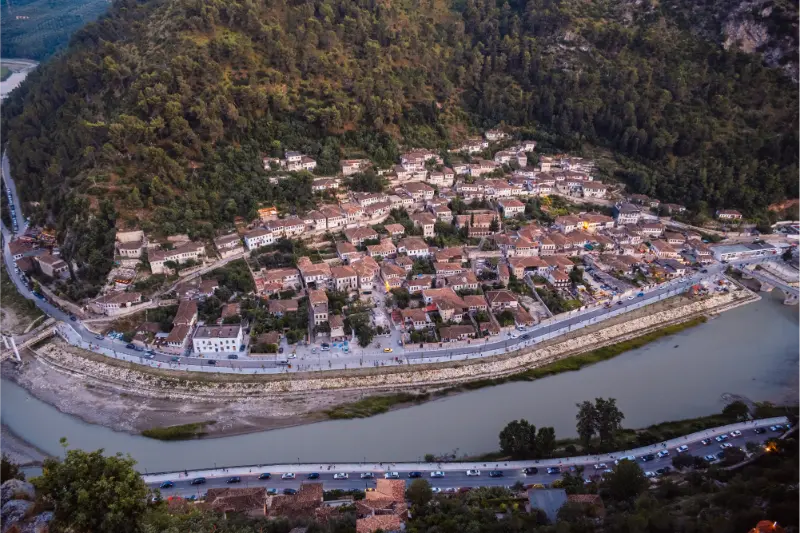
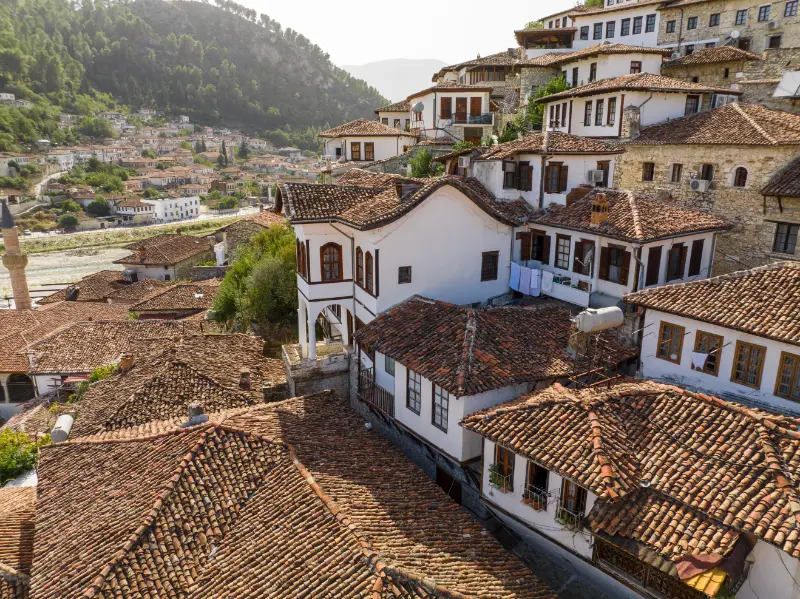
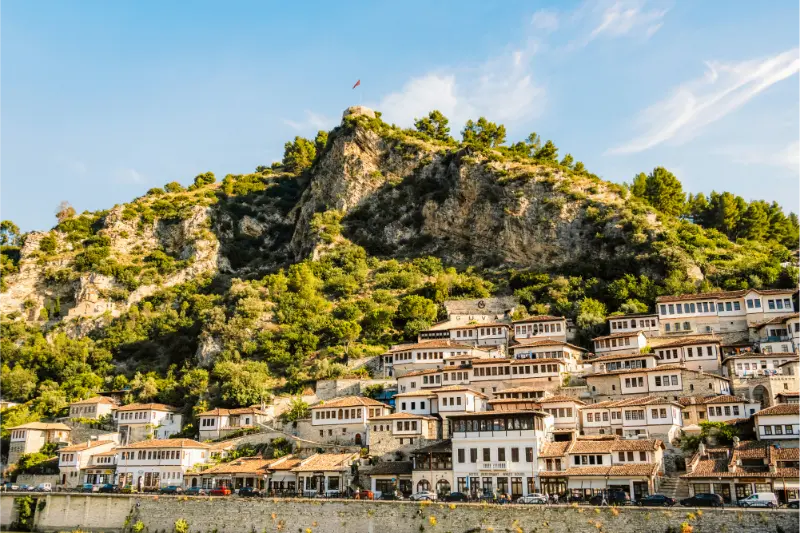
    Albanian Old Berat View Berat Castle Walls Tiled Roofs Houses 12

    AC destination charging vs DC fast charging

    Use fast DC charging when you need to continue driving the same day; use slower AC charging when the car will already be parked for several hours or overnight. This sounds obvious, yet travelers often waste time chasing a fast charger when a reliable hotel wallbox would have restored more than enough range by morning. Conversely, a slow 7–11 kW charger is not a good solution when you are trying to leave in 30 minutes.

    Connector compatibility matters. Type 2 is common for AC charging across Europe, while CCS2 is the standard fast-charging connector on most modern European EVs. Imported vehicles can differ. Confirm your own car rather than assuming the connector from the rental category photo.

    Driving conditions around Berat

    The main energy pattern here is mostly easy approach roads followed by steep castle access and hill routes toward Tomorr, where elevation and rougher surfaces matter more than city distance. That means the route planner should be read together with the road itself. A 60 km mountain road and a 60 km flat motorway leg do not use the battery in the same way. Regenerative braking can recover some energy on descents, but it never cancels the full cost of climbing.

    Do not let range anxiety create unsafe driving. Never coast dangerously, crawl below a safe traffic speed or stop on a blind bend to save electricity. If the battery margin becomes uncomfortable, change the itinerary early: skip the detour, use a verified charger, or stop for a proper charging session.

    Best EV day trips from Berat

    Berat Castle

    Range is irrelevant but steep access, parking and pedestrian lanes make it sensible to park lower if your accommodation is central.

    Mount Tomorr

    Elevation, rough roads and possible need for a suitable vehicle mean this is not simply an EV-range question. Confirm road conditions and your rental agreement.

    Osum Canyon and Çorovodë

    Longer rural driving than a city map suggests; start with a generous reserve and save charging alternatives before leaving Berat.

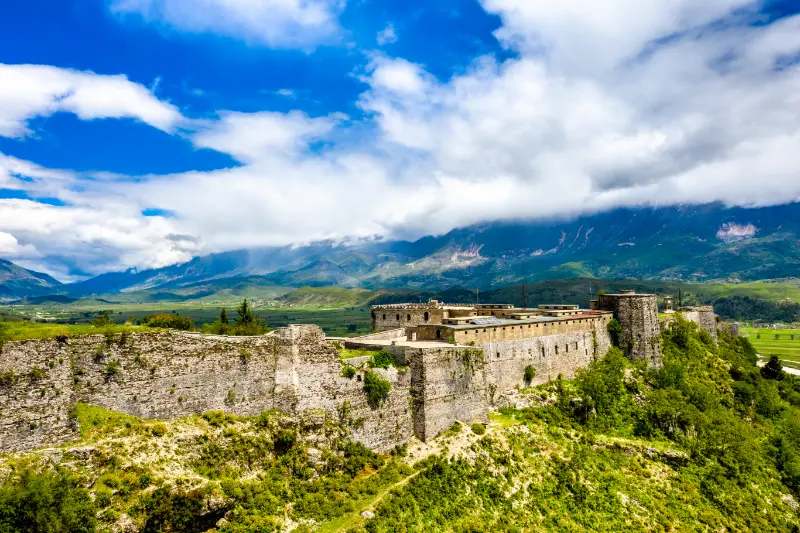
    Aerial View Of Berat Castle Albania

    Apps, payment and mobile data

    Before the trip, install at least two charging/map tools and keep mobile data active. PlugShare is useful for recent check-ins and photographs, while operator maps can be more accurate for their own hardware. Do not assume a card or app that works in Italy, Germany or Greece will automatically roam onto every Albanian charger. Create accounts before you need them, keep a physical bank card available and take screenshots of important station details. If a charger offers QR payment, verify that the page belongs to the operator before entering card data.

    Save the address of the next charger in your navigation app and also save a screenshot. If mobile coverage drops, you still need to know where you are going. If an app requires SMS verification, complete registration while you have stable data rather than standing beside the charger with a low battery.

    Charging etiquette and parking

    • Move the car when charging is finished. A charging bay is not free long-term parking.
    • Do not block a second connector. Park within the marked bay so another driver can use adjacent hardware.
    • Check parking fees separately. Paying for electricity may not include the municipal or private parking charge.
    • Leave a contact number only if you are comfortable doing so. Some EV drivers use a dashboard card, but protect your privacy.
    • Report broken equipment in the operator app. A recent check-in can help the next traveler avoid a failed stop.

    What to do if the charger does not work

    First, confirm that the problem is not the car: unlock/relock, end any failed session in the app and follow the charger instructions in the correct order. If another connector is available, try it only if compatible. Then call the operator number shown on the unit. If the station is clearly offline, stop troubleshooting after a reasonable attempt and drive to the backup while you still have a comfortable reserve.

    A roadside-assistance number from the rental company or your own insurer is worth saving before the trip. EV towing is not something to improvise with a rope, and some vehicles have specific instructions for transport. The goal is to avoid ever reaching that stage by changing plans early.

    Renting an EV for this trip

    If you rent an EV, ask for the exact battery size, real-world range, charging-port type, included charging cables and the battery percentage expected at return. Also ask whether cross-border driving is permitted, because a Lake Ohrid or Greece detour can change the insurance paperwork. Photograph the charging cables at pickup just as you would photograph bodywork. A missing Type 2 cable may not matter at a tethered DC fast charger, but it can matter greatly at hotel or AC destination chargers.

    For an Albanian road trip, battery capacity is usually more useful than extreme acceleration or premium trim. A smaller EV can be excellent for city-and-coast travel if you charge often, while a larger battery reduces dependence on sparse stops. Compare the real itinerary you want to drive, not just the advertised WLTP range.

    Seasonal range and weather

    Hot summer afternoons increase air-conditioning but you will often leave the car parked while exploring. Winter cold is more noticeable on higher routes toward Tomorr. Shoulder seasons offer the easiest combination of driving, walking and charger access.

    Wind and rain also matter. Strong headwinds increase consumption on exposed roads, while heavy rain can slow traffic and add detours. In the mountains, weather can change faster than the battery forecast. If conditions deteriorate, keep more reserve and choose the conservative route.

    Safe charging matters more than convenience

    Never improvise charging from an unknown household socket without the property owner’s permission. Sustained EV charging is a heavy electrical load, and an old extension lead, damaged outlet or undersized circuit can overheat. Use purpose-built charging equipment where possible. If a hotel offers socket charging, ask what current is permitted and use the portable EVSE supplied/approved for your car rather than a generic adapter chain.

    A realistic 2-day EV plan for Berat

    Day 1: arrive with a healthy battery, park and explore Mangalem/Gorica. Day 2: make a rural excursion only after checking the next reliable charging opportunity and your remaining range.

    This deliberately separates sightseeing from charging. The car does not need to be moved every time you see a charger. Plan one useful session, then enjoy the destination on foot, by local transport or on a booked activity while the battery is already sufficient for the next leg.

    Frequently asked questions

    Should I charge to 100% every time?

    Usually no. For ordinary local driving, follow the car manufacturer’s charging guidance. A high state of charge is most useful before a sparse-infrastructure or mountain leg; fast charging often slows substantially near full.

    Can I rely on hotel charging?

    Only after the hotel confirms it directly. Ask about connector type, power, access hours, reservation of the parking space and whether another guest may already have booked the charger.

    Do I need cash for EV charging?

    Many modern chargers use apps, cards or QR payment rather than cash, but payment systems vary. Keep both a working payment card and some cash for parking or nearby services.

    What battery reserve should I keep?

    In a major city you can be more flexible. On the Riviera, in the mountains or before a border crossing, I would keep a larger reserve so one failed station does not become an emergency.

    Is Berat a good EV base?

    Easy to reach from Tirana or the coast, but public charging is much thinner than in the big cities; overnight hotel charging is the best way to keep UNESCO sightseeing separate from battery logistics. The answer is yes when the charging plan is made before the battery becomes low. If you prefer completely spontaneous driving with no app checks, a conventional hybrid can still be simpler in Albania’s sparsest regions.

    Final advice

    An electric car can work very well in Berat because the distances within Albania are relatively compact. The trip becomes stressful only when you treat charging as something to think about after the battery warning appears. Verify the next stop, keep a backup, charge while the car would be parked anyway and use the larger cities as energy anchors before remote roads.

    Albanian Old Berat View Berat Castle Walls Tiled Roofs Houses 2

    For the wider route, return to our Electric Car Road Trip in Albania. With that country-level plan and a destination-specific strategy for Berat, you can spend far more time enjoying Albania and far less time watching the battery percentage.
  • Luxury Travel in Berat: Boutique Guesthouses, Wine Tastings and Private UNESCO Experiences

    Luxury Travel in Berat: Boutique Guesthouses, Wine Tastings and Private UNESCO Experiences

    Berat luxury is intimate rather than flashy. The strongest upgrades are a characterful heritage stay, a private guide through the UNESCO neighborhoods, a driver for wineries/countryside and a meal or tasting built around local products.

    Albanian Old Berat View Berat Castle Walls Tiled Roofs Houses 8

    Luxury in Albania is still highly destination-specific. In some places the best upgrade is a polished hotel; in others it is a private driver, heritage room, skipper or guide. I would not judge the trip by star rating alone. The goal is to remove friction, gain better timing and buy access to experiences that are genuinely improved by privacy or expertise.

    Where to stay for a premium trip

    Mangalem gives you atmosphere and views; Gorica is quieter and can feel more residential; the lower modern center is easier for vehicles and luggage. Castle-area stays are memorable but require realistic planning around steep access, cobbles and luggage.

    Albanian Old Berat View Berat Castle Walls Tiled Roofs Houses 10

    Compare premium and boutique stays in Berat on Booking.com.

    What is worth paying more for

    • A heritage room with a terrace or river/castle view when the building itself is part of the experience.
    • A private UNESCO walk timed for early morning or late afternoon.
    • A chauffeured winery and culinary day toward Roshnik/Malinat rather than self-driving after tastings.
    • A cooking or local-food experience that connects wine, olive oil and Beratian dishes.

    What I would not overspend on

    • Paying extra for a hotel high on the hill without confirming vehicle/luggage access.
    • Hiring a car solely to move between Mangalem and Gorica.
    • Stacking several wineries into one day when one well-paced tasting is more enjoyable.

    The signature premium experience

    The best premium Berat day is deliberately slow: castle with a private guide, a long local lunch, rest at the hotel, then a chauffeured tasting in the countryside and sunset back over Mangalem. Official tourism material specifically promotes culinary tours that combine local products, cooking and wine tasting around Berat.

    Albanian Old Berat View Berat Castle Walls Tiled Roofs Houses 6

    Private guide or self-guided?

    A private guide is worth the premium when context changes what you understand: archaeology, communist history, religious art, UNESCO architecture or a complicated historic quarter. For a simple promenade, beach afternoon or café district, self-guided time is usually better. I often combine one guided half-day with one completely unstructured half-day.

    Private driver, rental car or taxi?

    For a premium itinerary, a private driver is most valuable on days that include wine, difficult parking, several villages or a one-way transfer. A rental car is better when you want spontaneous road-trip freedom over several days. Taxis are fine for short city movements. Paying for a chauffeur every day can be unnecessary if the destination is compact and walkable.

    Airport and arrival strategy

    After a flight, I value a confirmed pickup when the onward journey is long, the group has substantial luggage or the hotel is in a historic zone with tricky vehicle access. For a central Tirana arrival, the standard airport bus or licensed taxi can be perfectly comfortable. Premium travel should simplify the difficult legs rather than make every leg private by default.

    Food and wine

    The best premium food experience is usually regional and specific: a long tasting menu, winery lunch, cooking experience, private table with a view or an agrotourism visit. I would rather pay for one memorable food day than make every dinner formal. Albania’s strongest meals often depend on local produce, season and hospitality rather than luxury décor.

    Private boat and water experiences

    On the coast or lakes, a private boat can be one of the few upgrades that genuinely changes the day. You control departure time, swim stops, shade breaks and pace. Before booking, ask about the route, boat type, maximum passengers, fuel/fees, cancellation policy and what happens if wind or sea state makes the planned itinerary unsafe.

    Spa and wellness

    Spa quality varies widely, so I do not choose a destination purely from the word “spa” in a hotel listing. Check whether the facility has the exact treatment, pool, sauna or hammam you want, whether access is included in the room rate and whether appointments must be reserved. In smaller destinations, a beautiful room, terrace and slow schedule may provide more real relaxation than a nominal spa facility.

    A realistic premium budget

    I prefer to think in layers rather than publish a fixed “luxury daily price.” Room rates, private boats and chauffeurs change sharply by season and group size. Start with the best-located accommodation you can justify, then add one or two paid upgrades per day. On the Riviera in July and August, accommodation and marine experiences can cost substantially more than in inland cities or shoulder season.

    How many nights?

    Two nights is the minimum I would use for most premium city stays because it avoids paying for an excellent room that you barely use. Coastal and lake destinations benefit from three to five nights when relaxation is part of the purpose. If the itinerary changes hotel every night, even expensive properties rarely make the trip feel luxurious.

    Best time for a luxury trip

    Spring and early autumn are often ideal because private guides, drivers and restaurants can deliver a calmer experience without peak heat or coastal congestion. Peak summer makes sense when sea temperature, nightlife and boat activity are the priority. Winter can be excellent for Tirana and Korçë, while Riviera luxury becomes more limited because many seasonal businesses reduce operations.

    Traveling as a couple

    For couples, I would spend on room location, privacy and one memorable shared experience rather than a long list of upgrades. A terrace, private boat, winery lunch or driver-led sunset day can shape the trip more than a hotel category. See Albania for Couples for the wider romantic planning framework.

    Luxury travel with children

    Families benefit most from space, easy transfers and predictable meal logistics. A suite or apartment-style premium room can be more useful than formal five-star service. Private transfers are especially valuable with child seats and luggage; on boat days, confirm shade, toilet availability, life jackets and realistic trip length before paying a premium.

    Solo premium travel

    Solo travelers should focus on upgrades that create access rather than isolation. A private guide, chef-led food experience or small premium tour can add conversation and context, while a huge isolated suite may add little. Central location also matters more when you want to return on foot after dinner.

    Booking strategy

    For peak-summer coast stays, book the room category and key boat day earlier. For city trips, keep some flexibility unless a festival or holiday drives demand. I always read the most recent reviews for noise, air conditioning, breakfast, lift access, parking and service consistency—the practical details that determine whether an expensive room actually feels premium.

    Useful guides for planning

    Tours and private experiences

    For current guided tours, private day trips and bookable experiences, compare the available options below. Check the exact group size, pickup point and cancellation conditions rather than assuming every “private” product has the same inclusions.

    Common luxury-travel mistakes

    • Choosing the most expensive room without checking whether the location matches the itinerary.
    • Paying for a rental car that remains parked for most of the stay.
    • Booking a private boat without confirming route, shade and weather policy.
    • Using a chauffeur for short walkable city movements instead of saving the budget for a regional day.
    • Assuming a high hotel star rating guarantees quiet rooms, good parking or easy historic-center access.
    • Changing hotels too often to enjoy the facilities you paid for.
    • Packing every premium experience into one day instead of leaving recovery time.

    A two-day premium template

    Day 1: private context + slow evening

    Arrive with the easiest appropriate transfer, leave luggage, then use a private guide for the destination’s most important cultural layer. Take a long lunch and protect two or three hours for the room, pool, terrace or simply rest. Finish with one excellent dinner close enough that the evening does not require complicated transport.

    Day 2: the experience worth the splurge

    Use the second day for the upgrade that is difficult to reproduce independently: a private boat, driver-led countryside route, winery visit, mountain-village circuit or specialist cultural guide. Keep the evening free. If the day is weather-dependent, book it with a cancellation policy and keep the museum/food day as the backup.

    Frequently asked questions

    Is Albania good for luxury travel?

    Yes, but luxury is unevenly distributed. Tirana and the coast have the widest premium accommodation choice, while inland destinations often deliver their best high-end experience through heritage stays, private guides, drivers, food and wine rather than large luxury hotels.

    Do I need a private driver?

    Not every day. Use one for long transfers, wine, difficult parking or multi-stop regional days. Compact centers are better explored on foot.

    Should I book a five-star hotel?

    Only if the location and facilities fit your itinerary. A smaller boutique or heritage property can be a stronger premium choice in Albania.

    Is luxury travel much more expensive in summer?

    On the Riviera, often yes. July and August can push room and boat rates much higher. Inland cities are less seasonal, although weekends and events still matter.

    What should I book first?

    Book the room category first when location/view matters, then the key private boat or driver day, then guides and restaurants. Keep some time unstructured.

    Final recommendation

    The best luxury trip in Albania is not the one with the largest number of expensive bookings. It is the one where premium spending removes the hardest logistics and protects time for the destination itself. Choose an excellent base, add one meaningful upgrade per day, and let the remaining hours stay flexible.

  • Free Things to Do in Berat: 14 Budget-Friendly Walks, Views and UNESCO Experiences

    Free Things to Do in Berat: 14 Budget-Friendly Walks, Views and UNESCO Experiences

    Berat is unusually rewarding on a small budget because the UNESCO experience is not confined to museums. Mangalem, Gorica, the Osum River, stone lanes and the city’s evening atmosphere are all visible from public streets and bridges.

    Berat Mangalem Quarter And Osumi River

    The castle and museums may involve admission depending on current rules, so I do not count them as permanently free. Instead, this guide builds a rich Berat day around neighborhoods, views and public space.

    At a glance: what can you really do for free?

    TypeFree ideaWhat may still cost extra
    WalkingHistoric streets, promenades and public squaresOptional guide, café stops or transport to distant areas
    NatureParks, lake/sea views and public landscapesParking, boat trips or equipment rental
    CultureArchitecture, neighborhoods and public monumentsMuseums, ticketed interiors or donations
    Beach / waterfrontPublic-access sections and promenadesLoungers, umbrellas, managed services and parking

    What I mean by “free”

    In this guide, “free” means the activity itself does not require an admission ticket. Transport, parking, food, rentals and optional services are separate. Religious buildings, archaeological sites and managed beaches can change access rules, so I never treat a currently open door or unstaffed entrance as a permanent promise of free admission.

    1. Walk through Mangalem

    Mangalem is the core free experience in Berat. Wander the narrow cobbled lanes, look at the vertically stacked white houses and notice how the architecture adapts to the steep slope below the castle. The official tourism agency describes Mangalem as one of the oldest and most representative parts of the medieval urban structure. You do not need to enter a museum to understand why Berat is called the city of one window over another. Morning is quieter; late afternoon gives warmer light.

    Albanian Old Berat View Berat Castle Walls Tiled Roofs Houses 11

    2. Cross Gorica Bridge

    Gorica Bridge is one of Berat’s defining public landmarks. The current stone bridge dates from the eighteenth century and links the two historic quarters across the Osum. Cross slowly, stop for the classic Mangalem view and then continue into Gorica rather than turning around immediately. The bridge is most useful as the center of a free walking loop, not as a five-minute photo stop.

    3. Explore the Gorica Quarter

    Gorica is quieter than Mangalem and gives you a different view of traditional Berat. Walk through the lanes, look back across the river and notice how the neighborhood feels more residential. It is one of the best free places to escape the midday concentration of tour groups. Be respectful around homes: beautiful doorways and courtyards are still private property.

    4. Walk the Osum riverfront

    The riverfront provides the easiest low-effort Berat activity. Walk between the bridges, watch the hills change with the light and use benches for a break. It is especially useful for families and older travelers who do not want to spend the entire day climbing. The river walk also connects naturally with cafés, but you do not need to buy anything to enjoy the setting.

    5. Photograph Mangalem from Gorica

    The classic “thousand windows” view is free. The best strategy is to cross to Gorica and look back rather than trying to photograph Mangalem from inside its own steep streets. Early morning gives softer activity; late afternoon can create warmer façades. A free photography walk is one of the simplest ways to appreciate Berat’s UNESCO urban landscape.

    6. Climb part of Gorica Hill for wider views

    You do not need to pay for a rooftop terrace to get an elevated perspective. Public paths and streets climbing behind Gorica offer broader views of the river valley and castle hill. Go only as far as your footwear and heat tolerance make sensible. This is a free activity, but it still requires water and good shoes.

    7. Walk Bulevardi Republika in the evening

    Modern Berat has its own social promenade along Bulevardi Republika. Walk it in the evening when families and locals are outside. This is useful because it prevents the visit from becoming a museum-only image of the city. Berat is a living regional center, and the modern boulevard shows that side for free.

    8. Explore the lower old-town religious architecture from outside

    Mangalem contains historic mosques and religious buildings that can be appreciated from public streets. Some may welcome visitors without a formal ticket at appropriate times, but I would never treat entry as guaranteed. Respect prayer and service times. The free activity is the architecture-and-neighborhood walk; entering is a bonus when clearly permitted.

    9. Watch daily life around the pedestrian center

    The small center between the historic quarters and modern town works well for people-watching. Sit on a public bench, watch school groups and local families move through the city and use the pause to reset before another uphill section. Free travel does not have to mean constant walking.

    10. Find the best sunset angle before dinner

    Berat changes beautifully near sunset. Gorica Bridge, the riverbanks and higher public lanes all work. I prefer to choose one viewpoint and remain there instead of racing between several. The old houses illuminate gradually, and the experience is free unless you choose a café terrace.

    11. Walk the old lanes after dark

    After day visitors leave, Mangalem and Gorica feel different. Stay on well-lit public lanes, respect residents and enjoy the quieter atmosphere. This is particularly valuable if you sleep in Berat rather than treating it as a day trip. An evening walk can be more memorable than another paid museum visit.

    12. Browse local shops without buying

    Small craft and food shops around the old quarters are free to browse. Ask before photographing people or interiors, and do not turn a private business into a free museum. If you buy something, choose a product you actually want rather than feeling obligated because you entered.

    13. Create a downhill walking route

    If you want a longer free walk but dislike steep climbs, take a taxi or other transport to a high point only if your budget permits, then walk downhill through the historic neighborhoods. The walking itself remains free. On a strict zero-transport budget, simply keep to the river and lower quarters rather than exhausting yourself on the castle hill.

    14. Use the UNESCO cityscape as the main attraction

    Berat demonstrates why budget travel can still feel substantial. The main experience is the relationship between river, bridge, hill, houses and living neighborhoods. You can spend hours observing that urban landscape without entering a single ticketed attraction. Paid sites add depth; they are not required for the city to make sense.

    A full free day

    Start in Mangalem, cross Gorica Bridge, loop through Gorica, walk the riverfront and modern boulevard, then return to the bridge for sunset. This gives you a full Berat day with no admission charges and minimal transport needs.

    If you can afford one paid experience

    If your budget allows one paid stop, I would usually choose Berat Castle/Onufri Museum or another heritage site according to current opening and ticket conditions. The free old-town walk tells you how the city looks; a museum helps explain the history behind it.

    Albanian Old Berat View Berat Castle Walls Tiled Roofs Houses

    Free things to do when it rains

    Rain makes Berat’s stone streets slippery. Keep the free route to the riverfront, lower quarters and covered café breaks. If the rain becomes persistent, one museum may be worth the admission rather than turning the day into an uncomfortable attempt to spend nothing.

    Free things to do with children

    Gorica Bridge, riverfront and Bulevardi Republika are the easiest free family stops. Keep steep lanes short and use the downhill version of the route in hot weather.

    How to keep food costs low too

    A no-ticket day can still become expensive if every break happens in a prime-location café. I mix one sit-down meal with bakery food, fruit or a simple picnic when appropriate. Carry water, but use refill options only where you know the water is suitable and the source is intended for drinking. The goal is not to avoid local businesses; it is to spend on the experiences and meals you genuinely value.

    How this fits a realistic Albania budget

    Free sightseeing is most useful as part of a mixed budget. Save on walking days, then spend on the experiences that cannot be replicated for free: an archaeological site, a specialist museum, a boat trip or a mountain transfer. Use Albania Travel Costs for the bigger accommodation, food and transport picture.

    Where to stay on a budget

    A cheaper room far outside the center can cost more once daily taxis are added. For a short stay, I usually prioritize walkability and then compare room prices. Compare current accommodation in Berat on Booking.com.

    Useful related guides

    Official tourism information

    For current destination information and official attraction descriptions, use Albania National Tourism Agency. Opening, event and access conditions can change after publication, so verify anything time-sensitive directly before visiting.

    Common budget mistakes

    • Calling an activity free while ignoring an expensive taxi or parking requirement.
    • Assuming a place of worship is always open to tourists because entry was free on a previous visit.
    • Using private beach furniture without asking the current price first.
    • Walking an unsafe roadside section simply to avoid a small transport cost.
    • Trying to make every day cost zero and missing the one paid attraction that would add the most context.
    • Booking the cheapest hotel without calculating daily transport and uphill luggage access.

    Frequently asked questions

    Can you see Berat without paying for attractions?

    Yes. Mangalem, Gorica, Gorica Bridge and the riverfront provide a strong free UNESCO experience.

    Is Berat Castle free?

    Do not assume it is permanently free; check current admission rules before going.

    Where is the best free viewpoint?

    Gorica and its higher public lanes give excellent views back toward Mangalem and the castle hill.

    What is best after dark?

    A quiet walk through Mangalem/Gorica and the central boulevard.

    Is Berat good for budget travelers?

    Very. The cityscape itself is the main attraction and is largely experienced from public space.

    Final advice

    Free travel works best when it helps you slow down rather than when it becomes a competition to spend nothing. Public streets, landscapes and local routines are a large part of what makes Albania interesting. Use them fully, then spend selectively on the museum, archaeological site, boat trip or meal that genuinely deepens the trip.

  • Is Berat Safe? Old Town, Castle, Night Walking, Taxis and Practical Tips

    Is Berat Safe? Old Town, Castle, Night Walking, Taxis and Practical Tips

    Is Berat safe for tourists? For most visitors, the useful answer is not a simple yes/no label. Berat is one of Albania’s easiest cities to enjoy slowly. Serious visitor problems are not the defining issue; the more common risks are uneven stone streets, heat, steep castle access, traffic on the main roads and over-ambitious canyon excursions. The best approach is to understand where ordinary travel problems actually happen, keep normal urban or outdoor precautions, and have a plan for transport and emergencies before you need one.

    Albanian Old Berat View Berat Castle Walls Tiled Roofs Houses 7

    This guide focuses on practical risk management for an independent trip in 2026. It should be read alongside our Albania safety guide and the broader Berat travel guide. Safety conditions can change, so check official travel advice shortly before departure rather than treating any blog post as a permanent guarantee.

    Quick answer: how safe does Berat feel?

    Mangalem and Gorica are atmospheric and central, while accommodation inside or near the castle trades convenience for steep access. The riverfront is easy to orient around, but side lanes can be dark and irregular underfoot at night. In practice, a visitor who chooses a sensible base, keeps control of valuables, uses known transport and avoids obviously risky situations can remove most of the friction that gets described online as a “safety problem.”

    It is also important not to confuse unfamiliarity with danger. Different driving habits, cash payments, informal bus stops or a street that looks rougher than a polished resort can feel uncertain without necessarily being threatening. At the same time, familiarity should not become complacency: crowded transport, nightlife, beaches and remote excursions all deserve specific precautions.

    What the current official travel advice says

    As of September 2026, the U.S. Department of State lists Albania at Level 2: Exercise Increased Caution because of crime. Its advisory notes that law-enforcement assistance can be more limited in some remote areas. The UK Foreign Office says crime and violence exist but reports of crime targeting foreigners are rare; it specifically recommends sensible precautions against street crime, pickpocketing and bag theft in tourist areas and transport hubs.

    These are country-wide advisories, not a statement that every neighbourhood of every Albanian city has the same risk. Use them as context. Check the current U.S. travel advisory for Albania and the UK safety and security advice before travel, especially if your itinerary includes remote areas, demonstrations or severe weather.

    Street crime, phones and bags

    The easiest theft to prevent is the one created by distraction. Keep your phone away from the edge of a café table, close bags on buses and in crowds, and avoid carrying your passport, all bank cards and all cash in one wallet. A small amount of daily cash in an accessible pocket and backup cards/documents stored separately is a better system than constantly opening a large travel wallet in public.

    At markets, bus stops, ferry queues and summer promenades, crowding can make accidental bumps and intentional distraction look similar. Do not become suspicious of everyone around you; simply reduce opportunity. Use a zipped cross-body bag or a front pocket, keep luggage physically connected to you during ticket questions and load/unload one bag at a time.

    Common tourist “scams” versus normal negotiation

    Not every disagreement over a taxi, restaurant bill or beach price is a scam. Albania still has many services where prices can be communicated verbally, and seasonal businesses may change rates. The practical defence is to ask the key question before accepting the service: total price, what is included, payment method and whether the price is per person, per vehicle, per hour or per item.

    • Ask for the total taxi/transfer price or fare method before departure when a meter/app is not being used.
    • At beaches, confirm whether the quoted amount covers one sunbed, two beds plus umbrella, or a full set for the day.
    • For boat trips, confirm route, duration, return time, swimming stops and what happens if weather changes.
    • At restaurants, check the menu price for market-price fish or seafood before ordering by weight.
    • When exchanging money, compare the displayed buy/sell rate and count the cash before leaving the counter.

    Pressure is the warning sign. If someone refuses to state a basic price, insists you decide immediately or prevents you from checking alternatives, walk away. A calm “no, thank you” is enough; there is no need to turn an ordinary sales pitch into a confrontation.

    Night safety in Berat

    Berat is quieter than Tirana or Sarandë. That calm is part of the appeal, but it means some lanes empty early. Choose a route with lighting, carry only what you need and use a taxi for a steep or distant return if you are tired.

    Alcohol changes the risk calculation more than the destination does. Keep your drink under your control, do not accept a lift from an unknown person because it is convenient, and make sure at least one person in the group knows the accommodation address. If you are travelling alone, send the hotel name or live location to someone you trust when returning very late.

    Taxis, transfers and getting home safely

    The intercity bus station is outside the historic core, so luggage and heat often justify a city bus or taxi. Confirm your guesthouse location before arrival; “old town” can still involve a meaningful climb with a suitcase.

    For detailed transport planning, see the Berat taxi and transfer guide. Save the accommodation name and map pin offline because street names can be less useful than landmarks or exact pins. If a ride is pre-booked, keep the operator name and phone number in a screenshot in case mobile data fails.

    Do not get into a vehicle merely because the driver says the name of your hotel; that information can be visible on luggage tags or overheard. Match the vehicle, driver or booking details whenever a transfer has been arranged in advance. For spontaneous taxis, use a clearly identifiable vehicle and agree on the payment method before the ride.

    Driving and road safety

    Driving inside the oldest quarters is less useful than it appears. Narrow streets, limited parking and pedestrians make a central parking strategy safer and less stressful than trying to place the car at the guesthouse door.

    If you rent a car, inspect and photograph the vehicle before departure, understand the insurance excess and never leave passports, laptops or camera bags visible inside. Use marked or managed parking when practical. Google Maps travel times can be optimistic on mountain or coastal roads, so add time rather than trying to “make up” delays with speed.

    Night driving is less forgiving because road markings, pedestrians, animals and unlit vehicles are harder to see. If a route is already unfamiliar in daylight, a late return after dinner may be a good reason to use a driver instead. Never combine alcohol with driving, even for a short hotel transfer.

    Pedestrian safety and the surfaces under your feet

    Road crossings deserve active attention. Look in both directions even on one-way-looking streets, make eye contact when possible and do not follow another pedestrian into traffic just because they step off the kerb. Pavements may be interrupted by parked vehicles, café seating or construction, pushing pedestrians closer to traffic.

    In Berat, footwear can matter as much as anti-theft precautions. Historic stone, wet tiles, beach steps, steep lanes or rough paths become slippery when rushed. A minor fall is more likely to disrupt a holiday than many of the dramatic risks travellers worry about before arriving.

    Beaches, mountains and outdoor activities

    Osum Canyon trips require more attention than a normal city excursion. Conditions vary by season and activity; use a reputable operator for rafting or canyon activities, ask what equipment is included and do not assume water levels are suitable because social-media videos show people swimming.

    For any outdoor activity, separate “can I physically do this?” from “are conditions good today?” Heat, wind, rain, wildfire restrictions, river levels and sea state can change the correct decision. Commercial operators should be willing to explain equipment, meeting points, age limits and cancellation rules. If answers are vague, choose another operator or another day.

    Weather and natural hazards

    Official UK advice highlights several country-wide natural hazards: earthquakes are possible, flooding and snow can disrupt winter travel, and wildfires are common in the hot dry period. None of these means a trip should be cancelled automatically; they mean you should keep alerts, weather and road conditions in the plan rather than treating every itinerary as fixed.

    The castle and cobbled quarters become more demanding in rain because polished stones can be slippery. Footwear with grip is a more useful safety tool here than any elaborate anti-theft gadget.

    If authorities close a road, trail or beach access, respect the closure. Travel insurance may help with costs, but it does not make it sensible to cross a barrier or continue into smoke, floodwater or unstable terrain.

    Solo travellers and solo women

    Berat can work well for solo travel when accommodation is chosen for location and late-arrival logistics rather than price alone. Read recent reviews for the exact street, reception hours and noise. If you arrive after dark, message the property in advance and use a direct transfer when the alternative is navigating with luggage while tired.

    Solo women should apply the same layered strategy they would use in another unfamiliar European destination: keep someone informed of the overnight location, avoid accepting rides from strangers, control alcohol intake, move away from persistent attention rather than arguing, and use a taxi if a route feels wrong. A destination does not have to be broadly dangerous for one situation to deserve a conservative decision.

    Families and teenagers

    For families, traffic, water and heat are usually more important than crime. Give children a simple rule for crowded places: if separated, stop and go to a staff member or agreed landmark rather than wandering. Put a parent phone number in a child’s bag or on a card. On beaches, designate one adult to supervise swimming instead of assuming the whole group is watching.

    Teenagers often want more independence. Start with a short, clearly bounded area that the family has already explored together, set a return time and meeting point, and keep phones charged. Do not use an unfamiliar city as the first test of completely unrestricted independence.

    Accommodation safety

    Location often matters more than star rating. Compare accommodation in Berat on Booking.com, then read recent reviews for street access, reception, stairs, parking and late-night noise. A cheap room that requires an unlit 25-minute roadside walk can be poor value even if the property itself is perfectly secure.

    On arrival, note the emergency exit and the exact property name/address. Use the room safe if available for backup documents, but do not place every essential item together. If you stay in an apartment, confirm how the building entrance works before returning late because host contact can be slower after normal check-in hours.

    Cash, cards and document security

    Carry enough lek for small payments without carrying the full trip budget. Use ATMs attached to or clearly associated with banks when possible, shield the PIN and reject any exchange-rate conversion you do not understand. Keep a second card separate from the main wallet and store a digital copy of your passport in secure cloud storage or encrypted offline storage.

    Your passport does not need to spend every beach day inside the same bag as your phone and cash. Follow any legal or accommodation requirements for identification, but use a deliberate storage system and keep a copy available. Before a ferry or border journey, move the original document back into your travel-day bag before leaving the hotel.

    What to do in an emergency

    The UK government currently lists Albania’s emergency numbers as 112 for police/general emergency, 127 for ambulance and 128 for fire. Save these before travel. The national 112 number is the simplest one to remember when you are unsure which service is needed.

    For current official details, see the Albania emergency-services information. If you need medical treatment, contact your travel insurer as soon as reasonably possible. For theft, make a police report when required by your insurer and keep copies of receipts, report numbers and replacement-document costs.

    If your phone, wallet or passport goes missing

    • Move to a calm public place before trying to solve everything at once.
    • Use another device to lock or locate the missing phone and change critical passwords if necessary.
    • Freeze affected bank cards immediately and use your backup card/cash.
    • For suspected theft, contact the police and obtain documentation if your insurer requires it.
    • For a lost passport, contact your embassy/consulate and do not book a complicated onward journey until you understand replacement-document rules.
    • Tell the accommodation if keys or an access card were lost together with anything showing the property address.

    Preparation makes this much easier: store emergency contacts and insurance numbers somewhere that is not dependent on your main phone. A paper note in the luggage can be surprisingly useful.

    A practical safety routine for Berat

    • Before leaving the hotel: charge the phone, download the day’s map, check weather and carry only the cash/cards you need.
    • For transport: screenshot the pickup point, confirm the fare/booking, and keep luggage in sight.
    • For sightseeing: use comfortable shoes, carry water and avoid rushing on uneven surfaces.
    • For beaches or outdoor trips: check local conditions and decide who is watching valuables.
    • Before evening: decide how you will get home, especially if the route is distant, steep or poorly lit.
    • Before sleeping: put passport, backup card and next-day tickets in the same deliberate place so morning departures are not chaotic.

    Common mistakes that create avoidable problems

    • Treating a relaxed atmosphere as permission to leave a phone and wallet unattended.
    • Booking accommodation without checking the exact location and then walking an unsuitable route late at night.
    • Accepting a service before clarifying the price and later calling the disagreement a scam.
    • Driving mountain/coastal roads according to optimistic map times.
    • Starting hikes or boat trips without checking current weather and return logistics.
    • Keeping passport, all cards, all cash and the only phone together.
    • Assuming travel insurance covers an activity without checking adventure-sport exclusions.
    • Following crowds across roads instead of independently checking traffic.

    Useful links before you travel

    FAQ

    Is Berat safe at night?

    Central, active areas are usually the easiest choice for evening walking, but the answer changes by exact street, season and distance from your accommodation. Berat is quieter than Tirana or Sarandë. That calm is part of the appeal, but it means some lanes empty early. Choose a route with lighting, carry only what you need and use a taxi for a steep or distant return if you are tired. Use a taxi when the alternative is a long unfamiliar route after drinking or when the street environment makes you uncomfortable.

    Albanian Old Berat View Berat Castle Walls Tiled Roofs Houses 12

    Are tourists targeted by crime in Berat?

    Official UK advice says reports of crime targeting foreigners in Albania are rare, but pickpocketing and bag theft remain possible in tourist areas and transport hubs. The practical response is normal control of valuables rather than fear of ordinary interactions.

    Should I carry my passport with me?

    Carry identification as required for your activity and travel documents when crossing borders or using ferries, but avoid putting the original passport in an unattended beach bag. Keep a secure backup copy and store the original deliberately when it is not needed.

    What emergency number should I save?

    Save 112 as the general emergency/police number, plus 127 for ambulance and 128 for fire. If you have travel insurance, save its emergency assistance number as well.

    Is Berat safe for solo female travellers?

    Many women travel independently in Albania, but no destination is risk-free. Choose a central well-reviewed property, use known transport late at night, keep someone informed of your plans, and leave situations that feel uncomfortable without worrying about being polite.

    Final safety advice

    The best way to think about safety in Berat is to replace vague fear with a few concrete systems: know where you are sleeping, control your valuables, understand the day’s transport, respect road and outdoor conditions, and keep emergency contacts available. That leaves more attention for the reason you came to Albania in the first place instead of spending the trip scanning for problems that may never happen.

    Travelling alone? Read Solo Female Travel in Berat: Old Town, Castle, Transport, Evenings and Safety for women-specific arrival, evening, transport and solo-planning advice.

    Albanian Old Berat View Berat Castle Walls Tiled Roofs Houses 9
  • 7-Day Albania Itinerary: A Realistic First Trip from Tirana to the Riviera

    7-Day Albania Itinerary: A Realistic First Trip from Tirana to the Riviera

    Seven days in Albania are enough for a memorable first trip, but not enough for every famous place. The most important decision is choosing a coherent route. I would rather come home feeling that I understood Tirana, one or two historic towns and a piece of the coast than remember the week as a sequence of car parks and check-ins.

    The itinerary below focuses on Tirana, Berat, Gjirokastër and the southern coast. It is the route I recommend most often for a first visit because the geography flows naturally from north to south. If the Albanian Alps are your main reason for travelling, skip the far south and use my Theth guide to build a northern version instead.

    The route at a glance

    • Day 1: arrive in Tirana
    • Day 2: full day in Tirana
    • Day 3: Tirana to Berat
    • Day 4: Berat to Gjirokastër
    • Day 5: Gjirokastër to the Blue Eye and Sarandë/Ksamil
    • Day 6: Butrint and beach time
    • Day 7: return north or continue your onward journey

    This is intentionally not a full Riviera road trip. With only a week, trying to add Dhërmi, Himarë, Sarandë, Ksamil and Theth would produce too much driving. If you want the coast to be the main event, replace one historic stop with two nights in Himarë and follow the structure in my Riviera guide.

    Day 1: Arrive in Tirana

    Keep arrival day simple. Travel from Tirana International Airport to your hotel, walk around Skanderbeg Square and have dinner in the centre or Blloku. The airport currently publishes bus and taxi information on its official pages, and I summarise the practical choices in my Tirana guide.

    I do not rent a car immediately unless I am leaving the city that same day. Central Tirana is easier on foot, and a parked rental car only adds cost and stress. Use the first evening to withdraw lek, buy anything you forgot and adjust to the city.

    Day 2: Tirana’s history, neighbourhoods and food

    Start at Skanderbeg Square, visit Et’hem Bey Mosque if open, then choose one major historical museum or bunker site. Have lunch around the New Bazaar, walk past the Pyramid and spend the evening in Blloku. If museums are not your priority, substitute Dajti or the Grand Park.

    The goal is not to see everything. Tirana works best when you leave time for coffee and neighbourhood life. This day also gives you a buffer if your flight arrived late.

    Day 3: Tirana to Berat

    Collect a rental car in the morning or use a direct bus. The drive is manageable, but I still avoid planning several detours. Arrive in Berat by early afternoon, check in, explore Mangalem and Gorica, then enjoy the riverfront around sunset. My detailed walking plan is in the Berat travel guide.

    If you are driving, ask the guesthouse exactly where to park before entering the historic streets. A navigation app may know the address but not the most comfortable approach.

    Where to sleep

    Stay in Mangalem for atmosphere, Gorica for a quieter feel, or the modern centre for easier parking. You can compare accommodation in Berat on Booking.com. This is a sponsored link.

    Day 4: Berat Castle, then Gjirokastër

    Go to Berat Castle early, spend a few hours inside the historic enclosure and visit the Onufri museum if it interests you. Have an early lunch, then continue south to Gjirokastër. This is a travel day, so I do not add a winery, rafting excursion and multiple roadside stops unless I have an extra night.

    Aerial View Of Berat Castle Albania

    In Gjirokastër, check in and walk the old bazaar before dinner. If you arrive with enough daylight, visit one historic house. Save the castle for the morning. See my Gjirokastër guide for the best sequence.

    Day 5: Gjirokastër, Blue Eye and the coast

    Visit Gjirokastër Castle early, then leave the city late in the morning. The Blue Eye fits naturally on the route toward Sarandë. This is exactly the kind of stop that is more efficient during a transfer than as a separate day trip from the coast.

    Continue to Sarandë or Ksamil. Choose Sarandë for restaurants, transport and evening life; choose Ksamil if you want to wake up close to the beaches. I compare them in the Ksamil and Sarandë guide.

    Where to sleep

    For a first visit I often prefer Sarandë because it is easier for dinner and logistics, then I go to Ksamil early the next day. You can compare stays in Sarandë on Booking.com. This is a sponsored link.

    Day 6: Butrint and beach time

    Start at Butrint before the strongest heat and biggest crowds. The archaeological site deserves real time; it is not just a quick photo between swims. Afterward, choose one Ksamil beach and enjoy the afternoon rather than moving from bay to bay.

    In peak summer, ask sunbed prices before settling in and arrive early. Outside July and August, the day can feel much more relaxed. Return to Sarandë for the evening if that is your base.

    Day 7: return or continue

    Your final day depends on the onward journey. If you must return to Tirana for a flight, leave a large time buffer and consider whether a night near Tirana would make the trip safer. If your trip continues, you can take a ferry to Corfu, travel north along the coast or turn inland.

    I do not recommend a long same-day drive from the far south followed immediately by an international flight if the schedule is tight. Road traffic, stops and unexpected delays can turn a theoretically possible plan into a stressful one.

    Alternative: make the Riviera the priority

    If beaches matter more than historic towns, keep Tirana and Berat, then drive to Himarë for two nights and finish around Sarandë or Ksamil. Use the Albanian Riviera road-trip guide for the coastal section. In this version I would skip Gjirokastër rather than reducing every destination to a few hours.

    Aerial View Gjirokaster Fortress Albania 2

    Alternative: choose the north instead of the south

    For mountains, use Tirana (2 nights), Shkodër (1 night) and Theth (2–3 nights), then return to Tirana. This creates a completely different week and is especially attractive from late spring to early autumn when trail conditions are suitable. Plan the mountain portion with the Theth and Albanian Alps guide.

    Car or bus for this itinerary?

    A rental car gives the most flexibility from day three onward, particularly for the Blue Eye and coastal accommodation outside centres. Buses can work for Tirana–Berat–Gjirokastër–Sarandë, but you need more patience and should not build tight connections. I compare the trade-offs in detail in the getting-around guide.

    If you rent, collect the car as you leave Tirana and return it only after the road-trip portion. Read Getting Around Albania for parking, bus and driving tips.

    How much luggage to bring

    A one-week route with several guesthouses is easier with a medium suitcase or travel bag than oversized luggage. Historic centres involve stairs, cobbles and slopes. If you know you will sleep in Mangalem or the Gjirokastër old town, pack so that carrying your bag for a short distance is not a crisis.

    How I would budget the week

    The biggest variables are summer accommodation and whether you rent a car. Tirana and inland towns can offer good mid-range value; the far south becomes more expensive in peak beach weeks. Keep a cash reserve for guesthouses, small restaurants, parking and beach services, but use a card where accepted to avoid carrying too much cash.

    Mistakes I would avoid on a 7-day trip

    • Adding Theth and Ksamil to the same week. It is possible on paper and exhausting in practice.
    • Changing hotel every night. Two-night stays create better memories than constant packing.
    • Planning by distance only. Road character, traffic and parking matter as much as kilometres.
    • Leaving all bookings to the last minute in August. The most convenient rooms can disappear early.
    • Scheduling a major hike or long drive before a flight. Build a buffer.

    Booking strategy for a one-week trip

    I book the first night, the most in-demand coastal stay and any rental car before departure. For shoulder-season travel, I prefer refundable rates so I can adjust the balance between coast and cities if weather changes. In July and August, I would not leave Ksamil, Sarandë or a popular Riviera room to chance if location matters.

    Aerial View Of Albanian Riviera Beach And Island

    I also send a short message to old-town guesthouses before arrival asking for parking or luggage instructions. That five-minute step saves far more time than circling narrow streets at the end of a driving day.

    What to pack for this route

    You need less than you think: comfortable walking shoes for stone streets, light clothing, sun protection, a thin layer for evenings, swimwear and a compact rain shell. A small daypack is more useful than carrying your main luggage into castles or archaeological sites. If you add Theth, the packing list changes and proper hiking footwear becomes essential.

    Arrival and departure buffers

    The itinerary works best when day one is genuinely an arrival day and day seven is not overloaded. If your inbound flight lands late, do not plan a museum that evening. If your outbound flight is early, consider returning to Tirana the previous night rather than gambling on a long same-day drive from the coast.

    My one-week Albania rule

    Choose a direction, not a collection of pins. A coherent week in Albania will always feel richer than a rushed tour of the whole map.

    Before booking, read the complete Albania travel guide for entry, money and seasonal advice, then use the best things to do in Albania to swap any stop that does not match your interests.

    \n

    Related guide: Short on time? See our realistic 3-day Albania itinerary.

    Related guide: Shorter trip? Our 5-day Albania itinerary keeps the route realistic without trying to cover the entire country.

  • How Many Days in Berat? 1, 2 or 3 Days for the UNESCO City and Countryside

    How Many Days in Berat? 1, 2 or 3 Days for the UNESCO City and Countryside

    Two days / two nights is my preferred first stay in Berat. One full day covers the UNESCO core well; the second gives you a countryside, winery or nature component. Three days makes sense when Osum Canyon, Mount Tomorr or a slower rural experience is a real priority.

    The right length for Berat depends on whether the destination is a headline stop, an overnight break between regions or a base for nearby excursions. I would decide the number of nights before booking transport, because a late arrival and early departure can turn a nominal two-night stay into barely one usable day.

    Quick answer: 1, 2 or 3 days?

    TimeBest forWhat it feels like
    1 dayHighlights and fast first tripsEnough for the core, but little buffer
    2 daysMost first-time visitorsBest balance of sights, food and slower time
    3 daysDay trips / deeper travelLets the wider region become part of the stay
    4+ daysSlow travel or a baseWorth it only when you have specific extra plans

    Is one day in Berat enough?

    A single full day is enough for Berat Castle, Onufri Museum if open, Mangalem, Gorica Bridge and a relaxed evening along the river. Start high or use a taxi to reduce the uphill effort, then work downhill. One day is much better than a rushed stop of only two or three hours.

    If you only have one day, use the dedicated 1-day itinerary rather than improvising a list of every attraction. I would protect the first two or three hours for the destination’s most important sight, then keep the afternoon flexible for food, a walk and one secondary experience.

    Two days in Berat: the sweet spot?

    On day two, leave the historic core. A winery, rural food experience, Bogovë or an organized canyon excursion gives you a different perspective on the Berat region. This prevents the second day from becoming a repetition of the same white-house viewpoints.

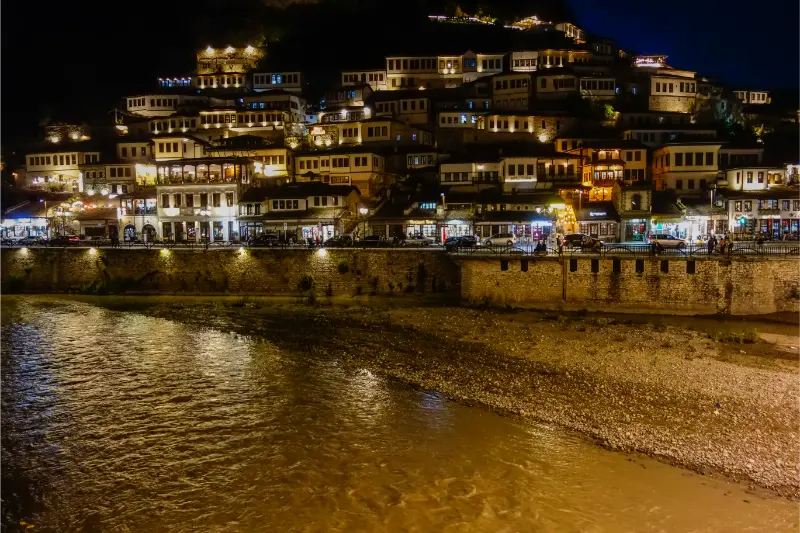
    Berat Historic South Albania Night 2

    For most travelers, two days works because you can separate the obvious first-day highlights from a second experience with a different character. Use the 2-day itinerary for a step-by-step version and avoid putting the most physically demanding activity on the same day as your arrival.

    Three days in Berat: when is it worth it?

    The third day is where Mount Tomorr or a longer Osum Canyon outing becomes realistic. These are not tiny add-ons to an old-town walk. They need transport, weather awareness and enough time that the destination does not become a race back to the hotel.

    Three days becomes especially useful when weather can disrupt a boat, mountain, beach or nature plan. It also gives you a backup day if an attraction is closed or an intercity bus arrives later than expected. See the 3-day itinerary for a realistic pace.

    What about four days or more?

    Stay four days only if you want a very slow heritage stay, multiple wine/agrotourism experiences or separate full days for Tomorr and the canyon. Most first-time itineraries gain more by moving on after two or three days.

    Day trip or overnight?

    A day trip is reasonable when the transport time is short and your goal is limited to the main sights. An overnight is better when evening atmosphere, early-morning streets, a second neighborhood or a regional excursion matters. I rarely judge a destination only by whether it can technically be visited between the first and last bus.

    If you are already using Berat as a base, compare the options in the day-trip guide before adding nights. A good extra day should unlock something meaningfully different, not simply repeat the same central walk.

    How many nights should you book?

    I separate nights from sightseeing days. Two nights often gives you only one full day if you arrive in the evening and leave early. For a destination where I want two complete days, I usually book three nights or arrange an early arrival and late departure. This is especially important on bus-based itineraries where transport does not always line up with hotel check-in and check-out times.

    Do you need a car?

    A car is unnecessary inside Berat and can be awkward around historic lanes. It becomes valuable for wineries, Tomorr and rural day trips. If you arrive by car, choose accommodation with clear parking or drop-off instructions.

    If you rent a car, choose accommodation with clear parking instructions before arrival. A vehicle is most valuable when it unlocks rural or regional sights; it adds little when it sits parked while you explore a compact historic center.

    How many days without a car?

    Without a car, I add time rather than subtract it. Public transport may be perfectly adequate, but a taxi to a trailhead, a less frequent regional bus or a separate day tour can shape the schedule. The best car-free itinerary usually has fewer bases and slightly longer stays, which also means less time spent carrying luggage between terminals.

    How many days with children?

    Families often do best with two days: one historic day and one easier countryside/nature day. Avoid the castle climb at peak summer heat, and do not assume cobbles are stroller-friendly.

    With children, the number of attractions matters less than the number of transitions. One museum, one outdoor block and one relaxed meal can be a full day. If a destination includes steep lanes, summer heat or long beach transfers, an extra night often improves the trip more than adding another destination.

    How many days for couples, solo travelers and seniors?

    • Couples: two nights is often the minimum that leaves room for a slow dinner and one unstructured morning.
    • Solo travelers: one or two days can be enough in compact destinations, but a third day is useful when joining a tour or day trip reduces transport friction.
    • Senior travelers: add a night when hills, cobbles or heat make a slower pace more comfortable; taxis can save energy without changing the itinerary.
    • Photographers: an overnight matters because early and late light can be more valuable than adding another midday attraction.

    Does the best length change by season?

    April–June and September–October are ideal for long UNESCO walks. Summer still works if the castle is early and evenings are slower. Canyon and mountain activities depend on current conditions, not only the month name.

    The most important seasonal question is whether the activity that justifies your extra day is actually realistic. A third beach day has less value in unstable weather; a high mountain day should not be assumed safe because the calendar says summer; and winter city breaks work better when you have indoor alternatives.

    Arrival day and departure day: do they count?

    I count an arrival day only when I can reasonably reach the hotel by early afternoon and still have energy for a meaningful walk. A flight landing in the evening or a four-hour bus journey creates a travel day, not a sightseeing day. The same applies on departure: if you must leave before lunch, do not pretend it is a full final day when deciding how long to stay.

    Where to stay to make a short visit work

    Location becomes more important as the stay gets shorter. Read the Where to Stay guide before choosing a room. For a one-night visit, I pay more attention to walking distance and luggage access than to a marginally cheaper room farther away.

    Compare current accommodation in Berat on Booking.com.

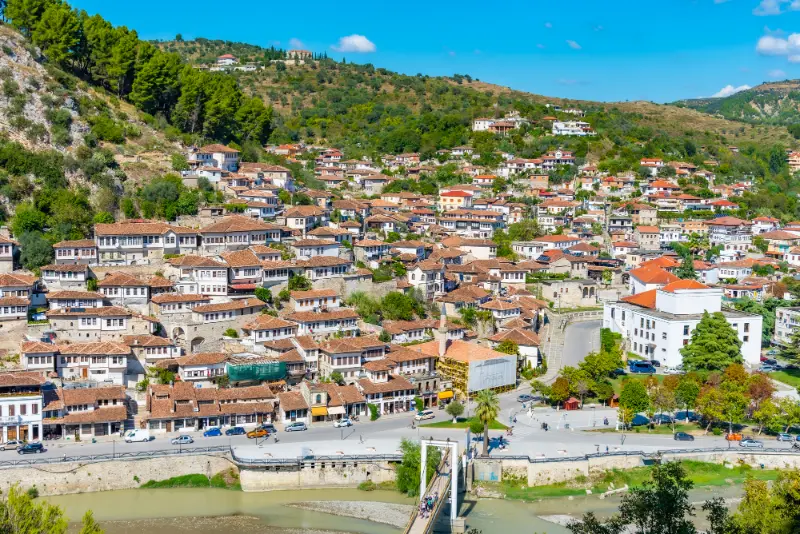
    Historic Berat Albania World Heritage Site UNESCO

    What should you book in advance?

    Accommodation is the main priority in peak periods or small destinations. I also pre-book any activity that would break the itinerary if unavailable: a seasonal boat, mountain transfer, rafting trip or specialist guide. I do not pre-book every museum and meal unless there is a real capacity issue; leaving some flexibility protects the trip from weather and transport delays.

    How this stop fits into a wider Albania itinerary

    Berat fits naturally between Tirana/Durrës and Gjirokastër/Vlorë. An overnight is worth keeping even on a fast route because the old town is at its best early and after day visitors leave.

    Use How Many Days in Albania? to balance this stop against the country as a whole. A destination can deserve three days in isolation but only one or two on a seven-day national itinerary.

    Common planning mistakes

    • Counting late arrival and early departure as two full sightseeing days.
    • Adding a third day without deciding what different experience it unlocks.
    • Choosing a distant hotel to save a small amount on a very short stay.
    • Building a day trip around old bus times without rechecking current transport.
    • Trying to visit a mountain, beach and museum-heavy city in the same day.
    • Ignoring heat, rain or steep terrain when deciding how much walking fits in one day.
    • Moving accommodation every night when two-night bases would reduce luggage and transit time.

    Frequently asked questions

    What is the ideal number of days in Berat?

    Two days / two nights is my preferred first stay in Berat. One full day covers the UNESCO core well; the second gives you a countryside, winery or nature component. Three days makes sense when Osum Canyon, Mount Tomorr or a slower rural experience is a real priority.

    Plaza Square Berat Albania UNESCO World Heritage Site

    Is one day in Berat enough?

    Yes for the main highlights, but it works best when you arrive early, stay centrally and accept that regional excursions belong on another trip.

    Is two days in Berat enough?

    For most first-time visitors, yes. Two days usually gives the best balance between the core sights and one slower or regional experience.

    When should I spend three days in Berat?

    Choose three days when a day trip, nature activity, beach/boat day or slower cultural experience is one of your main reasons for visiting.

    Should I add an extra night because I am traveling by bus?

    Often yes. A bus arrival late in the day can consume much of a nominal sightseeing day, so an extra night can make a car-free itinerary far more comfortable.

    Final recommendation

    Do not choose the length of your stay from a generic list of ‘must-see’ attractions. Decide what you want Berat to contribute to the wider trip: a quick cultural stop, a relaxed base, a beach break or access to regional nature. Then book enough time to do that one job well. For most people, the best itinerary has fewer destinations with usable days, not more destinations connected by rushed transfers.

  • Tirana Airport to Berat: Bus via Tirana Terminal, Taxi, Transfer and Rental Car

    Tirana Airport to Berat: Bus via Tirana Terminal, Taxi, Transfer and Rental Car

    Getting from Tirana International Airport (TIA) to Berat is easiest when you choose the transport based on your arrival time, luggage and what happens after check-in. As a rough road reference, allow roughly 1 hour 30 minutes to 2 hours from the airport by car in normal conditions, but treat that as planning time rather than a guaranteed transfer.

    The most important distinction is whether the airport currently lists a direct bus for your destination. TIA publishes direct airport services only for selected cities, while other routes require a change through Tirana’s intercity network. I would always check the current airport transport page again shortly before the flight.

    Quick comparison

    OptionBest forMain trade-off
    Airport/intercity busSolo travelers and lower budgetsCheapest, but schedules and final hotel transfer matter
    Official taxi / private transferLate arrivals, families and luggageSimplest door-to-door option, higher cost
    Rental carRoad trips and multi-stop itinerariesMaximum flexibility, plus parking/driving responsibility
    Overnight near Tirana/airportVery late flights before a long onward routeAdds a hotel night but avoids unsafe or stressful late travel

    What the airport officially provides

    Tirana International Airport publishes its current public-transport information on the Tirana International Airport bus page. For intercity timetables beyond the airport-specific services, use e-Transport Albania. TIA also publishes official Tirana Airport taxi information and a list of official Tirana Airport car-rental list.

    The official taxi information says branded airport taxis operate 24 hours a day and can provide transfers to cities throughout Albania. That makes taxi/private transfer the fallback when a flight lands after the last useful bus or when a connection would otherwise require several vehicles.

    By public transport

    The official TIA bus page does not currently list a direct airport–Berat bus. The most structured public-transport option is to use the airport’s daytime connection to Tirana’s North–South intercity terminal and then take a direct Tirana–Berat bus. Check both legs before travel on the airport page and e-Transport; a flight delay can break a tight self-made connection.

    For any bus journey, I save the departure point as a map pin and screenshot the current timetable. If the journey requires two separate services, I treat them as two independent tickets: a delay on the first leg does not guarantee the second vehicle will wait.

    By official taxi or private transfer

    A door-to-door transfer becomes more attractive here because it removes the terminal change and delivers you to Berat in one movement. For two or more travelers, compare the total transfer price with airport bus plus local taxis rather than assuming public transport always wins by a large margin.

    Before accepting or booking a long transfer, confirm the total price, exact hotel/village, luggage allowance and whether the service is private or shared. For a flight pickup, provide the flight number so the operator can see a delay. Use licensed services rather than accepting an unsolicited ride from someone approaching you in arrivals.

    By rental car

    Berat is an excellent first stop for a rental-car itinerary because you avoid central Tirana entirely. Collect the car at arrivals, drive south and park once in Berat. The old town is not a place where you want to keep moving the vehicle between Mangalem, Gorica and the castle.

    Illuminated Skanderbeg Square Tirana Albania Night

    At the rental desk, photograph the car, fuel level, wheels and existing damage before departure. Save the destination’s hotel-parking instructions offline and avoid putting the old-town reception address into navigation if the property has a separate vehicle entrance.

    Arriving at the destination

    Berat’s intercity terminal is outside the UNESCO core. If you arrive by bus, use the local city bus or a taxi toward Mangalem/Gorica. If you have an old-town guesthouse, ask whether the final luggage route involves steep lanes.

    I always compare the transport stop with the accommodation before buying the ticket. A route can look very cheap until you discover that the final hotel requires another long taxi ride, while a slightly more expensive transfer may deliver everyone and their luggage directly to reception.

    What if your flight lands late?

    A late flight is the weak point of the bus option. Intercity Berat services are daytime/evening transport, not a 24-hour airport connection. After a late arrival, use a transfer or sleep near Tirana/airport and travel the next morning.

    Interior Orthodox Cathedral Resurrection Christ Skanderbeg Square Tirana Albania

    Flight arrival time is not the same as terminal-exit time. Passport control, baggage reclaim, SIM cards, ATM use and rental paperwork can easily add time after landing. Never book the last realistic connection of the day with only a few minutes of margin.

    If you are traveling with children

    Families should compare the entire chain, not only ticket price. A direct transfer can become good value when it removes a terminal change, multiple suitcases and a tired child from the equation. If renting a car, request the correct child seat in advance and check the installation before leaving TIA.

    If you have large luggage

    Keep passports, medication, electronics and money in a smaller bag that stays with you. On buses and shuttles, large suitcases may go in the luggage compartment. On arrival in a historic town, a taxi can be worth paying for even when the hotel looks close on a map.

    Where to stay after arrival

    Compare current accommodation in Berat on Booking.com. For a first night after flying, I prioritize simple access over a room that looks marginally prettier but requires a difficult final transfer.

    See the local Where to Stay guide for the most practical base.

    Driving and parking after the airport

    If you collect a rental car, read the destination driving and parking guide before arrival. The best airport road trip is one where the car becomes useful between destinations and then stays parked while you explore compact centers on foot.

    Special route advice

    If your flight arrives early enough, going directly to Berat can save a hotel change in Tirana and creates a clean north-to-south itinerary. If you want Tirana as well, visit the capital first and use the separate Tirana–Berat route afterward.

    Returning to Tirana Airport

    For the airport-bound trip, you can reverse the terminal connection, but do not make the same-day chain too tight before an international flight. A direct transfer is often worth considering for early departures.

    For an international flight I would rather reach TIA early than discover that summer traffic, a missed bus or a wrong terminal has consumed the buffer. Re-check the airport’s current passenger guidance and your airline’s check-in requirement the day before departure.

    Common mistakes

    • Assuming every major Albanian city has a direct airport bus.
    • Using an old timetable screenshot instead of checking TIA/e-Transport again.
    • Booking the final intercity departure with almost no buffer after landing.
    • Confusing the city name with a distant beach strip, village or lower town.
    • Renting a car for a city stay where it will remain parked for several days.
    • Driving a long unfamiliar route late at night immediately after a flight.
    • Ignoring the final taxi from the intercity stop to the accommodation.
    • Planning the return to the airport using the minimum Google Maps driving time.

    Useful related guides

    If you are starting from Tirana city rather than the airport, use the dedicated point-to-point route guide.

    Frequently asked questions

    Is there a direct bus from Tirana Airport to Berat?

    TIA does not currently list a direct airport–Berat bus.

    How do I travel by public transport?

    Use the airport connection to Tirana’s North–South intercity terminal, then take a direct bus to Berat.

    Monument Skanderbeg Scanderbeg Square Center Tirana Albania

    Is a private transfer worth it?

    It can be, especially for couples/families, luggage or late arrivals.

    Should I rent a car?

    Yes if Berat starts a wider road trip; otherwise bus plus taxi works well.

    Can I go to Berat after a late-night flight?

    A direct transfer is the practical option. Otherwise stay near Tirana and travel the next morning.

    Final recommendation

    Choose the option that keeps the arrival day simple. Public transport is excellent value when the direct service or terminal connection fits naturally; a private transfer earns its cost when it removes a bad late-night connection; and a rental car makes sense when the vehicle immediately becomes part of a wider Albania itinerary. The cheapest first ticket is not always the cheapest or easiest complete journey to the hotel.

    How I would decide in 60 seconds after booking the flight

    First I check the landing time against the current TIA bus page. Second, I look at the hotel’s exact map position. Third, I decide whether I need a car after arrival. Those three facts usually make the answer obvious. If the direct bus exists and lands near the hotel, I use it. If the trip requires a complicated late connection, I book a transfer or sleep near Tirana. If the destination is the first stage of a road trip, I compare airport car rental with the cost and inconvenience of collecting a vehicle later.

    I then revisit the plan a day or two before departure. Transport schedules change, flights move and seasonal traffic can alter the sensible choice. That final check is more valuable than memorizing an exact bus time months in advance.

  • Mangalem Quarter Berat Guide: Ottoman Houses, Alleys and the City of a Thousand Windows

    Mangalem Quarter Berat Guide: Ottoman Houses, Alleys and the City of a Thousand Windows

    Mangalem is the image many travelers have in mind before they ever reach Berat: tiers of white houses climbing beneath the castle, their rows of windows facing the Osum River. But the neighborhood is more rewarding when you leave the postcard viewpoint and walk slowly through its steep alleys.

    Old Gorica Bridge Osum River Berat Albania Cityscape As Backdrop

    Albania’s official tourism portal is the principal reference used for the core historical and architectural facts in this guide. Opening hours, worship schedules, restoration work, entrance rules and commercial activity can change, so verify practical details shortly before your visit.

    Why this place deserves its own guide

    Mangalem Quarter Berat is worth treating as more than a quick photo stop. It adds a specific layer to the story of Albania: urban life, religious coexistence, architecture, commerce or the way a neighborhood changed between Ottoman, communist and contemporary periods. A focused visit lets you notice those layers instead of moving through the city as a checklist of landmarks.

    The most useful approach is to understand the setting first. Look at the street pattern, surrounding buildings, slope, river, square or neighboring monuments before concentrating on decorative details. Albanian heritage often makes sense only when you see how a church, mosque, bazaar, residential quarter or public square connects with everyday movement around it.

    Historical context: the facts that matter

    Mangalem is one of the oldest representative neighborhoods of Berat’s historic urban structure, spreading south and east of Castle Hill.

    Most surviving houses date mainly from the eighteenth and nineteenth centuries and use stone foundations and walls with timber in upper structures, balconies and roofs.

    The steep terrain produced compact houses and narrow cobbled lanes, while the vertically aligned windows helped create Berat’s famous image as the city of one window above another.

    The quarter historically formed an important Muslim residential area and includes Ottoman religious and civic heritage such as the King Mosque and other historic buildings.

    This background matters because Albania’s historic places rarely belong to one frozen moment. Buildings have been repaired, repurposed, damaged, secularized, restored and returned to religious or civic use. Neighborhoods have changed even more dramatically as families, businesses and tourism adapted to new political and economic conditions. Treat the visible place as the latest layer in a much longer story.

    What to notice when you arrive

    The layered rows of windows seen from across the Osum

    Pause and look specifically at the layered rows of windows seen from across the Osum. Rather than taking one wide photograph and leaving, compare materials, scale, openings, decorative details and the relationship with adjacent streets or buildings. Small changes in stonework, plaster, timber, paving or rooflines often reveal which parts are older, restored or adapted to new uses.

    Stone lower floors and lighter timber upper construction

    Pause and look specifically at stone lower floors and lighter timber upper construction. Rather than taking one wide photograph and leaving, compare materials, scale, openings, decorative details and the relationship with adjacent streets or buildings. Small changes in stonework, plaster, timber, paving or rooflines often reveal which parts are older, restored or adapted to new uses.

    Narrow lanes that rise toward Castle Hill

    Pause and look specifically at narrow lanes that rise toward Castle Hill. Rather than taking one wide photograph and leaving, compare materials, scale, openings, decorative details and the relationship with adjacent streets or buildings. Small changes in stonework, plaster, timber, paving or rooflines often reveal which parts are older, restored or adapted to new uses.

    Small architectural details that show the quarter is still a lived-in neighborhood rather than an open-air museum

    Pause and look specifically at small architectural details that show the quarter is still a lived-in neighborhood rather than an open-air museum. Rather than taking one wide photograph and leaving, compare materials, scale, openings, decorative details and the relationship with adjacent streets or buildings. Small changes in stonework, plaster, timber, paving or rooflines often reveal which parts are older, restored or adapted to new uses.

    How to experience the area without rushing

    Allow at least forty-five minutes for a single building and considerably longer for a neighborhood, market or public square. If the place is active rather than museum-like, the experience improves when you include time for a coffee, a short detour into side streets and a second pass after you understand the layout. In a bazaar or nightlife district, morning and evening can feel like two completely different destinations.

    If you are visiting a functioning church or mosque, do not assume the entire interior is continuously available. Services, prayers, weddings, funerals and religious festivals take priority. Enter quietly, dress respectfully and avoid photographing people at worship without permission. In residential quarters, remember that many photogenic doors, balconies and courtyards belong to private homes.

    Best time of day and season

    Spring and autumn are usually the easiest seasons for urban exploration because walking temperatures are comfortable and streets are lively without the most intense summer heat. July and August can still be enjoyable, but exposed squares and steep historic neighborhoods are better early in the morning or in the late afternoon. Winter brings shorter daylight and rain, yet also quieter streets and a more local atmosphere.

    Time of day matters as much as season. Religious buildings are often calm between services. Historic neighborhoods photograph beautifully when low light reaches façades from the opposite side of a valley or river. Markets are more interesting when shops are open, while nightlife areas make much more sense after late afternoon. Build the visit around the character of the place rather than forcing every attraction into the same 10:00–16:00 schedule.

    Practical walking and accessibility advice

    Historic Albania can be physically uneven. Cobbles, polished stone, steep slopes, high thresholds and narrow pavements are common. Comfortable shoes matter more than formal travel clothing. In summer carry water, and in wet weather expect stone paving to become slippery. Travelers with limited mobility should check current access directly because entrances, ramps and restoration zones can change.

    Families can make the visit more engaging by focusing on visible details: domes, bells, old shop fronts, carved doors, stone arches, windows or viewpoints. Senior travelers may prefer one major heritage stop followed by a cafe break rather than several back-to-back attractions. The distances in these cities are often short on a map but can feel longer because of heat and gradients.

    How to combine it with nearby places

    Related guide: Berat Castle. Combining two or three nearby places that explain different periods usually creates a stronger itinerary than crossing the city repeatedly for isolated sights.

    Berat Old Town And Osumi River Albania

    Related guide: Gorica Bridge. Combining two or three nearby places that explain different periods usually creates a stronger itinerary than crossing the city repeatedly for isolated sights.

    Related guide: Onufri Museum. Combining two or three nearby places that explain different periods usually creates a stronger itinerary than crossing the city repeatedly for isolated sights.

    A simple half-day plan

    Start with the main site or neighborhood while your energy is high, then continue on foot to one complementary attraction. Take a real break for coffee or lunch and leave at least thirty minutes unplanned. That flexible time is often when you discover a side street, local bakery, small workshop or viewpoint that turns a competent itinerary into a memorable one.

    For photographers, do not use the first viewpoint as your only composition. Walk past it, look back, change elevation and include ordinary street life where appropriate. For shoppers, compare several stores before buying and ask whether items are locally handmade. For food and nightlife districts, check recent reviews for individual businesses rather than assuming an old recommendation is still operating.

    Respect, etiquette and responsible tourism

    Do not treat lived-in historic quarters as film sets. Keep voices down in narrow residential lanes, avoid blocking doorways and do not photograph inside homes or private courtyards without permission. In markets, bargaining customs vary by shop and product; a polite conversation works better than treating every price as a confrontation. Buying directly from artisans can support skills that are part of the heritage you came to see.

    At religious sites, modest clothing and quiet behavior are basic courtesy. At political-history locations, avoid turning difficult history into jokes or staged social-media content. Albania’s recent past remains personal for many families. A respectful visit can still be engaging and visually interesting without reducing the place to a backdrop.

    Common mistakes to avoid

    • Rushing through. Historic quarters and active civic spaces reward observation more than speed.
    • Relying on old opening hours. Verify museums and interiors close to the date of travel.
    • Ignoring context. The surrounding street, river, castle or boulevard often explains why the site exists where it does.
    • Photographing worshippers without permission. Active religious practice always takes priority over tourism.
    • Buying the first souvenir you see. Compare quality and ask about local production if craftsmanship matters to you.
    • Overloading the day. Two or three meaningful stops are usually better than eight rushed landmarks.

    Where to stay

    For a short city stay, I prefer accommodation that lets you reach the historic core on foot but is still practical for luggage, taxis or parking. In hilly towns, a room that looks only a few hundred metres from the center may involve a steep climb. Check recent guest comments about access, noise, heating, air conditioning and parking rather than choosing by map distance alone.

    Compare accommodation options in Albania on Booking.com. Use the map view to understand the relationship between the hotel and the historic area, especially in Berat, Gjirokastër, Krujë and Shkodër.

    Plaza Square Berat Albania UNESCO World Heritage Site

    Frequently asked questions

    Is this worth adding to a first trip to Albania?

    Yes if it fits naturally into the city you are already visiting. It adds depth without requiring a long detour.

    Do I need a guide?

    Not always. A guide adds value when the history is complex, but official interpretation plus some preparation is enough for many independent visitors.

    Can I visit with children?

    Usually yes. Keep the visit shorter, focus on visible details and schedule a food or park break afterward.

    Is photography allowed?

    Outdoor photography is generally straightforward, but interiors, museums and active religious spaces may have specific restrictions. Follow signs and staff instructions.

    How long should I allow?

    Plan roughly one hour for a single landmark and two to three hours for a neighborhood or market combined with nearby sights.

    Final thoughts

    Mangalem Quarter Berat earns a place in a thoughtful Albania itinerary because it turns a broad destination into a specific story. Slow down, notice how people use the place today, connect it with one nearby landmark and leave enough room for unplanned discoveries.

    That approach is more useful than chasing a list of “must-sees.” Albania is most rewarding when architecture, daily life, landscape and history are allowed to overlap, and these focused guides are designed to help you see those connections rather than simply collect photographs.

  • Tirana vs Berat: Which Destination Should You Choose in Albania?

    Tirana vs Berat: Which Destination Should You Choose in Albania?

    If you are deciding between Tirana and Berat, the useful question is not which destination is universally better. It is which one fits the trip you are actually building. Tirana is an energetic capital with museums, cafés, contemporary neighborhoods, nightlife and easy day trips toward Mount Dajti; Berat is a UNESCO heritage city built around Mangalem, Gorica, the Osum River and an inhabited hilltop castle. Those differences affect how many nights you need, how much you walk, whether a car helps and what the evenings feel like.

    Choose Tirana if your priorities match first-time visitors who want city energy, museums, food and the easiest transport hub. Choose Berat if you care more about architecture, heritage, romantic guesthouses and a slower overnight stop. If both fit your route, the two destinations complement each other better than they compete.

    Tirana vs Berat at a glance

    QuestionTiranaBerat
    Overall feelurban and flexibleslow, historic and atmospheric
    Best forfirst-time visitors who want city energy, museums, food and the easiest transport hubarchitecture, heritage, romantic guesthouses and a slower overnight stop
    Typical stay2–3 nights1–2 nights
    Walking / terrainmostly easy in the central area, with optional hills only on day tripscompact but noticeably hilly around the castle, with cobbles and steps
    Car?A car is unnecessary for the center and can be a burden because parking adds friction.You do not need a car for the historic core; a car is useful mainly for wineries, countryside and Osum-area excursions.

    Atmosphere and travel style

    Tirana feels urban and flexible. It is strongest for first-time visitors who want city energy, museums, food and the easiest transport hub. I would be less enthusiastic about it for travelers whose main goal is a compact historic town or a very slow atmosphere. That is important because many Albania itineraries become tiring when every stop is chosen only because it is famous rather than because it offers a different rhythm.

    Berat feels slow, historic and atmospheric. It is strongest for architecture, heritage, romantic guesthouses and a slower overnight stop. It is less naturally suited to travelers looking for nightlife, a large museum scene or beach time. If you have already spent several days in a destination with a similar rhythm, Berat may be useful precisely because it changes the pace.

    Culture and sightseeing

    For culture, Tirana gives you modern Albanian history, Cold War museums, Skanderbeg Square, Blloku and contemporary city life. This creates a sightseeing day that can be built around several distinct stops rather than one headline monument.

    Tirana Pyramid Center Skanderbeg Square Tirana Albania 2

    Berat offers UNESCO Ottoman-era urban fabric, a living castle district, religious monuments and iconography. The cultural experience is therefore different rather than simply larger or smaller. I would choose according to the kind of history you enjoy: museum-based city history, lived-in heritage, archaeology, village culture or landscape-based traditions.

    Nature, beaches and outdoor time

    The outdoor side of Tirana is about urban parks, Mount Dajti and easy countryside day trips rather than water-based travel. That makes it a better fit when those activities are central to your itinerary rather than optional extras.

    Around Berat, the main outdoor draw is the Osum River, surrounding hills, wineries and access to canyon/countryside trips. Think about what you will realistically do for half a day: swim, hike, cycle, take a boat, walk a lakefront or simply sit in an old town. The answer usually separates the two destinations more clearly than a list of attractions.

    Which is easier without a car?

    In Tirana, A car is unnecessary for the center and can be a burden because parking adds friction. The important distinction is between enjoying the destination itself and reaching its surrounding attractions. A place can be easy without a car in the center but much less flexible for day trips.

    In Berat, You do not need a car for the historic core; a car is useful mainly for wineries, countryside and Osum-area excursions. If you are traveling by bus, I would choose accommodation close to the practical arrival area and avoid adding a taxi every morning just to reach the first sight.

    Walking, hills and physical effort

    Tirana: mostly easy in the central area, with optional hills only on day trips. This matters for summer heat, heavy luggage, small children and travelers with limited mobility. A short map distance can be deceptive when the route climbs or uses polished stone.

    Berat: compact but noticeably hilly around the castle, with cobbles and steps. If walking comfort is one of your main criteria, use it as a real decision factor rather than assuming every historic or coastal destination is equally easy on foot.

    Where to stay

    For Tirana, use Where to Stay in Tirana before booking. Compare accommodation in Tirana on Booking.com.

    For Berat, use Where to Stay in Berat before booking. Compare accommodation in Berat on Booking.com.

    The cheapest room is not automatically the best comparison. A central room that removes two taxi rides, a difficult hill climb or daily parking can be better value than a cheaper property in the wrong zone.

    Food and evening atmosphere

    I would use Tirana for an evening that matches its urban and flexible character. The practical advantage of staying centrally is that dinner can become part of the sightseeing day instead of another transport task.

    Berat’s evenings reflect its slow, historic and atmospheric identity. In seasonal beach destinations, the difference between August and October can be dramatic; in larger cities, restaurants and cafés remain a more stable part of the experience year-round.

    Budget: which usually costs more?

    I would not choose between the two using one fixed daily-price figure. Accommodation changes with season, weekend demand and exact location, while transport choices can reverse the apparent difference. A beach resort in August and the same place in May are effectively different budget destinations.

    For Tirana, compare the current hotel cost, whether you need a car/taxi and how many paid attractions you will actually enter. For Berat, do the same. The better-value choice is the destination where your preferred activities are naturally accessible, not necessarily the one with the lowest room rate.

    Tirana Pyramid Center Skanderbeg Square Tirana Albania Congress Center

    Families

    Families should look beyond attraction count. In Tirana, the key practical issue is that the terrain is mostly easy in the central area, with optional hills only on day trips. In Berat, it is compact but noticeably hilly around the castle, with cobbles and steps. I would prioritize easy access to dinner, a manageable return to the room and one main activity per half-day rather than trying to reproduce an adult sightseeing schedule with children.

    Couples

    For couples, Tirana works especially well when you want first-time visitors who want city energy, museums, food and the easiest transport hub. Berat works better when the shared trip is about architecture, heritage, romantic guesthouses and a slower overnight stop. Romantic travel is often more about pace, views and dinner logistics than about a formal ‘romantic attraction’.

    Solo travelers

    Solo travelers can enjoy both. Tirana is a natural fit for first-time visitors who want city energy, museums, food and the easiest transport hub, while Berat suits architecture, heritage, romantic guesthouses and a slower overnight stop. If social energy matters, choose the destination and season with a stronger evening scene; if quiet independence matters, choose the place where the main sights are easy to reach on foot.

    How many nights?

    I would normally give Tirana 2–3 nights and Berat 1–2 nights. Those are planning ranges, not rules. Add a night when you are using the place as a day-trip base, traveling with children, arriving late or deliberately slowing the itinerary.

    Best time to visit

    Spring and early autumn are the easiest all-round periods for many Albania comparison decisions because walking and road travel are comfortable. Summer is the clear choice when swimming, boats or high-season beach atmosphere are central. Mountain destinations require current trail and road conditions rather than a fixed calendar promise; winter city trips can be excellent where museums, food and urban life remain strong.

    Can you visit both Tirana and Berat?

    Often, yes. The question is whether the transfer creates a logical route. If Tirana and Berat sit naturally on the same itinerary, visiting both is more rewarding than trying to name a winner. I still avoid one-night hopping when each destination needs time to feel different: checking in, parking, repacking and changing hotels can consume the very hours you hoped to save.

    For a short first trip, I keep only destinations that add a new experience. One capital, one UNESCO town, one coast base and one mountain/lake stop often produces more variety than three similar beach towns or three historic cities visited too quickly.

    Choose Tirana if…

    • You want first-time visitors who want city energy, museums, food and the easiest transport hub.
    • You prefer a urban and flexible destination.
    • You are comfortable with this terrain: mostly easy in the central area, with optional hills only on day trips.
    • A stay of 2–3 nights fits your route.

    Choose Berat if…

    • You want architecture, heritage, romantic guesthouses and a slower overnight stop.
    • You prefer a slow, historic and atmospheric destination.
    • You are comfortable with this terrain: compact but noticeably hilly around the castle, with cobbles and steps.
    • A stay of 1–2 nights fits your route.

    What I would not use as the deciding factor

    • One viral photo or social-media reel.
    • A single hotel price checked months before the trip.
    • A claim that one destination is always cheaper, quieter or more authentic.
    • Driving time alone without considering parking and the final hotel location.
    • A summer review applied to a winter or shoulder-season trip.

    Useful planning guides

    A simple decision method

    Write down the three things you most want from this part of the trip. Give one point to each destination for every priority it clearly satisfies. Then check the practical constraints: arrival time, onward route, whether you have a car, and how many nights are available. This is more useful than choosing from a generic top-ten list because it forces the itinerary to match your actual travel style.

    If the result is still tied, I would choose the destination that adds more contrast to the rest of the trip. After several urban days, Berat may create the bigger change of pace; after several quiet stops, the destination with more city energy can be the better reset.

    Frequently asked questions

    Is Tirana better than Berat?

    Choose Tirana if your priorities match first-time visitors who want city energy, museums, food and the easiest transport hub. Choose Berat if you care more about architecture, heritage, romantic guesthouses and a slower overnight stop. If both fit your route, the two destinations complement each other better than they compete.

    Aerial Drone View Tirana Albania

    Which is better for a first trip to Albania?

    Both can work on a first trip. Choose Tirana for first-time visitors who want city energy, museums, food and the easiest transport hub; choose Berat for architecture, heritage, romantic guesthouses and a slower overnight stop. Route efficiency matters just as much as fame.

    Which is easier without a car?

    Tirana: A car is unnecessary for the center and can be a burden because parking adds friction. Berat: You do not need a car for the historic core; a car is useful mainly for wineries, countryside and Osum-area excursions. Compare the exact accommodation location before deciding.

    Which is better for families?

    The easier choice depends on terrain and daily plan. Tirana has mostly easy in the central area, with optional hills only on day trips; Berat has compact but noticeably hilly around the castle, with cobbles and steps. Families usually benefit from the base with simpler walking and fewer daily transfers.

    Should I stay overnight in both?

    If you have enough time, yes when each adds a different experience. I would usually plan around 2–3 nights in Tirana and 1–2 nights in Berat, then shorten only if the overall itinerary would otherwise become too rushed.

    Final take

    Choose Tirana if your priorities match first-time visitors who want city energy, museums, food and the easiest transport hub. Choose Berat if you care more about architecture, heritage, romantic guesthouses and a slower overnight stop. If both fit your route, the two destinations complement each other better than they compete. The strongest Albania itineraries are not built by finding one universal winner. They are built by combining destinations that give you different landscapes, rhythms and experiences without wasting days on unnecessary transfers.

  • Gorica Quarter Berat Guide: Stone Houses, Churches and Osum River Views

    Gorica Quarter Berat Guide: Stone Houses, Churches and Osum River Views

    Gorica is the quieter counterpoint to Mangalem across the Osum River. From its lanes, Berat’s castle and window-filled hillside become the view rather than the setting, while the neighborhood itself reveals another side of the city’s religious and residential history.

    Albania’s official tourism portal is the principal reference used for the core historical and architectural facts in this guide. Opening hours, worship schedules, restoration work, entrance rules and commercial activity can change, so verify practical details shortly before your visit.

    Why this place deserves its own guide

    Gorica Quarter Berat is worth treating as more than a quick photo stop. It adds a specific layer to the story of Albania: urban life, religious coexistence, architecture, commerce or the way a neighborhood changed between Ottoman, communist and contemporary periods. A focused visit lets you notice those layers instead of moving through the city as a checklist of landmarks.

    Old Gorica Bridge Osum River Berat Albania Cityscape As Backdrop

    The most useful approach is to understand the setting first. Look at the street pattern, surrounding buildings, slope, river, square or neighboring monuments before concentrating on decorative details. Albanian heritage often makes sense only when you see how a church, mosque, bazaar, residential quarter or public square connects with everyday movement around it.

    Historical context: the facts that matter

    Gorica is one of Berat’s three historic neighborhoods, located on the hill opposite the castle on the left bank of the Osum River.

    It developed historically as an important Orthodox residential area and has long been connected to the opposite bank by the eighteenth-century Gorica Bridge.

    Official tourism information distinguishes smaller compact houses higher on the slope from larger merchant houses closer to the river, many with verandas.

    Many buildings were rebuilt or restored after the 1851 earthquake, creating the combination of older Ottoman-period forms and later nineteenth-century interventions visible today.

    This background matters because Albania’s historic places rarely belong to one frozen moment. Buildings have been repaired, repurposed, damaged, secularized, restored and returned to religious or civic use. Neighborhoods have changed even more dramatically as families, businesses and tourism adapted to new political and economic conditions. Treat the visible place as the latest layer in a much longer story.

    What to notice when you arrive

    Views across the river toward Mangalem and Castle Hill

    Pause and look specifically at views across the river toward Mangalem and Castle Hill. Rather than taking one wide photograph and leaving, compare materials, scale, openings, decorative details and the relationship with adjacent streets or buildings. Small changes in stonework, plaster, timber, paving or rooflines often reveal which parts are older, restored or adapted to new uses.

    Stone walls, tiled roofs and changes between upper and lower houses

    Pause and look specifically at stone walls, tiled roofs and changes between upper and lower houses. Rather than taking one wide photograph and leaving, compare materials, scale, openings, decorative details and the relationship with adjacent streets or buildings. Small changes in stonework, plaster, timber, paving or rooflines often reveal which parts are older, restored or adapted to new uses.

    The role of St Spyridon Church in the neighborhood

    Pause and look specifically at the role of St Spyridon Church in the neighborhood. Rather than taking one wide photograph and leaving, compare materials, scale, openings, decorative details and the relationship with adjacent streets or buildings. Small changes in stonework, plaster, timber, paving or rooflines often reveal which parts are older, restored or adapted to new uses.

    The way Gorica Bridge links two different historic urban communities

    Pause and look specifically at the way Gorica Bridge links two different historic urban communities. Rather than taking one wide photograph and leaving, compare materials, scale, openings, decorative details and the relationship with adjacent streets or buildings. Small changes in stonework, plaster, timber, paving or rooflines often reveal which parts are older, restored or adapted to new uses.

    How to experience the area without rushing

    Allow at least forty-five minutes for a single building and considerably longer for a neighborhood, market or public square. If the place is active rather than museum-like, the experience improves when you include time for a coffee, a short detour into side streets and a second pass after you understand the layout. In a bazaar or nightlife district, morning and evening can feel like two completely different destinations.

    If you are visiting a functioning church or mosque, do not assume the entire interior is continuously available. Services, prayers, weddings, funerals and religious festivals take priority. Enter quietly, dress respectfully and avoid photographing people at worship without permission. In residential quarters, remember that many photogenic doors, balconies and courtyards belong to private homes.

    Best time of day and season

    Spring and autumn are usually the easiest seasons for urban exploration because walking temperatures are comfortable and streets are lively without the most intense summer heat. July and August can still be enjoyable, but exposed squares and steep historic neighborhoods are better early in the morning or in the late afternoon. Winter brings shorter daylight and rain, yet also quieter streets and a more local atmosphere.

    Time of day matters as much as season. Religious buildings are often calm between services. Historic neighborhoods photograph beautifully when low light reaches façades from the opposite side of a valley or river. Markets are more interesting when shops are open, while nightlife areas make much more sense after late afternoon. Build the visit around the character of the place rather than forcing every attraction into the same 10:00–16:00 schedule.

    Practical walking and accessibility advice

    Historic Albania can be physically uneven. Cobbles, polished stone, steep slopes, high thresholds and narrow pavements are common. Comfortable shoes matter more than formal travel clothing. In summer carry water, and in wet weather expect stone paving to become slippery. Travelers with limited mobility should check current access directly because entrances, ramps and restoration zones can change.

    Families can make the visit more engaging by focusing on visible details: domes, bells, old shop fronts, carved doors, stone arches, windows or viewpoints. Senior travelers may prefer one major heritage stop followed by a cafe break rather than several back-to-back attractions. The distances in these cities are often short on a map but can feel longer because of heat and gradients.

    How to combine it with nearby places

    Related guide: Gorica Bridge. Combining two or three nearby places that explain different periods usually creates a stronger itinerary than crossing the city repeatedly for isolated sights.

    Related guide: Mangalem Quarter. Combining two or three nearby places that explain different periods usually creates a stronger itinerary than crossing the city repeatedly for isolated sights.

    Related guide: Berat travel guide. Combining two or three nearby places that explain different periods usually creates a stronger itinerary than crossing the city repeatedly for isolated sights.

    Osumi River From Berat Castle Albania

    A simple half-day plan

    Start with the main site or neighborhood while your energy is high, then continue on foot to one complementary attraction. Take a real break for coffee or lunch and leave at least thirty minutes unplanned. That flexible time is often when you discover a side street, local bakery, small workshop or viewpoint that turns a competent itinerary into a memorable one.

    For photographers, do not use the first viewpoint as your only composition. Walk past it, look back, change elevation and include ordinary street life where appropriate. For shoppers, compare several stores before buying and ask whether items are locally handmade. For food and nightlife districts, check recent reviews for individual businesses rather than assuming an old recommendation is still operating.

    Respect, etiquette and responsible tourism

    Do not treat lived-in historic quarters as film sets. Keep voices down in narrow residential lanes, avoid blocking doorways and do not photograph inside homes or private courtyards without permission. In markets, bargaining customs vary by shop and product; a polite conversation works better than treating every price as a confrontation. Buying directly from artisans can support skills that are part of the heritage you came to see.

    At religious sites, modest clothing and quiet behavior are basic courtesy. At political-history locations, avoid turning difficult history into jokes or staged social-media content. Albania’s recent past remains personal for many families. A respectful visit can still be engaging and visually interesting without reducing the place to a backdrop.

    Common mistakes to avoid

    • Rushing through. Historic quarters and active civic spaces reward observation more than speed.
    • Relying on old opening hours. Verify museums and interiors close to the date of travel.
    • Ignoring context. The surrounding street, river, castle or boulevard often explains why the site exists where it does.
    • Photographing worshippers without permission. Active religious practice always takes priority over tourism.
    • Buying the first souvenir you see. Compare quality and ask about local production if craftsmanship matters to you.
    • Overloading the day. Two or three meaningful stops are usually better than eight rushed landmarks.

    Where to stay

    For a short city stay, I prefer accommodation that lets you reach the historic core on foot but is still practical for luggage, taxis or parking. In hilly towns, a room that looks only a few hundred metres from the center may involve a steep climb. Check recent guest comments about access, noise, heating, air conditioning and parking rather than choosing by map distance alone.

    Compare accommodation options in Albania on Booking.com. Use the map view to understand the relationship between the hotel and the historic area, especially in Berat, Gjirokastër, Krujë and Shkodër.

    Berat Old Town And Osumi River Albania

    Frequently asked questions

    Is this worth adding to a first trip to Albania?

    Yes if it fits naturally into the city you are already visiting. It adds depth without requiring a long detour.

    Do I need a guide?

    Not always. A guide adds value when the history is complex, but official interpretation plus some preparation is enough for many independent visitors.

    Can I visit with children?

    Usually yes. Keep the visit shorter, focus on visible details and schedule a food or park break afterward.

    Is photography allowed?

    Outdoor photography is generally straightforward, but interiors, museums and active religious spaces may have specific restrictions. Follow signs and staff instructions.

    How long should I allow?

    Plan roughly one hour for a single landmark and two to three hours for a neighborhood or market combined with nearby sights.

    Final thoughts

    Gorica Quarter Berat earns a place in a thoughtful Albania itinerary because it turns a broad destination into a specific story. Slow down, notice how people use the place today, connect it with one nearby landmark and leave enough room for unplanned discoveries.

    That approach is more useful than chasing a list of “must-sees.” Albania is most rewarding when architecture, daily life, landscape and history are allowed to overlap, and these focused guides are designed to help you see those connections rather than simply collect photographs.