
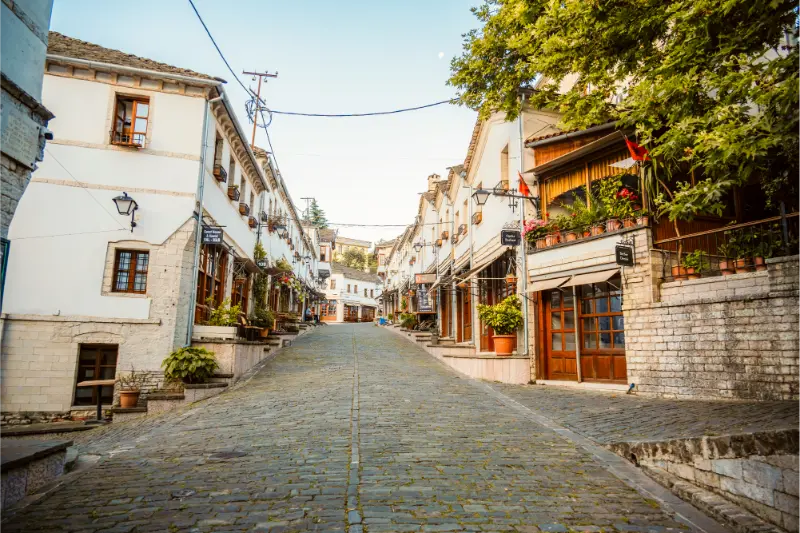
Gjirokastër looks as if it has been built from the same stone as the mountain behind it. The streets are steep, roofs are heavy with grey slate and the castle sits above almost everything. After the brighter white façades of Berat or the blue coast near Sarandë, the city feels like a complete change of mood.
Gjirokastër and Berat are jointly inscribed by UNESCO for their historic centres and well-preserved Ottoman-period architecture. The official UNESCO page for Berat and Gjirokastër describes Gjirokastër’s characteristic tower houses and long urban history. I recommend reading a little context before arriving because the architecture becomes much more meaningful once you know what you are looking at.
How long do you need in Gjirokastër?
One night is enough for the castle, bazaar and one historic house if you arrive early. Two nights let you slow down and fit the town naturally between the Blue Eye, Përmet or the southern coast. I strongly prefer an overnight stay to a fast stop between Sarandë and Tirana.
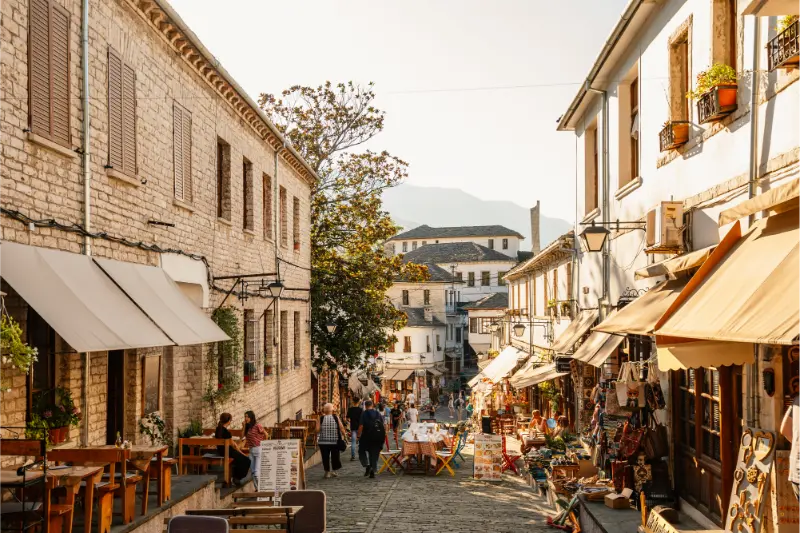
Start with the old bazaar
The bazaar area is the easiest place to orient yourself. Cobbled streets climb between shops, cafés, guesthouses and restaurants. It is also where the town can feel most visitor-focused, so I use it as a starting point and then walk into quieter residential lanes.
Footwear matters here more than in many Albanian cities. The stone streets are beautiful but uneven and can be slippery. I leave smooth-soled sandals for the coast.
Gjirokastër Castle
The castle is the major landmark and one of the best places to understand the geography of the Drino valley. Because the site is large and exposed, I visit early in summer. The climb from the bazaar is manageable for many visitors but steep enough that a taxi can be worthwhile for travellers with limited mobility.
Do not rush the ramparts and viewpoints. The fortress is not only a place to photograph the town below; it contains layers of military and political history. Exhibitions and access areas can change, so check current visitor information locally.
Visit at least one historic house
The traditional houses are what make Gjirokastër more than a fortress town. Their defensive appearance, internal organisation and decorative rooms reflect the lives of wealthy families in a very specific social and architectural setting. If time is limited, choose one carefully rather than sprinting through several.
Skenduli House
Skenduli House is frequently visited because it preserves many traditional architectural details. Guided explanations can make a major difference; without context, it is easy to see only a beautiful old interior and miss how spaces were used.
Zekate House
Zekate House is another impressive example, set higher on the slope. The uphill walk is part of the experience but can be tiring in heat. If you are already planning the castle and several steep streets, spread the climbs across the day.
Cold War Tunnel and recent history
Gjirokastër also has sites connected with Albania’s communist period, including an underground bunker complex. It offers a different layer from the Ottoman-era old town. I would pair it with the historic houses to avoid leaving with a one-period view of the city.
Where to stay
Old bazaar area
The easiest option if you want atmosphere and restaurants on foot. The downside is that car access and parking may be complicated, and some rooms can hear evening activity.
Residential slopes around the old town
Potentially quieter and more scenic, but check the exact walking gradient. A property that looks only 500 metres away on a map can feel much farther when the route climbs sharply.
Lower town
More practical for parking and flatter access, though you lose some of the immersive old-town feeling. It can work well if you have a car and plan an early departure.
You can compare hotels and guesthouses in Gjirokastër on Booking.com. This is a sponsored link. Read access instructions before driving to a historic-centre guesthouse.
Parking and driving
Gjirokastër is one of the places where I prefer to park once and walk. The old streets are not designed for visitors circling in search of a doorway. Ask your accommodation for the recommended parking point and do not assume the navigation app will choose a comfortable route.
If you are using public transport, confirm the current station and departure time close to travel. My broader comparison of buses and rental cars is in the getting-around Albania guide.
What to eat
Southern Albanian food is one of the pleasures of staying overnight. Ask about qifqi, the rice-ball speciality associated with Gjirokastër, along with pies, stuffed vegetables, local cheeses, grilled dishes and seasonal produce. Guesthouses can be excellent places for a traditional breakfast.
As in Berat, I like one meal with a view and another slightly away from the most obvious tourist street. The second is often where I find a quieter atmosphere and a more focused menu.
Gjirokastër and the Blue Eye
The Blue Eye spring lies on the route between Gjirokastër and the coast, which is why I prefer to visit it while changing bases. For example, leave Gjirokastër in the morning, stop at the spring, and continue to Sarandë or Ksamil. This avoids backtracking and turns a transfer day into a sightseeing day.
Gjirokastër and Përmet
If you have more than a week in Albania, heading toward Përmet creates a more inland southern route focused on mountains, thermal springs, villages and food. I would not squeeze it into a short itinerary that already includes the Riviera and Theth; save it for a slower second trip if necessary.
Best time to visit
Spring and autumn are ideal for steep walking. In summer, the old stone amplifies the heat, so I start with the castle or a historic house in the morning, rest over lunch and use the later afternoon for the bazaar. Winter brings a quieter atmosphere but also shorter daylight and more variable weather.
A one-night Gjirokastër plan
Arrival afternoon
- Check in and leave the car parked if possible.
- Walk through the bazaar and nearby lanes.
- Visit one historic house before closing time.
- Have dinner in the old town and enjoy the evening without another drive.
Next morning
- Visit the castle early.
- Add the Cold War Tunnel or another historic house if time allows.
- Have an early lunch.
- Continue toward the Blue Eye and Sarandë, or north toward Berat.
Berat or Gjirokastër?
They share UNESCO status but offer different experiences. Berat is organised around the Osum River, Mangalem, Gorica and a hilltop castle district. Gjirokastër is steeper and more monochrome, with massive stone houses and a fortress that dominates the valley. If your route allows it, visiting both is not repetitive.
Gjirokastër with children
The fortress, tunnels and unusual stone houses can be fascinating for older children, but the steep streets require pacing. I would choose one historic house, the castle and plenty of breaks rather than trying to reproduce an adult sightseeing list. A child carrier can be more practical than a stroller on the steepest cobbles.
Photography and viewpoints
Gjirokastër is photogenic because the roofs, mountain backdrop and layered houses create depth from almost every slope. Morning light can be softer over the old town, while late afternoon often works well from the castle or higher residential streets. The best compositions are not always in the bazaar; walking ten minutes away from the main commercial lane often reveals quieter roofs and courtyards.
Day trip or overnight stay?
A day trip gives you the headline sights but misses the town after the busier middle hours. Staying overnight means you can see the bazaar early, visit the fortress before the heat and have dinner without another long drive. If your schedule is tight, I would cut a minor stop elsewhere before reducing Gjirokastër to a two-hour pause.
Practical tips for the old town
- Carry only what you need for the day; steep cobbles make heavy bags annoying.
- Ask whether your guesthouse is reachable by car before following navigation blindly.
- Use cash as a backup for small shops and family-run places.
- In summer, put the fortress first and the bazaar later in the day.
- If rain starts, slow down: the stone streets become noticeably more slippery.
For travellers with an extra day, Gjirokastër also works as a base for nearby villages or a slower food-focused route through the south. I would rather add that depth than create a new one-night stop several hours away.
I also keep the evening deliberately light. After a day of climbing, museums and stone streets, dinner and a slow walk are enough. The town has a stronger atmosphere after sunset when you are not rushing toward another destination or thinking about the next parking stop.
My Gjirokastër takeaway
The steep streets are not an inconvenience to work around; they are part of Gjirokastër’s identity. Plan fewer attractions, wear good shoes and let the old town reveal itself slowly.
From here, the natural next steps are Sarandë and Ksamil on the coast or Berat farther north. Both connections appear in my 7-day Albania itinerary.
Related guide: For ancient history beyond the old town, add our Antigonea Archaeological Park guide.
Related guide: For a quieter historic town nearby, add Libohovë and its castle to your Gjirokastër stay.
Related guide: To understand how a traditional Gjirokastër tower house worked from the inside, add our Skenduli House guide to your old-town planning.
Related guide: For one of the city’s most impressive early-19th-century tower houses, see our dedicated Zekate House guide.
Related guide: Gjirokaster Bazaar Mosque Guide adds a focused layer to this destination, with historical context and practical visiting advice.
Related guide: Ismail Kadare House Gjirokaster Guide adds a focused layer to this destination, with historical context and practical visiting advice.
Related guide: Gjirokaster Ethnographic Museum Guide adds a focused layer to this destination, with historical context and practical visiting advice.
Related guide: Sotira Village Guide: Forests, Springs and Cultural Heritage in Dropull adds a focused stop to this destination and helps build a more detailed Albania itinerary.
\n\nRelated guide: Traditional Albanian Architecture: Stone Houses, Kullas, Bazaars and Historic Neighborhoods develops this subject as a dedicated cultural route.
\nRelated cultural guide: Albanian Folk Iso-Polyphony Guide: UNESCO Singing Traditions of Southern Albania.
Related cultural guide: Gjirokaster National Folklore Festival Guide: Music, Dance, Costumes and Trip Planning.
Choosing your base: Where to Stay in Gjirokaster: Old Bazaar, Palorto, Dunavat and Lower Town compares the most practical areas, access, parking and accommodation styles for this destination.
Suggested itinerary: 1 Day in Gjirokaster: Castle, Bazaar, Stone Houses and a Realistic Route gives you a realistic day-by-day plan with pacing, transport and optional stops.
Explore beyond the city: Best Day Trips from Gjirokaster: Blue Eye, Antigonea, Libohova, Permet and More compares the most useful excursions, transport options and realistic timing.
Local food: Gjirokaster Food Guide: Qifqi, Oshaf, Traditional Dishes and What to Order explains regional dishes, food shopping, what to order and how to plan a food-focused day.
Explore on foot: Gjirokaster Self-Guided Walking Tour: Bazaar, Stone Houses and the Castle gives you a practical stop-by-stop route, a shorter version and an easier alternative.
Driving: Driving and Parking in Gjirokaster: Old Bazaar, Castle, Hills and Rental-Car Tips explains parking strategy, hotel access, traffic and when to leave the rental car parked.
Getting here: Tirana to Gjirokaster: Bus, Car, Transfer and the Best Route South compares public transport, driving and private-transfer options with arrival advice.
When to go: Best Time to Visit Gjirokaster: Weather, Crowds, Stone Streets and the Best Months compares every season, crowds, weather-sensitive activities and the best months for different travel styles.
Arriving by air: Tirana Airport to Gjirokaster: Bus Connection, Transfer, Taxi and Rental Car compares the airport bus/connection, official taxi, transfer and rental-car options.
What to do: 15 Best Things to Do in Gjirokastër: Castle, Bazaar, Stone Houses and Hidden Corners is the attraction-focused hub with priorities, free activities, family options and nearby experiences.
Go beyond the highlights: Hidden Gems in Gjirokastër: 10 Lesser-Known Places in and Around the Stone City focuses on lesser-known places, quiet neighborhoods and short regional detours.
On a budget: Free Things to Do in Gjirokastër: 14 Walks, Views and Stone-City Experiences shows what you can genuinely do without an admission ticket and where paid attractions are optional.
Bad weather: Rainy Day in Gjirokastër: Museums, Stone Houses and What to Do When It Rains gives you a realistic museum, food and short-walk backup plan instead of forcing the normal outdoor itinerary.
No car? Gjirokastër Without a Car: Walking, Taxis and Easy Southern Albania Excursions explains walking, public transport, taxis and realistic excursions without renting a vehicle.
Traveling alone? Solo Travel in Gjirokastër: Old Bazaar, Safety, Hills and Southern Day Trips covers accommodation, transport, evenings, day trips and practical solo safety.
Traveling as a couple? Couples Travel in Gjirokastër: Stone Houses, Castle Views, Food and Romantic Walks covers where to stay, relaxed experiences, food, sunsets and a two-day plan.
Have three days? 3 Days in Gjirokaster: Castle, Stone Houses and Southern Day Trips gives you a slower city plan plus the most logical regional excursion.
Easier-paced planning: Senior Travel in Gjirokastër: Steep Streets, Castle Access and a Comfortable Visit covers terrain, taxis, hotel access, rest breaks and a relaxed two-day plan.
Budget planning: Gjirokastër Travel Costs: How Much to Budget Per Day in 2026 breaks down accommodation, food, transport, attractions and realistic daily spending.
Photography: Best Viewpoints and Photo Spots in Gjirokastër: Castle, Stone Roofs and Drino Valley compares the best panoramas, street-photo locations and light for sunrise, sunset and blue hour.
Shopping: Shopping in Gjirokastër: Old Bazaar Crafts, Textiles, Ceramics and Local Products explains where to browse, what local products are worth buying, how to judge crafts and what is practical to take home.
48-hour itinerary: 2 Days in Gjirokastër: Castle, Bazaar, Historic Houses and the Drino Valley.
Comparing bases? Berat vs Gjirokastër: Which Destination Should You Choose in Albania? explains the differences in atmosphere, sightseeing, transport, budget and ideal length of stay.
Accessibility planning: Accessible Travel in Gjirokastër: Steep Streets, Cobblestones, Hotels and Mobility explains terrain, hotel access, transport, easier routes and the main barriers to verify before travel.
Route planning: Sarandë to Gjirokastër: Bus, Car, Taxi and the Best Route Inland explains bus/shuttle, car, transfer, luggage and seasonal logistics.
Route planning: Berat to Gjirokastër: Bus, Car, Transfer and the UNESCO-to-UNESCO Route explains bus/shuttle, car, transfer, luggage and seasonal logistics.
First-time tips: Gjirokastër Travel Tips: 22 Things to Know Before Your First Visit covers practical mistakes, transport, where to stay, cash, timing and trip-planning details.
Hiking: Best Hikes Near Gjirokastër: Ali Pasha Bridge, Antigonea, Villages and Mountain Walks compares the best local walks and mountain routes by difficulty, access, season and transport.
Museums & culture: Best Museums and Historic Houses in Gjirokastër: Stone-City Culture Beyond the Castle compares the most useful collections, historic houses and cultural sites, with realistic visit planning.
Backpacking: Backpacking Gjirokastër: Budget Stays, Old Bazaar, Buses and the Southern Albania Route covers budget stays, buses, luggage, social travel and onward route planning for independent travelers.
Premium planning: Luxury Travel in Gjirokastër: Heritage Stays, Private Guides and Slow Southern Albania covers where to stay, private transfers, high-value splurges and premium experiences.
Working remotely here? Digital Nomad in Gjirokastër: Remote Work, Old-Town Living, Wi-Fi and Long Stays covers neighborhoods, internet backup, long-stay apartments, transport and seasonality.
How long should you stay? How Many Days in Gjirokastër? 1, 2 or 3 Days in Albania’s Stone City compares one, two and three days and explains when an extra night is actually useful.
Villages nearby: Best Villages and Small Towns Near Gjirokastër: Libohovë, Nepravishtë, Dropull and More compares the best rural and small-town escapes from this base.
Useful point-to-point transport guides
Useful transport and border guides
\nMore specialist Albania guides
\n\nMore local Albania guides
\n- Dhuvjan Travel Guide: Monastery Heritage, Dropull Villages and Quiet Southern Albania
- Glinë Travel Guide: Dropull Countryside, Historic Bridge and Villages near Gjirokastër
More local Albania guides
\n- Kordhocë Bridge Guide: Ottoman Stone Bridge, Drino Valley and Gjirokastër Day Trip
- Cepo Monastery Guide: Orthodox Heritage, Frescoes and Gjirokastër Hills
More local Albania guides
\n\nMore local Albania guides
\nMore local Albania guides
More international routes into Albania
Arriving and leaving by bus
For exact departure points, tickets, luggage and onward connections, see the Gjirokastër bus station guide.
\nParking and arriving by car
\nIf you are driving, see the Parking in Gjirokastër for current parking strategy, hotel advice and local restrictions.
Exploring without a car
For local buses, walking, taxis and day-trip planning, see Gjirokastër Without a Car.
Taxi and private transfers
For local taxi booking, luggage transfers, longer private rides and practical fare advice, see Gjirokastër Taxi Guide.
Luggage storage and laundry
If you have an early arrival, late departure or need to wash clothes during a longer stay, see Gjirokastër luggage storage and laundry guide for practical local options and travel-day planning.
Health and pharmacies
For emergency numbers, pharmacies, prescriptions, insurance and practical local medical planning, see Gjirokastër health and pharmacy guide.
Accessibility and reduced-mobility planning
If stairs, gradients, wheelchair access or reduced stamina affect your trip, see Accessible Gjirokastër: Steep Streets, Bazaar, Castle and Mobility-Friendly Planning for practical local planning.

SIM, eSIM and Wi-Fi
For mobile data, roaming, hotel Wi-Fi and offline connectivity planning, see SIM Card, eSIM & Wi-Fi in Gjirokastër: Hills, Old Bazaar and Mobile Connectivity.
Travelling with a dog
If you are bringing a dog, see Gjirokastër with a Dog: Steep Streets, Bazaar, Castle and Pet Travel Tips for accommodation, walks, heat, transport and pet-specific planning.
Travelling with older children? See Gjirokastër with Teenagers: Castle, Bazaar, Stone Houses and Family Adventure Tips for teen-focused activities, independence, evenings and family pacing.
Planning safety and avoiding common tourist problems? Read Is Gjirokastër Safe? Steep Streets, Bazaar, Driving and Night Safety Tips for local advice on valuables, night travel, transport, roads and emergency planning.
Prefer a slower, comfort-focused itinerary? Read Gjirokastër for Senior Travelers: Bazaar Hills, Castle Access, Hotels and Easy Pacing for hotel location, walking effort, taxis, heat, health preparation and realistic pacing.
Travelling with a motorhome or campervan? Read Campervan & Camping in Gjirokastër: Old Bazaar Hills, Parking, Vjosa and Road-Trip Planning for overnight strategy, parking, road access, water/waste planning and protected-area camping rules.
Muslim traveler? Read Muslim Travel in Gjirokastër: Bazaar Mosque, Halal Food, Prayer and Heritage Tips for prayer options, halal-food verification, Ramadan planning, accommodation areas and respectful mosque visits.
Driving an EV? Read Electric Car in Gjirokastër: EV Charging, Hills, Blue Eye and South Albania Range for charging, range, hotel-power and backup planning.
Travelling alone? Read Solo Female Travel in Gjirokastër: Bazaar, Hills, Transport, Night Safety and Day Trips for women-specific arrival, evening, transport and solo-planning advice.
Winter trip: Gjirokastër in Winter: Stone Streets, Museums, Castle Views and Low-Season Tips explains what stays open, weather trade-offs, winter transport and a realistic low-season itinerary.
Rainy-day plan: Gjirokastër on a Rainy Day: Museums, Historic Houses, Bazaar and Wet-Stone Tips explains the best indoor anchors, safe between-shower walks and what to postpone when the weather turns wet.
Photography: Gjirokastër Photography Guide: Stone Roofs, Bazaar, Castle and Drino Valley Light covers the best photo locations, light, street scenes, weather, gear and a realistic one-day shooting plan.
Wellness & slow travel: Gjirokastër Wellness & Slow Travel Guide: Stone-City Pacing, Food and Easy Days covers easy pacing, spa and massage planning, gentle movement, nature, food and recovery days.
Architecture guide: Gjirokastër Architecture Guide: Stone Roofs, Tower Houses, Bazaar Streets and the UNESCO City explains the city’s architectural layers, landmark buildings, materials and a practical self-guided route.
Responsible travel: Sustainable Travel in Gjirokastër: UNESCO Houses, Local Culture, Walking and Responsible Day Trips covers transport, waste, water, local spending and lower-impact choices for this destination.
Cycling guide: Cycling in Gjirokastër: Drino Valley, Old Bazaar Hills and E-Bike Route Planning covers local routes, traffic, e-bikes and bike-day planning.
Running guide: Running in Gjirokastër: Drino Valley, Viroi Lake, Old Bazaar Hills and Training Tips covers safe local routes, traffic, heat, surfaces and practical training plans.
Coffee guide: Gjirokastër Coffee & Café Guide: Old Bazaar, Stone Streets, Espresso Stops and Slow City Views covers local café areas, ordering, breakfast, prices, Wi-Fi and coffee etiquette.
\nRural experience: Agrotourism in Gjirokastër and Dropull: Stone Villages, Farm Food and Drino Valley Stays adds farm stays, local food and practical countryside planning.
Leave a Reply