Tag: First Trip

Articles and practical travel tips about First Trip in Albania.

  • Nightlife in Dhërmi: Beach Clubs, Summer Events, Drymades and Jalë After Dark

    Nightlife in Dhërmi: Beach Clubs, Summer Events, Drymades and Jalë After Dark

    Dhërmi is one of the Riviera’s most nightlife-oriented summer destinations. The official tourism agency specifically highlights nightlife, bars and restaurants as part of the beach experience. But this is not a compact city scene: old Dhërmi, the main beach, Drymades and nearby Jalë are separate areas, so transport and accommodation location shape the night.

    I treat nightlife broadly: dinner, wine bars, beach bars, live music, promenades, cultural events and clubs all count. That matters in Albania because a historic town and a Riviera resort can both have excellent evenings while offering completely different after-dark experiences.

    Nightlife at a glance

    AreaBest for
    Dhërmi BeachThe main summer nightlife zone, with beach-oriented venues, restaurants and event programming.
    Drymades / DrimadhesA separate beach environment with its own restaurants, accommodation and seasonal bars.
    Old DhërmiBest for dinner, village atmosphere and views, not club-hopping.
    JalëA nearby bay known for a younger summer scene and beach activity.
    Palasë / northern RivieraMore useful for resort evenings, sunset and private-property entertainment than dense nightlife.

    What the nightlife is really like

    Do not expect the same nightlife in October that you saw in an August video. Dhërmi’s party reputation is real, but it is closely tied to the high-summer season and individual event calendars.

    The safest way to plan is by area and season, not by a permanent “top 10 bars” list. Venues change ownership, music concepts, opening days and event calendars. I prefer to identify the stable nightlife district first, then check what is actually open during the week of the trip.

    Dhërmi Beach

    The main summer nightlife zone, with beach-oriented venues, restaurants and event programming. Stay near the beach if you expect several late nights because the old village is uphill and not a sensible walk after drinking.

    Drymades / Drimadhes

    A separate beach environment with its own restaurants, accommodation and seasonal bars. It can feel more spread out and resort-like; choose one venue or property rather than planning a walking bar crawl between Dhërmi Beach and Drymades.

    Old Dhërmi

    Best for dinner, village atmosphere and views, not club-hopping. It is ideal for travelers who want quiet nights and are happy to taxi down to the coast once or twice.

    Jalë

    A nearby bay known for a younger summer scene and beach activity. It can complement a Dhërmi stay, but it is a separate taxi/drive rather than another neighborhood you stroll into.

    Dhermi Beach In The Morning Albania

    Palasë / northern Riviera

    More useful for resort evenings, sunset and private-property entertainment than dense nightlife. Good for couples or groups who prefer one stylish venue over late-night hopping.

    When does the evening start?

    Albanians often treat the evening as a gradual progression: coffee or a walk, dinner later than many northern-European visitors expect, then drinks. In summer coastal resorts shift even later because the beach day runs long. If you want a quiet dinner, arrive earlier; if you want atmosphere, the same street may feel completely different two hours later.

    Best season for nightlife

    The nightlife is highly seasonal. July and August are peak party months; June and early September can still be active with less pressure. Outside the summer season, choose Dhërmi for scenery, villages and coast rather than expecting full club programming.

    Where to stay if nightlife matters

    Compare current accommodation in Dhermi on Booking.com.

    Read the local Where to Stay guide before booking. I prioritize a safe, simple walk or short taxi home over saving a small amount on a room far from the evening area.

    Getting home late

    This is the Riviera destination where I most strongly recommend solving transport before the first drink. Roads are steep, beaches are separated and pedestrian routes can be dark. Use a taxi/driver or stay next to the nightlife zone you plan to use.

    Current UK travel advice says reports of crime targeting foreigners are rare, while still recommending sensible precautions in larger cities and late at night. Keep your phone charged, use a known/licensed taxi or locally reputable booking method, watch your belongings in busy areas and avoid walking unfamiliar poorly lit roads after drinking. See current Albania safety advice.

    Nightlife for solo travelers

    Solo travelers usually do best in compact pedestrian areas, café-bars and venues where sitting at the bar or terrace feels normal. Tell someone where you are going, keep control of your drink and transport, and do not accept an unplanned ride from a stranger simply because public transport has ended.

    Nightlife for couples and small groups

    Couples can use the evening to combine a sunset viewpoint, dinner and one good bar rather than chasing the loudest venue. Groups have more flexibility with taxis and tables, but should agree the return plan before people split up. In beach resorts, staying near the nightlife zone can save repeated taxi costs.

    Costs and payment

    Premium beach clubs and event nights can be among the more expensive nightlife experiences in Albania. Entrance, table minimums and event pricing vary. Check the specific event rather than assuming a normal bar price.

    Carry some Albanian lek because not every small bar or taxi handles cards consistently. At premium venues, ask about cover charges, table minimums or event tickets before ordering. Never leave a card behind the bar unless you are completely comfortable with the venue’s process.

    Dress code

    Most Albanian nightlife is casual-smart rather than formal. Beach towns are relaxed, while premium rooftops and clubs may expect cleaner evening clothing. Comfortable shoes matter more than fashion in Berat, Shkodër and old-town streets where stone or uneven paving can make late walking awkward.

    Food before and after drinks

    I strongly prefer to eat before a long night out. Albania makes that easy because evening life and food overlap closely. A proper dinner also slows the pace of drinking. Late-night food availability varies by destination and season, so do not assume a quiet historic town has the same 02:00 options as Tirana or Sarandë in August.

    A good evening plan

    Beach until late afternoon, return to the room, eat close to the beach, then choose one nightlife venue. If you want Jalë on another night, make it a separate plan. This is safer and more enjoyable than trying to move between multiple coastal bays after midnight.

    What not to do

    • Do not drive after drinking, especially on dark coastal or mountain roads.
    • Do not build the night around an old list of venues without checking that they still operate.
    • Do not assume public buses run after nightlife hours.
    • Do not leave drinks, phones or bags unattended in crowded bars.
    • Do not choose accommodation only by daytime location if you know you will return after midnight.
    • Do not confuse a seasonal beach resort with a year-round nightlife city.

    If it rains

    A rainy evening usually favors dinner, wine bars, cafés and live music over open-air beach venues or rooftops. In coastal resorts, a storm can cancel or empty an event that would normally be busy. Keep one indoor alternative and avoid making a non-refundable nightlife booking the only plan for the night.

    Official tourism context

    For the stable character of this destination, see the official Dhermi Beach tourism page. Use official information for districts and destination context, then verify same-week nightlife programming locally because events and individual venues change much faster than landmarks.
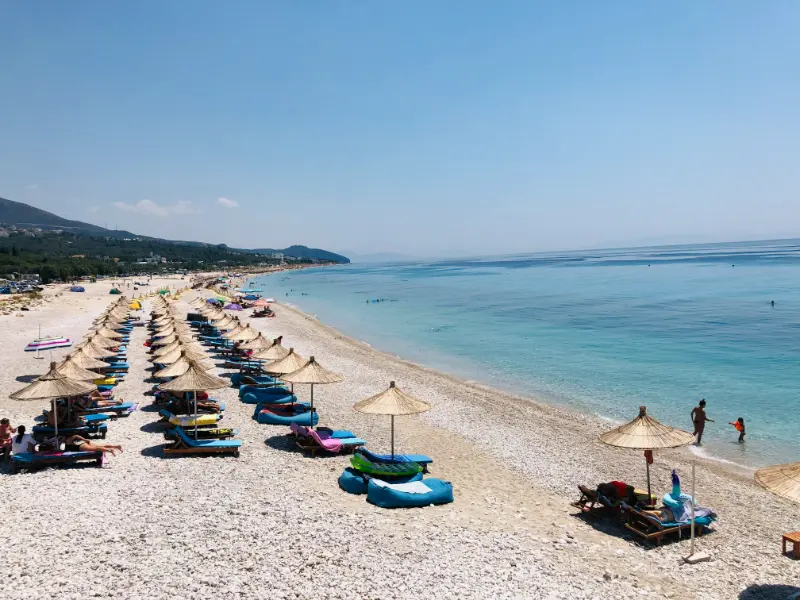
    Drymades Beach Umbrellas Dhermi Albania

    Useful related guides

    Frequently asked questions

    Is Dhermi the best nightlife spot on the Riviera?

    It is one of the strongest summer party destinations, especially for beach-club and event-style nightlife.

    Where should I stay for nightlife?

    Near Dhermi Beach if late nights are a priority; Old Dhermi is atmospheric but uphill.

    Can I walk between Dhermi and Drymades at night?

    Do not plan your night around a long dark coastal walk; use a taxi or stay near the chosen venue.

    Is nightlife active in September?

    Early September can still be active, but programming becomes more variable than July/August.

    Is Jale part of Dhermi nightlife?

    It is nearby and often included in Riviera nightlife plans, but it is a separate bay requiring transport.

    Final recommendation

    Choose Dhërmi for a high-energy beach holiday. Choose Himarë if you want more everyday restaurants and a calmer town base with occasional nightlife trips.

    Drymades Beach Dhermi Albania

    Plan the night around the destination’s real personality. Tirana rewards district-hopping, Riviera resorts reward seasonal beach nights, and cities such as Shkodër, Korçë and Berat are strongest when you slow down and treat cafés, food, music and walking as nightlife too. That produces a better trip than forcing every destination into the same club template.

    How to choose a venue once you arrive

    Walk the main evening area once before committing. Look at whether locals as well as tourists are using the place, whether prices are displayed, whether the atmosphere matches what you want and whether the route back to the hotel is easy. I would rather have two good drinks in a comfortable venue than spend an hour moving between places because an online list told me I had to see them all.

    Noise and choosing a hotel

    The hotel decision can matter more than the nightlife decision. A room directly above a summer bar may be perfect if you plan to stay out late and frustrating if you want to sleep at midnight. Read recent accommodation reviews for noise, ask about room orientation and remember that “central” can mean lively rather than quiet. If sleep matters, stay one or two blocks away from the main strip instead of directly on it.

    Early evening versus late night

    You do not need to stay out until 02:00 to experience the local evening. In many Albanian destinations the most enjoyable period begins around sunset, when promenades fill, cafés become social and dinner terraces come alive. Travelers who want a calmer night can finish after dinner; travelers who want clubs can treat that first phase as the warm-up. Separating the two also makes it easier for couples or groups with different energy levels to enjoy the same destination.

  • Senior Travel in Vlorë: Lungomare Walks, Easy Beaches, Taxis and Comfortable Day Trips

    Senior Travel in Vlorë: Lungomare Walks, Easy Beaches, Taxis and Comfortable Day Trips

    Vlorë can work very well for senior travelers or anyone who prefers a slower, more comfortable travel rhythm. The key is not to remove the destination’s best experiences; it is to change how you connect them. A taxi for one steep section, a central hotel and a long lunch can make the difference between an enjoyable day and an exhausting one.

    Vlorë is long rather than steep. The historic center, Lungomare and southern hotel zones are spread apart, so comfort depends on not trying to walk between them all. The promenade itself is straightforward for gentle walks, while Zvernec, Karaburun and Llogara should be treated as separate excursions.

    Is this a good destination for senior travelers?

    Part of the tripPractical verdictBest approach
    City-center walkingGood with pacingUse short loops and taxis when terrain changes
    Main cultural sightsGoodChoose 1–2 per half-day rather than stacking them
    Day tripsGood when pre-arrangedPrivate taxi/driver often makes the day much easier
    Car rentalOptionalUseful for regional touring, rarely necessary inside the center

    Yes, with realistic pacing. I would plan two main sightseeing blocks per day, one in the morning and one in late afternoon. Midday becomes lunch, rest or an indoor attraction. This rhythm is especially valuable in summer, when heat can make even a short route more tiring.

    Where to stay for the easiest trip

    For easy evenings and sea views, choose the Lungomare or Uji i Ftohtë. For history, stay closer to the old center but expect to use taxis for the beach. Senior travelers generally benefit more from a well-located hotel than from saving a small amount outside the main zones.

    Compare current accommodation in Vlorë on Booking.com.

    Before booking, also read the destination Where to Stay guide.

    Walking, taxis and getting around

    You can stay in Vlorë without a car if based on the Lungomare and using taxis. A rental car becomes useful for the Riviera, Llogara and multiple coastal stops.

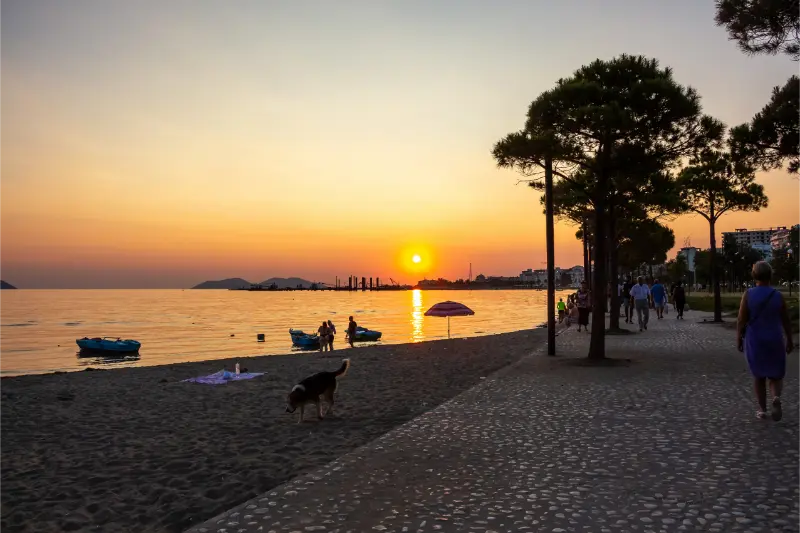
    Vlore Albania Sea Coast Sunset View Dog Beach

    For detailed no-car planning, use Vlorë without a car. Taxis are often best used strategically: one ride to remove a climb, one ride back after dinner, or a half-day driver for an out-of-town sight. That is usually more efficient than renting a car purely to avoid walking.

    Five experiences I would prioritize

    Lungomare

    Ideal for short, flat coastal walks with many places to stop.

    Historic center

    Visit in one compact block, then take a taxi back to the waterfront instead of trying to connect the zones on foot.

    Independence-related museums/sites

    Choose one or two cultural stops and verify current opening/access. Museum days work especially well in hot or windy weather.

    Zvërnec and Narta by taxi/car

    A scenic half-day with nature and the monastery area. The wooden access and outdoor surfaces require normal caution; assess conditions on the day.

    Radhimë or Orikum for an easier beach day

    A pre-arranged taxi or hotel transfer can give you clearer water without the stress of driving and parking yourself.

    A relaxed 2-day itinerary

    Day 1

    Morning historic center and one museum, long lunch, hotel rest, then Lungomare in late afternoon and dinner nearby.

    Day 2

    Choose either Zvernec/Narta or a relaxed Radhimë/Orikum beach day. Do not add both plus a boat excursion. Return to Vlorë for an easy evening walk.

    Adriatic Sea Evening Coastline Top View Orikum Albania

    If you have a third day, keep it flexible. Use it for the regional excursion that interests you most, a second museum, a long meal or simply a slower version of something you skipped. Extra time is more valuable when it creates breathing room than when it adds another checklist.

    Best day trip for an easier pace

    Karaburun boat trips can be enjoyable if boarding is comfortable and sea conditions are calm. Llogara by private car is a good scenic alternative when you prefer viewpoints and lunch over a full day at sea.

    Best time to visit

    May–June and September–October are easiest. July/August are hotter and busier. Winter works for city/history but not for a classic beach itinerary.

    Whatever the month, check the short-range forecast. Rain changes cobblestones and outdoor sites; heat changes walking tolerance; wind can affect coastal or boat plans. A flexible itinerary is more useful than an “ideal month” if you ignore the weather on the actual day.

    Hotel checklist for a more comfortable stay

    Ask about lift access, street noise, taxi stopping space and the true distance to the promenade. If staying south of the center, make sure restaurants are within comfortable walking distance.

    • Lift/elevator access from street level, not only between upper floors.
    • Number of steps between taxi drop-off and reception.
    • Walk-in shower or bathroom layout that matches your needs.
    • Air conditioning in summer and effective heating in winter.
    • Quiet room location if the property is above a bar or busy promenade.
    • Parking or reliable taxi access if you are carrying luggage.

    Meals and rest breaks

    The Lungomare makes frequent breaks simple. Use lunch and a waterfront coffee to divide the day into manageable blocks rather than continuous sightseeing.

    I would avoid booking lunch and dinner far from the hotel on the same day. Let one meal be close to the sightseeing zone and the other close to the accommodation. This small choice removes an unnecessary evening transfer and makes the schedule much more forgiving.

    What to pack differently for an easier trip

    • Supportive shoes with good grip, especially for historic stone streets.
    • A light rain layer and a compact umbrella for shoulder seasons.
    • A small day bag rather than carrying all travel documents and water in a heavy backpack.
    • Sun protection and a refillable water bottle in warm months.
    • A written or offline copy of the hotel address for taxis.
    • Any personal medication in hand luggage, with enough supply for delays.

    Accessibility and mobility: what to verify

    This guide describes terrain and trip-planning choices, but it does not guarantee step-free access. Historic castles, Ottoman houses, archaeological sites and old churches were not designed as modern accessible buildings. If you need step-free routes, ramps, lift access or a specific bathroom setup, contact the attraction and hotel directly before travel. Use Accessible Travel in Albania as the national planning starting point.

    Safety and practical comfort

    The city’s length is deceptive. A map may show everything in one urban area, but repeated trips between the old center and Uji i Ftohtë can add substantial walking or taxi time.

    Keep the day simple after a long transfer. On arrival day I would check in, learn the immediate neighborhood, buy water or essentials and have dinner nearby. Save the most demanding attraction for the following morning rather than proving that you can “use” every hour of the first day.

    Travel insurance and health planning

    For any international trip, consider travel insurance that fits your own circumstances and planned activities. Bring routine medication in original packaging where practical, keep essential doses in hand luggage and make a note of generic medicine names. If you have specific medical or mobility needs, discuss travel suitability with your own clinician rather than relying on a destination guide.

    Useful related guides

    Official destination information

    For current destination information and attractions, see Albania’s official tourism page for Vlorë. Opening times, temporary closures and access arrangements can change, so I would confirm any essential attraction close to the visit.

    Frequently asked questions

    Is Vlorë suitable for senior travelers?

    Yes, especially when you choose a central hotel, limit the number of major sights each day and use taxis strategically for difficult sections.

    Do I need to rent a car?

    You can stay in Vlorë without a car if based on the Lungomare and using taxis. A rental car becomes useful for the Riviera, Llogara and multiple coastal stops.

    Vlore Albania Sea Coast Sunset Landscape

    How many days should I stay?

    Two nights is enough for the core sights at a relaxed pace in many cases; three nights gives you a much better buffer for rest, weather and one regional excursion.

    What is the most important hotel question?

    Ask about the actual number of steps between the street or taxi drop-off and your room. A property can advertise an elevator and still require stairs before you reach it.

    Should I avoid summer?

    Not necessarily. Use early mornings, a long midday rest and late-afternoon sightseeing. Shoulder seasons are easier if walking comfort is the main priority.

    Final recommendation

    The best senior trip to Vlorë is not a reduced version of a younger traveler’s itinerary. It is a better-edited version: fewer transfers, a hotel in the right place, taxis where they genuinely save effort, and enough time to enjoy meals, views and local life. Prioritize the experiences that define the destination and let the rest remain optional.

    How to avoid an overpacked day

    I use a simple rule: one major attraction before lunch, one after the rest break, and everything else is optional. If the morning takes longer because you stop for coffee or spend extra time in a museum, I do not “catch up” by rushing the afternoon. The destination will still be there tomorrow, and the quality of the trip is usually higher when the schedule has margin.

    When two attractions require separate taxis or different parts of town, I put them on different days unless there is a strong reason not to. This reduces waiting, traffic and the mental load of constantly checking the next pickup.

  • Best Day Trips from Gjirokaster: Blue Eye, Antigonea, Libohova, Permet and More

    Best Day Trips from Gjirokaster: Blue Eye, Antigonea, Libohova, Permet and More

    Gjirokastër is one of the best bases in southern Albania because the Drino Valley gives you archaeology, villages, springs and mountain roads in several directions. You can spend one day at the Blue Eye and another in a quiet stone village without repeating the same type of experience.

    The key is not to turn every excursion into a race toward Sarandë. Some of the most rewarding trips are much closer to Gjirokastër and reveal the valley that shaped the city.

    A good day trip in Albania is not simply a place that looks close on a map. Road type, summer traffic, mountain gradients, parking, boat departures and the amount of walking after arrival can change the real effort of the day. For that reason, I rank these excursions by how naturally they fit the base rather than by fame alone.

    Quick comparison

    Day tripBest forBest transportTime
    Blue EyeNatural springCar / taxi / tourHalf to full day
    AntigoneaArchaeologyCar / taxiHalf day
    LibohovëCastle / villageCar / taxiHalf day
    Labova of the CrossChurch / villageCarHalf day
    Përmet & BenjaNature / foodCarFull day
    TepelenëCastle / Vjosa sceneryCarHalf to full day
    Sarandë & LekuresiCoast / viewsCar or busFull day
    ButrintUNESCO archaeologyCar / bus combination / tourFull day

    How I would choose the right day trip

    Start by looking at the rest of your Albania itinerary. If you already have several beach days, choose archaeology, mountains or a village. If you are spending most of the trip in historic towns, use the free day for water, forest or a scenic drive. The best day trip adds contrast instead of repeating what you are already doing.

    I also separate places that are easy without a car from places where independent public transport creates more effort than value. A bus may exist, but if the last connection forces you to leave before the main experience or wait hours for the return, a taxi, driver or organized trip can be the smarter choice.

    The best day trips

    1. The Blue Eye

    The Blue Eye is the most famous nature excursion from Gjirokastër and works because it changes the atmosphere completely: from stone roofs and fortress walls to a cold karst spring surrounded by greenery. It can also be busy, so I prefer an earlier start and enough time for the walking approach rather than treating the spring as a ten-minute photo stop. Current access and parking arrangements can evolve, which is why I avoid giving one permanent set of instructions. Use the Blue Eye guide before departure.

    2. Antigonea Archaeological Park

    Antigonea is much closer and far less visited than the Blue Eye, making it one of my favorite half-day trips from Gjirokastër for travelers interested in ancient Epirus. The ruins sit above the Drino Valley and help explain that Gjirokastër was not the first important settlement in this landscape. There is less tourist infrastructure than at Butrint, so bring water and sun protection. The Antigonea guide is useful for understanding what survives.

    3. Libohovë

    Libohovë is ideal when you want a small-town day instead of another headline attraction. Its castle, old streets and valley setting make a good contrast to Gjirokastër, and the trip is short enough to leave room for a slow lunch. I would pair the town with nearby rural stops only if they fit naturally rather than building a complicated loop. Read the Libohovë travel guide and, if the fortress is your main interest, the Libohovë Castle guide.

    4. Labova of the Cross

    Labova e Kryqit is a strong day trip for travelers interested in religious architecture, villages and quiet cultural sites. The medieval church is the centerpiece, but the drive through the valley and village atmosphere are part of the experience. This is not a destination for travelers who need constant entertainment; it works precisely because it is small and focused. See the Labova of the Cross guide.

    5. Përmet and the Benja area

    Përmet can be visited from Gjirokastër as a full day, but I would start early and decide whether the priority is the town, Vjosa scenery or Benja Thermal Baths and Langarica Canyon. Trying to do everything plus a long restaurant lunch makes the day too dense. If nature is the priority, go directly toward Benja and use the Benja Thermal Baths guide and Langarica Canyon guide.

    Stream Hot Sulfuric Water Thermal Baths Permet Albania Langarica Canyon Kadiut Bridge 2

    6. Tepelenë and the Vjosa corridor

    Tepelenë works well for travelers continuing north or anyone interested in Ali Pasha history and the Vjosa landscape. The castle and river views are the main reasons to stop. I would combine Tepelenë with one additional nearby stop, not with a complete Përmet day. The Tepelenë travel guide helps you decide whether it deserves a half day or a route stop.

    7. Sarandë and Lekuresi

    Sarandë is reachable as a day trip, but I recommend it only if you are not already planning several nights on the coast. Walk the promenade, have lunch and go up toward Lekuresi for the view rather than spending the whole day moving between urban beaches. In summer, build in extra road time. If the coast is a major part of your trip, staying overnight is better than commuting back to Gjirokastër.

    8. Butrint

    Butrint is possible as a long day from Gjirokastër and is absolutely worthwhile for archaeology, but it should be the day’s main objective. The site is large enough to deserve unhurried walking, and adding multiple Ksamil beaches plus the Blue Eye creates an exhausting schedule. Read the Butrint travel guide and leave the beach portion optional.

    Can you do these day trips without a car?

    The Blue Eye and Sarandë are the easiest without your own car because buses, taxis and tours can be combined. Antigonea, Libohovë and Labova are simpler by taxi or private transfer. Përmet is reachable by intercity transport, but a day trip becomes much more practical when you control the return time.

    Stream Hot Sulfuric Water Thermal Baths Permet Albania Langarica Canyon Kadiut Bridge 3

    When I use taxis or private drivers for a full day, I agree on the approximate route, waiting time and total price before departure. For buses, I confirm the return point on the ground because terminals and informal stopping places can be less obvious than in countries with one centralized timetable system.

    Best season

    Spring and autumn are excellent for valley archaeology and village travel. Summer requires earlier starts, especially at Antigonea and Butrint. Winter can still work for Libohovë, Tepelenë and cultural trips, but mountain roads and canyon excursions need current-condition checks.

    Weather matters more than the month name. A clear October day can be better for a mountain viewpoint than a stormy July afternoon, while summer traffic can make a normally easy coastal route much slower. Check the forecast the evening before and move weather-sensitive plans when necessary.

    What to take

    • Water, especially for exposed archaeological sites, canyons and mountain roads.
    • Shoes with grip rather than smooth city soles if the day includes trails, castles or wet stone.
    • Sun protection for spring through early autumn.
    • A light layer even in summer if the route gains altitude.
    • Some Albanian lek for parking, small cafés and village businesses.
    • Offline maps and a screenshot of the return route.
    • Swimwear only when the day genuinely includes a beach, spring or thermal stop.

    Common day-trip mistakes

    • Start with the hardest-to-control element. If the day depends on a boat, mountain weather or an archaeological site’s opening hours, solve that first and keep the rest flexible.
    • Do not combine two full day trips into one. Albania rewards slower travel, and an itinerary that technically fits often becomes a sequence of car parks and rushed lunches.
    • Leave a buffer before dinner or an onward transfer. Coastal and mountain roads can take longer than expected even when the distance looks short.
    • Carry some cash. Parking, small cafés, village restaurants and seasonal services can be easier with Albanian lek.
    • Download the route offline. Mobile data is usually useful, but an offline map and a screenshot of your accommodation address remove unnecessary stress.

    Another common mistake is judging a day only by driving time. A two-hour drive followed by four hours in one excellent place can be far more rewarding than three short drives that create six hours of transitions. I plan around the experience in the middle, not around how many pins I can connect.

    Which day trip would I choose first?

    For a first extra day, choose the Blue Eye if nature is missing from your itinerary, Antigonea if you love archaeology, or Libohovë/Labova if you want a quiet local experience.

    Where to stay before your day trips

    For several excursions, I prefer staying in the same base for at least two or three nights. Check current accommodation on Booking.com. See my area-by-area accommodation guide before booking.

    Useful guides

    Frequently asked questions

    How many day trips should I plan from one base?

    Usually one or two. If you need four separate day trips to see the region, it may be more efficient to move your accommodation once and reduce backtracking.

    Is a rental car necessary?

    Not always. City-to-city routes and some famous attractions can be reached by bus, taxi or tour. A car becomes most useful for rural loops, national parks, villages and days with several small stops.

    Should I book day tours before arriving?

    Book limited-capacity boat trips, rafting, mountain transfers and peak-season private tours earlier. For ordinary taxi days or independent city trips, I prefer keeping more flexibility.

    Are these trips suitable for families?

    Many are, but choose by walking difficulty, heat and transfer length rather than by destination name. A short lake or village day is often better for young children than a long canyon route.

    Stream Hot Sulfuric Water Thermal Baths Permet Albania Langarica Canyon Kadiut Bridge

    Can I combine two day trips?

    Only when they sit naturally on the same route and each is a half-day experience. I would not combine two destinations that each deserve a full day just to increase the number of places visited.

    Final advice

    Use the base to simplify the trip, not to create daily commutes. Pick the excursion that adds the most contrast, start early when heat or traffic matters, and give yourself permission to return sooner if one place turns out to be better than the rest of the plan.

  • Theth vs Valbona: Which Destination Should You Choose in Albania?

    Theth vs Valbona: Which Destination Should You Choose in Albania?

    If you are deciding between Theth and Valbona, the useful question is not which destination is universally better. It is which one fits the trip you are actually building. Theth is an alpine village surrounded by dramatic peaks, with Grunas Waterfall, canyon walks, traditional guesthouses and the Blue Eye route; Valbona is a long alpine valley centered on river landscapes, mountain walks, guesthouses and the classic connection with Theth. Those differences affect how many nights you need, how much you walk, whether a car helps and what the evenings feel like.

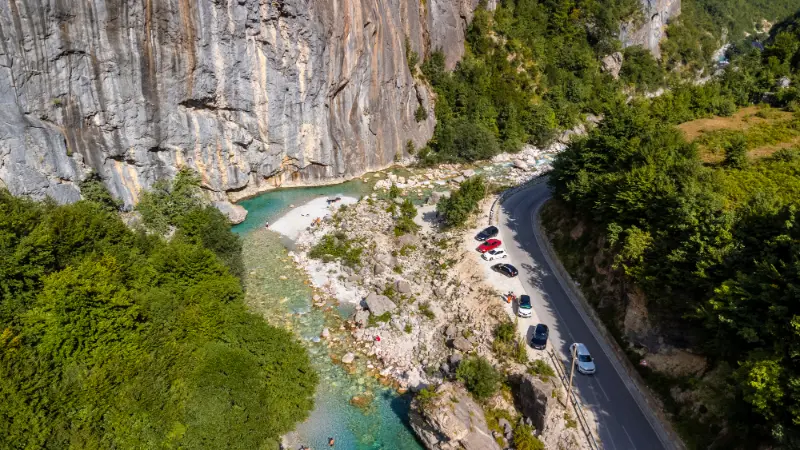
    Panoramic Aerial Drone View Valbona Valley Theth National Park Albanian Alps Albania

    Choose Theth if your priorities match travelers who want iconic valley scenery, guesthouse atmosphere and several named hikes from one alpine base. Choose Valbona if you care more about travelers seeking a quieter alpine valley, broad mountain views and the Koman–Valbona–Theth route. If both fit your route, the two destinations complement each other better than they compete.

    Theth vs Valbona at a glance

    QuestionThethValbona
    Overall feelactive, mountain-focused and seasonalquiet, scenic and hiking-oriented
    Best fortravelers who want iconic valley scenery, guesthouse atmosphere and several named hikes from one alpine basetravelers seeking a quieter alpine valley, broad mountain views and the Koman–Valbona–Theth route
    Typical stay2–3 nights1–3 nights
    Walking / terrainmountain paths and valley walking; difficulty varies sharply by chosen hike and conditionsvalley distances are long and trail difficulty depends on the chosen route
    Car?Shared shuttles from Shkodër are often simpler than self-driving, especially if you plan a one-way hike toward Valbona.Road access can work for a return trip, but a car is awkward for the one-way Valbona–Theth hike; shuttle/ferry logistics often fit better.

    Atmosphere and travel style

    Theth feels active, mountain-focused and seasonal. It is strongest for travelers who want iconic valley scenery, guesthouse atmosphere and several named hikes from one alpine base. I would be less enthusiastic about it for visitors who need flat walking, urban services or weather-independent sightseeing. That is important because many Albania itineraries become tiring when every stop is chosen only because it is famous rather than because it offers a different rhythm.

    Valbona feels quiet, scenic and hiking-oriented. It is strongest for travelers seeking a quieter alpine valley, broad mountain views and the Koman–Valbona–Theth route. It is less naturally suited to visitors wanting a compact village center with several sights clustered together. If you have already spent several days in a destination with a similar rhythm, Valbona may be useful precisely because it changes the pace.

    Culture and sightseeing

    For culture, Theth gives you traditional mountain guesthouses, village heritage and northern Albanian customs. This creates a sightseeing day that can be built around several distinct stops rather than one headline monument.

    Valbona offers highland hospitality and valley life, with culture woven into guesthouses rather than museums. The cultural experience is therefore different rather than simply larger or smaller. I would choose according to the kind of history you enjoy: museum-based city history, lived-in heritage, archaeology, village culture or landscape-based traditions.

    Nature, beaches and outdoor time

    The outdoor side of Theth is about waterfalls, canyon scenery, alpine trails and enclosed mountain-valley views. That makes it a better fit when those activities are central to your itinerary rather than optional extras.

    Around Valbona, the main outdoor draw is a long river valley, open alpine panoramas and hiking rather than clustered sightseeing. Think about what you will realistically do for half a day: swim, hike, cycle, take a boat, walk a lakefront or simply sit in an old town. The answer usually separates the two destinations more clearly than a list of attractions.

    Which is easier without a car?

    In Theth, Shared shuttles from Shkodër are often simpler than self-driving, especially if you plan a one-way hike toward Valbona. The important distinction is between enjoying the destination itself and reaching its surrounding attractions. A place can be easy without a car in the center but much less flexible for day trips.

    In Valbona, Road access can work for a return trip, but a car is awkward for the one-way Valbona–Theth hike; shuttle/ferry logistics often fit better. If you are traveling by bus, I would choose accommodation close to the practical arrival area and avoid adding a taxi every morning just to reach the first sight.

    Walking, hills and physical effort

    Theth: mountain paths and valley walking; difficulty varies sharply by chosen hike and conditions. This matters for summer heat, heavy luggage, small children and travelers with limited mobility. A short map distance can be deceptive when the route climbs or uses polished stone.

    Valbona: valley distances are long and trail difficulty depends on the chosen route. If walking comfort is one of your main criteria, use it as a real decision factor rather than assuming every historic or coastal destination is equally easy on foot.

    Where to stay

    For Theth, use Where to Stay in Theth before booking. Compare accommodation in Theth on Booking.com.

    For Valbona, use Where to Stay in Valbona before booking. Compare accommodation in Valbona on Booking.com.

    The cheapest room is not automatically the best comparison. A central room that removes two taxi rides, a difficult hill climb or daily parking can be better value than a cheaper property in the wrong zone.

    Food and evening atmosphere

    I would use Theth for an evening that matches its active, mountain-focused and seasonal character. The practical advantage of staying centrally is that dinner can become part of the sightseeing day instead of another transport task.

    Valbona’s evenings reflect its quiet, scenic and hiking-oriented identity. In seasonal beach destinations, the difference between August and October can be dramatic; in larger cities, restaurants and cafés remain a more stable part of the experience year-round.

    Budget: which usually costs more?

    I would not choose between the two using one fixed daily-price figure. Accommodation changes with season, weekend demand and exact location, while transport choices can reverse the apparent difference. A beach resort in August and the same place in May are effectively different budget destinations.

    For Theth, compare the current hotel cost, whether you need a car/taxi and how many paid attractions you will actually enter. For Valbona, do the same. The better-value choice is the destination where your preferred activities are naturally accessible, not necessarily the one with the lowest room rate.

    Families

    Families should look beyond attraction count. In Theth, the key practical issue is that the terrain is mountain paths and valley walking; difficulty varies sharply by chosen hike and conditions. In Valbona, it is valley distances are long and trail difficulty depends on the chosen route. I would prioritize easy access to dinner, a manageable return to the room and one main activity per half-day rather than trying to reproduce an adult sightseeing schedule with children.

    Aerial Drone View Small Beach Turquoise River Valbona Valley Theth National Park Albanian Alps

    Couples

    For couples, Theth works especially well when you want travelers who want iconic valley scenery, guesthouse atmosphere and several named hikes from one alpine base. Valbona works better when the shared trip is about travelers seeking a quieter alpine valley, broad mountain views and the Koman–Valbona–Theth route. Romantic travel is often more about pace, views and dinner logistics than about a formal ‘romantic attraction’.

    Solo travelers

    Solo travelers can enjoy both. Theth is a natural fit for travelers who want iconic valley scenery, guesthouse atmosphere and several named hikes from one alpine base, while Valbona suits travelers seeking a quieter alpine valley, broad mountain views and the Koman–Valbona–Theth route. If social energy matters, choose the destination and season with a stronger evening scene; if quiet independence matters, choose the place where the main sights are easy to reach on foot.

    How many nights?

    I would normally give Theth 2–3 nights and Valbona 1–3 nights. Those are planning ranges, not rules. Add a night when you are using the place as a day-trip base, traveling with children, arriving late or deliberately slowing the itinerary.

    Best time to visit

    Spring and early autumn are the easiest all-round periods for many Albania comparison decisions because walking and road travel are comfortable. Summer is the clear choice when swimming, boats or high-season beach atmosphere are central. Mountain destinations require current trail and road conditions rather than a fixed calendar promise; winter city trips can be excellent where museums, food and urban life remain strong.

    Can you visit both Theth and Valbona?

    Often, yes. The question is whether the transfer creates a logical route. If Theth and Valbona sit naturally on the same itinerary, visiting both is more rewarding than trying to name a winner. I still avoid one-night hopping when each destination needs time to feel different: checking in, parking, repacking and changing hotels can consume the very hours you hoped to save.

    For a short first trip, I keep only destinations that add a new experience. One capital, one UNESCO town, one coast base and one mountain/lake stop often produces more variety than three similar beach towns or three historic cities visited too quickly.

    Choose Theth if…

    • You want travelers who want iconic valley scenery, guesthouse atmosphere and several named hikes from one alpine base.
    • You prefer a active, mountain-focused and seasonal destination.
    • You are comfortable with this terrain: mountain paths and valley walking; difficulty varies sharply by chosen hike and conditions.
    • A stay of 2–3 nights fits your route.

    Choose Valbona if…

    • You want travelers seeking a quieter alpine valley, broad mountain views and the Koman–Valbona–Theth route.
    • You prefer a quiet, scenic and hiking-oriented destination.
    • You are comfortable with this terrain: valley distances are long and trail difficulty depends on the chosen route.
    • A stay of 1–3 nights fits your route.

    What I would not use as the deciding factor

    • One viral photo or social-media reel.
    • A single hotel price checked months before the trip.
    • A claim that one destination is always cheaper, quieter or more authentic.
    • Driving time alone without considering parking and the final hotel location.
    • A summer review applied to a winter or shoulder-season trip.

    Useful planning guides

    A simple decision method

    Write down the three things you most want from this part of the trip. Give one point to each destination for every priority it clearly satisfies. Then check the practical constraints: arrival time, onward route, whether you have a car, and how many nights are available. This is more useful than choosing from a generic top-ten list because it forces the itinerary to match your actual travel style.

    If the result is still tied, I would choose the destination that adds more contrast to the rest of the trip. After several urban days, Theth may create the bigger change of pace; after several quiet stops, the destination with more city energy can be the better reset.

    Frequently asked questions

    Is Theth better than Valbona?

    Choose Theth if your priorities match travelers who want iconic valley scenery, guesthouse atmosphere and several named hikes from one alpine base. Choose Valbona if you care more about travelers seeking a quieter alpine valley, broad mountain views and the Koman–Valbona–Theth route. If both fit your route, the two destinations complement each other better than they compete.

    Aerial View Valbona Valley Theth National Park Albanian Alps Albania

    Which is better for a first trip to Albania?

    Both can work on a first trip. Choose Theth for travelers who want iconic valley scenery, guesthouse atmosphere and several named hikes from one alpine base; choose Valbona for travelers seeking a quieter alpine valley, broad mountain views and the Koman–Valbona–Theth route. Route efficiency matters just as much as fame.

    Which is easier without a car?

    Theth: Shared shuttles from Shkodër are often simpler than self-driving, especially if you plan a one-way hike toward Valbona. Valbona: Road access can work for a return trip, but a car is awkward for the one-way Valbona–Theth hike; shuttle/ferry logistics often fit better. Compare the exact accommodation location before deciding.

    Which is better for families?

    The easier choice depends on terrain and daily plan. Theth has mountain paths and valley walking; difficulty varies sharply by chosen hike and conditions; Valbona has valley distances are long and trail difficulty depends on the chosen route. Families usually benefit from the base with simpler walking and fewer daily transfers.

    Should I stay overnight in both?

    If you have enough time, yes when each adds a different experience. I would usually plan around 2–3 nights in Theth and 1–3 nights in Valbona, then shorten only if the overall itinerary would otherwise become too rushed.

    Final take

    Choose Theth if your priorities match travelers who want iconic valley scenery, guesthouse atmosphere and several named hikes from one alpine base. Choose Valbona if you care more about travelers seeking a quieter alpine valley, broad mountain views and the Koman–Valbona–Theth route. If both fit your route, the two destinations complement each other better than they compete. The strongest Albania itineraries are not built by finding one universal winner. They are built by combining destinations that give you different landscapes, rhythms and experiences without wasting days on unnecessary transfers.

  • Best Viewpoints and Photo Spots in Vlorë: Kaninë, Lungomare, Llogara and Karaburun

    Best Viewpoints and Photo Spots in Vlorë: Kaninë, Lungomare, Llogara and Karaburun

    Vlorë offers a rare mix of city, bay, wetlands and mountain-to-sea landscapes. You can photograph Ottoman and independence-era architecture in the morning, move to the lagoon in the afternoon, then finish with the Bay of Vlorë from a high viewpoint. For wider Riviera work, Llogara and Karaburun add the dramatic scale that central Vlorë lacks.

    This guide focuses on places that are useful for both photographers and ordinary travelers who simply want a memorable view. Opening conditions, access rules and weather can change, so ticketed monuments and mountain routes should always be checked locally before you build the whole day around one frame.

    Quick comparison

    LocationBest lightAccess
    Kaninë CastleLate afternoonCar/taxi; short trip above Vlorë
    Kuzum Baba hillLate afternoon and blue hourTaxi or uphill city access
    Vlorë LungomareSunset and blue hourWalkable from coastal hotels
    Uji i Ftohtë coastlineMorning or sunsetWalk/taxi depending hotel
    Zvërnec Monastery footbridge and islandMorning or late afternoonCar/taxi
    Narta LagoonMorning and sunsetCar/taxi
    Llogara PassClear morning or late afternoonCar/tour; mountain road
    Karaburun PeninsulaDaylight, especially clear morningsBoat trip
    Sazan Island and the bay approachDaylightBoat excursion
    Old Town and Muradie MosqueMorning or late afternoonCentral and walkable

    The best photo spots, one by one

    Kaninë Castle

    Best light: Late afternoon. Access: Car/taxi; short trip above Vlorë. Official tourism material highlights Kaninë’s dominant view over the Bay of Vlorë and surrounding lowlands. The Kaninë Castle and Village guide gives context. The best frames include ruined walls or the village as foreground, then let the bay stretch into the distance. Haze can be strong in midsummer, so clear post-rain days are especially valuable.

    Kuzum Baba hill

    Best light: Late afternoon and blue hour. Access: Taxi or uphill city access. Kuzum Baba is one of the easiest elevated city views, looking across Vlorë toward the bay. It works best as an urban panorama rather than a pure sunset shot: include roads, rooftops and the shoreline. Because it is also a religious/cultural site, photograph respectfully and avoid turning worship spaces into tripod platforms.

    Vlorë Lungomare

    Best light: Sunset and blue hour. Access: Walkable from coastal hotels. The Vlorë Lungomare guide is ideal for evening photography: palms, cyclists, sea, cafés and changing architectural light. Look both toward the sunset and back along the promenade; reflected sky colors on paving and windows can be more interesting than the sun itself.

    Vlore Albania Ferris Wheel Night Light Searchlight

    Uji i Ftohtë coastline

    Best light: Morning or sunset. Access: Walk/taxi depending hotel. South of the main Lungomare, the coast becomes rockier and the water clearer. This is useful for sea-level photographs with rocks in the foreground and mountains beyond. A neutral-density filter can smooth water in low light, but a phone or handheld camera is enough for strong color and layers.

    Zvërnec Monastery footbridge and island

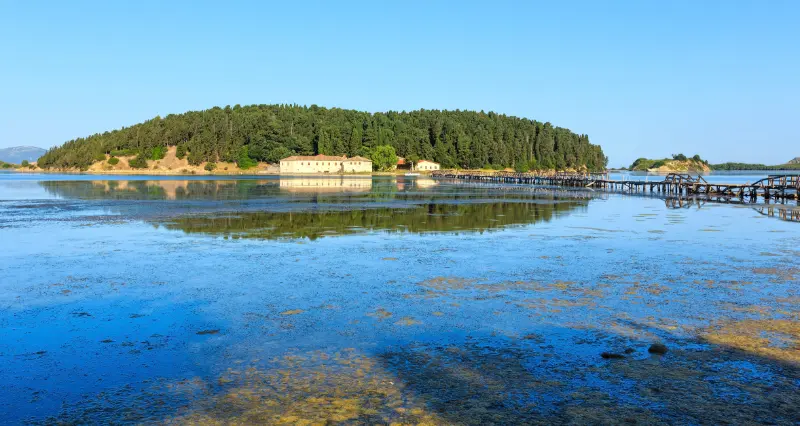
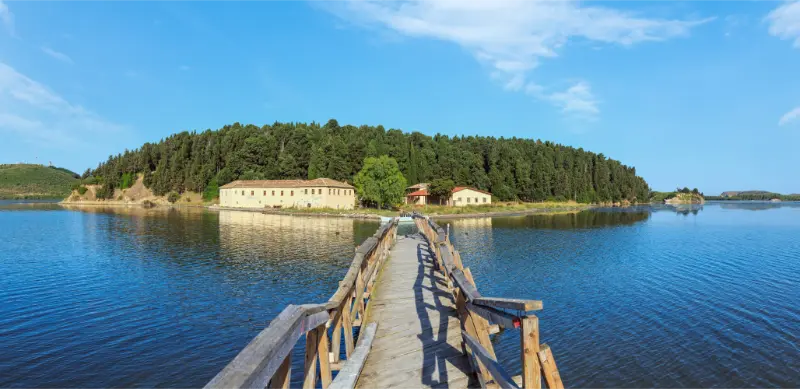
    Best light: Morning or late afternoon. Access: Car/taxi. The Zvërnec and Narta Lagoon guide gives one of the region’s most distinctive compositions: a long wooden bridge crossing water toward a wooded island. Morning mist or late sidelight can simplify the scene. Keep the bridge clear for other visitors and avoid blocking narrow sections with tripods.

    Wooden Ruined Bridge Isolated Monastery Saint Mary Zvernec Island Narta Lagoon Vlore Albania

    Narta Lagoon

    Best light: Morning and sunset. Access: Car/taxi. Narta is for broad, minimal landscapes: water, reeds, salt flats and birdlife. Long lenses are useful for birds, but maintain respectful distance and avoid disturbing feeding or nesting areas. Overcast weather can work very well because it lowers contrast and emphasizes subtle color.

    Llogara Pass

    Best light: Clear morning or late afternoon. Access: Car/tour; mountain road. The Llogara National Park guide provides one of Albania’s classic mountain-to-sea panoramas. Clear air matters more than a specific hour. Pull over only in designated safe areas and never stand in the roadway for a better angle. A telephoto lens can compress Riviera villages and coastline far below.

    Karaburun Peninsula

    Best light: Daylight, especially clear mornings. Access: Boat trip. The Karaburun Peninsula guide shifts photography to cliffs, caves and water. From a boat, use fast shutter speeds and protect gear from spray. The goal is not only turquoise water; include cliff scale, small boats or cave entrances to make the images readable.

    Sazan Island and the bay approach

    Best light: Daylight. Access: Boat excursion. Sazan adds military remains, coastline and open-sea context to a Vlorë photo day. Wide shots from the boat show the island’s scale; closer details work better once ashore where access is permitted by the operator. Follow current tour and site restrictions rather than wandering into closed structures.

    Vlore Albania Seascape Yachts Pier

    Old Town and Muradie Mosque

    Best light: Morning or late afternoon. Access: Central and walkable. The city’s historic core gives texture that the modern waterfront does not: restored façades, narrow streets and the Muradie Mosque. Use the Muradie Mosque guide. This is best for careful architectural framing, details and local street life, especially before the midday sun flattens façades.

    Sunrise, sunset or blue hour?

    Sunrise is usually best for quieter streets, calm water and cleaner architectural compositions. Sunset is better for west-facing coastlines, social atmosphere and warm side light on hills. Blue hour is often the most reliable urban period because the sky still holds color while street and building lights have switched on. Do not abandon a location immediately after the sun disappears; some of the strongest travel photographs happen in the following 20–30 minutes.

    What to photograph in bad weather

    Overcast light is not a failed photography day. It is often better for stone streets, markets, forest, interiors and archaeological details because contrast is lower. After rain, wet paving can add reflections, while broken cloud can make mountains and lake views more dramatic. The only situations that should automatically change the plan are unsafe storms, exposed ridges, slippery steep paths or sea conditions that make boat travel unsuitable.

    Phone photography tips

    • Clean the lens before every important viewpoint; pocket lenses collect fingerprints quickly.
    • Use the 1× lens for the cleanest quality and switch to ultra-wide only when the scene genuinely needs it.
    • Tap and reduce exposure slightly for sunsets so the sky keeps color.
    • Use a railing, wall or stable surface for blue-hour shots instead of digital zoom.
    • Shoot a short sequence when people, boats or bicycles are moving through the frame, then choose the strongest moment later.

    Camera and lens strategy

    A two-lens travel kit is enough for nearly every location in this guide: a moderate wide-angle zoom for streets and landscapes, plus a short telephoto for compressed roofs, mountains, boats and architectural details. Carrying more equipment can slow you down on cobbles, stairs and beaches. A tripod is useful for deliberate blue-hour work but should never block narrow paths, castle passages or promenades.

    Photography etiquette

    Historic cities are lived-in places, not film sets. Ask before making close portraits, respect worship, avoid pointing cameras into private courtyards and follow museum or church photography rules. At beaches and swimming areas, be especially careful with identifiable strangers and children. In archaeological and natural areas, remain on marked paths and behind barriers even when stepping over one would improve the angle.

    Drone photography

    Do not assume a scenic viewpoint is automatically legal for drone flying. Rules can involve aviation restrictions, airports, protected areas, archaeological sites, crowds and local permissions. Check current Albanian aviation and site-specific rules before the trip, and never launch from a castle, beach crowd or protected landscape merely because other visitors have posted drone images online.

    Where to stay for early and late light

    Compare accommodation in Vlore on Booking.com. For photographers, location often matters more than a small room-price difference: walking to a sunrise waterfront or old-town blue-hour session is much easier than arranging a taxi every time the light changes.

    Use the local Where to Stay guide to compare areas before booking.

    Related planning guides

    A simple one-day photography plan

    Start with one quiet street, waterfront or architectural location shortly after sunrise. Use the middle of the day for museums, interiors, food, scouting and travel to the next area. Reserve the final two hours of daylight for the strongest elevated or coastal viewpoint, then stay through blue hour if returning safely is straightforward. This rhythm produces more varied images than spending the whole day chasing viewpoints in harsh midday light.

    Common mistakes

    • Trying to photograph every viewpoint in one day.
    • Arriving at a sunset spot only a few minutes before the sun disappears.
    • Using only ultra-wide compositions and losing the sense of scale.
    • Ignoring foregrounds such as walls, boats, people or trees.
    • Standing in roads, unstable ruins or restricted areas for a cleaner angle.
    • Carrying too much gear on steep old-town or mountain routes.
    • Treating midday as useless instead of using it for details, interiors and scouting.

    Frequently asked questions

    Do I need a professional camera?

    No. Most locations work extremely well with a recent phone. Light, position and timing matter more than sensor size for travel photography.

    Do I need a tripod?

    Not for most daytime work. A compact tripod can help at blue hour, but stabilization and a steady surface are often enough. Follow local rules in monuments and do not obstruct paths.

    What is the best season for photography?

    Spring and autumn usually offer softer light, greener or warmer landscapes and easier walking. Summer gives long days and active coastal scenes but harsher midday contrast. Winter can be excellent for clear air, snow or quiet streets depending on the destination.

    Can I photograph churches and mosques?

    Exterior photography is generally straightforward from public space, but interiors and services may have their own rules. Ask when uncertain, dress respectfully and do not use flash or photograph worshippers intrusively.

    Should I plan around sunset every day?

    No. One strong sunrise, one blue-hour city walk and one sunset panorama usually create a more varied set of images than repeating the same west-facing composition every evening.

    Final advice

    The strongest travel photographs explain the destination rather than simply proving you reached a viewpoint. Use architecture, local life, landscape and changing light together. Pick fewer locations, stay longer, and let the scene develop instead of moving on as soon as you have one wide-angle image.

  • Butrint Travel Guide: How to Visit Albania’s UNESCO Archaeological Site

    Butrint Travel Guide: How to Visit Albania’s UNESCO Archaeological Site

    Butrint is the archaeological site I would prioritise on a first trip to southern Albania. It sits within a green, watery landscape near Sarandë and Ksamil, and the experience is very different from walking through ruins exposed on a bare hill. Trees, lagoon views, fortifications, theatre remains and layers of Greek, Roman, Byzantine and Venetian history make the site feel like a landscape rather than a single monument.

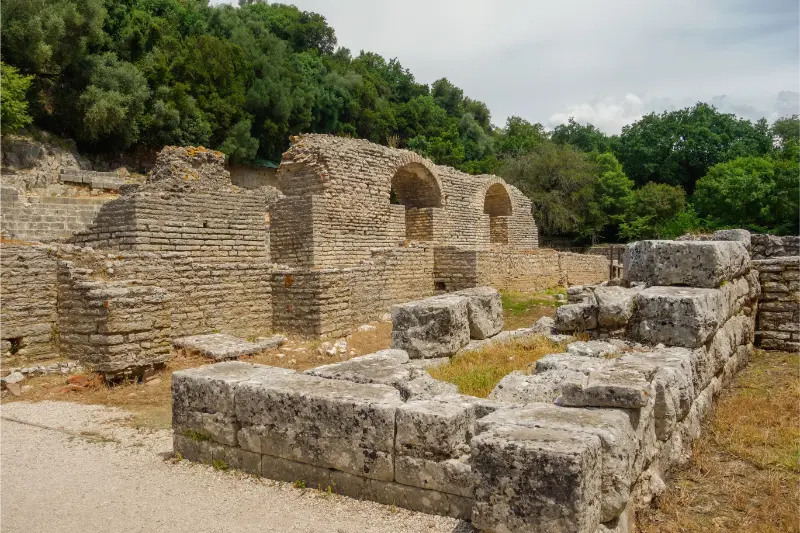
    Remains Ancient Baptistery 6th Century Butrint Albania This Archeological Site World Heritage Site UNESCO 4

    If you are staying in Ksamil or Saranda, set aside at least half a day. I would not combine Butrint with a full beach-hopping schedule and expect to appreciate both. The site deserves a slow walk, especially in warm weather.

    Why Butrint is important

    Butrint has been on the UNESCO World Heritage List since 1992, with later boundary changes. UNESCO describes a site with evidence ranging from prehistoric occupation through Greek, Roman, early Christian, Byzantine and Venetian periods. The official UNESCO page for Butrint is the best starting point for understanding why the landscape and archaeology are protected together.

    What makes Butrint special is continuity and layering. Instead of one reconstructed “Roman city,” you encounter structures from different periods sharing the same terrain. The environment also matters: water, vegetation and surrounding wetlands shaped both the history of settlement and the modern atmosphere of the visit.

    How much time do you need at Butrint?

    I would allow two to three hours inside the archaeological site for a normal first visit. History enthusiasts can easily spend longer, especially if they stop to read interpretation and visit the museum area. In hot weather, the shade makes the site more comfortable than many Mediterranean ruins, but humidity can still be tiring.

    Add transport time, parking or bus waiting, and a possible stop at the nearby channel. That is why I call Butrint a half-day excursion rather than a “quick attraction.”

    The ancient theatre

    The theatre is one of the most recognisable remains and a good point to slow down. Look at how later buildings and the surrounding landscape relate to the older structure. Instead of taking one photo and moving on, sit for a few minutes if conditions allow; the scale becomes easier to understand when you stop.

    The baptistery and early Christian remains

    Butrint’s early Christian archaeology is a major part of its significance. The baptistery is famous for its mosaic floor, although conservation needs can affect what is visible at any given time. This is a good example of why I avoid promising that a specific delicate feature will always be uncovered for visitors.

    The basilica

    The large basilica ruins are among the most atmospheric parts of the route. The surviving walls and openings combine with vegetation in a way that makes the passage of time very visible. If you visit early or outside peak season, this can be one of the quietest places to pause.

    Fortifications and the upper site

    As you climb, the defensive history of Butrint becomes more obvious. Gates, walls and later fortifications show how the strategic value of the site continued beyond antiquity. The higher sections also give useful views over the surrounding water and landscape.

    Museum and interpretation

    The on-site museum helps bring together finds and chronology that can otherwise feel confusing after several layers of ruins. If you normally skip small archaeological museums, I would make an exception here. Even a short visit can help you connect objects with the places you have just walked through.

    Best time of day to visit Butrint

    In summer, I prefer arriving near opening time or later in the afternoon, avoiding the strongest midday heat and the largest excursion groups. Morning also gives you a better chance of continuing to a beach afterward without feeling that the whole day disappeared in transit.

    In spring and autumn, timing is more flexible, but daylight still matters because the route is outdoor and the landscape is a major part of the visit. Check current opening information before making a late arrival.

    How to get to Butrint from Saranda

    Butrint lies south of Sarandë and can be reached by local road transport, taxi, rental car or organised excursion. Public transport is the cheapest, while a taxi is convenient for a small group if you want flexible timing. With a rental car, parking and peak-season traffic become the main practical considerations.

    How to get to Butrint from Ksamil

    Ksamil is much closer, so Butrint is an easy cultural break from beach days. I like visiting early, then returning to Ksamil for lunch and swimming. If you go at midday in July or August, you may experience both the hottest period and the busiest traffic at the same time.

    The Vivari Channel and ferry crossing

    Near Butrint, the channel and small ferry crossing toward the opposite side add another layer to the landscape. If your road-trip route continues into less visited southern areas, ask locally about current crossing and road conditions. Do not build a complicated onward route based only on an old map or travel forum.

    What to bring

    • Comfortable shoes for uneven archaeological paths.
    • Water, especially from late spring to early autumn.
    • Sun protection even though parts of the site are shaded.
    • Mosquito repellent when conditions are humid.
    • A downloaded map or guide if you want more context than the signs provide.
    • Cash as a backup for local transport or small purchases.

    Butrint with children

    Butrint can work very well for families because it feels more like an exploratory walk than a formal indoor museum. The key is not to lecture children at every ruin. Pick a few stories—the theatre, gates, mosaics, fortress—and let the landscape do some of the work. A carrier may be easier than a stroller on uneven sections.

    Butrint with limited mobility

    The archaeological terrain includes uneven surfaces and changes in elevation. Accessibility can vary by section and site management measures. If mobility is a concern, contact the site or a local operator for current information before arrival so you can plan the most suitable route.

    Where to stay for Butrint

    Ksamil is the closest popular base and works if beaches are the main priority. Sarandë has more urban services, transport options and evening variety. I choose between them based on the entire stay rather than on Butrint alone because the archaeological visit needs only part of one day.

    Remains Ancient Baptistery 6th Century Butrint Albania This Archeological Site World Heritage Site UNESCO 2

    You can compare accommodation in Ksamil on Booking.com or compare accommodation in Saranda on Booking.com. These are sponsored links. In July and August, location and parking can matter more than an extra hotel facility you may never use.

    Can you combine Butrint and the Blue Eye in one day?

    It is technically possible with a car or tour, but I do not love the combination unless time is very limited. The two attractions are in different directions from Sarandë, and the day can become mostly driving and parking. I would rather combine Butrint with Ksamil or a relaxed southern-coast afternoon.

    Butrint and UNESCO status

    Albania currently has four properties on the UNESCO World Heritage List. Butrint is one of the cultural properties, while Berat and Gjirokastër share another inscription. You can verify the current list on the official UNESCO page for Albania. UNESCO status is not just a badge for tourism; it reflects conservation responsibilities and the importance of protecting the wider setting.

    Remains Ancient Baptistery 6th Century Butrint Albania This Archeological Site World Heritage Site UNESCO 3

    Common mistakes

    • Arriving at the hottest part of a summer day with no water.
    • Giving the site only 45 minutes because the ruins look compact on a map.
    • Assuming every mosaic or delicate feature will be permanently exposed.
    • Trying to combine Butrint, several Ksamil beaches and the Blue Eye in one relaxed day.
    • Ignoring the natural landscape and treating the visit as only a list of ruins.

    Butrint is most memorable when you stop trying to identify every stone and start noticing how archaeology, water and forest share the same space.

    Plan the rest of the coast with my Ksamil and Saranda guide, compare other UNESCO cities in Berat and Gjirokastër, or return to the best things to do in Albania.

    Final planning checklist

    Before publishing a final itinerary around Butrint travel guide, I recheck three things: the weather, the transport for the next day and the exact location of my accommodation. These small checks prevent most avoidable problems in Albania, especially in summer when traffic is heavier and in mountain regions where conditions can change quickly.

    • Save accommodation addresses and phone numbers offline.
    • Carry some Albanian lek for small businesses and transport.
    • Confirm parking before driving into historic centres or beach resorts.
    • Download offline maps before mountain or rural days.
    • Leave margin between a long transfer and any fixed tour or ferry.

    I also avoid planning every meal, beach and café in advance. Albania is still a destination where local advice can improve the trip significantly. Guesthouse owners often know the current road condition, the best departure time or whether a supposedly quiet beach has become crowded that week.

    Is this destination suitable for a first trip to Albania?

    Yes if it fits the wider route and your interests. The mistake is not choosing the “wrong” destination; it is combining too many good destinations into too few days. Two or three well-planned bases usually create a better first trip than six rushed overnight stops.

    Do I need to book everything in advance?

    In July and August I book accommodation in popular coastal areas and any essential transport connection. Outside peak season I keep more flexibility, while still reserving special guesthouses or small properties that I would be disappointed to miss. Activities that depend on sea or mountain weather are often better confirmed closer to the day when cancellation terms allow it.

    Cash or card?

    Carry both. Cards are increasingly common in larger hotels, supermarkets and restaurants, but cash remains useful for buses, rural guesthouses, parking and small family businesses. Having a backup payment method is more important than trying to make the entire trip cashless.

    For the bigger picture, return to the Albania travel guide and use the travel-cost guide to check how this stop fits your time and budget.

    \n

    Parking and arriving by car

    \n

    If you are driving, see Butrint Parking Guide for current access strategy, parking advice and rental-car tips.

    Scenic drive: Sarandë–Butrint Scenic Drive adds a road-trip route with viewpoints, stops and practical driving advice.

  • 14-Day Albania Itinerary: The Best Two-Week Route for a First Trip

    14-Day Albania Itinerary: The Best Two-Week Route for a First Trip

    Two weeks is long enough to see several sides of Albania without treating the country like a race. You can combine a capital, northern mountains, UNESCO cities and the Ionian coast, but the route only works if you respect travel time. My preferred first-trip structure is Tirana → Shkoder → Theth → Berat → Gjirokaster → Saranda/Ksamil → Himare/Riviera → Vlore → Tirana.

    This is a fuller version of the 7-day Albania itinerary. It assumes you want variety and are comfortable changing bases, but it still includes two-night stops in the places where slowing down matters most. If you are travelling with children, use the family guide and remove one region rather than forcing the same pace.

    Day 1: Arrive in Tirana

    Use the first day to settle into Tirana. Walk Skanderbeg Square, the central streets and Blloku, but keep the schedule light after a flight. If you arrive early, choose one museum; if you arrive late, focus on dinner and sleep.

    Stay centrally so you can walk. Compare central Tirana accommodation and avoid collecting a rental car until you actually need it if parking is not part of your hotel.

    Day 2: Tirana and Dajti or city culture

    Spend a full day in the capital. History-focused travellers can visit Bunk’Art or the House of Leaves; families may prefer the Grand Park and Dajti cable car. Do not try to see every museum. Tirana is also about cafés, food and observing how quickly the city is changing.

    Prepare for the north by withdrawing some cash, downloading offline maps and confirming transport or your rental-car pickup.

    Day 3: Tirana to Shkoder

    Travel to Shkoder and spend the afternoon in the pedestrian centre, at the Marubi museum or cycling toward the lake. If driving, stop at Kruje only if you leave early and genuinely want the castle; otherwise give Shkoder the time it deserves.

    Aerial Drone View Rozafa Castle Shkoder Walls Albania

    Sleep in Shkoder because it is the practical gateway for Theth and many northern transfers.

    Day 4: Shkoder to Theth

    Move into the Albanian Alps. The road journey itself is part of the experience, so do not plan a major hike on arrival. Check into a guesthouse, walk through the village and use the evening to understand the next day’s route. Read the Theth guide before deciding how ambitious to be.

    Mountain weather can change quickly. Keep a flexible plan and ask your host about current trail conditions.

    Day 5: Theth

    Use a full day for nature. Depending on fitness and conditions, choose the waterfall, canyon viewpoints or a longer hike. You do not have to complete the Theth–Valbona crossing for the mountains to be worthwhile.

    A second night matters because it lets you experience the valley after day visitors leave and removes the pressure to hike immediately after a long transfer.

    Day 6: Theth to Berat

    This is one of the longer transition days. Leave the mountains and head south toward Berat. If the journey feels too long for your travel style, insert a Tirana night or restructure the route with Lake Koman/Valbona instead.

    Aerial Shot Valbona Valley National Park Reflecting Waters Albania

    Arrive in time for an evening walk through Mangalem and Gorica, but save the castle for the next morning.

    Day 7: Berat

    Visit Berat Castle early, explore the historic neighbourhoods and take a long lunch. The city deserves a full day because its appeal is architectural and atmospheric rather than based on one attraction.

    If you want countryside, add a winery or nearby nature excursion, but do not let a day tour erase the time you came to spend in Berat itself.

    Day 8: Berat to Gjirokaster

    Drive south to Gjirokaster. The castle and old bazaar can fill the afternoon, while traditional houses add depth if opening times work. The stone streets are steep, so choose accommodation carefully if carrying luggage.

    This is another night where central location is more useful than a swimming pool outside town.

    Day 9: Gjirokaster to Blue Eye and Saranda

    Leave Gjirokaster and stop at the Blue Eye before continuing to Saranda. This is geographically efficient and avoids a separate excursion later. Arrive on the coast in time for a sunset walk and seafood dinner.

    Stay in Saranda if you want restaurants and ferries, or Ksamil if beach access matters more than evening city life.

    Day 10: Butrint and Ksamil

    Visit Butrint early, then spend the warmer part of the day at the coast. In peak summer, Ksamil can be crowded, so book beach facilities only if you actually want that style of day. Otherwise explore quieter nearby coves.

    Do not combine Butrint, Blue Eye and a full beach day unless you enjoy rushing. Two nights in the Saranda area make the south much easier.

    Day 11: Saranda to Himare via the Riviera

    Begin the northbound Riviera road trip. Stop at viewpoints, beaches or villages depending on season. The route is scenic but slow, and parking around popular beaches can add time.

    Sleep in Himare or nearby. Compare Himare accommodation for a base that lets you walk to dinner.

    Day 12: Himare and beaches

    Dedicate a full day to the coast. Choose one or two beaches from the best beaches in Albania guide instead of driving from cove to cove. If you prefer culture, visit Himare’s old village or a nearby hill settlement.

    This is deliberately a low-transfer day. After more than a week of movement, the itinerary needs a pause.

    Day 13: Himare to Vlore

    Drive over the Llogara area toward Vlore. Stop for views, lunch or a short walk, then continue to the city. In summer, allow extra time for traffic because this section can be busy.

    Spend the evening on the Lungomare. If your return flight is early the following day, you may prefer to continue to Tirana instead.

    Day 14: Vlore to Tirana and departure

    Return to Tirana with a generous buffer for the airport. If your flight is late, Apollonia or Durres can be added, but only if departure time leaves genuine margin. International flights should always take priority over squeezing in one last attraction.

    If you have a fifteenth night, add Apollonia or stay in Tirana and make departure day stress-free.

    Car or buses for this route?

    A rental car makes the southern half much easier and gives flexibility for Blue Eye, beaches and Llogara. Northern mountain transfers can be handled separately. Read the transport guide before booking because keeping a car parked while you are in Theth is not always the most efficient use of the rental.

    Travellers who dislike driving can build a similar route using buses, guesthouse transfers and occasional taxis, but should reduce the number of intermediate stops.

    Final planning notes

    This route is a framework, not a command. In July and August, add time to the coast and remove a city if beaches are the priority. In May, June, September and early October, the balance between hiking, cities and coast is often easier.

    Book the hardest pieces first: mountain guesthouses, peak-summer coastal rooms, ferries and any rental car. Leave ordinary city meals and minor attractions flexible so the trip still feels spontaneous.

    Extra practical advice

    If flights allow, reverse the entire route rather than forcing a one-way sequence that creates a bad final drive. Albania works well clockwise or anticlockwise; what matters is reducing backtracking and keeping the hardest transfer days apart.

    A two-week itinerary also needs unscheduled time. Leave at least one afternoon without tickets or a fixed excursion so weather, fatigue or a place you unexpectedly love can change the plan without causing a chain of cancellations.

    When planning 14 day Albania itinerary, I would also keep the wider route in mind. Albania rewards travellers who leave realistic margins between stops, confirm seasonal services directly and avoid basing an entire day on one old timetable or price. Save addresses and confirmations offline, carry some cash as a backup, and ask accommodation hosts for current local conditions when roads, weather or opening times could affect the plan. The most useful approach is to separate fixed decisions from flexible ones: book transport or accommodation that would be difficult to replace, but leave ordinary meals, viewpoints and minor stops open. That balance keeps the trip organised without making it rigid. It also allows you to change direction when a beach is crowded, a mountain road is slow or a local recommendation sounds better than the original plan.

    Aerial View Of Albanian Riviera Beach And Island

    When planning 14 day Albania itinerary, I would also keep the wider route in mind. Albania rewards travellers who leave realistic margins between stops, confirm seasonal services directly and avoid basing an entire day on one old timetable or price. Save addresses and confirmations offline, carry some cash as a backup, and ask accommodation hosts for current local conditions when roads, weather or opening times could affect the plan. The most useful approach is to separate fixed decisions from flexible ones: book transport or accommodation that would be difficult to replace, but leave ordinary meals, viewpoints and minor stops open. That balance keeps the trip organised without making it rigid. It also allows you to change direction when a beach is crowded, a mountain road is slow or a local recommendation sounds better than the original plan.

    \n\n

    More targeted Albania trip planning

    \n\n\n\n
  • Best Museums in Shkodër: Marubi, Memory, Local History and Rozafa Castle

    Best Museums in Shkodër: Marubi, Memory, Local History and Rozafa Castle

    Shkodër has one of Albania’s most coherent museum circuits. Photography, civic history, communist repression and the long story of Rozafa Castle can all be explored without turning the day into a generic list of national history.

    Aerial Drone View Rozafa Castle Shkoder Walls Albania 2

    I would not choose museums only by how famous they are. The best cultural day has variety: one collection with objects, one historic building or memorial, and enough time outside to connect what you saw with the real city. Opening days, temporary exhibitions, restorations and ticket arrangements can change, so verify the current schedule before building a tight itinerary around a smaller institution.

    Museums and cultural sites at a glance

    PlaceBest for
    Marubi National Museum of PhotographyBest museum in Shkodër for most first-time visitors
    Site of Witness and MemoryBest for understanding communist repression in northern Albania
    Historical Museum of ShkodërBest for local history inside a traditional civic house
    Rozafa Castle MuseumBest for 2,500 years of strategic history
    Religious heritage as a living museum of the cityBest for understanding Shkodër’s multi-faith identity
    Gjuhadol and the pedestrian centerBest open-air context for civic Shkodër

    How to choose what to visit

    If you have only a few hours, choose the institution that explains the destination’s defining story. If you have a full day, add a second museum with a different theme instead of another collection that repeats the same period. I also leave a real lunch break between substantial museums; Albania’s best cultural cities are more enjoyable when the day includes streets, food and architecture rather than six hours indoors.

    Marubi National Museum of Photography

    Best museum in Shkodër for most first-time visitors. Marubi is genuinely distinctive: the archive preserves hundreds of thousands of photographs and negatives that document people, landscapes and events across more than a century. The museum is modern and focused enough to work even for visitors who do not normally choose photography museums. Read the Marubi Museum guide before combining it with the pedestrian center.

    Site of Witness and Memory

    Best for understanding communist repression in northern Albania. This former prison and interrogation site deals with political persecution and should be visited at a slower pace. It is not a light attraction to squeeze between cafés. Pair it with Marubi only if you want two very different forms of historical memory in one day. See the Site of Witness and Memory guide.

    Historical Museum of Shkodër

    Best for local history inside a traditional civic house. The Historical Museum occupies the Oso Kuka house and combines the building itself with archaeological, ethnographic and historical collections. It is the most useful choice if you want Shkodër-specific context rather than only national themes. The Historical Museum guide explains what makes the house worth seeing.

    Rozafa Castle Museum

    Best for 2,500 years of strategic history. Inside Rozafa, the museum and archaeological context explain why the hill mattered long before modern Shkodër. The fortress is partly an outdoor visit, so weather and heat matter more than at Marubi. Use the Rozafa Castle guide and give the views time rather than treating the museum as a quick add-on.

    Rozafa Castle Shkoder Albania

    Religious heritage as a living museum of the city

    Best for understanding Shkodër’s multi-faith identity. The mosque, Catholic cathedral, Orthodox church and other religious sites are not museums in the usual sense, but together they explain the city’s cultural identity better than a single display case can. Visit respectfully and work around services. This layer is especially valuable after the Historical Museum.

    Gjuhadol and the pedestrian center

    Best open-air context for civic Shkodër. The historic streets around Gjuhadol help connect museum objects with the city that produced them. Architecture, cafés and old façades make a useful break between indoor visits. Treat this as cultural context, not simply a restaurant stop.

    A realistic museum itinerary

    My ideal cultural day starts at Marubi, continues through the pedestrian center, then chooses either the Site of Witness and Memory or the Historical Museum before lunch. Visit Rozafa later when the light is better and the heat is lower. With two days, separate the communist-memory site from the castle so the experience does not feel rushed.

    Tickets, opening hours and closures

    I avoid putting fixed museum prices and opening hours into a long-term trip plan because they are among the first details to change. Check the official tourism page, the institution’s current channel or your accommodation shortly before visiting. Monday closures, seasonal hours, restoration work and temporary exhibitions can all affect access. If a museum is essential to your trip, verify it before traveling across town.

    For current cultural information, see the official Albania tourism information for this destination. Use official information for current access, then use this guide to decide which museums are worth your limited time.
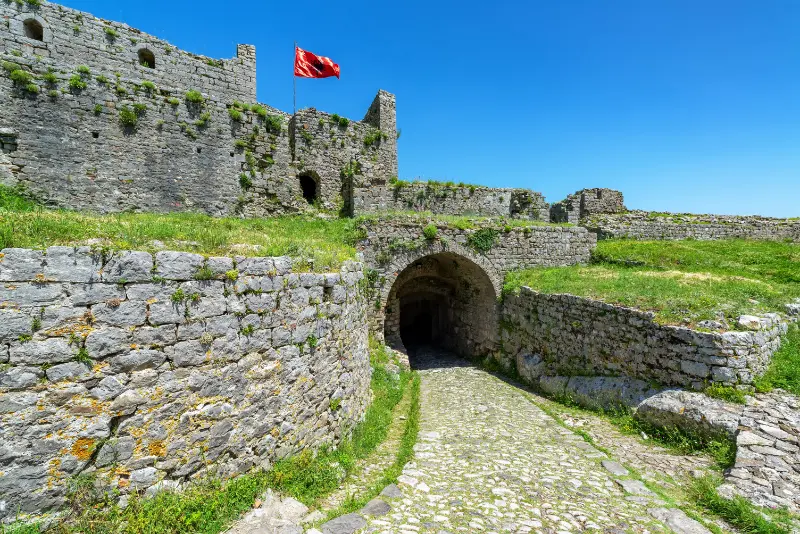
    How much time should you allow?

    For a focused museum, 45–90 minutes is usually enough for a meaningful first visit; larger bunker, castle or archaeological experiences can take longer. The bigger planning mistake is not the exact number of minutes—it is scheduling several emotionally or visually dense museums back to back. Two important museums plus one open-air cultural site is a strong full day for most travelers.

    Museums with children

    Marubi can work very well with older children because photography is immediately visual. The Historical Museum is also manageable. The Site of Witness and Memory contains difficult themes; families should decide based on age. Rozafa has uneven surfaces and exposed areas, so it is a different physical experience from a museum hall.

    Rainy-day planning

    Marubi, the Historical Museum and the Site of Witness and Memory make Shkodër one of the strongest rainy-day cities in Albania. Save Rozafa for a clearer period because the panorama and outdoor walls are a major part of the visit.

    Rozafa Castle Entrance Shkoder Albania

    Accessibility and mobility

    Historic museums in Albania are often housed in castles, old houses, bunkers or protected buildings. That means stairs, thresholds, cobbles and uneven floors can be part of the visit. Do not assume a historic building is step-free because the entrance looks simple in photographs. If step-free access, an elevator, seating or accessible toilets are essential, contact the museum directly before visiting. For broader planning, see Accessible Travel in Albania.

    Photography and respectful visiting

    Ask before using flash, tripods or photographing sensitive exhibits. In memorial museums, former prisons and places connected with political repression, treat the site as a place of memory rather than a dramatic photo set. In active religious buildings, museum-style curiosity never overrides worship: dress appropriately, keep noise low and follow local instructions.

    Where to stay for a cultural visit

    A central base is worth paying a little more for when museums are the priority because you can return to the room between visits and avoid unnecessary taxi rides. Compare accommodation in Shkoder on Booking.com. For area-by-area advice, read the local Where to Stay guide.

    Tours and guided cultural experiences

    A good guide is most useful when the site has layers that are difficult to read from the building alone: archaeology, iconography, communist history or a fortress with several construction periods. A tour is less valuable when you only want a quick museum visit. Compare the cost of a guided experience with the value of having someone connect the objects to the wider city.

    Useful related guides

    Common museum-planning mistakes

    • Assuming every museum follows the same weekly opening pattern.
    • Planning too many serious museums in a single day.
    • Ignoring the building itself when the museum occupies a historic house, bunker or castle.
    • Visiting a castle museum at midday in summer without considering heat and exposed walking.
    • Treating a memorial or former prison as a casual photo attraction.
    • Relying on an old blog for ticket prices instead of checking current information.
    • Forgetting that smaller museums may have limited seasonal or staffing-dependent hours.

    Frequently asked questions

    What is the best museum in Shkoder?

    Marubi is the most distinctive and easiest recommendation for a first visit.

    What does the Site of Witness and Memory cover?

    It focuses on communist-era imprisonment, interrogation and political persecution.

    Is there a museum inside Rozafa Castle?

    Yes, museum material inside the fortress helps explain the long history of the site.

    How many museums fit in one day?

    Two indoor museums plus Rozafa is a good maximum for most travelers.

    Which museum is best with children?

    Marubi is usually the easiest because of its visual collection.

    Final recommendation

    Choose quality over quantity. A museum day is successful when you leave with a clearer picture of the destination, not when you have collected the maximum number of ticket stubs. Start with the museum that explains the city’s strongest historical identity, add one contrasting institution or historic house, then spend time outside in the streets, castle, bazaar or waterfront where that history actually unfolded.

    How to make the museum day more useful

    Before entering the first museum, I read a short timeline of the city so names and dates have somewhere to fit. After the visit, I deliberately walk through one related neighborhood or monument instead of opening another museum immediately. This simple sequence—context, collection, real place—makes the history easier to remember and prevents museum fatigue.

    If English interpretation is limited, use the museum’s available guide, audio material or a reputable guided tour rather than guessing at an object’s meaning. Photograph labels only where permitted and use them later to research a topic that interests you. The goal is not to understand every display in one visit.

    Combining culture with food and everyday city life

    Museums explain a destination best when they are not isolated from ordinary life. Put lunch in the historic center, stop at a local market or old bazaar, and notice the building materials, religious architecture and street plan around you. In Albania, the relationship between museum collections and living neighborhoods is particularly strong because many institutions occupy houses, castles and former state buildings rather than purpose-built galleries.

  • Shopping in Gjirokastër: Old Bazaar Crafts, Textiles, Ceramics and Local Products

    Shopping in Gjirokastër: Old Bazaar Crafts, Textiles, Ceramics and Local Products

    Gjirokastër is one of Albania’s strongest cities for shopping that feels part of the sightseeing rather than separate from it. The Old Bazaar remains a commercial street inside the UNESCO city, and the national tourism agency specifically highlights carpets, woodwork, ceramics, jewelry and other traditional handicrafts sold there.

    Zekate House Road Sign Gjirokaster Albania

    The goal of this guide is not to produce a list of shops that can close or change quickly. It is to show the areas and product categories that make sense, how to recognize a better purchase, and what is practical to carry through the rest of an Albania trip.

    Where to shop

    AreaBest for
    Old Bazaar / Qafa e PazaritBest overall place for crafts
    Craft workshops and small studiosBest for understanding how an object is made
    Food and pantry-product shopsBest for honey, herbs and preserved flavors
    Museum and heritage-area shopsBest for books and contextual souvenirs

    Old Bazaar / Qafa e Pazarit

    Best overall place for crafts. The bazaar is the obvious starting point. Browse more than one shop before buying because quality, materials and origin vary. The pleasure is in comparing objects while walking the historic streets, not in rushing into the first doorway.

    Craft workshops and small studios

    Best for understanding how an object is made. Whenever a shop doubles as a workshop or the seller can explain the maker, technique and material, the purchase becomes easier to evaluate. Wood, textile and ceramic pieces are especially worth asking about because “handmade” covers a wide range of production.

    Food and pantry-product shops

    Best for honey, herbs and preserved flavors. Southern Albania produces mountain honey, dairy products, herbs and preserved foods. Choose sealed, labelled items when they are going into checked luggage. A product you can identify later is more useful than an anonymous plastic bottle.

    Museum and heritage-area shops

    Best for books and contextual souvenirs. Books, postcards, reproductions and heritage-oriented objects can be better purchases than decorative “antiques.” They connect directly with the city’s architecture and history and are much easier to pack.

    What to buy

    • small woven textiles or carpets
    • woodwork and ceramics
    • locally made jewelry
    • mountain honey and tea
    • regional preserves and sweets
    • books or prints related to Gjirokaster architecture and history

    Food and drink to take home

    Gjirokastër’s region is associated with mountain products, dairy, honey and preserves. Buy food that can survive the rest of your itinerary. Fresh dairy is excellent to eat locally but often a poor flight souvenir.

    How to judge authenticity

    Official tourism material confirms that handicrafts are a real part of Old Bazaar retail, but individual pieces still vary. Ask direct questions: who made it, where, from what material, and whether another identical piece exists in the shop. Those answers help distinguish a craft object from a generic souvenir.

    How to tell handmade from mass-produced

    Price alone does not prove authenticity. Look at repetition, finishing and material, then ask a specific question about who made the item and where. A seller who knows the maker can usually describe the technique, material or workshop. Identical “handmade” pieces stacked in large quantities deserve more questions. Small imperfections can be normal in craft work, but poor construction is not the same thing as handmade character.

    Should you bargain?

    Bargaining is not a universal rule in Albania. In a supermarket, boutique, museum shop or clearly priced artisan store, pay the displayed price unless the seller offers something different. In a bazaar or for a larger craft purchase, there may be room for a polite conversation, but aggressive haggling over a handmade item is not necessary. Ask the price first, compare, and decide whether the object is worth it to you.

    Cash or card?

    Carry both. Cards are increasingly common in hotels, supermarkets and many urban shops, but small craft sellers and market stalls may prefer cash. Albanian lek is the clearest currency for everyday purchases. If a price is quoted in euros, ask the lek price as well so you understand the conversion. Keep smaller notes for low-value market purchases instead of expecting every stall to change a large banknote.

    Food souvenirs and customs

    Your destination country decides what food can enter, not Albania. Meat, dairy, fresh fruit, seeds, plants and homemade liquids can be restricted. Before buying, check the customs rules for the country where you will land. For the least complicated flight souvenir, choose factory-sealed or professionally packaged tea, coffee, sweets, honey, olive oil, wine or preserves that meet your destination’s rules.

    How to pack fragile purchases

    Glass bottles belong in checked baggage unless they meet cabin-liquid rules. Put each bottle in a sealed bag, wrap it in clothing and position it in the center of the suitcase rather than against a hard edge. Ceramics need the same treatment. Rugs and textiles are easier: ask whether they can be rolled tightly and avoid folding delicate embroidery across the same line repeatedly.

    What I would not buy

    I would avoid anything presented as an archaeological fragment, protected natural specimen, coral, wildlife product or “real antique” without clear legal provenance. Export rules can apply to cultural property, and a tourist should not have to guess whether an object can legally leave the country. I also skip generic items that I can see in identical form in every destination unless I simply need an inexpensive gift.

    Shopping with children

    Give children a small fixed souvenir budget and let them compare two or three options. This turns shopping into part of the trip rather than a repeated negotiation at every stall. For food markets, let them choose one local snack to try immediately. Keep glass, sharp metalwork and valuable textiles out of the browsing plan if everyone is already tired.

    When to shop during the trip

    Buy large, fragile or heavy objects close to the end of the itinerary. Buy food after you know which flavors you actually liked. Photograph the label of any wine, oil or craft producer you enjoy so you can remember the source later. If you are crossing borders by bus or continuing through several countries, travel light and prioritize small products over bottles and ceramics.

    A simple shopping route

    Shop after the castle rather than before it so you are not carrying purchases uphill. The Old Bazaar works perfectly in late afternoon, when the light is softer and you can combine browsing with coffee or dinner.

    Where to stay for easy shopping

    Compare current accommodation in Gjirokastër on Booking.com. A central base is useful because it lets you drop purchases at the hotel instead of carrying them through museums, hills or beaches.

    Aerial View Of Gjirokaster Old Town Albania

    Useful related guides

    Official tourism information

    For background on the destination and its documented products or market traditions, see the official tourism page on Old Bazaar handicrafts.

    Common shopping mistakes

    • Buying the first souvenir before seeing what appears elsewhere in the city.
    • Assuming a national symbol automatically means the item was made in Albania.
    • Buying food without checking whether it can enter the destination country.
    • Carrying glass bottles through several more weeks of travel when the same product could be bought later.
    • Treating every bazaar like a place where aggressive bargaining is expected.
    • Buying an antique-looking or natural object with unclear legal provenance.
    • Choosing a large item without measuring whether it fits in checked luggage.

    Frequently asked questions

    What is the best thing to buy in Gjirokastër?

    The best purchase is one that has a clear connection with the destination and a maker or producer you can identify. Use the local-product suggestions above, but choose something you will still value after the holiday rather than an object bought only because it was displayed near an attraction.

    Are souvenirs expensive in Albania?

    Small gifts can be inexpensive, while genuine rugs, metalwork, jewelry, wine and high-quality olive oil cost more. Compare like with like: a handmade object should not be evaluated against the price of a factory-made magnet.

    Can I pay by card?

    Often yes in larger shops, but cash remains useful in markets, bazaars and small workshops. Keep some lek and a card as backup.

    Is bargaining normal?

    Sometimes for larger purchases in bazaar-style settings, but not everywhere. Be polite and never assume that a fixed-price artisan or boutique expects negotiation.

    Can I take Albanian food home?

    Usually some sealed shelf-stable products can travel, but your destination customs rules decide what is permitted. Check those rules before buying meat, dairy, fresh produce, plants or homemade liquids.

    Final recommendation

    Shop slowly and ask questions. Albania’s strongest souvenirs are not necessarily the objects with the biggest flag or eagle; they are the products that retain a connection with a place, craft, ingredient or producer. One well-chosen textile, bottle of oil, jar of preserves or locally made object is a better memory than a suitcase full of generic merchandise.

    How much time to allow

    For ordinary souvenir shopping, an hour is enough. For a real bazaar or craft district, allow two or three hours because the value comes from comparison and conversation. Never put serious shopping before a fixed bus, ferry or airport departure: packing a rug, wrapping a ceramic or processing a card payment can take longer than expected. If a major purchase matters, return to the shop after you have finished the day’s sightseeing.

    Buying gifts for several people

    Use one regional specialty as a theme instead of buying unrelated objects for everyone. Tea, small jars, packaged sweets, postcards or modest textiles are easier to divide among friends and family. Keep a note of who each gift is for so you do not overbuy. If baggage allowance is tight, prioritize flat textiles and small packaged food over glass and heavy decorative objects.

    Groceries and self-catering

    For apartment stays, family travel and day-trip supplies, see the Gjirokastër supermarkets and grocery-shopping guide.

    Gjirokaster Albania Charming Old Town
  • 3 Days in Kruje: Castle, Old Bazaar, Sari Salltik and Qafe Shtame

    3 Days in Kruje: Castle, Old Bazaar, Sari Salltik and Qafe Shtame

    Most travelers visit Krujë for a day, but three days works for a slower mountain-and-history break. The castle needs only one day; the extra value comes from Mount Kruja and the surrounding landscapes.

    View Kruja Castle Albania

    This itinerary is designed for travelers who want to spend three nights or three full sightseeing days in Kruje without turning the trip into a race. The order is deliberate: the first day stays close to the base, the second adds a stronger local experience, and the third is the flexible day for a regional excursion or weather-dependent activity.

    3 days at a glance

    DayPlan
    Day 1Krujë Castle, museums and the Old Bazaar
    Day 2Sari Salltik and Mount Kruja
    Day 3Qafë Shtamë, Preza or a slower countryside route

    Before you start

    For a first visit, read Kruje Travel Guide and Where to Stay in Kruje before booking. Location has a direct effect on how much of a three-day trip is spent walking versus arranging taxis, parking or luggage transfers.

    If your schedule is shorter, use the 1-day Kruje itinerary instead. Three days should add depth, not simply stretch a one-day checklist across a longer stay.

    Day 1 — Krujë Castle, museums and the Old Bazaar

    Start with the castle complex before the busiest day-trippers arrive. Give the Skanderbeg story enough time, then add the Ethnographic Museum if open and relevant to your interests. Walk the Old Bazaar slowly rather than treating it only as a souvenir corridor. In the late afternoon, stay in the upper town for views over the plain and an evening after the day-trip crowds have left.

    Keep the first day intentionally compact. Arrival delays, hotel check-in and orientation always consume more time than a map suggests. A strong first day leaves one or two optional stops rather than forcing you to skip lunch or reach the final attraction after closing time.

    Day 2 — Sari Salltik and Mount Kruja

    Use the second day for the mountain above the town. Sari Salltik combines religious significance, dramatic viewpoints and a road or hiking experience that feels completely different from the bazaar. Weather matters: cloud can erase the panorama and winter conditions can change access. Do not force the mountain merely because it is on the schedule; swap days if the forecast is better later.

    Treat this as the day to understand the destination beyond its postcard view. Start early, protect the middle of the day from unnecessary driving, and leave enough time for food and short unplanned stops. Three-day itineraries work best when one day has room to breathe.

    Day 3 — Qafë Shtamë, Preza or a slower countryside route

    Qafë Shtamë is the strongest choice for a nature-focused third day when road conditions are good. Preza is easier if you are heading back toward Tirana or the airport and want another castle/viewpoint without a long mountain drive. Choose one main direction. Three days in Krujë should feel relaxed, not like a collection of distant day trips.

    Castle Kruja Albania Skanderbeg Old Bazaar Traditional Things 3

    The third day is deliberately flexible because weather, season and onward travel often decide what makes sense. If the excursion lies in the same direction as your next destination, consider checking out first and turning the day into a one-way transfer instead of returning to the same hotel.

    If you prefer a slower itinerary

    If you do not have a car, make day three a shorter local excursion or return to Tirana rather than paying for a complex remote itinerary. In winter, keep both mountain days weather-dependent.

    A slower version is not a failed itinerary. Remove one museum, one village or one beach and keep the time for a long lunch, café stop or sunset. Albania often rewards simple geographic grouping more than an aggressive attraction count.

    Getting around

    The castle/bazaar day is walkable once you reach upper Krujë. A car or driver is very helpful for Sari Salltik and Qafë Shtamë. Parking near the old town can be tight at busy times.

    Castle Kruja Albania Skanderbeg Old Bazaar Traditional Things

    When using intercity or seasonal transport, verify the current departure rather than relying on an old timetable. If a taxi or private driver saves two separate connections, compare the total cost for the group rather than only the cheapest single ticket.

    Where to stay for this itinerary

    Compare accommodation in Kruje on Booking.com.

    Use the dedicated accommodation guide to choose the most practical area. For a three-day stay, paying slightly more for a walkable location can be better value than saving on the room and using taxis several times a day.

    Best time for this 3-day plan

    Spring and autumn are ideal for combining history and mountain viewpoints. Summer afternoons can be hot on exposed streets, while winter can limit mountain roads even when the town itself is accessible.

    Whatever the month, check the short-range forecast before the weather-sensitive day and swap day two/day three if necessary. That is one of the biggest advantages of having three days in one base.

    How to adapt this itinerary without a car

    Keep the first day unchanged. For the regional days, use direct buses where they make geographic sense, otherwise compare a taxi/driver or a small-group excursion. Do not build a day around three uncertain connections just to avoid paying for a straightforward transfer. If public transport would leave you with only two useful hours at the destination, choose a closer excursion.

    How to adapt it for families

    Families should protect the middle of the day in hot weather and avoid making all three days ‘major attraction’ days. Keep one afternoon intentionally light, choose accommodation with easy vehicle or pedestrian access, and treat a beach, park, lake or thermal stop as a real activity rather than a gap between monuments.

    What to do if it rains

    Move museums, historic houses and long meals into the wettest hours, and keep exposed viewpoints, boat trips, canyon walks or mountain drives flexible. A three-day stay gives you enough room to swap the order. Do not force a marine or mountain activity merely because it was originally assigned to day three.

    Common mistakes

    • Spending all three days only between the castle and bazaar.
    • Driving mountain roads in poor weather for a viewpoint hidden by cloud.
    • Confusing Fushë-Krujë with historic upper Krujë.
    • Booking an old-town stay without checking parking/luggage access.
    • Trying Qafë Shtamë and several Tirana-area attractions in one day.

    Useful planning links

    Frequently asked questions

    Are 3 days in Kruje too many?

    For a normal city break, yes; for a slow mountain-and-history stay, they work well.

    What should I do beyond the castle?

    Sari Salltik/Mount Kruja and Qafe Shtame are the strongest extensions.

    Do I need a car?

    Not for the historic core, but it is very useful for days two and three.

    Can I stay in Kruje before a flight?

    Yes, but leave a realistic traffic buffer to Tirana Airport.

    Qafe Shtame or Preza?

    Choose Qafe Shtame for nature and mountains; Preza for an easier road stop toward Tirana/airport.

    Final advice

    Three days in Kruje works best when the destination is used as a base rather than a checklist. Keep one day local, one day focused on the area’s defining experience and one day flexible for the wider region. That structure gives you enough depth to understand the place while still making the itinerary practical if weather, transport or energy levels change.

    Arriving and departing: how to protect the three full days

    If possible, arrive in Kruje the evening before day one. That gives you three genuinely useful sightseeing days rather than spending the first morning checking out of another hotel, waiting for transport and storing luggage. If that is not possible, keep day one exactly as written and remove an optional stop instead of pushing the entire schedule later.

    On departure day, separate sightseeing from logistics. Check-out, parking, fuel, intercity terminals and luggage storage can easily consume an hour or more. A final coffee or short walk is a better plan than a major attraction that must be abandoned halfway because the bus or transfer is leaving.

    How much should you actually fit into each day?

    The historic core is compact but steep, while mountain roads immediately change the pace. One urban day plus one mountain direction is far more realistic than trying to combine everything.

    A realistic target is two major anchors plus meals, walking and one or two minor stops. More than that often creates the illusion of seeing more while actually spending the day watching the clock. If you finish early, add a viewpoint, café, market or waterfront walk spontaneously; those are easier to add than to cancel a prepaid excursion.

    What should be booked in advance?

    Book the accommodation first, then any activity that has limited capacity or depends on a specific departure: boat trips, rafting, popular guided excursions or a private driver. Ordinary city walking, viewpoints and most self-guided historic areas do not need a minute-by-minute reservation plan. Keep at least one half day flexible so weather can move the outdoor activity.

    For summer weekends and major event dates, reserve the room and key transport earlier than usual. In quieter months, flexible cancellation can be more valuable than locking the entire trip months ahead. Always confirm current opening information for museums, archaeological sites and seasonal services shortly before travel.

    How this 3-day stop fits into a longer Albania itinerary

    Krujë combines easily with Tirana, Shkodër and Tirana Airport. If your flight is next, use Preza or a simple old-town morning rather than a remote mountain excursion. If Shkodër is next, Sari Salltik/Qafë Shtamë should be planned only if they do not create a major detour.

    The best Albania itineraries minimize repeated road sections. Look at the map before finalizing day three: if the excursion lies in the same direction as the next destination, check out in the morning and carry your luggage rather than returning to the same base simply because the first draft called it a ‘day trip’.

    Staying 2 days? Use the dedicated 2-day itinerary for the balanced 48-hour version.

    Not sure how long to stay? Compare 1, 2 and 3 days before choosing this itinerary length.