
Valbona Valley is the quieter counterpoint to some of Albania’s more publicized mountain stops. The valley stretches through the Albanian Alps around a cold, clear river, with guesthouses scattered beneath limestone peaks and walking routes leading toward Rragam, Dragobi and the famous pass to Theth. It is dramatic, but the best way to experience it is not to rush straight to the hardest hike.

The official tourism portal describes Valbona as one of Albania’s major mountain destinations and highlights hiking, nature exploration, mountaineering and the villages of the valley. I use Valbona differently depending on the trip: as the end of the Lake Koman–Valbona route, as a two-night mountain retreat, or as one side of the classic trek to Theth.
What makes Valbona special
The landscape is immediately alpine: a broad stony riverbed, forested slopes and steep mountains closing the horizon. Yet the valley is inhabited and welcoming, with family-run guesthouses, restaurants and small farms. That combination matters. You can spend the morning on a serious walk, then return to a simple meal and a quiet garden rather than feeling that you are camping in complete wilderness.
The official Valbona Valley page notes its protected status and importance for mountain tourism. Treat the protection seriously: stay on established routes, carry rubbish out, avoid disturbing wildlife and use local accommodation rather than seeing the valley only as a backdrop for a photograph.
Getting to Valbona through Lake Koman
The most memorable approach combines road transfers with the Lake Koman ferry to Fierza, followed by a transfer through Bajram Curri into the valley. It is not the fastest route, but it turns the journey into part of the experience. Timetables and operators can change seasonally, so book critical connections directly and confirm the pickup arrangement with your guesthouse.
Allow buffer time. A ferry arrival followed immediately by a fixed hike is poor planning, especially if weather or traffic delays the transfer. I prefer to arrive, settle into the valley, walk locally and start a longer trail the next morning.
Driving via Kosovo
Some travelers reach Valbona by road through Kosovo because the route can be practical from Tirana or Pristina depending on the itinerary. If you are driving a rental car across an international border, confirm permission, insurance and documentation with the rental company in writing before departure. Do not assume every contract allows the same crossings.
Our Albania border crossings guide and car rental guide cover the planning questions. Even when navigation apps show a quick route, mountain weather and roadworks can affect travel time.
Easy walks before the big hikes
You do not need to cross to Theth to enjoy Valbona. Walking along quieter roads and tracks toward Rragam, exploring sections near the river and visiting Dragobi can fill a rewarding day. Ask your host for current trail advice because water levels, landslides and seasonal conditions can change what is straightforward.
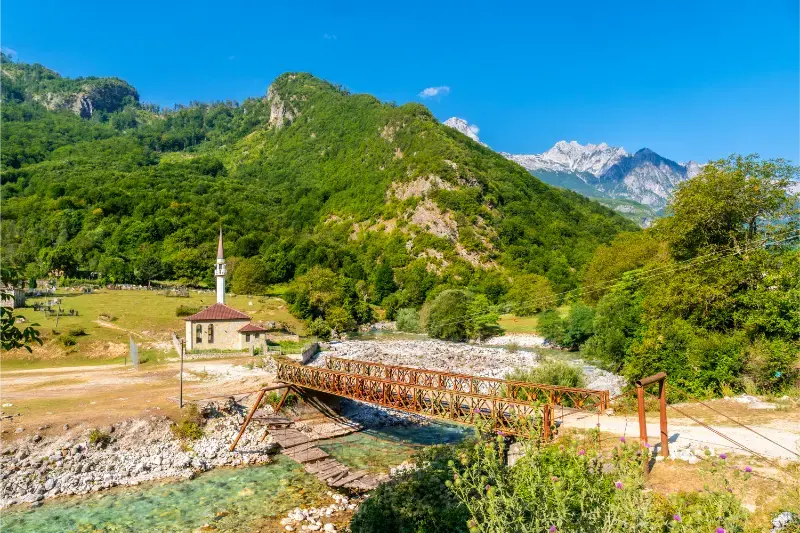
For families or travelers who do not want a strenuous climb, the valley itself is the attraction. Plan shorter walks with generous stops, keep children away from fast water and exposed edges, and carry sun protection even when the air feels cool.
The Valbona–Theth hike
The pass between Valbona and Theth is one of Albania’s signature hikes, but popularity does not make it casual. It is a full mountain day with sustained climbing and descending, exposed weather and navigation decisions. Start early, carry enough water and food, and ask locally about conditions. If snow, storms or poor visibility are expected, change the plan.
Our best hiking trails in Albania guide explains how to think about difficulty and equipment. A luggage transfer can make the crossing more comfortable, but it does not reduce the physical demands of the trail itself.
Rragam, Dragobi and the wider valley
Rragam is useful for getting deeper into the mountain setting and is associated with routes toward waterfalls and the pass. Dragobi has strong cultural identity and access to nearby natural features. Rather than treating these names as boxes to tick, ask your host which short routes are in good condition during your stay.
Seasonal water makes a large difference. A waterfall that is powerful in spring may be reduced after a dry summer, while river crossings can become more difficult after heavy rain. Current local knowledge is more valuable than an old GPS track.
Food and guesthouse culture
A Valbona stay is as much about hospitality as hiking. Guesthouses often serve filling mountain food built around bread, dairy, vegetables, meat and regional dishes. If dinner is important, tell the host in advance because some kitchens plan portions around confirmed guests rather than operating like walk-in city restaurants.
Carry some cash. Card acceptance is improving across Albania, but remote mountain businesses should not be treated as guaranteed card environments. Our {internal(“albania-money-atms-cards-guide”,”money and ATM guide”)} explains why a small cash reserve is useful outside major cities.
Best season and how many nights
Late spring to early autumn is the main period for hiking, but the exact mountain season changes with snow and weather. Summer has the most services and visitors; September can be beautiful with cooler walking temperatures. Winter is a different proposition and requires specific transport and weather planning.
I recommend at least two nights if Valbona is more than a transport stop. Three nights are better for a relaxed hike, a valley day and flexibility for weather. One night can work after the ferry if you are crossing to Theth the next morning, but it gives you very little time to understand the place.
Valbona planning questions
Do you need a guide? Not for every valley walk, but a guide is valuable for unfamiliar, remote or technical routes and when conditions are uncertain. The Theth crossing is popular, yet weather and fitness still matter. A guide does not make bad conditions safe, but local knowledge can improve decisions.
Can you visit without hiking? Absolutely. The drive, river, villages, guesthouses and short walks make Valbona worthwhile for travelers who prefer scenery to strenuous trekking. Just choose accommodation with a comfortable setting so the valley itself becomes part of the stay.
Planning for different travel styles
Valbona Valley can work for very different travelers, but the same plan will not suit everyone. Families usually benefit from shorter transfers, reliable meal stops and one clear activity at a time. Couples may prefer a later start and a longer lunch or sunset stop. Hikers and photographers often want early light and more time outside. Senior travelers or anyone with limited mobility should check gradients, surfaces, shade, toilets and parking before committing to the most scenic route.
Budget travelers can keep costs controlled by using a larger nearby town as a base and making Valbona Valley a day trip, while travelers who value quiet should consider sleeping closer to the destination. The trade-off is convenience: remote stays can be atmospheric but may have fewer restaurants, ATMs, pharmacies and transport options. Decide which inconvenience you are actually happy to accept rather than choosing accommodation only because the photos look isolated.
Build a backup plan for weather and delays
A useful Albania itinerary always has a second version. If weather makes Valbona Valley less enjoyable or unsafe, use the day for Bajram Curri, Lake Koman and the Albanian Alps instead of forcing the original plan. Save indoor museums, long lunches, city walks and flexible drives as backup ideas. This is especially valuable on the coast, where wind can cancel boats, and in the mountains, where rain, snow or low cloud can transform an easy-looking route.
Do not judge the entire trip by one forecast icon. Check the specific location, elevation and time of day, then ask accommodation or local operators what conditions are actually like. A destination can be clear while a pass above it is in cloud, or a city can be dry while the coast is too windy for a boat. The best decision is the one based on current local conditions rather than the plan you made weeks earlier.
How this stop fits into a longer Albania trip
I would connect Valbona Valley to the route rather than make a long out-and-back journey only because it appears on a must-see list. Look at where you are sleeping before and after, then group nearby places logically. Albania is compact, but mountain roads, summer traffic and city parking make repeated backtracking tiring. A one-way sequence usually gives you more real travel time than returning to the same base every night.
Finally, protect at least one unscheduled block in every three or four travel days. Use it for laundry, a beach, a café, an extra walk or a place someone recommends locally. That empty space is not wasted. It is what lets the itinerary absorb a delayed bus, a changed boat departure or a mountain shower without turning the rest of the holiday into a chain of missed reservations.
How to keep the plan realistic
Valbona Valley works best when you leave margin for the parts of Albania that are hard to predict from a map: traffic, road surfaces, parking, weather and seasonal services. I prefer to build the day around one major experience, then add smaller stops only if time and conditions cooperate. That approach is especially useful when combining Bajram Curri, Lake Koman and the Albanian Alps, because the distance may look short while the real travel time is shaped by mountain roads or coastal traffic.
For transport, arrange the mountain transfer before a tight itinerary and confirm whether your guesthouse offers pickup, especially if you arrive through the Koman–Fierza route. Save offline directions before leaving a city, carry some cash for small local expenses and avoid making a non-refundable activity the same day as a tight flight or ferry connection. In late spring, summer and early autumn, recheck conditions shortly before departure because access, boat departures, trail conditions or opening patterns can change.
Where to stay
The best base depends on whether this is your main destination or a side trip. Staying nearby gives you the quietest mornings and evenings, while sleeping in a larger hub creates more restaurant and transport options. Compare recent reviews, exact map location, parking or transfer details and cancellation terms rather than choosing on headline price alone. Check current accommodation on Booking.com.
A final note before you go
Albania is changing quickly as a travel destination, so I treat schedules and access details as information to verify rather than permanent facts. Check the latest local weather, transport and protected-area guidance close to your visit. Keep confirmations offline, tell your accommodation about late arrivals, and let current local advice override an old screenshot or social-media post.
Most importantly, give Valbona Valley enough time to feel like a place rather than a photo stop. A slower plan creates room for a coffee, a local meal, an unexpected viewpoint or a short walk that never appears on a checklist. That is usually where the most memorable part of an Albania trip happens.
Related cultural guide: K’cimi Dance of Tropoje Guide: Albania’s UNESCO Mountain Dance Tradition.
Where to stay: Where to Stay in Valbona: Central Valley, Rragam, Dragobi and Mountain Guesthouses compares the most practical areas, parking, no-car options and the best base for different types of trip.
Getting here: Shkoder to Valbona: Koman Ferry, Shuttle, Car and the Classic Alps Route compares public transport, driving and private-transfer options with arrival advice.
48-hour itinerary: 2 Days in Valbona: Valley Walks, Mountain Views and a Relaxed Alps Stay.
Comparing bases? Theth vs Valbona: Which Destination Should You Choose in Albania? explains the differences in atmosphere, sightseeing, transport, budget and ideal length of stay.
Driving and parking: Driving and Parking in Valbona: Valley Road, Guesthouses and Theth Hike Logistics explains access, parking strategy, hotel logistics and when the car is actually useful.

Route planning: Tirana to Valbona: Koman Ferry Route, Direct Road, Shuttle and Car Options explains bus/shuttle, car, transfer, luggage and seasonal logistics.
Easy excursions: Best Day Trips from Valbona: Rragam, Kukaj, Cerem, Bajram Curri and Alpine Excursions compares the most useful day trips, transport and when an overnight is better.
Hiking: Best Hikes in Valbona: Rragam, Kukaj, Xhema Lake and the Valbona Pass compares the best local walks and mountain routes by difficulty, access, season and transport.
Backpacking: Backpacking Theth and Valbona: Guesthouses, Hiking, Koman Ferry and Luggage Logistics covers budget stays, buses, luggage, social travel and onward route planning for independent travelers.
Only have one day? 1 Day in Valbona: Valley Walks, River Views and a Realistic Albanian Alps Itinerary gives you a realistic morning-to-evening plan without overloading the schedule.
Leave a Reply