A rainy day in Albania does not need to become a lost day, but the right plan depends on the destination. Historic cities with strong museums can absorb hours indoors; coastal towns often require a more flexible mix of food, cafés, short heritage stops and weather windows. I plan for the actual type of rain rather than treating every grey forecast as an all-day storm.
Check the short-range radar or hourly forecast before abandoning outdoor plans. A two-hour shower calls for a different itinerary from persistent wind and heavy rain. In old towns, wet stone and polished cobbles can become slippery even after the rain stops, so good-grip shoes matter more than an umbrella.
Rainy-day plan at a glance
| Weather / situation | Best plan | Why |
|---|---|---|
| Heavy rain | Ethnographic Museum + lunch + Onufri if access is sensible | Protect indoor time |
| Showers | Mangalem/Gorica between museum blocks | Short cobbled walks |
| Castle | Taxi up if rain eases | Avoid unnecessary slippery climb |
| Evening | Riverfront meal | Easy finish |
Start by deciding how bad the weather really is
I separate rain into three categories. Drizzle means the normal itinerary can often continue with better shoes and shorter outdoor stops. Repeated showers mean I build the day around two indoor anchors and use dry windows for streets or viewpoints. Persistent heavy rain means I stop pretending it is a normal sightseeing day and choose a compact cultural, food and rest itinerary.
Opening days, renovation periods and ticket rules can change, so I verify the one museum I care about most before walking across town. I would rather spend two focused hours in one good museum than rush through three indoor attractions just because it is raining.
Best things to do on a rainy day
Berat Ethnographic Museum
Start with the Berat Ethnographic Museum. It is housed in a traditional Berat residence and the official tourism agency describes a substantial collection of household objects, crafts, textiles and domestic interiors. On a wet day, this museum gives you exactly the context that a fast sunny-day walk can miss.
Onufri Museum
The Onufri Museum inside Berat Castle is one of Albania’s strongest iconographic collections. It is an excellent indoor goal, but the museum sits inside a fortress area reached over steep, exposed stone. In heavy rain I would take a taxi as high as practical, use good shoes and avoid turning the castle approach into a test of endurance.
Mangalem during a dry window
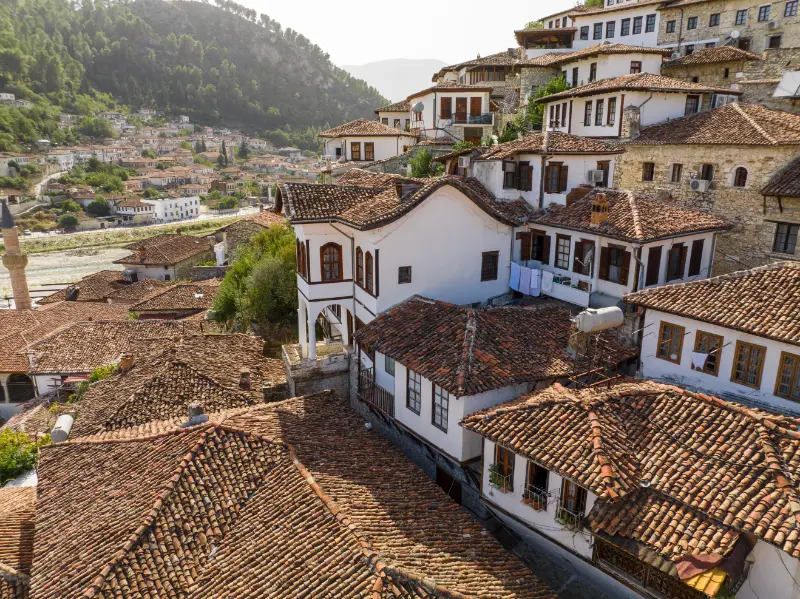
Walk a compact part of Mangalem only when rain eases. The lanes are atmospheric in wet weather, but polished cobbles and slopes become slippery. Stay close to cafés and the museum rather than attempting a full hill climb.
Gorica from the river
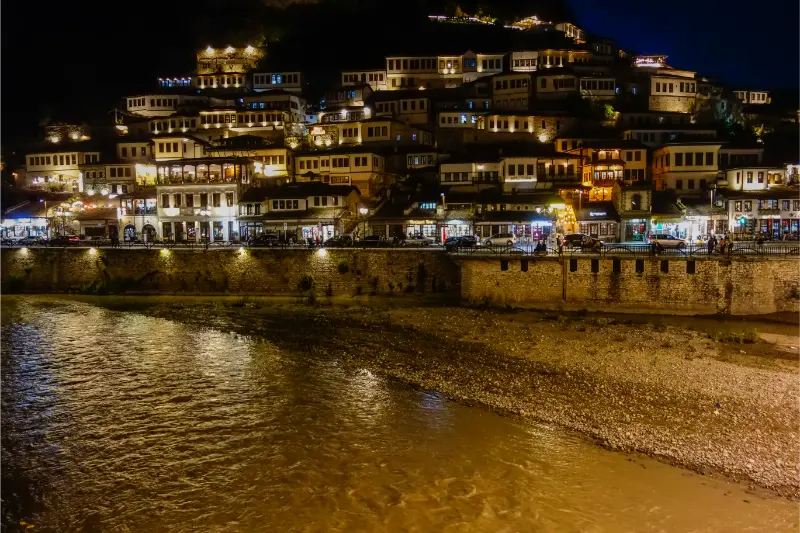
If the weather improves, cross Gorica Bridge and make a short lower-quarter loop. The bridge and riverside give you the classic Berat composition without demanding a long exposed walk.

A slow Berat lunch
Berat is strong for a long traditional meal, local wine and regional dishes. Use the Berat Food Guide and let lunch absorb the wettest part of the day rather than trying to fill every hour with attractions.
If it rains all day
A sensible heavy-rain day is Ethnographic Museum, long lunch, hotel/café break, then the Onufri Museum only if the castle approach is safe and practical. If not, save the castle for the next morning instead of forcing the UNESCO experience through slippery weather.
If it is only showers or light rain
During showers, keep the route low: Mangalem riverfront, Gorica Bridge, lower historic lanes and short café stops. The Berat Self-Guided Walking Tour should be shortened rather than followed in full.
Rainy day with children
With children, avoid the castle climb in active rain. The Ethnographic Museum plus a food stop gives enough cultural content; add the castle only if the weather genuinely improves.
With children I deliberately remove one attraction from the original plan. Wet clothes, umbrellas and slower walking make transitions more tiring than they look on a map. A museum, a long lunch and one short outdoor window are often enough.
If you have a rental car
If you have a car, do not use it to chase old-town parking. Keep it in a legitimate space and use a taxi for the castle. Wet historic lanes are a poor place to experiment with a rental car.
I never use bad weather as a reason to add a long unfamiliar drive automatically. Rain can reduce visibility, increase braking distance and make mountain or coastal roads more demanding. Drive only when the alternative destination clearly improves the day.
Make food part of the itinerary
Berat’s rainy-day advantage is that lunch, local wine and traditional food belong naturally in the itinerary. A two-hour meal is not wasted sightseeing when the alternative is standing under an umbrella on polished stone.
What to wear and carry
- Shoes with grip rather than smooth city soles; old stone can stay slippery after rain stops.
- A light waterproof jacket with a hood; umbrellas are less useful in strong coastal or mountain wind.
- A small dry bag or zip pouch for passport, phone and tickets.
- A spare pair of socks if the forecast shows persistent rain.
- Offline maps, because standing outside in rain while solving navigation is unnecessary.
- A light layer in shoulder seasons; wet weather can feel much cooler than the temperature suggests.
Where to stay when weather is uncertain
For a short stay, I value a central base more when the forecast is poor. Walking five minutes to a museum or restaurant is very different from needing a taxi for every meal. Compare current accommodation in Berat on Booking.com.
Common rainy-day mistakes
- Walking the steep castle road in heavy rain when a taxi is available.
- Wearing smooth shoes on wet cobbles.
- Trying to photograph every viewpoint in low cloud.
- Assuming a museum inside the castle means the approach is fully indoors.
- Driving into narrow old-town lanes to avoid getting wet.
Useful related guides
Should you change the whole itinerary?
For one wet day, usually not. I swap the order of days before I change hotels or cancel a destination. If tomorrow is clearer, move the exposed castle, lake, beach, boat or mountain excursion to tomorrow and use today for the destination’s indoor culture. This is one reason I avoid booking every hour of an Albania trip in advance.
For several consecutive days of severe weather, then I reconsider the route. Cities with museums such as Tirana, Shkodër and Korçë absorb bad weather better than beach-focused bases. The decision should be based on the regional forecast, not frustration with one wet morning.
Frequently asked questions
What is the best rainy-day museum in Berat?
The Ethnographic Museum is easiest in the old town; Onufri is excellent if castle access is safe.
Is Berat Castle good in the rain?
The museum can be, but the exposed fortress and slippery approach are less pleasant in heavy rain.
Can I still visit Mangalem?
Yes during lighter spells, with good-grip shoes and a shorter route.
What should families do?
Prioritize the Ethnographic Museum and food, then add the castle only if conditions improve.
Should I postpone Berat because of rain?
Not necessarily. One wet day still works well if you keep the plan museum- and food-focused.
Final advice
A rainy day is easiest when you stop trying to reproduce the sunny-day itinerary. Choose one or two things that become better indoors, use food and coffee as real experiences, and wait for short weather windows instead of fighting the forecast. The result can be a slower but more memorable day—and the main outdoor attraction will still be there when the sky clears.
A simple morning-to-evening template
My default wet-weather rhythm is: substantial breakfast, first museum at opening, coffee or short dry-window walk, long lunch, second indoor attraction or hotel break, then one final outdoor loop if the rain eases before dinner. This keeps the day structured without depending on the weather behaving perfectly.
How to use a two-hour dry window
When the forecast shows a short dry period, I do not spend the first thirty minutes deciding what to do. I choose one outdoor priority in advance and keep it close to the indoor plan. In a historic town that may be the bazaar, castle approach or riverfront; in a coastal city it may be the promenade; beside a lake it may be one short waterfront section. I then return to the next indoor stop before the weather deteriorates. This works better than trying to restart the entire original itinerary each time the rain pauses.
I also avoid driving across the destination just because the sky looks brighter in one direction. Short weather windows are most useful when the next stop is already nearby. A compact plan reduces wet transfers, protects luggage and gives you the freedom to stop immediately if rain returns.
If this is your only day in the destination
If you have no second day to move outdoor sights to, rank the destination into three layers: one essential indoor attraction, one essential outdoor place and one food or cultural experience. Protect the indoor attraction first, then use the best weather window for the outdoor place. Everything else is optional. This prevents bad weather from turning a short visit into a frantic attempt to save every item on the original list.
The result may be a shorter list of sights, but it is usually a better visit. Rain slows walking, transport and photography, so a realistic one-day plan should contain fewer transitions than the sunny version.
Phones, cameras and wet-weather photography
Keep the phone or camera in a dry pocket or small waterproof pouch between shots. Water on a lens can ruin far more photos than the grey sky itself. After a storm, wet stone, reflections and low cloud can create excellent photographs, but never stand in traffic, on slippery walls or beside rough water simply for a dramatic frame. The best photograph is not worth a fall.
Leave a Reply