The Ancona to Durrës ferry is a useful alternative to Bari for travellers starting in central or northern Italy. It saves the long drive down the Italian Adriatic coast and delivers you directly to Albania with your own vehicle. The crossing is longer than Bari–Durrës, so comfort and schedule choice matter even more.
Adria Ferries currently advertises multiple weekly connections from Ancona to Durrës. Timetables can change by season, so I verify the exact sailing on the official Adria Ferries website before planning hotels or long onward drives. For all sea routes together, start with my Albania ferry overview.

Who should choose the Ancona route?
This route makes most sense if you live in or are touring central and northern Italy, or if your vehicle journey to Bari would add many tiring hours. It is also attractive for campervan and motorcycle travellers who would rather spend more time resting on a ship than sitting on the autostrada.
The trade-off is a longer sea crossing. If you hate being on ferries, driving farther south to Bari may still feel easier. I compare total door-to-door time, fuel, motorway tolls, cabin price and personal comfort rather than looking only at the ferry fare.
A longer crossing changes how I book
On a longer voyage, I place more value on a cabin. A private bed, shower and quiet space can turn the crossing into a genuine overnight break. Arriving after poor sleep is particularly unhelpful if the next stage is a multi-hour drive through Albania.
Budget travellers can still use seats or deck accommodation when available, but I would pack earplugs, a warm layer and realistic expectations. Public areas are not designed to feel like a private hotel room.
Vehicle reservations
Enter the real vehicle dimensions, including roof boxes, trailers, rear bicycle racks or camper accessories if the booking system asks for them. Ferries allocate car-deck space according to the vehicle category, so a inaccurate reservation can create problems at check-in.
Keep registration and insurance documents ready. If you are travelling with a company car or a vehicle owned by someone else, check whether authorisation is needed for international travel. For road-law basics after arrival, read the driving rules guide.
Check-in and boarding at Ancona
Ancona is a busy Adriatic port. Do not aim to arrive at the last possible minute, especially with a vehicle. Follow the operator’s latest check-in instructions, allow time for finding the correct terminal and lane, and expect periods of waiting even when you arrive early.
Before joining the final queue I make sure everyone has used the toilet, phones are charged and the overnight bag is inside the passenger compartment. Once loading begins, you want to follow crew directions rather than unpacking the boot.
Your overnight bag
- Passport or identity document and booking confirmation
- Prescription medicines and valuables
- Toiletries and clean shirt
- Water and snacks
- Warm layer and comfortable clothes
- Phone charger, power bank and headphones
- Earplugs and sleep mask
- Anything children will need overnight
The vehicle deck is usually inaccessible during the voyage. Pack as if the car will be locked away until shortly before disembarkation.
Cabins for couples and families
A cabin is not only about sleep. It gives families a controlled space, couples privacy and drivers a place to rest properly. If the difference between an inside and outside cabin is large, I usually prioritise having a cabin at all rather than paying extra for a window I may barely see at night.
If you require an accessible cabin or are travelling with an infant, contact the operator before booking instead of assuming every vessel has the same layout.
Food and drink on board
Services vary by ship and departure. I bring water and a snack even when restaurants or bars are listed because boarding can take time and opening hours may not match when I am hungry. If you have food allergies, carry a safe backup meal rather than relying on detailed allergen options on a busy ferry.
Alcohol is best kept moderate if you plan to drive after arrival. The goal is to step off the ferry rested and alert.
Phones, roaming and Wi-Fi
At sea, your phone may connect to maritime networks with different charges from normal EU or Albanian roaming. If I do not understand my mobile plan, I use airplane mode or disable data roaming until the ship is close to land. Download maps and hotel details before departure.
This is especially useful if you are driving immediately after arrival: offline navigation means you do not need to solve a SIM-card problem inside the port.
Weather and schedule flexibility
Adriatic conditions can affect sailing times, and operational changes can happen for other reasons too. I never plan a flight or fixed tour immediately after the scheduled arrival. Leave enough time for disembarkation, border procedures and normal delay.
If you are travelling in winter or shoulder season, this buffer matters even more because there may be fewer alternative departures than in summer.
First hour in Durrës
Follow signs and port instructions until you are fully outside the controlled terminal area. Set navigation before moving off, but do not stop in an active lane to reorganise the car. If you need cash, a SIM or breakfast, it is easier to solve those once you are in the city.
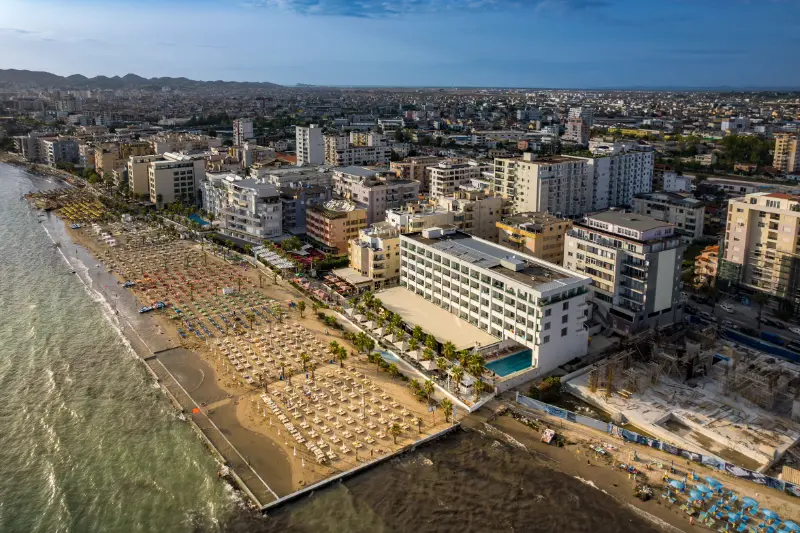
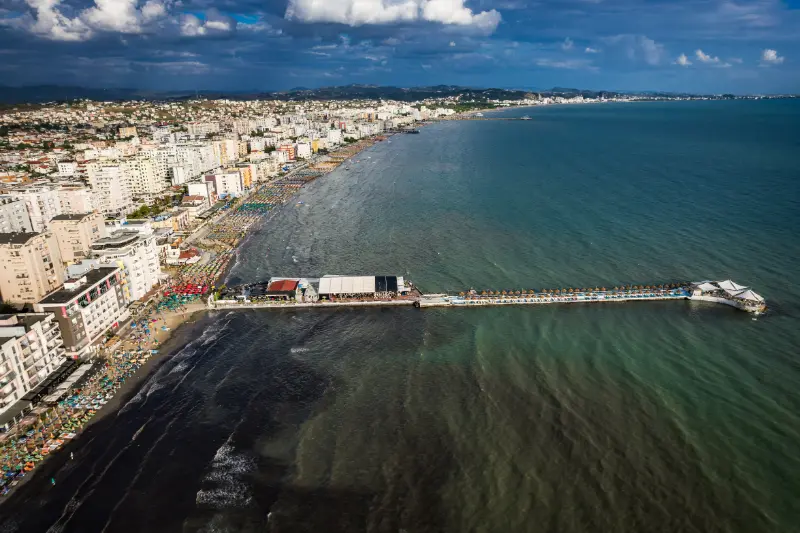
Durrës deserves more than being treated as a motorway exit. See the Durrës travel guide for the amphitheatre, seafront and city-centre sights. Compare places to stay in Durrës if you want a recovery night before a longer route.
Where to drive next
Tirana is the simplest major destination from Durrës. Berat works well for a central-southern itinerary, while Shkodër is the gateway to northern Albania. I would not target Theth or a remote mountain guesthouse on the same morning unless the ferry arrives early, everyone has slept and conditions are good.
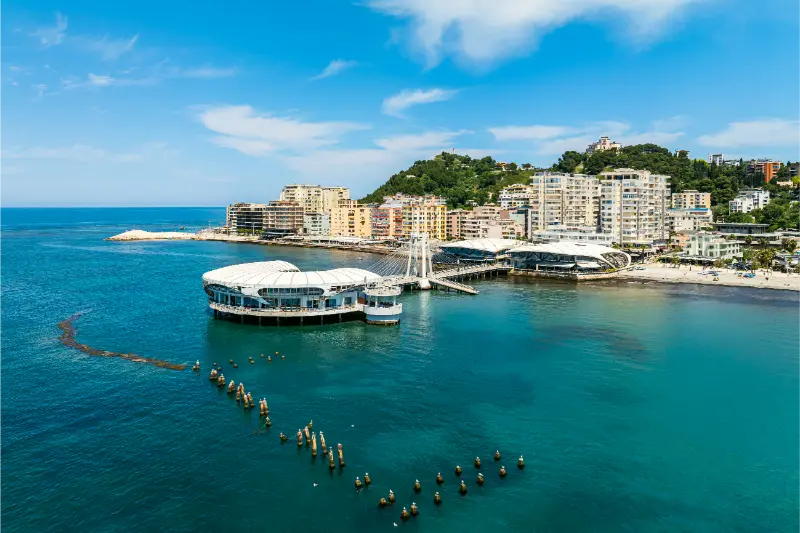
For a full-country road trip, the combination of Durrës, Berat, Gjirokastër, Riviera, Tirana and the north needs realistic travel days. The 10-day Albania itinerary is a useful reference for pacing.
Motorcycles and campervans
The Ancona route is attractive for overland travellers because it removes hundreds of kilometres of Italian motorway. Motorcycle riders should bring tie-down guidance if requested by the operator and follow crew instructions on the deck. Campervan travellers must book the correct dimensions and should never assume they can remain inside the vehicle while at sea.
For Albania itself, read Camping and Campervan Travel in Albania and the 10-day campervan itinerary.
Travelling with children
A long ferry can be easier with children than a long drive if you plan well. Bring one compact activity bag, snacks, familiar sleep items and a change of clothes. A cabin makes naps and bedtime far easier. Explain in advance that the family may need to wait in queues before boarding and again before leaving the ship.
Keep children close on stairs and outside decks, and follow all restricted-area signs. Ferries are large working vessels, not playgrounds.
Tours after the crossing
Once you have settled into Albania, Durrës is within reach of Tirana, Krujë and central-Albania day trips. I prefer to book activities for the day after arrival rather than the same afternoon.

Frequently asked questions
Is Ancona to Durrës a good route with a car?
Yes, especially when you are starting in central or northern Italy and want to avoid the drive to Bari. Compare the total trip cost, not only the ferry fare.
Should I book a cabin?
On this longer route, a cabin is one of the upgrades I value most. It is particularly useful if you will drive after arrival.
Can I sleep in my campervan on the car deck?
Normally passengers follow the vessel’s accommodation rules and do not remain on the vehicle deck during the crossing. Book passenger accommodation and confirm any special camping-on-board product directly with the operator if offered.
How much time should I leave after arrival?
At least enough for possible delay, disembarkation and border checks. For a fixed appointment I leave several hours, not minutes.
Final planning advice
Ancona–Durrës is a strong choice when the ferry replaces a long Italian road journey. The best version of the trip is simple: book the right vehicle, pay for enough comfort to arrive rested, keep an overnight bag with you and give the first Albanian day some breathing room.
Small planning details that make the trip easier
I save every important confirmation offline before travelling: accommodation address, ferry or attraction booking, insurance contact and one emergency number. That sounds basic, but it matters when mobile data is slow, a phone is almost out of battery or a rural guesthouse is difficult to find. I also keep one payment card separate from my main wallet and carry a modest amount of Albanian lek for small purchases.
I avoid planning each day to the minute. Albania rewards travellers who leave room for traffic, weather, a longer lunch or an unexpected stop. If a route looks comfortable only when every connection is perfectly on time, I simplify it. One fewer attraction often produces a better holiday than one more stressful transfer.
For road trips, I check the next day’s route in the evening rather than blindly following navigation in the morning. Mountain roads, temporary works and local access conditions can change. For city trips, I save the hotel pin and ask reception about the easiest current taxi or bus option. These small habits are more useful than trying to memorise every detail before departure.