Category: Travel Planning

Practical advice for planning an independent trip to Albania, including transport, money, seasons, costs and first-time travel tips.

  • Shkodër Photography Guide: Rozafa, Marubi, Lake Shkodra, Bikes and Northern Light

    Shkodër Photography Guide: Rozafa, Marubi, Lake Shkodra, Bikes and Northern Light

    Shkodër is unusually rewarding for photographers because the city has its own visual identity before you even leave for the Albanian Alps. Bicycles, low-rise streets, religious architecture, the Marubi photographic legacy, Rozafa Castle and the open lake create a sequence of subjects that feels very different from Tirana or the Riviera.

    Rozafa Castle Shkoder Albania

    This guide is for travelers who want useful images rather than a race through Instagram coordinates. It combines practical access, light, weather, respectful street photography and realistic pacing. Keep the full Shkodër travel guide open for transport and sightseeing details, and use the national best photography spots in Albania guide when you are building a longer route.

    Why Shkodër works for photography

    The official tourism portal calls Shkodër one of Albania’s oldest cities and emphasizes Rozafa, Marubi, the lake and its role as a gateway to Theth and other northern landscapes. For a photographer, the city works best when you give it at least one full day rather than treating it only as a bus connection.

    Before the trip, look at the official tourism information for Shkodër for current attractions and destination context. Opening arrangements, restoration work, seasonal access and events can change, so a photography plan should never depend on a single interior or viewpoint being available.

    Photography at a glance

    QuestionPractical answer
    Best time of dayEarly morning for clean compositions; late afternoon through blue hour for depth, people and atmosphere.
    Best lens strategyA wide or standard zoom plus a small prime; add a short telephoto when landscape layers or architectural details matter.
    TripodUseful at dawn/blue hour when space allows; avoid blocking narrow streets, promenades or heritage paths.
    DroneDo not assume a scenic place is legal to fly. Check current Albanian airspace and site rules before every launch.
    People photographyPrefer environmental scenes; ask before close portraits and always protect children’s privacy.
    Bad-weather backupUse the Shkodër rainy-day guide to turn wet weather into museums, reflections and sheltered street photography.

    Best photography spots in Shkodër

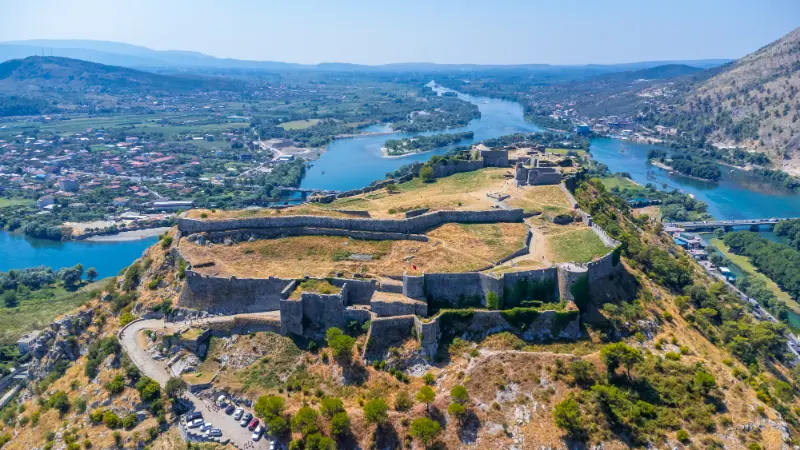
    Rozafa Castle

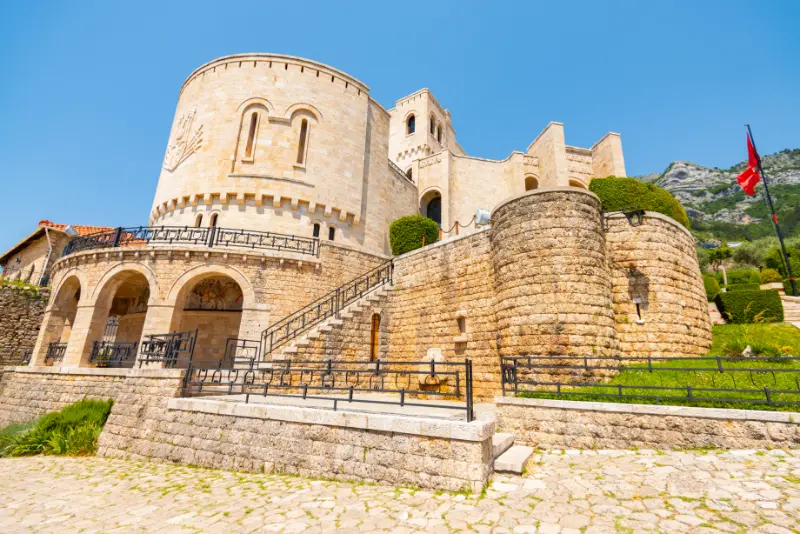
    The elevated position gives layered views over rivers, lake and mountains. Late light is attractive, but access and closing hours matter; do not build a sunset plan that assumes you can remain inside after official closing.

    Gjuhadol and pedestrian center

    Use bicycles, façades, café tables and evening life. A normal or short-telephoto lens helps separate details from busy backgrounds.

    Marubi context

    The museum is essential for understanding Albanian photographic history even when interior photography is restricted. Treat the visit as visual education, not just another place to point a camera.

    Shirokë and Lake Shkodra

    Water, mountains, fishing boats and restaurants make this a strong late-afternoon location. Wind can change reflections quickly, so use both fast and slower shutter approaches.

    Mesi Bridge

    The stone bridge works best when water level, weather and background are considered together. Avoid slippery rocks and private land while searching for a lower angle.

    Cycling culture

    Shkodër’s bicycles are part of everyday life. Wider street scenes usually tell the story better than close images of an unaware rider.

    How to plan the light instead of chasing locations

    Begin in the pedestrian center, visit Marubi when it opens, photograph market or street details before lunch, then use Rozafa or Mesi Bridge in the afternoon and finish at Shirokë if transport allows. Keep a separate day for Theth or Koman rather than treating the mountains as a quick sunset excursion.

    The most common photography mistake in Albania is treating golden hour as one exact moment. Mountains can block the sun earlier than the app suggests, coastal haze can reduce contrast, and historic streets may fall into shadow long before sunset. Scout one important location in daylight when possible, then return when the light improves. If clouds look promising, stay through blue hour rather than packing up immediately after the sun disappears.

    Sunrise, golden hour and blue hour

    Sunrise is valuable for more than color: streets are quieter, beaches are emptier and reflective surfaces are often calmer. Golden hour works best when side light can reveal stone, facades or hills. Blue hour is especially useful in Albanian towns because cafés, promenades and shopfronts become part of the scene while the sky still holds detail.

    Use a weather app for direction and cloud, but observe the real horizon. A forecast showing clear sky can produce flat photographs; broken cloud can create far better light. If the forecast is poor, look for details, interiors, people and reflections rather than cancelling the camera day.

    Street photography and photographing people

    Shkodër has a deep photographic tradition, but that is not blanket consent to photograph everyone. Be especially careful around religious services, children and people relaxing at cafés.

    A useful rule is to separate public activity from private vulnerability. A wide frame of a market, promenade or café street is different from a telephoto portrait of somebody who does not know they are being photographed. Religious services, children, medical situations and people in swimwear deserve extra restraint. When a portrait is the point of the image, a simple request is usually the best approach.

    Architecture and heritage: slow down

    Old stone, churches, mosques, castles and archaeological sites often look better when you stop trying to photograph the entire building. Use arches as frames, look for repeating windows, isolate roof lines with a telephoto and include a person when scale helps. Inside museums and religious buildings, photography policies can vary by room or exhibition. Ask before using flash, tripod or professional-looking equipment.

    Do not step beyond barriers, climb walls or move objects for a cleaner composition. Besides being unsafe, that turns cultural heritage into a prop. The best photographs make the site look worth protecting as well as worth visiting.

    Drone photography: use the national rules guide

    Albania has dramatic drone subjects, but a local photography guide should not be treated as flight permission. Airports, heliports, temporary restrictions, crowds, protected areas and individual heritage sites can all affect a launch. Read the current drone photography rules for Albania, check official airspace immediately before flying and keep a strong ground-photography plan so the trip still works when the drone stays packed.

    On beaches and viewpoints, crowding is often the practical limit even when the landscape appears open. Wind is another major issue on ridges and along the Riviera: the conditions at your feet may be very different from those above a headland. Keep conservative battery reserves and never fly merely because other tourists are doing it.

    What gear I would actually carry

    • A standard zoom such as 24–70 mm equivalent for most city and travel work
    • A small fast prime for evening street scenes and low-light interiors where photography is allowed
    • A short telephoto for compressed landscapes, architectural layers and discreet detail
    • A circular polarizer for water and foliage, used carefully so reflections do not disappear unnaturally
    • One compact tripod only when dawn, blue hour or long exposure is a real priority
    • Lens cloth, rain cover and a simple dry bag or zip pouch for electronics
    • Spare battery or power bank; heat, cold and long screen use can reduce practical endurance
    • Comfortable shoes with grip—often more important than carrying a fourth lens

    Travel light enough that you can still explore normally. In steep cities and summer heat, an overloaded camera bag changes where you are willing to walk. I would rather carry two lenses and stay out until blue hour than carry every lens and return to the hotel exhausted at 16:00.

    Phone photography: Albania is a good place to keep it simple

    A recent phone is enough for many of the strongest travel images in Albania. Use the main camera for the best quality, clean the lens frequently, avoid excessive digital zoom and expose for highlights around white stone or bright water. Panorama mode is useful for viewpoints, but move slowly and avoid people close to the camera because stitching errors become obvious.

    For night scenes, brace the phone against a stable surface instead of relying on extreme software brightening. If you edit, protect natural water and sky colors: the Ionian coast does not need maximum saturation to look impressive.

    Seasonal photography

    Spring and autumn are excellent for mixed city and lake photography. Summer is useful for alpine access but can be hot in the city. Winter brings lower light and atmospheric mountains but makes highland travel more weather-dependent.

    Shoulder season is often the easiest choice for a photography-focused trip because you get usable daylight, fewer crowds and more flexible accommodation. Peak summer is still valuable if the goal includes beach culture and nightlife, but start early and accept that a busy resort is part of the real scene rather than something to erase from every frame.

    Rain, cloud and imperfect weather

    Do not automatically treat rain as a lost photography day. Wet stone, reflections, empty lanes and low cloud can produce some of the strongest frames. The Shkodër rainy-day guide gives indoor and sheltered alternatives, while a short shower can be the moment to wait under cover and photograph the light immediately after it passes.

    View Fortress Rozafa Shkoder Albania 3

    Protect the camera before the rain becomes heavy, not after. Salt spray on the coast is especially important: wipe equipment with a clean damp cloth after exposure and never change lenses in blowing spray if you can avoid it.

    Where to stay for a photography trip

    Location changes photography more than hotel luxury. If dawn or blue hour matters, choose accommodation that lets you reach the first or final location without a complicated transfer. Compare accommodation in Shkodër on Booking.com, then check the actual map, walking gradient, parking and recent reviews rather than choosing only by the word “view.”

    For camera equipment, a room safe is useful but not a substitute for normal care. Do not leave an entire camera bag visible in a parked vehicle. If charging multiple batteries, use reputable chargers and avoid covering them with clothing or leaving damaged batteries unattended.

    A realistic one-day photography plan

    Early morning

    Photograph the location that depends most on empty streets, calm water or low-angle light. Keep breakfast flexible instead of sacrificing the first hour of good light.

    Late morning

    Switch to street detail, markets, interiors or architecture. This is a good time to visit a museum or scout the sunset location.

    Midday

    Use hard light deliberately for graphic architecture, or stop for lunch, backup files and a battery recharge. In July and August, this rest period also protects you from the least productive heat.

    Late afternoon to blue hour

    Return to the strongest viewpoint or social space and stay long enough for the scene to change. Photograph the transition rather than only the single sunset frame.

    Extra photography excursion

    Theth, Koman/Shala or Lake Shkodra villages can each become a full photographic project. Pick one instead of rushing through all three.

    If you are building a longer route, the 10-day Albania photography road trip helps connect city, coast, lake and mountain locations without spending every golden hour driving.

    Tours and guided experiences

    A guided walk, boat trip, food experience or day tour can provide access and context that you would not find alone, but it should not be booked solely as a “photo tour” unless the operator says so. Ask whether there is time for photography, whether tripods or large bags are practical and whether a boat or vehicle has a dry place for equipment.

    Common photography mistakes to avoid

    • Arriving at the most famous location at midday and deciding the place is “not photogenic”
    • Carrying so much equipment that steep streets, heat or long walks become unpleasant
    • Using a tripod where it blocks pedestrians or narrow heritage lanes
    • Over-saturating the sea, sky or old-town colors until the place no longer looks believable
    • Photographing people closely without considering consent or context
    • Assuming a drone can fly because another tourist launched one
    • Leaving camera gear visible in a parked rental car
    • Chasing a viewpoint in unsafe weather or after official closing time
    • Ignoring blue hour and packing up immediately after sunset

    Frequently asked questions

    Is Shkodër good for photography?

    Yes. Shkodër has enough variety for a dedicated photography day, especially if you plan around morning and evening light rather than trying to photograph every attraction at noon.
    Aerial Drone View Rozafa Castle Shkoder Walls Albania 2

    Do I need a professional camera?

    No. A phone or small mirrorless camera is enough for most travel images. Timing, position and patience matter more than sensor size.

    Can I use a tripod?

    Usually in open public areas when it does not block anyone, but individual museums, archaeological sites and managed attractions can have separate rules. Ask when in doubt.

    Can I fly a drone?

    Possibly, but only when current Albanian aviation rules, airspace, crowd conditions and site-specific restrictions allow it. Check immediately before the flight.

    What is the best season?

    For most photographers, late spring and early autumn provide a strong balance of weather, daylight and manageable visitor numbers. Winter and peak summer can both work when their specific atmosphere is part of the story.

    Final photography advice

    The best Shkodër photographs will not come from collecting the greatest number of coordinates. Pick a few locations, learn how the light moves, stay through the transitions and include enough everyday life that the images could only have been made here. Use the destination as a place first and a backdrop second; the photographs normally improve as a result.

  • Money, ATMs and Card Payments in Sarandë and Ksamil: Summer Cash and Exchange Guide

    Money, ATMs and Card Payments in Sarandë and Ksamil: Summer Cash and Exchange Guide

    Money and atms in saranda and ksamil is less complicated than it first looks, but the easiest strategy is a mix of one or two cards and a sensible amount of Albanian lek. Sarandë has much better banking depth than a small beach village, so it is the place where I prefer to withdraw or solve a card issue before spending several days in Ksamil. Central Ksamil has ATMs and more services than it once did, but summer crowds can create queues, out-of-service machines or a long walk from a particular beach. Never let your cash balance fall to zero before a beach day.

    Albania uses the lek (ALL). The Bank of Albania confirms that the lek is the national monetary unit, and its official exchange-rate publication is a reference rate rather than a promise of the retail rate a bank, card network or exchange office will give you. That distinction matters: the practical cost of getting cash depends on your own bank, the Albanian ATM operator, the amount withdrawn and whether you accept any currency conversion offered on screen. I therefore check the Bank of Albania official exchange-rate page for context, then judge the real transaction by the amount and fees shown before I confirm it.

    Sarandë and Ksamil money at a glance

    SituationBest practical approach
    Everyday spendingCarry lek for small purchases; use a card where it is clearly accepted
    ATM withdrawalPrefer a bank-linked ATM, read all fees and conversion choices before confirming
    Card paymentChoose to pay in lek when the terminal offers a currency choice, unless you have a specific reason not to
    Exchange officeCompare the displayed buy/sell rate with the official reference rate; count the cash before leaving
    BackupCarry a second card separately and enough cash for transport, food and one unexpected expense
    Next-day tripWithdraw before leaving for beaches, villages, mountains or rural attractions

    The currency rule that prevents most confusion

    Prices in Albania are legally and practically centered on lek. In tourist areas you may hear a euro price or be offered the possibility of paying in euros, but convenience is not the same as value. If a business quotes both currencies, compare the numbers. For budgeting, I record expenses in lek and let my banking app convert them later rather than switching back and forth mentally between currencies.

    You may also hear people use the old habit of adding an extra zero when speaking about prices. The Bank of Albania has actively campaigned against the “old lek/new lek” wording, but visitors can still encounter it in conversation. When a number sounds implausibly high, ask the seller to type the amount on a phone or calculator and confirm the amount in current lek before paying.

    Where to withdraw cash in Sarandë and Ksamil

    Sarandë has much better banking depth than a small beach village, so it is the place where I prefer to withdraw or solve a card issue before spending several days in Ksamil. Central Ksamil has ATMs and more services than it once did, but summer crowds can create queues, out-of-service machines or a long walk from a particular beach. Never let your cash balance fall to zero before a beach day.

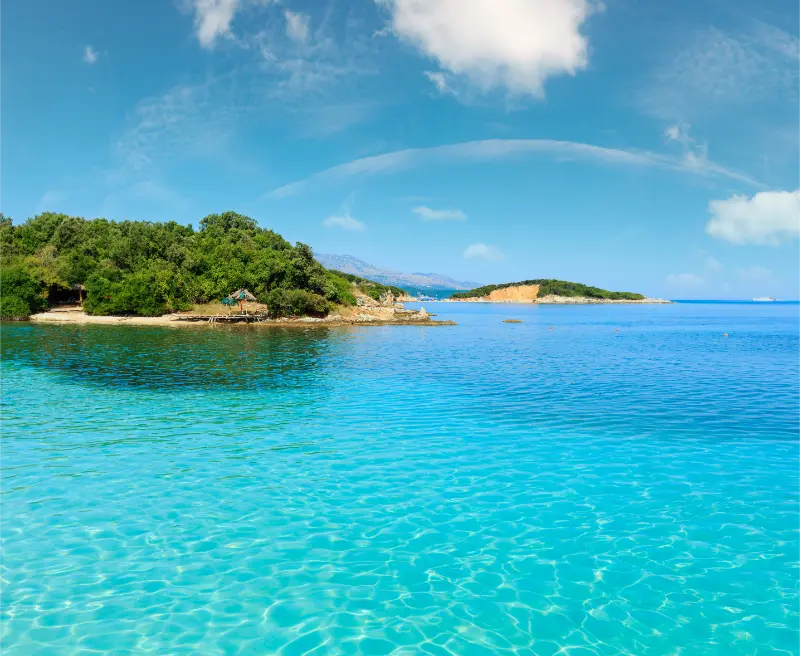
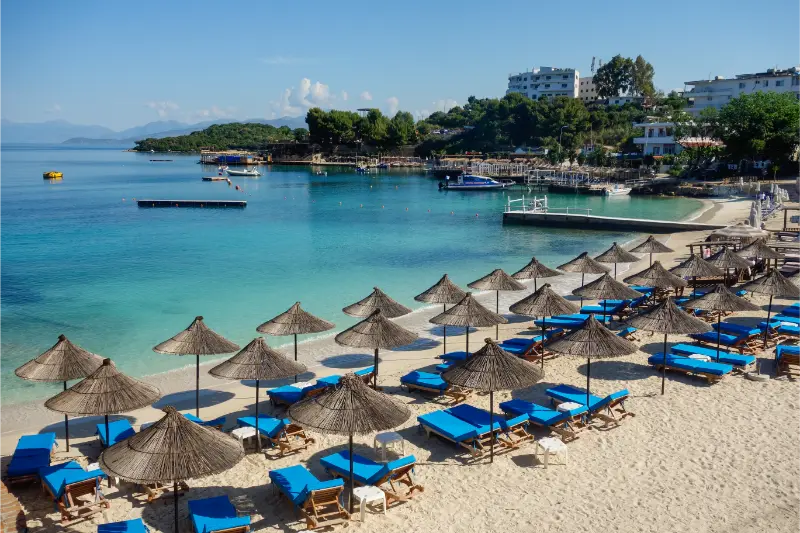
    Turquoise Waters at Ksamil Beach Albania

    When possible, I prefer an ATM physically attached to a recognizable bank branch during opening hours. That does not guarantee zero fees, but it gives me a straightforward place to ask for help if the machine retains a card or the transaction fails. I also avoid making repeated tiny withdrawals: several separate operator and home-bank fees can cost more than one planned withdrawal.

    Card payments in Sarandë and Ksamil: where they work and where cash still wins

    The southern resort area has modern hotels and restaurants that take cards, but it also has a large seasonal economy: beach beds, small boats, parking, taxis, snack stands and family businesses. That mix makes a card-only plan fragile. Sarandë is generally easier; Ksamil rewards carrying small lek notes and asking about payment before ordering extras at a beach club.

    Ksamil Turquoise Beach And Island Albania

    Before the terminal is handed to me, I check the amount and the currency shown. If the terminal or ATM offers to convert the transaction into my home currency, I compare carefully. Dynamic currency conversion can make the final exchange rate less attractive; selecting lek generally lets the card network and my own bank handle the conversion, although the best choice depends on the card and fees I personally have.

    Euros are useful as a backup, not as your accounting system

    Euro notes can be useful emergency travel money, especially if Albania is part of a wider Balkan or Italy–Albania itinerary. But I do not assume that every restaurant, taxi or shop wants euros, and I do not assume the offered rate will match the official market reference. Paying in lek makes prices easier to compare and reduces the chance of accepting a casual conversion simply because the arithmetic is inconvenient.

    If you bring euros to exchange, use a bank or established exchange office and look at the displayed rate before handing over cash. The Bank of Albania currency information confirms that the lek is Albania’s national currency. The official rate is useful as a benchmark; the retail business still sets its own buy/sell spread.

    How to use an Albanian ATM without rushing

    • Use a machine in a well-lit, normal banking area rather than an isolated machine if you have a choice.
    • Inspect the card slot and keypad before inserting the card and shield the PIN.
    • Read the operator fee and the amount in lek before accepting the transaction.
    • If asked whether you want the ATM to convert the withdrawal into your home currency, compare the rate instead of automatically pressing accept.
    • Take the card, cash and receipt before reorganizing your wallet.
    • If the ATM declines the card, do not retry many times immediately; use a second bank or contact your card issuer if necessary.
    • Keep a second payment card in a separate secure place.

    What “enough cash” actually means

    I do not recommend one fixed daily cash amount because accommodation style and activities change the answer completely. Instead, I add up the expenses that are most likely to be cash-based: local transport, small cafés, markets, parking, beach services, entrance tickets, tips, a simple lunch and any guesthouse balance. Then I add a contingency large enough to get back to my accommodation if a terminal or ATM is unavailable.

    The goal is not to walk around with the whole trip budget. Keep the daily wallet small and separate the reserve. Couples or families can split cards and cash between two adults. Solo travelers can keep the backup card and emergency cash in a different secure location from the everyday wallet.

    Coming from Corfu: ferry arrival and the euro temptation

    Travellers arriving from Corfu often still have euros in their wallet, which can make it tempting to keep spending in euro without checking the conversion. Albania’s currency is the lek. A business may agree to take euros, especially in a tourist area, but that convenience does not guarantee the same rate you would receive from a transparent exchange or card transaction. I use euro acceptance as a backup, not as my default budgeting system.

    Where cash matters most around Sarandë port and promenade, Rruga Butrinti, central Ksamil and the beach zones around the village

    For Butrint, beach hopping and taxi movements between Sarandë and Ksamil, carry enough lek for a full half-day without needing an ATM. Summer beach areas can be crowded and mobile payment terminals are not a reason to skip a cash reserve. In Sarandë, the promenade and central commercial streets make it easier to rebalance cash before heading south.

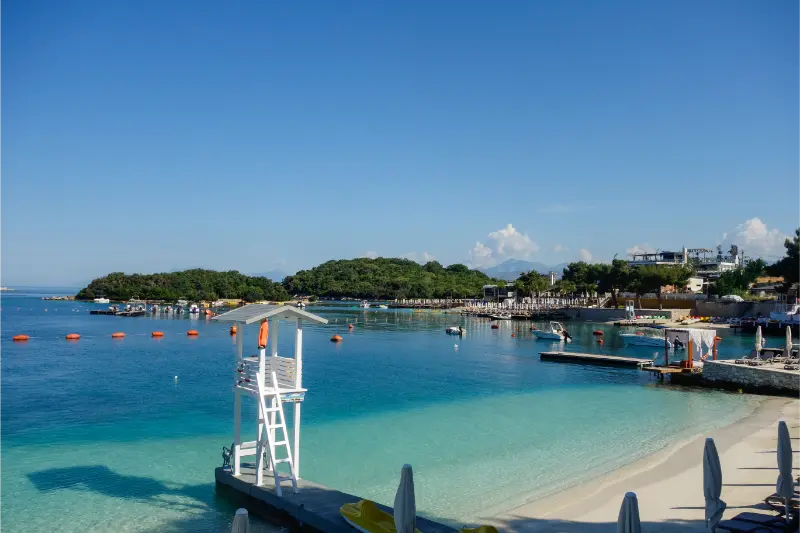
    Paradise Beach Ksamil Albanian Riviera

    Restaurants, cafés and tipping

    Ask about card payment before ordering if you would be uncomfortable paying the bill in cash. In a small family restaurant, a terminal can be temporarily unavailable even when cards are normally accepted. I keep enough lek to cover one full meal for that reason. Tipping in Albania is not handled through one universal rule; if you choose to tip, cash is often the simplest method and lets you control the amount directly.

    For low-value purchases—coffee, byrek, bottled water, fruit or a short taxi ride—small notes reduce friction. Do not repeatedly hand a vendor the largest note in your wallet. When you withdraw, preserve some medium and small denominations instead of spending every smaller note first.

    Markets, supermarkets and shopping

    Markets and tiny shops are among the places where cash remains most useful. Larger supermarkets are more likely to accept cards, which can help you preserve cash for places that genuinely need it. When a souvenir shop offers both euro and lek prices, I ask for the lek price first and compare rather than negotiating from an unfamiliar euro conversion.

    Transport: buses, taxis, parking and transfers

    Do not assume local buses, minibuses or informal transfer arrangements accept cards. Keep cash accessible before boarding, especially if the ticket is bought directly from a driver or local office. For taxis, ask for the approximate fare or meter practice before starting and confirm whether card payment is actually available. For rental cars, cash is still useful for parking, roadside cafés and smaller fuel-station situations even if most major fuel purchases can often be made by card.

    Accommodation: solve the payment question before checkout

    A reservation made online does not always mean the property has already charged the entire stay. Some guesthouses take an online guarantee but collect the balance locally. Read the booking conditions and ask the property whether the remaining amount is payable by card or cash. This matters most when checkout is early, you are leaving for a bus, or the accommodation is far from the banking area.

    For this destination, compare places to stay in Sarandë. I prefer a property whose payment method and final price are clear before arrival, especially on short stays when I do not want to spend the final hour looking for cash.

    A simple arrival-day money plan

    If the ferry from Corfu arrives late, I prioritize the hotel transfer and a small cash reserve over rate-shopping. The following morning is a better time to compare an exchange office or bank ATM. Keep some euro separately for the return to Greece rather than accidentally converting every last note.

    • Keep one working payment card available during the transfer rather than packed in checked luggage.
    • Get only the amount of cash you actually need if the first ATM or exchange option feels expensive.
    • Confirm how the accommodation balance will be paid.
    • Use the first daytime walk to identify a normal bank ATM and supermarket.
    • Before a rural or beach excursion, top up the cash reserve while you are still in town.

    Common money mistakes to avoid

    • Travelling with only one card and no cash backup.
    • Accepting an ATM or card-terminal conversion without reading the rate and fees.
    • Assuming euros are automatically accepted at a fair rate because the destination is touristy.
    • Leaving the ATM withdrawal until after you have reached a remote beach, village or mountain guesthouse.
    • Carrying the entire holiday cash reserve in the everyday wallet.
    • Forgetting that an online hotel reservation may still have a cash balance due locally.
    • Using the official exchange rate as if it were the exact retail rate you are entitled to receive.
    • Ignoring the possibility of “old lek” wording when a spoken price sounds ten times too high.

    Useful WonderfulAlbania guides for Sarandë and Ksamil

    Bookable activities in Sarandë and Ksamil

    For tours and activities, check whether the displayed price is charged online in advance or whether any balance, entrance ticket, food, boat fee or local transport must be paid on the day. Carrying a small cash reserve prevents an otherwise prepaid excursion from becoming awkward.

    Frequently asked questions

    Can I just use euros in Sarandë and Ksamil?

    Some tourism businesses may accept euros, but lek is Albania’s official currency and should be your default. If a price is converted into euros, check the rate rather than assuming it is favorable.

    What currency should I use in Sarandë and Ksamil?

    Use Albanian lek as your default. Euros may sometimes be accepted in tourism businesses, but the rate offered can differ from a bank or exchange-office rate. Ask for the lek price when you want a clear comparison.

    Should I choose lek or my home currency on an ATM screen?

    If the machine offers a conversion into your home currency, read the rate and fees carefully. Many travelers prefer the withdrawal to remain in lek so their card network or home bank performs the conversion, but your own card terms determine the final cost.

    Are card payments safe in Albania?

    Use the same precautions you would at home: keep the card in sight, check the amount on the terminal, enable transaction notifications and use established ATMs. Carrying a second card separately is a practical travel backup rather than a sign that card use is unusual.

    Should I exchange all my cash at once?

    Usually not. Exchange or withdraw enough for the next stage of the trip, then reassess. Carrying a large unused cash balance creates more security risk and can leave you converting money back at the end.

    Do I need small notes?

    Yes. Small and medium lek notes are useful for buses, cafés, markets, parking, tips and minor purchases. Keep them rather than breaking a large note for every low-value transaction.

    Final practical advice

    The easiest way to handle money in Sarandë and Ksamil is deliberately boring: use lek for everyday spending, carry at least two payment methods, withdraw from a normal bank ATM when practical, read every conversion screen, and top up cash before leaving the urban area. That simple routine removes most money stress and lets the destination—not the next ATM—decide how you spend the day.

  • Tirana Without a Car: Buses, Taxis, Walking and Easy Day Trips

    Tirana Without a Car: Buses, Taxis, Walking and Easy Day Trips

    Tirana is one of the easiest places in Albania to visit without a car. The first-time sights cluster around Skanderbeg Square, Pazari i Ri, the Pyramid and Blloku, and the city has a real municipal bus network for longer urban trips. A rental car mostly adds parking and traffic decisions until you are ready to leave the capital.

    I would stay centrally, walk the historic and social core, use buses for places such as the Dajti side of the city, and take taxis only when they save meaningful time. If Tirana is the first stop of a road trip, collecting the car on departure day is often cleaner than paying to store it in the center.

    Quick answer

    QuestionAnswerWhy
    Car needed in the center?NoMost first-time sights are walkable
    Best baseSkanderbeg Square / central TiranaMinimizes bus and taxi use
    Useful public transportMunicipal urban busesOfficial map + Google Maps integration
    Best car-free excursionMount DajtiCity bus/taxi to cable-car area
    When a car helpsMulti-day regional road tripNot for central sightseeing

    Is a car actually useful here?

    A car is useful only when it solves a real transport problem. If it spends most of the day parked while you walk a historic center, it is not helping. My car-free strategy is to stay in the right neighborhood, walk the compact core, use public transport for predictable corridors and pay for a taxi or transfer only when it removes a genuinely awkward connection.

    For intercity journeys, e-Transport Albania is the national planning reference I check alongside current terminal information and local confirmation. For city transport, use the official/local source linked below and always re-check information close to travel.

    Official / local transport information

    Tirana Municipality public-transport portal

    Walking is the default

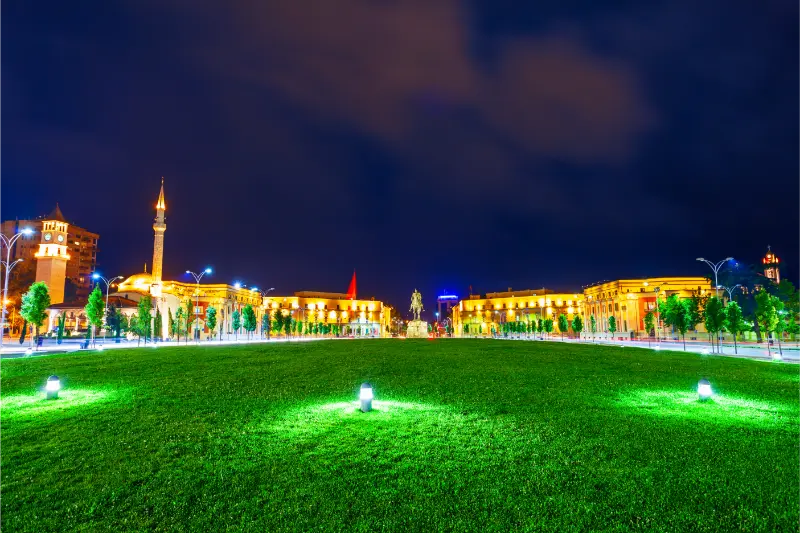
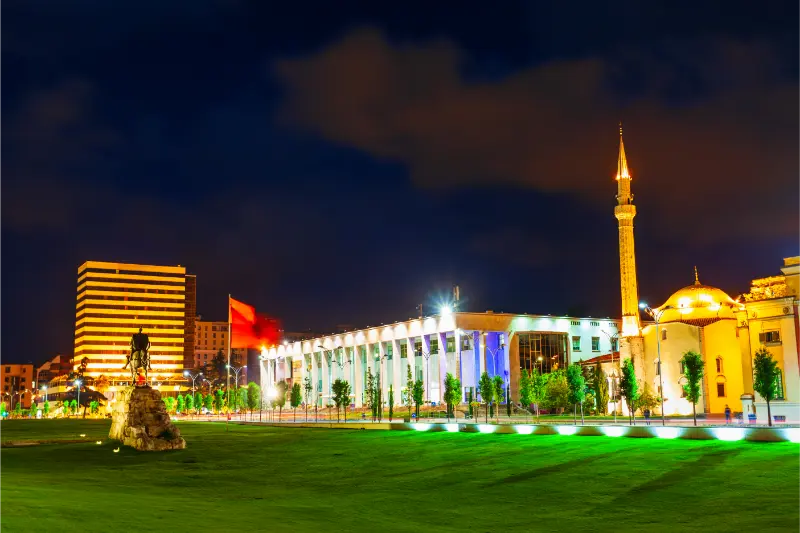
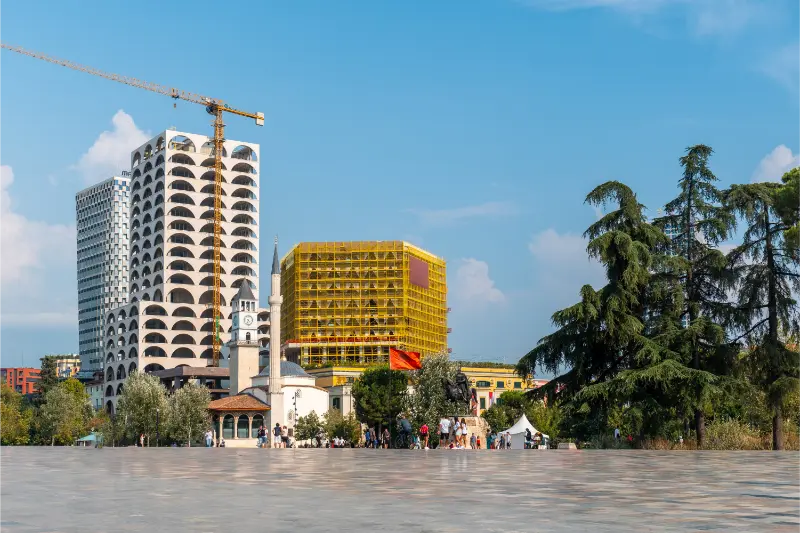
    Central Tirana is compact enough that walking should be your first transport choice. Skanderbeg Square, Et’hem Bey Mosque, Bunk’Art 2, Pazari i Ri, Tirana Castle, the Pyramid and Blloku fit into one coherent pedestrian route. Use the Tirana self-guided walking tour rather than treating every sight as a separate taxi ride.

    Tirana Pyramid Center Skanderbeg Square Tirana Albania

    Using city buses

    Tirana Municipality maintains an urban bus system and an official transport portal with a route map; it also states that bus schedules are integrated into Google Maps. That makes buses useful for destinations beyond the compact center. I still check the route shortly before boarding because road works and service changes can affect stops.

    Taxis and ride planning

    Taxis are useful for a late evening, heavy luggage or an awkward cross-city trip. I ask the hotel to call a licensed taxi or use a clearly identified service, then confirm the fare or meter arrangement before departure. For short central hops, walking is often faster once traffic is considered.

    Mount Dajti without a car

    You do not need a rental car to make Dajti part of a Tirana stay. Use bus/taxi transport toward the cable-car side, then continue with Dajti Ekspres when it is operating. The car-free version is often better because nobody has to drive back after lunch or spend time finding mountain-area parking.

    Airport to the center

    TIA has a dedicated airport-city connection, so a rental car is not required on arrival. The Tirana Airport to City Center guide explains bus, taxi and transfer choices. If your hotel is near Skanderbeg Square, the airport bus can be particularly practical.

    Day trips without a car

    Durrës and Krujë are among the easiest independent day trips by intercity transport. Berat and Shkodër are possible too, but I prefer an overnight if you want more than the headline sights. For nature destinations with awkward public transport, an organized tour or hired driver can be better than renting a car for one day.

    Where to stay

    Without a car, location is worth paying for. Stay near Skanderbeg Square, Pazari i Ri or the central/Blloku corridor and you can walk most evenings. The Where to Stay in Tirana guide compares the neighborhoods in detail.

    When I would rent a car anyway

    Rent when Tirana becomes the starting point for several rural or coastal stops that are inconvenient by bus. Collecting the vehicle after the city stay keeps the advantages of both travel styles: a car-free capital and flexible road trip afterward.

    A simple car-free itinerary

    For two car-free days, use day one for the central walking route and one museum. On day two, choose Dajti plus the Grand Park or an easy intercity excursion. You do not need to spend either day learning Tirana traffic.

    Traveling with children

    Families benefit from central accommodation, the Grand Park and selective taxi use. Buses can save walking but may be less convenient with a stroller at busy times. I would keep the car out of the plan unless the family is leaving Tirana for a wider road trip.

    Limited mobility and easier routes

    Tirana is flatter than Albania’s UNESCO hill towns, but pavement quality and crossings still vary. Travelers with limited mobility should choose a central hotel, use taxis for longer gaps and contact attractions about step-free access rather than assuming every historic building is accessible.

    Where to stay without a car

    Compare current accommodation in Tirana on Booking.com.

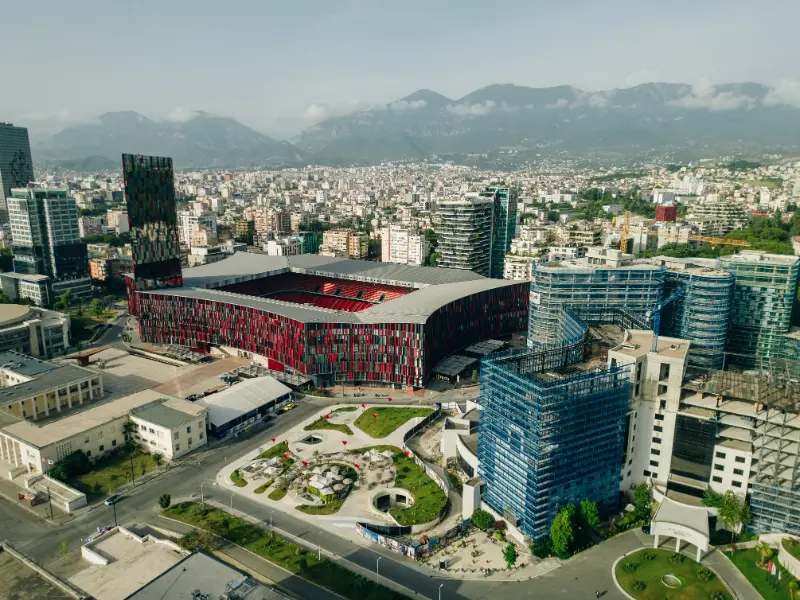
    Aerial Drone View Tirana Albania 3

    The best no-car hotel is not always the prettiest one. I prioritize a location that removes one daily transfer: close to the historic core, promenade, bus connection or beach I expect to use most.

    Taxi strategy

    Use taxis strategically rather than automatically. I ask the accommodation for a reliable local number, agree the price for longer rural trips and arrange the return before being dropped at a remote site. If a driver is waiting during a visit, clarify whether waiting time is included. For families, ask about child-seat availability before the day of travel.

    How to handle intercity buses

    Arrive early, confirm the destination with the driver and keep valuables in your hand luggage. Albanian intercity transport is practical, but departure points and schedules can change. I never build an international flight or mountain ferry connection around a bus with only a few minutes of margin.

    When a rental car becomes worth it

    I would rent a car when the itinerary changes from one base plus one excursion into a chain of rural stops: several beaches in different bays, remote villages, mountain trailheads or small archaeological sites in one day. Even then, consider renting only for that segment rather than keeping the vehicle through an entire city stay.

    Common mistakes

    • Booking accommodation far from the walkable center because the map distance looks small.
    • Assuming every local bus timetable found online is current.
    • Trying to reproduce a five-stop road trip with separate taxis.
    • Waiting until a remote attraction closes to think about the return ride.
    • Carrying large luggage through steep old-town lanes instead of taking one short taxi.
    • Renting a car for a destination where parking is harder than public transport.
    • Booking two fragile transport connections with no delay buffer.

    Useful related guides

    Frequently asked questions

    Can I visit Tirana without renting a car?

    Yes. For most first-time visitors, a car is unnecessary.

    Are buses useful for tourists?

    Yes for trips beyond the compact center. Use the municipal route information and Google Maps as current planning tools.

    How do I get to Dajti without a car?

    Use local bus/taxi transport toward the cable-car area and continue by Dajti Ekspres when operating.

    What is the best neighborhood without a car?

    The central Skanderbeg Square–Blloku–Pazari i Ri area is the easiest.

    When should I collect a rental car?

    On the day you leave Tirana if the next part of the trip is a road trip.

    Aerial Drone View Tirana Albania 4

    Final advice

    A no-car trip works best when you stop treating the rental car as the default definition of freedom. Good location, one reliable bus connection and the occasional taxi can create a more relaxed itinerary than driving, parking and navigating every day. Keep the car-free parts genuinely simple, and pay for a transfer when simplicity is worth more than squeezing every journey into the cheapest possible ticket.

    How I would decide before booking

    I look at three map points: the arrival stop, the hotel and the first two attractions. If all three sit inside one compact area, I keep the stay car-free. Then I identify the single hardest excursion. If a taxi, tour or shuttle solves that one day, renting a car for the whole stay usually does not make sense.

    I also check the departure day. A car-free plan is excellent until an early ferry, airport transfer or mountain shuttle requires a connection that does not exist. Solve the fixed-time departure first; everything else can remain flexible.

    Public transport versus taxi: how I split the budget

    I use public transport for predictable point-to-point movements and taxis for the awkward edges: luggage, hills, early departures and sites where the return is uncertain. This keeps the budget low without turning every day into a transport puzzle. Two well-chosen taxi rides can be better value than a rental car, fuel and parking for an entire stay.

    Night arrivals and early departures

    After dark, I become more conservative. I do not learn an unfamiliar local-bus network while carrying luggage if a simple taxi solves the problem. For an early departure, I arrange the transfer the evening before and confirm the pickup point. A car-free itinerary remains easy when the fixed-time journeys are solved in advance.

    What to keep offline

    Save the hotel address, intercity terminal pin, one taxi contact, current bus information and the name of the destination written clearly on your phone. If mobile data fails, those five items are enough to keep most Albanian car-free journeys moving.

  • Parking in Tirana: Zones, Prices, Garages, Hotel Parking and Driving Tips

    Parking in Tirana: Zones, Prices, Garages, Hotel Parking and Driving Tips

    If you are driving in Albania, parking in Tirana deserves more planning than it usually gets. Parking rules are becoming more structured in the country’s busiest destinations, but the experience still changes sharply from one city to another. Historic centers, beach roads, hotel garages and municipal spaces can all operate differently, especially in July and August.

    Tirana is the Albanian city where I would most readily leave the car parked for an entire day. The center is compact enough for walking, taxis and city buses, while driving between Blloku, Skanderbeg Square and the New Bazaar can consume more time than it saves. If the hotel has secure parking, treat that space as part of the room value. This guide focuses on the practical decisions that save time: where to aim first, when a hotel parking space is worth paying for, how to read local restrictions, what changes in summer and when it is smarter to leave the car parked and continue on foot. I checked the municipal information referenced here on September 21, 2026, but signs on the street and instructions from the parking operator always take priority because local rules can change.

    Tirana parking at a glance

    QuestionPractical answer
    Best overall strategyPark legally once, then walk or use a short taxi for the compact sightseeing area whenever possible.
    Best choice for an overnight stayA hotel with confirmed on-site or reserved parking, especially in summer.
    Should I rely on free street parking?No. Free spaces exist, but availability and legality vary block by block and season by season.
    Cash or card?Carry some Albanian lek. Payment systems vary between municipal spaces, private lots and hotel parking.
    What should I re-check?Current signs, hours, payment instructions, overnight rules and whether your exact vehicle fits the space.

    Is a car useful in Tirana?

    A rental car can be extremely useful for reaching Tirana, continuing to another region and visiting places that are awkward by bus. It is much less useful for moving a few hundred meters between central attractions. A common first-time mistake is to treat the car as the default transport for every meal, viewpoint and museum. In compact Albanian destinations, repeated parking searches can consume more holiday time than walking.

    Tirana Albania Bunkart Bunker 2

    For the wider transport decision, compare this guide with my guide to renting a car in Albania and Getting Around Albania. If your itinerary is mostly Tirana plus easy bus connections, a car may not be essential every day. If you are building a regional road trip, parking becomes part of the hotel and route-planning decision rather than an afterthought.

    Where to park in Tirana

    For sightseeing, a garage or legal paid space on the edge of the central core is usually more efficient than circling the blocks immediately around Skanderbeg Square. Blloku and the stadium area become busy in the evening, while streets close to offices fill quickly on weekdays. The Grand Park area also attracts heavy leisure traffic on good-weather afternoons.

    The best space is not always the closest space. I prefer a legal parking area that allows a simple exit over a curbside gap that requires reversing into traffic or climbing a difficult street. In Tirana, save the parking pin before you drive into the busiest zone. If your first choice is full, having a second legal option already marked prevents the stressful loop of circling one block repeatedly.

    Current municipal parking rules and paid areas

    Tirana Municipality currently publishes three street-parking tariff zones: Zone A at 100 ALL per hour, Zone B at 40 ALL per hour and Zone C at 20 ALL per hour. The municipal service also lists SMS payment to 50500 and the Tirana Ime app. For current information, the most useful official reference is the Tirana Municipality paid-parking service.

    Sunset Tirana Albania Aerial Panoramic View 3

    I do not recommend building a trip around a parking price copied from an old forum or map review. Municipal tariffs, payment methods, seasonal zones and enforcement can change. When you arrive, read the sign at the exact space: it should tell you whether the area is paid, the relevant hours and how payment is handled. If the instructions are unclear, use a managed lot or ask your hotel rather than guessing.

    Street parking: how to decide whether a space is legal

    Do not read an empty curb as permission to park. Bus stops, driveways, reserved spaces, taxi stands, disabled spaces and signed no-parking areas are enforced independently of whether other cars are stopped nearby. In the center, road design and one-way systems can make it difficult to return to a space after a wrong turn. The safest visual clues are proper bay markings, municipal signs and clearly managed parking areas. Never assume that a line of parked cars proves that the space is legal. Local drivers may be stopping briefly, using resident permissions or simply taking a risk that you do not want with a rental vehicle.

    Keep junctions, pedestrian crossings, ramps, fire access and driveways clear. Do not use disabled spaces without the required authorization. If a sign contains Albanian wording you do not understand, translate it before leaving the car. A thirty-second translation is cheaper than a tow, clamp or parking fine.

    Hotel parking: what to ask before booking

    If you are staying in the center for two or three nights, prioritize a hotel that explicitly confirms on-site or reserved parking. ‘Parking available nearby’ can mean a public garage rather than a private space. Ask whether the space is guaranteed, whether there is a height limit, and whether you can leave and re-enter during the day.

    • Is the parking space guaranteed for every night of my reservation?
    • Is it on the property, in a private lot, in a garage or simply on the public street?
    • Is there an extra daily fee?
    • Can I enter and leave at any hour?
    • Is there a height, width or vehicle-size limit?
    • Will I need to leave the car keys with reception or a parking attendant?

    For a road trip, these questions can matter more than being 300 meters closer to the center. You can compare accommodation in Tirana on Booking.com and then confirm the parking arrangement directly with the property before arrival. This is a sponsored link.

    Historic center and pedestrian areas

    Tirana has areas where walking is part of the experience. Even when a road is technically open to traffic, historic streets can be narrow, crowded or unpleasant for a visitor in an unfamiliar rental car. The practical goal is to stop before the difficult part, not to reach the door of every attraction.

    Use the Tirana travel guide to understand which sights cluster together. Once you see that several attractions lie within the same walkable area, parking once becomes the obvious choice. This also reduces the risk of entering a pedestrian zone or getting trapped in a one-way street system.

    Arriving with luggage

    If you are checking into a hotel in Tirana, do not automatically unload in the middle of a narrow street. Ask the property for the correct arrival procedure before you reach the center. Some hotels prefer that you stop briefly at a specific point, unload, and then move the vehicle to a garage or lot. Others can direct you to an access route that navigation apps do not choose well.

    Keep valuables, passports, medication and electronics with you while unloading. Do not leave visible bags in the passenger compartment simply because the stop will be short. The main risk is ordinary opportunistic theft rather than a destination-specific danger, and the easiest prevention is a car that looks empty.

    Summer parking and peak-hour strategy

    Parking pressure in Tirana is not constant throughout the year. Summer weekends, public holidays and late-afternoon leisure traffic can turn an easy spring parking area into a slow search. If you are visiting a beach, castle, promenade or old town, arriving before the main day-trip wave gives you more choice and a less stressful exit.

    On very busy days, I would rather pay for a legal managed space than spend forty minutes searching for a free one. The real cost of free parking is sometimes fuel, time and frustration. If you have a timed ferry, tour, restaurant reservation or flight later in the day, use the option with the most predictable exit.

    Night parking and leaving a rental car overnight

    For overnight parking, security and legality matter more than saving a small fee. Remove luggage, passports and shopping from view. Close windows fully and check the vehicle manually after locking it. If the hotel offers controlled parking, I usually consider that a meaningful benefit on a road trip.

    Read rental terms about keys, damage reporting and towing. If the vehicle is moved or damaged while parked, photograph the position, surroundings and any marks before driving away. For minor issues, contact the rental company according to its instructions rather than arranging repairs independently.

    Families, strollers and travelers with limited mobility

    The closest legal parking space can be worth more when traveling with a stroller, young children, an older relative or limited mobility. Cobblestones, steep streets and summer heat change the practical walking distance. If step-free access matters, contact the attraction or hotel directly and ask about the route from the parking area, not only whether a parking space exists.

    When traveling with children, unload on the pavement side whenever possible and keep them away from moving traffic while luggage is being removed. In a busy beach or old-town car park, agree on a meeting point before everyone disperses. These small habits matter more than complicated parking tricks.

    Parking a rental car safely

    • Photograph the vehicle at pickup, including wheels and lower bumpers.
    • Keep the rental contract and roadside-assistance number accessible offline.
    • Use a space with enough clearance rather than squeezing between vehicles.
    • Fold mirrors only when appropriate and never leave bags visible.
    • Check signs again before leaving the car overnight.
    • If crossing a border later, keep vehicle authorization and insurance documents with you rather than hidden in unattended luggage.

    When I would leave the car parked in Tirana

    Tirana is also the place where a rental car can become unnecessary between arrival and departure. If your Albania road trip starts with two nights in the capital, consider collecting the car only when you leave for Berat, Shkodër or the coast. That can save parking fees, reduce city-driving stress and shorten the rental period.

    A good road trip has deliberate no-driving periods. They reduce fatigue, simplify meals and let you enjoy a glass of wine without thinking about the vehicle. If the next destination is not until tomorrow, there is usually no reason to move the car after check-in unless the sight you want is genuinely outside walking or taxi range.

    Common parking mistakes to avoid

    • Assuming that other parked cars prove a space is legal.
    • Booking a central hotel without asking what “parking available” actually means.
    • Driving into a historic lane because navigation shows it as a road.
    • Leaving luggage visible while sightseeing.
    • Expecting peak-August parking conditions to match reviews written in April.
    • Ignoring payment instructions because the stay will be “only ten minutes.”
    • Planning a zero-margin connection after parking in a crowded center.

    A simple parking checklist

    1. Save your hotel and first-choice parking pins before driving into the center.
    2. Check current municipal signs and payment instructions on arrival.
    3. Park fully inside a legal bay and leave access points clear.
    4. Photograph the parked location if the streets are unfamiliar.
    5. Remove valuables and travel documents from view.
    6. Confirm the closing time if using a private garage or lot.
    7. Before departure, allow extra time to retrieve the vehicle and exit city traffic.

    Tours and activities after you park

    Once the car is parked, fixed-location sightseeing becomes much easier. I would schedule the first paid activity with enough margin to walk from the parking area rather than choosing a start time that depends on finding a perfect curb space. The widget below is useful for comparing bookable experiences in and around Tirana.

    Frequently asked questions

    Is parking in Tirana free?

    Both free and paid parking can exist in and around Tirana, but the exact rules depend on the street, lot and season. Use the sign at the space as the authority and do not assume that an unmarked-looking curb is free.

    Can I pay by card?

    Sometimes, but not everywhere. Municipal systems, private lots and hotel garages can use different methods. Carry a small amount of Albanian lek even if you normally pay by card.

    Is it safe to leave luggage in the car?

    I would not leave visible luggage in any tourist destination. Put bags in the hotel or keep them out of sight before arriving at the parking area, so nobody sees you moving valuables into the trunk.

    Should I book a hotel with parking?

    If you are visiting Tirana with a rental car in summer, yes, I would give confirmed hotel parking significant weight. It removes one of the least enjoyable parts of arriving in a busy destination.

    Can I park in the historic center?

    Access varies. Some streets are pedestrian, restricted, narrow or unsuitable for visitor parking. Stop at a legal outer parking area unless your hotel gives you precise access instructions.

    What if I cannot understand the parking sign?

    Use phone translation, ask a parking attendant or move to a clearly managed lot. Guessing is rarely worth the risk of a fine or tow.

    Final planning advice

    The easiest way to handle parking in Tirana is to make it part of the itinerary before you arrive. Choose the hotel with the car in mind, save one or two legal parking options, read the current signs and then leave the vehicle alone while you explore the compact center. A car should give you freedom between Albanian destinations, not become a problem you solve every hour.

    Tirana Pyramid Center Skanderbeg Square Tirana Albania

    Travelling with a motorhome or campervan? Read Campervan & Camping in Tirana: Parking, Campsites, Dajti and Road-Trip Planning for overnight strategy, parking, road access, water/waste planning and protected-area camping rules.

  • Cycling in Gjirokastër: Drino Valley, Old Bazaar Hills and E-Bike Route Planning

    Cycling in Gjirokastër: Drino Valley, Old Bazaar Hills and E-Bike Route Planning

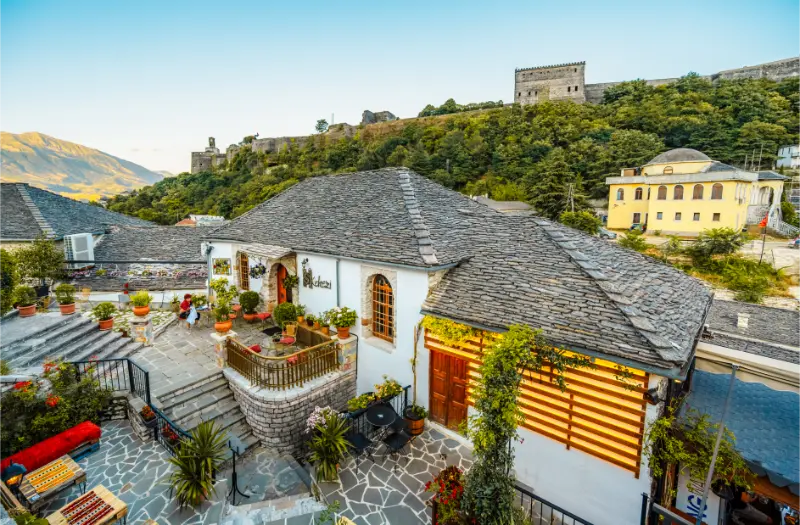
    Gjirokastër is the hardest of Albania’s major heritage cities to treat as a casual cycling destination. The modern lower city sits in the Drino valley, while the Old Bazaar and castle rise steeply above it on stone streets. A conventional bike is useful for the valley; an e-bike makes the climbs more realistic; neither removes the need to walk on steep cobbled lanes.

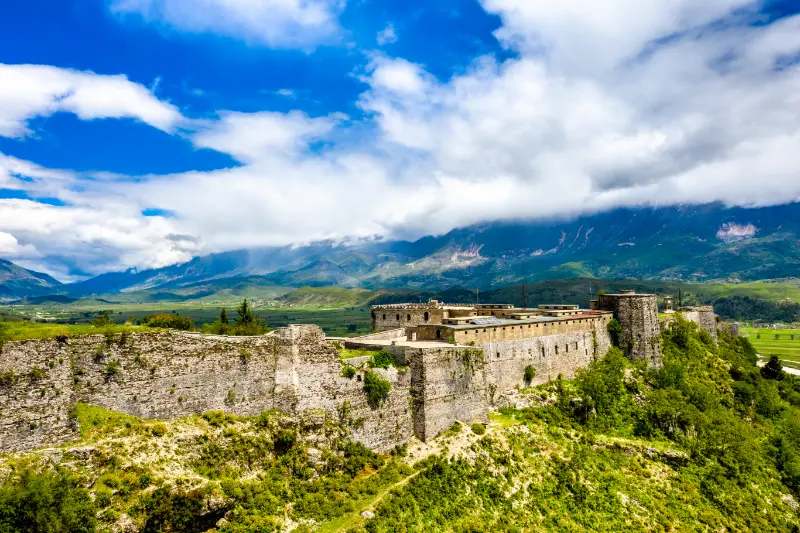
    Aerial View Gjirokaster Fortress Albania 2

    Is Gjirokastër good for cycling?

    Gjirokastër is one of the places where an e-bike genuinely changes the trip, but even electric assistance does not make wet cobblestones or stair-like streets safe to ride.

    Cycling here suits travellers who already ride in mixed traffic, but there is also room for cautious leisure riders if they choose the easiest routes and quieter hours. If you have not ridden a bicycle for years, begin with a short flat loop rather than booking an ambitious full-day tour. Families should judge each road independently; a scenic destination is not automatically suitable for children on bikes.

    Terrain and what the map does not show

    Around Gjirokastër, the riding profile is flat in the valley but dramatically steep toward the castle and old bazaar, with rough stone surfaces in historic lanes. Distance alone therefore tells you very little. A 15-kilometre route with repeated climbing, rough surfaces or dense traffic can take more energy than a 35-kilometre flat lakeside ride. Before leaving, check elevation as carefully as kilometres and decide whether you want a transport ride, a fitness ride or a sightseeing ride.

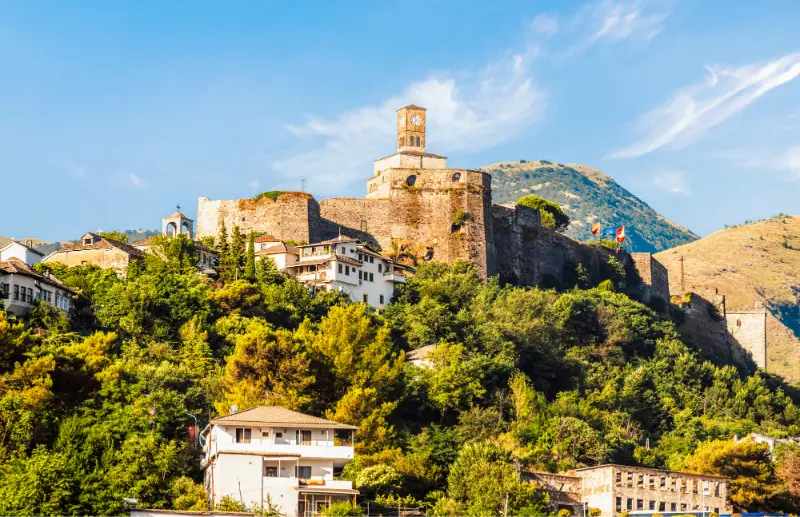
    Clock Tower Castle Gjirokaster Albania View Old

    Navigation apps are useful but imperfect for cycling in Albania. A line that looks like a minor paved road can become rough, steep or unsuitable after weather damage. Compare satellite imagery, elevation and recent local advice, and ask a rental shop or host whether the route is realistic. Never enter a new road, tunnel or construction section simply because a mapping app draws a bicycle line through it.

    Three practical bike routes to consider

    Lower city and Drino valley

    The most comfortable local ride, useful for building confidence and exploring beyond the tourist core. Watch traffic on larger roads and choose village lanes carefully.

    Lower town to the edge of the historic centre

    A short but steep test ride. Most visitors should park or lock the bike before the narrowest old streets and continue on foot.

    Drino valley day ride toward rural villages

    A strong choice for experienced cyclists who want landscapes rather than monuments. Carry water and repair gear, and do not assume every minor mapped road has smooth pavement.

    Traffic and road-safety reality

    The main local issues are steep gradients, braking heat on descents, polished cobbles, blind corners, dogs and limited shoulders on rural roads. I would rather add ten minutes on a calmer street than save time on a road that feels hostile. At roundabouts and complex junctions, slow down early and make eye contact where possible; never assume a driver has seen you simply because you have priority.

    Wear a helmet even when local riders do not. Use a strong rear light in daylight on mixed roads, a front light in tunnels or low visibility, and clothing that makes you easy to see. Ride predictably, signal early and avoid squeezing along the inside of buses or trucks at junctions. Albania’s national transport strategy for 2026–2030 places road safety within a Safe System / Vision Zero framework, but infrastructure quality still varies street by street, so your route choice remains part of the safety plan.

    Renting a bike

    Bike-rental businesses in Albania can be seasonal and inventories vary. Ask for the exact bicycle type, frame size, brake condition, tyre condition, lock, helmet and repair kit before paying. Photograph existing damage. For an e-bike, confirm real battery capacity, charger type, replacement support and whether the rental company allows the route you are planning. A powerful motor does not compensate for poor brakes, worn tyres or an undersized frame.

    If the first bike offered in Gjirokastër feels wrong, ask for another one. A badly fitting saddle or unreliable brake becomes much more serious once you are several kilometres from town. Test both brakes, every gear and wheel alignment on a quiet street before beginning the planned route.

    Should you rent an e-bike?

    An e-bike is most useful where climbs or heat would otherwise shorten the day. Use lower assistance on flat sections and save battery for the return climb. Do not plan around the advertised maximum range: rider weight, luggage, gradients, temperature, wind and repeated high-assistance starts can reduce it sharply. If the route is remote, turn around with a generous battery reserve rather than trying to arrive with one or two percent remaining.

    For Gjirokastër, an e-bike is especially useful when your route includes the hillier sections described above or when you want to combine sightseeing with cycling without arriving exhausted. Confirm where you can recharge and whether the battery is removable; never count on a café allowing charging without asking.

    Best time of year and best time of day

    April to june and september to october offer the best balance; summer valley heat can be severe. Even in the best season, start earlier than you would for a normal sightseeing day. Cooler roads, lighter traffic and softer light make the first two hours much more pleasant. In summer, I plan the hardest riding before lunch and use the middle of the day for a museum, long meal or swim.

    Wind and rain can matter as much as temperature. Coastal headwinds turn an easy outward ride into a hard return; wet polished stone can become slippery in heritage towns; thunderstorms make exposed mountain descents a poor choice. Check the forecast again on the morning of the ride and treat cancellation as good judgement, not a failed travel day.

    What to carry

    • Helmet and front/rear lights
    • Water plus one emergency snack
    • Phone with offline map and enough battery
    • Pump, tube/patch kit and tyre levers
    • Light layer or rain shell on longer routes
    • Cash or card for an unplanned taxi, café stop or repair

    For anything beyond a short urban ride, carry at least a tube or patch kit, tyre levers, pump, basic multi-tool and a way to call for help. Tubeless riders should bring plugs and know how to use them. Specialist tyres, brake pads and electronic components may not be available in a small town. If your bike has an unusual axle or proprietary part, bring the correct spare rather than assuming a local shop will stock it.

    Parking and securing the bicycle

    Use a proper lock and choose a visible, fixed object. Do not leave a rental bike unlocked outside a café because local theft rates feel low; opportunistic theft only needs a few seconds. Remove lights, phone mounts, batteries or panniers when practical. At hotels, ask whether the bicycle can be stored inside, in a locked courtyard or in a monitored luggage room rather than on the street overnight.

    Cycling with children or occasional riders

    For children and less confident riders, prioritize traffic separation over scenery. A short lakefront or park ride can be a better family memory than a famous coastal road with fast vehicles. Check helmet sizes before the day of the ride, carry snacks, and build in a clear turning point. If a child becomes tired, the plan should allow a taxi or transfer rather than requiring everyone to complete the same distance.

    Food, water and recovery

    Cycling days work better with simple food planning. Eat a normal breakfast, carry fruit or another easy snack and do not rely on finding a restaurant exactly when energy drops. Albanian bakeries, byrek shops, cafés and small markets make refuelling easy in towns. On remote routes, buy water and food before leaving the last settlement rather than waiting for a pin on a map that may be closed.

    Heat management matters from late spring through early autumn. Carry more water than you expect to need, refill before leaving towns, use sunscreen and avoid the hottest hours for sustained climbing. A shaded café stop is not wasted time: fatigue and dehydration make traffic decisions worse. On cooler mountain routes, the opposite problem appears—carry a windproof layer because a long descent can feel cold even after a hot climb.

    Combining the bike with buses, taxis and a wider Albania itinerary

    If cycling is one part of a wider Albania trip, keep luggage modular. Leave the main suitcase at your accommodation and ride with a small day bag or pannier. For point-to-point touring, distribute weight low and evenly, protect electronics from rain and test the loaded bike before the first long stage. Buses may accept bicycles only when space and operator policy allow, so never assume a bike will be carried without asking in advance.

    For the wider destination, use the Gjirokastër travel guide to decide where cycling fits around museums, beaches, castles or day trips. The national overview Cycling in Albania is useful for multi-day planning, while the e-bike guide covers battery and charging strategy.

    Would I book a guided cycling tour?

    A guided ride is worth considering when the best scenery lies outside town or the route involves mountain junctions, remote roads or cultural stops that are easy to miss. Ask about group size, vehicle support, bicycle maintenance and the guide’s plan for a mechanical problem. A good guide should be willing to shorten or reroute a ride when traffic, weather or group ability makes the original plan inappropriate.

    Where to stay if cycling is a priority

    Choose accommodation in Gjirokastër by route access, secure storage and the streets you will actually use, not just by star rating. A hotel 500 metres closer to a calm exit road can be more valuable than a more luxurious property that forces you through a dangerous junction every morning. Ask directly whether bikes can be stored inside overnight and whether stairs make carrying an e-bike difficult.

    Clock Tower Castle Gjirokaster UNESCO World Heritage Albania 2

    You can compare accommodation here: places to stay in Gjirokastër on Booking.com.

    Responsible cycling etiquette

    Respect pedestrians, livestock, residents and protected areas. Slow down near villages, children and animals, and do not ride through crowded pedestrian streets simply because other people do. Close gates when you pass through an authorized rural route, avoid private land and never create a shortcut across fields or archaeological areas. Responsible cycling should reduce impact, not move it from cars to trails.

    A realistic two-day cycling plan

    Day 1: keep the ride local. Use the easiest of the three routes above, stop often and learn how traffic behaves in Gjirokastër. Finish with a walking section rather than extending the ride just to reach a mileage target.

    Day 2: choose the more scenic or challenging route only if weather, traffic, bike condition and your legs all feel right. Start early, carry repair basics and set a turnaround time. If conditions are poor, use the bicycle for a short morning ride and switch to normal sightseeing instead.

    Common mistakes to avoid

    • Choosing a route by distance but ignoring elevation and traffic
    • Riding without daytime lights on mixed roads
    • Assuming every mapped minor road is paved
    • Setting out at midday in July or August
    • Renting an e-bike without checking brakes and battery condition
    • Leaving the bicycle outside overnight with a weak lock
    • Planning a one-way ride without confirming how the bike can return
    • Treating pedestrian zones, heritage streets or protected sites as cycle tracks

    Official road-safety context

    Albania’s Ministry of Infrastructure and Energy publishes the national transport and road-safety framework. For current rules, major road works and policy changes, check the official transport information before a long road-based cycling trip. Local conditions can change faster than a travel article.

    Final thoughts on cycling in Gjirokastër

    Cycling in Gjirokastër works best when the bicycle is a tool rather than a challenge. Choose the road that feels safe, walk when the surface or traffic stops being enjoyable, and use an e-bike or taxi without feeling that it makes the trip less authentic. The reward is not a Strava number; it is seeing more of the landscape at a human pace while still arriving with enough energy to enjoy the destination.

  • Sarandë & Ksamil for Senior Travelers: Beaches, Hotels, Butrint, Taxis and Easy Pacing

    Sarandë & Ksamil for Senior Travelers: Beaches, Hotels, Butrint, Taxis and Easy Pacing

    Sarande Ksamil for senior travelers is best planned around comfort, not a stereotype about age. Some travelers in their seventies happily hike for hours; others in their fifties need to protect a knee, avoid heat or limit stairs. Sarandë and Ksamil can be excellent for senior travelers, but they reward careful hotel selection more than almost any other Albanian coastal base. Sarandë climbs steeply behind the waterfront, while Ksamil is spread across small roads and separate beach pockets. A sea view may come with a daily hill or staircase, so location and entrance design matter as much as room quality.

    This guide focuses on practical choices that reduce unnecessary strain: where to stay, how much walking to schedule, when a taxi is worth it, how to manage heat and medication, and which excursions deserve more scrutiny. For a country-wide route, start with my Albania for Senior Travelers guide; for ordinary sightseeing detail, keep the Sarandë & Ksamil travel guide open as well.

    Is Sarandë & Ksamil a good destination for senior travelers?

    Yes, with the right expectations. The most important question is not “Am I too old for Sarandë & Ksamil?” but “Which parts of Sarandë & Ksamil match the way I currently like to travel?” Good senior travel planning removes avoidable friction—long luggage carries, steep hotel approaches, midday heat, uncertain late-night transport—while keeping the experiences that made you choose Albania in the first place.

    Sarandë’s promenade is the easiest walking environment, but many hotels sit uphill. Ksamil is less steep overall yet sidewalks can be discontinuous and beach entrances vary. Butrint includes uneven archaeological surfaces, while the Blue Eye can involve walking from the parking/arrival area; decide whether those distances fit your stamina before committing.

    Choose the hotel for access, not only for the view

    In Sarandë, a hotel close to the promenade can dramatically reduce effort. In Ksamil, choose the specific beach area first and then find accommodation nearby rather than selecting a property solely by rating. Confirm lift access, number of entrance steps and whether the restaurant/breakfast room is on another floor without lift service.

    Ksamil Sandy Beach And Island Albania

    Before booking, use Booking.com accommodation options in Sarandë & Ksamil to compare location, lift information and recent reviews. Then contact the property directly if an access feature is non-negotiable. “Elevator” does not always mean step-free from the street, and “ground floor” can still include entrance steps.

    • Ask how many steps there are from the street to reception and from the lift to the room.
    • Confirm whether the shower is walk-in or inside a high bathtub if that matters to you.
    • Check whether breakfast is served on a floor reached by the lift.
    • Ask where a taxi can stop, especially in historic or pedestrian areas.
    • If you sleep lightly, request a room away from late-night bars, lifts and busy roads.
    • For longer stays, a small fridge can be useful for medication, drinks and simple snacks.

    Walking: plan by surface and gradient, not kilometres

    A four-kilometre day on smooth level pavement can be easier than one kilometre on polished stone, stairs and steep lanes. In Sarandë & Ksamil, separate “distance” from “effort.” Build the day around one physically demanding block, then add seated experiences—lunch, museum, café, scenic drive or waterfront time—rather than stacking several walking-heavy attractions.

    If reduced mobility is a central issue rather than simply a preference for slower travel, read the dedicated accessible Sarandë & Ksamil guide. It focuses more specifically on gradients, surfaces, wheelchair/reduced-mobility planning and what needs direct confirmation.

    Use taxis to protect the best part of the day

    For ferry arrivals from Corfu, a pre-arranged transfer is worth considering if you have luggage or arrive in heat. The Sarandë–Ksamil road can be crowded in summer, so taxis and transfers often preserve more energy than waiting for a packed bus. Agree pickup details carefully because beach addresses can be confusing in peak season.

    See the local Sarandë & Ksamil taxi and transfer guide for practical transport planning. A ten-minute taxi can be excellent value if it prevents a difficult approach, preserves energy for a museum or lets you enjoy dinner without worrying about the walk back uphill.

    A comfortable sightseeing rhythm

    A comfortable plan uses Sarandë as the service base, Ksamil for selected beach time and Butrint for one cultural half-day. Avoid combining Butrint, Blue Eye and a full beach afternoon in one compressed tour unless you are very comfortable with heat and repeated vehicle entries/exits.

    Ksamil Turquoise Beach And Island Albania

    The 90-minute rule

    For many travelers, ninety minutes is a useful maximum for a continuous sightseeing block before a real seated break. It is not a medical rule; it is a planning tool. A coffee, lunch or hotel rest before fatigue becomes obvious usually preserves the afternoon better than pushing until someone is exhausted.

    Do the hardest thing first

    If the day includes a castle, archaeological site, long promenade or excursion, schedule the most demanding element in the coolest and freshest part of the day. Leave flexible, seated or air-conditioned activities for later. This is especially important in July and August.

    Heat, hydration and sun

    Albanian summer heat can turn an ordinary walking day into a much harder one. Carry water, use a hat and sunscreen, and plan shade before you need it. If you take medication affected by dehydration, heat or sun exposure, follow your clinician’s advice rather than generic travel tips. Do not reduce prescribed medication or change timing simply because a travel day is inconvenient.

    June and September are much easier than peak July/August because Ksamil’s crowds, traffic and heat amplify every small mobility challenge. May and October can also be rewarding for sightseeing, although sea temperatures and seasonal beach services are less predictable. In midsummer, book shade and transport before you are tired.

    Medication, pharmacies and medical planning

    Bring enough regular medication for the trip plus a small buffer, keep essential medicines in hand luggage and carry a copy of the prescription or a clinician letter when appropriate. The health and pharmacies guide for Sarandë & Ksamil explains local planning in more detail.

    Albania’s Ministry of Health identifies 127 as the national number for medical emergencies. Save it before travel; the official information is available on the Ministry of Health emergency page. Travel insurance should include the activities you actually plan to do, not merely basic city sightseeing.

    Arriving through Tirana Airport: assistance can be requested

    Tirana International Airport states that passengers who need reduced-mobility assistance should notify their airline or travel agent in advance, ideally when booking and at least 48 hours before travel. This can be useful even if you do not normally use a wheelchair but need help with long terminal distances or boarding. Check the current process on the official TIA PRM page and request assistance through the airline rather than waiting until arrival.

    Luggage: remove unnecessary lifting

    A comfortable Albania trip improves immediately when luggage is smaller and easier to manage. Use a wheeled case that you can control yourself, but remember that wheels are less helpful on historic cobbles. If your hotel is on a steep lane, ask for luggage help or arrange a taxi to the closest vehicle-access point. Avoid building an itinerary with one-night stays if every transfer requires repacking and carrying bags.

    Food and meal timing

    Long lunches work well with a slower Albania itinerary because they combine rest with an important part of the travel experience. In Sarandë & Ksamil, do not wait until fatigue or heat has already made everyone irritable. Eat before the next demanding walk, keep a small snack if medication requires food, and ask for less salt or other modifications when needed rather than assuming a dish can be changed after it reaches the table.

    Driving versus private transfers

    A rental car provides freedom, but it also creates a workload: navigation, parking, unfamiliar driving styles and concentration on mountain or coastal roads. If one person in the group would spend the entire trip as the driver, compare the cost of selected private transfers. Paying for two or three strategic driver days can be more relaxing than renting a car for the whole trip.

    Best easy-paced experiences in Sarandë & Ksamil

    • Choose one major sight per half-day instead of collecting attractions.
    • Pair a cultural visit with a scenic café, waterfront or park stop.
    • Use taxis for the least interesting uphill or roadside section.
    • Return to the hotel before dinner if a rest improves the evening.
    • Keep one flexible period every two days for weather, fatigue or an unexpected place you want to enjoy longer.
    • Book tours only after confirming walking distance, stairs, boat boarding and toilet access when those matter to you.

    Day trips: comfort matters more than the number of stops

    Butrint is the strongest cultural outing. Blue Eye is beautiful but should be assessed as a walking-and-heat excursion, not only a photo stop. If you enjoy Corfu, a ferry day is possible, but border formalities and boat timing make it a longer day than the short sea distance suggests.

    When comparing tours, ask concrete questions: How long is the longest continuous drive? How many stairs are unavoidable? Is there a toilet on the boat or vehicle route? Can the vehicle get close to the attraction? How much free walking time is expected? A tour labelled “easy” by an operator may still include conditions that are difficult for a specific traveler.

    If you use a cane, walker or wheelchair

    Do not rely on a generic accessibility icon. Historic Albania includes irregular kerbs, polished cobbles, steps into restaurants and older lifts. Contact the hotel and any essential attraction directly. If you travel with mobility equipment, carry basic spare parts that are hard to source quickly and photograph the equipment before flights or transfers.

    Hearing, vision and sensory comfort

    Senior travel is not only about walking. If hearing is limited, ask guides to face you and choose smaller tours. If vision is limited, avoid poorly lit uneven lanes after dark and use a companion or taxi where surfaces are unpredictable. Bright summer sun can make shaded-to-sun transitions harder, so sunglasses and a hat are practical safety tools rather than accessories.

    A realistic 2-day plan

    Day 1 — easy orientation

    Start after breakfast with the easiest central part of Sarandë & Ksamil. Choose one important sight, sit for coffee, then have a proper lunch. Return to the hotel for an hour if the afternoon is hot. In the evening, use the most walkable local area for dinner and a short promenade rather than adding another formal attraction.

    Day 2 — one headline experience

    Use the second day for the experience that makes Sarandë & Ksamil distinctive: a castle, lake, beach, boat, mountain view or archaeological site. Arrange transport in advance if the approach is demanding. Keep the remainder of the day flexible so a longer lunch or rest does not create a chain of missed reservations.

    Paradise Beach Ksamil Albanian Riviera

    Common mistakes on an easier-paced Albania trip

    • Choosing a beautiful hotel before checking the final hill, stairs or taxi access.
    • Planning several one-night stays and spending too much energy on luggage and check-in.
    • Doing castles or archaeological sites at midday in summer.
    • Avoiding taxis on principle even when a short ride would preserve the day.
    • Assuming every bus has easy boarding, guaranteed seating or space for mobility aids.
    • Booking a boat or adventure tour without asking about boarding, toilets and walking at stops.
    • Carrying all medication in checked luggage.
    • Treating rest as “wasted holiday time” and then losing the next day to fatigue.

    FAQ

    How many nights should senior travelers spend in Sarandë & Ksamil?

    Two nights is the practical minimum for most travelers, while three nights creates a much more comfortable rhythm if Sarandë & Ksamil is a major stop. The extra night allows one full sightseeing day plus one excursion or slower day without combining everything into a single morning.

    Is a private driver necessary?

    Not always. Central sightseeing can often be done independently, but a driver is useful for difficult approaches, day trips and routes where public transport would require multiple changes. The decision should be based on comfort and energy, not on age alone.

    What is the best season for a senior trip to Albania?

    For most comfort-focused itineraries, late April to June and September to October balance daylight, temperatures and services well. July and August are workable if you build around heat and crowds; winter is attractive for culture-focused trips but requires more weather flexibility.

    Should I buy travel insurance?

    Travel insurance is strongly worth considering, particularly for medical costs, cancellations and activities beyond ordinary city sightseeing. Read exclusions carefully and declare pre-existing conditions when the policy requires it.

    Final advice

    The best way to enjoy Sarandë & Ksamil as a senior traveler is to spend money and planning effort on the parts that protect your energy: the right hotel location, occasional taxis, sensible timing and enough nights. Comfort is not the opposite of adventure. It is what allows you to notice the food, history, landscapes and conversations instead of remembering only the climb back to the hotel.

  • SIM Card, eSIM & Wi-Fi in Tirana: Mobile Data, Airport Setup and Remote Work

    SIM Card, eSIM & Wi-Fi in Tirana: Mobile Data, Airport Setup and Remote Work

    Tirana is the easiest place in Albania to solve a connectivity problem because the capital concentrates mobile shops, electronics stores, modern hotels, cafés and work-friendly spaces in a compact urban area. If I land without data, I do not panic: the airport and central Tirana both give me several ways to get online. The bigger risk is not lack of signal but paying unnecessary roaming charges because Albania is still outside the EU Roam Like at Home area in September 2026.

    My rule is simple: arrange one working connection before the first transfer, keep the expensive home line from using data accidentally, and download the essentials offline. That gives you enough redundancy to travel normally even if a hotel router fails or a mobile signal disappears for part of a day.

    What mobile connectivity is like in Tirana

    Albania currently has two national mobile operators, One Albania and Vodafone Albania. The electronic-communications regulator AKEP reported for 2025 that 4G coverage had reached about 97% of the territory and roughly 100% of the population, while both operators continued expanding 5G under their 3.5 GHz authorisations. That national figure is useful context, but it is not a promise that every beach cove, mountain trail, stone guesthouse or basement room will have the same signal.

    In practical terms, Tirana is not a place where I would travel without offline backup, but neither is it a destination where I expect to be disconnected most of the time. The key is to distinguish normal urban use—maps, messages, booking apps and calls—from remote-work requirements or excursions into terrain where coverage can change quickly.

    Albania is still outside EU Roam Like at Home

    As of September 2026, Albania has not yet joined the EU Roam Like at Home area. The Council of the EU authorised negotiations with Albania and the other Western Balkan partners on 4 June 2026, but the official EU guidance still says there is no set completion date. That means an EU phone plan is not automatically domestic-price roaming in Albania. Some carriers include Albania voluntarily or sell a Balkan bundle, while others charge a separate daily or per-megabyte rate.

    Before travelling, open your home carrier app and search specifically for Albania. Screenshot the tariff or bundle conditions. If the price is unattractive, disable data roaming on that line before arrival. Keep in mind that receiving an SMS is different from using mobile data: many travellers keep the home SIM active for verification codes while another SIM or eSIM handles data.

    Arriving in Tirana: the first 30 minutes

    If Tirana is your first stop, decide before landing whether you want to use your home operator, a travel eSIM or an Albanian SIM. Having one working connection for the airport-to-city transfer is valuable because it lets you message the hotel, open the taxi or bus information you saved, and check the exact address. If your phone supports dual SIM, I prefer to keep the home line available for banking SMS while assigning mobile data to the Albanian or travel line.

    Skanderbeg Square Tirana Albania 3

    I also save the first-night address, phone number and check-in instructions as a screenshot. A travel day is the worst moment to depend on a cloud-only reservation. If an eSIM is your plan, install it before travel while you still have reliable Wi-Fi, but do not necessarily activate a validity period early if the provider starts counting from installation rather than first network connection.

    Vodafone, One Albania, physical SIM or eSIM?

    For most visitors, the choice is between a local Albanian package from Vodafone Albania or One Albania, a travel eSIM that roams on an Albanian network, or a home-carrier roaming add-on. There is no universal best option. A local SIM is attractive for a long stay, heavy hotspot use or when you want an Albanian phone number. A travel eSIM is attractive when you want data working before you land and do not need local voice service.

    Vodafone Albania published new Tourist Pack offers for 2026 and currently maintains an official tourist/eSIM flow on its website. Because the operator changed its online tourist-eSIM plans during 2026, I would never copy a price from an old blog post and assume it is still valid. Check the live operator page immediately before purchase. One Albania is the other national mobile operator; compare the live prepaid offer, validity, hotspot rules and any Western Balkans roaming allowance rather than choosing only by the largest advertised data number.

    Central Tirana is the place where I would buy or troubleshoot a physical SIM if I wanted staff help. Rather than choosing an unofficial kiosk only because it is closest, I prefer an operator-branded shop and bring a passport or other accepted identification because prepaid registration can require identity verification. If the phone is locked to the home carrier, no Albanian SIM will solve the problem, so check that before travel.

    What to check before paying for a SIM

    • The exact validity period and when the clock starts.
    • Whether the package includes a local phone number, ordinary calls and SMS, or data only.
    • Whether hotspot/tethering is allowed and whether there is a fair-use limit.
    • How much data, if any, can be used in Kosovo, Montenegro, North Macedonia, Serbia or Bosnia and Herzegovina.
    • Whether Greece or another EU country is included; do not assume Western Balkans roaming covers it.
    • How top-ups work and whether the operator app can be used with a foreign payment card.
    • What identification is required for a physical prepaid SIM or online eSIM verification.

    If a shop employee activates the SIM for you, open a webpage and a map before leaving. If the plan includes calls, make a quick test call. Take a photo of the package name or receipt so you know what you bought later. For eSIM, save the QR code or installation details securely in case you need to reinstall according to the provider rules.

    Wi-Fi in hotels and apartments in Tirana

    Wi-Fi is common in Tirana hotels, apartments, cafés and restaurants, but quality varies by building and room. A property can advertise free Wi-Fi while a corner room has weak signal or the evening network becomes crowded. For remote work I ask for a recent speed test from the exact room type, whether the router is inside the apartment or shared across the building, and whether there is a desk with a usable chair rather than relying on the amenity icon alone.

    When comparing accommodation, check places to stay in Tirana, then message the property if internet is essential. Ask for a recent download/upload speed test, whether the test was taken in the room rather than the lobby, and whether there is a backup connection. A rating of 9/10 for “Wi-Fi” in guest reviews is useful, but a screenshot from this month is better evidence for a work trip.

    Public Wi-Fi and café networks

    Free Wi-Fi is common in cafés and restaurants in Tirana, but I treat it as convenience rather than infrastructure. Public networks can be slow, shared or insecure, and passwords are often posted openly. For banking, account recovery or confidential work, use your own mobile connection or another security setup appropriate to your needs. Turn off automatic connection to unknown open networks so the phone does not join a similarly named hotspot without you noticing.

    A café is also a business, not a free office. If you stay for more than a short email check, order appropriately, avoid occupying the best table through a busy meal period and use headphones for calls. The most reliable remote-work setup is usually accommodation Wi-Fi plus a mobile-data fallback, not a daily search for the fastest café.

    Remote work in Tirana

    Tirana is Albania’s strongest base for remote work because it gives you redundancy. If hotel Wi-Fi fails, you can move to a café, use mobile hotspot data, visit a coworking-style space or replace a charger quickly. Blloku and central neighbourhoods are convenient for this, but a quieter residential street can be better for video calls. I would prioritize stable internet, air-conditioning in summer and a table over a rooftop view if work is the reason for the stay.

    Tirana Aerial Panoramic View Albania

    For a work-heavy stay, run three tests on the first day: hotel Wi-Fi, mobile hotspot and an alternative place within walking distance. Also test upload speed, not only download speed, because video calls and cloud backups need upstream capacity. Turn off automatic photo and video backup during important calls; a phone silently uploading hundreds of holiday images can make an otherwise good connection feel unstable.

    How much mobile data do you need?

    Maps, messaging, email and ordinary browsing use surprisingly little data compared with video. A traveller who downloads offline maps and streams only on Wi-Fi may use a modest amount over a week. Reels, cloud photo backup, video calls, hotspot use and laptop updates can multiply that consumption. Instead of guessing, check your phone statistics before the trip, reset the counter on arrival and see what you actually use.

    If two people travel together, one larger local package can sometimes serve as an emergency hotspot for both, but do not make one phone the single point of failure. Hotspot drains battery and can overheat a phone in summer. Each traveller should at least have the hotel address, tickets and critical contacts saved offline.

    Offline maps, tickets and battery backup

    Before every transfer I download the relevant Google Maps or other offline-map area, save tickets to the phone and take screenshots of hotel addresses, meeting points and transport confirmations. Offline navigation is especially valuable when a bus drops passengers at an informal stop or a beach road branches away from the route you expected.

    Carry a power bank on long travel days. Weak signal makes a handset search harder for a network and can increase battery use. Keep the charging cable in your day bag, not inside luggage that is in a bus hold or ferry vehicle deck. For electricity and plug details, see the Albania plug and electricity guide.

    Day trips from Tirana: where the connection can change

    Day trips to Dajti, Krujë or rural restaurants can reduce the reliability you experience in the city centre. Download the return route and meeting point before leaving Tirana. On Mount Dajti or in hillier areas, a phone may still work well but should not be treated as the only navigation or emergency tool. Save the hotel address, driver number and ticket details offline.

    Even when mobile coverage is good, do not use live connectivity as the only safety layer for a hike, boat trip or isolated road. A phone can break, overheat, run out of power or lose signal. Save the route, carry water and follow local safety information. Connectivity is a convenience; in remote terrain it is not a substitute for preparation.

    Border roaming and accidental network switching

    Tirana is far enough from an international border that accidental foreign-network connection is less of a daily concern than in Ksamil or Pogradec. The more relevant issue is what happens when you continue the trip into Kosovo, Montenegro, North Macedonia or Greece. Check whether the Albanian package includes Western Balkans roaming or any Greece allowance before assuming your data continues unchanged across the border.

    If your phone has two active SIMs, disable automatic mobile-data switching when roaming prices differ. Near a border, set the preferred network manually if necessary. After intentionally crossing a frontier, switch back to automatic selection once you understand the new tariff. The mobile roaming in Albania guide explains the wider EU and Western Balkans context.

    A simple setup that works for most trips

    • Before departure: check whether the home plan includes Albania and disable expensive roaming if it does not.
    • Install the chosen eSIM before travel or plan an official operator shop for a physical SIM.
    • Keep the home number active for banking SMS if your phone supports dual SIM, but route mobile data through the cheaper line.
    • Download offline maps, first-night directions and tickets.
    • Turn off automatic cloud photo backup over mobile data unless you have a very large allowance.
    • Carry a power bank and keep a second way to reach the hotel or driver.
    • Recheck the network name near borders and on ferries or boat trips.

    This setup is deliberately boring. That is the point: the best travel connectivity disappears into the background and lets you focus on the destination.

    Useful official links

    For market and coverage context, use AKEP, Albania’s electronic communications regulator. For current Vodafone tourist products, use Vodafone Albania’s 2026 Tourist Pack notice and check the live tourist/eSIM pages before buying. For the current EU roaming position, use the European Commission roaming Q&A. These are better sources for changing prices and rules than an old screenshot shared on social media.

    Related Wonderful Albania guides

    Frequently asked questions

    Can I buy a SIM card in Tirana?

    Yes. Tirana has access to Albania’s national mobile services, although the number and convenience of operator shops vary by destination. Use an official operator channel where possible, bring identification, and test the connection before leaving the shop.

    Tourist Points Interest Skanderbeg Square Tirana Albania

    Is Albania included in EU free roaming in 2026?

    Not automatically. Negotiations to extend EU Roam Like at Home to the Western Balkans were authorised in June 2026, but Albania has not yet joined the area. Check your own carrier because some plans voluntarily include Albania.

    Is an eSIM better than a physical Albanian SIM?

    An eSIM is usually easier for a short trip because it can work immediately and leaves your home SIM in place. A local physical SIM can be better for longer stays, large data use or when you want a local number. Compare live prices, validity and roaming allowances rather than deciding only by format.

    Is hotel Wi-Fi reliable in Tirana?

    It can be very good, but quality depends on the individual property, room and season. If you need the connection for work, ask for a current speed test from the room and keep mobile hotspot data as backup.

    Should I turn off my home SIM?

    You do not necessarily need to turn it off. On a dual-SIM phone you can keep it active for incoming verification texts while disabling data roaming and assigning mobile data to the Albanian or travel line. Check your home carrier’s rules for calls, voicemail and SMS.

    Can I use my phone normally near Albania’s borders?

    Usually yes, but the phone may detect a neighbouring network in some coastal, lake or mountain areas. Check the network name when roaming costs differ and use manual network selection if automatic switching creates a problem.

    Final advice

    The best connectivity plan for Tirana is not the package with the biggest number printed on it. It is the setup that works on arrival, keeps surprise roaming charges under control, gives you one backup when Wi-Fi fails and still leaves maps and tickets available offline. For most travellers, that means one tested mobile-data option, the home number protected from expensive data, and a few minutes of preparation before each excursion.

  • Accessible Travel in Tirana: Wheelchair, Mobility, Hotels and Transport

    Accessible Travel in Tirana: Wheelchair, Mobility, Hotels and Transport

    Accessible Travel in Tirana: Wheelchair, Mobility, Hotels and Transport is not a list of places that I am labelling wheelchair-accessible. It is a practical planning guide for travelers who use a wheelchair, have limited walking stamina, use a cane or rollator, travel with an older relative, or simply need to reduce steps, slopes and long transfers.

    Accessibility in Albania is improving, but it remains inconsistent. Historic centers, public pavements, transport and older buildings can still present barriers, and a venue that is technically open to the public may not have a step-free route through every area. The safest approach is to plan around terrain first, then verify the exact hotel, attraction and transport features that matter to you.

    Tirana is the easiest major Albanian city to plan around reduced mobility because the central sightseeing zone is largely on the plain. Skanderbeg Square, the boulevard, Blloku, Pazari i Ri and many central streets can be linked without major hills. The problem is consistency rather than gradient: kerbs, parked vehicles, uneven paving, construction and busy road crossings can turn an apparently simple route into a series of small obstacles.

    Tourist Points Interest Skanderbeg Square Tirana Albania

    At a glance

    QuestionPractical answer
    Best baseFor most travelers with mobility needs, I would stay between Skanderbeg Square, the central boulevard and the northern edge of Blloku. A truly step-free hotel entrance, lift and taxi drop-off matter more than a fashionable street one kilometer farther away.
    Getting aroundTirana has an official urban bus network and current route data through the municipal Urbani system, but route information is not the same thing as guaranteed accessible boarding. If ramp or low-floor access is essential, confirm the exact route/vehicle locally. Taxis are often the most useful gap-filler because they remove difficult crossings and long transfers between museums.
    Main challengeMount Dajti, hillside viewpoints, cave/nature trips and some historic properties require a different level of planning. The cable car can reduce the climb to Dajti, but you should verify boarding, station access and current operating conditions if wheelchair transfer is important. Do not treat Bovilla or Pellumbas Cave as accessible alternatives simply because they are close to the capital.
    Best seasonSpring and autumn are easiest for mobility because heat magnifies fatigue and pavement obstacles. In summer, use early morning and evening. After heavy rain, kerbs, broken surfaces and street puddles can become more difficult, so reduce the walking radius.

    Where to stay for easier access

    For most travelers with mobility needs, I would stay between Skanderbeg Square, the central boulevard and the northern edge of Blloku. A truly step-free hotel entrance, lift and taxi drop-off matter more than a fashionable street one kilometer farther away.

    When booking, I would not rely only on an ‘accessible room’ filter. Message the property and ask for the exact route from street or taxi drop-off to reception and room. If the trip depends on a roll-in shower, grab bars, shower chair, bed height, lift dimensions or step-free breakfast access, request confirmation in writing.

    Compare current accommodation in Tirana on Booking.com. Use the booking platform to shortlist properties, then contact the hotel directly about the specific access features you need.

    Hotel accessibility checklist

    • Step-free route from street or taxi drop-off to reception.
    • Lift/elevator from entrance level to the room, with dimensions suitable for your mobility aid.
    • No hidden steps between lift, room, breakfast area and main exit.
    • Bathroom layout that matches your needs: roll-in shower, grab rails, shower seat or enough turning space.
    • Bed height and clearance that work for transfers if that is relevant.
    • A taxi can stop close to the entrance rather than at the bottom of a historic lane.
    • Air conditioning or heating appropriate to the season.
    • A quiet room if fatigue or sensory overload makes nightlife noise difficult.

    Getting around

    Tirana has an official urban bus network and current route data through the municipal Urbani system, but route information is not the same thing as guaranteed accessible boarding. If ramp or low-floor access is essential, confirm the exact route/vehicle locally. Taxis are often the most useful gap-filler because they remove difficult crossings and long transfers between museums.

    Tirana Albania Bunkart Museo Bunker

    If a standard taxi cannot accommodate your wheelchair or mobility equipment, arrange transport before arrival rather than expecting an accessible vehicle to be available on demand. If you travel with a foldable wheelchair or rollator, tell the driver in advance so the boot space is not a surprise.

    For public transport, route existence does not equal accessible boarding. Low-floor vehicles, ramp deployment, stop design and crowding can vary. If independent boarding is essential, confirm locally and keep a taxi alternative in the plan.

    Areas and sights that are easier to plan

    Skanderbeg Square and the central boulevard

    This is the simplest orientation area: broad public space, multiple cafés and short distances between major landmarks. Surface conditions still vary around side streets, but it is the best place to begin an access-first city day.

    Pazari i Ri

    The market district is compact and gives you food, cafés and atmosphere without a long sightseeing circuit. The market’s surrounding streets can be busier than the central square, so I would use taxi drop-off if walking stamina is limited.

    Grand Park edge

    The park can provide a flexible outdoor break because you can choose a short section rather than complete a full circuit. Surface quality and gradients vary inside the park; stay on the easiest paved routes and turn back before fatigue becomes a problem.

    House of Leaves / central museums

    Central museums are easier logistically because they can be reached with short taxi or walking transfers. Historic buildings may still have internal stairs, so confirm the exact entrance, lift and toilet setup before making any museum essential.

    The main accessibility barriers

    Mount Dajti, hillside viewpoints, cave/nature trips and some historic properties require a different level of planning. The cable car can reduce the climb to Dajti, but you should verify boarding, station access and current operating conditions if wheelchair transfer is important. Do not treat Bovilla or Pellumbas Cave as accessible alternatives simply because they are close to the capital.

    Historic authenticity often creates exactly the obstacles that modern accessibility standards try to remove: cobbles, thresholds, steep ramps, narrow doors, irregular stairs and buildings spread across several levels. It is better to enjoy a meaningful part of a site than to treat the inaccessible section as a failed visit.

    A realistic low-strain day

    A realistic low-strain day starts around Skanderbeg Square, uses one museum or cultural stop, pauses for a long lunch near Pazari i Ri, returns to the hotel if needed, then finishes with a short Blloku or Grand Park outing. The key is using taxis between zones rather than proving that the whole center can be crossed on foot.

    I would leave at least one empty hour in the middle of the day. That buffer can become a rest, a taxi delay, a longer lunch or simply time to recover from a surface that was harder than expected. A flexible schedule is one of the most effective accessibility tools.

    Wheelchair users: what to verify before arrival

    • The exact surface between vehicle drop-off and entrance: smooth pavement, cobbles, gravel, sand or steps.
    • The steepest gradient on the route, not just the total distance.
    • Whether doors are wide enough and thresholds are flush.
    • Whether lifts actually reach all public floors.
    • Accessible toilet availability and whether it is kept unlocked for visitors.
    • Whether a companion is required for any ramp, transfer or boat boarding.
    • If batteries or powered mobility equipment are involved, charging arrangements at the hotel.

    Travelers with limited walking stamina

    Limited stamina can be easier to plan for than strict step-free access because taxis can remove many long transfers. I would build the day from short clusters: one museum plus lunch, one promenade section plus dinner, or one castle viewpoint with a vehicle drop-off. Avoid itineraries that cross the destination repeatedly just because the map makes the distances look small.

    Benches and café stops are valuable, but they should not be the only rest strategy. A proper hotel break can prevent the second half of the day from becoming uncomfortable.

    Visual, hearing and sensory access

    For visual or hearing access, ask museums whether guided material is available in a usable format, whether exhibits rely heavily on small text, and whether staff can provide written explanations. Do not assume captioning, induction loops or tactile interpretation unless the venue confirms them.

    For visual or hearing access more generally, contact the attraction before the visit and ask about written material, audio guides, captioning, lighting, staff-guided alternatives and whether assistance animals are accepted under the venue’s current rules. These services are not consistent enough to assume across Albania.

    Weather and season

    Spring and autumn are easiest for mobility because heat magnifies fatigue and pavement obstacles. In summer, use early morning and evening. After heavy rain, kerbs, broken surfaces and street puddles can become more difficult, so reduce the walking radius.

    Weather can turn a manageable route into a difficult one. Rain makes stone and polished paving more slippery, heat increases fatigue and dehydration, and snow or ice can transform southeastern or mountain destinations. Check the short-range forecast and be willing to change the order of the itinerary.

    Day trips and excursions

    Krujë, Bovilla and mountain excursions should be treated as separate accessibility projects rather than routine day trips. For a cultural excursion, a private driver who can wait and reposition the vehicle is more useful than a fixed group schedule.

    Traditional Ottoman Market Kruja Tirana Flea Market Albania

    For any excursion sold as ‘easy’, ask for actual walking distance, surface, number of steps, toilet access and the distance between the vehicle and the attraction. Marketing language such as ‘easy tour’ often refers to the average traveler, not to a specific access requirement.

    Traveling with a companion or personal assistant

    A companion can help with luggage, kerbs, doors and communication, but the itinerary should not assume that another person can safely lift a wheelchair or physically compensate for a badly designed route. If a transfer requires lifting or specialist handling, arrange trained assistance rather than improvising.

    Arrival day strategy

    I keep arrival day intentionally light. Check in, test the hotel entrance and lift, identify the nearest pharmacy or supermarket, confirm how taxis pick up from the property, then do one short outing close to the hotel. This gives you real information about the destination before the first full sightseeing day.

    What I would not pre-book too tightly

    I avoid stacking a non-refundable morning attraction, a fixed lunch, a long afternoon tour and a timed evening experience. If the first route takes longer because of paving, a lift issue or taxi delay, the entire day becomes stressful. One fixed booking per half-day is usually enough.

    Medical and practical preparation

    Bring essential medication in hand luggage and keep a written list of generic medicine names. If you use mobility equipment, carry basic repair items that are appropriate for your device. Travel insurance should match your personal circumstances and planned activities. For individual medical fitness-to-travel questions, use your own clinician rather than relying on a destination article.

    National accessibility context

    Albania has legal and policy commitments on disability inclusion, but practical accessibility remains uneven. Recent Council of Europe work in Albania continues to identify accessibility in buildings, sidewalks and transport as a real inclusion issue. That is why this guide avoids promising that an attraction is fully accessible unless the venue itself can confirm the exact feature you need.

    Read the Council of Europe discussion of accessibility and disability barriers in Albania.

    Useful related guides

    Official destination information

    For current destination attractions and tourism information, see Albania’s official tourism page for this destination. Opening times, construction work and access arrangements can change, so confirm any essential feature shortly before the visit.

    Frequently asked questions

    Is Tirana wheelchair accessible?

    I would not describe the entire destination that way. Some zones are much easier than others, while historic sites, cobbles, hills and older buildings can create significant barriers. The practical answer depends on your wheelchair, transfer ability, companion support and the exact places you want to visit.

    Can I rely on taxis?

    Standard taxis are useful for reducing walking, but they are not automatically wheelchair-accessible vehicles. If you need to remain seated in your wheelchair during transport, arrange a suitable vehicle in advance.

    How should I choose a hotel?

    Choose location and verified physical access before décor. Ask about steps, lift dimensions, bathroom layout and taxi drop-off, and request photos or video when one feature is essential.

    Should I rent a car?

    A car can reduce transfers outside city centers, but parking, cobbled historic zones and getting in and out of the vehicle can add their own barriers. A private driver is often easier when you want close drop-offs without managing parking.

    What is the best season for travelers with limited mobility?

    Usually spring or early autumn because temperatures are milder and crowds are lower. The destination-specific weather section above explains the main local exception.

    Final recommendation

    The best accessible itinerary is not the one that proves you can complete every famous sight. It is the one that gives you the destination’s character with the least avoidable friction. Verify the hotel carefully, use taxis strategically, choose one demanding historic site only when it matters to you, and keep enough flexibility to replace a difficult route with an easier cultural, food or waterfront experience.

  • Krujë Bus Station Guide: Tirana Buses, Fushë-Krujë Connections and Castle Access

    Krujë Bus Station Guide: Tirana Buses, Fushë-Krujë Connections and Castle Access

    If you are traveling around Albania without a car, understanding the Kruje bus station is more useful than memorizing a timetable. Albanian intercity transport is improving quickly, and more routes can now be checked or booked online, but station names, roadside stops and operator meeting points still vary. In Krujë, the practical question is not only “what time is the bus?” but also “exactly where does my operator expect me to stand?”

    Krujë’s bus stop is near the town center and works well for the classic Tirana day trip, but the wider municipality also depends heavily on Fushë-Krujë as a transport junction. Current municipal information lists direct Krujë–Tirana services and much more frequent Fushë-Krujë–Tirana transport. I checked Krujë Municipality transport information when updating this guide in September 2026, but I would still re-check the exact departure point on the travel day. Local operators can change stops, seasonal frequencies and boarding arrangements more easily than a railway company changes a platform.

    Krujë bus station at a glance

    QuestionPractical answer
    Is there one main terminal?Krujë’s bus stop is near the town center and works well for the classic Tirana day trip, but the wider municipality also depends heavily on Fushë-Krujë as a transport junction.
    When should I arrive?About 20–30 minutes early for a normal domestic bus; earlier for an international service or an unfamiliar pickup point.
    Can I buy online?Many major routes can be checked or booked online, but some local minibuses are still paid directly to the driver or operator.
    Should I carry cash?Yes. Keep small Albanian lek notes even when you hold a digital ticket, especially for local buses, taxis and station-area purchases.
    What matters most?The exact station name or map pin shown for your operator, not a generic map search for “bus station.”

    Where is the bus station in Krujë?

    The main Krujë stop is close enough to the Old Bazaar entrance for most travelers to walk, but the castle is uphill. For an overnight stay with a heavy suitcase, check whether your guesthouse is above the bazaar and whether a taxi can reach its entrance.

    View Kruja Castle Albania 3

    Before I leave a hotel in Krujë, I compare three things: the station label on the ticket, the operator name and the map pin. If those three agree, the trip is usually straightforward. If the ticket only says “Krujë” without a clear stop, I contact the operator or ask the accommodation to confirm the usual boarding point. This is especially worthwhile for the first bus of the morning, when there is no time to recover from going to the wrong side of town.

    A useful broader reference is the Albania by Bus guide. It explains the difference between full-size coaches, minibuses and furgons, how terminal culture works and why some regional departures are less formal than travelers expect. For destination planning, keep the Krujë travel guide open as well, because station choice makes more sense when you know where the historic center, hotel areas and onward attractions actually are.

    Main bus routes and what to expect

    Route or directionWhat I would check
    TiranaDirect buses/minibuses; current municipal and booking-platform listings show multiple daily departures.
    Fushë-KrujëImportant local connection and fallback transport hub.
    DurrësOften easier via Fushë-Krujë depending on the schedule.
    ShkodërSome through/regional options; verify the exact stop.
    Tirana AirportUsually taxi/private transfer is simplest; budget public transport may require a change.
    Qafë ShtamëNot an intercity bus route; usually taxi/car planning from Krujë.

    The table above is a planning framework, not a promise that every route runs every day of the year. Albania’s busiest corridors are increasingly easy to search online, while smaller regional links can still change by season, weekday or operator. For Krujë, I would book or reconfirm the important leg first, then build sightseeing around that transport rather than the other way around.

    How to buy tickets

    For major routes from Krujë, I first check a current booking platform or the operator itself. Online tickets are useful because they record the operator, departure time and often the boarding-point name. That last detail can be more valuable than the reservation itself. On routes where online booking is not available, payment at the station, agency or directly on the vehicle is still normal.

    I keep both a screenshot and the live ticket link on my phone. Mobile data is generally good in Albanian cities, but a screenshot removes the problem of poor signal, a slow app or a dead roaming connection at boarding time. If the ticket includes a QR code, I still keep the operator name and route written down because some drivers check passenger lists manually.

    For cash purchases, I prefer small lek notes. A driver may be able to make change, but I do not start a morning journey with only a large banknote or expect card payment on a small minibus. If an online platform shows a euro price, remember that the on-the-ground cash fare may be quoted in lek and may not match the online amount exactly.

    How early should you arrive?

    For a straightforward domestic departure from Krujë, 20 to 30 minutes is a comfortable target. I arrive earlier if the station is unfamiliar, if several stops have similar names, if I need to put a large suitcase in the luggage hold or if the bus is an international service. Albania is not a place where I would arrive two minutes before departure and assume the vehicle will still be sitting at a marked gate.

    At roadside or operator-specific stops, being early matters even more. Some buses pause only long enough to load booked passengers. Stand where the operator told you to stand, keep the ticket visible and watch for the company name or destination board. If you are unsure, ask nearby drivers rather than waiting silently for a perfect platform sign that may not exist.

    Luggage, backpacks and bicycles

    Full-size intercity coaches normally have a luggage compartment, while minibuses have much less space. I keep passport, phone, wallet, medication, charger and any valuables in a small bag that stays with me. The large suitcase or backpack can go underneath, but I do not leave documents or electronics in it.

    If you are traveling through Krujë with a large trekking pack, stroller, folding bicycle or unusually bulky luggage, confirm before departure. This is particularly important on smaller vehicles and on seasonal routes. For more detail on storage and baggage habits, see the luggage in Albania guide.

    Getting from the station to your hotel in Krujë

    For a day trip, the central stop makes Krujë easy: walk through the bazaar to the castle, then return to the same general area for the bus. For an overnight stay, note that “near the castle” can mean a steep final climb.

    Castle Kruja Albania Skanderbeg 5

    I use the accommodation address, not just the hotel name, when planning the final transfer. Albanian streets can have similar names and some historic quarters are partly pedestrianized or too narrow for a large vehicle. If you are deciding where to base yourself, the where to stay in Krujë guide compares the main areas and helps you judge whether walking from the station is realistic.

    For accommodation, you can also compare hotels and guesthouses in Krujë on Booking.com. I would not choose a property solely because it appears close to a bus icon on a map; check elevation, road access and the actual operator stop first.

    Connecting to another bus on the same day

    Albanian bus travel works best when you avoid airline-style connection thinking. Two services that appear to meet on paper may use different stops, and the first bus can be delayed by traffic, roadworks or a busy border. For ordinary domestic connections I prefer at least an hour when changing in an unfamiliar city, and considerably more if I must cross town between stops.

    The key distinction is Krujë versus Fushë-Krujë. They are not the same place. A timetable that says Fushë-Krujë leaves you down on the plain, not at the castle town. If the second leg is the last bus of the day, I either choose an earlier first service or identify a taxi/hotel backup. That small bit of planning is much cheaper than losing a prepaid night or a flight.

    View Kruja Castle Albania

    Traveling with children

    With children, I reduce uncertainty rather than trying to save the last few lek. I arrive early, buy water before boarding and keep snacks, tissues and a light layer in the day bag. Bus stations in Albania are functional rather than airport-like, so toilets, shade, seating and food options vary. A family should not assume there will be a comfortable waiting room.

    If your hotel is uphill, far from the stop or across a busy road, a short taxi on arrival can be the right choice even when adults could technically walk. The same applies to early departures: asking the accommodation to arrange a taxi can remove the most stressful part of the day.

    Accessibility and reduced mobility

    Accessibility is inconsistent. Modern coaches may have easier steps and good luggage holds, but many minibuses, roadside stops and older terminals were not designed for wheelchairs or reduced mobility. If step-free boarding is essential, contact the operator in advance rather than assuming the vehicle will be accessible.

    For travelers with limited mobility, I also check the terrain after arrival. In Krujë, the station-to-hotel route can matter as much as the coach itself. The broader accessible travel in Albania guide covers realistic expectations for transport, hotels and sightseeing.

    Late arrivals and early departures

    If I expect to reach Krujë after dark, I save the hotel phone number, station pin and a taxi option before the bus leaves the previous city. This is not because Krujë is inherently unsafe; it is because finding an unfamiliar stop is easier in daylight and some local transport becomes less frequent in the evening.

    For an early-morning departure, I ask the hotel the night before how long the trip to the correct stop normally takes. I do not rely on seeing taxis at dawn, particularly outside the largest cities. If the departure point is an operator office, I also verify whether the office itself is open or whether passengers simply meet outside.

    Common mistakes to avoid

    • Searching only “Krujë bus station” on Google Maps and ignoring the station name printed on the ticket.
    • Assuming every bus uses a formal terminal with numbered platforms.
    • Planning a connection with no allowance for road traffic or a cross-town transfer.
    • Carrying only a large euro note and expecting every local vehicle to accept cards.
    • Putting passports, medication or electronics in luggage stored underneath the coach.
    • Booking a hotel based on straight-line distance without checking hills, pedestrian streets or road access.
    • Assuming summer and winter timetables are identical.
    • Waiting at the correct street but on the wrong side of the road without confirming direction.

    How this station fits into a Krujë trip

    For most travelers, the best strategy is to separate transport day from sightseeing. Arrive in Krujë, check in, leave the large bags and then start exploring. If you are departing after a stay, keep the final morning simple and avoid placing a fixed museum ticket or tour immediately before the bus. This gives you room to deal with a changed stop or a taxi delay without ruining the day.

    If you are arriving from Tirana, read the Tirana–Krujë transport guide as well. It focuses on the journey itself; this article focuses on what happens at the Krujë end. Used together, they cover the full door-to-door trip rather than only the time spent on the bus.

    Tours and activities after you arrive

    I prefer to schedule a guided tour or paid activity after I have checked in, especially on a long intercity travel day. Road travel is generally reliable enough for normal planning, but it is not precise enough for a zero-buffer connection to an expensive activity. If you want to compare bookable experiences, the widget below can be useful after you know your arrival day.

    Frequently asked questions

    Is there one main bus station in Krujë?

    Krujë’s bus stop is near the town center and works well for the classic Tirana day trip, but the wider municipality also depends heavily on Fushë-Krujë as a transport junction. Current municipal information lists direct Krujë–Tirana services and much more frequent Fushë-Krujë–Tirana transport.

    Can I buy Krujë bus tickets online?

    For many major routes, yes. However, not every local minibus or regional departure is bookable online. Use the digital listing to confirm the operator and stop, then be prepared to pay locally when the route is not sold online.

    Should I print my ticket?

    Usually a phone ticket or booking confirmation is sufficient where digital tickets are accepted, but I keep a screenshot. The important backup information is the operator name, departure time and boarding point.

    How much connection time should I allow?

    For a simple domestic connection in the same area, I like at least an hour. If the next bus leaves from another stop, if a border is involved or if missing the service would seriously disrupt the trip, I allow much more.

    Can I rely on card payments?

    Not for every bus or minibus. Carry Albanian lek for local tickets, taxis and small purchases even when the main intercity ticket was booked online.

    Is it safe to arrive in Krujë by bus after dark?

    For most travelers this is a normal situation, but plan the final transfer in advance. Save the hotel address, station pin and taxi contact before arrival so you are not solving logistics with luggage on an unfamiliar street at night.

    Final planning advice

    The Kruje bus station system is easy to use once you stop expecting it to behave like a railway terminal. Confirm the exact stop, arrive early, carry some lek, protect your valuables and give connections breathing room. The biggest improvement you can make to a bus trip in Krujë is simple: know precisely where you are boarding before you leave your hotel.

    Exploring without a car

    For local buses, walking, taxis and day-trip planning, see Krujë Without a Car.

  • Himarë Wellness & Slow Travel Guide: Quiet Beaches, Village Walks and Riviera Reset

    Himarë Wellness & Slow Travel Guide: Quiet Beaches, Village Walks and Riviera Reset

    Himarë is one of the easiest Riviera bases for travelers who define wellness as sea, sleep, simple food and fewer decisions. It has enough restaurants and accommodation for comfort but still gives quick access to quieter beaches and villages.

    Panoramic View Filikuri Beach Himare Vlore District Albania

    This guide is designed for travelers who want to return home feeling better rather than needing a holiday after the holiday. It complements the Himarë travel guide and the national wellness and spa travel in Albania. “Wellness” here means a sensible combination of sleep, movement, nature, good food, recovery time and carefully chosen treatments—not a promise that every hotel calling itself a spa offers the same facilities or standards.

    What a wellness trip to Himarë should actually look like

    A restorative trip starts with fewer transitions. Two nights in one place are usually better than two one-night stops, and three nights are better when you want one day with no transport booking. Build the schedule around how you want to feel at the end of the day: pleasantly active, well fed and ready to sleep, not proud that you have crossed twelve items off a list.

    Himarë is one of the easiest Riviera bases for travelers who define wellness as sea, sleep, simple food and fewer decisions. It has enough restaurants and accommodation for comfort but still gives quick access to quieter beaches and villages.

    Wellness priorityBest strategy in Himarë
    SleepChoose location and noise level before room aesthetics; confirm air-conditioning/heating and blackout options when they matter.
    Gentle movementUse flat promenades, lake/river walks or central pedestrian areas first; add hills only when they are part of the day’s plan.
    Spa or massageVerify the exact facility, treatment duration, therapist availability and what is included before booking.
    FoodFavor simple local meals, vegetables, fruit, yogurt, soups, fish or grilled dishes according to your diet rather than treating every meal as an event.
    NatureChoose one nearby landscape at a time instead of stacking multiple transfers.
    Recovery dayKeep one day without a boat, border crossing, long drive or early alarm.

    Where to stay for a slower trip

    Spile is convenient for a car-free stay, Potam is calmer at the edge of town, and Livadhi gives more beach space but usually works better with a vehicle or taxi. Old Himarë is atmospheric and elevated rather than practical for effortless beach access.

    Himare Rocky Beach and Turquoise Ionian Sea Albania

    For wellness-focused accommodation, ask practical questions: Is the room reached by stairs? Is the pool indoor or outdoor? Is it heated? Does “spa access” mean a sauna and small gym, or a full treatment area? Are massages provided every day or only on request? Is there road or nightlife noise? These details matter more than a generic “wellness” badge on a booking page.

    Compare hotels and apartments in Himarë on Booking.com, then confirm any spa, pool, gym or accessibility feature directly with the property before paying a non-refundable rate.

    The best slow morning in Himarë

    Swim or walk early at Spile, Potam or Livadhi, then have a long breakfast. Avoid turning every morning into a beach-hopping exercise; repeating the same cove can be more restorative than collecting five beaches.

    Keep the phone away for the first part of the walk if you can. Take water, use sun protection in warm months and sit down before you feel tired rather than after. A slow morning is successful when it leaves energy for the rest of the day, not when it becomes an accidental workout.

    Spa, massage and hotel wellness: how to book intelligently

    Facilities in Albania range from substantial hotel spa complexes to small beauty or massage studios. The label alone tells you little. Before booking, ask whether the treatment is relaxation massage, sports massage, physiotherapy or a beauty service; whether the practitioner is qualified for the service you need; whether the sauna or steam room is operating; and whether access is private, shared or time-limited.

    Do not use a massage or thermal bath as a substitute for medical care. If you have an injury, cardiovascular condition, pregnancy, skin infection or another health concern, use the practical health and pharmacies in Himarë guide and seek appropriate professional advice before heat exposure or intensive treatment.

    Nature as the main wellness facility

    Porto Palermo, Old Himarë and the coastal viewpoints provide low-pressure excursions. Gjipe is beautiful but the access involves more effort and heat, so it belongs on an active day rather than a recovery day.

    Marachi Beach Himare Albania

    Nature days work best when transport is proportionate to the experience. A two-hour drive each way for a twenty-minute viewpoint rarely feels restorative. If weather, traffic or energy changes, shorten the plan without treating that as failure.

    Thermal springs and day trips

    If you are driving the Riviera, schedule a no-car day in Himarë between longer road sections. The SH8 scenery is spectacular, but continuous curves and parking decisions can be tiring.

    For natural and developed thermal options elsewhere in the country, read the thermal springs in Albania guide. Conditions, water management, facilities and access differ greatly between natural bathing spots and spa hotels, so check current local guidance before entering any spring.

    Eat for energy, not for an itinerary

    Albanian travel can easily become a sequence of large restaurant meals. On a wellness-oriented stay, alternate richer dishes with lighter choices: seasonal salads, grilled vegetables, yogurt, fruit, soups, fish where appropriate and simple breakfasts. The Himarë food guide has destination-specific dishes and ordering ideas.

    Hydration matters particularly in summer and after long walks. Keep water in the room, carry a refillable bottle when practical and be cautious with excessive alcohol before swimming, driving, hiking, sauna use or an early transfer. Coffee culture is enjoyable, but multiple late espressos can undermine the sleep you are trying to protect.

    Gentle movement without turning the trip into training

    The waterfront is manageable, but the wider Riviera is steep. Beaches that look close on the map may involve descents, rough tracks or exposed walking.

    A useful rule is to separate “movement for feeling good” from “activity for achievement.” A thirty-minute promenade walk, easy swim or relaxed bicycle ride can be enough on a recovery day. If you are training seriously, keep hard sessions away from long transfer days and avoid experimenting with unfamiliar routes in heat, darkness or poor weather.

    A realistic two-day slow itinerary

    Day 1: arrive, settle and reduce decisions

    • Check in without immediately leaving your bags to chase an attraction.
    • Take a short orientation walk close to the hotel.
    • Choose one café, one main sight or one gentle waterfront/park route.
    • Book a massage or spa slot only after you have confirmed the facility and your energy level.
    • Have an early dinner and protect sleep.

    Day 2: movement, one meaningful experience and free time

    • Start with the city’s easiest morning walk or swim.
    • Have a long breakfast.
    • Choose one cultural or nature experience rather than three.
    • Leave at least two unscheduled hours in the afternoon.
    • Finish with the evening rhythm described below rather than adding a late excursion.

    Eat near where you sleep, walk the waterfront and leave the phone in the room for part of the evening. Himarë is at its best when the schedule becomes deliberately repetitive.

    When to visit for wellness and slow travel

    June and September are particularly good. May and October can be wonderfully quiet, while July and August bring more traffic, music and pressure on parking and beaches.

    Shoulder season is usually the easiest period for a restorative trip because you gain space, milder walking conditions and less pressure to reserve every table or transfer. Peak summer can still work, but the schedule should shift toward early mornings, long midday breaks and evenings outside.

    What to do when it rains

    Rain does not need to destroy a wellness trip. Use it as permission to slow down: museum, long lunch, coffee, reading, spa time or an afternoon nap. The Himarë rainy-day guide has specific indoor and wet-weather ideas so you do not have to improvise when the forecast changes.

    Digital detox without becoming unreachable

    You do not need to switch the phone off for a week. A more realistic approach is to create phone-free windows: the first walk of the morning, meals, a treatment and the final thirty minutes before sleep. Keep maps, transport messages and emergency contacts available, but stop using every quiet moment to research the next thing.

    Guided experiences: useful when they remove friction

    A private transfer, small food experience, gentle walking tour or well-paced day trip can improve a slow itinerary if it removes navigation and logistics. It does the opposite when pickup times are very early, the group is rushed or the route tries to cover too much. Read the itinerary rather than choosing by star rating alone.

    Wellness on a budget

    You can build a restorative trip without an expensive spa hotel. Spend on a quiet room in the right location, then use free assets—promenades, lake or sea views, parks, slow breakfasts and walking. Add one paid treatment or private transfer where it genuinely reduces effort. A low-priced room with traffic noise and a long taxi ride to everything is often worse value than a modestly more expensive central base.

    Wellness for couples, solo travelers and friends

    Couples should agree on how much “doing nothing” they actually want; one person’s recovery day can feel like the other person’s wasted day. Solo travelers gain complete control of pace but should keep someone informed before remote nature outings. Friends can mix plans—one person takes a treatment while another visits a museum—then meet for dinner instead of forcing every activity to be shared.

    Common wellness-trip mistakes

    • Booking a hotel because it says “spa” without checking what the spa actually contains.
    • Scheduling a treatment immediately after a long hot drive, strenuous hike or heavy lunch.
    • Using alcohol, sauna and strong sun in the same afternoon without enough hydration.
    • Turning every nature day into an endurance challenge.
    • Choosing the cheapest accommodation far from the places you want to walk.
    • Assuming a pool is heated, indoor or open year-round.
    • Trying to visit thermal springs without checking current access and facilities.
    • Filling the only free afternoon with a last-minute day trip.
    • Ignoring sleep because nightlife or an early transfer seems more “efficient.”
    • Treating massage or thermal bathing as medical treatment.

    Frequently asked questions

    Is Himarë a good wellness destination?

    Yes, if you define wellness broadly. The strongest version of the trip combines a well-located room, easy movement, nature or waterfront time, local food and enough unscheduled hours. Dedicated spa facilities vary by property.

    Should I book a spa hotel?

    Only when you will actually use the facilities. Confirm pool, sauna, steam room, gym and treatment availability individually. For many travelers, a quiet central hotel plus one externally booked massage is a better fit.

    Can I arrange a massage after arrival?

    Often, but availability can be seasonal or limited. If a treatment is a major reason for the trip, reserve in advance and reconfirm shortly before arrival.

    Are Albania’s thermal springs like a resort spa?

    Not necessarily. Albania has natural springs, bathing areas and developed spa facilities, and they differ greatly in infrastructure. Read the dedicated thermal-springs guide and check current conditions rather than assuming changing rooms, showers, lockers or treatment services exist.

    How many nights should I stay?

    Two nights is the minimum for a meaningful slow break because it gives you one full day without arrival or departure. Three nights is better when you want a treatment, nature outing and a genuinely empty half-day.

    Is a wellness trip suitable without a car?

    Usually yes when you choose accommodation carefully. Use taxis or a private transfer selectively for nature extensions instead of renting a car purely because one day trip is inconvenient.

    Final advice

    The best wellness trip to Himarë is not the one with the longest treatment menu. It is the one where your hotel location reduces friction, the day has enough empty space, the food feels good, movement is enjoyable and you stop before fatigue turns sightseeing into work. Book fewer things, verify the facilities that matter and let the destination itself do part of the recovery.

    A simple planning checklist for Himarë

    • Pick the neighborhood before the hotel brand.
    • Confirm noise, stairs, heating or air-conditioning, and the exact wellness facilities.
    • Plan one gentle morning route you can repeat.
    • Choose one nature extension and one cultural anchor, not five.
    • Keep a bad-weather alternative using the rainy-day guide.
    • Save the local health guide offline.
    • Leave one half-day completely unbooked.
    • Recheck transfers, treatment appointments and seasonal opening one or two days before use.