
Durrës is one of the easiest places to misunderstand in Albania. Some travellers see only a busy beach city close to Tirana, while others come only for the Roman amphitheatre and leave before noticing the seafront rhythm. I think the city works best when you accept both identities: Durrës is an ancient Adriatic port and a modern Albanian holiday destination at the same time.
Because it is close to the capital, Durrës can be a day trip from Tirana, but I prefer one night if you want archaeology without rushing and an evening by the sea. It also makes a practical first or last coastal stop on a road trip, especially if you do not have enough days for the full Albanian Riviera.
Why visit Durres?
The main reason is the contrast between layers of history and an active contemporary city. Ancient Dyrrachium was strategically important on the Adriatic and connected with the Via Egnatia. Today, apartment blocks, cafés, port activity, archaeological remains and beach culture sit close together. It is not a perfectly preserved old town like Berat, and that is exactly why it feels different.
The official tourism page for Durrës describes the city as one of Albania’s oldest, with more than two millennia of continuous history. If you enjoy Roman sites, it is worth reading a little before arrival because many remains are embedded into the modern city rather than separated into one large archaeological park.
The Durres Amphitheatre
The Roman amphitheatre is the essential historical stop. Built in the early second century AD, it once held thousands of spectators and later incorporated Christian spaces. What I find most interesting is not only its size but the way the monument sits inside today’s urban fabric: you turn from ordinary streets and suddenly encounter a major ancient structure.
The Albanian tourism authority’s amphitheatre page identifies it as one of the country’s most important ancient monuments. The site is also on Albania’s UNESCO Tentative List, which is not the same as being a World Heritage Site. Allow time to look at the surviving passages and later religious features rather than taking only a photo from outside.
Explore the archaeological museum and city walls
If you are genuinely interested in antiquity, the amphitheatre makes more sense with the archaeological museum and surviving stretches of fortification. Opening arrangements can change, so check locally before designing an hour-by-hour museum day. I prefer to group the historic centre into a half-day and leave the rest of the visit for the seafront.
Look for fragments of Byzantine and Venetian walls as you move through the centre. Durrës rewards travellers who pay attention to transitions: a modern street can lead to a tower, wall or archaeological remnant without the theatrical presentation you might expect in a museum city.
Walk the seafront and the Vollga area
The seafront is where Durrës shifts from archaeology to everyday life. Around the central promenade, locals walk, meet for coffee and stay out late in warm weather. I like to visit around sunset, when the day-trip pace disappears and the city becomes more social. It is also a convenient area for dinner because you can compare menus while walking.
Durres beaches: what to expect
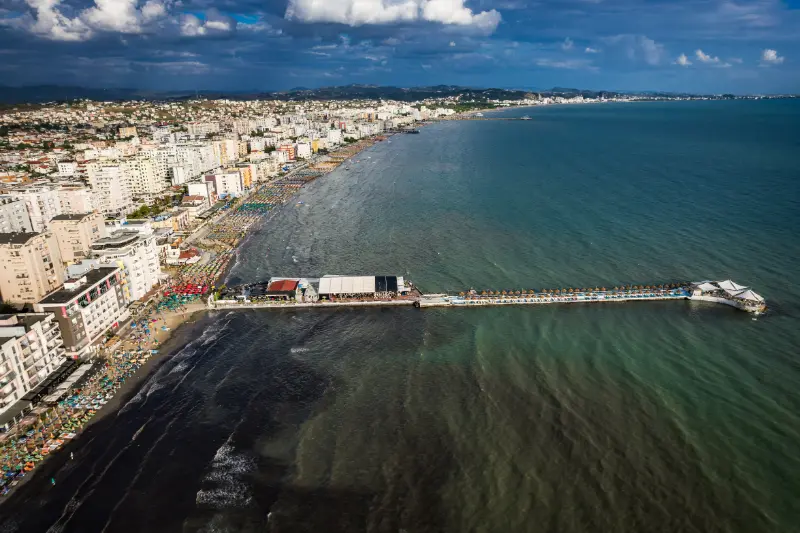
The beaches around Durrës are sandy and easy to access, which makes them popular with Albanian families and visitors who want a straightforward beach holiday. They are very different from the small rocky coves and bright water associated with parts of the Ionian Riviera. Choose Durrës for convenience, sand, services and proximity to Tirana—not because you expect an untouched hidden bay.
In high summer, the main beach areas can be crowded and rows of umbrellas are common. If your priority is quiet water and dramatic coastal scenery, continue south to Vlorë, Himarë or Ksamil. If you have children and value flat access, supermarkets, restaurants and a simple transfer from the airport, Durrës can be much easier.
Where should you stay?
Historic centre and Vollga
Best for a short cultural stay. You can walk to the amphitheatre, central restaurants and seafront, and you will experience more of the city than a resort strip. This is my choice for one or two nights.
Beachfront south of the centre
Better if the beach is the main purpose of the trip and you want to step outside the hotel directly into a holiday zone. The trade-off is that reaching the historic sights may require a taxi or bus, depending on how far south you stay.
You can compare hotels and apartments in Durres on Booking.com. This is a sponsored link. I filter carefully by the map because “Durrës” can cover accommodation a significant distance from the archaeological centre.
How to get from Tirana to Durres
Durrës is one of the simplest coastal connections from Tirana, with regular road transport and a journey that is short enough for a day trip. For public transport, confirm the current departure point and schedule shortly before travelling because stations and operating patterns are more useful than old blog timetables. A taxi or private transfer becomes reasonable for families or small groups.
If you are renting a car for a wider Albania trip, I would use Durrës as the first stop only if it fits the route. A car is not essential for the historic centre. For the broader decision, see my guide to buses, taxis and rental cars in Albania.
Can you visit Durres on a Tirana day trip?
Yes. Leave Tirana in the morning, spend several hours with the amphitheatre, archaeological sights and lunch, then walk the promenade before returning. The limitation is the evening atmosphere: Durrës becomes more enjoyable when you are not watching the clock for the last convenient return.
Food in Durres
Seafood is an obvious choice in a port city, but I still check the menu, recent reviews and how fish is priced. Ask whether the price is per portion or by weight. Beyond seafood, you will find pizza, grilled meat, pasta, salads and familiar Albanian dishes, which makes Durrës easy for mixed groups and families.
I also like using the city for a long breakfast or coffee. Durrës has a relaxed coastal routine, and trying to turn every hour into sightseeing misses part of the reason people come here.
Best time to visit Durres
Late spring and early autumn are my favourite periods for combining archaeology with the coast. The weather is usually more comfortable for walking, and the beach zone is less intense than in peak summer. July and August are best if you specifically want a lively Adriatic beach holiday and do not mind crowds.
A one-day Durres itinerary
- Arrive in the morning and start with the Roman amphitheatre.
- Continue through the historic centre, walls and archaeological points of interest.
- Visit the archaeological museum if open and relevant to your interests.
- Have a late lunch near the centre or waterfront.
- Walk the Vollga promenade and seafront.
- Stay for sunset if your transport plan allows it.
Should you choose Durres or the Albanian Riviera?
They solve different travel problems. Durrës is easy, close to Tirana, sandy and well served. The Riviera is more scenic, more varied and much better suited to a multi-day road trip, but it requires significantly more travel time. On a four-day Albania trip I might choose Durrës; on a ten-day trip I would usually save my main beach time for the south.
Common mistakes
- Booking a “Durrës” hotel without checking how far it is from the old centre.
- Expecting Ionian-style coves on the main urban beaches.
- Visiting only the amphitheatre and deciding the city has nothing else to offer.
- Driving into central areas without asking the hotel about parking.
- Trying to combine a full Tirana sightseeing day and a full Durrës day into one rushed schedule.
Durrës makes sense when you stop asking whether it is a history destination or a beach destination. It is both, and the contrast is the point.
For your next stop, return to Tirana, continue south toward the Albanian Riviera, or compare the country’s major destinations in my best things to do in Albania guide.
Final planning checklist
Before publishing a final itinerary around Durres travel guide, I recheck three things: the weather, the transport for the next day and the exact location of my accommodation. These small checks prevent most avoidable problems in Albania, especially in summer when traffic is heavier and in mountain regions where conditions can change quickly.
- Save accommodation addresses and phone numbers offline.
- Carry some Albanian lek for small businesses and transport.
- Confirm parking before driving into historic centres or beach resorts.
- Download offline maps before mountain or rural days.
- Leave margin between a long transfer and any fixed tour or ferry.
I also avoid planning every meal, beach and café in advance. Albania is still a destination where local advice can improve the trip significantly. Guesthouse owners often know the current road condition, the best departure time or whether a supposedly quiet beach has become crowded that week.
Is this destination suitable for a first trip to Albania?
Yes if it fits the wider route and your interests. The mistake is not choosing the “wrong” destination; it is combining too many good destinations into too few days. Two or three well-planned bases usually create a better first trip than six rushed overnight stops.
Do I need to book everything in advance?
In July and August I book accommodation in popular coastal areas and any essential transport connection. Outside peak season I keep more flexibility, while still reserving special guesthouses or small properties that I would be disappointed to miss. Activities that depend on sea or mountain weather are often better confirmed closer to the day when cancellation terms allow it.
Cash or card?
Carry both. Cards are increasingly common in larger hotels, supermarkets and restaurants, but cash remains useful for buses, rural guesthouses, parking and small family businesses. Having a backup payment method is more important than trying to make the entire trip cashless.
For the bigger picture, return to the Albania travel guide and use the travel-cost guide to check how this stop fits your time and budget.
\nRelated guide: Add a wilder Adriatic day with our Cape of Rodon guide to the castle, church and beaches.
Related guide: For a straightforward sandy beach stay south of the city, read our Golem Beach guide.
Related guide: For a closer look at Roman Dyrrachium, use our dedicated Durrës Amphitheatre guide.
\n\nRelated guide: Fatih Mosque Durres Guide: Early Ottoman Architecture beside the Ancient City adds a focused cultural stop to this destination.
\n\n\nRelated guide: Aleksander Moisiu House-Museum Durres Guide: Theatre, Urban Life and a Historic Home adds a focused cultural stop to this destination.
\n\n\nRelated guide: Kavaja Castle Guide: Fortifications, Local History and Adriatic Views adds a focused stop to this destination and helps build a more detailed Albania itinerary.
\nFamily planning: Durres with Kids: Family Beaches, Roman History and Practical Travel Tips.
Choosing your base: Where to Stay in Durres: City Center, Currila, Plazh and Golem compares the most practical areas, access, parking and accommodation styles for this destination.
Suggested itinerary: 2 Days in Durres: Roman History, Seafront and an Easy Adriatic Break gives you a realistic day-by-day plan with pacing, transport and optional stops.
Explore beyond the city: Best Day Trips from Durres: Kruje, Cape of Rodon, Tirana, Berat and Karavasta compares the most useful excursions, transport options and realistic timing.
Local food: Durres Food Guide: Adriatic Seafood, Fish Soup, Mussels and Local Dishes explains regional dishes, food shopping, what to order and how to plan a food-focused day.
Explore on foot: Durres Self-Guided Walking Tour: Roman Amphitheatre, Venetian Tower and Seafront gives you a practical stop-by-stop route, a shorter version and an easier alternative.
Driving: Driving and Parking in Durres: Historic Center, Beach Strip and Golem explains parking strategy, hotel access, traffic and when to leave the rental car parked.
Only one day? 1 Day in Durres: Roman History, Archaeology, Seafront and an Adriatic Sunset gives you a selective, realistic route with timing, transport and what to skip if you start late.
Getting here: Tirana to Durres: Bus, Car, Taxi and the Easiest Day-Trip Connection compares public transport, driving and private-transfer options with arrival advice.
Arriving by air: Tirana Airport to Durres: Direct Bus, Taxi, Rental Car and Private Transfer compares the airport bus/connection, official taxi, transfer and rental-car options.
Beach planning: Best Beaches in Durrës and Golem: Sand, Families, Currila and Quieter Coastal Escapes compares the best local beach options by access, families, transport and atmosphere.
What to do: 15 Best Things to Do in Durrës: Roman History, Beaches and Adriatic Experiences is the attraction-focused hub with priorities, free activities, family options and nearby experiences.
Go beyond the highlights: Hidden Gems in Durrës: 9 Lesser-Known Places Beyond the Amphitheatre and Beach focuses on lesser-known places, quiet neighborhoods and short regional detours.
On a budget: Free Things to Do in Durrës: 15 Roman-City Walks, Beaches and Seafront Ideas shows what you can genuinely do without an admission ticket and where paid attractions are optional.
Bad weather: Rainy Day in Durrës: Archaeology, Museums and What to Do When It Rains gives you a realistic museum, food and short-walk backup plan instead of forcing the normal outdoor itinerary.
No car? Durrës Without a Car: City Buses, Walking, Beaches and Easy Trips from Tirana explains walking, public transport, taxis and realistic excursions without renting a vehicle.
Traveling alone? Solo Travel in Durrës: Roman History, Beaches, Safety and Easy Tirana Connections covers accommodation, transport, evenings, day trips and practical solo safety.
Have three days? 3 Days in Durres: Roman History, Beaches and Cape of Rodon gives you a slower city plan plus the most logical regional excursion.
Easier-paced planning: Senior Travel in Durrës: Roman Sights, Easy Seafront Walks and a Comfortable Beach Stay covers terrain, taxis, hotel access, rest breaks and a relaxed two-day plan.

Budget planning: Durrës Travel Costs: How Much to Budget Per Day in 2026 breaks down accommodation, food, transport, attractions and realistic daily spending.
Photography: Best Viewpoints and Photo Spots in Durrës: Adriatic Sunsets, Roman Layers and Cape of Rodon compares the best panoramas, street-photo locations and light for sunrise, sunset and blue hour.
Shopping: Shopping in Durrës: Local Food, City-Center Shops, Souvenirs and Beach Essentials explains where to browse, what local products are worth buying, how to judge crafts and what is practical to take home.
After dark: Nightlife in Durrës: Vollga, Beach Bars, Golem and Evening Entertainment explains the best evening areas, seasonality, late transport, costs and what nightlife is realistically like.
Comparing bases? Durrës vs Vlorë: Which Destination Should You Choose in Albania? explains the differences in atmosphere, sightseeing, transport, budget and ideal length of stay.
Accessibility planning: Accessible Travel in Durrës: Seafront, Roman Sites, Beaches and Mobility explains terrain, hotel access, transport, easier routes and the main barriers to verify before travel.
First-time tips: Durrës Travel Tips: 22 Things to Know Before Your First Visit covers practical mistakes, transport, where to stay, cash, timing and trip-planning details.
Museums & culture: Best Museums and Archaeological Sites in Durrës: Roman Dyrrachium, Artifacts and City History compares the most useful collections, historic houses and cultural sites, with realistic visit planning.
Premium planning: Luxury Travel in Durrës: Beach Resorts, Private Archaeology and Easy Tirana Transfers covers where to stay, private transfers, high-value splurges and premium experiences.
Working remotely here? Digital Nomad in Durrës: Remote Work by the Adriatic, Wi-Fi and Tirana Access covers neighborhoods, internet backup, long-stay apartments, transport and seasonality.
How long should you stay? How Many Days in Durrës? 1, 2 or 3 Days for Roman History and the Adriatic compares one, two and three days and explains when an extra night is actually useful.
Useful transport and border guides
\nMore local Albania guides
\n\nMore local Albania guides
\n\nMore local Albania guides
\n\nMore Albania planning guides
\nMore international routes into Albania
More international routes into Durrës
Arriving and leaving by bus
For exact departure points, tickets, luggage and onward connections, see the Durrës bus station guide.
\nParking and arriving by car
\nIf you are driving, see the Parking in Durrës for current parking strategy, hotel advice and local restrictions.
Exploring without a car
For local buses, walking, taxis and day-trip planning, see Getting Around Durrës Without a Car.
Taxi and private transfers
For local taxi booking, luggage transfers, longer private rides and practical fare advice, see Durrës Taxi and Transfer Guide.
Luggage storage and laundry
If you have an early arrival, late departure or need to wash clothes during a longer stay, see Durrës luggage storage and laundry guide for practical local options and travel-day planning.
Health and pharmacies
For emergency numbers, pharmacies, prescriptions, insurance and practical local medical planning, see Durrës health and pharmacy guide.
Accessibility and reduced-mobility planning
If stairs, gradients, wheelchair access or reduced stamina affect your trip, see Accessible Durrës: Seafront, Beaches, Wheelchair Planning and Transport for practical local planning.
SIM, eSIM and Wi-Fi
For mobile data, roaming, hotel Wi-Fi and offline connectivity planning, see SIM Card, eSIM & Wi-Fi in Durrës: Port Arrival, Beach Areas and Mobile Data.
Travelling with a dog
If you are bringing a dog, see Durrës with a Dog: Beaches, Promenade, Ferries, Hotels and Pet Travel Tips for accommodation, walks, heat, transport and pet-specific planning.
Travelling with older children? See Durrës with Teenagers: Beaches, Roman History, Seafront Evenings and Family Tips for teen-focused activities, independence, evenings and family pacing.
Planning safety and avoiding common tourist problems? Read Is Durrës Safe? Beach, Port, Pickpockets, Night Safety and Driving Tips for local advice on valuables, night travel, transport, roads and emergency planning.
Prefer a slower, comfort-focused itinerary? Read Durrës for Senior Travelers: Beachfront Comfort, Roman Sights, Hotels and Easy Transport for hotel location, walking effort, taxis, heat, health preparation and realistic pacing.
Travelling with a motorhome or campervan? Read Campervan & Camping in Durrës: Ferry Port, Beach Bases, Parking and Road-Trip Tips for overnight strategy, parking, road access, water/waste planning and protected-area camping rules.
Muslim traveler? Read Muslim Travel in Durrës: Mosques, Halal Food, Beaches and Ferry Tips for prayer options, halal-food verification, Ramadan planning, accommodation areas and respectful mosque visits.
Driving an EV? Read Electric Car in Durrës: EV Charging, Ferry Arrival, Beach Hotels and Range Planning for charging, range, hotel-power and backup planning.

Travelling alone? Read Solo Female Travel in Durrës: Beach, Port, Transport, Night Safety and Practical Tips for women-specific arrival, evening, transport and solo-planning advice.
Winter trip: Durrës in Winter: Roman History, Seafront Walks, Ferry Arrivals and Low-Season Travel explains what stays open, weather trade-offs, winter transport and a realistic low-season itinerary.
Rainy-day plan: Durrës on a Rainy Day: Archaeology, Museums, Cafés and Seafront Plan B explains the best indoor anchors, safe between-shower walks and what to postpone when the weather turns wet.
Photography: Durrës Photography Guide: Roman Ruins, Seafront Light, Old Walls and Adriatic Sunsets covers the best photo locations, light, street scenes, weather, gear and a realistic one-day shooting plan.
Wellness & slow travel: Durrës Wellness & Slow Travel Guide: Seafront Walks, Spa Stays and Adriatic Reset covers easy pacing, spa and massage planning, gentle movement, nature, food and recovery days.
Architecture guide: Durrës Architecture Guide: Roman Dyrrachium, Byzantine Walls, Ottoman Layers and the Adriatic City explains the city’s architectural layers, landmark buildings, materials and a practical self-guided route.
Cycling guide: Cycling in Durrës: Seafront, Roman City, Beach Corridor and Cape Day-Trip Planning covers local routes, traffic, e-bikes and bike-day planning.
Running guide: Running in Durrës: Vollga, Currila, Beachfront Routes and Adriatic Morning Runs covers safe local routes, traffic, heat, surfaces and practical training plans.
Coffee guide: Durrës Coffee & Café Guide: Vollga, Historic Centre, Beachfront Espresso and Adriatic Café Culture covers local café areas, ordering, breakfast, prices, Wi-Fi and coffee etiquette.
\nRural experience: Agrotourism in Durrës: Shijak, Sukth, Lalzi Bay and Countryside Farm Stays adds farm stays, local food and practical countryside planning.
Leave a Reply