
Durrës is one of Albania’s easiest cities to combine history and sea on a small budget. You can walk between Roman-era urban traces, the Venetian Tower area and the waterfront, then finish with a beach afternoon without buying a ticket.

The amphitheatre and Archaeological Museum may require admission, so I treat them as optional paid upgrades. The free route focuses on what is visible from public space and on the Adriatic coast.
At a glance: what can you really do for free?
| Type | Free idea | What may still cost extra |
|---|---|---|
| Walking | Historic streets, promenades and public squares | Optional guide, café stops or transport to distant areas |
| Nature | Parks, lake/sea views and public landscapes | Parking, boat trips or equipment rental |
| Culture | Architecture, neighborhoods and public monuments | Museums, ticketed interiors or donations |
| Beach / waterfront | Public-access sections and promenades | Loungers, umbrellas, managed services and parking |
What I mean by “free”
In this guide, “free” means the activity itself does not require an admission ticket. Transport, parking, food, rentals and optional services are separate. Religious buildings, archaeological sites and managed beaches can change access rules, so I never treat a currently open door or unstaffed entrance as a permanent promise of free admission.
1. Walk the Vollga promenade
The Vollga waterfront is the best free place to understand modern Durrës. Walk in late afternoon, watch families and fishermen, and look back toward the city. The promenade costs nothing and naturally leads toward restaurants if you later decide to spend. It is especially useful after a museum-heavy morning.
2. See the Venetian Tower from outside
The Venetian Tower is one of the city’s clearest historical landmarks and forms part of a free exterior architecture walk. Interior access or events may have current rules, but you do not need a ticket to understand its relationship with the surviving walls and waterfront.
3. Trace the surviving city walls
Fragments of fortification are integrated into modern Durrës. Follow them through public streets and compare Roman/Byzantine/Venetian layers as they appear beside newer buildings. This is not a polished archaeological park; that is exactly why the free walk is interesting.
4. Look into the Byzantine Forum area from public space
The Byzantine Forum is another reminder that ancient Dyrrachium sits under the modern city. Access conditions can change, so I avoid promising unrestricted entry. Even viewing the remains within the urban fabric gives useful context before deciding whether to pay for the archaeological museum.
5. Walk around Fatih Mosque respectfully
Fatih Mosque adds the Ottoman layer to the historical route. View the exterior and surrounding square freely. If entry is welcomed outside prayer times, behave as a guest and check photography expectations.
6. Spend time on a public section of Durrës Beach
The long sandy coast is one of Albania’s easiest family beach environments. Use a public-access section, bring your own towel and separate free beach time from optional lounger/umbrella services. In summer, early morning and late afternoon are much more pleasant than the middle of the day.
7. Walk Currila
Currila gives you a more urban-coastal experience closer to the historic city. Walk the seafront, compare it with the main beach strip and use the area for sunset if you want to stay near the center. This is a good free alternative to driving down to Golem every day.
8. Watch sunset over the Adriatic
Durrës faces the right direction for an easy sunset routine. The public promenade and beach are enough; you do not need a paid terrace. Arrive before the sun reaches the horizon and stay for the afterglow.

9. Explore residential streets behind the historic center
Move away from the monuments and you see ordinary Durrës: apartment blocks, bakeries, shops and small squares. This is a free way to understand the city as a year-round port rather than only a beach destination.
10. Photograph the amphitheatre from legal public viewpoints
The amphitheatre is the headline paid archaeological attraction, but parts of its form and urban context can be appreciated from surrounding public streets. Do not enter restricted areas or climb barriers. Use the exterior view to decide whether the full ticketed visit is worth your time.
11. Browse markets for picnic food
A market or bakery stop costs nothing until you decide to buy. It also makes a cheap beach picnic possible. This is one of the easiest practical budget habits in Durrës because the coast is so close to the city.
12. Join the evening city walk
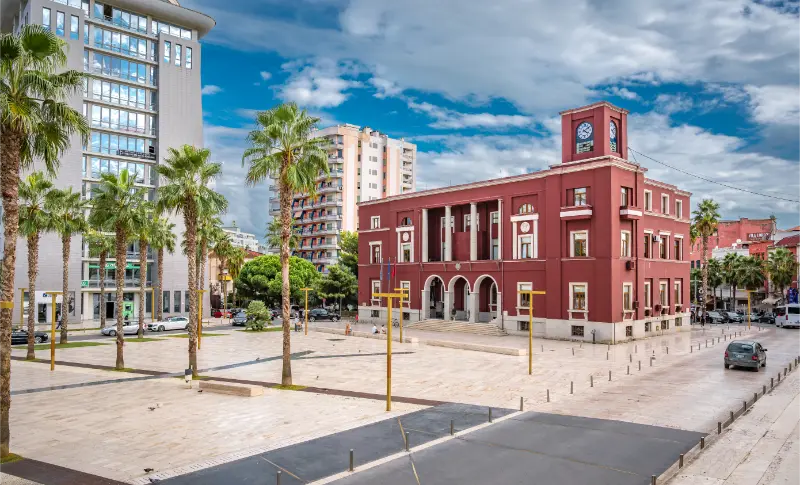
The historical center and seafront become social in the evening. Walk between the Venetian Tower area and Vollga instead of scheduling another attraction. This gives you the living city for free.
13. Use the train/bus arrival as a walking orientation
If you arrive by public transport, orient yourself on foot before paying for taxis. Central Durrës is compact enough that many visitors can reach the historic core by walking. With heavy luggage, use a taxi; budget travel should not become punishment.
14. Build a free Roman-to-Adriatic loop
Combine forum views, mosque, walls, Venetian Tower exterior, Vollga and the beach. The dedicated self-guided walk helps you keep the route logical. This is one of the best examples in Albania of a full sightseeing day with almost no admission spending.
15. Save paid archaeology for one focused block
Rather than buying every ticket, spend the morning walking free sites and then choose either the amphitheatre or Archaeological Museum if your budget allows. The free route gives you context that makes the paid stop more meaningful.
A full free day
Walk the historical center and public archaeological viewpoints in the morning, continue to Vollga, eat a picnic and spend the afternoon on a public beach section. Return to the waterfront for sunset. No admission ticket is necessary for the core route.
If you can afford one paid experience
The Roman amphitheatre is the first paid attraction I would add; the Archaeological Museum is the second if ancient history is a major interest. Check current opening and ticket information.
Free things to do when it rains
In persistent rain, Durrës becomes harder to enjoy for free. Keep the historical exterior route short and consider the museum as the logical paid weather backup.
Free things to do with children
The main beach, Vollga and open waterfront spaces are excellent with children. Keep Roman-history walking short unless the children are genuinely interested.
How to keep food costs low too
A no-ticket day can still become expensive if every break happens in a prime-location café. I mix one sit-down meal with bakery food, fruit or a simple picnic when appropriate. Carry water, but use refill options only where you know the water is suitable and the source is intended for drinking. The goal is not to avoid local businesses; it is to spend on the experiences and meals you genuinely value.
How this fits a realistic Albania budget
Free sightseeing is most useful as part of a mixed budget. Save on walking days, then spend on the experiences that cannot be replicated for free: an archaeological site, a specialist museum, a boat trip or a mountain transfer. Use Albania Travel Costs for the bigger accommodation, food and transport picture.
Where to stay on a budget
A cheaper room far outside the center can cost more once daily taxis are added. For a short stay, I usually prioritize walkability and then compare room prices. Compare current accommodation in Durres on Booking.com.
Useful related guides
- Main destination travel guide
- Best Things to Do guide
- Hidden Gems guide
- Self-guided / practical route guide
- Albania Travel Costs
Official tourism information
For current destination information and official attraction descriptions, use Albania National Tourism Agency. Opening, event and access conditions can change after publication, so verify anything time-sensitive directly before visiting.
Common budget mistakes
- Calling an activity free while ignoring an expensive taxi or parking requirement.
- Assuming a place of worship is always open to tourists because entry was free on a previous visit.
- Using private beach furniture without asking the current price first.
- Walking an unsafe roadside section simply to avoid a small transport cost.
- Trying to make every day cost zero and missing the one paid attraction that would add the most context.
- Booking the cheapest hotel without calculating daily transport and uphill luggage access.
Frequently asked questions
Can I see Roman Durres for free?
You can see parts of the historical urban fabric from public streets, while major sites such as the amphitheatre may charge admission.
What is the best free activity?
Walk Vollga and the historic center, then spend time on the beach.
Are Durres beaches free?
Use public-access sections; loungers and organized services cost extra.
Is the Venetian Tower free?
The exterior/public-space experience is free; current interior/event access should be checked.
Is Durres good for a cheap day trip?
Yes. It is easy to combine walking, history and beach time with minimal admission spending.
Final advice
Free travel works best when it helps you slow down rather than when it becomes a competition to spend nothing. Public streets, landscapes and local routines are a large part of what makes Albania interesting. Use them fully, then spend selectively on the museum, archaeological site, boat trip or meal that genuinely deepens the trip.
Leave a Reply