Tag: First Trip

Articles and practical travel tips about First Trip in Albania.

  • Best Day Trips from Berat: Osum Canyon, Mount Tomorr, Apollonia and Rural Albania

    Best Day Trips from Berat: Osum Canyon, Mount Tomorr, Apollonia and Rural Albania

    Berat is not only a UNESCO old-town stop; it is one of central Albania’s most useful bases for nature and archaeology. The city sits between mountain landscapes, the Osum valley, fertile countryside and the western lowlands, so you can reach very different experiences without changing hotels every night.

    These are the day trips I would actually consider from Berat. Some work in almost any season, while others depend on river conditions, mountain weather or a suitable vehicle. I would keep at least one day flexible if your plans include rafting, Mount Tomorr or a remote canyon.

    A good day trip in Albania is not simply a place that looks close on a map. Road type, summer traffic, mountain gradients, parking, boat departures and the amount of walking after arrival can change the real effort of the day. For that reason, I rank these excursions by how naturally they fit the base rather than by fame alone.

    Quick comparison

    Day tripBest forBest transportTime
    Osum Canyon & ÇorovodëNature / raftingCar, transfer or organized tripFull day
    Mount TomorrMountain scenery / hiking4×4 or suitable vehicle strongly preferredFull day
    Apollonia & ArdenicaArchaeology / cultureCar or private transferFull day
    Belsh & Dumrea LakesCountryside / slow travelCarHalf to full day
    Sinec CanyonWild natureCar + walkingFull day
    Bogovë areaWaterfall / rural landscapesCar or taxiHalf day
    Gramsh & Holta CanyonCanyon sceneryCarFull day
    Roshnik countrysideFood / vineyards / village lifeTaxi or carHalf day

    How I would choose the right day trip

    Start by looking at the rest of your Albania itinerary. If you already have several beach days, choose archaeology, mountains or a village. If you are spending most of the trip in historic towns, use the free day for water, forest or a scenic drive. The best day trip adds contrast instead of repeating what you are already doing.

    I also separate places that are easy without a car from places where independent public transport creates more effort than value. A bus may exist, but if the last connection forces you to leave before the main experience or wait hours for the return, a taxi, driver or organized trip can be the smarter choice.

    The best day trips

    1. Osum Canyon and Çorovodë

    From Berat, Osum Canyon is the obvious nature day, but I would not reduce it to a rafting booking. The canyon near Çorovodë is impressive from viewpoints even when river conditions are not suitable for rafting. In spring, higher water can make organized rafting more attractive; later in the season, the experience may shift toward viewpoints, walks and swimming in permitted areas. The drive also shows a more rural side of the Berat region. Use my Osum Canyon guide before deciding how active you want the day to be. If you book an organized rafting trip, confirm the exact meeting point, included transport and current river conditions rather than assuming all operators use the same program.

    2. Mount Tomorr

    Mount Tomorr gives Berat a completely different scale. This is not a casual scenic drive to add after lunch: mountain roads, weather and vehicle suitability matter, and some routes are much better with local experience or a 4×4. The reward is a highland landscape tied to both nature and religious tradition, with broad views and a very different atmosphere from the stone city below. Read the Mount Tomorr guide and treat the day according to conditions. If the weather is unstable, I would move Tomorr to another day instead of trying to force it because the accommodation is already booked.

    3. Apollonia and Ardenica Monastery

    For travelers who came to Berat for history, Apollonia and Ardenica create the strongest cultural day trip. Apollonia adds a major ancient Illyrian-Roman site, while Ardenica offers a monastery setting and religious heritage on the same wider route. I prefer combining these two rather than adding another distant city. The archaeological park needs enough time to walk slowly, especially in warm weather. Start with the Apollonia guide and Ardenica Monastery guide. A car or private transfer is the simplest way to keep the day coherent.

    Monument Agonothetes Apollonia Ruins Albania

    4. Belsh and the Dumrea Lakes

    Belsh is for travelers who want central Albania without another major monument. The Dumrea landscape is shaped by numerous small lakes, agricultural land and low hills, giving the day a gentler pace than Tomorr or Osum Canyon. I would use Belsh for a long lunch, lake viewpoints and a countryside drive rather than trying to identify every lake. This is also a good choice when your group includes different fitness levels. The Belsh and Dumrea Lakes guide gives you the broader context.

    5. Sinec Canyon

    Sinec is a more adventurous and less polished nature day. Access conditions can change, and the value of the trip comes from the gorge, water and rural setting rather than developed visitor infrastructure. Good footwear, water and realistic expectations matter. I would not combine Sinec with Osum Canyon in the same day; both deserve enough time to feel like an experience rather than a photograph. See the Sinec Canyon guide before leaving.

    6. Bogovë and the waterfall area

    Bogovë works well when you want a nature outing shorter than a full canyon expedition. The village and waterfall area can be combined with a relaxed rural drive, but walking conditions and water flow vary through the year. In hot weather, start earlier and do not assume the final approach is suitable for every traveler or every shoe. This is a good day to keep intentionally simple: one walk, one village lunch and an easy return to Berat.

    7. Gramsh and Holta Canyon

    Gramsh is farther from Berat than the simplest half-day escapes, but it gives you access to Holta Canyon and central Albanian scenery that feels very different from the UNESCO circuit. The canyon can involve water and uneven surfaces, so seasonal conditions matter. If your priority is Holta, make it the main destination and do not add several other canyon stops. My Holta Canyon guide explains the experience in more detail.

    8. Roshnik and the countryside east of Berat

    Not every day trip needs a famous attraction. Roshnik and the surrounding countryside are useful for travelers interested in agriculture, food, vineyards and village scenery. This is the day I would choose after an intense castle-and-museum schedule. Arrange a winery or meal in advance if that is the purpose of the trip; rural businesses may not function like city restaurants with continuous walk-in hours.

    Can you do these day trips without a car?

    Without a car, the easiest choices are an organized Osum Canyon trip, a private or shared transfer to Mount Tomorr, and a taxi-based countryside day. Apollonia is possible by combining buses and taxis, but for one day I usually value a direct transfer because it protects sightseeing time. Belsh and the more remote canyons are much easier with your own vehicle.
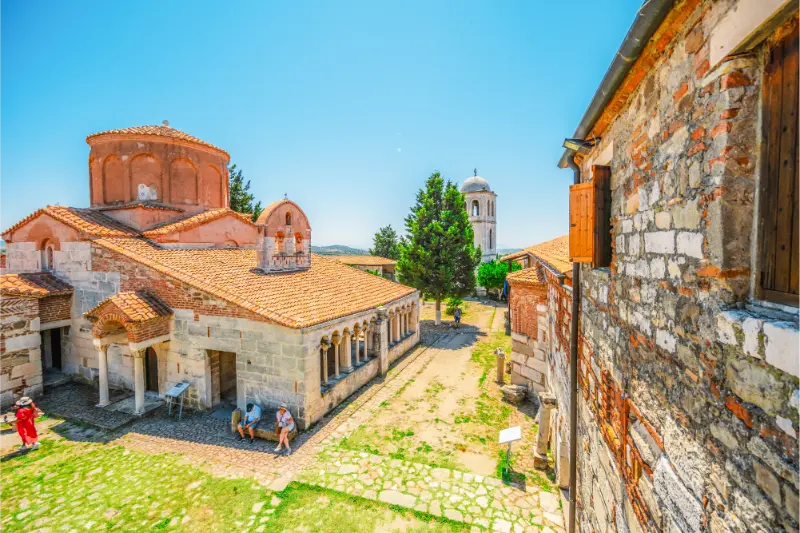
    Byzantine Church St Mary Apollonia Temple Ruins Ancient Apollonia Albania 3

    When I use taxis or private drivers for a full day, I agree on the approximate route, waiting time and total price before departure. For buses, I confirm the return point on the ground because terminals and informal stopping places can be less obvious than in countries with one centralized timetable system.

    Best season

    Spring is excellent for green landscapes and can be strong for rafting when conditions allow. Summer favors early starts and shaded or water-based nature stops. Autumn is especially good for countryside, vineyards and walking. In winter, keep mountain and canyon plans conservative and use Apollonia, Ardenica or Belsh as more dependable alternatives.

    Weather matters more than the month name. A clear October day can be better for a mountain viewpoint than a stormy July afternoon, while summer traffic can make a normally easy coastal route much slower. Check the forecast the evening before and move weather-sensitive plans when necessary.

    What to take

    • Water, especially for exposed archaeological sites, canyons and mountain roads.
    • Shoes with grip rather than smooth city soles if the day includes trails, castles or wet stone.
    • Sun protection for spring through early autumn.
    • A light layer even in summer if the route gains altitude.
    • Some Albanian lek for parking, small cafés and village businesses.
    • Offline maps and a screenshot of the return route.
    • Swimwear only when the day genuinely includes a beach, spring or thermal stop.

    Common day-trip mistakes

    • Start with the hardest-to-control element. If the day depends on a boat, mountain weather or an archaeological site’s opening hours, solve that first and keep the rest flexible.
    • Do not combine two full day trips into one. Albania rewards slower travel, and an itinerary that technically fits often becomes a sequence of car parks and rushed lunches.
    • Leave a buffer before dinner or an onward transfer. Coastal and mountain roads can take longer than expected even when the distance looks short.
    • Carry some cash. Parking, small cafés, village restaurants and seasonal services can be easier with Albanian lek.
    • Download the route offline. Mobile data is usually useful, but an offline map and a screenshot of your accommodation address remove unnecessary stress.

    Another common mistake is judging a day only by driving time. A two-hour drive followed by four hours in one excellent place can be far more rewarding than three short drives that create six hours of transitions. I plan around the experience in the middle, not around how many pins I can connect.

    Which day trip would I choose first?

    If you have only one free day, choose Osum Canyon for nature, Apollonia/Ardenica for history, or Mount Tomorr for mountain scenery. I would not choose by online popularity; choose the experience that is missing from the rest of your Albania itinerary.
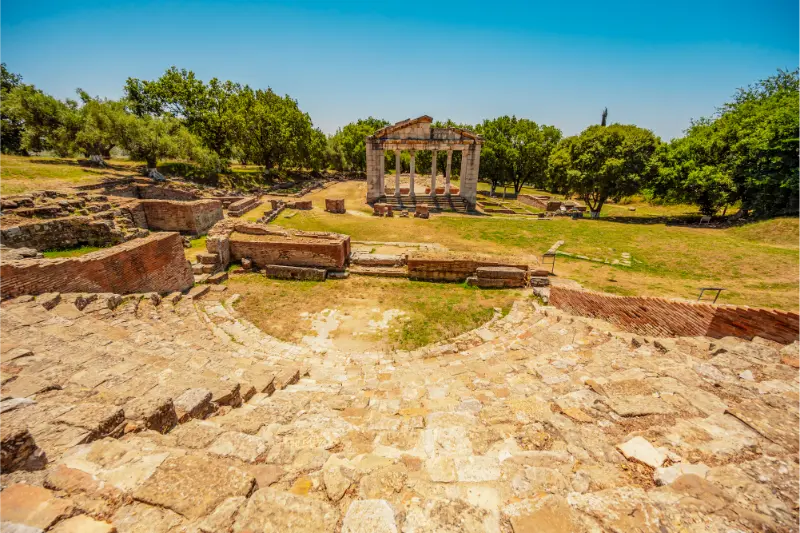
    Byzantine Church St Mary Apollonia Temple Ruins Ancient Apollonia Albania 7

    Where to stay before your day trips

    For several excursions, I prefer staying in the same base for at least two or three nights. Check current accommodation on Booking.com. See my area-by-area accommodation guide before booking.

    Useful guides

    Frequently asked questions

    How many day trips should I plan from one base?

    Usually one or two. If you need four separate day trips to see the region, it may be more efficient to move your accommodation once and reduce backtracking.

    Is a rental car necessary?

    Not always. City-to-city routes and some famous attractions can be reached by bus, taxi or tour. A car becomes most useful for rural loops, national parks, villages and days with several small stops.

    Should I book day tours before arriving?

    Book limited-capacity boat trips, rafting, mountain transfers and peak-season private tours earlier. For ordinary taxi days or independent city trips, I prefer keeping more flexibility.

    Are these trips suitable for families?

    Many are, but choose by walking difficulty, heat and transfer length rather than by destination name. A short lake or village day is often better for young children than a long canyon route.

    Can I combine two day trips?

    Only when they sit naturally on the same route and each is a half-day experience. I would not combine two destinations that each deserve a full day just to increase the number of places visited.

    Final advice

    Use the base to simplify the trip, not to create daily commutes. Pick the excursion that adds the most contrast, start early when heat or traffic matters, and give yourself permission to return sooner if one place turns out to be better than the rest of the plan.

  • Albania with a Dog or Pet: Entry Rules, Ferries, Hotels, Beaches and Road Trips

    Albania with a Dog or Pet: Entry Rules, Ferries, Hotels, Beaches and Road Trips

    Travelling Albania with a dog or pet can work particularly well on a road trip, but the paperwork deserves more attention than the sightseeing. Albania is outside the EU, which matters for travellers entering from an EU country and then returning with a dog, cat or ferret. Airline, ferry, accommodation and border requirements should be checked before booking a non-refundable itinerary.

    This guide focuses on non-commercial travel with companion animals and is not a substitute for veterinary or customs advice. Rules can change, and the exact requirement depends on where the animal normally lives, how you enter Albania and where you travel next. Use it together with our Albania rental-car guide, ferry guide and official EU pet-travel information.

    Quick answer

    QuestionPractical answer
    Is Albania in the EU pet-travel area?No. EU travellers should pay particular attention to the rules for returning to the EU from Albania.
    What documents are normally central to pet travel?Microchip identification, valid rabies vaccination and the correct passport or health documentation; additional testing can apply depending on the route.
    Are pet-friendly hotels common?Many properties accept pets, but policies, fees, size limits and room types vary and must be confirmed.
    Best transport styleA private car usually gives the most control over stops, shade, water and luggage.
    Biggest summer riskHeat. Do not plan long exposed walks or leave an animal in a parked vehicle.

    Paperwork comes before the itinerary

    Pet travel rules should be resolved before you decide which beach to visit. Confirm the animal’s microchip, rabies-vaccination dates and travel document with your veterinarian and the authorities relevant to your route. If you are coming from the EU, ask specifically what you need to re-enter the EU after a stay in Albania, because the return leg can be more demanding than the outbound leg.

    Aerial View Of Spille Beach Albania

    Current EU guidance says dogs, cats and ferrets entering the EU from most non-EU countries may require a rabies antibody titration test unless an exemption applies. The rules changed in 2026, so do not rely on an old blog post or a previous trip. If a titration test is required for your situation, timing can matter by months, not days.

    EU travellers: plan the return before leaving home

    The easiest scenario is often an EU-resident pet whose passport already documents everything required before departure. Current EU guidance explains that a pet returning after a short stay in a non-EU country may use its EU pet passport when the required rabies conditions, including titration where applicable, were completed and recorded before leaving the EU. That can avoid trying to solve paperwork during the holiday.

    Because the rules depend on current country lists and the pet’s status, take the official EU page to your veterinarian and ask them to verify the Albania return route. Do this well before travel. A ferry or hotel booking can be changed; a biological waiting period for rabies documentation cannot be compressed because your holiday starts next week.

    Flights and ferries

    Airlines have their own policies for cabin and hold transport, carrier dimensions, weight limits and breed restrictions. Reserve the animal at the same time as your own ticket rather than assuming space will be available later. At Tirana airport, allow extra check-in time and keep documents accessible instead of buried in checked luggage.

    Ferries from Italy can be attractive for road-trippers with dogs because you keep the car and pet equipment together, but ship policies vary by operator and vessel. Some offer pet cabins, kennels or deck access under conditions. Read the operator rules for the exact sailing, and use our ferries to Albania guide for the route overview before checking the carrier directly.

    Driving with a pet

    A car gives you freedom to stop for water, toilet breaks and shade, but Albanian summer heat makes vehicle safety non-negotiable. Never leave a pet in a closed parked car, even for a short stop. Carry more water than you think you need and plan longer breaks on mountain roads where travel time can exceed the map estimate.

    If you rent a car, tell the company that you are travelling with an animal and ask about cleaning fees or restrictions. Protect upholstery with a cover and secure the animal appropriately. On long Riviera drives, combine fuel stops with short shaded walks rather than waiting until the dog is restless on a narrow section of road.

    Pet-friendly accommodation

    A “pets allowed” filter is only the beginning. Message the property to confirm species, size, number of animals, fee, room restrictions and whether the pet can be left alone in the room. Ask about outdoor space and nearby walking areas if you are staying several nights. A central historic hotel may accept dogs but still have steep stairs and no convenient toilet area.

    Apartments and rural guesthouses can work well because they provide space, but check fences and other animals on the property. Albania has free-roaming dogs in some areas, so a private garden is not automatically an off-leash environment. Keep vaccinations and parasite prevention up to date based on veterinary advice.

    Beaches and summer heat

    Pet access to beaches can vary by municipality, operator and season, and many organized beach clubs do not advertise a clear dog policy. Ask before settling in. Early morning and evening are the most comfortable times for a dog in July and August, while midday sand, asphalt and rocks can become dangerously hot.

    Bring shade, fresh water and a bowl, and prevent the dog from drinking seawater. A quiet beach with no facilities is not automatically better if the approach is exposed and there is no shade. In summer, an apartment near a promenade may provide a safer daily routine than driving to remote coves every day.

    Drymades Beach Rock Arch Albania

    Street dogs and animal interactions

    Free-roaming dogs are visible in parts of Albania. Many are indifferent to people, but travellers should avoid allowing an unfamiliar dog to approach their pet freely, especially around food, territory or packs. Keep your own dog on a lead where encounters are likely and create distance rather than trying to test whether another animal is friendly.

    Discuss rabies vaccination and parasite prevention with your veterinarian before travel. If your pet is bitten or scratched, clean the wound and seek veterinary advice promptly. Save the location of veterinary clinics in your main bases before you need one; Tirana and larger cities offer more choice than remote coastal or mountain areas.

    A pet-friendly Albania route

    A practical first road trip might use Tirana, Shkodër or Lake Shkodra, Berat, Vlorë and one Riviera base, with longer stays and fewer hotel changes. This gives you city services, rural walking and coast without forcing the animal through a new room every night. Avoid scheduling a long ferry, long drive and mountain hike on consecutive days.

    If your dog is nervous around traffic or crowds, skip the busiest central promenades at peak time and choose early walks. If it loves hiking, choose routes appropriate to the animal’s fitness and heat tolerance rather than selecting a trail only because it is famous. The same principle applies to human travel: the best itinerary is the one your actual group can enjoy.

    Where to stay

    Search pet-friendly accommodation in Tirana on Booking.com. After using a pet filter, message the property directly to confirm the current policy and any fee. Repeat this for every stop because a chain or host can apply different rules by room type or season.

    Tours and activities

    Most standard group tours are not designed for pets, so private tours, self-driving days and outdoor sightseeing are usually easier. Before booking a boat trip, castle visit or national-park activity, ask whether animals are allowed and whether the transport itself can safely carry them.

    Useful related guides

    Before you go: a practical checklist

    Ask your veterinarian to review the entire route, not only entry into Albania. Keep digital and paper copies of the pet’s documents, vaccination record and microchip number. Confirm airline or ferry rules for the exact service and reserve pet space early. Pack a lead, secure travel harness or carrier, bowl, water, food, waste bags, towel and any regular medication.

    During the trip, maintain the animal’s normal routine as much as possible. Use mornings and evenings for longer walks in hot weather, check paws after rough trails or hot surfaces, and choose accommodation with predictable access outside. If the animal is stressed by crowds, do not force a busy beach-club itinerary simply because it is popular.

    Current rules and official information

    Use the EU’s official pet-travel guidance to check the latest requirements for entering or re-entering the EU. In 2026 the EU pet-travel legal framework changed, so travellers should verify current rules with an authorised veterinarian and the competent authorities close to departure.

    Common mistakes

    • Checking Albania entry but forgetting the rules for returning to the EU or continuing to another country.
    • Assuming “pets allowed” means no fee, no size limit and permission in every room.
    • Leaving a dog in a parked car during summer, even briefly.
    • Relying on an old forum post for rabies or titration requirements.
    • Allowing uncontrolled greetings with unfamiliar free-roaming dogs.
    • Planning every day around human sightseeing without rest and routine for the animal.

    Frequently asked questions

    Can I take my dog from Italy to Albania by ferry?

    Often yes, but pet cabins, kennels and deck rules vary by operator and vessel. Confirm the exact sailing before booking.

    Do I need a rabies antibody test to return to the EU?

    It can be required depending on current EU rules and the pet’s documentation. Check the official EU country list and ask an authorised veterinarian well before departure.

    Are dogs allowed on Albanian beaches?

    Policies vary by beach, municipality and private operator. Ask locally and favor cooler morning or evening hours in summer.

    Rana E Hedhun Sand Dunes And Adriatic Beach Albania

    Is Albania good for a dog road trip?

    A car can make pet travel much easier because you control stops, luggage and water, but summer heat and road time require planning.

    Are veterinarians easy to find?

    Larger cities offer more options than remote areas. Save clinics in your main bases before the trip, especially if your pet has an existing condition.

    Final recommendation

    A pet-friendly Albania trip succeeds or fails on preparation more than on the destination itself. Solve rabies and re-entry rules first, reserve the animal with the ferry or airline, confirm every hotel and build the road trip around heat, water and rest. Once those basics are handled, Albania’s mix of coast, lakes and countryside can work very well for travellers who prefer to bring their animal rather than leave it at home.

    Dog travel guides by destination

    Local conditions matter when travelling with a dog. These guides cover walks, accommodation, heat, transport, beaches and practical pet routines in Albania’s main bases:

  • Best Museums in Tirana: Bunk’Art, House of Leaves, Archaeology and Albanian History

    Best Museums in Tirana: Bunk’Art, House of Leaves, Archaeology and Albanian History

    Tirana is Albania’s strongest museum city because the capital lets you move from archaeology to religious heritage and twentieth-century dictatorship history in the same day. The most useful way to plan the museums is by theme rather than by trying to collect every institution.

    I would not choose museums only by how famous they are. The best cultural day has variety: one collection with objects, one historic building or memorial, and enough time outside to connect what you saw with the real city. Opening days, temporary exhibitions, restorations and ticket arrangements can change, so verify the current schedule before building a tight itinerary around a smaller institution.

    Museums and cultural sites at a glance

    PlaceBest for
    House of LeavesBest for understanding surveillance and the Sigurimi
    Bunk’Art 2Best central museum for communist-era state security
    Bunk’Art 1Best for the scale of Albania’s bunker mentality
    National Archaeological MuseumBest for ancient Albania before the Ottoman and modern story
    Bektashi World Center and museumBest for religious history and a less obvious side of Tirana
    Tirana MosaicBest short archaeological stop outdoors

    How to choose what to visit

    If you have only a few hours, choose the institution that explains the destination’s defining story. If you have a full day, add a second museum with a different theme instead of another collection that repeats the same period. I also leave a real lunch break between substantial museums; Albania’s best cultural cities are more enjoyable when the day includes streets, food and architecture rather than six hours indoors.

    House of Leaves

    Best for understanding surveillance and the Sigurimi. The former surveillance headquarters is one of the most focused museums in Tirana. Its rooms explain how state security monitored private life during the communist period, so I would visit it before or after Bunk’Art 2 rather than treating the two as interchangeable. House of Leaves is smaller and more intimate; it works especially well when you want documents, equipment and the human scale of surveillance. Read the House of Leaves guide for the historical context before you go.

    Bunk’Art 2

    Best central museum for communist-era state security. Bunk’Art 2 is in the center and fits easily into a Skanderbeg Square day. The bunker setting makes the history physical: corridors, rooms and exhibits interpret the security system and political repression. It is a better choice than Bunk’Art 1 when you have only a short stay because you do not need the Dajti-side journey. See the Bunk’Art 2 guide for a detailed visit.

    Bunk’Art 1

    Best for the scale of Albania’s bunker mentality. Bunk’Art 1 is the larger, more immersive excursion. It occupies a major underground complex on the eastern side of Tirana and works well with Dajti or the cable-car area. I would allow more time than for the central museum because the journey and the size of the bunker are part of the experience. Use the Bunk’Art 1 guide when deciding whether it fits a one- or two-day Tirana itinerary.

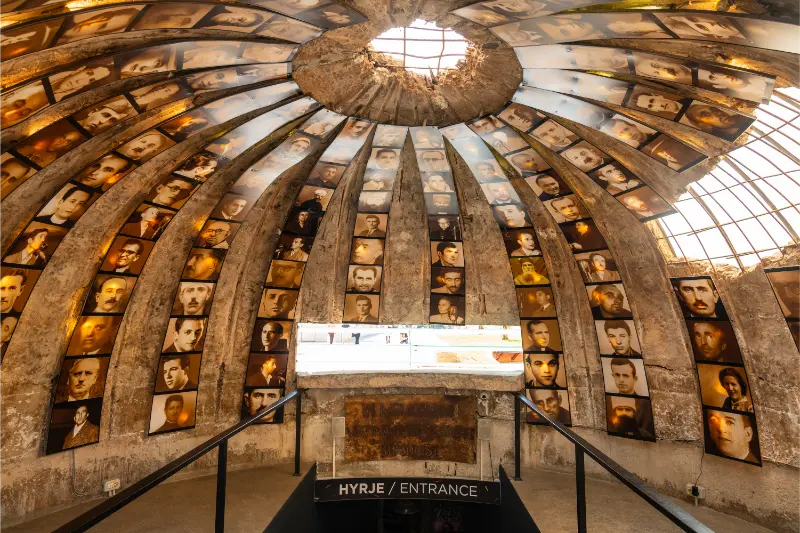
    Tirana Albania Bunkart Bunker

    National Archaeological Museum

    Best for ancient Albania before the Ottoman and modern story. The archaeology collection is useful because many first-time visitors encounter Albania mainly through castles and twentieth-century history. Archaeological material broadens that timeline to Illyrian, Greek and Roman periods. Confirm current opening arrangements before walking over, especially because cultural institutions in Tirana can undergo renovation or exhibition changes.

    Bektashi World Center and museum

    Best for religious history and a less obvious side of Tirana. The Bektashi World Center gives a different kind of museum visit. The complex introduces Bektashi history, beliefs and the place of the community in Albania. It is also useful for travelers who want to understand why Albania’s religious landscape cannot be reduced to one tradition. Read the Bektashi World Center guide and dress respectfully.

    Tirana Mosaic

    Best short archaeological stop outdoors. Tirana Mosaic is not a conventional museum, but it makes an excellent short cultural stop if you want physical evidence of the city’s much older past. It works best as an addition to an urban walk rather than a reason to cross Tirana by itself. Check current access before making a special trip because small heritage sites can have changing visitor arrangements.

    A realistic museum itinerary

    With one museum half-day, I would choose House of Leaves plus Bunk’Art 2 because they are central and tell complementary parts of the communist story. With a full cultural day, add archaeology or the Bektashi World Center. If you have two days in Tirana, place Bunk’Art 1 on the Dajti side of the itinerary instead of squeezing it between central sights.

    Entrance War Bunker Skanderbeg Square Tirana Albania

    Tickets, opening hours and closures

    I avoid putting fixed museum prices and opening hours into a long-term trip plan because they are among the first details to change. Check the official tourism page, the institution’s current channel or your accommodation shortly before visiting. Monday closures, seasonal hours, restoration work and temporary exhibitions can all affect access. If a museum is essential to your trip, verify it before traveling across town.

    For current cultural information, see the official Albania tourism information for this destination. Use official information for current access, then use this guide to decide which museums are worth your limited time.

    How much time should you allow?

    For a focused museum, 45–90 minutes is usually enough for a meaningful first visit; larger bunker, castle or archaeological experiences can take longer. The bigger planning mistake is not the exact number of minutes—it is scheduling several emotionally or visually dense museums back to back. Two important museums plus one open-air cultural site is a strong full day for most travelers.

    Museums with children

    For older children and teenagers, archaeology and Bunk’Art can be engaging when the historical context is explained first. House of Leaves and repression-focused museums contain difficult material, so parents should decide whether the themes suit younger children. A mixed day with one museum, Grand Park and Dajti is usually easier than several heavy museums in succession.

    Rainy-day planning

    Tirana is one of the best places in Albania for a rainy cultural day. House of Leaves and the bunker museums can anchor the schedule, although getting between venues still requires outdoor movement. Keep one flexible indoor museum in reserve rather than assuming every attraction opens daily.

    Tirana Albania Bunkart Museo Bunker

    Accessibility and mobility

    Historic museums in Albania are often housed in castles, old houses, bunkers or protected buildings. That means stairs, thresholds, cobbles and uneven floors can be part of the visit. Do not assume a historic building is step-free because the entrance looks simple in photographs. If step-free access, an elevator, seating or accessible toilets are essential, contact the museum directly before visiting. For broader planning, see Accessible Travel in Albania.

    Photography and respectful visiting

    Ask before using flash, tripods or photographing sensitive exhibits. In memorial museums, former prisons and places connected with political repression, treat the site as a place of memory rather than a dramatic photo set. In active religious buildings, museum-style curiosity never overrides worship: dress appropriately, keep noise low and follow local instructions.

    Where to stay for a cultural visit

    A central base is worth paying a little more for when museums are the priority because you can return to the room between visits and avoid unnecessary taxi rides. Compare accommodation in Tirana on Booking.com. For area-by-area advice, read the local Where to Stay guide.

    Tours and guided cultural experiences

    A good guide is most useful when the site has layers that are difficult to read from the building alone: archaeology, iconography, communist history or a fortress with several construction periods. A tour is less valuable when you only want a quick museum visit. Compare the cost of a guided experience with the value of having someone connect the objects to the wider city.

    Useful related guides

    Common museum-planning mistakes

    • Assuming every museum follows the same weekly opening pattern.
    • Planning too many serious museums in a single day.
    • Ignoring the building itself when the museum occupies a historic house, bunker or castle.
    • Visiting a castle museum at midday in summer without considering heat and exposed walking.
    • Treating a memorial or former prison as a casual photo attraction.
    • Relying on an old blog for ticket prices instead of checking current information.
    • Forgetting that smaller museums may have limited seasonal or staffing-dependent hours.

    Frequently asked questions

    What is the best museum in Tirana for a first visit?

    House of Leaves or Bunk’Art 2 are the easiest central choices for understanding the communist period.

    Are Bunk’Art 1 and Bunk’Art 2 the same?

    No. They occupy different bunkers and have different scope; Bunk’Art 1 is larger and farther from the center.

    How many museums can I visit in one day?

    Two substantial museums plus one smaller cultural stop is a comfortable pace for most travelers.

    Are Tirana museums open every day?

    Do not assume so. Check the current official schedule before visiting.

    Which museum is best with children?

    The archaeology collection is often an easier starting point; choose the communist-history museums according to the child’s age and interest.

    Final recommendation

    Choose quality over quantity. A museum day is successful when you leave with a clearer picture of the destination, not when you have collected the maximum number of ticket stubs. Start with the museum that explains the city’s strongest historical identity, add one contrasting institution or historic house, then spend time outside in the streets, castle, bazaar or waterfront where that history actually unfolded.

  • Vlore Self-Guided Walking Tour: Old Town, Independence History and Lungomare

    Vlore Self-Guided Walking Tour: Old Town, Independence History and Lungomare

    Vlorë is long, so a useful self-guided tour should not pretend that the historic center and modern Lungomare sit inside one tiny pedestrian loop. The best plan is two connected walks: independence and Ottoman-era history first, then the waterfront later.

    The core route takes 3–4 hours split into two walking blocks and uses flat within each section but spread across an elongated city. The best timing is historic center in the morning and Lungomare in the evening. The estimate does not include a long museum visit or a full restaurant meal.

    Route at a glance

    QuestionAnswer
    Core walking time3–4 hours split into two walking blocks
    Terrainflat within each section but spread across an elongated city
    Best timinghistoric center in the morning and Lungomare in the evening
    NavigationEasy with an offline map
    Best forFirst-time visitors who want to understand the city at street level

    Before you start

    Save the next few stops offline before leaving the hotel. A self-guided route is most enjoyable when you are not staring at the phone at every corner. Wear shoes that match the surface: polished stone, cobbles and steep castle lanes matter more than distance in several Albanian historic towns.

    Treat the route as a framework rather than a contract. If one museum becomes unexpectedly interesting, stay longer and remove a weaker later stop. The aim is to understand the destination, not to complete a list.

    Step-by-step walking route

    1. Historic-center streets

    Begin in the older center and walk before entering a museum. Restored pedestrian areas and older façades give this part of Vlorë a different identity from the modern coast. Use the first twenty minutes to understand the city rather than searching for a perfect photo.

    2. Muradie Mosque

    Visit Muradie Mosque, one of the key surviving Ottoman-era monuments. Its central position makes it the natural anchor of the historical walk. Enter respectfully when appropriate.

    3. Independence civic area

    Continue through the central area associated with Albania’s declaration of independence in 1912. Vlorë’s national historical role deserves more than a quick photo between beach stops, so give the square and monuments time to make sense.

    Vlore Albania Seascape Yachts Pier

    4. Coffee break in the center

    Stop before attempting the waterfront. A café break divides the two parts of the day and prevents the historical walk from becoming an overlong urban transfer.

    5. National Museum of Independence

    Reach the National Museum of Independence area, using a short taxi if heat or traffic makes the connecting walk unattractive. This is the key indoor stop for the political story behind the city’s national symbolism.

    6. Waterfront transition

    From the port-side area, begin the coastal section. The sea now replaces historical monuments as the organizing element, so slow the pace rather than continuing to collect stops.

    7. Lungomare

    Walk the Vlorë Lungomare south. The promenade is broad, social and modern. There is no prize for completing every kilometer; choose an endpoint based on sunset, dinner and your hotel.

    8. Uji i Ftohte finish

    If you stay toward the south, continue toward Uji i Ftohtë. Otherwise turn back earlier or take a taxi. The goal is to experience the promenade when it is active, not to complete an arbitrary distance.

    Easier version

    Make two short walks connected by taxi: historic center in the morning and Lungomare in the evening. This is the version I recommend in summer.

    Short version

    If you have only two hours, choose the historic center or the Lungomare instead of rushing both.

    How to extend the walk

    Add Zvërnec or Kanina on another half day. They are not genuine walking extensions of central Vlorë.

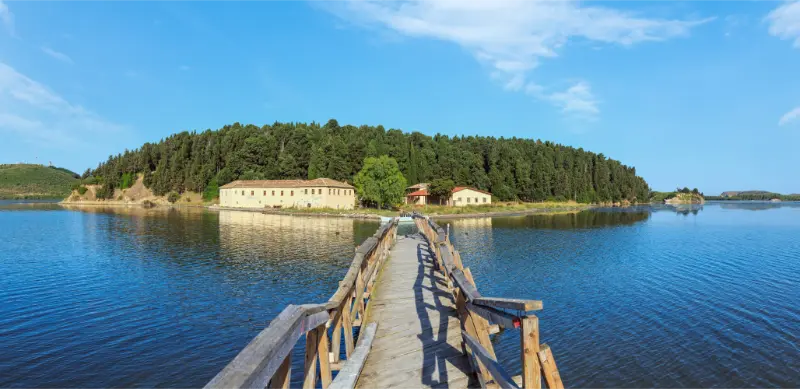
    Wooden Ruined Bridge Isolated Monastery Saint Mary Zvernec Island Narta Lagoon Vlore Albania

    Where to stop for food and coffee

    Have a lighter lunch in the center and save seafood for the coast. The Vlorë Food Guide covers fish, herb pies, olive oil and regional wine.

    Pacing the walk

    A good rhythm is forty to sixty minutes of sightseeing followed by a short seated break. This is particularly important in summer and in steep towns. A ten-minute coffee or water stop often improves the final hour more than trying to walk continuously.

    If you start later than planned, remove an indoor stop instead of speeding up every street. Museums can be visited another time; the atmosphere of a neighborhood is easy to miss when you are checking the clock every few minutes.

    Heat, rain and seasonal adjustments

    In July and August, exposed squares and castle approaches are much more comfortable early or late. Spring and autumn usually support a continuous half-day walk. After rain, polished stone and cobbles can become slippery, so reduce speed and avoid unnecessary shortcuts on stairs.

    Winter walking is often excellent in year-round cities, but shorter daylight means I prefer to finish the route before dark unless the final section is a well-lit promenade or pedestrian center.

    What to carry

    • Comfortable shoes with grip.
    • Water, especially from late spring through early autumn.
    • Sun protection for exposed squares, castles and waterfronts.
    • A light layer outside summer or when the route ends after sunset.
    • Some Albanian lek for cafés, museums and small purchases.
    • An offline map plus your accommodation address.
    • A compact bag rather than heavy shopping or luggage.

    Navigation strategy

    I save only the next two stops rather than every turn. That leaves room to take a pleasant side street without feeling that I have gone off-plan. When a landmark is visible—a castle above you, a cathedral, the sea or a major square—I use the city itself for orientation before checking the phone again.

    Avoid blindly following the shortest digital route if it sends you onto a traffic-heavy road or a very steep staircase. A slightly longer pedestrian street is usually the better travel experience.

    Common mistakes

    • Starting the hardest uphill section at midday in summer.
    • Entering every museum simply because it appears on the route.
    • Wearing smooth-soled city shoes on polished stone.
    • Adding a distant viewpoint and turning a compact walk into a roadside hike.
    • Shopping heavily at the beginning and carrying purchases for the rest of the route.
    • Ignoring opening or worship conditions at religious buildings.

    Photography without slowing the whole walk

    Take one wide establishing frame, one detail and one second composition if the light is genuinely good, then keep moving. Repeating the same photo from ten nearby positions can turn a three-hour city walk into a full-day project for everyone traveling with you.

    Early morning gives cleaner streets and softer light in historic centers; late afternoon is usually stronger for promenades and viewpoints. Inside museums and religious buildings, follow the local photography rules rather than assuming a phone camera is permitted.

    Where to stay for this walk

    For a short stay I prefer a walkable base so the route can begin at the hotel and end near dinner. Check current accommodation in Vlore on Booking.com.

    Albania Vlore Large Palm Tree Seashore Cottages Tourists

    Useful related guides

    Frequently asked questions

    Do I need a professional guide?

    No for navigation. A professional guide can add historical depth, but the route is deliberately simple enough to follow independently.

    Should I buy museum tickets in advance?

    For ordinary city museums, check current official information close to your visit rather than assuming advance booking is required. Time-sensitive rules can change.

    Can I do the walk with children?

    Usually yes if you reduce museum time and choose the easier version in steep towns. Heat and cobbles often matter more than distance.

    What if it rains?

    Move an indoor stop earlier, shorten exposed sections and slow down on polished stone. Do not force a castle climb in slippery conditions simply because it was on the plan.

    Can I split the route over two days?

    Yes. A slower route often works better if you also want museums, shopping and long meals.

    Final advice

    The best self-guided walk keeps the interesting walking and removes the boring walking. Use a taxi when it eliminates an unpleasant hill or long traffic corridor, then spend the saved energy inside the historic center, on the promenade or at the viewpoint you actually came to see.

    How to make the route feel less like a checklist

    I leave one twenty- to thirty-minute block completely unassigned. It can become a café, a small side street, a bench, a shop or extra museum time. This unplanned block is often where the city starts to feel personal rather than pre-programmed.

    I also decide in advance which stop I am willing to remove. That sounds negative, but it prevents the weakest attraction from controlling the pace of the entire day. If the weather is excellent, I usually protect outdoor streets and viewpoints; if it rains, I protect the best museum instead.

    Arrival and departure logistics

    Do not carry large luggage through the route. Leave bags at your hotel or a legitimate storage option and begin walking only after check-in logistics are solved. On departure day, finish the route with enough buffer to retrieve luggage without racing through traffic.

    If you are moving to another city immediately afterwards, eat before the transfer or carry a simple snack. A delayed bus or road segment feels much less stressful when you are not trying to solve food, tickets and luggage at the same time.

  • Best Day Trips from Kruje: Tirana, Dajti, Durres, Cape of Rodon and Qafe Shtame

    Best Day Trips from Kruje: Tirana, Dajti, Durres, Cape of Rodon and Qafe Shtame

    Krujë is usually visited from Tirana, but it can also work as a base for one or two nights if you prefer a smaller historic town and mountain views. From here, day trips fan out toward Tirana, Dajti, the Adriatic coast and the mountain landscapes north of town.

    A car gives the most freedom, but Tirana and Durrës are possible with public transport. For nature destinations, road condition and vehicle suitability matter more than distance.

    A good day trip in Albania is not simply a place that looks close on a map. Road type, summer traffic, mountain gradients, parking, boat departures and the amount of walking after arrival can change the real effort of the day. For that reason, I rank these excursions by how naturally they fit the base rather than by fame alone.

    Quick comparison

    Day tripBest forBest transportTime
    TiranaCity / museums / foodBus / taxi / carFull day
    Mount DajtiMountain / cable carCar / taxi via Tirana sideFull day
    DurrësRoman history / seafrontBus / carFull day
    Cape of RodonWild coast / castleCarFull day
    Qafë ShtamëNational park / forestCarFull day
    Lake BovillaReservoir / viewpointCar / tourFull day
    Preza CastleCastle / viewsCar / taxiHalf day
    ShkodërCastle / city / lakeCar / busFull day

    How I would choose the right day trip

    Start by looking at the rest of your Albania itinerary. If you already have several beach days, choose archaeology, mountains or a village. If you are spending most of the trip in historic towns, use the free day for water, forest or a scenic drive. The best day trip adds contrast instead of repeating what you are already doing.

    I also separate places that are easy without a car from places where independent public transport creates more effort than value. A bus may exist, but if the last connection forces you to leave before the main experience or wait hours for the return, a taxi, driver or organized trip can be the smarter choice.

    The best day trips

    1. Tirana

    Tirana is the easiest major day trip from Krujë. Because the city has so much to see, choose a theme: communist-era history, food and neighborhoods, or central landmarks. One museum plus Pazari i Ri and Blloku creates a better day than trying to visit every bunker and gallery. Return to Krujë for the quieter evening if that contrast is why you chose to stay there.

    2. Mount Dajti

    Dajti gives you a mountain day that still connects naturally with Tirana. The cable car makes the upper area accessible when operating, and the viewpoint helps you understand the plain below. Weather and visibility matter; on a hazy day I would choose Tirana instead. See the Mount Dajti guide and Dajti Ekspres guide.

    3. Durrës

    Durrës adds Roman history and the Adriatic. Visit the amphitheatre and archaeological museum area first, then spend the afternoon on the promenade or beach. This is a strong day trip because it gives you exactly what Krujë does not: flat coastal urban life. Use the Durrës travel guide.

    Main Square Sheshi Liria Durres Albania 2

    4. Cape of Rodon

    Cape of Rodon is the wild-coast choice. The headland, castle remains and shoreline feel far removed from Krujë’s mountain bazaar. Access is much easier with a car, and the final roads deserve patience. Bring water and do not schedule a fixed dinner immediately after the planned return. Read the Cape of Rodon guide.

    5. Qafë Shtamë National Park

    Qafë Shtamë is the natural extension of a Krujë stay. Forest, springs and mountain scenery make it useful in warm weather when the plain feels hot. The road and exact conditions should be checked locally, especially outside the main season. The Qafë Shtamë guide explains why this is more than a viewpoint drive.

    6. Lake Bovilla

    Lake Bovilla is visually dramatic, but access roads and hiking conditions mean I do not present it as a casual city excursion for every rental car. Many travelers prefer a local driver or tour. If you go independently, research the current route and parking situation. The Lake Bovilla guide gives you the planning context.

    7. Preza Castle

    Preza is the short day when you want another castle without another long transfer. It overlooks the plain and works well with airport logistics, a late start or a relaxed lunch. See the Preza Castle guide.

    8. Shkodër

    Shkodër is the longest city day in this list but still realistic if you leave early. Prioritize Rozafa Castle, the pedestrian center and one museum or lake stop. If Theth or Lake Koman is next on your itinerary, it usually makes more sense to move your base to Shkodër rather than return to Krujë.

    Can you do these day trips without a car?

    Tirana and Durrës are the easiest by public transport. Shkodër is also possible, although a full day requires attention to return times. Qafë Shtamë, Bovilla and Cape of Rodon are much easier with a car, driver or organized trip.

    When I use taxis or private drivers for a full day, I agree on the approximate route, waiting time and total price before departure. For buses, I confirm the return point on the ground because terminals and informal stopping places can be less obvious than in countries with one centralized timetable system.

    Best season

    Spring and autumn are excellent for Krujë-based driving. Summer favors mountain escapes and coastal days but needs early starts. Winter works well for Tirana and Durrës; mountain roads should be checked carefully after bad weather.

    Aerial Drone View Tirana Albania

    Weather matters more than the month name. A clear October day can be better for a mountain viewpoint than a stormy July afternoon, while summer traffic can make a normally easy coastal route much slower. Check the forecast the evening before and move weather-sensitive plans when necessary.

    What to take

    • Water, especially for exposed archaeological sites, canyons and mountain roads.
    • Shoes with grip rather than smooth city soles if the day includes trails, castles or wet stone.
    • Sun protection for spring through early autumn.
    • A light layer even in summer if the route gains altitude.
    • Some Albanian lek for parking, small cafés and village businesses.
    • Offline maps and a screenshot of the return route.
    • Swimwear only when the day genuinely includes a beach, spring or thermal stop.

    Common day-trip mistakes

    • Start with the hardest-to-control element. If the day depends on a boat, mountain weather or an archaeological site’s opening hours, solve that first and keep the rest flexible.
    • Do not combine two full day trips into one. Albania rewards slower travel, and an itinerary that technically fits often becomes a sequence of car parks and rushed lunches.
    • Leave a buffer before dinner or an onward transfer. Coastal and mountain roads can take longer than expected even when the distance looks short.
    • Carry some cash. Parking, small cafés, village restaurants and seasonal services can be easier with Albanian lek.
    • Download the route offline. Mobile data is usually useful, but an offline map and a screenshot of your accommodation address remove unnecessary stress.

    Another common mistake is judging a day only by driving time. A two-hour drive followed by four hours in one excellent place can be far more rewarding than three short drives that create six hours of transitions. I plan around the experience in the middle, not around how many pins I can connect.

    Which day trip would I choose first?

    Choose Tirana for culture, Qafë Shtamë for nature, or Cape of Rodon for the Adriatic coast.

    Aerial Beach Boat Straw Umbrellas Cape Rodon Albania

    Where to stay before your day trips

    For several excursions, I prefer staying in the same base for at least two or three nights. Check current accommodation on Booking.com.

    Useful guides

    Frequently asked questions

    How many day trips should I plan from one base?

    Usually one or two. If you need four separate day trips to see the region, it may be more efficient to move your accommodation once and reduce backtracking.

    Is a rental car necessary?

    Not always. City-to-city routes and some famous attractions can be reached by bus, taxi or tour. A car becomes most useful for rural loops, national parks, villages and days with several small stops.

    Should I book day tours before arriving?

    Book limited-capacity boat trips, rafting, mountain transfers and peak-season private tours earlier. For ordinary taxi days or independent city trips, I prefer keeping more flexibility.

    Are these trips suitable for families?

    Many are, but choose by walking difficulty, heat and transfer length rather than by destination name. A short lake or village day is often better for young children than a long canyon route.

    Can I combine two day trips?

    Only when they sit naturally on the same route and each is a half-day experience. I would not combine two destinations that each deserve a full day just to increase the number of places visited.

    Final advice

    Use the base to simplify the trip, not to create daily commutes. Pick the excursion that adds the most contrast, start early when heat or traffic matters, and give yourself permission to return sooner if one place turns out to be better than the rest of the plan.

    Short on time? Use the one-day itinerary for the most important stops without compressing this longer plan.

  • Sarandë vs Ksamil: Which Destination Should You Choose in Albania?

    Sarandë vs Ksamil: Which Destination Should You Choose in Albania?

    If you are deciding between Sarandë and Ksamil, the useful question is not which destination is universally better. It is which one fits the trip you are actually building. Sarandë is a lively Ionian seaside city with a promenade, broad accommodation choice and practical access to Butrint, the Blue Eye and Ksamil; Ksamil is a compact seasonal beach resort known for small turquoise bays, offshore islands and immediate proximity to Butrint. Those differences affect how many nights you need, how much you walk, whether a car helps and what the evenings feel like.

    Choose Sarandë if your priorities match travelers who want restaurants, evening life, transport options and several day trips from one base. Choose Ksamil if you care more about travelers prioritizing swimming, small bays, island views and a classic summer-resort feel. If both fit your route, the two destinations complement each other better than they compete.

    Sarandë vs Ksamil at a glance

    QuestionSarandëKsamil
    Overall feelurban-coastal and excursion-friendlybeach-first and highly seasonal
    Best fortravelers who want restaurants, evening life, transport options and several day trips from one basetravelers prioritizing swimming, small bays, island views and a classic summer-resort feel
    Typical stay3–5 nights2–4 nights
    Walking / terraineasy along the waterfront, hillier for viewpoints and some hotelscompact and relatively easy, though summer traffic makes road movement slow
    Car?A car is optional. Buses, taxis and tours cover the classic sights, while a car adds freedom for quieter beaches and inland stops.A car is not necessary if you stay centrally, and in peak summer parking can reduce rather than improve convenience.

    Atmosphere and travel style

    Sarandë feels urban-coastal and excursion-friendly. It is strongest for travelers who want restaurants, evening life, transport options and several day trips from one base. I would be less enthusiastic about it for visitors seeking a tiny quiet beach village or a purely resort-style holiday. That is important because many Albania itineraries become tiring when every stop is chosen only because it is famous rather than because it offers a different rhythm.

    Ksamil feels beach-first and highly seasonal. It is strongest for travelers prioritizing swimming, small bays, island views and a classic summer-resort feel. It is less naturally suited to people who need year-round city services, broad cultural variety or quiet peak-season roads. If you have already spent several days in a destination with a similar rhythm, Ksamil may be useful precisely because it changes the pace.

    Empty Beach Spring Season Albanian Riviera Ksamil

    Culture and sightseeing

    For culture, Sarandë gives you a modern seaside city whose strongest cultural assets are often day trips such as Butrint. This creates a sightseeing day that can be built around several distinct stops rather than one headline monument.

    Ksamil offers limited urban heritage; its cultural advantage is proximity to Butrint rather than the resort itself. The cultural experience is therefore different rather than simply larger or smaller. I would choose according to the kind of history you enjoy: museum-based city history, lived-in heritage, archaeology, village culture or landscape-based traditions.

    Nature, beaches and outdoor time

    The outdoor side of Sarandë is about Ionian swimming, promenade sunsets and easy access to beaches, Butrint and the Blue Eye. That makes it a better fit when those activities are central to your itinerary rather than optional extras.

    Around Ksamil, the main outdoor draw is small turquoise bays, offshore islands and a beach-first daily routine. Think about what you will realistically do for half a day: swim, hike, cycle, take a boat, walk a lakefront or simply sit in an old town. The answer usually separates the two destinations more clearly than a list of attractions.

    Which is easier without a car?

    In Sarandë, A car is optional. Buses, taxis and tours cover the classic sights, while a car adds freedom for quieter beaches and inland stops. The important distinction is between enjoying the destination itself and reaching its surrounding attractions. A place can be easy without a car in the center but much less flexible for day trips.

    In Ksamil, A car is not necessary if you stay centrally, and in peak summer parking can reduce rather than improve convenience. If you are traveling by bus, I would choose accommodation close to the practical arrival area and avoid adding a taxi every morning just to reach the first sight.

    Walking, hills and physical effort

    Sarandë: easy along the waterfront, hillier for viewpoints and some hotels. This matters for summer heat, heavy luggage, small children and travelers with limited mobility. A short map distance can be deceptive when the route climbs or uses polished stone.

    Ksamil: compact and relatively easy, though summer traffic makes road movement slow. If walking comfort is one of your main criteria, use it as a real decision factor rather than assuming every historic or coastal destination is equally easy on foot.

    Where to stay

    For Sarandë, use Where to Stay in Sarandë before booking. Compare accommodation in Sarandë on Booking.com.

    For Ksamil, use Where to Stay in Ksamil before booking. Compare accommodation in Ksamil on Booking.com.

    The cheapest room is not automatically the best comparison. A central room that removes two taxi rides, a difficult hill climb or daily parking can be better value than a cheaper property in the wrong zone.

    Food and evening atmosphere

    I would use Sarandë for an evening that matches its urban-coastal and excursion-friendly character. The practical advantage of staying centrally is that dinner can become part of the sightseeing day instead of another transport task.

    Ksamil’s evenings reflect its beach-first and highly seasonal identity. In seasonal beach destinations, the difference between August and October can be dramatic; in larger cities, restaurants and cafés remain a more stable part of the experience year-round.

    Budget: which usually costs more?

    I would not choose between the two using one fixed daily-price figure. Accommodation changes with season, weekend demand and exact location, while transport choices can reverse the apparent difference. A beach resort in August and the same place in May are effectively different budget destinations.

    For Sarandë, compare the current hotel cost, whether you need a car/taxi and how many paid attractions you will actually enter. For Ksamil, do the same. The better-value choice is the destination where your preferred activities are naturally accessible, not necessarily the one with the lowest room rate.

    Families

    Families should look beyond attraction count. In Sarandë, the key practical issue is that the terrain is easy along the waterfront, hillier for viewpoints and some hotels. In Ksamil, it is compact and relatively easy, though summer traffic makes road movement slow. I would prioritize easy access to dinner, a manageable return to the room and one main activity per half-day rather than trying to reproduce an adult sightseeing schedule with children.

    Couples

    For couples, Sarandë works especially well when you want travelers who want restaurants, evening life, transport options and several day trips from one base. Ksamil works better when the shared trip is about travelers prioritizing swimming, small bays, island views and a classic summer-resort feel. Romantic travel is often more about pace, views and dinner logistics than about a formal ‘romantic attraction’.

    Ksamil Sandy Beach And Island Albania

    Solo travelers

    Solo travelers can enjoy both. Sarandë is a natural fit for travelers who want restaurants, evening life, transport options and several day trips from one base, while Ksamil suits travelers prioritizing swimming, small bays, island views and a classic summer-resort feel. If social energy matters, choose the destination and season with a stronger evening scene; if quiet independence matters, choose the place where the main sights are easy to reach on foot.

    How many nights?

    I would normally give Sarandë 3–5 nights and Ksamil 2–4 nights. Those are planning ranges, not rules. Add a night when you are using the place as a day-trip base, traveling with children, arriving late or deliberately slowing the itinerary.

    Best time to visit

    Spring and early autumn are the easiest all-round periods for many Albania comparison decisions because walking and road travel are comfortable. Summer is the clear choice when swimming, boats or high-season beach atmosphere are central. Mountain destinations require current trail and road conditions rather than a fixed calendar promise; winter city trips can be excellent where museums, food and urban life remain strong.

    Can you visit both Sarandë and Ksamil?

    Often, yes. The question is whether the transfer creates a logical route. If Sarandë and Ksamil sit naturally on the same itinerary, visiting both is more rewarding than trying to name a winner. I still avoid one-night hopping when each destination needs time to feel different: checking in, parking, repacking and changing hotels can consume the very hours you hoped to save.

    For a short first trip, I keep only destinations that add a new experience. One capital, one UNESCO town, one coast base and one mountain/lake stop often produces more variety than three similar beach towns or three historic cities visited too quickly.

    Choose Sarandë if…

    • You want travelers who want restaurants, evening life, transport options and several day trips from one base.
    • You prefer a urban-coastal and excursion-friendly destination.
    • You are comfortable with this terrain: easy along the waterfront, hillier for viewpoints and some hotels.
    • A stay of 3–5 nights fits your route.

    Choose Ksamil if…

    • You want travelers prioritizing swimming, small bays, island views and a classic summer-resort feel.
    • You prefer a beach-first and highly seasonal destination.
    • You are comfortable with this terrain: compact and relatively easy, though summer traffic makes road movement slow.
    • A stay of 2–4 nights fits your route.

    What I would not use as the deciding factor

    • One viral photo or social-media reel.
    • A single hotel price checked months before the trip.
    • A claim that one destination is always cheaper, quieter or more authentic.
    • Driving time alone without considering parking and the final hotel location.
    • A summer review applied to a winter or shoulder-season trip.

    Useful planning guides

    A simple decision method

    Write down the three things you most want from this part of the trip. Give one point to each destination for every priority it clearly satisfies. Then check the practical constraints: arrival time, onward route, whether you have a car, and how many nights are available. This is more useful than choosing from a generic top-ten list because it forces the itinerary to match your actual travel style.

    If the result is still tied, I would choose the destination that adds more contrast to the rest of the trip. After several urban days, Sarandë may create the bigger change of pace; after several quiet stops, the destination with more city energy can be the better reset.

    Frequently asked questions

    Is Sarandë better than Ksamil?

    Choose Sarandë if your priorities match travelers who want restaurants, evening life, transport options and several day trips from one base. Choose Ksamil if you care more about travelers prioritizing swimming, small bays, island views and a classic summer-resort feel. If both fit your route, the two destinations complement each other better than they compete.

    Ksamil Turquoise Beach And Island Albania

    Which is better for a first trip to Albania?

    Both can work on a first trip. Choose Sarandë for travelers who want restaurants, evening life, transport options and several day trips from one base; choose Ksamil for travelers prioritizing swimming, small bays, island views and a classic summer-resort feel. Route efficiency matters just as much as fame.

    Which is easier without a car?

    Sarandë: A car is optional. Buses, taxis and tours cover the classic sights, while a car adds freedom for quieter beaches and inland stops. Ksamil: A car is not necessary if you stay centrally, and in peak summer parking can reduce rather than improve convenience. Compare the exact accommodation location before deciding.

    Which is better for families?

    The easier choice depends on terrain and daily plan. Sarandë has easy along the waterfront, hillier for viewpoints and some hotels; Ksamil has compact and relatively easy, though summer traffic makes road movement slow. Families usually benefit from the base with simpler walking and fewer daily transfers.

    Should I stay overnight in both?

    If you have enough time, yes when each adds a different experience. I would usually plan around 3–5 nights in Sarandë and 2–4 nights in Ksamil, then shorten only if the overall itinerary would otherwise become too rushed.

    Final take

    Choose Sarandë if your priorities match travelers who want restaurants, evening life, transport options and several day trips from one base. Choose Ksamil if you care more about travelers prioritizing swimming, small bays, island views and a classic summer-resort feel. If both fit your route, the two destinations complement each other better than they compete. The strongest Albania itineraries are not built by finding one universal winner. They are built by combining destinations that give you different landscapes, rhythms and experiences without wasting days on unnecessary transfers.

  • 2 Days in Dhërmi: Beaches, Old Village, Drymades and a Riviera Adventure

    2 Days in Dhërmi: Beaches, Old Village, Drymades and a Riviera Adventure

    Two days in Dhermi is long enough to see the essential sights without turning the visit into a race. The key is to make the second day feel different from the first: one day for the destination itself, one day for the landscape, beach, village or regional experience that explains why staying overnight is worthwhile.

    This itinerary is designed for a first visit. It assumes you want a realistic pace, time for meals and an evening in the destination—not a schedule that treats every viewpoint, museum and beach as a box to tick.

    2-day itinerary at a glance

    DayMain focusWhy it works
    Day 1Core destinationSee the essential sights while your energy is highest
    Day 2Regional / slower experienceAdd nature, coast, villages or an excursion instead of repeating day one

    Day 1: the essential experience

    Begin with the old village before the day gets hot, walking the traditional lanes and viewpoints before descending toward the coast. Spend the main part of the day at Dhërmi Beach or Drymades, not both, then keep the evening for dinner and the summer atmosphere. The vertical distance between village and coast makes repeated back-and-forth transfers less relaxing than they look on a map.

    How to pace day one

    Start with the stop that is most exposed, steep or important, then make lunch a real break. I keep the late afternoon deliberately looser because that is when delays, heat or an unexpectedly interesting place usually change the plan. If you are enjoying one neighborhood, beach or museum, remove the weakest later stop rather than rushing the experience in front of you.
    Day 2: go beyond the first-day checklist

    Choose one contrasting coastal experience: Gjipe for canyon scenery and a more adventurous access, Palasë for a broad northern Riviera beach, or a boat excursion when sea conditions are good. Keep the second half of the day flexible for another swim instead of adding several named beaches simply to complete a list.

    The second day is also your weather buffer. If rain, wind or heat makes the planned excursion unattractive, swap the order, use indoor/cultural stops earlier or keep the day local. Two nights create enough flexibility that you do not need to force an outdoor activity in poor conditions.

    Do you need a car?

    A car is useful for Palasë, Gjipe access areas and regional flexibility, but parking can be difficult in peak summer. Choose accommodation with parking if you drive.

    If you rent a car, check parking before arrival and leave it parked while exploring compact historic centers. If you travel without a car, use taxis or one organized excursion strategically; paying for one well-chosen transfer can be more efficient than renting a vehicle for two days.

    Where to stay for two nights

    For a short stay, location matters more than room size. Read the local Where to Stay guide before booking, then compare current accommodation in Dhermi on Booking.com. I prefer accommodation that reduces the hardest daily transfer—an old-town climb, a beach road, or a long walk to the bus stop.

    Greek Style Village Dhermi Coastal Road Albania

    Arriving on day zero or the first morning

    If possible, arrive the evening before the itinerary begins. That gives you two complete days and lets you enjoy dinner and an orientation walk without sacrificing the first major attraction. If you arrive on the first morning, protect only the main day-one anchor and accept that the schedule may start later than planned.

    A slower version for families

    Families should make Drymades or Dhërmi Beach the main anchor and choose Gjipe only when the access and walking are appropriate for the children.

    Dhermi Coastal Village with White Houses Albania

    With children I reduce the number of formal attractions, protect a long lunch and keep one open block each afternoon. A beach, river, park, thermal area or guesthouse garden counts as a real activity; it does not need to be filled with another ticketed sight.

    If you are traveling without a car

    Base yourself within walking distance of the evening area, because that removes the need to solve transport twice every day. For the regional second day, ask your accommodation about current buses, taxis, shared transfers or tours. Avoid building an itinerary around an old timetable screenshot: local transport and seasonal services can change.

    Best time for this 2-day itinerary

    Late spring and early autumn are the easiest all-round periods for most Albanian destinations because walking and road travel are more comfortable. Coastal destinations are at their most active in summer, while mountain itineraries depend on current trail and road conditions rather than a fixed calendar date. In winter, shorten daylight-dependent excursions and give more time to food and culture.

    How much should you book in advance?

    In July and August on the Riviera and during the main Alps hiking season, reserve the accommodation that solves your location or transport problem before arrival. Outside peak periods I keep the second-day activity flexible unless it depends on a boat, guide or fixed transfer. That balance protects you from both sold-out essentials and unnecessary overplanning.

    What to pack for 48 hours

    • Comfortable walking shoes appropriate to cobbles, hills or trails.
    • A compact rain layer and one warmer layer outside peak summer.
    • Sun protection and water for exposed castle, beach or mountain days.
    • Some Albanian lek for small purchases, parking, cafés or local transport.
    • Offline maps and screenshots of the accommodation and transport pickup points.
    • Swimwear only when the itinerary genuinely includes water; do not carry beach equipment through a museum day.

    Common mistakes

    • Treating two days as two one-day itineraries stacked together.
    • Changing hotels after only one night and losing the benefit of a two-day base.
    • Using the car for every short movement inside a compact historic center.
    • Scheduling the hardest outdoor activity after lunch in midsummer.
    • Assuming a seasonal boat, shuttle or high trail operates every day of the year.
    • Adding a distant famous attraction that turns the second day into mostly driving.

    How this compares with 1 day and 3 days

    With only one day, stay local and remove the regional excursion. The value of the second day is precisely that it lets you add landscape or a slower experience without damaging the core visit.

    A third day is worthwhile if you want a longer hike, a boat trip, a second village or a completely weather-dependent activity. Do not add it only to repeat the same type of sightseeing.

    Useful planning guides

    Frequently asked questions

    Are 2 days enough for Dhermi?

    Yes for a first visit when you keep day one focused on the destination and use day two for one coherent regional experience.

    Do I need to change hotels?

    No. Keep the same base for both nights unless day two is intentionally a one-way transfer to your next destination.

    Should I rent a car?

    A car is useful for Palasë, Gjipe access areas and regional flexibility, but parking can be difficult in peak summer. Choose accommodation with parking if you drive.

    What if it rains?

    Swap the day order, move museums and long meals into the wettest hours and keep exposed mountain, canyon, boat or beach activities flexible.

    Is this itinerary suitable for families?

    Families should make Drymades or Dhërmi Beach the main anchor and choose Gjipe only when the access and walking are appropriate for the children.

    Dhermi Beach In The Morning Albania

    Final advice

    The best two-day trip feels like one complete stay, not a sprint between two lists. Use the first day to understand the destination, sleep there, then let the second day broaden the story. That rhythm gives you the atmosphere that day-trippers miss while still keeping the itinerary efficient.

    A practical 48-hour rhythm

    I think of the visit as four half-days rather than forty-eight hours to fill. The first half-day establishes the place, the second is the best evening atmosphere, the third holds the major excursion and the fourth stays flexible for the stop you missed, a slower meal or an early departure. This structure absorbs travel delays without making the trip feel incomplete.

    If you are continuing elsewhere on the second evening, move the most important day-two activity into the morning and leave before dark when the road is unfamiliar. An itinerary is successful when you leave with energy and a clear memory of the place, not when you reach the numerical maximum of attractions.

    How to use the two evenings

    The two evenings are one of the main reasons to stay forty-eight hours. On the first evening I keep things local: a promenade, old-town walk, lakefront, guesthouse dinner or one viewpoint close to the accommodation. On the second evening I leave room for the place I liked most, a longer dinner or an early night before the next transfer. I do not book both evenings with fixed activities because weather, fatigue and transport delays are exactly what a two-night stay is supposed to absorb.

    Connecting this stop to your next destination

    Before the trip I decide whether day two ends back at the same hotel or becomes a one-way movement toward the next destination. If the onward route is short and simple, checking out in the morning and carrying luggage in the car can work. If the route involves buses, mountain shuttles, ferries or a long coastal drive, I keep the second night and leave the following morning. That choice protects the itinerary from turning its best afternoon into a race against the last connection.

    Food and meal timing

    I build both days around one proper meal rather than constant snack stops. In historic towns, lunch is a useful break from steep lanes and midday heat; on the coast, a later lunch can bridge the hottest beach hours; in the mountains, guesthouse dinner may be the social center of the stay. Food should support the rhythm of the itinerary, not become another list of places to cross the city for.

    Shorter option: See the one-day version if you have only a single full day in the destination.

  • Himarë vs Dhërmi: Which Destination Should You Choose in Albania?

    Himarë vs Dhërmi: Which Destination Should You Choose in Albania?

    If you are deciding between Himarë and Dhërmi, the useful question is not which destination is universally better. It is which one fits the trip you are actually building. Himarë is a smaller Riviera town that balances walkable beaches with Old Himara, Livadhi, Porto Palermo and access to nearby coves; Dhërmi is a Riviera destination split between a historic hillside village and a developed beach zone, with dramatic mountains, clear water and summer nightlife. Those differences affect how many nights you need, how much you walk, whether a car helps and what the evenings feel like.

    Choose Himarë if your priorities match travelers who want a calmer Riviera base with beaches, local life and day-trip variety. Choose Dhërmi if you care more about travelers who want striking coast, stylish beach days and a stronger summer social scene. If both fit your route, the two destinations complement each other better than they compete.

    Himarë vs Dhërmi at a glance

    QuestionHimarëDhërmi
    Overall feelrelaxed coastal with enough variety for several daysscenic, seasonal and more spread out
    Best fortravelers who want a calmer Riviera base with beaches, local life and day-trip varietytravelers who want striking coast, stylish beach days and a stronger summer social scene
    Typical stay3–4 nights2–3 nights
    Walking / terraineasy in the modern beachfront area, hillier for Old Himara and some surrounding beachessteep between the old village and coast, so location choice matters
    Car?You can enjoy the town without a car, but a car or taxi expands access to Porto Palermo, Qeparo, Borsh and remote coves.A car is useful for moving between village, beach, Drymades, Palasë and nearby coves, though summer parking needs planning.

    Atmosphere and travel style

    Himarë feels relaxed coastal with enough variety for several days. It is strongest for travelers who want a calmer Riviera base with beaches, local life and day-trip variety. I would be less enthusiastic about it for people seeking the biggest nightlife scene or a polished resort experience. That is important because many Albania itineraries become tiring when every stop is chosen only because it is famous rather than because it offers a different rhythm.

    Dhërmi feels scenic, seasonal and more spread out. It is strongest for travelers who want striking coast, stylish beach days and a stronger summer social scene. It is less naturally suited to people who want a compact walk-everywhere base or easy logistics without taxis/car. If you have already spent several days in a destination with a similar rhythm, Dhërmi may be useful precisely because it changes the pace.

    Culture and sightseeing

    For culture, Himarë gives you Old Himara, coastal village identity, churches and nearby Porto Palermo. This creates a sightseeing day that can be built around several distinct stops rather than one headline monument.

    Dhërmi offers a historic hillside village, churches and Riviera architecture alongside a modern beach scene. The cultural experience is therefore different rather than simply larger or smaller. I would choose according to the kind of history you enjoy: museum-based city history, lived-in heritage, archaeology, village culture or landscape-based traditions.

    Nature, beaches and outdoor time

    The outdoor side of Himarë is about multiple beaches, nearby coves, Old Himara views and easy access to Porto Palermo and the central Riviera. That makes it a better fit when those activities are central to your itinerary rather than optional extras.

    Around Dhërmi, the main outdoor draw is dramatic Ionian beaches, Drymades, Palasë and quick access to Gjipe/Jalë areas. Think about what you will realistically do for half a day: swim, hike, cycle, take a boat, walk a lakefront or simply sit in an old town. The answer usually separates the two destinations more clearly than a list of attractions.

    Which is easier without a car?

    In Himarë, You can enjoy the town without a car, but a car or taxi expands access to Porto Palermo, Qeparo, Borsh and remote coves. The important distinction is between enjoying the destination itself and reaching its surrounding attractions. A place can be easy without a car in the center but much less flexible for day trips.

    In Dhërmi, A car is useful for moving between village, beach, Drymades, Palasë and nearby coves, though summer parking needs planning. If you are traveling by bus, I would choose accommodation close to the practical arrival area and avoid adding a taxi every morning just to reach the first sight.

    Drymades Beach Dhermi Albania

    Walking, hills and physical effort

    Himarë: easy in the modern beachfront area, hillier for Old Himara and some surrounding beaches. This matters for summer heat, heavy luggage, small children and travelers with limited mobility. A short map distance can be deceptive when the route climbs or uses polished stone.

    Dhërmi: steep between the old village and coast, so location choice matters. If walking comfort is one of your main criteria, use it as a real decision factor rather than assuming every historic or coastal destination is equally easy on foot.

    Where to stay

    For Himarë, use Where to Stay in Himarë before booking. Compare accommodation in Himarë on Booking.com.

    For Dhërmi, use Where to Stay in Dhërmi before booking. Compare accommodation in Dhërmi on Booking.com.

    The cheapest room is not automatically the best comparison. A central room that removes two taxi rides, a difficult hill climb or daily parking can be better value than a cheaper property in the wrong zone.

    Food and evening atmosphere

    I would use Himarë for an evening that matches its relaxed coastal with enough variety for several days character. The practical advantage of staying centrally is that dinner can become part of the sightseeing day instead of another transport task.

    Dhërmi’s evenings reflect its scenic, seasonal and more spread out identity. In seasonal beach destinations, the difference between August and October can be dramatic; in larger cities, restaurants and cafés remain a more stable part of the experience year-round.

    Budget: which usually costs more?

    I would not choose between the two using one fixed daily-price figure. Accommodation changes with season, weekend demand and exact location, while transport choices can reverse the apparent difference. A beach resort in August and the same place in May are effectively different budget destinations.

    For Himarë, compare the current hotel cost, whether you need a car/taxi and how many paid attractions you will actually enter. For Dhërmi, do the same. The better-value choice is the destination where your preferred activities are naturally accessible, not necessarily the one with the lowest room rate.

    Families

    Families should look beyond attraction count. In Himarë, the key practical issue is that the terrain is easy in the modern beachfront area, hillier for Old Himara and some surrounding beaches. In Dhërmi, it is steep between the old village and coast, so location choice matters. I would prioritize easy access to dinner, a manageable return to the room and one main activity per half-day rather than trying to reproduce an adult sightseeing schedule with children.

    Couples

    For couples, Himarë works especially well when you want travelers who want a calmer Riviera base with beaches, local life and day-trip variety. Dhërmi works better when the shared trip is about travelers who want striking coast, stylish beach days and a stronger summer social scene. Romantic travel is often more about pace, views and dinner logistics than about a formal ‘romantic attraction’.

    Dhermi Beach Albanian Riviera

    Solo travelers

    Solo travelers can enjoy both. Himarë is a natural fit for travelers who want a calmer Riviera base with beaches, local life and day-trip variety, while Dhërmi suits travelers who want striking coast, stylish beach days and a stronger summer social scene. If social energy matters, choose the destination and season with a stronger evening scene; if quiet independence matters, choose the place where the main sights are easy to reach on foot.

    How many nights?

    I would normally give Himarë 3–4 nights and Dhërmi 2–3 nights. Those are planning ranges, not rules. Add a night when you are using the place as a day-trip base, traveling with children, arriving late or deliberately slowing the itinerary.

    Best time to visit

    Spring and early autumn are the easiest all-round periods for many Albania comparison decisions because walking and road travel are comfortable. Summer is the clear choice when swimming, boats or high-season beach atmosphere are central. Mountain destinations require current trail and road conditions rather than a fixed calendar promise; winter city trips can be excellent where museums, food and urban life remain strong.

    Can you visit both Himarë and Dhërmi?

    Often, yes. The question is whether the transfer creates a logical route. If Himarë and Dhërmi sit naturally on the same itinerary, visiting both is more rewarding than trying to name a winner. I still avoid one-night hopping when each destination needs time to feel different: checking in, parking, repacking and changing hotels can consume the very hours you hoped to save.

    For a short first trip, I keep only destinations that add a new experience. One capital, one UNESCO town, one coast base and one mountain/lake stop often produces more variety than three similar beach towns or three historic cities visited too quickly.

    Choose Himarë if…

    • You want travelers who want a calmer Riviera base with beaches, local life and day-trip variety.
    • You prefer a relaxed coastal with enough variety for several days destination.
    • You are comfortable with this terrain: easy in the modern beachfront area, hillier for Old Himara and some surrounding beaches.
    • A stay of 3–4 nights fits your route.

    Choose Dhërmi if…

    • You want travelers who want striking coast, stylish beach days and a stronger summer social scene.
    • You prefer a scenic, seasonal and more spread out destination.
    • You are comfortable with this terrain: steep between the old village and coast, so location choice matters.
    • A stay of 2–3 nights fits your route.

    What I would not use as the deciding factor

    • One viral photo or social-media reel.
    • A single hotel price checked months before the trip.
    • A claim that one destination is always cheaper, quieter or more authentic.
    • Driving time alone without considering parking and the final hotel location.
    • A summer review applied to a winter or shoulder-season trip.

    Useful planning guides

    A simple decision method

    Write down the three things you most want from this part of the trip. Give one point to each destination for every priority it clearly satisfies. Then check the practical constraints: arrival time, onward route, whether you have a car, and how many nights are available. This is more useful than choosing from a generic top-ten list because it forces the itinerary to match your actual travel style.

    If the result is still tied, I would choose the destination that adds more contrast to the rest of the trip. After several urban days, Himarë may create the bigger change of pace; after several quiet stops, the destination with more city energy can be the better reset.

    Frequently asked questions

    Is Himarë better than Dhërmi?

    Choose Himarë if your priorities match travelers who want a calmer Riviera base with beaches, local life and day-trip variety. Choose Dhërmi if you care more about travelers who want striking coast, stylish beach days and a stronger summer social scene. If both fit your route, the two destinations complement each other better than they compete.

    Gjipe Beach Albanian Riviera

    Which is better for a first trip to Albania?

    Both can work on a first trip. Choose Himarë for travelers who want a calmer Riviera base with beaches, local life and day-trip variety; choose Dhërmi for travelers who want striking coast, stylish beach days and a stronger summer social scene. Route efficiency matters just as much as fame.

    Which is easier without a car?

    Himarë: You can enjoy the town without a car, but a car or taxi expands access to Porto Palermo, Qeparo, Borsh and remote coves. Dhërmi: A car is useful for moving between village, beach, Drymades, Palasë and nearby coves, though summer parking needs planning. Compare the exact accommodation location before deciding.

    Which is better for families?

    The easier choice depends on terrain and daily plan. Himarë has easy in the modern beachfront area, hillier for Old Himara and some surrounding beaches; Dhërmi has steep between the old village and coast, so location choice matters. Families usually benefit from the base with simpler walking and fewer daily transfers.

    Should I stay overnight in both?

    If you have enough time, yes when each adds a different experience. I would usually plan around 3–4 nights in Himarë and 2–3 nights in Dhërmi, then shorten only if the overall itinerary would otherwise become too rushed.

    Final take

    Choose Himarë if your priorities match travelers who want a calmer Riviera base with beaches, local life and day-trip variety. Choose Dhërmi if you care more about travelers who want striking coast, stylish beach days and a stronger summer social scene. If both fit your route, the two destinations complement each other better than they compete. The strongest Albania itineraries are not built by finding one universal winner. They are built by combining destinations that give you different landscapes, rhythms and experiences without wasting days on unnecessary transfers.

  • Nightlife in Durrës: Vollga, Beach Bars, Golem and Evening Entertainment

    Nightlife in Durrës: Vollga, Beach Bars, Golem and Evening Entertainment

    Durrës has two different evening identities: the historic city and Vollga/Currila side, and the long resort coast toward Plazh and Golem. The official tourism agency notes bars, clubs and evening promenade life as part of the Durrës beach experience. Choosing the right base matters more than compiling a list of individual venues.

    Old Olive Tree Beach Golem Durres Albania

    I treat nightlife broadly: dinner, wine bars, beach bars, live music, promenades, cultural events and clubs all count. That matters in Albania because a historic town and a Riviera resort can both have excellent evenings while offering completely different after-dark experiences.

    Nightlife at a glance

    AreaBest for
    Vollga / central waterfrontBest for a city evening with restaurants, promenades and drinks close to historic Durrës.
    CurrilaA waterfront area north/west of the center with restaurants and sea-view venues.
    PlazhThe main beach district south of the center.
    GolemA separate resort scene with hotel bars, beach venues and summer entertainment.
    Beach clubs / event nightsSummer programming can be lively along the coast.

    What the nightlife is really like

    Do not assume central Durrës and Golem form one nightlife district. They are separate bases linked by road. Pick one for the night rather than spending your evening in transit.

    The safest way to plan is by area and season, not by a permanent “top 10 bars” list. Venues change ownership, music concepts, opening days and event calendars. I prefer to identify the stable nightlife district first, then check what is actually open during the week of the trip.

    Vollga / central waterfront

    Best for a city evening with restaurants, promenades and drinks close to historic Durrës. It is the easiest zone for travelers who also want the amphitheatre, museum and old center.

    Currila

    A waterfront area north/west of the center with restaurants and sea-view venues. It suits sunset dinners and a more polished evening without committing to the long resort strip.

    Plazh

    The main beach district south of the center. In summer it has bars, restaurants and resort entertainment, but distances along the coast are long and the urban center is not a casual walk away.

    Golem

    A separate resort scene with hotel bars, beach venues and summer entertainment. Stay there if the beach holiday is the priority; do not commute to central Durrës every night.

    Currilave Beach Shoreline Hotels Durres Albania Sunset 2

    Beach clubs / event nights

    Summer programming can be lively along the coast. Venue names and schedules change, so choose based on current event listings and transport from your hotel.

    When does the evening start?

    Albanians often treat the evening as a gradual progression: coffee or a walk, dinner later than many northern-European visitors expect, then drinks. In summer coastal resorts shift even later because the beach day runs long. If you want a quiet dinner, arrive earlier; if you want atmosphere, the same street may feel completely different two hours later.

    Best season for nightlife

    Durrës city works all year, while the beach-strip nightlife peaks in summer. June and September are strong for a social coast without the maximum August pressure.

    Where to stay if nightlife matters

    Compare current accommodation in Durres on Booking.com.

    Read the local Where to Stay guide before booking. I prioritize a safe, simple walk or short taxi home over saving a small amount on a room far from the evening area.

    Getting home late

    If you are based centrally, walk around Vollga/Currila and use a taxi for the final return if needed. If you stay in Golem, treat it as its own nightlife base. The coastal road can be congested and is not the place to drive after drinking.

    Current UK travel advice says reports of crime targeting foreigners are rare, while still recommending sensible precautions in larger cities and late at night. Keep your phone charged, use a known/licensed taxi or locally reputable booking method, watch your belongings in busy areas and avoid walking unfamiliar poorly lit roads after drinking. See current Albania safety advice.

    Nightlife for solo travelers

    Solo travelers usually do best in compact pedestrian areas, café-bars and venues where sitting at the bar or terrace feels normal. Tell someone where you are going, keep control of your drink and transport, and do not accept an unplanned ride from a stranger simply because public transport has ended.

    Nightlife for couples and small groups

    Couples can use the evening to combine a sunset viewpoint, dinner and one good bar rather than chasing the loudest venue. Groups have more flexibility with taxis and tables, but should agree the return plan before people split up. In beach resorts, staying near the nightlife zone can save repeated taxi costs.

    Costs and payment

    Central bars range widely; Golem and beach properties can charge resort-level prices in peak season. A simple way to save is to eat in the city or a non-front-row restaurant and use a beachfront venue only for one drink.

    Carry some Albanian lek because not every small bar or taxi handles cards consistently. At premium venues, ask about cover charges, table minimums or event tickets before ordering. Never leave a card behind the bar unless you are completely comfortable with the venue’s process.

    Dress code

    Most Albanian nightlife is casual-smart rather than formal. Beach towns are relaxed, while premium rooftops and clubs may expect cleaner evening clothing. Comfortable shoes matter more than fashion in Berat, Shkodër and old-town streets where stone or uneven paving can make late walking awkward.

    Food before and after drinks

    I strongly prefer to eat before a long night out. Albania makes that easy because evening life and food overlap closely. A proper dinner also slows the pace of drinking. Late-night food availability varies by destination and season, so do not assume a quiet historic town has the same 02:00 options as Tirana or Sarandë in August.

    A good evening plan

    Historic-center dinner, sunset on the waterfront, drinks around Vollga, then either end centrally or choose one beach venue with a taxi. If staying in Golem, reverse the logic and keep the whole evening there.

    What not to do

    • Do not drive after drinking, especially on dark coastal or mountain roads.
    • Do not build the night around an old list of venues without checking that they still operate.
    • Do not assume public buses run after nightlife hours.
    • Do not leave drinks, phones or bags unattended in crowded bars.
    • Do not choose accommodation only by daytime location if you know you will return after midnight.
    • Do not confuse a seasonal beach resort with a year-round nightlife city.

    If it rains

    A rainy evening usually favors dinner, wine bars, cafés and live music over open-air beach venues or rooftops. In coastal resorts, a storm can cancel or empty an event that would normally be busy. Keep one indoor alternative and avoid making a non-refundable nightlife booking the only plan for the night.

    Official tourism context

    For the stable character of this destination, see the official Durres Beach tourism page. Use official information for districts and destination context, then verify same-week nightlife programming locally because events and individual venues change much faster than landmarks.

    Useful related guides

    Frequently asked questions

    Where is nightlife in central Durres?

    The Vollga and Currila waterfront areas are the easiest starting points.

    Is Golem good for nightlife?

    Yes in summer, mainly through resort and beach-oriented venues.

    Can I walk from central Durres to Golem at night?

    No; treat them as separate areas and use road transport.

    Is Durres active in winter?

    The city remains active, while beach-resort nightlife becomes much quieter.

    Where should I stay?

    Central Durres for culture and city nightlife; Golem or Plazh for a beach-resort holiday.

    Currilave Beach Shoreline Hotels Durres Albania Sunset

    Final recommendation

    Durrës is a better choice than the Riviera for travelers who want beach evenings but also need easy access to Tirana and year-round city services.

    Plan the night around the destination’s real personality. Tirana rewards district-hopping, Riviera resorts reward seasonal beach nights, and cities such as Shkodër, Korçë and Berat are strongest when you slow down and treat cafés, food, music and walking as nightlife too. That produces a better trip than forcing every destination into the same club template.

    How to choose a venue once you arrive

    Walk the main evening area once before committing. Look at whether locals as well as tourists are using the place, whether prices are displayed, whether the atmosphere matches what you want and whether the route back to the hotel is easy. I would rather have two good drinks in a comfortable venue than spend an hour moving between places because an online list told me I had to see them all.

    Noise and choosing a hotel

    The hotel decision can matter more than the nightlife decision. A room directly above a summer bar may be perfect if you plan to stay out late and frustrating if you want to sleep at midnight. Read recent accommodation reviews for noise, ask about room orientation and remember that “central” can mean lively rather than quiet. If sleep matters, stay one or two blocks away from the main strip instead of directly on it.

    Early evening versus late night

    You do not need to stay out until 02:00 to experience the local evening. In many Albanian destinations the most enjoyable period begins around sunset, when promenades fill, cafés become social and dinner terraces come alive. Travelers who want a calmer night can finish after dinner; travelers who want clubs can treat that first phase as the warm-up. Separating the two also makes it easier for couples or groups with different energy levels to enjoy the same destination.