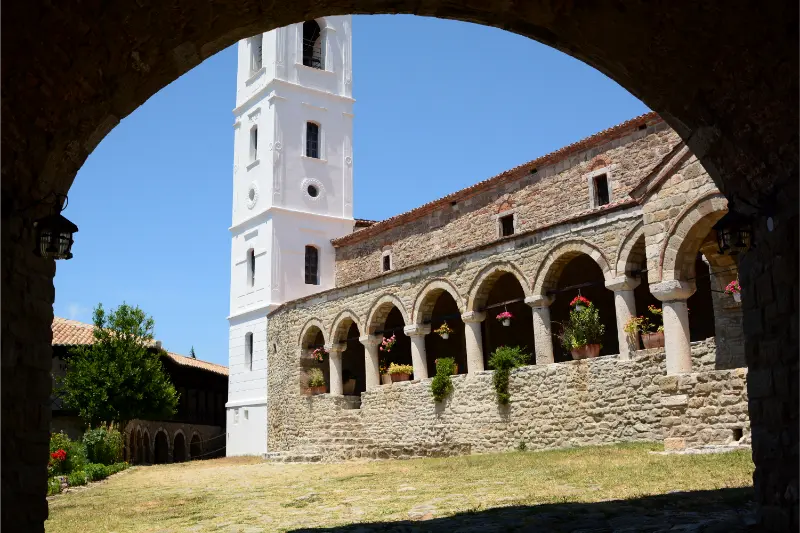
Ardenica Monastery is one of the most rewarding cultural stops in the Fier region because it combines living religious heritage, hilltop scenery and a direct link with important moments in Albanian history. It is easy to overlook when planning around Apollonia or the coast, but the monastery adds a completely different layer to the day.
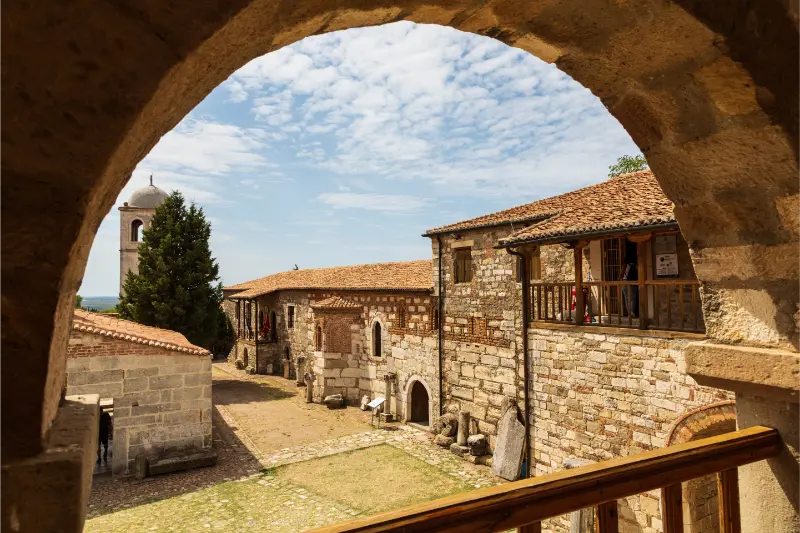
The official Albanian tourism portal places the monastery around 18 km south of Fier and dates its foundation to 1282 under Byzantine emperor Andronikos II; the tourism portal also notes the traditional association with Skanderbeg’s marriage in 1451 and the frescoes of the Zografi brothers.
Why Ardenica Monastery deserves a place in an Albania itinerary
The monastery is small enough to visit without fatigue but rich enough to reward attention. Unlike an archaeological ruin, it is a religious complex with architecture, painted decoration and a spiritual atmosphere that should shape how visitors behave.
This is the kind of stop that works best when you understand its context. It fits naturally into a cultural route with Fier and Apollonia. I would not visit only to collect a photograph and leave. Give yourself enough time to notice the landscape, local rhythm and the practical details that connect the attraction to the wider region.
What to see and what not to rush
Spend time with the church architecture and frescoes rather than treating the complex as a quick exterior photo. Sacred art is easiest to appreciate when you slow down and look at composition, color and the relationship between painted surfaces and the building.
The elevated setting gives broad views across the surrounding lowlands. The hilltop position also makes the monastery a pleasant pause between larger destinations, especially when the air is clear.
The most rewarding visits in Albania often happen between the headline sights: a view from a quiet road, a conversation over coffee, a village lane, a local bakery or a few minutes watching the landscape change. Leave space for those moments instead of turning the day into a race between pins on a map.
How much time to allow
One to two hours is sufficient for most visitors. The value comes from a calm visit, not the size of the complex. Add lunch and Apollonia and you have a full cultural day around Fier.
If you are driving, count parking, short detours and slower rural roads as part of the day. Distances in Albania can look small on a map while still requiring patience. I prefer one well-planned regional day to three attractions connected by constant driving.
Getting there and moving around
A car or taxi from Fier is the simplest approach. If relying on a taxi, agree on the return because the monastery is not a city-center attraction with constant passing transport.
For a wider overview, use our getting around Albania guide and, if you are driving, our car-rental and driving guide. Download offline maps, keep some Albanian lek, and save the name of your accommodation or destination in Albanian spelling as well as English.
Best time to visit
Spring and autumn offer comfortable temperatures and clear countryside views. Summer works best in the morning or later afternoon, while winter can be peaceful provided roads and weather are normal.
Weather matters differently depending on the setting. Archaeological sites and castles can feel exposed in summer, mountain roads can change quickly after storms, and beach destinations are much busier in July and August. Recheck current conditions near departure rather than assuming last year’s timetable or access arrangement is still valid.
Where to stay
Fier is the most practical base. Berat also works if Ardenica is part of a longer road trip through central and southern Albania rather than a dedicated overnight stop.
Check current accommodation on Booking.com. Check the exact map location before booking because Albanian properties sometimes use the name of the nearest famous beach, lake or town even when they sit several kilometres away. Recent reviews are especially useful for parking, road access, noise and seasonal facilities.
Food and local atmosphere
Plan meals in Fier, around Apollonia or at a confirmed local restaurant. Religious sites should not be treated like entertainment complexes, so arrive prepared rather than expecting extensive tourist services inside.

I usually avoid building a rural day around one supposedly “must-visit” restaurant. Instead, I look for a place that is busy with local diners, read the menu and ask what is fresh. A slower lunch often adds more to the memory of a trip than squeezing in one extra viewpoint.
Families, accessibility and comfort
Families can manage the short visit well, particularly older children interested in history or art. Explain respectful behavior before entering the church and keep voices low during services or prayer.
Travelers with reduced mobility should confirm the exact surface, steps, parking distance and toilet access directly with the attraction or accommodation. “Accessible by car” does not necessarily mean a historic ruin, castle, beach path or village street is step-free once you arrive.
Safety and responsible travel
Dress and behave respectfully, follow photography rules inside sacred spaces and do not touch frescoes or religious objects. Stone surfaces can be slippery in rain, so wear sensible shoes.
Carry water, sun protection and a small first-aid kit. Do not climb unstable walls, remove stones, carve names into ruins or leave rubbish in natural areas. Where infrastructure is light, visitors have an even greater responsibility to protect the place rather than expecting the place to absorb every kind of visitor behavior.
What to combine with this stop
The strongest pairing is Apollonia. Travelers heading toward the coast can continue to Vlorë, while those moving inland can use Fier as a practical overnight stop.
The best combinations are regional. Avoid pairing two places just because each looks attractive online if the transfer between them consumes half the day. A coherent route reduces driving, gives you more time outside the car and usually produces a more enjoyable trip.
A simple way to plan the day
Visit Apollonia early, have lunch, then continue to Ardenica when the strongest midday heat is easing. Spend an unhurried hour in the complex and finish the day in Fier or continue to your next base before dark.

Keep the final hour flexible. If the place is quieter than expected, stay longer. If access is busy, the weather changes or a road is slower than planned, use that margin for a café, a nearby village or an early dinner. Flexibility is one of the most useful travel skills in Albania.
Is Ardenica Monastery worth visiting?
Yes for culture, history and religious heritage. Ardenica is not a blockbuster attraction, but it is exactly the kind of layered, peaceful place that makes a road trip feel richer than a sequence of famous cities.
I would include it for the experience it adds to the route, not because every traveler needs to see the same checklist. Albania rewards matching places to your interests: archaeology for history lovers, quiet villages for slow travelers, mountain landscapes for hikers, and beaches for people who want time by the water. That is the approach used throughout WonderfulAlbania.com.
Practical details that make the visit easier
A few small preparations make a disproportionate difference. Save an offline map before leaving your hotel, screenshot the exact parking or meeting point, and carry cash in smaller denominations. Mobile data coverage is generally useful in Albania, but valleys, rural roads and crowded summer areas are exactly where you do not want navigation to depend on a perfect signal.
I also keep one flexible hour in the schedule. That margin absorbs traffic, roadworks, a longer lunch, a slower museum visit or a spontaneous viewpoint. Albania is compact enough to tempt travelers into overplanning, but the most enjoyable itineraries are usually the ones that leave room for the country to surprise you.
Costs and booking strategy
Prices vary sharply by season and by how close you are to a famous beach or attraction. Check current rates rather than copying an old budget from a forum. For accommodation, flexible cancellation can be worth paying slightly more during road trips because weather, transport and route changes are easier to manage when one reservation does not control the entire itinerary.
For taxis, boat trips or private transfers, confirm what the quoted price includes and whether it is per person, per vehicle or for a round trip. A clear message before departure avoids most misunderstandings. Keep receipts or screenshots for important bookings and use official or well-reviewed providers for services where safety matters.
Photography and the best light
Early and late light is usually more flattering than midday, but the best moment depends on the landscape. Castles and ruins benefit from side light that reveals texture; lagoons and lakes can look cleaner when wind is low; mountain valleys often become hazy later in hot weather. Do not let photography push you onto unstable walls, cliff edges or private land.
If you use a drone, check current national and local rules before flying. Protected nature, archaeological sites, religious buildings and populated beaches can all involve restrictions or ethical concerns. A drone shot is never more important than conservation, privacy or safety.
Leave a Reply