
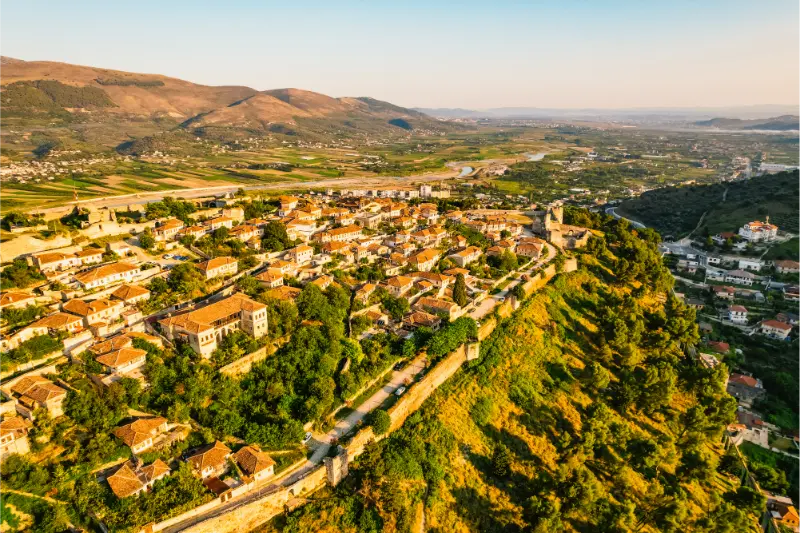
Berat with a Dog: Old Town Walks, Castle, Hotels and Pet Travel Tips is for travellers who want the destination to work for both the human itinerary and the animal’s daily routine. Berat is beautiful with a dog, but it is not effortless. The riverfront and Gorica side are pleasant for walking, while Mangalem and the castle involve steep cobbles, stairs and heat exposure. The right accommodation location matters more here than in flatter cities. If your dog is older, small, short-nosed or uncomfortable on slippery stone, build the stay around the lower town and treat the castle as a separate, carefully timed excursion.
This guide focuses on practical planning rather than promising that a particular hotel, beach or restaurant will always accept dogs. Policies can change by season, management and animal size. Confirm the services that matter to you directly, especially accommodation, transport and beach access. For country-wide preparation, keep the Albania with a Dog or Pet guide open alongside this local guide.
Is Berat a good destination with a dog?
I would prioritize the lower town near the Osum River or Gorica for easier toilet breaks and flatter evening walks. Staying inside Mangalem is atmospheric but can mean steep steps every time you leave the room. Castle accommodation is even more demanding if the dog needs several outings a day. Ask for the exact access route before booking because “old town” can describe very different levels of effort.
The answer depends as much on the dog as on the destination. A confident adult dog that is comfortable with traffic, cafés and new rooms has very different needs from a reactive rescue, a senior dog or a puppy. Plan for the animal you actually have. If your dog struggles with crowds at home, peak-season Albania will not magically make crowds easier.
Documents, rabies rules and the journey home
Before choosing beaches or cafés, solve the paperwork. For international pet travel, keep the microchip details, rabies vaccination record and the document required for your route together in one folder, and confirm the rules with the airline, ferry company or border authority shortly before departure. Requirements depend on where the animal is coming from and where you will travel next, not simply on the fact that you are visiting Albania.
A particularly important point for EU residents is the return journey. As of September 2026, Albania does not appear on the European Commission list of non-EU countries from which dogs, cats and ferrets can enter the EU without a rabies antibody titration test. That means a traveller who wants to return to the EU should check the current titration and documentation rules well before leaving home. If a valid test was completed and recorded before departure from the EU, the procedure may be much simpler. Use the European Commission pet-travel pages rather than old forum posts: bringing a pet into the EU from a non-EU country and the current country list.
Where to stay with a dog
Pet-friendly accommodation is not one universal category. One hotel may accept a five-kilogram dog but refuse a larger animal; another may allow dogs only in certain rooms or charge a cleaning fee. Message the property before booking and ask four concrete questions: Is my dog’s size accepted? Is there an extra fee or deposit? Can the dog stay alone in the room? Are there resident pets or shared animals on the property?
For apartments, also ask about stairs, balcony rail spacing, nearby outdoor space and check-in access. A listing that says “pets allowed” can still be inconvenient if the only toilet-break route is a steep staircase followed by a busy road. When comparing stays, use Booking.com accommodation in Berat, then confirm the pet policy directly with the property before paying a non-refundable rate.
Best everyday walks and toilet-break strategy
The riverbanks and bridges create the easiest routine. Cobblestones in historic quarters can become hot and polished smooth, so take your time. The castle is exposed and steep; visit early, carry water and avoid dragging a reluctant dog uphill simply because the viewpoint is famous. Heritage sites may restrict animals inside churches or museums even if outdoor lanes are accessible.
Noise deserves attention. Fireworks, scooters, horns, church bells, calls to prayer, nightlife and barking dogs can all be unfamiliar. If your dog is sound-sensitive, ask for a room away from the road and bring the same calming routine you use at home. A familiar blanket can make a surprising difference in a new apartment.
Summer heat, paws and hydration
Heat is the most underestimated pet issue in Albania. In summer, air temperature is only part of the problem: asphalt, stone and sand can become much hotter than the air. Long-haired, senior, overweight and short-nosed dogs are at higher risk. Shift the longest walk to early morning, use the middle of the day for rest and choose late evening for the second substantial outing.
Carry more water than you think you need, particularly on beach or mountain days. A collapsible bowl, cooling mat or damp towel can help, but none replaces shade and reduced exertion. Never leave a dog in a parked vehicle while you “quickly” visit a viewpoint, shop or ticket office. If your accommodation does not have reliable cooling in the hottest months, reconsider the booking.
Beach water is not automatically safe drinking water, and salt water can cause vomiting or dehydration if a dog drinks too much. Carry fresh water even for a short seaside walk. After swimming, rinse salt and sand when possible, check paws for cuts and dry the ears of dogs that are prone to infections.
Street dogs, livestock and responsible encounters
Free-roaming dogs are part of the reality of travel in parts of Albania. Most encounters pass without incident, but your own dog can change the dynamic. Keep the lead short when an unfamiliar dog approaches, avoid food bowls, puppies and sleeping animals, and do not allow greeting if either dog is tense. Carrying treats to throw away from your path can sometimes create space, but do not turn feeding street dogs into a routine around your accommodation.
In rural areas, livestock guardian dogs are a different category from urban strays. They are working animals. If you see a flock, put your dog on a short lead, move calmly, give the animals a wide berth and follow the shepherd’s instructions. Do not run, shout or let your dog race toward livestock. For broader animal-safety context, read the Albania guide to stray dogs, snakes and animal encounters.
Cafés, restaurants and food
Outdoor café culture can make eating with a dog easier than it first appears, but permission is always the venue’s choice. Ask before sitting down, keep the dog out of service paths and do not let the lead stretch across a pavement. A calm dog under the table is far more likely to be welcomed than one blocking staff or reacting to every passing animal.
Carry a small mat if the dog settles better with a defined place. Bring your own food if the animal has dietary sensitivities; changing diet at the same time as changing climate and routine is an easy way to create stomach problems. Supermarkets and pet shops are easier to find in larger cities, while small coastal or mountain bases may have limited specialist products. Pack enough medication and any prescription diet for delays.
Getting around Berat with a dog
Berat buses and shared transport are not ideal for an uncrated dog. A pre-arranged taxi or private transfer is simpler, especially with luggage. If you drive, choose accommodation with confirmed parking because old-town streets are narrow and parking can be separated from the room by steep walking. A crate or harness helps on winding approaches.

Whatever the mode, disclose the animal before booking rather than at pickup. Give the operator useful information: approximate weight, whether the dog is crated, whether it sheds heavily and how much luggage you have. A polite, specific request gets a clearer answer than simply asking “pets allowed?”.
Day trips and outdoor excursions
Osum Canyon and rural excursions need a different risk assessment. Boat or rafting operators will normally have their own animal rules, and canyon viewpoints can be exposed. Winery visits may work if the producer agrees in advance and the dog can settle quietly outdoors. Never bring a dog into a food-production or tasting space without explicit permission.
A dog also changes how quickly you move. Albania rewards spontaneous stops, but with an animal you need to think about shade, water and where the next safe walk will happen. I prefer shorter driving legs and fewer hotel changes. Two or three nights in one base usually work better than packing the car every morning, especially in summer.
Ticks and other parasites are another reason to speak with your own veterinarian before departure. The right preventive product depends on the dog, season and route. Do not improvise medication after arrival or use a product intended for another species. Check the coat daily after grass, scrub or mountain walks.
Veterinary planning and medication
Save a veterinary contact before you need one. Larger Albanian cities offer more choice than small Riviera or mountain settlements, but opening hours and emergency coverage vary. Ask your accommodation for a current local recommendation, then save the clinic location and phone number offline. If your dog has a chronic condition, bring a short medical summary and medication list in English.
For urgent human medical help the national system is different; for animals you need a veterinary provider, not the human emergency number. If the dog becomes weak, collapses, has breathing difficulty, repeated vomiting, suspected poisoning, snakebite or heatstroke symptoms, seek professional veterinary advice promptly rather than relying on travel forums. Travel insurance for people does not automatically cover veterinary bills, so check pet-specific cover separately.
What to pack for your dog
My practical dog kit for Albania is simple: sturdy lead plus spare, harness, ID tag with an international phone number, collapsible bowl, water bottle, waste bags, towel, tick-removal tool, basic paw protection, familiar food for at least the first days, any medication, vaccination documents and a recent photo of the animal. A muzzle is worth carrying even if your dog rarely wears one because a transport operator, vet or emergency situation may require it.
Add a light sheet or seat cover for taxis and rental cars. For ferries, include a secure carrier or travel crate when appropriate and an absorbent pad for delays. For hiking, add more water, a small first-aid kit and a way to lift or assist the dog if paws are injured. Do not overload the animal with a heavy pack simply because the trip is outdoorsy.
- Documents: identification, rabies record and route-specific certificates.
- Control: harness, normal lead, spare lead, ID tag and muzzle.
- Comfort: familiar blanket or mat, towel and food the dog already tolerates.
- Heat: water, bowl and a plan for shade rather than only cooling gadgets.
- Health: medication, parasite prevention recommended by your vet and basic first-aid items.
- Transport: carrier or crate when appropriate, car restraint and seat cover.
A realistic daily rhythm
A good pet day in Berat usually starts earlier than a normal holiday day. Use the coolest morning hours for the longest walk and any open-air sightseeing. Return to the accommodation before heat and crowds peak. Midday is for sleep, your own museum visit in shifts, lunch near the room or a short drive with air-conditioning. Go out again toward sunset for the second substantial walk and dinner on a terrace that has agreed to the dog.

This rhythm can feel conservative, but it solves several problems at once: hot paws, dehydration, crowded pavements and overtired animals. It also leaves room for your own sightseeing. If two adults travel together, alternating one pet-care block each can open attractions that do not admit animals without leaving the dog alone for too long.
Common mistakes to avoid
The most common mistakes are predictable. Travellers book a non-refundable hotel before confirming the dog, assume every beach follows the same rules, schedule sightseeing at midday in July, rely on a bus without asking the operator, or discover EU re-entry paperwork only when it is time to go home. Another mistake is letting a friendly dog run off-leash in unfamiliar countryside where livestock, traffic or wildlife may appear suddenly.
Build redundancy into the plan. Have one taxi contact, one veterinary contact, offline maps, extra water and one alternative walk for days when a beach, park or attraction says no to animals. Pet travel becomes much easier when every day has a fallback rather than one perfect plan.
Related Wonderful Albania guides
- Albania with a Dog or Pet: entry rules, ferries and road trips
- Berat travel guide
- Stray dogs, snakes and animal safety in Albania
- Renting a car in Albania
- Health and pharmacies in Albania
Frequently asked questions
Can I take my dog to Berat?
Yes, many travellers can build a successful visit with a dog, but accommodation, transport and beach or attraction rules must be confirmed individually. Plan around heat, daily walks and the dog’s temperament rather than assuming the whole destination is pet-friendly.
Are dogs allowed on beaches?
There is no single answer that applies to every beach or every season. Organized beach operators and municipalities may set rules, and a quiet beach early in the morning may operate differently later in the day. Follow signage and staff instructions and always carry a fallback walking plan.
Can I use buses or taxis with a dog?
Taxi acceptance is usually easier to arrange because you can ask the driver in advance. Bus policies and practical tolerance vary by operator, dog size and crowding. Contact the operator before travel, especially for a large dog or an uncrated animal.
Do I need a rabies antibody titration test after visiting Albania?
For entry or re-entry into the EU, Albania is not on the September 2026 European Commission list that exempts pets from the rabies antibody titration requirement. The exact procedure depends on the pet’s existing records and route, so check the official EU rules well before departure.
What is the biggest practical risk for dogs in summer?
Heat is usually the most immediate everyday risk. Hot pavement and sand, lack of shade, dehydration and time in vehicles can become dangerous quickly. Shift exercise to cooler hours and choose accommodation where the dog can rest comfortably during midday.
Final advice
A successful trip to Berat with a dog is built from small confirmations rather than one “pet-friendly” label. Confirm the room, the transport, the border paperwork and the day’s heat plan; keep the dog controlled around unfamiliar animals; and accept that some attractions are easier to visit in shifts. With that approach, the dog becomes part of the travel rhythm instead of a constant logistical problem.
Leave a Reply