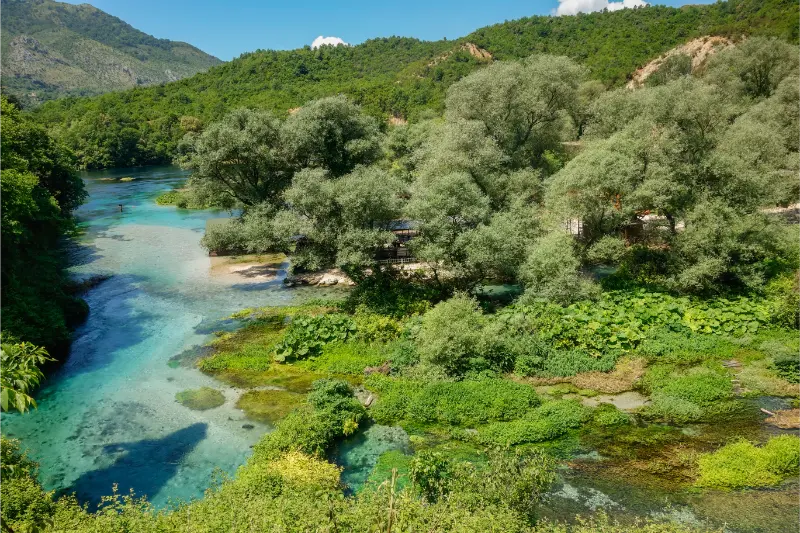
The Blue Eye, or Syri i Kaltër, is one of the easiest natural sights to add to a southern Albania itinerary, but it is much more enjoyable when you understand what the visit actually involves. It is a karst spring near Muzinë, surrounded by forest and intensely coloured water that can look almost unreal in bright light. The official Albanian tourism portal describes it as one of the most visited natural attractions in the south and highlights the spring’s ecological and hydro-geological value. See the official Blue Eye tourism page before travelling for any updated visitor information.
I would treat the Blue Eye as a half-day nature stop, not as an all-day destination on its own. It works especially well between Saranda and Ksamil and Gjirokaster, or as a break on a road trip through southern Albania. The key is to arrive with realistic expectations: you come for the spring, the shade, the walk and the colour of the water, not for a huge park full of attractions.
What makes the Blue Eye special
The spring rises through limestone and creates a deep, circular blue centre surrounded by lighter turquoise and green tones. The visual effect is strongest when sunlight reaches the water, while the surrounding trees make the area feel cooler than the exposed coast in summer. It is a good example of why southern Albania is more than beaches: within a relatively short drive you can move from the Ionian coast into a greener inland landscape.
The spring is also a protected natural feature, so I would approach it as a place to observe rather than a swimming spot. Rules and access arrangements can change, especially in protected or heavily visited areas. Respect barriers, signs and staff instructions even if you see old travel posts showing people doing something different.
How to get to the Blue Eye
By car, the Blue Eye fits naturally on the road corridor between Saranda and Gjirokaster. A rental car gives you the most flexibility because you can combine the visit with other stops and avoid building the whole day around a single transfer. If you are considering driving more widely, read my guide to getting around Albania first, especially the sections on road times and rental-car planning.
Travellers without a car can normally arrange a taxi, private transfer or organised excursion from Saranda and sometimes from Gjirokaster. Rather than relying on an old fixed fare from a blog, ask for the total price before departure and confirm whether waiting time is included. Public transport in Albania is useful for city-to-city travel, but it is less convenient for attractions located away from town centres.
When to go during the day
In high summer, early morning is the most comfortable choice. You get cooler walking conditions and usually a calmer atmosphere before many day-trippers arrive from the coast. Late afternoon can also be pleasant, but do not cut the visit too close to closing or sunset because access arrangements and seasonal hours can change.
Spring and early autumn are excellent if you prefer a slower visit. The forest feels fresh, the walk is easier in milder temperatures and the Blue Eye can be paired with a longer road-trip day without the intensity of July or August traffic.
How much time to allow
For most travellers, two to three hours from arrival to departure is a sensible planning window. That gives you time to walk in, stop for viewpoints, enjoy the spring without rushing and take a break. If you are visiting with children, older relatives or in hot weather, build in more time because the walk can feel longer than it looks on a map.
Do not schedule a tightly timed museum ticket or ferry immediately after the Blue Eye. Southern Albania journeys can be slowed by seasonal traffic, road works or parking queues, and a nature stop is more enjoyable when you are not watching the clock.
What to bring
- Comfortable shoes rather than beach flip-flops for the walk
- Water, especially from late spring to early autumn
- Sun protection even though parts of the route are shaded
- A light layer outside midsummer because the spring area can feel cooler
- A small amount of cash as a backup for local services or parking
Blue Eye with Saranda and Ksamil
If you are based on the coast, the Blue Eye is an easy contrast to beach days. I would not combine it with every major southern attraction in one rushed day. A better plan is Blue Eye plus Saranda in the evening, or Blue Eye plus one cultural stop. For beaches and coastal logistics, use the best beaches in Albania guide and the Butrint guide separately.

For accommodation, staying in Saranda is convenient if you want restaurants, ferries and a broad choice of hotels. You can compare places to stay in Saranda and then make the Blue Eye a morning excursion.
Blue Eye with Gjirokaster
Gjirokaster makes a stronger combination if your trip is focused on culture and inland landscapes. Spend the night in the stone city, visit the castle and old bazaar, then stop at the Blue Eye while travelling toward Saranda. This avoids unnecessary backtracking. My Gjirokaster travel guide explains how much time the UNESCO-listed historic centre deserves.

If you are travelling slowly, one night in Gjirokaster and two or more on the coast creates a much better rhythm than trying to see the city, Blue Eye, Butrint and Ksamil all in a single day.
Is the Blue Eye suitable for families?
Yes, for many families it is a manageable nature outing, but it is not a playground or a beach. The main practical issues are heat, walking distance and keeping young children close near water and viewpoints. A stroller may be less convenient than expected on uneven sections, so parents should check current access conditions before going.
For a broader family route, see Albania with kids, which covers beach choices, driving days and how to avoid overloading children with long transfers.
My suggested southern Albania sequence
A balanced route is Gjirokaster → Blue Eye → Saranda → Butrint/Ksamil → Riviera. That sequence follows the geography well and connects naturally with the Albanian Riviera road trip guide. If you are driving north afterward, continue through Himare and Vlore instead of returning inland.

The Blue Eye is memorable because it is simple: a short nature stop built around one extraordinary spring. Give it enough time to feel peaceful, but do not design an entire day around it unless you specifically want a slow forest outing.
Final planning notes
Check the official tourism page shortly before your visit because parking, shuttle arrangements and access rules can evolve as visitor numbers increase. I also recommend downloading an offline map before leaving Saranda or Gjirokaster, since mobile coverage can vary in rural valleys.
If the Blue Eye is one stop in a larger trip, plan the route first and accommodation second. That prevents unnecessary backtracking and usually saves more time than chasing the cheapest room in a town that does not fit your direction of travel.
Extra practical advice
If you are photographing the spring, polarising filters can reduce glare but do not let photography turn the visit into a queue. Move away from the most obvious viewpoint and let other visitors have space. Drones may be restricted in protected or crowded areas, so check current rules before flying one.
A picnic can work if local rules permit it, but pack out everything you bring. The area receives heavy visitor pressure in summer, and small choices such as carrying a reusable bottle and staying on paths matter when multiplied by thousands of visitors.
When planning Blue Eye Albania, I would also keep the wider route in mind. Albania rewards travellers who leave realistic margins between stops, confirm seasonal services directly and avoid basing an entire day on one old timetable or price. Save addresses and confirmations offline, carry some cash as a backup, and ask accommodation hosts for current local conditions when roads, weather or opening times could affect the plan. The most useful approach is to separate fixed decisions from flexible ones: book transport or accommodation that would be difficult to replace, but leave ordinary meals, viewpoints and minor stops open. That balance keeps the trip organised without making it rigid. It also allows you to change direction when a beach is crowded, a mountain road is slow or a local recommendation sounds better than the original plan.
When planning Blue Eye Albania, I would also keep the wider route in mind. Albania rewards travellers who leave realistic margins between stops, confirm seasonal services directly and avoid basing an entire day on one old timetable or price. Save addresses and confirmations offline, carry some cash as a backup, and ask accommodation hosts for current local conditions when roads, weather or opening times could affect the plan. The most useful approach is to separate fixed decisions from flexible ones: book transport or accommodation that would be difficult to replace, but leave ordinary meals, viewpoints and minor stops open. That balance keeps the trip organised without making it rigid. It also allows you to change direction when a beach is crowded, a mountain road is slow or a local recommendation sounds better than the original plan.
More local Albania guides
\nParking and arriving by car
\nIf you are driving, see Blue Eye Albania Parking Guide for current access strategy, parking advice and rental-car tips.
\nGeology deep dive: The Blue Eye is also part of a much wider karst system. Karst Landscapes of Albania.
Leave a Reply