
April–May and September–October are the easiest months for most visitors because the steep stone streets are more comfortable, the Drino Valley is attractive and day trips do not require midsummer pacing.
The best month depends on what you want to do, not on one universal weather ranking. A beach traveler, a hiker, a family and someone interested mainly in museums can all choose different dates and all be right.
I use seasonal patterns for planning, not as a guarantee for a specific week. Albania can have heat waves, wet spells, wind and unseasonal cold, especially in mountains and shoulder months. Check a short-range forecast just before the trip.
Best time at a glance
| Season | My rating | Best for |
|---|---|---|
| Spring | Excellent | Green valley, house museums, castle and nearby archaeology |
| Summer | Good with early starts | Hot steep streets; evening bazaar atmosphere is strong |
| Autumn | Excellent | Comfortable walking, softer light and regional food |
| Winter | Quiet / atmospheric | Low crowds, rainier streets and good cultural focus |
Month-by-month guide
| Month | Verdict | What changes |
|---|---|---|
| January | Very quiet | Atmospheric stone city but expect cool, wet conditions. |
| February | Quiet | Strong for slow cultural travel rather than ambitious day trips. |
| March | Variable spring | Good value and improving landscapes; rain remains possible. |
| April | Excellent | Green Drino Valley and comfortable castle walking. |
| May | Excellent | Longer days and strong conditions for Antigonea or Libohove. |
| June | Very good | Warm; move the steepest walking into the morning. |
| July | Hot | Use shade, museum interiors and a long midday break. |
| August | Hot / busier | Old Bazaar evenings are lively; daytime hills require pacing. |
| September | Excellent | Warm but easier; strong for city plus Blue Eye or Permet routes. |
| October | Excellent | Very good walking and autumn atmosphere. |
| November | Quiet | Food, museums and architecture work well between rain spells. |
| December | Atmospheric | A calm heritage stop that pairs well with winter city travel. |
Spring
Spring is the season when I value flexibility most. Landscapes become greener, daylight improves and the destination feels less compressed by peak-season demand. The trade-off is weather variability: a beautiful warm day can be followed by rain, and mountain or marine activities may not yet run on full summer patterns.
Green valley, house museums, castle and nearby archaeology. April–May and September–October are the easiest months for most visitors because the steep stone streets are more comfortable, the Drino Valley is attractive and day trips do not require midsummer pacing.
Summer
Gjirokastër’s challenge in summer is not the number of sights; it is the gradient. A short uphill route can feel much harder at 14:00 than at 09:00. I visit the castle first, use house museums around late morning and return to the bazaar after the heat drops.
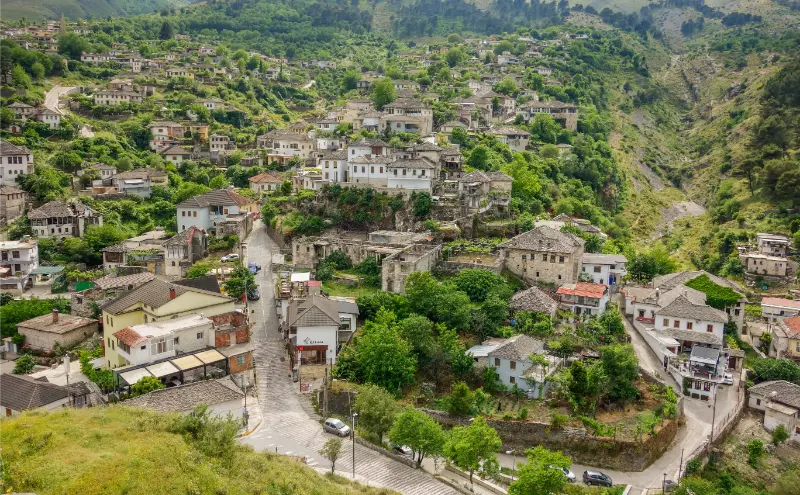
If you travel in July or August, reserve the accommodation feature that solves your destination’s main friction: central walkability in a city, guaranteed parking on the coast, or a confirmed guesthouse/transfer in the mountains. Peak season becomes much easier when the daily logistics are already solved.
Autumn
September often keeps much of summer’s warmth while reducing some pressure on roads and accommodation. October shifts the emphasis toward walking, food, culture and landscape. Later autumn is better for flexible travelers who accept rain and shorter daylight in exchange for quieter streets.
Winter
Winter makes the stone city feel dramatic and quiet, but wet cobbles require good shoes. The Blue Eye and mountain/village drives should remain optional according to the forecast rather than being treated as guaranteed extensions.
Crowds, prices and booking
Crowds are not only about how many people are in the destination. They also change parking, restaurant reservations, beach access, road travel and the price of the best-located rooms. That is why a slightly cooler shoulder-season trip can feel substantially easier even when the headline attraction is exactly the same.
Winter and late autumn are generally calmer, while peak summer and event weekends bring higher demand in the most atmospheric old-town guesthouses.
For seasonal trips I care more about cancellation conditions than I do on a fixed city break. Beach weather, mountain conditions and transport can change, so a flexible rate can be worth paying a little more for.
Events and seasonal atmosphere
Cultural events and local festivals can add value, but the city is strong even when no major event is happening. If your dates revolve around a festival, verify the current-year program before booking non-refundable rooms.
Best time for families
Families should choose April–June or September–October for the easiest balance. In summer, a taxi to the castle and a downhill route can save a lot of energy.
What to pack by season
Grip matters: polished stone and slopes are the defining walking issue. Add sun protection in summer, a compact rain shell in shoulder seasons and a warm layer in winter.
Where to stay
Compare current accommodation in Gjirokaster on Booking.com.
For area-by-area advice, read Where to Stay in Gjirokaster.
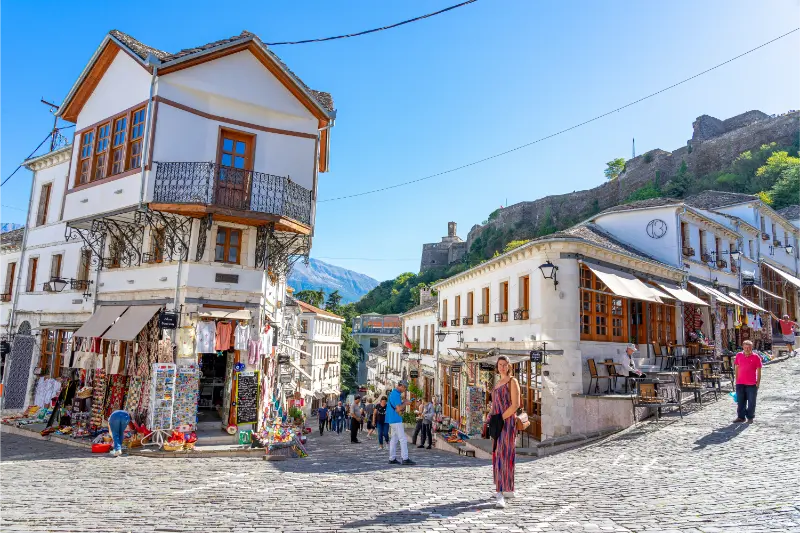
Useful month-by-month planning
For the national picture, use Best Time to Visit Albania before fixing a multi-region itinerary.
Useful destination guides
How I would choose the month
I start with the one activity that would make the trip disappointing if it failed. For a coastal trip that may be swimming; for Theth it may be a specific hike; for a city break it may simply be comfortable walking. I then choose the broad season for that activity and only after that compare flight prices and hotel rates.
This prevents the classic mistake of booking the cheapest week first and then trying to force the destination to behave like a different season. A low hotel price is not a saving if the boat route, beach service or high trail you wanted is not realistically available.
Frequently asked questions
What is the best month for Gjirokaster?
May and September are particularly easy for first-time visitors.
Is Gjirokaster crowded in summer?
It is busier, but heat on the steep streets is often a bigger issue than crowd numbers.
Is winter worth it?
Yes for a quiet cultural stay, provided you are comfortable with rain and slippery stone.
When is best for day trips?
Spring and autumn are excellent for Antigonea, Libohove and regional drives.
When should families visit?
Late spring or early autumn is the simplest choice.
Final recommendation
April–May and September–October are the easiest months for most visitors because the steep stone streets are more comfortable, the Drino Valley is attractive and day trips do not require midsummer pacing. If your dates are fixed, do not worry about chasing a theoretical perfect month. Adjust the daily schedule to the season, keep weather-sensitive activities flexible and use the destination’s strengths at that time of year.
If your dates are fixed
Fixed dates do not make the trip a bad idea; they simply change the itinerary. On hot days, move exposed sightseeing into the morning. On wet days, protect the best indoor attraction and a long meal. In shoulder season, call ahead for seasonal businesses. In mountains, replace a high route with a valley walk when current conditions say that is the safer choice.
How far ahead I would book
For July and August coast stays, major festival weekends and the central weeks of the mountain hiking season, I book the accommodation that has the exact location or parking I want earlier. For quieter months, I value flexibility more and avoid locking every night unless the trip coincides with a known event.
Photography and daylight
Season also changes the visual experience. Summer gives long evenings but harsh midday light; spring gives greener landscapes; autumn creates softer light and warmer colors; winter can produce clear dramatic views between weather systems. I plan viewpoints around light and weather rather than simply visiting them at the next free slot.
Peak season versus shoulder season
Peak season gives you the widest choice of operating businesses, longer activity schedules and the strongest tourism atmosphere. The trade-off is that small practical problems become more expensive: the best-located rooms sell first, popular restaurants need more planning, parking takes longer and a short transfer can be slowed by traffic. Shoulder season reverses that balance. You gain space and flexibility, but you need to check seasonal services instead of assuming that every boat, beach venue, mountain shuttle or excursion runs exactly as it does in August.
For that reason, I do not describe shoulder season as simply ‘better because it is quieter.’ It is better for travelers who are flexible. If one specific seasonal activity is the reason for the trip, peak or near-peak season may still be the more sensible choice even when prices are higher.
How the daily rhythm changes by season
In hot weather I move the most exposed sightseeing into the first hours of the day, use lunch as a real break and return outside in late afternoon. In cooler months I do the opposite: I use the brightest middle part of the day for viewpoints, outdoor walks and photographs, then move museums, cafés and longer meals toward the colder or wetter hours. This change in daily rhythm often matters more than a small difference between two neighboring months.
Combining this destination with the rest of Albania
A month that is ideal here is not automatically ideal everywhere else in Albania. A coast-and-mountains itinerary requires compromise because the beach season, city-walking comfort and high-trail conditions do not peak at exactly the same time. For a multi-region first trip, I usually favor late spring or early autumn because those periods keep more options open, then I adjust individual days to local weather.
If one region is non-negotiable, choose the date for that region first. A traveler whose priority is swimming should let the coast determine the calendar; a traveler whose priority is a high Alpine hike should let mountain conditions determine it. Cities such as Tirana, Berat, Gjirokaster, Shkoder or Korce are then much easier to fit around the fixed seasonal anchor.

Leave a Reply