
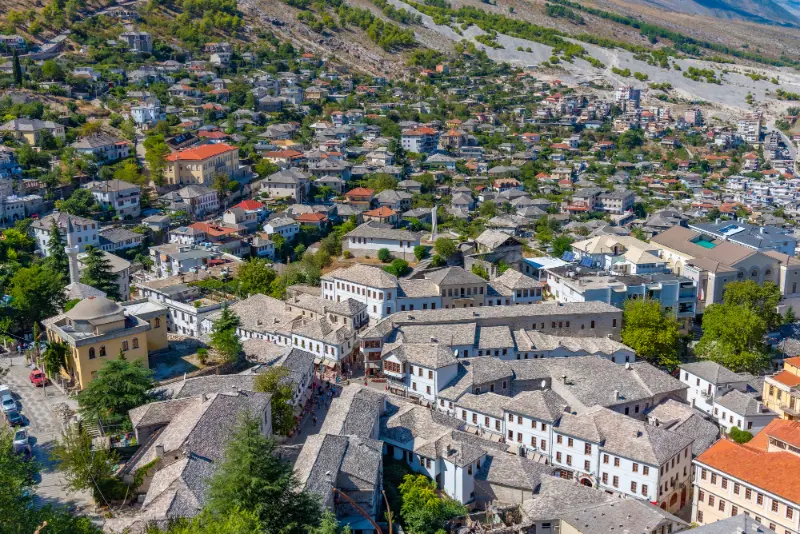
Gjirokastër is excellent for solo travelers who like history and slow walking because the old town gives you a strong sense of place without needing a group itinerary. You can spend hours between the bazaar, castle and traditional houses, then use the city as a base for the Blue Eye, Antigonea, Libohovë or Përmet.
I would plan a solo stay around three questions: Can I walk back to my accommodation after dinner? Can I reach the next destination without a complicated late connection? and Which one paid activity would be more enjoyable in a group? Once those are solved, the rest of the trip becomes very easy.
Quick solo-travel verdict
| Question | Practical answer |
|---|---|
| Good for first-time solo travelers? | Yes, if the destination matches your travel style |
| Car required? | No for the core stay; use transport selectively |
| Best accommodation priority | Walkable location and simple evening return |
| Best social option | One group activity, tour, boat trip or central hostel/café scene |
| Biggest solo mistake | Overcomplicating transport or staying too far from the center |
Is it safe to travel here alone?
Albania requires the same basic solo-travel habits you would use elsewhere in Europe: keep valuables controlled in busy areas, use licensed transport, tell someone where you are going on a remote excursion and avoid unnecessary late-night risks. Current UK travel advice says reports of crime targeting foreigners are rare but recommends sensible precautions, particularly in larger cities and late at night, and vigilance against pickpockets in tourist areas and transport hubs. For the latest official wording, check current UK travel advice for Albania.
Safety is situational, not a label attached permanently to a neighborhood. A busy central street can feel straightforward at 21:00 and a remote beach road can feel uncomfortable at the same hour even when both are generally used by visitors. I plan around lighting, transport, distance and how easily I can change plans if something feels wrong.
Best area to stay when traveling solo
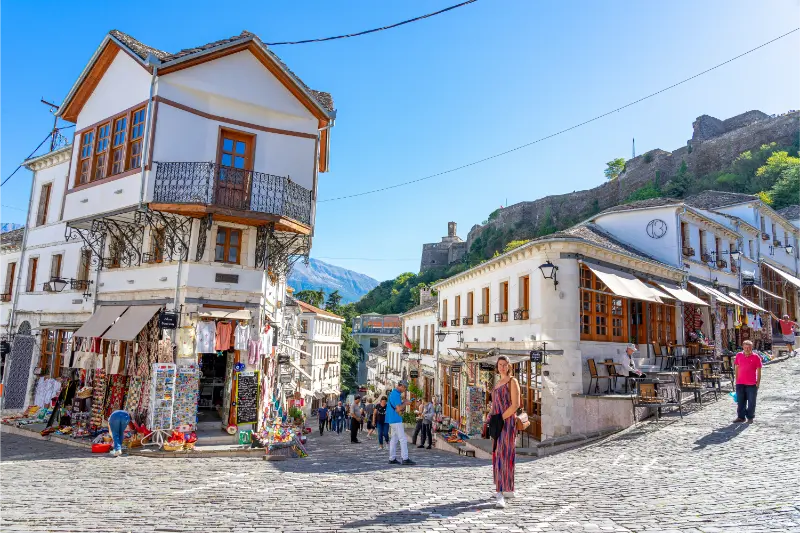
The Old Bazaar is the easiest solo base for atmosphere, restaurants and orientation. Palorto is beautiful and close to traditional houses but involves more climbing. Lower-town accommodation is easier for buses and luggage but less atmospheric. I would choose the bazaar unless you have mobility concerns or are arriving very late.
For solo travel I pay for location before room size. A room five minutes from dinner, the bus stop and the morning route usually gives me more value than a larger apartment that requires two taxis a day.
Compare current accommodation in Gjirokaster on Booking.com.
Use the local Where to Stay guide to compare areas in more detail.
Getting around without depending on other people
The bus arrival area is in the lower city, so a taxi uphill is often worth the small extra cost with luggage. Once in the historic center, walking is the default. Do not rent a car only for Gjirokastër; use one if the city is part of a southern road trip. If you do drive, follow your guesthouse parking instructions instead of navigation shortcuts.
The full car-free strategy is in the destination Without a Car guide. I always save the accommodation pin offline and screenshot the departure point for the next intercity leg before leaving Wi-Fi.
Eating alone
Gjirokastër is a good place for solo travelers to make food part of the day. Qifqi, oshaf and home-style dishes appear in casual settings where a table for one is unremarkable. A cooking class or food-focused tour is one of the better ways to meet people because the city itself is otherwise calm at night.
If I want a table with atmosphere, I go slightly earlier than the peak dinner rush and choose a counter, terrace or small table rather than waiting for the most formal sea-view setup. Lunch is also the easiest meal for trying a traditional restaurant alone because the atmosphere is more casual.
Evenings and nightlife
The bazaar is the natural evening zone: restaurants, small bars, shops and guesthouses create enough activity that a solo traveler does not feel stranded. The streets become quieter quickly outside the center, so if you are staying in an upper neighborhood, know the route home before dinner and carry a light.
I decide how I am getting back before I order the final drink. If the return depends on a taxi, I keep a known number/app or ask the restaurant/hotel to call one. Walking back is great when the route is central and active; it is not a badge of independence when the alternative is a short, inexpensive ride.
Solo female travel
A solo woman can use the same practical plan: stay close to the bazaar, take a taxi from the lower bus area after dark or with heavy luggage, and avoid poorly lit steep shortcuts when a main route is available. The physical environment is more likely to inconvenience you than the social side of the trip.
Street harassment experiences vary from person to person, so I do not promise that a destination will feel identical to everyone. The useful planning advice is concrete: central accommodation, control of your drink and belongings, licensed transport, and permission to leave any interaction that feels uncomfortable without being polite about it.
Meeting other travelers without forcing it
Traveling alone does not mean you need to turn every day into a social event. I choose one or two deliberate opportunities to meet people—hostel common spaces, a food tour, a boat trip, a walking tour or a small-group excursion—and leave the rest of the itinerary independent. That balance is usually better than booking group activities every day simply because you are solo.
Best day trips for solo travelers
The Blue Eye is easy by taxi or tour, while Antigonea and Libohovë are simpler with a driver or car. Përmet deserves an overnight if Benja and Langarica are part of the plan. Solo travelers should resist the temptation to make one giant southern loop simply because private drivers advertise it.
For remote nature, mountain or boat trips, the calculation changes. Going alone is not automatically unsafe, but you need better logistics: current weather, a charged phone, offline maps where useful, enough water, an agreed return plan and someone who knows your route. If conditions are uncertain or the route is difficult to reverse, joining a guide or group is a practical decision rather than a failure of independent travel.
Solo travel budget
Central guesthouses offer good value and often include breakfast. Your main solo expense is transport outside the city because taxi costs are not shared. Join a small group excursion or coordinate with other guesthouse guests when a day trip has a fixed route.
Solo travelers pay the full room and taxi cost, so I save money where sharing adds the least value: walking, city buses, bakeries, public beaches and free viewpoints. I spend more where sharing improves the experience: a boat, a difficult transfer, a food tour or a guide for a remote route.
A simple first-day plan
Begin with the castle, then choose one traditional house rather than several, eat lunch in the bazaar and spend the late afternoon wandering Palorto and the old streets. This keeps the day focused and avoids turning a solo visit into a checklist of museums.

The purpose of the first day is orientation. I want to know where the center is, where I will eat, how I get back to the room and where tomorrow’s bus or excursion starts. Once those four things are clear, solo travel stops feeling like a logistical project.
What I would pack differently when traveling alone
- A small power bank so maps and transport messages remain available all day.
- Offline maps plus screenshots of the hotel and next transport departure point.
- A compact day bag that keeps phone, wallet and passport organized rather than loose.
- A light layer or rain shell so weather does not force an unnecessary taxi back to the room.
- A small amount of Albanian lek for buses, cafés and situations where cards are not convenient.
- For nature days: more water and a stronger return-time plan than you might use in a city.
Common solo-travel mistakes
- Choosing the cheapest accommodation without checking the nighttime walk back.
- Arriving at an intercity terminal after dark without knowing the final hotel connection.
- Renting a car for a destination where it will stay parked most of the time.
- Trying to save every taxi fare by walking isolated roads late at night.
- Booking too many group activities because you are worried about being alone.
- Leaving a remote hike, boat return or mountain transfer to same-day improvisation.
- Keeping valuables visible on a café table or in an unattended beach bag.
- Treating a quiet evening as a failed travel day instead of part of the destination.
Useful guides for planning the stay
- Main destination travel guide
- Best Things to Do guide
- One-day itinerary
- Solo Travel in Albania
- Is Albania Safe to Visit?
- Albania Without a Car
Frequently asked questions
Is Gjirokaster good for solo travelers?
Yes, especially for history, architecture and slow travel.
Where should I stay?
The Old Bazaar is the easiest all-round base.
Is the old town difficult with luggage?
Yes, it can be steep. A taxi from the lower city is useful.
What is the easiest day trip?
The Blue Eye by taxi or organized tour.
How long should I stay?
One to two nights for the city; longer if you use it as a southern base.
Final advice
Solo travel works best here when you simplify the day instead of trying to prove complete independence. Stay somewhere walkable, use a taxi when it genuinely improves the evening, join a group when the activity is better shared, and keep enough unplanned time to follow your own pace. That freedom—not doing everything alone—is the real advantage of traveling solo.
For official destination context and current national tourism information, see Albania National Tourism Agency. For changing safety conditions, transport disruption or local restrictions, check official sources again close to your travel date rather than relying only on a static guide.
Leave a Reply