
Gjirokastër turns coffee into a useful pause between steep streets. The Old Bazaar is the obvious social centre, but the city rewards choosing stops by elevation: one before the castle climb, one after a museum, and perhaps a quieter coffee in the lower town rather than repeatedly climbing the same stone lanes.
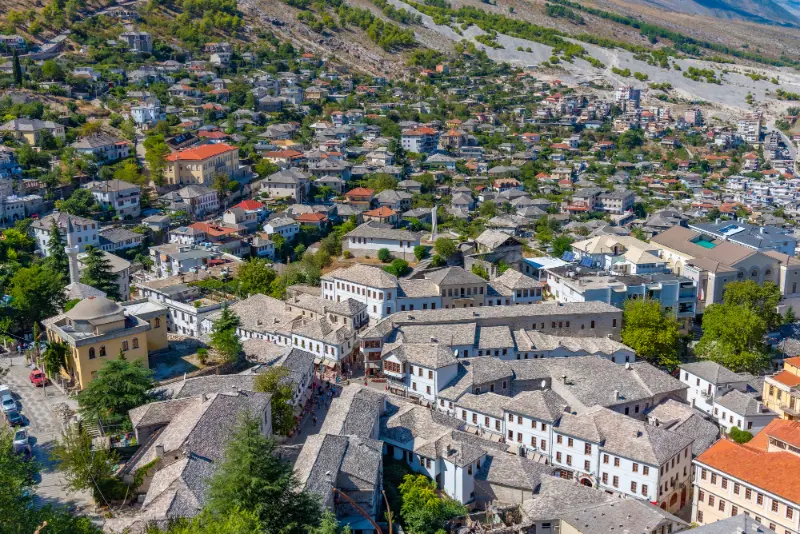
This Gjirokastër coffee guide is not a ranking of ten cafés that may change ownership or quality next month. It is a practical guide to how to use café culture while you travel: which parts of the city suit a quick espresso, where a longer terrace stop makes sense, what to order, how long people tend to sit, and how coffee fits around sightseeing rather than replacing it.
For the wider destination, keep the Gjirokastër travel guide open. For the national context, read Albanian Coffee Culture, which explains the social ritual, basic ordering and the mix of espresso, Turkish-style coffee and modern specialty cafés.
What coffee culture feels like in Gjirokastër
In Albania, coffee is often an activity in its own right. Ordering one small drink does not necessarily mean leaving five minutes later. Friends meet over coffee, business conversations begin over coffee, older residents hold long morning routines at the same tables and younger people use cafés as social spaces between work, study and evening plans. Visitors who slow down enough to notice this rhythm often understand the destination better than those who only search for the highest-rated espresso.
Gjirokastër has its own version of that pattern. The right café depends on whether you want a two-minute caffeine stop, a long conversation, breakfast, Wi-Fi, shade, a lake or sea view, or simply a chair after several hours of walking. I would choose by purpose and neighbourhood before choosing by online score.
Coffee at a glance
| Question | Practical answer |
|---|---|
| Best first order | A single espresso if you want the most common baseline; cappuccino or macchiato if you prefer milk. |
| Best time | Morning for local rhythm; late afternoon for people-watching. Avoid over-caffeinating simply because cafés are everywhere. |
| How long to stay | A quick espresso can be brief, but longer social stays are normal when the café is not busy. |
| Payment | Carry some lek even if cards are increasingly common; small cafés may prefer cash or have temporary terminal issues. |
| Wi-Fi | Common but never guaranteed. Ask before starting work and keep important calls for your accommodation. |
| Smoking | If smoke bothers you, inspect the seating before ordering and choose outdoor/open-air or clearly comfortable areas for you. |
Best areas for coffee in Gjirokastër
Old Bazaar
The most atmospheric place for visitors and the easiest spot to combine coffee with browsing craft shops. Sit long enough to enjoy the street, but remember that peak tour-group periods can make the narrow bazaar feel very different from early morning.
Castle approach
Useful for a short rest before or after the climb. Do not plan a heavy meal, several coffees and a steep ascent in summer heat; stagger them.
Historic-house area
A slower coffee fits well between visits to Skënduli or Zekate House. Choose a shaded terrace and use the break to reset rather than rushing through multiple house museums.
Lower town / 18 Shtatori area
Less romantic in photographs but more practical for everyday cafés, transport and laptop time. It is a good reminder that Gjirokastër is a living city, not only a preserved bazaar.

A simple café-hopping route
Start early in the Old Bazaar, visit one historic house, take a second coffee before the castle climb, and finish in the lower town if you need a practical stop near transport. This route avoids unnecessary repeated climbing.
Espresso, macchiato, cappuccino or Turkish-style coffee?
The safest way to understand Albanian café menus is to start simple. Espresso is small and strong, and it is the easiest common denominator between a traditional bar and a modern café. A macchiato adds a little milk; cappuccino is more breakfast-oriented for many travelers. Turkish-style coffee may appear under different wording and preparation traditions, so ask how it is served rather than assuming every venue makes the same drink.
Specialty coffee has expanded in larger and more tourism-oriented cities, but you do not need specialty beans to have an authentic coffee experience. The ordinary neighbourhood espresso bar is often more revealing culturally. If beans, roast date or filter methods matter to you, ask directly; if they do not, enjoy the social setting and do not turn a travel day into a competition for the perfect flat white.
How to order without overcomplicating it
- Start with “Një espresso, ju lutem” for one espresso, please.
- Say whether you want milk rather than assuming the default.
- Ask for water if you want it; do not assume every coffee automatically includes a large glass.
- If you need decaf, ask clearly because availability is uneven.
- For plant milk, check before sitting down if it matters to you; it is more common in modern urban cafés than small traditional bars.
- If you have a food allergy, treat the pastry case and coffee counter as separate risks and explain the allergy rather than relying on appearance.
Morning coffee versus the afternoon ritual
The morning stop is usually the easiest moment to observe everyday routines. People are on the way to work, reading messages, meeting briefly or taking a first break. For travelers, this is also the best time to combine coffee with bakery food before attractions get busy. A second coffee in late afternoon has a different role: less functional, more social, and often connected to the evening promenade.
Do not try to imitate local café culture by ordering five coffees a day. The ritual is about time and company as much as caffeine. Alternate with water, tea or a non-caffeinated drink, particularly in summer heat or after wine at lunch.
What to eat with coffee
Qifqi, pies and local sweets belong in the wider food day. Coffee pairs well with a small pastry or oshaf-style dessert later, but do not overload the morning if you still have steep walking ahead.
For a deeper look at regional dishes, use the relevant food guide for Gjirokastër. Coffee works best when it supports that wider food experience rather than replacing breakfast and lunch with pastries.
Prices, cash and tipping
I would not build a current travel budget around a fixed coffee price because venue, neighbourhood, view and inflation all matter. A basic espresso in an everyday bar and a large milk drink on a prime waterfront terrace are different products. Check the menu when prices matter, especially in beach destinations and panoramic venues.
Small cash payments in lek remain useful. When paying by card, make sure the terminal amount matches the bill and keep some cash for a backup. Tipping for one coffee is usually about courtesy rather than a formal percentage: rounding up or leaving a modest amount for attentive table service is enough when you choose to tip.
Laptop work and café etiquette
For laptop use, the lower town is often more practical than the historic core because tables, sockets and access are less constrained by heritage buildings. In the bazaar, treat the café primarily as a social and sightseeing space.
A simple rule helps: if the café is filling up, your table is valuable. Long laptop sessions are more considerate when you order periodically, avoid occupying a four-person table alone and keep calls quiet. Ask before plugging equipment into an awkward socket or moving furniture. The fact that Wi-Fi exists does not turn every café into a coworking space.
Outdoor seating, weather and seasonality
Wet weather matters because Gjirokastër’s polished stone can become slippery. On rainy days, choose fewer café changes and spend longer indoors. Summer requires shade; winter is quieter and makes the old town feel more local.
Outdoor tables are a major part of Albanian café life, but weather changes how useful they are. Summer sun can make a beautiful terrace uncomfortable within minutes; coastal wind can cool coffee quickly; winter shade in inland cities can feel much colder than the forecast. Choose the table that will still be pleasant in half an hour, not only the one with the best photo when you arrive.
Smoke, noise and choosing the right table
Travelers vary greatly in how sensitive they are to smoke, music and street noise. Look at the environment before ordering. A café that is excellent for a social evening may be poor for reading; a quiet morning terrace may become a loud nightlife venue later. If cigarette smoke is a problem for you, ask for the least exposed seating and be prepared to move on rather than assuming every indoor/outdoor boundary feels the same.
Coffee for solo travelers
Cafés are one of the easiest places to be alone in Gjirokastër. You do not need to hide behind a laptop: order, sit facing the street and use the break to plan the next hour. A busy central café is also a sensible place to wait for transport or reset if a street or situation feels uncomfortable. Keep your phone and bag under normal control rather than leaving them unattended while taking photos.
Coffee with children
Families are common in café settings, especially at outdoor tables, but choose space over style. A pedestrian zone, park edge or broad promenade is easier than a tiny table beside traffic. Order water and food for children rather than making a long adult coffee stop the whole activity. In summer, avoid turning a shaded café into the only protection plan against heat; schedule indoor rest at the accommodation as well.
Accessibility and reduced mobility
Café accessibility can change from one doorway to the next. Flat promenades and modern boulevards are generally easier than steep historic quarters, but a single step, narrow toilet or upper-floor seating can still be decisive. If step-free access or an adapted toilet is essential, contact the venue directly and describe what you need rather than relying on a generic accessibility icon.
Coffee after a meal
A small espresso after lunch or dinner is a common and useful rhythm for travelers because it creates a natural pause before the next walk. If caffeine affects your sleep, switch to decaf where available or order tea later in the day. Good travel planning includes sleep; there is little benefit in copying an evening espresso habit that leaves you awake until 02:00.
Buying coffee beans or souvenirs
If you want to take coffee home, ask what you are actually buying: origin, roast, grind and whether it reflects Albanian café culture or is simply an imported commercial brand sold locally. Coffee culture in Albania is more about the social ritual than a single nationally grown bean. A local cup, conversation and memory can be more authentic than forcing a souvenir purchase.
Responsible café travel
Choose independent local businesses when they suit your needs, avoid wasting bottled water and disposable cups unnecessarily, and do not photograph staff or other customers at close range without permission. If you use a café toilet, Wi-Fi and table for a long period, buy enough to make the relationship fair. Responsible travel is often made of these small ordinary decisions rather than dramatic eco-gestures.
Where to stay for an easy café-focused city break
If coffee culture matters to you, stay where you can walk to the areas you actually want to use. A slightly smaller room in a central neighbourhood can be more enjoyable than a resort-style property that requires a taxi for every morning espresso. Compare accommodation here: places to stay in Gjirokastër on Booking.com.
Combine coffee with a guided experience
A food tour, walking tour, museum visit or nature activity can give structure to the rest of your day in Gjirokastër. Use café time before or after the activity rather than packing every hour with bookings. That balance is particularly useful in Albania, where unplanned street life is often part of the experience.
Common coffee mistakes to avoid
- Choosing only cafés with the highest online rating and never trying an ordinary neighbourhood bar
- Assuming waterfront seating automatically means better coffee
- Ordering repeated espresso in summer without enough water
- Using a busy four-person table as a private office for hours
- Expecting every café to accept cards or every terminal to work
- Confusing a “halal-looking,” vegan-looking or allergy-friendly pastry case with verified dietary safety
- Driving across town only for a café recommendation and losing more time to traffic than the stop is worth
- Photographing people closely without permission because the café looks “authentic”
FAQ
What is the best coffee area in Gjirokastër?
There is no single best area. Use the neighbourhood sections above: the strongest choice depends on whether you want local daily life, a view, breakfast, laptop time or a social evening.
Is espresso the safest order?
Yes if you simply want a small strong coffee and do not want to decode a long menu. Milk drinks and Turkish-style preparations are also common, but details vary by café.
Can I pay by card?
Often, especially in modern venues, but not universally. Keep some lek for small cafés, temporary terminal problems and quick stops.
Can I work on a laptop in cafés?
Usually for a short session if the venue is suitable. Confirm Wi-Fi, order appropriately and avoid occupying scarce tables during busy periods.
Is coffee expensive in tourist areas?
A prime-view terrace can cost more than an everyday neighbourhood espresso bar. Check the menu rather than assuming one citywide price.
What if I do not drink caffeine?
Ask for decaf, tea, herbal infusions, juice or another non-caffeinated drink. Availability varies, so the most traditional small bar may have fewer options than a modern café.
Final thoughts on coffee in Gjirokastër
The best coffee memory in Gjirokastër is unlikely to come from rushing through a checklist of famous cafés. Pick the right neighbourhood, sit long enough to notice the city, order simply and let the stop fit naturally between museums, markets, beaches or walks. Albania’s café culture makes the most sense when coffee is treated as time spent in the destination, not only as a drink.
\n\nBreakfast & bakery: Gjirokastër Breakfast & Bakery Guide: Old Bazaar, Guesthouses, Byrek and Stone-City Mornings explains what to eat with your morning coffee and how to plan an early local breakfast.
\n\n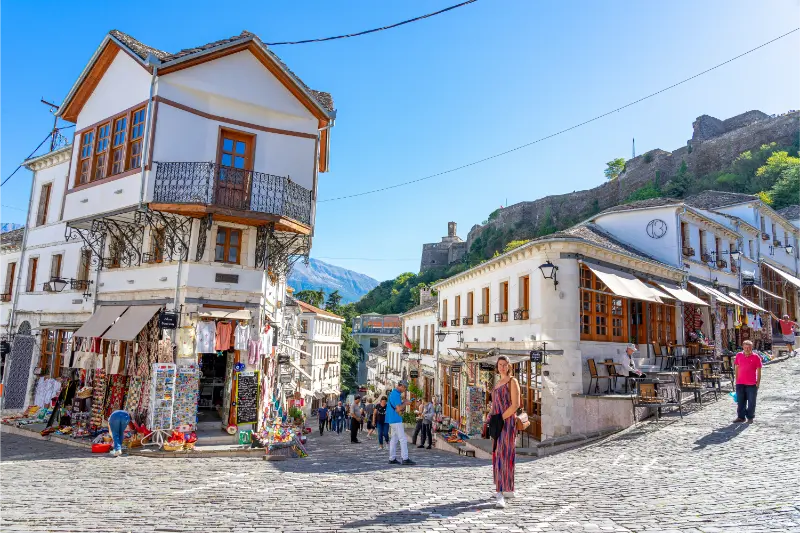
Something sweet with coffee: See the Gjirokastër desserts and sweet treats guide for traditional pastries, gliko, cakes and practical pairing tips.
\n
Leave a Reply