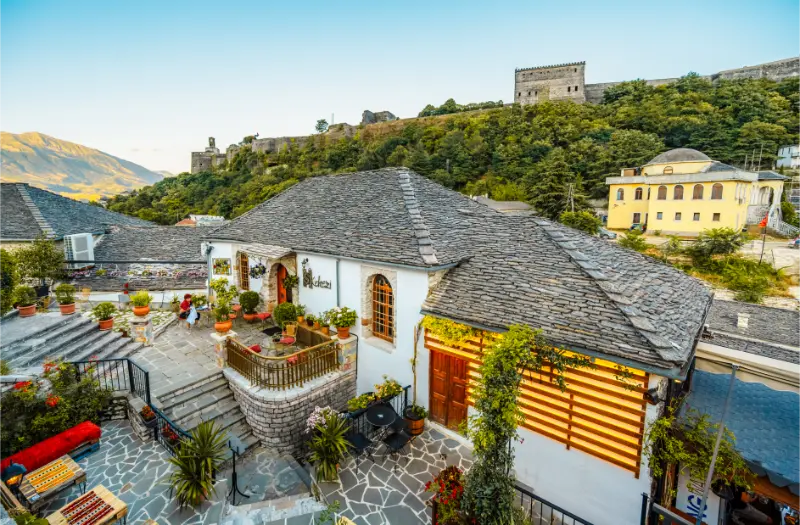
Gjirokaster can work very well for senior travelers or anyone who prefers a slower, more comfortable travel rhythm. The key is not to remove the destination’s best experiences; it is to change how you connect them. A taxi for one steep section, a central hotel and a long lunch can make the difference between an enjoyable day and an exhausting one.
Gjirokastër is one of Albania’s most demanding major heritage towns on foot. The Old Bazaar, castle and museum houses sit on a steep hillside, and the stone streets can be polished, uneven and slippery. Senior travelers can still enjoy the city very well, but the trip should be designed around taxi drop-offs, short walking blocks and fewer attractions per day.

Is this a good destination for senior travelers?
| Part of the trip | Practical verdict | Best approach |
|---|---|---|
| City-center walking | Good with pacing | Use short loops and taxis when terrain changes |
| Main cultural sights | Good | Choose 1–2 per half-day rather than stacking them |
| Day trips | Good when pre-arranged | Private taxi/driver often makes the day much easier |
| Car rental | Optional | Useful for regional touring, rarely necessary inside the center |
Yes, with realistic pacing. I would plan two main sightseeing blocks per day, one in the morning and one in late afternoon. Midday becomes lunch, rest or an indoor attraction. This rhythm is especially valuable in summer, when heat can make even a short route more tiring.
Where to stay for the easiest trip
Stay close to the Old Bazaar only if the hotel has realistic vehicle access and you are comfortable with some slopes. Otherwise, a property slightly lower on the hill with taxi access may be easier. Ask the host where the car or taxi actually stops; “in the old town” can mean a final staircase or steep cobbled lane.
Compare current accommodation in Gjirokaster on Booking.com.
Before booking, also read the destination Where to Stay guide.
Walking, taxis and getting around
A car is useful for southern-Albania touring but not for navigating the historic hill. Park where the accommodation recommends and use local taxis for the steepest vertical movements.
For detailed no-car planning, use Gjirokaster without a car. Taxis are often best used strategically: one ride to remove a climb, one ride back after dinner, or a half-day driver for an out-of-town sight. That is usually more efficient than renting a car purely to avoid walking.
Five experiences I would prioritize
Old Bazaar in short loops
Use the bazaar as a base rather than a through-route. Walk one section, sit for coffee, then continue only if comfortable.
Gjirokastër Castle by taxi
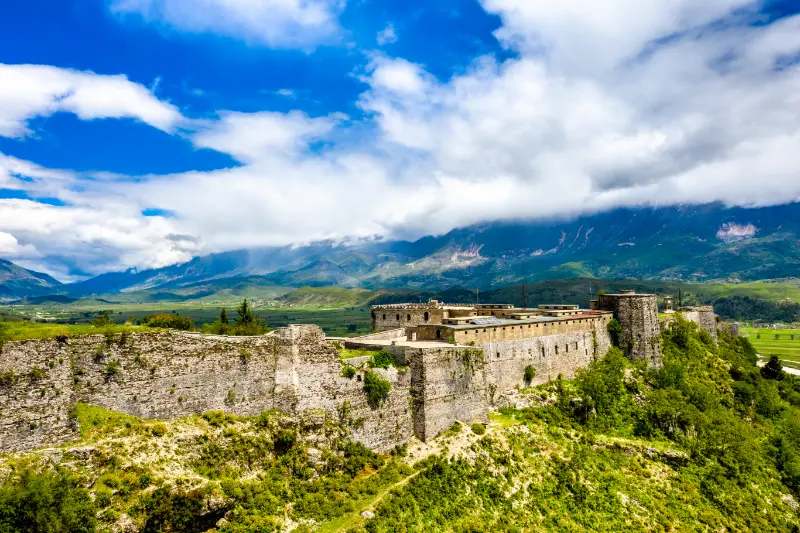
Arrange a taxi as high as legally/practically possible and visit the fortress in the cool part of the day. The castle itself is large, so prioritize viewpoints and exhibits rather than trying to cover every corner.
Skenduli or another museum house
Choose one traditional house, not three. Historic homes are fascinating but include stairs and thresholds that can be more tiring than their floor area suggests.
Ethnographic Museum
Use it as an indoor cultural stop if the access works for you. Always check current opening/access details because historic buildings are not purpose-built accessible museums.
Bazaar dinner close to the hotel
The best evening plan is often no plan beyond a nearby restaurant. Avoid descending to the modern city for dinner if that creates another uphill taxi/walk late at night.
A relaxed 2-day itinerary
Day 1
Arrive, settle into the hotel, explore the Old Bazaar in short sections and choose one museum house. Have a long lunch or coffee break, rest in the afternoon, then return for a nearby dinner.
Day 2
Take a taxi toward the castle early, visit selectively and return to the bazaar for lunch. In the afternoon choose either the Ethnographic Museum or a short scenic drive—not another long sequence of hillside attractions.
If you have a third day, keep it flexible. Use it for the regional excursion that interests you most, a second museum, a long meal or simply a slower version of something you skipped. Extra time is more valuable when it creates breathing room than when it adds another checklist.
Best day trip for an easier pace
Antigonea or Libohovë can work with a private car/taxi and minimal walking if chosen carefully. The Blue Eye involves additional transport and can have uneven approaches, so it should be treated as a separate outing rather than automatically added to a tiring heritage day.
Best time to visit
April–May and September–October are the easiest. Summer heat amplifies every climb. Wet winter days make stone surfaces slippery, so flexible scheduling is particularly useful.
Whatever the month, check the short-range forecast. Rain changes cobblestones and outdoor sites; heat changes walking tolerance; wind can affect coastal or boat plans. A flexible itinerary is more useful than an “ideal month” if you ignore the weather on the actual day.
Hotel checklist for a more comfortable stay
Ask specifically about steps from street to reception, internal stairs, handrails, bathroom layout and taxi drop-off. A spectacular terrace is not helpful if reaching it requires several flights of stairs you did not expect.
- Lift/elevator access from street level, not only between upper floors.
- Number of steps between taxi drop-off and reception.
- Walk-in shower or bathroom layout that matches your needs.
- Air conditioning in summer and effective heating in winter.
- Quiet room location if the property is above a bar or busy promenade.
- Parking or reliable taxi access if you are carrying luggage.
Meals and rest breaks
Gjirokastër rewards slow eating. Qifqi, local soups, pies and traditional dishes turn lunch into a natural recovery block between steep sightseeing sections.
I would avoid booking lunch and dinner far from the hotel on the same day. Let one meal be close to the sightseeing zone and the other close to the accommodation. This small choice removes an unnecessary evening transfer and makes the schedule much more forgiving.
What to pack differently for an easier trip
- Supportive shoes with good grip, especially for historic stone streets.
- A light rain layer and a compact umbrella for shoulder seasons.
- A small day bag rather than carrying all travel documents and water in a heavy backpack.
- Sun protection and a refillable water bottle in warm months.
- A written or offline copy of the hotel address for taxis.
- Any personal medication in hand luggage, with enough supply for delays.
Accessibility and mobility: what to verify
This guide describes terrain and trip-planning choices, but it does not guarantee step-free access. Historic castles, Ottoman houses, archaeological sites and old churches were not designed as modern accessible buildings. If you need step-free routes, ramps, lift access or a specific bathroom setup, contact the attraction and hotel directly before travel. Use Accessible Travel in Albania as the national planning starting point.
Safety and practical comfort
Do not plan the castle, multiple museum houses, bazaar, Ali Pasha Bridge and a regional day trip in one day. The city feels compact on a map but the vertical effort makes that schedule far more demanding than it looks.
Keep the day simple after a long transfer. On arrival day I would check in, learn the immediate neighborhood, buy water or essentials and have dinner nearby. Save the most demanding attraction for the following morning rather than proving that you can “use” every hour of the first day.
Travel insurance and health planning
For any international trip, consider travel insurance that fits your own circumstances and planned activities. Bring routine medication in original packaging where practical, keep essential doses in hand luggage and make a note of generic medicine names. If you have specific medical or mobility needs, discuss travel suitability with your own clinician rather than relying on a destination guide.
Useful related guides
- Albania for Senior Travelers
- Accessible Travel in Albania
- Gjirokaster Travel Guide
- Where to Stay
- Without a Car Guide
Official destination information
For current destination information and attractions, see Albania’s official tourism page for Gjirokaster. Opening times, temporary closures and access arrangements can change, so I would confirm any essential attraction close to the visit.

Frequently asked questions
Is Gjirokaster suitable for senior travelers?
Yes, especially when you choose a central hotel, limit the number of major sights each day and use taxis strategically for difficult sections.
Do I need to rent a car?
A car is useful for southern-Albania touring but not for navigating the historic hill. Park where the accommodation recommends and use local taxis for the steepest vertical movements.
How many days should I stay?
Two nights is enough for the core sights at a relaxed pace in many cases; three nights gives you a much better buffer for rest, weather and one regional excursion.
What is the most important hotel question?
Ask about the actual number of steps between the street or taxi drop-off and your room. A property can advertise an elevator and still require stairs before you reach it.
Should I avoid summer?
Not necessarily. Use early mornings, a long midday rest and late-afternoon sightseeing. Shoulder seasons are easier if walking comfort is the main priority.
Final recommendation
The best senior trip to Gjirokaster is not a reduced version of a younger traveler’s itinerary. It is a better-edited version: fewer transfers, a hotel in the right place, taxis where they genuinely save effort, and enough time to enjoy meals, views and local life. Prioritize the experiences that define the destination and let the rest remain optional.
Leave a Reply