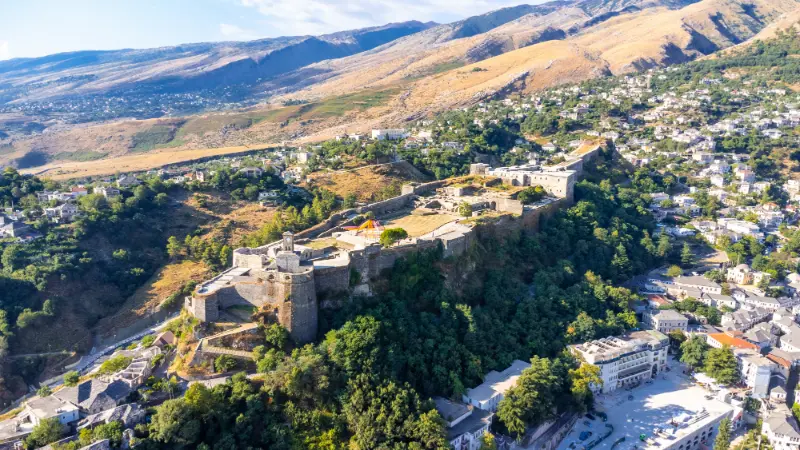
Gjirokastër is the Albanian city where navigation apps can create the biggest gap between “technically reachable” and “pleasant to drive.” The UNESCO old town climbs steeply beneath the castle, with stone lanes, tight turns and guesthouses built long before cars.
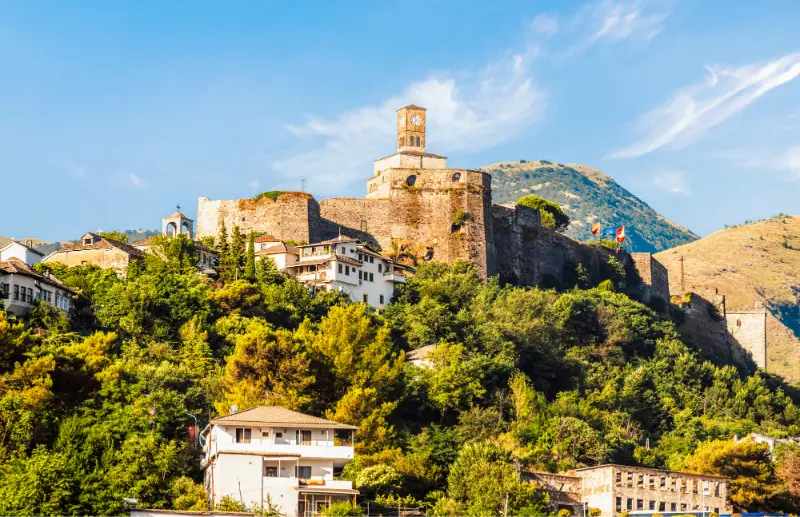
The best driving strategy is conservative: reach a known parking point, stop moving the car and explore on foot. If your guesthouse is high on the slope, ask the host exactly how they want you to arrive.
Quick answer
| Question | My answer | Why |
|---|---|---|
| Do you need a car in Old Town? | No | Walk once parked |
| Main challenge | Steep, narrow cobbled streets | Hotel directions matter |
| Best arrival | Use accommodation’s parking pin | Not the front-door address alone |
| Easiest parking strategy | Lower / edge of Old Town | Then walk or taxi |
| Road-trip value | High | Blue Eye, Antigonea, Libohova, Permet |
My basic rule
A rental car should remove friction from an Albania trip, not create a new task every thirty minutes. In cities and resort centers, I prefer to secure one legal parking space and explore on foot. I move the car only when the next activity is genuinely outside the walkable area.
For the national picture—insurance, deposits, fuel, road conditions, mountain driving and cross-border rules—read Renting a Car in Albania before building the route. I also keep Getting Around Albania open when deciding whether a particular city really needs the car.
Why the old town is different
Gjirokastër’s geography is the issue, not long distances. A hotel 400 meters from the bazaar can sit much higher or lower, and the street between them may be too steep or narrow for a comfortable first attempt in an unfamiliar rental car. Treat elevation as part of the booking decision.
Old Bazaar parking strategy
I would not circle the Old Bazaar looking for the closest possible space. Aim for your hotel’s designated area or a legitimate parking point on the edge of the historic center, then walk. The bazaar is where you want to be on foot anyway, especially in the evening.
Castle access
The castle sits above the bazaar. Strong walkers can climb; others can use a taxi. Driving your own car uphill only makes sense when you have clear current parking instructions. If you already parked well near your hotel, do not give up that space simply to save one uphill walk.
Palorto and upper guesthouses
Palorto and neighboring upper areas contain atmospheric accommodation, but parking quality varies building by building. Some guesthouses can receive cars; others require a short luggage walk. Ask for a map pin for the car, not only the property, and ask whether the approach is suitable for a normal two-wheel-drive rental.
Wet weather
Rain changes Gjirokastër more than many drivers expect. Polished stone becomes slippery for pedestrians, and steep streets require smoother throttle and braking. If the forecast is poor, avoid unnecessary old-town driving and keep the car somewhere straightforward.
Day trips from Gjirokaster
The car becomes valuable for Antigonea, Libohovë, the Blue Eye and Përmet. Plan these as separate driving days, then return and park for the evening. For the Blue Eye in summer, early departure avoids some of the road pressure toward Sarandë.
Fuel and departure
Do fuel and route planning in the lower, modern part of the city rather than searching for services inside the historic zone. If you are continuing toward Sarandë or Përmet, download the route before leaving and avoid adding a remote detour after dark.
Where to stay if you have a car
Old Bazaar and Palorto stays are atmospheric; lower-town hotels are easier for parking. The right choice depends on whether the car or the historic setting matters more. See Where to Stay in Gjirokaster.
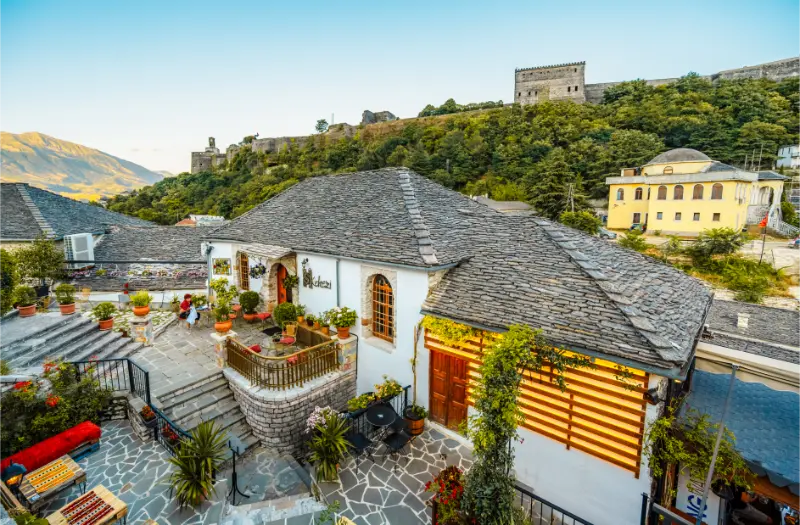
Compare current accommodation in Gjirokaster on Booking.com. When comparing properties, read the parking description rather than relying only on the parking icon.
Arrival-day strategy
Contact the property before arrival and ask for the exact parking approach. If the host offers to meet you at a landmark, accept—it is often easier than trusting the final hundred meters of navigation.
I also take a screenshot of the final approach before entering dense traffic. If the accommodation has a separate garage entrance, save that pin independently. A five-minute preparation stop outside the center is better than trying to read messages while driving.
Peak-season or weather-specific advice
In summer, arrive before the busiest evening period if possible. Once parked, leave the car until your day trip or departure.
Parking rules I would follow everywhere
- Trust signs over old blog posts. Paid-parking zones, one-way streets and temporary restrictions can change. Read the signs where you actually park.
- Do not block pavements, gates or access roads. A space used by other cars is not automatically a legal parking space.
- Remove visible valuables. Keep luggage out of sight and avoid using the parked car as long-term storage.
- Photograph the car when collecting it. Record existing damage, wheels and fuel level before leaving a rental desk.
- Save your hotel’s arrival instructions offline. Old towns and beach areas can have narrow or confusing final approaches.
- Leave extra time before ferries, flights and fixed tours. Summer coastal traffic can turn an easy transfer into the most stressful part of the day.
If you have a rental car
Keep the rental agreement, emergency contact and insurance information accessible rather than buried in luggage. Before leaving the pickup point, photograph every side of the car, wheels, windscreen, fuel gauge and odometer. If the vehicle develops a warning light or damage, contact the rental company before authorizing repairs unless an immediate emergency makes that impossible.
For narrow historic or beach roads, a compact car is usually easier than a large SUV. Choose a larger vehicle only when passenger space, luggage, ground clearance or a specific mountain route genuinely requires it.
Manual versus automatic rental cars
If you normally drive an automatic, do not choose a manual only to save a small amount of money. Hill starts, dense city traffic and coastal hairpins are not the place to relearn clutch control. Reserve the transmission you are comfortable with and verify it on the confirmation. The same principle applies to vehicle size: familiarity and easy maneuvering are more useful than renting the largest model available.
Fuel, navigation and phone coverage
I refuel before mountain or remote coastal excursions rather than waiting for the tank to become low. Navigation apps are useful, but I keep the route downloaded offline and compare any surprising shortcut with the visible road. If an app sends you toward an extremely narrow lane, a rough track or a pedestrian-looking street, stop safely and reassess instead of assuming the algorithm knows your rental-car limitations.
Parking overnight
For overnight parking, I prefer a hotel space, staffed garage or clearly legal public area over an improvised roadside gap. Ask reception whether there are street-cleaning, market or event restrictions the next morning. If the car will remain still for several days, check it periodically and keep the rental company contact details available. A legal space that does not inconvenience residents is better than parking a few meters closer to the hotel.
Driving with children
Families should solve child seats before leaving the rental desk and check that they are installed correctly. A hotel space close to reception becomes more valuable when unloading a sleeping child, stroller and luggage. For beach days, keep the car shaded when possible and never leave a child or pet inside, even for a short stop. Carry water in the cabin rather than in a hot boot.
What not to leave in the car
Do not leave passports, cash, cameras, laptops or visible luggage in a parked vehicle. Even in a destination where serious tourist crime is uncommon, a visible bag creates an unnecessary opportunity. Use hotel storage, keep valuables with you and leave the cabin looking empty. If luggage must remain in the car during a transfer day, put it out of sight before you arrive at the parking location rather than visibly rearranging valuables after parking.
Current local information
Parking arrangements in the old town can change by street and property. Follow municipal signs and your accommodation’s current instructions rather than relying on a fixed list of spaces.
Useful related guides
- Main destination travel guide
- Where to Stay guide
- Renting a Car in Albania
- Albania Safety and Road-Safety Guide
- Getting Around Albania
Frequently asked questions
Is Gjirokaster difficult to drive?
The lower city is straightforward; the steep historic center is the challenging part.
Where should I park for the Old Bazaar?
Use your hotel’s confirmed parking or a legitimate area on the edge of the historic center, then walk.
Can I drive to the castle?
Possibly, but it is rarely necessary. A taxi or walk is simpler for most visitors.
Should I stay in the lower town with a car?
It is easier for parking, though you trade some historic atmosphere. Upper guesthouses can still work if access is clearly explained.
Do I need a car for day trips?
A car is very useful for Antigonea, Libohove, Blue Eye and the wider Drino Valley.
Final advice
Do not judge the success of a road trip by how close you parked to every attraction. The best parking space is often the one you can find legally once and forget about. Use the car for the distances and landscapes Albania makes difficult without one, then enjoy cities and waterfronts on foot.
Driving an EV? Read Electric Car in Gjirokastër: EV Charging, Hills, Blue Eye and South Albania Range for charging, range, hotel-power and backup planning.
Leave a Reply