Tag: Rental Car

Articles and practical travel tips about Rental Car in Albania.

  • Tirana to Thessaloniki: Direct Bus, Car and Greece Border Crossing Guide

    Tirana to Thessaloniki: Direct Bus, Car and Greece Border Crossing Guide

    Traveling from Tirana to Thessaloniki is a useful way to turn an Albania trip into a wider Balkan itinerary. The route is straightforward once you separate three questions: whether there is a direct public-transport service, which border or port formalities apply, and whether a rental car is actually useful after you arrive.

    As a rough planning reference, allow roughly 6½–8½ hours depending on route, border and breaks by road where relevant. For public transport, a long travel day, commonly around eight hours on current through-services. Those are planning ranges, not promises: international journeys can be changed by passport control, traffic, rest stops, weather and seasonal demand.

    Quick comparison

    OptionBest forMain trade-off
    Direct bus / coachSolo travelers, backpackers and car-free itinerariesCheapest and simplest when a direct service fits, but border delays affect arrival time
    Rental carMulti-stop Balkan road tripsFreedom to stop, but cross-border permission and insurance must be arranged in advance
    Private transferFamilies, late arrivals and small groupsDoor-to-door convenience at a much higher cost
    Flight / ferry where relevantLong routes or island connectionsCan save time, but airport/port transfers and check-in must be included

    The short answer

    Autobus.al currently publishes direct international services between Tirana and Thessaloniki through the Kapshticë corridor. Exact departure times and stops should be checked for your date because long-distance Balkan services can change seasonally.

    For current service information I would check Autobus.al international Greece route listings shortly before travel. I never build an international bus day around an old screenshot because stop addresses, departure times and seasonal frequency can change.

    By direct bus or coach

    For most travelers without a car, the direct coach is the first option I check. Autobus.al currently publishes direct international services between Tirana and Thessaloniki through the Kapshticë corridor. Exact departure times and stops should be checked for your date because long-distance Balkan services can change seasonally.

    International coaches are different from many domestic Albanian buses because advance online booking is more common and the ticket often contains the exact departure stop. Read the ticket carefully: Tirana, in particular, has several international/intercity pickup points used by different operators. Arrive early enough to find the correct vehicle without relying on the driver to wait.

    Skanderbeg Square Tirana Albania

    Keep your passport, wallet, medication, phone charger and valuables in your hand luggage. Checked bags can remain in the luggage hold during the border stop, while passengers may be asked to present documents inside the bus or at a control booth depending on the crossing and procedure that day.

    Driving the route

    Driving can be worthwhile if you want Korçë, Prespa, Kastoria or other stops. If you rent in Albania, Greece must be explicitly authorized by the rental company. Ask about cross-border insurance and roadside assistance before departure.

    Before leaving the rental desk, I ask four questions in writing: Is the destination country permitted? Which vehicle/insurance papers must I show at the border? Is roadside assistance valid outside Albania? Can I return the car in Albania after crossing? A verbal ‘yes, no problem’ is not enough for an international road trip.

    Download offline maps before departure and carry the accommodation address in a format you can show without mobile data. Border areas and mountain roads can have weaker coverage, and roaming terms may change immediately after you cross into another country.

    Border or port: Kapshticë/Krystallopigi is the common Albania–Greece corridor for this route

    Entering Greece means passing an external Schengen border. Passport/visa requirements depend on your nationality, and buses can spend significant time at border checks when traffic is heavy. Keep documents in your hand luggage.

    Border waiting time is inherently unpredictable. A journey that takes only a few hours on an empty road can become much longer during summer weekends, public holidays or concentrated arrival periods. For that reason, I would not book a non-refundable onward train, ferry or flight immediately after the scheduled bus arrival.

    Passport, visa and entry rules

    Entry requirements depend on your passport, nationality, residence status and the country you are entering. I would check the destination country’s official immigration/foreign-affairs information shortly before travel rather than relying on a general travel blog. Carry the physical passport or travel document required for the route; a photo on your phone is not a substitute for border control.

    If you are traveling with children, check whether the country or carrier requires any additional parental-consent documentation. If you hold a residence permit or visa that affects entry rights, keep that document accessible with your passport rather than in checked baggage.

    Rental-car paperwork across the border

    Cross-border driving is where travelers most often create avoidable problems. A rental company may allow driving in one neighboring country but not another, may charge an international-use fee, or may require specific insurance paperwork. Ask before booking if the cross-border portion is essential to the trip. Do not arrive at the frontier and discover that the rental contract prohibits the country you are entering.

    If the company authorizes the trip, photograph or save the relevant permission and insurance documents offline. Also ask about breakdown procedures: the number you call in Albania may not automatically dispatch help in another country.

    Luggage and long-distance comfort

    For a cross-border coach, one manageable suitcase or backpack is much easier than several loose bags. Keep valuables and anything needed at the border with you. I also carry water, a snack, tissues and a power bank because rest-stop timing is controlled by the operator, not by the passenger.

    On very long routes, dress in layers. Air-conditioning can be strong even in summer, and a night or early-morning arrival can feel much cooler than the departure city.

    Traveling with children

    For families, I compare a direct coach with a private transfer rather than automatically choosing the cheapest ticket. A direct bus can work very well when there are no changes, but a transfer earns its premium when a late flight, stroller, several bags or a tired child would make terminals difficult.

    With a rental car, arrange the correct child seat before arrival and inspect it at pickup. International-road fatigue matters too: if the route is long, one deliberate meal/toilet stop is better than trying to reach the destination without a break.

    Solo travel

    These routes are generally straightforward for solo travelers because direct buses remove the need to negotiate several connections. I keep my accommodation pin offline, arrive during a sensible hour when possible and use an official taxi/app or walkable hotel from the arrival station.

    The main solo-travel risk is not the border itself but poor arrival planning: reaching an unfamiliar city late at night with no local data, no cash and no idea where the bus has stopped. Solve those three things before departure.

    Accessibility and reduced mobility

    International bus accessibility varies by vehicle and operator. If you need a wheelchair space, boarding assistance or a specific luggage arrangement, contact the carrier before buying the ticket rather than assuming every coach on the route has the same equipment. For a private transfer, explain mobility needs and equipment dimensions in writing.

    Can you do it as a day trip?

    Thessaloniki is absolutely not a Tirana day trip. Stay at least two nights if the city is part of the holiday; one night only makes sense as a transit stop.

    Sunset Tirana Albania Aerial Panoramic View

    Best time to travel

    The route works year-round. Summer adds heat and border traffic, while winter can introduce snow/ice risk on higher inland sections.

    For any border route in July and August, I leave more margin than the timetable suggests. Shoulder-season travel usually reduces queues, while winter adds a different uncertainty: shorter daylight, rain, fog or snow on inland sections.

    Money and payments in Thessaloniki

    Greece uses the euro. International bus stations and long-distance routes may have different luggage/ticket rules, so check your operator before departure.

    I avoid exchanging a large amount of cash at a border unless I genuinely need it. A small arrival amount plus card access is usually more flexible. Decline dynamic currency conversion when an ATM or card terminal offers a poor home-currency conversion unless you understand the rate.

    Where to stay after the journey

    Stay centrally near the waterfront/Aristotelous area or near convenient bus/rail links depending on your onward plans.

    Compare current accommodation in Thessaloniki on Booking.com. This is a sponsored link.

    Tours and activities after arrival

    If you only have one or two nights, an organized tour can be useful for a site that would otherwise require another car rental or complicated local connection. Check the meeting point and cancellation terms before booking.

    How this route fits into a wider itinerary

    Thessaloniki is a major transport hub for northern Greece and onward Balkan travel. If you are heading farther east or south, compare continuing from Thessaloniki against returning to Tirana.

    For a multi-country trip, I prefer a one-way flow. Crossing a border, spending one night and immediately backtracking often creates more transport than sightseeing. If your flight home is from Tirana, build the return into the last days rather than assuming an international coach will arrive exactly on schedule.

    Tirana Albania Bunkart Bunker

    Returning to Albania

    Reverse services are usually available on the same broad corridor, but do not assume the departure point is identical to the arrival stop. Check the return ticket separately. If you are returning for a flight, I would either travel back the previous day or choose a connection with a very large buffer.

    Useful Albania planning guides

    Common mistakes

    • Assuming the scheduled journey time already includes a worst-case border queue.
    • Buying a ticket without checking the exact departure stop.
    • Putting the passport in checked luggage.
    • Taking a rental car across the border without written authorization.
    • Booking a tight onward flight, ferry or bus after an international coach.
    • Forgetting that mobile roaming, currency and payment habits may change after the border.
    • Arriving late without saving the hotel address and a local transport plan.
    • Treating a cross-border day trip as worthwhile just because the map distance looks short.

    Day-of-travel checklist

    • Passport / required travel document accessible.
    • Ticket and stop address saved offline.
    • Hotel pin and check-in instructions saved.
    • Rental-car cross-border papers if driving.
    • Small cash/card access for arrival.
    • Power bank, water and medication in hand luggage.
    • Enough time between separate international connections.

    Frequently asked questions

    Is there a direct bus from Tirana to Thessaloniki?

    Yes. Current international route listings show through-services.

    How long does it take?

    Plan most of a day; around eight hours is a useful planning reference before delays.

    Which border crossing is used?

    Kapshtice/Krystallopigi is the common corridor.

    Can I drive an Albanian rental car into Greece?

    Only with explicit rental-company permission and the correct insurance/documents.

    Should I fly instead?

    Compare current flights when time matters; the bus is useful when price or an overland itinerary matters more.

    Final recommendation

    For most travelers, the best way from Tirana to Thessaloniki is the direct public-transport option when it fits the itinerary. Choose a rental car only when the car continues to add value after the border, and use a private transfer when arrival time, children or luggage make terminals genuinely inconvenient. The most important planning step is simple: verify the current service and border requirements again shortly before departure.

    International travel around the Balkans rewards conservative timing. The routes are often easy, but the border is outside your control. Build in margin, keep documents accessible and let the destination—not a perfectly optimized timetable—be the reason for making the trip.
    More international routes into Albania

  • Driving and Parking in Saranda: Promenade, Port, Summer Traffic and Hotel Parking

    Driving and Parking in Saranda: Promenade, Port, Summer Traffic and Hotel Parking

    Sarandë is the southern city where a rental car can be both extremely useful and extremely annoying. It opens the Blue Eye, Gjirokastër and the Riviera, but once you return to the waterfront in high summer, finding a convenient space can erase the time you saved on the road.

    My rule is simple: if you are sleeping in central Sarandë, parking quality should be part of the hotel decision. Once the car is secured, use your feet for the promenade and dinner.

    Quick answer

    QuestionMy answerWhy
    Do you need a car in central Saranda?NoPromenade and restaurants are walkable
    Main challengeSummer traffic + limited convenient parkingHotel parking has high value
    Port areaBusy around ferry timesDo not improvise long stops
    Rruga ButrintiLong hotel corridorLocation can reduce daily driving
    Road-trip valueHigh outside centerKsamil, Butrint, Blue Eye, Riviera

    My basic rule

    A rental car should remove friction from an Albania trip, not create a new task every thirty minutes. In cities and resort centers, I prefer to secure one legal parking space and explore on foot. I move the car only when the next activity is genuinely outside the walkable area.

    For the national picture—insurance, deposits, fuel, road conditions, mountain driving and cross-border rules—read Renting a Car in Albania before building the route. I also keep Getting Around Albania open when deciding whether a particular city really needs the car.

    Central Saranda: park once

    The promenade, port and central restaurant area are compact enough to walk. Moving the car for dinner or a short swim makes little sense. A central hotel with a guaranteed space is therefore worth more than a slightly cheaper room that sends you searching every evening.

    Ferry-port traffic

    The ferry terminal creates pulses of taxis, buses, pedestrians and cars around sailing times. If you are taking a ferry to Corfu, arrive according to the operator’s check-in requirements and do not count on finding a casual long-term space beside the terminal. If the rental car is staying in Albania, solve parking before walking into the port.

    Rruga Butrinti accommodation

    Many apartments and hotels extend east along Rruga Butrinti. This can be a good car-based location because you are already on the road toward Ksamil, but not every property has easy on-site parking. Ask whether access requires a steep side street and whether the space is reserved during peak season.

    Day trips to Ksamil and Butrint

    The road south is straightforward in distance and difficult in August traffic. Leave early for Butrint, use one planned beach rather than five parking searches, and return outside the most obvious beach-departure wave when possible. The car is useful only if you do not spend the day continuously looking for spaces.

    Blue Eye and Gjirokaster

    These are better uses of a rental car. Start with a full tank, keep the day geographically coherent and return to the same Sarandë parking space. If Gjirokastër is a major part of the trip, consider staying there overnight instead of doing a late drive back after dinner.

    Hotel parking versus street parking

    In high season I strongly prefer confirmed hotel or apartment parking. “Free parking nearby” is not the same thing as a reserved space. Ask the property what happens if you arrive at 20:00 in August—this question reveals much more than the parking icon on a booking site.

    Driving the promenade

    Do not use the waterfront roads as a sightseeing loop when you could walk. Summer pedestrians, taxis and deliveries make central driving slow. If you miss a turn, continue safely and reroute rather than stopping in the lane.

    Where to stay if you have a car

    For road-trippers, prioritize central accommodation with confirmed parking or a well-located Rruga Butrinti property that makes southbound departures easy. Compare areas in Where to Stay in Saranda.

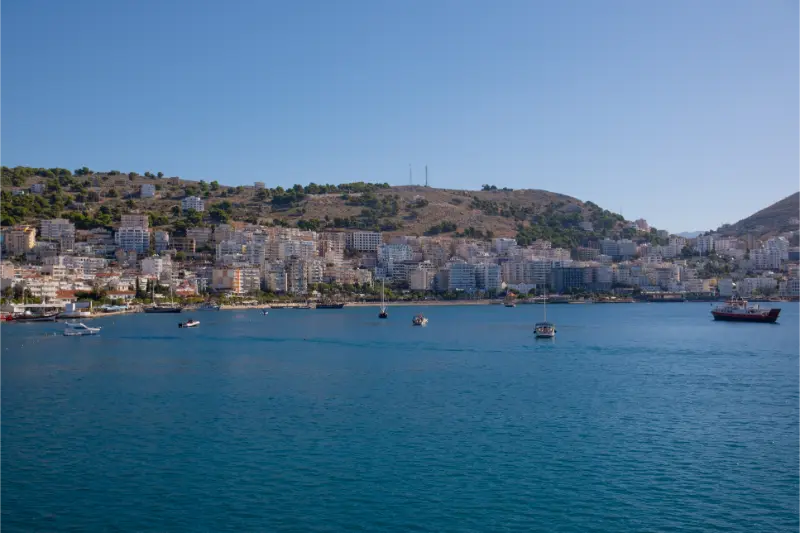
    Resort Town Albania View Departing Ship Houses Mountains Port Town Saranda

    Compare current accommodation in Sarande on Booking.com. When comparing properties, read the parking description rather than relying only on the parking icon.

    Arrival-day strategy

    Arrive with the property’s parking instructions already saved. If the host needs to open a gate or show you a private space, message before you reach the busiest central streets.

    I also take a screenshot of the final approach before entering dense traffic. If the accommodation has a separate garage entrance, save that pin independently. A five-minute preparation stop outside the center is better than trying to read messages while driving.

    Peak-season or weather-specific advice

    July and August are where the parking plan matters most. An early check-in, a reserved space and a walking evening routine can transform the stay.

    Parking rules I would follow everywhere

    • Trust signs over old blog posts. Paid-parking zones, one-way streets and temporary restrictions can change. Read the signs where you actually park.
    • Do not block pavements, gates or access roads. A space used by other cars is not automatically a legal parking space.
    • Remove visible valuables. Keep luggage out of sight and avoid using the parked car as long-term storage.
    • Photograph the car when collecting it. Record existing damage, wheels and fuel level before leaving a rental desk.
    • Save your hotel’s arrival instructions offline. Old towns and beach areas can have narrow or confusing final approaches.
    • Leave extra time before ferries, flights and fixed tours. Summer coastal traffic can turn an easy transfer into the most stressful part of the day.

    If you have a rental car

    Keep the rental agreement, emergency contact and insurance information accessible rather than buried in luggage. Before leaving the pickup point, photograph every side of the car, wheels, windscreen, fuel gauge and odometer. If the vehicle develops a warning light or damage, contact the rental company before authorizing repairs unless an immediate emergency makes that impossible.

    For narrow historic or beach roads, a compact car is usually easier than a large SUV. Choose a larger vehicle only when passenger space, luggage, ground clearance or a specific mountain route genuinely requires it.

    Manual versus automatic rental cars

    If you normally drive an automatic, do not choose a manual only to save a small amount of money. Hill starts, dense city traffic and coastal hairpins are not the place to relearn clutch control. Reserve the transmission you are comfortable with and verify it on the confirmation. The same principle applies to vehicle size: familiarity and easy maneuvering are more useful than renting the largest model available.

    Fuel, navigation and phone coverage

    I refuel before mountain or remote coastal excursions rather than waiting for the tank to become low. Navigation apps are useful, but I keep the route downloaded offline and compare any surprising shortcut with the visible road. If an app sends you toward an extremely narrow lane, a rough track or a pedestrian-looking street, stop safely and reassess instead of assuming the algorithm knows your rental-car limitations.

    Parking overnight

    For overnight parking, I prefer a hotel space, staffed garage or clearly legal public area over an improvised roadside gap. Ask reception whether there are street-cleaning, market or event restrictions the next morning. If the car will remain still for several days, check it periodically and keep the rental company contact details available. A legal space that does not inconvenience residents is better than parking a few meters closer to the hotel.

    Driving with children

    Families should solve child seats before leaving the rental desk and check that they are installed correctly. A hotel space close to reception becomes more valuable when unloading a sleeping child, stroller and luggage. For beach days, keep the car shaded when possible and never leave a child or pet inside, even for a short stop. Carry water in the cabin rather than in a hot boot.

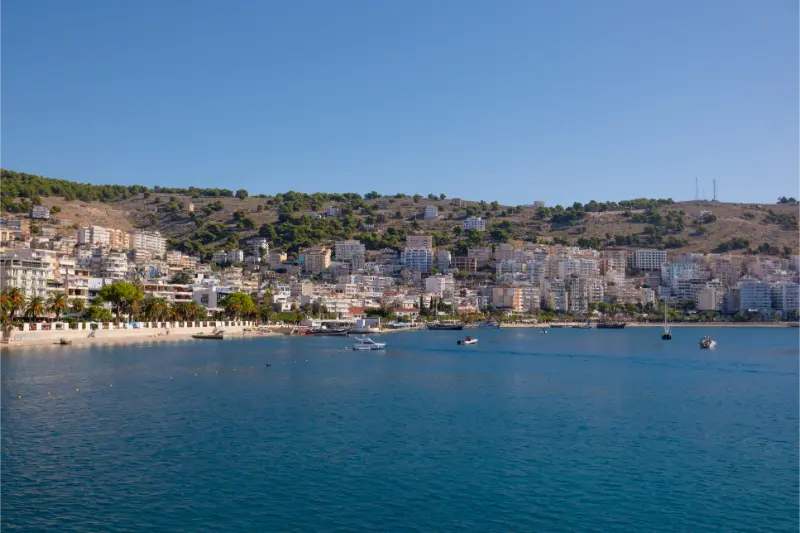
    Aerial View Saranda Coastal Resort Albania

    What not to leave in the car

    Do not leave passports, cash, cameras, laptops or visible luggage in a parked vehicle. Even in a destination where serious tourist crime is uncommon, a visible bag creates an unnecessary opportunity. Use hotel storage, keep valuables with you and leave the cabin looking empty. If luggage must remain in the car during a transfer day, put it out of sight before you arrive at the parking location rather than visibly rearranging valuables after parking.

    Current local information

    Sarandë parking and traffic management can be seasonal. Follow current local signs and municipal restrictions, especially near the port and promenade.

    Useful related guides

    Frequently asked questions

    Do I need a car in Saranda?

    No for the center. A car is very useful for Blue Eye, Gjirokaster and Riviera excursions.

    Is parking difficult in summer?

    It can be, especially near the waterfront and popular accommodation areas. Confirmed hotel parking is valuable.

    Can I park at the ferry port all day?

    Do not assume so. Check current parking rules and solve long-term parking before ferry check-in.

    Saranda Waterfront And Marina Albania

    Where should I stay with a car?

    Central with reserved parking, or along Rruga Butrinti if the property has clear access and you plan southbound day trips.

    Should I drive to Ksamil every day?

    You can, but repeated peak-season traffic and parking searches may make staying in Ksamil for beach-focused days more efficient.

    Final advice

    Do not judge the success of a road trip by how close you parked to every attraction. The best parking space is often the one you can find legally once and forget about. Use the car for the distances and landscapes Albania makes difficult without one, then enjoy cities and waterfronts on foot.

    Driving an EV? Read Electric Car in Sarandë & Ksamil: EV Charging, Butrint, Border Trips and Range for charging, range, hotel-power and backup planning.

  • 10-Day Albania Family Road Trip: Beaches, Castles and Easy Stops with Kids

    10-Day Albania Family Road Trip: Beaches, Castles and Easy Stops with Kids

    A family road trip in Albania is most successful when the adults stop measuring success by how many attractions fit into a day. Children usually remember a castle tunnel, a boat, an ice cream beside the sea or an evening square more vividly than a long list of viewpoints. The route therefore needs short driving blocks, flexible afternoons and accommodation that makes daily logistics easy.

    This 10-day itinerary is aimed at families who want a first taste of Albania without combining the far north and far south in the same short trip. It uses Tirana, Berat, Gjirokastër and the Riviera, with enough beach time to recover from cultural sightseeing. Families with toddlers can slow it further; families with teenagers can add rafting, kayaking or longer hikes.

    Car seats, steep streets and summer heat deserve more planning than they do on an adults-only road trip. Bring or reserve an appropriate child seat, avoid leaving luggage visible in the car, and treat midday in July or August as rest time rather than the best hour to climb a stone castle.

    At a glance

    DayBaseFamily focus
    1–2TiranaParks, square, Dajti, easy food
    3–4BeratCastle, river, relaxed old town
    5–6GjirokastërFortress, stone houses, short excursion
    7–9HimarëBeaches, boat option, villages
    10Tirana / airportEasy return and flight buffer

    Days 1–2: Tirana with room to move

    Use arrival day for Skanderbeg Square, a simple meal and perhaps the Grand Park rather than a museum marathon. Central Tirana has enough cafés, bakeries and pedestrian areas to recover from a flight while children reset. If your hotel has parking, leave the car there and walk or use taxis for the centre.

    On day two, Dajti can be a good family outing when weather is clear because the journey itself feels like an activity. Older children may prefer Bunk’Art or a bike ride; younger ones often need a park break between cultural stops. See Albania with Kids for age-specific planning.

    Days 3–4: Berat without overloading the castle day

    Drive to Berat and check in before exploring. The old quarters are atmospheric but cobbled and uneven, so leave the stroller at the hotel if your child can walk or use a carrier for small children. Do not drive deep into historic lanes simply because navigation suggests it; park sensibly and continue on foot.

    Visit the castle early or later in the day to avoid the strongest heat. Children often enjoy the sense of a lived-in fortress more than a formal museum, but the terrain requires supervision. Keep the second day flexible for a slow river walk, a pool, an agritourism lunch or a short countryside outing instead of another long driving loop.

    Days 5–6: Gjirokastër and a slower southern rhythm

    The drive south is manageable when you stop for lunch and avoid turning the transfer into a chain of attractions. In Gjirokastër, choose accommodation carefully: the old town has atmosphere, while lower-road hotels can make parking and luggage easier. Families with pushchairs should expect steps and steep cobbles.

    The castle is the main family sight. Explore it when temperatures are comfortable, then let the bazaar and evening meal complete the day. On the second day, choose one excursion such as Antigonea, Libohovë or a pool/rest afternoon. A family trip improves when one adult is willing to delete a planned stop.

    Days 7–9: Himarë as the family coast base

    Base yourself in Himarë rather than changing beach hotels every night. Livadhi and other nearby beaches give you options if one place is windy, crowded or difficult for parking. Check sea conditions before boat trips and bring shade, water shoes where useful and enough drinking water for children.

    Use one day for a gentle coastal outing such as Porto Palermo and Qeparo, but avoid building a six-village checklist. Another day can be mostly beach with a late-afternoon old-village walk. Teenagers may enjoy kayaking, snorkeling or a boat excursion; younger children usually benefit more from predictable beach access and an early dinner.

    Pulebardha Beach Seagull Beach Albania

    Day 10: return with a real buffer

    If your flight leaves early the next morning, return to Tirana or an airport-area hotel on day ten. Do not schedule a same-day Riviera drive before an international flight unless you have a very generous margin. Summer traffic, roadworks and meal stops can all stretch the journey.

    Use the final evening for a relaxed meal, laundry and repacking rather than one last attraction. Compare family-friendly accommodation in Tirana on Booking.com if you need a practical last night.

    Car seats and driving days

    Reserve child seats in advance with the rental company and confirm the type provided. Families who need a specific fit or safety standard often prefer bringing their own approved seat. Never assume a taxi will automatically have a suitable seat for the age and size of your child.

    Keep driving days short enough that one unexpected stop does not ruin the schedule. Mountain and coastal roads can be slower than their distance suggests, so use realistic travel time rather than kilometres as the planning measure.

    Beaches with children

    A beautiful beach is not automatically a convenient family beach. Look for easy access, shade options, toilets, food and parking before choosing. Pebbles can be excellent for clear water but may require water shoes, while remote coves can be difficult with a stroller, cool box and tired child.

    Beach Crystal Clear Water Albania

    Never rely on a beach bar as your only source of drinking water or child-friendly food. Carry backups and protect the middle of the day in hot weather.

    Food and picky eaters

    Albanian restaurants are generally easy for families because simple grilled meat, rice, potatoes, bread, yogurt, pasta-style dishes and fresh fruit are widely available alongside regional food. Order a few shared dishes and add familiar items rather than forcing every meal to become a culinary lesson.

    For allergies, carry a translated explanation and read our food allergy travel guide if relevant.

    How to adapt for toddlers or teenagers

    With a baby or toddler, spend three nights in fewer bases and prioritize accommodation with easy parking, a lift or ground-floor access, refrigerator and shade. Our Albania with a Baby or Toddler goes into stroller and car-seat details.

    With teenagers, keep the same route but add one high-energy activity such as rafting, kayaking, a boat trip or a longer coastal walk. Albania with Teenagers has ideas by interest.

    Health, sun and rest

    Carry a small family kit with sunscreen, plasters, insect repellent, any regular medication and oral rehydration supplies appropriate for your family. For medical questions or persistent symptoms, use professional care rather than relying on travel advice.

    Build a quiet block into the hottest part of the day in summer. A hotel pool, shaded lunch or nap often makes the late-afternoon castle or promenade much happier for everyone.

    Where to stay

    Family accommodation should reduce friction: parking, breakfast, a practical room layout and walking access to dinner often matter more than a dramatic view. On the Riviera, check the real walking route to the beach because a short map distance can hide a steep road.

    Rocky Beach Crystal Turquoise Water Ionian Sea Albania 3

    Compare accommodation in Himarë on Booking.com for the longest coastal stay.

    Tours and activities

    Choose activities that remove logistics rather than add them. A well-run boat trip, rafting day or private cultural guide can be worthwhile when pickup, equipment and timing are clear for children’s ages.

    Official information to check before you go

    For destination information, use the official Albania tourism portal and verify age, height or equipment rules directly with activity operators before booking children.

    Useful related guides

    Common mistakes

    • Planning adult sightseeing days and expecting children to keep the same pace.
    • Choosing remote beaches without checking access, toilets or shade.
    • Assuming rental-car child seats are identical to the model you use at home.
    • Driving deep into old towns with narrow cobbled streets.
    • Booking one-night stays for most of the trip.
    • Making the final long drive on the morning of the flight.

    Frequently asked questions

    Is Albania good for a family road trip?

    Yes when the route is paced realistically. Beaches, castles, parks and informal restaurants make it easy to mix adult and child interests.

    Do we need a car?

    A car makes family luggage and beach access much easier, but Tirana itself is better explored without driving.

    What is the best family base on the Riviera?

    Himarë is a strong all-round choice because it combines a town, several nearby beaches and day-trip options.

    Can we use a stroller in Berat and Gjirokastër?

    Yes in some lower areas, but steep cobbles and steps make a carrier or walking child much easier in the historic centres.

    How many hotels for 10 days?

    Four bases is a comfortable target. More hotel changes usually create work without adding much value.

    Final recommendation

    A good Albania family road trip is not the adult highlights itinerary with children added afterward. Build the day around shade, meal timing, easy parking and one memorable activity. With four bases in ten days, you still see several sides of Albania while giving the family enough time to enjoy them.

  • Tirana to Athens: Direct Bus, Car, Greece Border and Long-Distance Travel Tips

    Tirana to Athens: Direct Bus, Car, Greece Border and Long-Distance Travel Tips

    Traveling from Tirana to Athens is a useful way to turn an Albania trip into a wider Balkan itinerary. The route is straightforward once you separate three questions: whether there is a direct public-transport service, which border or port formalities apply, and whether a rental car is actually useful after you arrive.

    As a rough planning reference, allow roughly 9–12 hours of driving before long border/meal/rest delays by road where relevant. For public transport, often 12 hours or more on current through-services, depending on stops and border processing. Those are planning ranges, not promises: international journeys can be changed by passport control, traffic, rest stops, weather and seasonal demand.

    Quick comparison

    OptionBest forMain trade-off
    Direct bus / coachSolo travelers, backpackers and car-free itinerariesCheapest and simplest when a direct service fits, but border delays affect arrival time
    Rental carMulti-stop Balkan road tripsFreedom to stop, but cross-border permission and insurance must be arranged in advance
    Private transferFamilies, late arrivals and small groupsDoor-to-door convenience at a much higher cost
    Flight / ferry where relevantLong routes or island connectionsCan save time, but airport/port transfers and check-in must be included

    The short answer

    Current international listings publish direct Tirana–Athens/Piraeus services through Kapshticë. This is a long overland journey rather than a normal intercity hop, so I compare the bus with flying before booking, especially when I have limited vacation days.

    For current service information I would check Autobus.al international Greece route listings shortly before travel. I never build an international bus day around an old screenshot because stop addresses, departure times and seasonal frequency can change.

    By direct bus or coach

    For most travelers without a car, the direct coach is the first option I check. Current international listings publish direct Tirana–Athens/Piraeus services through Kapshticë. This is a long overland journey rather than a normal intercity hop, so I compare the bus with flying before booking, especially when I have limited vacation days.

    International coaches are different from many domestic Albanian buses because advance online booking is more common and the ticket often contains the exact departure stop. Read the ticket carefully: Tirana, in particular, has several international/intercity pickup points used by different operators. Arrive early enough to find the correct vehicle without relying on the driver to wait.

    Modern Buildings Center Skanderbeg Square Tirana Albania

    Keep your passport, wallet, medication, phone charger and valuables in your hand luggage. Checked bags can remain in the luggage hold during the border stop, while passengers may be asked to present documents inside the bus or at a control booth depending on the crossing and procedure that day.

    Driving the route

    Driving only makes sense if the road trip itself is part of the experience—Korçë, northern Greece and central Greece stops can justify it. For a simple city-to-city move, a direct bus or flight is easier. Cross-border rental permission is mandatory.

    Before leaving the rental desk, I ask four questions in writing: Is the destination country permitted? Which vehicle/insurance papers must I show at the border? Is roadside assistance valid outside Albania? Can I return the car in Albania after crossing? A verbal ‘yes, no problem’ is not enough for an international road trip.

    Download offline maps before departure and carry the accommodation address in a format you can show without mobile data. Border areas and mountain roads can have weaker coverage, and roaming terms may change immediately after you cross into another country.

    Border or port: Kapshticë/Krystallopigi

    The route enters Greece at an external Schengen border. Keep passport/entry documentation accessible throughout the journey. Border delays can be substantial on a long coach route, so do not arrange a tight onward flight or ferry immediately after the scheduled arrival.

    Border waiting time is inherently unpredictable. A journey that takes only a few hours on an empty road can become much longer during summer weekends, public holidays or concentrated arrival periods. For that reason, I would not book a non-refundable onward train, ferry or flight immediately after the scheduled bus arrival.

    Passport, visa and entry rules

    Entry requirements depend on your passport, nationality, residence status and the country you are entering. I would check the destination country’s official immigration/foreign-affairs information shortly before travel rather than relying on a general travel blog. Carry the physical passport or travel document required for the route; a photo on your phone is not a substitute for border control.

    If you are traveling with children, check whether the country or carrier requires any additional parental-consent documentation. If you hold a residence permit or visa that affects entry rights, keep that document accessible with your passport rather than in checked baggage.

    Rental-car paperwork across the border

    Cross-border driving is where travelers most often create avoidable problems. A rental company may allow driving in one neighboring country but not another, may charge an international-use fee, or may require specific insurance paperwork. Ask before booking if the cross-border portion is essential to the trip. Do not arrive at the frontier and discover that the rental contract prohibits the country you are entering.

    If the company authorizes the trip, photograph or save the relevant permission and insurance documents offline. Also ask about breakdown procedures: the number you call in Albania may not automatically dispatch help in another country.

    Luggage and long-distance comfort

    For a cross-border coach, one manageable suitcase or backpack is much easier than several loose bags. Keep valuables and anything needed at the border with you. I also carry water, a snack, tissues and a power bank because rest-stop timing is controlled by the operator, not by the passenger.

    On very long routes, dress in layers. Air-conditioning can be strong even in summer, and a night or early-morning arrival can feel much cooler than the departure city.

    Traveling with children

    For families, I compare a direct coach with a private transfer rather than automatically choosing the cheapest ticket. A direct bus can work very well when there are no changes, but a transfer earns its premium when a late flight, stroller, several bags or a tired child would make terminals difficult.

    With a rental car, arrange the correct child seat before arrival and inspect it at pickup. International-road fatigue matters too: if the route is long, one deliberate meal/toilet stop is better than trying to reach the destination without a break.

    Solo travel

    These routes are generally straightforward for solo travelers because direct buses remove the need to negotiate several connections. I keep my accommodation pin offline, arrive during a sensible hour when possible and use an official taxi/app or walkable hotel from the arrival station.

    The main solo-travel risk is not the border itself but poor arrival planning: reaching an unfamiliar city late at night with no local data, no cash and no idea where the bus has stopped. Solve those three things before departure.

    Accessibility and reduced mobility

    International bus accessibility varies by vehicle and operator. If you need a wheelchair space, boarding assistance or a specific luggage arrangement, contact the carrier before buying the ticket rather than assuming every coach on the route has the same equipment. For a private transfer, explain mobility needs and equipment dimensions in writing.

    Can you do it as a day trip?

    Athens is not remotely a day trip from Tirana. Plan at least two nights, preferably three or more if this is your first visit.

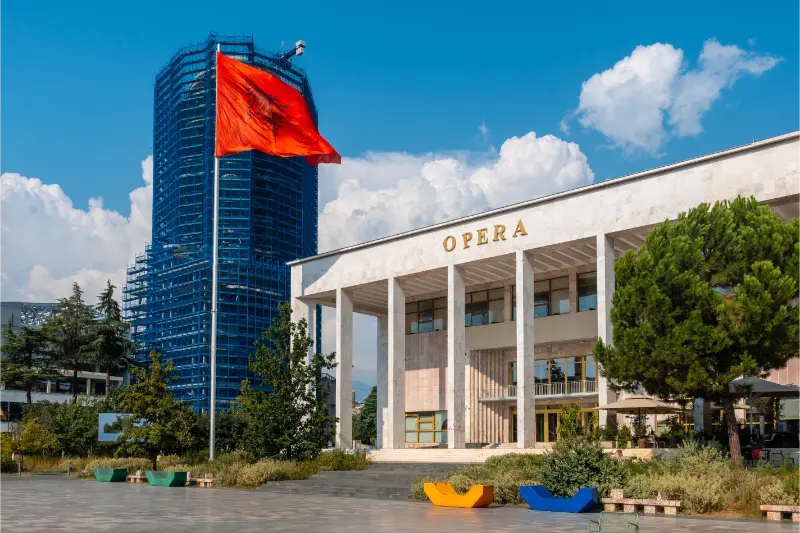
    Palace Culture Opera Skanderbeg Square Tirana Flag Albania Moving Wind

    Best time to travel

    The bus runs through a wide range of climates. Summer brings heat and busy borders; winter can create difficult inland driving conditions. Flying becomes especially attractive when weather or time makes a long road journey inconvenient.

    For any border route in July and August, I leave more margin than the timetable suggests. Shoulder-season travel usually reduces queues, while winter adds a different uncertainty: shorter daylight, rain, fog or snow on inland sections.

    Money and payments in Athens

    Greece uses the euro. Carry food/water for the coach, a power bank, and any medication in hand luggage because checked bags may be inaccessible for long sections.

    I avoid exchanging a large amount of cash at a border unless I genuinely need it. A small arrival amount plus card access is usually more flexible. Decline dynamic currency conversion when an ATM or card terminal offers a poor home-currency conversion unless you understand the rate.

    Where to stay after the journey

    For a first visit, central Athens near a metro line is more valuable than a peripheral bargain after a long international travel day.

    Compare current accommodation in Athens on Booking.com. This is a sponsored link.

    Tours and activities after arrival

    If you only have one or two nights, an organized tour can be useful for a site that would otherwise require another car rental or complicated local connection. Check the meeting point and cancellation terms before booking.

    How this route fits into a wider itinerary

    Athens connects easily to the Greek islands, Peloponnese and international flights. It can be an effective endpoint to an Albania trip, particularly if you are building a one-way Balkan itinerary.

    For a multi-country trip, I prefer a one-way flow. Crossing a border, spending one night and immediately backtracking often creates more transport than sightseeing. If your flight home is from Tirana, build the return into the last days rather than assuming an international coach will arrive exactly on schedule.

    Pyramid Of Tirana Albania

    Returning to Albania

    Reverse services are usually available on the same broad corridor, but do not assume the departure point is identical to the arrival stop. Check the return ticket separately. If you are returning for a flight, I would either travel back the previous day or choose a connection with a very large buffer.

    Useful Albania planning guides

    Common mistakes

    • Assuming the scheduled journey time already includes a worst-case border queue.
    • Buying a ticket without checking the exact departure stop.
    • Putting the passport in checked luggage.
    • Taking a rental car across the border without written authorization.
    • Booking a tight onward flight, ferry or bus after an international coach.
    • Forgetting that mobile roaming, currency and payment habits may change after the border.
    • Arriving late without saving the hotel address and a local transport plan.
    • Treating a cross-border day trip as worthwhile just because the map distance looks short.

    Day-of-travel checklist

    • Passport / required travel document accessible.
    • Ticket and stop address saved offline.
    • Hotel pin and check-in instructions saved.
    • Rental-car cross-border papers if driving.
    • Small cash/card access for arrival.
    • Power bank, water and medication in hand luggage.
    • Enough time between separate international connections.

    Frequently asked questions

    Is there a direct bus from Tirana to Athens?

    Yes. Current listings show direct services to Athens/Piraeus through Kapshtice.

    How long does the bus take?

    Plan a very long journey—often 12 hours or more depending on stops and the border.

    Is flying better?

    Often yes when time is limited; compare current fares and airport-transfer time.

    Can I drive?

    Yes with the correct cross-border rental permission, but it is a long drive.

    Should I book an onward ferry the same day?

    Only with a very large buffer; border and road delays can make coach arrival unpredictable.

    Final recommendation

    For most travelers, the best way from Tirana to Athens is the direct public-transport option when it fits the itinerary. Choose a rental car only when the car continues to add value after the border, and use a private transfer when arrival time, children or luggage make terminals genuinely inconvenient. The most important planning step is simple: verify the current service and border requirements again shortly before departure.

    International travel around the Balkans rewards conservative timing. The routes are often easy, but the border is outside your control. Build in margin, keep documents accessible and let the destination—not a perfectly optimized timetable—be the reason for making the trip.

    More international routes into Albania

  • Tirana Airport to Berat: Bus via Tirana Terminal, Taxi, Transfer and Rental Car

    Tirana Airport to Berat: Bus via Tirana Terminal, Taxi, Transfer and Rental Car

    Getting from Tirana International Airport (TIA) to Berat is easiest when you choose the transport based on your arrival time, luggage and what happens after check-in. As a rough road reference, allow roughly 1 hour 30 minutes to 2 hours from the airport by car in normal conditions, but treat that as planning time rather than a guaranteed transfer.

    The most important distinction is whether the airport currently lists a direct bus for your destination. TIA publishes direct airport services only for selected cities, while other routes require a change through Tirana’s intercity network. I would always check the current airport transport page again shortly before the flight.

    Quick comparison

    OptionBest forMain trade-off
    Airport/intercity busSolo travelers and lower budgetsCheapest, but schedules and final hotel transfer matter
    Official taxi / private transferLate arrivals, families and luggageSimplest door-to-door option, higher cost
    Rental carRoad trips and multi-stop itinerariesMaximum flexibility, plus parking/driving responsibility
    Overnight near Tirana/airportVery late flights before a long onward routeAdds a hotel night but avoids unsafe or stressful late travel

    What the airport officially provides

    Tirana International Airport publishes its current public-transport information on the Tirana International Airport bus page. For intercity timetables beyond the airport-specific services, use e-Transport Albania. TIA also publishes official Tirana Airport taxi information and a list of official Tirana Airport car-rental list.

    The official taxi information says branded airport taxis operate 24 hours a day and can provide transfers to cities throughout Albania. That makes taxi/private transfer the fallback when a flight lands after the last useful bus or when a connection would otherwise require several vehicles.

    By public transport

    The official TIA bus page does not currently list a direct airport–Berat bus. The most structured public-transport option is to use the airport’s daytime connection to Tirana’s North–South intercity terminal and then take a direct Tirana–Berat bus. Check both legs before travel on the airport page and e-Transport; a flight delay can break a tight self-made connection.

    For any bus journey, I save the departure point as a map pin and screenshot the current timetable. If the journey requires two separate services, I treat them as two independent tickets: a delay on the first leg does not guarantee the second vehicle will wait.

    By official taxi or private transfer

    A door-to-door transfer becomes more attractive here because it removes the terminal change and delivers you to Berat in one movement. For two or more travelers, compare the total transfer price with airport bus plus local taxis rather than assuming public transport always wins by a large margin.

    Before accepting or booking a long transfer, confirm the total price, exact hotel/village, luggage allowance and whether the service is private or shared. For a flight pickup, provide the flight number so the operator can see a delay. Use licensed services rather than accepting an unsolicited ride from someone approaching you in arrivals.

    By rental car

    Berat is an excellent first stop for a rental-car itinerary because you avoid central Tirana entirely. Collect the car at arrivals, drive south and park once in Berat. The old town is not a place where you want to keep moving the vehicle between Mangalem, Gorica and the castle.

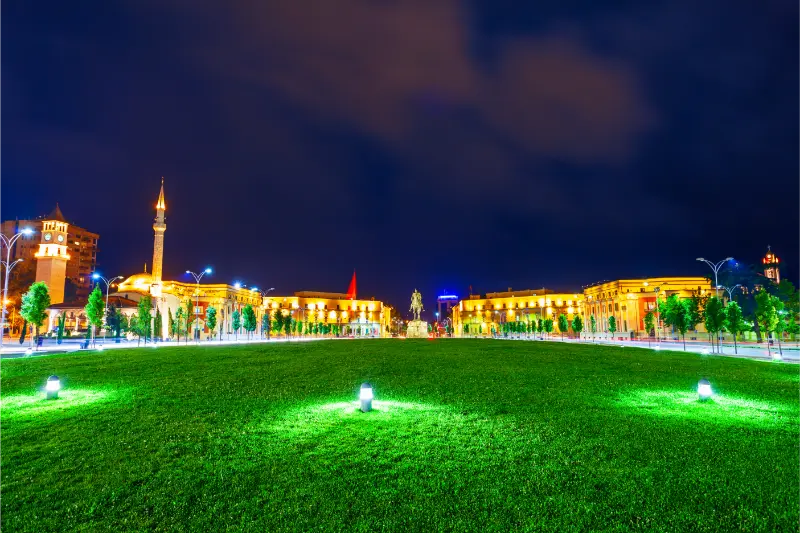
    Illuminated Skanderbeg Square Tirana Albania Night

    At the rental desk, photograph the car, fuel level, wheels and existing damage before departure. Save the destination’s hotel-parking instructions offline and avoid putting the old-town reception address into navigation if the property has a separate vehicle entrance.

    Arriving at the destination

    Berat’s intercity terminal is outside the UNESCO core. If you arrive by bus, use the local city bus or a taxi toward Mangalem/Gorica. If you have an old-town guesthouse, ask whether the final luggage route involves steep lanes.

    I always compare the transport stop with the accommodation before buying the ticket. A route can look very cheap until you discover that the final hotel requires another long taxi ride, while a slightly more expensive transfer may deliver everyone and their luggage directly to reception.

    What if your flight lands late?

    A late flight is the weak point of the bus option. Intercity Berat services are daytime/evening transport, not a 24-hour airport connection. After a late arrival, use a transfer or sleep near Tirana/airport and travel the next morning.

    Interior Orthodox Cathedral Resurrection Christ Skanderbeg Square Tirana Albania

    Flight arrival time is not the same as terminal-exit time. Passport control, baggage reclaim, SIM cards, ATM use and rental paperwork can easily add time after landing. Never book the last realistic connection of the day with only a few minutes of margin.

    If you are traveling with children

    Families should compare the entire chain, not only ticket price. A direct transfer can become good value when it removes a terminal change, multiple suitcases and a tired child from the equation. If renting a car, request the correct child seat in advance and check the installation before leaving TIA.

    If you have large luggage

    Keep passports, medication, electronics and money in a smaller bag that stays with you. On buses and shuttles, large suitcases may go in the luggage compartment. On arrival in a historic town, a taxi can be worth paying for even when the hotel looks close on a map.

    Where to stay after arrival

    Compare current accommodation in Berat on Booking.com. For a first night after flying, I prioritize simple access over a room that looks marginally prettier but requires a difficult final transfer.

    See the local Where to Stay guide for the most practical base.

    Driving and parking after the airport

    If you collect a rental car, read the destination driving and parking guide before arrival. The best airport road trip is one where the car becomes useful between destinations and then stays parked while you explore compact centers on foot.

    Special route advice

    If your flight arrives early enough, going directly to Berat can save a hotel change in Tirana and creates a clean north-to-south itinerary. If you want Tirana as well, visit the capital first and use the separate Tirana–Berat route afterward.

    Returning to Tirana Airport

    For the airport-bound trip, you can reverse the terminal connection, but do not make the same-day chain too tight before an international flight. A direct transfer is often worth considering for early departures.

    For an international flight I would rather reach TIA early than discover that summer traffic, a missed bus or a wrong terminal has consumed the buffer. Re-check the airport’s current passenger guidance and your airline’s check-in requirement the day before departure.

    Common mistakes

    • Assuming every major Albanian city has a direct airport bus.
    • Using an old timetable screenshot instead of checking TIA/e-Transport again.
    • Booking the final intercity departure with almost no buffer after landing.
    • Confusing the city name with a distant beach strip, village or lower town.
    • Renting a car for a city stay where it will remain parked for several days.
    • Driving a long unfamiliar route late at night immediately after a flight.
    • Ignoring the final taxi from the intercity stop to the accommodation.
    • Planning the return to the airport using the minimum Google Maps driving time.

    Useful related guides

    If you are starting from Tirana city rather than the airport, use the dedicated point-to-point route guide.

    Frequently asked questions

    Is there a direct bus from Tirana Airport to Berat?

    TIA does not currently list a direct airport–Berat bus.

    How do I travel by public transport?

    Use the airport connection to Tirana’s North–South intercity terminal, then take a direct bus to Berat.

    Monument Skanderbeg Scanderbeg Square Center Tirana Albania

    Is a private transfer worth it?

    It can be, especially for couples/families, luggage or late arrivals.

    Should I rent a car?

    Yes if Berat starts a wider road trip; otherwise bus plus taxi works well.

    Can I go to Berat after a late-night flight?

    A direct transfer is the practical option. Otherwise stay near Tirana and travel the next morning.

    Final recommendation

    Choose the option that keeps the arrival day simple. Public transport is excellent value when the direct service or terminal connection fits naturally; a private transfer earns its cost when it removes a bad late-night connection; and a rental car makes sense when the vehicle immediately becomes part of a wider Albania itinerary. The cheapest first ticket is not always the cheapest or easiest complete journey to the hotel.

    How I would decide in 60 seconds after booking the flight

    First I check the landing time against the current TIA bus page. Second, I look at the hotel’s exact map position. Third, I decide whether I need a car after arrival. Those three facts usually make the answer obvious. If the direct bus exists and lands near the hotel, I use it. If the trip requires a complicated late connection, I book a transfer or sleep near Tirana. If the destination is the first stage of a road trip, I compare airport car rental with the cost and inconvenience of collecting a vehicle later.

    I then revisit the plan a day or two before departure. Transport schedules change, flights move and seasonal traffic can alter the sensible choice. That final check is more valuable than memorizing an exact bus time months in advance.

  • Tirana to Borsh: Bus, Car, Transfer and the Albanian Riviera Route

    Tirana to Borsh: Bus, Car, Transfer and the Albanian Riviera Route

    Traveling from Tirana to Borsh is easy once you plan the correct terminal, the final hotel drop-off and whether the journey is part of a wider road trip. As a rough road reference, allow about 3 hours 20 minutes to 4 hours depending on traffic, stops and the exact part of Borsh Beach.

    The important point is that Albania’s intercity network is practical but not one unified railway-style system. Exact departure points, seasonal coastal services and final stops can change. I use current official transport information close to the travel date rather than saving a timetable months in advance.

    Quick comparison

    OptionBest forMain trade-off
    Bus / minibusSolo travelers and lower budgetsCheapest, but you must confirm the current stop and final connection
    Rental carRoad trips and regional explorationMost flexible, but parking and summer traffic become your responsibility
    Taxi / private transferFamilies, luggage, late arrivalsDoor-to-door convenience at a higher cost
    Mixed routeDestinations without a strong direct serviceOften the most realistic public-transport solution

    Which Tirana terminal should you use?

    Borsh is farther south than Dhërmi and Himarë, so public transport requires more attention. Check e-Transport for a current direct/through service and ask whether the bus uses the coastal SH8 route and where it stops in Borsh.

    Tirana Municipality currently lists the North–South terminal at Kthesa e Kamzës and the Southeast/International terminal near TEG, and it directs passengers to e-Transport Albania for detailed routes, stops and timetables. See Tirana Municipality transport information before leaving your accommodation.

    Do not tell a taxi driver only ‘the bus station’—Tirana has more than one intercity terminal. Show the destination and the map pin for the correct terminal.

    By bus or minibus

    If no convenient direct service appears, a realistic strategy is Tirana to Vlorë or Himarë and then an onward coastal bus/taxi. Another service may approach southern Albania by a different inland route, so the destination name alone is not enough—confirm the actual stop and route before boarding.

    Skanderbeg Square Tirana Albania 2

    I arrive 20–30 minutes before the planned departure when possible. That gives enough time to find the correct vehicle, ask where luggage goes and confirm the destination with the driver. Keep passport, money, medication and electronics in a small bag that stays with you.

    If your route uses two separate vehicles, leave a real buffer between them. A local bus, coastal shuttle and intercity coach do not normally form one protected ticket. If the first leg is delayed, the next driver may leave on time.

    By rental car

    By car, the coastal route through Vlorë, the Llogara Tunnel, Dhërmi, Himarë and Qeparo is scenic and straightforward for a Riviera road trip. The tunnel has removed the old need to climb the full Llogara Pass simply to reach the coast, although the SH8 sections farther south remain winding.

    A rental car is worth paying for when it creates value after arrival: beaches spread along the coast, mountain villages, nature areas or a multi-stop itinerary. If the vehicle will sit in the same hotel car park for four days, public transport plus an occasional taxi may be cheaper and less stressful.

    Before leaving Tirana, photograph the car, fuel level, wheels and existing damage. Save offline maps and the hotel parking instructions. On coastal routes, the last few kilometers can matter more than the motorway because entrances, one-way streets and beach parking fill quickly.

    By taxi or private transfer

    A private transfer removes the terminal and luggage problem completely. It makes the most sense for several travelers, families with children, very early/late journeys or accommodation located far from the public-transport stop.

    Confirm the total price, pickup address, exact destination, luggage allowance and whether waiting is included. If the trip begins at a Tirana hotel, send the property name and map pin rather than relying on a similar street name.

    Arrival: do not stop planning at the town name

    Borsh has one of the longest beaches on the Riviera, and accommodation is spread along a large area. ‘Borsh’ on a bus sign may leave you far from a beachfront apartment at the opposite end. Save the exact hotel pin and ask about the final taxi or pickup.

    This is one of the most common Albania transport mistakes: travelers compare Tirana-to-town prices but ignore the final 3–10 km to the actual accommodation. Check that last leg before you decide which option is cheapest.

    What if you arrive late?

    A late arrival is much easier with a pre-booked transfer or rental car. I would not count on a last-minute coastal connection after dark. If self-driving, avoid adding sightseeing stops once daylight is fading.

    For late journeys I value simplicity more than saving a few euros. A missed last connection can turn into a more expensive taxi anyway, while a pre-booked transfer gives you one price and one arrival.

    Can you do it as a day trip from Tirana?

    Borsh is not a sensible day trip from Tirana for most travelers. The beach is best experienced slowly, and the return drive would dominate the day.

    Albania Riviera Beach Coast Ionian Sea Lukove Greece Island Corfu Borsh Beach 3

    Best stop on the way

    Qeparo and Porto Palermo are natural stops if you arrive early, but I would save them for a separate Riviera day unless you have at least several hours of daylight after reaching the coast.

    Season and traffic

    Spring and autumn are easier for road travel because beach traffic is lower. July and August can add substantial time around Tirana, Durrës, Vlorë and resort access roads. Winter usually reduces coastal traffic, but daylight is shorter and some seasonal services run less often.

    For southern Riviera routes, the modern road network has improved significantly. The Llogara Tunnel opened in July 2024 and shortened the Dukat–Palasë section, but the coast south of the tunnel is still a winding road with village traffic and beach access points. See official Llogara Tunnel information.

    Traveling with luggage

    • Keep valuables and medication in hand luggage.
    • Ask your accommodation for the best bus/taxi drop-off before departure.
    • Do not assume an old-village guesthouse is on the same level as the beach.
    • Use a taxi for the final uphill or long coastal section when carrying heavy bags.
    • If you drive, do not leave visible luggage in the parked car during sightseeing stops.

    Traveling with children

    With children, compare the whole journey rather than only the bus fare. A direct transfer can be good value when it removes a terminal change, long wait and final taxi. If renting a car, reserve the correct child seat and check it before leaving Tirana.

    Where to stay after arrival

    Compare current accommodation in Borsh on Booking.com.

    Use the dedicated Where to Stay guide before booking. On linear beaches and hill villages, choosing the right area can save more travel time than choosing the fastest bus.

    Useful related guides

    Common mistakes

    • Using an old blog timetable as if it were permanent.
    • Going to the wrong Tirana terminal.
    • Assuming a bus marked for a nearby city stops at your exact resort or village.
    • Ignoring the final taxi from the bus stop to the hotel.
    • Driving a long coastal route immediately after a late flight when tired.
    • Planning multiple sightseeing stops on what should be a transfer day.
    • Booking an old-town or hillside property without asking about vehicle access.
    • Using the minimum map driving time for a fixed onward connection.

    The return journey to Tirana

    When returning to Tirana by bus, ask locally where the northbound vehicle actually stops because the long Borsh coast can have different practical pickup points. With a car, start before peak beach-exit traffic in high season when possible.

    If you have a flight on the same day, I prefer a large buffer or an overnight in Tirana. A coastal bus plus city transfer plus airport bus creates several independent links, and one delay can affect the whole chain.

    A useful route-specific detail

    The official tourism agency describes Borsh as having the longest beach in the region, with the village and castle above the coast. That geography is the reason accommodation location matters so much here.

    Borsh Beach Albanian Riviera

    Frequently asked questions

    Is there a direct bus from Tirana to Borsh?

    There may be current through or seasonal coastal services, but confirm on e-Transport and with the operator rather than assuming a permanent direct bus.

    How long is the drive?

    Usually around 3½–4 hours before long stops.

    Should I go via Llogara?

    For a Riviera road trip, the Vlorë–Llogara Tunnel–Himarë route is the natural coastal approach.

    Is Borsh walkable after the bus arrives?

    Not always with luggage because the beach is very long and accommodation is spread out.

    Is a car useful in Borsh?

    Yes, especially for Qeparo, Porto Palermo, Himare and quieter beach sections.

    Final recommendation

    Use public transport when the route and final hotel location line up naturally. Choose a rental car when it unlocks the region after arrival, not simply because the road looks easy. Choose a private transfer when late timing, luggage, children or an awkward final drop-off would otherwise create two or three separate connections.

    The best decision is usually visible once you compare the entire door-to-door journey rather than only the first ticket. Check the current service on e-Transport shortly before departure, save the hotel pin offline and keep enough flexibility for seasonal traffic.

  • Shkodër to Podgorica: Bus, Car and Montenegro Border Crossing Guide

    Shkodër to Podgorica: Bus, Car and Montenegro Border Crossing Guide

    Traveling from Shkodër to Podgorica is a useful way to turn an Albania trip into a wider Balkan itinerary. The route is straightforward once you separate three questions: whether there is a direct public-transport service, which border or port formalities apply, and whether a rental car is actually useful after you arrive.

    As a rough planning reference, allow roughly 1–2 hours in light conditions, with border queues capable of adding much more by road where relevant. For public transport, around one hour on the fastest current schedule, but border processing makes real-world timing variable. Those are planning ranges, not promises: international journeys can be changed by passport control, traffic, rest stops, weather and seasonal demand.

    Quick comparison

    OptionBest forMain trade-off
    Direct bus / coachSolo travelers, backpackers and car-free itinerariesCheapest and simplest when a direct service fits, but border delays affect arrival time
    Rental carMulti-stop Balkan road tripsFreedom to stop, but cross-border permission and insurance must be arranged in advance
    Private transferFamilies, late arrivals and small groupsDoor-to-door convenience at a much higher cost
    Flight / ferry where relevantLong routes or island connectionsCan save time, but airport/port transfers and check-in must be included

    The short answer

    Direct Shkodër–Podgorica buses are currently easy to find. Visit Shkodër publishes international departures and FlixBus lists daily services. The scheduled road time can look very short, but the border means you should never build a tight onward connection around the minimum figure.

    For current service information I would check current FlixBus Shkodër–Podgorica route page shortly before travel. I never build an international bus day around an old screenshot because stop addresses, departure times and seasonal frequency can change.

    By direct bus or coach

    For most travelers without a car, the direct coach is the first option I check. Direct Shkodër–Podgorica buses are currently easy to find. Visit Shkodër publishes international departures and FlixBus lists daily services. The scheduled road time can look very short, but the border means you should never build a tight onward connection around the minimum figure.

    View Fortress Rozafa Shkoder Albania 2

    International coaches are different from many domestic Albanian buses because advance online booking is more common and the ticket often contains the exact departure stop. Read the ticket carefully: Tirana, in particular, has several international/intercity pickup points used by different operators. Arrive early enough to find the correct vehicle without relying on the driver to wait.

    Keep your passport, wallet, medication, phone charger and valuables in your hand luggage. Checked bags can remain in the luggage hold during the border stop, while passengers may be asked to present documents inside the bus or at a control booth depending on the crossing and procedure that day.

    Driving the route

    Driving is simple enough for an experienced road-tripper and can be combined with Lake Shkodra stops. If you rent in Albania, verify Montenegro permission and insurance. If you are continuing along the Bay of Kotor, consider whether the car adds value after Podgorica.

    Before leaving the rental desk, I ask four questions in writing: Is the destination country permitted? Which vehicle/insurance papers must I show at the border? Is roadside assistance valid outside Albania? Can I return the car in Albania after crossing? A verbal ‘yes, no problem’ is not enough for an international road trip.

    Download offline maps before departure and carry the accommodation address in a format you can show without mobile data. Border areas and mountain roads can have weaker coverage, and roaming terms may change immediately after you cross into another country.

    Border or port: Hani i Hotit/Božaj

    The route crosses the Albania–Montenegro frontier north of Lake Shkodra at Hani i Hotit/Božaj. This is a busy tourist corridor and the queue can be the longest part of the journey in summer.

    Border waiting time is inherently unpredictable. A journey that takes only a few hours on an empty road can become much longer during summer weekends, public holidays or concentrated arrival periods. For that reason, I would not book a non-refundable onward train, ferry or flight immediately after the scheduled bus arrival.

    Passport, visa and entry rules

    Entry requirements depend on your passport, nationality, residence status and the country you are entering. I would check the destination country’s official immigration/foreign-affairs information shortly before travel rather than relying on a general travel blog. Carry the physical passport or travel document required for the route; a photo on your phone is not a substitute for border control.

    If you are traveling with children, check whether the country or carrier requires any additional parental-consent documentation. If you hold a residence permit or visa that affects entry rights, keep that document accessible with your passport rather than in checked baggage.

    Rental-car paperwork across the border

    Cross-border driving is where travelers most often create avoidable problems. A rental company may allow driving in one neighboring country but not another, may charge an international-use fee, or may require specific insurance paperwork. Ask before booking if the cross-border portion is essential to the trip. Do not arrive at the frontier and discover that the rental contract prohibits the country you are entering.

    If the company authorizes the trip, photograph or save the relevant permission and insurance documents offline. Also ask about breakdown procedures: the number you call in Albania may not automatically dispatch help in another country.

    Luggage and long-distance comfort

    For a cross-border coach, one manageable suitcase or backpack is much easier than several loose bags. Keep valuables and anything needed at the border with you. I also carry water, a snack, tissues and a power bank because rest-stop timing is controlled by the operator, not by the passenger.

    On very long routes, dress in layers. Air-conditioning can be strong even in summer, and a night or early-morning arrival can feel much cooler than the departure city.

    Traveling with children

    For families, I compare a direct coach with a private transfer rather than automatically choosing the cheapest ticket. A direct bus can work very well when there are no changes, but a transfer earns its premium when a late flight, stroller, several bags or a tired child would make terminals difficult.

    With a rental car, arrange the correct child seat before arrival and inspect it at pickup. International-road fatigue matters too: if the route is long, one deliberate meal/toilet stop is better than trying to reach the destination without a break.

    Solo travel

    These routes are generally straightforward for solo travelers because direct buses remove the need to negotiate several connections. I keep my accommodation pin offline, arrive during a sensible hour when possible and use an official taxi/app or walkable hotel from the arrival station.

    The main solo-travel risk is not the border itself but poor arrival planning: reaching an unfamiliar city late at night with no local data, no cash and no idea where the bus has stopped. Solve those three things before departure.

    Accessibility and reduced mobility

    International bus accessibility varies by vehicle and operator. If you need a wheelchair space, boarding assistance or a specific luggage arrangement, contact the carrier before buying the ticket rather than assuming every coach on the route has the same equipment. For a private transfer, explain mobility needs and equipment dimensions in writing.

    Can you do it as a day trip?

    A day trip is possible on distance alone, but I would only do it for a specific reason. Podgorica is more useful as an overnight/transport hub, while Kotor or Lake Skadar may be the stronger tourism objective.

    Best time to travel

    The route is year-round. Summer border traffic matters much more than the road itself.

    For any border route in July and August, I leave more margin than the timetable suggests. Shoulder-season travel usually reduces queues, while winter adds a different uncertainty: shorter daylight, rain, fog or snow on inland sections.

    Money and payments in Podgorica

    Montenegro uses the euro. Shkodër uses Albanian lek, so keep both payment methods available during the transition.

    Landscape View Shkoder Albania

    I avoid exchanging a large amount of cash at a border unless I genuinely need it. A small arrival amount plus card access is usually more flexible. Decline dynamic currency conversion when an ATM or card terminal offers a poor home-currency conversion unless you understand the rate.

    Where to stay after the journey

    If you have an early onward bus from Podgorica, staying near the station can be more useful than a scenic hotel far across the city.

    Compare current accommodation in Podgorica on Booking.com. This is a sponsored link.

    Tours and activities after arrival

    If you only have one or two nights, an organized tour can be useful for a site that would otherwise require another car rental or complicated local connection. Check the meeting point and cancellation terms before booking.

    How this route fits into a wider itinerary

    From Podgorica you can continue to Kotor, Budva, Cetinje or northern Montenegro. Leave a generous connection buffer if the onward ticket is separate.

    For a multi-country trip, I prefer a one-way flow. Crossing a border, spending one night and immediately backtracking often creates more transport than sightseeing. If your flight home is from Tirana, build the return into the last days rather than assuming an international coach will arrive exactly on schedule.

    Returning to Albania

    Reverse services are usually available on the same broad corridor, but do not assume the departure point is identical to the arrival stop. Check the return ticket separately. If you are returning for a flight, I would either travel back the previous day or choose a connection with a very large buffer.

    Useful Albania planning guides

    Common mistakes

    • Assuming the scheduled journey time already includes a worst-case border queue.
    • Buying a ticket without checking the exact departure stop.
    • Putting the passport in checked luggage.
    • Taking a rental car across the border without written authorization.
    • Booking a tight onward flight, ferry or bus after an international coach.
    • Forgetting that mobile roaming, currency and payment habits may change after the border.
    • Arriving late without saving the hotel address and a local transport plan.
    • Treating a cross-border day trip as worthwhile just because the map distance looks short.

    Day-of-travel checklist

    • Passport / required travel document accessible.
    • Ticket and stop address saved offline.
    • Hotel pin and check-in instructions saved.
    • Rental-car cross-border papers if driving.
    • Small cash/card access for arrival.
    • Power bank, water and medication in hand luggage.
    • Enough time between separate international connections.

    Frequently asked questions

    Is there a direct bus from Shkoder to Podgorica?

    Yes. Current operators list daily direct services.

    How long is the journey?

    The fastest schedule is around one hour, but the border can make it longer.

    Which border crossing is used?

    Hani i Hotit/Bozaj.

    Can I do Podgorica as a day trip?

    Yes technically, but it is more useful as part of a wider Montenegro route.

    Do I need to book in advance?

    In peak season, booking ahead is sensible because international buses have limited seats.

    Final recommendation

    For most travelers, the best way from Shkodër to Podgorica is the direct public-transport option when it fits the itinerary. Choose a rental car only when the car continues to add value after the border, and use a private transfer when arrival time, children or luggage make terminals genuinely inconvenient. The most important planning step is simple: verify the current service and border requirements again shortly before departure.

    Rozafa Castle Gate Shkoder Albania

    International travel around the Balkans rewards conservative timing. The routes are often easy, but the border is outside your control. Build in margin, keep documents accessible and let the destination—not a perfectly optimized timetable—be the reason for making the trip.

    More routes into Albania

    More international routes into Albania

  • Kruje to Shkoder Road Trip: Castles, Lake Views and Northern Albania

    Kruje to Shkoder Road Trip: Castles, Lake Views and Northern Albania

    A Kruje to Shkoder road trip is one of the easiest ways to turn a simple journey north from Tirana into a full cultural day. Kruje brings together the castle, Skanderbeg history and an old bazaar, while Shkoder adds Rozafa Castle, a lively pedestrian centre, photography heritage and access to Lake Shkodra. The route also positions you perfectly for a later journey to Theth, Lake Koman or Valbona.

    I would not treat the drive as a race between two pins on a map. The best version starts early, gives Kruje enough time to feel like a real stop, and reaches Shkoder with daylight left for a first walk. If your schedule allows it, spend the night in Shkoder rather than driving back to Tirana immediately. That single decision makes the whole route calmer.

    Why combine Kruje and Shkoder in one route

    Kruje and Shkoder tell different parts of Albania’s story. Kruje is compact and intensely historical; Shkoder feels broader, more urban and closely connected with the northern landscape. Together they create variety without requiring a long multi-day expedition.

    The route is especially useful for first-time visitors who want to move gradually from central Albania toward the Alps. It also works well in reverse if you are returning from Theth or Valbona and want one final cultural stop before Tirana or the airport.

    Start early in Kruje

    Arrive before the busiest part of the day if possible. Walk the old bazaar slowly, then continue uphill to the castle complex. The official tourism portal identifies Kruje Castle, the Skanderbeg Museum, the Ethnographic Museum and the historic bazaar as the city’s main cultural attractions.

    Use the official Kruje tourism page for current visitor context. Museum hours can change, so check locally if a specific interior is essential to your day.

    How much time to give Kruje

    For a first visit, allow roughly half a day rather than squeezing the castle into an hour. The bazaar deserves time for browsing, and the castle area includes viewpoints and multiple points of interest. Add extra margin if you want lunch in Kruje.

    If you have already visited Kruje on a separate day trip, use the road-trip day differently: leave earlier, stop for coffee only, and give more time to Shkoder and the lake.

    Aerial Drone View Shiroka Lake Sunset Shkoder Albania

    Driving north and managing the middle of the day

    A rental car gives you flexibility, but read our Albania car-rental guide before planning the route. Main-road driving is straightforward compared with remote mountain roads, yet traffic around urban approaches can still alter timing.

    Do not schedule a chain of minor stops just because they appear close on the map. One good lunch or scenic pause is better than repeatedly losing time to parking and navigation. Keep water in the car and avoid leaving visible luggage when you stop.

    Arriving in Shkoder

    Shkoder rewards an overnight stay. Check in, leave the car, and explore the central pedestrian streets on foot. Cafés, restaurants and the evening atmosphere make a pleasant contrast with the fortress-focused morning in Kruje.

    Tourist Woman Red Dress Hat Enjoying Vacation Walking Streets Shkoder Albania

    Compare places to stay in Shkoder and choose a property with practical parking if you are driving. A central base also makes the next morning easier.

    Rozafa Castle and Lake Shkodra

    Rozafa Castle is the obvious major sight. Its elevated position opens views toward the lake and the surrounding waterways, so clear weather is worth using. Footwear with grip is helpful because old stone can be uneven and slippery.

    After the castle, continue toward the lake if time allows. You do not need a complicated programme: a lakeside walk, a quiet meal or a short cycle can be enough to understand why Shkoder works as both a cultural city and a nature gateway.

    Should you do the trip as a day trip from Tirana?

    It is possible, but it changes the character of the day. You will spend more time driving and may rush either Kruje or Shkoder. If you only have one day, start early and choose a few priorities instead of trying to see every museum and viewpoint.

    An overnight stay is much better if you plan to continue into northern Albania. It removes a return leg and lets Shkoder become part of the trip rather than just a late-afternoon stop.

    Continue to Theth, Koman or Valbona

    From Shkoder, the logical extensions are Theth or the Lake Koman and Valbona route. Do not assume these are simple add-ons to the same day: mountain transfers require their own planning and often an early start.

    If Lake Koman is next, confirm the practical transfer and ferry arrangements for your specific date. If Theth is next, check current road and weather conditions, especially outside summer.

    Best seasons for the route

    Spring and autumn are excellent for combining urban walking with comfortable driving. Summer gives long daylight but can bring heavier traffic and heat. See our autumn guide or spring guide for wider seasonal planning.

    Winter can still suit Kruje and Shkoder, but short days matter. If mountain travel follows, do not treat a clear road in the lowlands as proof that alpine conditions are equally easy.

    A simple two-day version

    Day one: Tirana to Kruje, castle and bazaar, lunch, drive to Shkoder, evening walk. Day two: Rozafa Castle and Lake Shkodra, then continue to your northern destination or return toward central Albania.

    View Fortress Rozafa Shkoder Albania

    This plan is intentionally modest. It leaves room for traffic, coffee stops, photography and local recommendations without turning every hour into a deadline.

    Final planning tips

    If this is your first road trip in the country, combine this route with our transport guide and keep offline maps available.

    The strongest version is not the one with the most stops. It is the one that gives Kruje and Shkoder enough time to feel distinct, while still leaving energy for the northern landscapes that come next.

    Extra practical advice

    For a trip centred on Kruje to Shkoder road trip, the final improvement is usually not another attraction but better pacing. Keep addresses, reservation details and the most important route notes available offline, and avoid planning a major transfer immediately after the most demanding sightseeing block of the day. Albania is compact, but road conditions, parking, summer traffic and mountain geography can make short distances take longer than expected. I also recommend leaving at least one flexible period in every two or three days. Use it for weather changes, a beach you unexpectedly love, a long lunch, laundry, a child or travel companion who needs rest, or simply a slower morning. That margin makes the itinerary more resilient and prevents small delays from affecting several days in a row. For services that matter to the whole day—museum access, ferries, mountain transfers, guided activities or a hotel with a specific accessibility requirement—confirm details close to travel. For ordinary cafés, viewpoints and short walks, keep some spontaneity. This balance between preparation and flexibility is one of the easiest ways to make an Albania trip feel comfortable rather than over-managed.

    Keep the day flexible enough to respond to weather, traffic and local advice. Confirm any service that would materially affect the itinerary, carry water and offline directions, and avoid adding a second major stop simply because the driving distance looks short on a map.

    Keep the day flexible enough to respond to weather, traffic and local advice. Confirm any service that would materially affect the itinerary, carry water and offline directions, and avoid adding a second major stop simply because the driving distance looks short on a map.

    Keep the day flexible enough to respond to weather, traffic and local advice. Confirm any service that would materially affect the itinerary, carry water and offline directions, and avoid adding a second major stop simply because the driving distance looks short on a map.

    Keep the day flexible enough to respond to weather, traffic and local advice. Confirm any service that would materially affect the itinerary, carry water and offline directions, and avoid adding a second major stop simply because the driving distance looks short on a map.

    Keep the day flexible enough to respond to weather, traffic and local advice. Confirm any service that would materially affect the itinerary, carry water and offline directions, and avoid adding a second major stop simply because the driving distance looks short on a map.

    Keep the day flexible enough to respond to weather, traffic and local advice. Confirm any service that would materially affect the itinerary, carry water and offline directions, and avoid adding a second major stop simply because the driving distance looks short on a map.

    Keep the day flexible enough to respond to weather, traffic and local advice. Confirm any service that would materially affect the itinerary, carry water and offline directions, and avoid adding a second major stop simply because the driving distance looks short on a map.

    Keep the day flexible enough to respond to weather, traffic and local advice. Confirm any service that would materially affect the itinerary, carry water and offline directions, and avoid adding a second major stop simply because the driving distance looks short on a map.

    Keep the day flexible enough to respond to weather, traffic and local advice. Confirm any service that would materially affect the itinerary, carry water and offline directions, and avoid adding a second major stop simply because the driving distance looks short on a map.

  • Tirana Airport to Himarë: Bus Connection, Transfer, Rental Car and Llogara Route

    Tirana Airport to Himarë: Bus Connection, Transfer, Rental Car and Llogara Route

    Himarë is a much easier first Riviera base than it used to be because the road south of Vlorë has improved and the Llogara Tunnel shortened the mountain approach. The awkward part is still the airport connection: a flight lands at TIA, while most conventional intercity services start from Tirana or another transport hub. I therefore choose the transport mode based on landing time, not just price.

    Public transport usually requires a connection from Tirana Airport into the intercity network, although seasonal tourist shuttles and commercial services can appear in summer. A private transfer is the cleanest door-to-door option. Driving is practical for a road trip and normally takes around four to five hours with realistic traffic and stops. Always re-check any claimed direct airport service for your exact date before depending on it.

    Quick answer: which option should you choose?

    • Bus/public transport: best for solo travelers and couples who travel light and can match the current timetable.
    • Rental car: best when the vehicle is useful after arrival, not only for this one transfer.
    • Private transfer: best for groups, families, awkward flight times, heavy luggage or hotels away from the main stop.
    • Taxi for the final leg: often worth it when the intercity ticket is cheap but the hotel is uphill, outside town or on a beach road.

    I compare the whole door-to-door journey, not just the cheapest ticket. In Albania, the first and last few kilometers can matter more than the long intercity leg because terminals are not always in historic centers and coastal or mountain accommodation can be spread out.

    By bus or public transport

    If using buses, first confirm whether a through seasonal service is genuinely operating from the airport on your date. If not, reach Tirana’s southbound terminal and take a Himarë bus from there. The connection is manageable after a morning arrival, but I would not book the final bus with a tight margin after landing because immigration, baggage reclaim and airport traffic are unpredictable.

    Tirana Pyramid Center Skanderbeg Square Tirana Albania 2

    For current departures I use check current Albania coach and shuttle options shortly before travel. Timetables in Albania are improving online, but seasonal frequency, terminal changes and operator schedules can still move. I save the current result on my phone, then confirm the departure point locally if the journey is important.

    By rental car

    The drive runs from TIA toward the main southbound corridor, then through Vlorë and the Llogara area to Himarë. The tunnel is the practical fast route; the old pass is a separate scenic choice. After the tunnel, the Riviera road remains curvy and can slow around Dhërmi, Vuno and Himarë, so do not promise a hotel an arrival time based only on the fastest map estimate.

    Before leaving, I photograph the car, fuel gauge, wheels and existing damage. I also save offline maps and the accommodation parking instructions. If the rental is only for this one transfer and will sit unused for several days, I compare the full rental cost—including parking and one-way fees—with a private transfer before booking.

    By taxi or private transfer

    A pre-booked transfer removes the terminal problem and is the most predictable choice when timing matters. I ask for the total price in writing, exact pickup point, luggage allowance, child-seat availability when relevant, waiting policy and whether the driver will take me to the hotel door or only to the nearest vehicle-access point.

    For groups, calculate the price per person rather than reacting to the vehicle total. Four bus tickets, two local taxis and the time spent making connections can narrow the gap considerably. For solo travelers, public transport usually wins on value unless the journey starts or ends at a difficult hour.

    What the road is actually like

    Albanian route planning works better when you separate distance from travel time. Modern highways can be quick, but city approaches, coastal curves, mountain sections and construction create variability. I add at least 20–30% to the minimum map time when I have a fixed check-in, ferry, tour or flight connection.

    Daylight is valuable on unfamiliar routes. It makes road signs, hotel entrances and parking easier to read, and it turns the landscape into part of the experience. I avoid scheduling a first drive in Albania immediately after a long flight if the route continues for several hours.

    Arriving in Himarë: plan the last kilometer

    Ask your Himarë accommodation which neighborhood it is actually in. Spile, Potam, Livadhi and the old town all use ‘Himarë’ in booking descriptions but require different final approaches. A private driver can usually deliver to the property, while a bus passenger may still need a short taxi with bags.

    Before travel I open the property location, read where to stay in Himarë, and ask the host one simple question: “What is the easiest way to reach you with luggage?” That answer often changes whether I choose bus, car or transfer.

    Worthwhile stops if you are driving

    On a flight-arrival day I keep stops functional: coffee, fuel, lunch, then check-in. If the plane lands early and you are driving, one Llogara viewpoint or a short Dhërmi break can work. Porto Palermo is better saved for a full Riviera day unless everything has gone perfectly.

    My rule is simple: one meaningful stop is better than four rushed ones. A transfer day becomes tiring when every attraction is treated as compulsory. If a stop needs two hours to be worthwhile, either give it those two hours or save it for another day.

    If you arrive late

    After a late-afternoon or evening landing, a direct transfer is the only same-day option I find genuinely relaxing. Otherwise, sleep near TIA or in Tirana and leave early. Riviera roads are not where I want to learn a rental car while tired after a flight.

    Tirana Pyramid Center Skanderbeg Square Tirana Albania Congress Center

    I also tell the accommodation my realistic arrival window. Small guesthouses may not have a 24-hour desk, and a phone message before departure is easier than trying to find a host after midnight with weak battery and no local cash.

    Traveling with luggage

    • Keep passports, money, medication and electronics in a small bag that stays with you.
    • Use a suitcase that you can lift yourself; bus luggage compartments and guesthouse stairs are common.
    • Ask whether the final hotel street is accessible by car or taxi before choosing a large hard-shell case.
    • Carry some Albanian lek for local taxis, bus fares, water and small stops.
    • Do not leave visible luggage in a parked rental car while sightseeing.

    Traveling with children or as a group

    For families, the advantage of a transfer is not luxury; it is removing two luggage moves and an uncertain final taxi. For solo travelers with an early arrival, public transport is much cheaper. Couples should compare both, especially if the hotel is outside central Himarë.

    Can you do it as a day trip?

    Do not treat TIA–Himarë as an extension of a sightseeing day. The transfer is enough. Once you arrive, stay at least two nights if the Riviera is a major part of the holiday.

    Season, traffic and weather

    From June through September, allow extra time around Vlorë and beach access roads. Shoulder season is calmer but has fewer seasonal transport products. In winter, verify bus frequency and accommodation check-in before traveling late.

    I re-check transport two times: once when I build the itinerary and again 24–48 hours before travel. The second check matters more. A route that was perfect on paper three months earlier may have a different departure, road situation or seasonal frequency by the time you arrive.

    Where to stay after arrival

    Compare current accommodation in Himarë on Booking.com. I choose the area with transport in mind: a slightly more expensive central room can be cheaper overall if it removes two taxi rides and difficult luggage handling.

    Tours and activities after the transfer

    I keep the transfer day light and use tours on a separate day when possible. That protects prepaid activities from transport delays and makes it easier to enjoy the destination rather than watching the clock.

    A route-specific detail that matters

    If a booking platform shows an airport–Himarë journey with a connection, read the transfer location carefully. Some results combine separate operators. I only use a connection that gives enough time to collect luggage, reach the correct stop and recover from a modest delay.

    A simple decision checklist

    • What time can I realistically leave, not just land or check out?
    • Is there a direct service on my exact date?
    • Where does the bus actually arrive?
    • How far is the accommodation from that stop?
    • Will I need a car after arrival?
    • Is the journey still sensible if traffic adds one hour?
    • Do I have a backup if the last connection is missed?

    If the answers point in different directions, I choose the option with the fewest fragile connections. Albanian transport can be excellent value, but a cheap itinerary is not a good itinerary when it depends on three separate vehicles arriving perfectly on time.

    Related planning guides

    For the wider transport picture, use Albania by bus and getting around Albania. If you plan to drive, read renting a car in Albania before collecting the vehicle.

    Frequently asked questions

    What is the easiest way to travel to Himarë?

    For one or two budget travelers, a direct bus or the simplest public-transport connection is usually best. For a family or group with luggage, a private transfer can be easier. A rental car is best when it will remain useful for sightseeing after arrival.

    Should I book transport in advance?

    For peak summer, airport arrivals, mountain routes and any journey tied to a flight or ferry, yes. On frequent city routes, confirming shortly before travel may be enough. I still avoid relying on a last service without a backup.

    Can I pay by card?

    Do not assume it. Online tickets may accept cards, while local buses, taxis and small stops often work more smoothly with cash in lek. Carrying small notes prevents unnecessary problems.

    How much time should I add to Google Maps?

    For a normal transfer, I add at least 20–30% to the fastest driving estimate. In July and August, around Tirana, Vlorë, Sarandë or beach roads, I allow more. For a flight, ferry or fixed tour, build a much larger safety margin.

    Aerial Drone View Tirana Albania

    Is a private transfer worth it?

    It is worth comparing whenever there are three or more travelers, a late arrival, several suitcases, children, limited mobility or a hotel far from the bus stop. For a solo traveler in daylight, the bus often offers far better value.

    My practical recommendation

    Choose the transport that keeps the day simple enough that you still enjoy the destination when you arrive. I use buses when the route is direct and the timetable fits naturally, private transfers when a bad connection would damage the trip, and rental cars when they unlock several days of useful exploration. The best option is not automatically the fastest or cheapest one; it is the one with the fewest unnecessary complications for your specific itinerary.

  • Tirana to Ohrid: Direct Bus, Car and Lake Ohrid Border Crossing Guide

    Tirana to Ohrid: Direct Bus, Car and Lake Ohrid Border Crossing Guide

    Traveling from Tirana to Ohrid is a useful way to turn an Albania trip into a wider Balkan itinerary. The route is straightforward once you separate three questions: whether there is a direct public-transport service, which border or port formalities apply, and whether a rental car is actually useful after you arrive.

    As a rough planning reference, allow roughly 2½–3½ hours plus any border delay by road where relevant. For public transport, around three hours on some current direct services, with longer schedules possible. Those are planning ranges, not promises: international journeys can be changed by passport control, traffic, rest stops, weather and seasonal demand.

    Quick comparison

    OptionBest forMain trade-off
    Direct bus / coachSolo travelers, backpackers and car-free itinerariesCheapest and simplest when a direct service fits, but border delays affect arrival time
    Rental carMulti-stop Balkan road tripsFreedom to stop, but cross-border permission and insurance must be arranged in advance
    Private transferFamilies, late arrivals and small groupsDoor-to-door convenience at a much higher cost
    Flight / ferry where relevantLong routes or island connectionsCan save time, but airport/port transfers and check-in must be included

    The short answer

    Direct Tirana–Ohrid buses are currently published by international operators. Autobus.al also lists a daily Tirana–Ohrid service via Qafë Thanë, while FlixBus publishes the route online. That makes Ohrid one of the easiest cross-border additions to an Albania itinerary without a car.

    For current service information I would check current FlixBus Tirana–Ohrid route page shortly before travel. I never build an international bus day around an old screenshot because stop addresses, departure times and seasonal frequency can change.

    By direct bus or coach

    For most travelers without a car, the direct coach is the first option I check. Direct Tirana–Ohrid buses are currently published by international operators. Autobus.al also lists a daily Tirana–Ohrid service via Qafë Thanë, while FlixBus publishes the route online. That makes Ohrid one of the easiest cross-border additions to an Albania itinerary without a car.

    International coaches are different from many domestic Albanian buses because advance online booking is more common and the ticket often contains the exact departure stop. Read the ticket carefully: Tirana, in particular, has several international/intercity pickup points used by different operators. Arrive early enough to find the correct vehicle without relying on the driver to wait.

    Tirana Aerial Panoramic View Albania

    Keep your passport, wallet, medication, phone charger and valuables in your hand luggage. Checked bags can remain in the luggage hold during the border stop, while passengers may be asked to present documents inside the bus or at a control booth depending on the crossing and procedure that day.

    Driving the route

    Driving is especially worthwhile if you want to combine Pogradec, Lin and Ohrid in one two-country lake trip. Do not make the border a casual surprise: confirm North Macedonia permission with the rental company and carry all required vehicle/insurance documents.

    Before leaving the rental desk, I ask four questions in writing: Is the destination country permitted? Which vehicle/insurance papers must I show at the border? Is roadside assistance valid outside Albania? Can I return the car in Albania after crossing? A verbal ‘yes, no problem’ is not enough for an international road trip.

    Download offline maps before departure and carry the accommodation address in a format you can show without mobile data. Border areas and mountain roads can have weaker coverage, and roaming terms may change immediately after you cross into another country.

    Border or port: Qafë Thanë/Kjafasan

    Qafë Thanë/Kjafasan is the main road crossing for the Tirana–Ohrid corridor. The road approaches Lake Ohrid from the Albanian side near Pogradec/Lin and continues toward Struga and Ohrid after border control.

    Border waiting time is inherently unpredictable. A journey that takes only a few hours on an empty road can become much longer during summer weekends, public holidays or concentrated arrival periods. For that reason, I would not book a non-refundable onward train, ferry or flight immediately after the scheduled bus arrival.

    Passport, visa and entry rules

    Entry requirements depend on your passport, nationality, residence status and the country you are entering. I would check the destination country’s official immigration/foreign-affairs information shortly before travel rather than relying on a general travel blog. Carry the physical passport or travel document required for the route; a photo on your phone is not a substitute for border control.

    If you are traveling with children, check whether the country or carrier requires any additional parental-consent documentation. If you hold a residence permit or visa that affects entry rights, keep that document accessible with your passport rather than in checked baggage.

    Rental-car paperwork across the border

    Cross-border driving is where travelers most often create avoidable problems. A rental company may allow driving in one neighboring country but not another, may charge an international-use fee, or may require specific insurance paperwork. Ask before booking if the cross-border portion is essential to the trip. Do not arrive at the frontier and discover that the rental contract prohibits the country you are entering.

    If the company authorizes the trip, photograph or save the relevant permission and insurance documents offline. Also ask about breakdown procedures: the number you call in Albania may not automatically dispatch help in another country.

    Luggage and long-distance comfort

    For a cross-border coach, one manageable suitcase or backpack is much easier than several loose bags. Keep valuables and anything needed at the border with you. I also carry water, a snack, tissues and a power bank because rest-stop timing is controlled by the operator, not by the passenger.

    On very long routes, dress in layers. Air-conditioning can be strong even in summer, and a night or early-morning arrival can feel much cooler than the departure city.

    Traveling with children

    For families, I compare a direct coach with a private transfer rather than automatically choosing the cheapest ticket. A direct bus can work very well when there are no changes, but a transfer earns its premium when a late flight, stroller, several bags or a tired child would make terminals difficult.

    With a rental car, arrange the correct child seat before arrival and inspect it at pickup. International-road fatigue matters too: if the route is long, one deliberate meal/toilet stop is better than trying to reach the destination without a break.

    Solo travel

    These routes are generally straightforward for solo travelers because direct buses remove the need to negotiate several connections. I keep my accommodation pin offline, arrive during a sensible hour when possible and use an official taxi/app or walkable hotel from the arrival station.

    The main solo-travel risk is not the border itself but poor arrival planning: reaching an unfamiliar city late at night with no local data, no cash and no idea where the bus has stopped. Solve those three things before departure.

    Accessibility and reduced mobility

    International bus accessibility varies by vehicle and operator. If you need a wheelchair space, boarding assistance or a specific luggage arrangement, contact the carrier before buying the ticket rather than assuming every coach on the route has the same equipment. For a private transfer, explain mobility needs and equipment dimensions in writing.

    Can you do it as a day trip?

    Ohrid can be reached quickly enough that a very long day trip is possible, but I would still stay at least one night. The old town, lakeshore and evening atmosphere deserve more than the middle hours of the day.

    Best time to travel

    Late spring through early autumn gives the easiest lake experience. Summer has more visitors and border traffic; winter is much quieter and requires more conservative road planning.

    For any border route in July and August, I leave more margin than the timetable suggests. Shoulder-season travel usually reduces queues, while winter adds a different uncertainty: shorter daylight, rain, fog or snow on inland sections.

    Money and payments in Ohrid

    North Macedonia uses denars, while Albania uses lek. Carry a card and a small amount of local cash rather than exchanging a large sum at the border.

    I avoid exchanging a large amount of cash at a border unless I genuinely need it. A small arrival amount plus card access is usually more flexible. Decline dynamic currency conversion when an ATM or card terminal offers a poor home-currency conversion unless you understand the rate.

    Where to stay after the journey

    Stay near Ohrid Old Town or the central lakefront if you arrive by bus. That keeps the first evening walkable and avoids needing a taxi after a cross-border travel day.

    Compare current accommodation in Ohrid on Booking.com. This is a sponsored link.

    Tours and activities after arrival

    If you only have one or two nights, an organized tour can be useful for a site that would otherwise require another car rental or complicated local connection. Check the meeting point and cancellation terms before booking.

    How this route fits into a wider itinerary

    Ohrid pairs naturally with Pogradec and Korçë on the Albanian side or Skopje on the North Macedonian side. A two-country lake loop is more coherent than bouncing back to Tirana after one short visit.

    Tirana Artificial Lake And City Skyline Albania

    For a multi-country trip, I prefer a one-way flow. Crossing a border, spending one night and immediately backtracking often creates more transport than sightseeing. If your flight home is from Tirana, build the return into the last days rather than assuming an international coach will arrive exactly on schedule.

    Returning to Albania

    Reverse services are usually available on the same broad corridor, but do not assume the departure point is identical to the arrival stop. Check the return ticket separately. If you are returning for a flight, I would either travel back the previous day or choose a connection with a very large buffer.

    Useful Albania planning guides

    Common mistakes

    • Assuming the scheduled journey time already includes a worst-case border queue.
    • Buying a ticket without checking the exact departure stop.
    • Putting the passport in checked luggage.
    • Taking a rental car across the border without written authorization.
    • Booking a tight onward flight, ferry or bus after an international coach.
    • Forgetting that mobile roaming, currency and payment habits may change after the border.
    • Arriving late without saving the hotel address and a local transport plan.
    • Treating a cross-border day trip as worthwhile just because the map distance looks short.

    Day-of-travel checklist

    • Passport / required travel document accessible.
    • Ticket and stop address saved offline.
    • Hotel pin and check-in instructions saved.
    • Rental-car cross-border papers if driving.
    • Small cash/card access for arrival.
    • Power bank, water and medication in hand luggage.
    • Enough time between separate international connections.

    Frequently asked questions

    Is there a direct bus from Tirana to Ohrid?

    Yes. Current operators publish direct Tirana–Ohrid services.

    How long does it take?

    Around three hours on some direct services; border queues can add time.

    Which border crossing is used?

    Qafe Thane/Kjafasan is the standard corridor.

    Can I combine Pogradec and Ohrid?

    Yes. They make an excellent two-country Lake Ohrid itinerary.

    Is Ohrid a day trip?

    Possible, but an overnight is much more rewarding.

    Final recommendation

    For most travelers, the best way from Tirana to Ohrid is the direct public-transport option when it fits the itinerary. Choose a rental car only when the car continues to add value after the border, and use a private transfer when arrival time, children or luggage make terminals genuinely inconvenient. The most important planning step is simple: verify the current service and border requirements again shortly before departure.

    Tirana Albania Bunkart Museo Bunker

    International travel around the Balkans rewards conservative timing. The routes are often easy, but the border is outside your control. Build in margin, keep documents accessible and let the destination—not a perfectly optimized timetable—be the reason for making the trip.
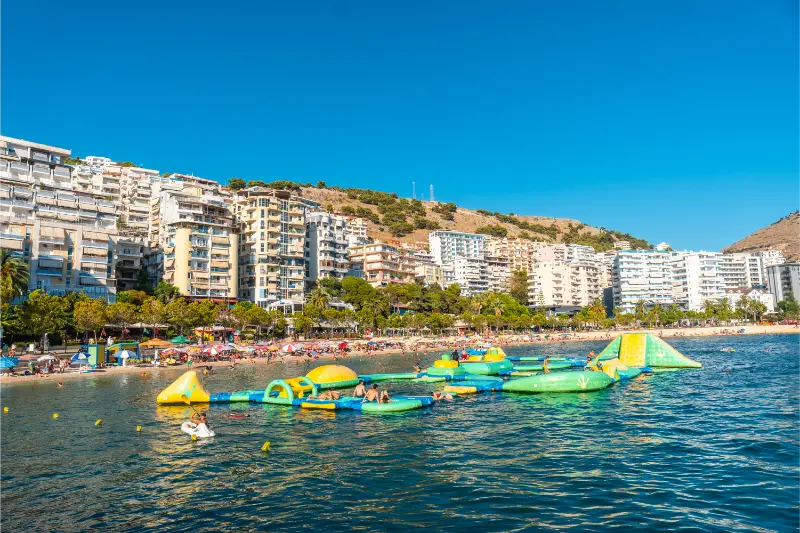
    More Lake Ohrid transport guides

    More routes into Albania