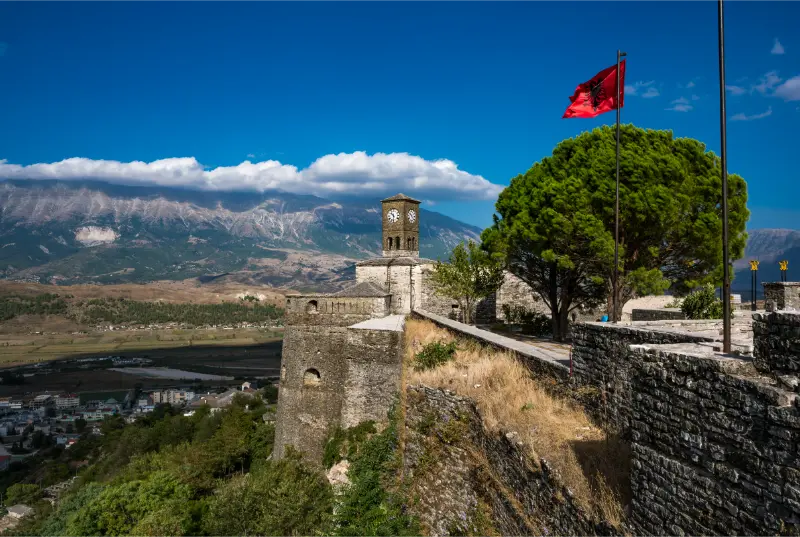
Category: Itineraries

Realistic Albania itineraries and road-trip routes designed around travel time, overnight stops and different styles of trip.

  • 3 Days in Gjirokaster: Castle, Stone Houses and Southern Day Trips

    3 Days in Gjirokaster: Castle, Stone Houses and Southern Day Trips

    Three days turns Gjirokastër from a castle-and-bazaar stop into a proper base for the Drino Valley and southern Albania. The key is to keep one full day in the stone city and use the other two selectively.
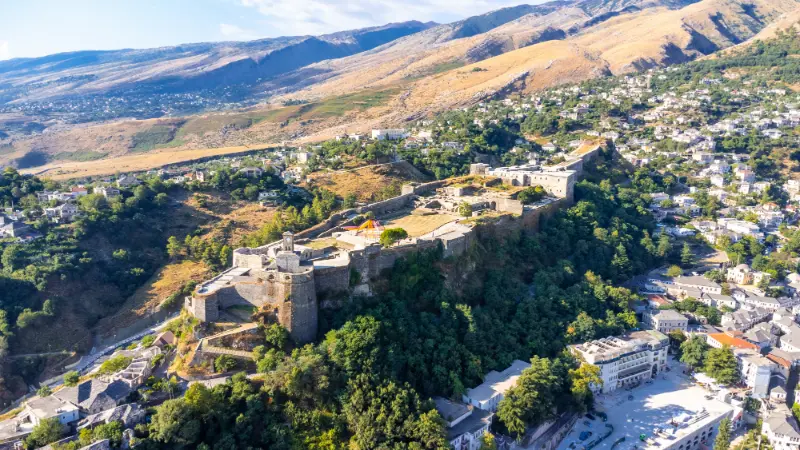
    Aerial View Old Castle Fortress Gjirokaster Albania

    This itinerary is designed for travelers who want to spend three nights or three full sightseeing days in Gjirokaster without turning the trip into a race. The order is deliberate: the first day stays close to the base, the second adds a stronger local experience, and the third is the flexible day for a regional excursion or weather-dependent activity.

    3 days at a glance

    DayPlan
    Day 1Castle, Old Bazaar and historic houses
    Day 2Antigonea and Libohovë
    Day 3Blue Eye, Përmet or a slower valley day

    Before you start

    For a first visit, read Gjirokaster Travel Guide and Where to Stay in Gjirokaster before booking. Location has a direct effect on how much of a three-day trip is spent walking versus arranging taxis, parking or luggage transfers.

    If your schedule is shorter, use the 1-day Gjirokaster itinerary instead. Three days should add depth, not simply stretch a one-day checklist across a longer stay.

    Day 1 — Castle, Old Bazaar and historic houses

    Begin at Gjirokastër Castle before the steep lanes heat up. The fortress gives the best orientation over the Drino Valley, then the Old Bazaar brings you back into the city’s everyday commercial core. After lunch, visit one or two historic houses rather than every museum house on the map. Skenduli or another traditional house adds architectural detail that the castle cannot provide. Finish with a slow evening around the bazaar after day-trippers leave.
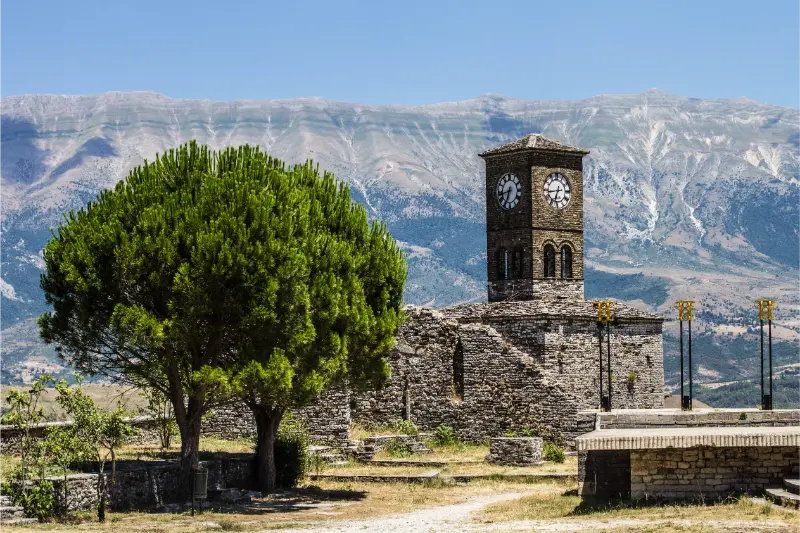
    Gjirokaster Castle Clock Tower UNESCO Site Albania

    Keep the first day intentionally compact. Arrival delays, hotel check-in and orientation always consume more time than a map suggests. A strong first day leaves one or two optional stops rather than forcing you to skip lunch or reach the final attraction after closing time.

    Day 2 — Antigonea and Libohovë

    Use the second day to understand the wider Drino Valley. Antigonea adds ancient history in an open landscape, while Libohovë adds a smaller-town atmosphere, castle remains and a different view of southern Albania. A rental car makes this day easiest, but a driver or tour can be better if you do not want to navigate rural roads. Keep the schedule loose enough for lunch rather than treating both places as quick photo stops.

    Treat this as the day to understand the destination beyond its postcard view. Start early, protect the middle of the day from unnecessary driving, and leave enough time for food and short unplanned stops. Three-day itineraries work best when one day has room to breathe.

    Day 3 — Blue Eye, Përmet or a slower valley day

    If your trip continues to Sarandë, the Blue Eye is the most logical final excursion because it can fit the southbound route. If you continue east, Përmet and the Vjosa direction are more natural. Do not try to do both in one day. Travelers who prefer less driving can spend the third day around local food, nearby villages and a second historic house, turning Gjirokastër into a genuinely slow cultural stay.

    The third day is deliberately flexible because weather, season and onward travel often decide what makes sense. If the excursion lies in the same direction as your next destination, consider checking out first and turning the day into a one-way transfer instead of returning to the same hotel.

    If you prefer a slower itinerary

    If you are already visiting Butrint and Sarandë, save the Blue Eye for that leg. If archaeology is not a priority, replace Antigonea with a longer countryside lunch and Libohovë. Rainy weather favors the castle museums and house interiors but makes stone lanes slippery.

    A slower version is not a failed itinerary. Remove one museum, one village or one beach and keep the time for a long lunch, café stop or sunset. Albania often rewards simple geographic grouping more than an aggressive attraction count.

    Getting around

    The old town is walkable but steep. Taxis are worth using between the lower city and bazaar with luggage. A car or driver is most useful for Antigonea, Libohovë and longer day trips.

    When using intercity or seasonal transport, verify the current departure rather than relying on an old timetable. If a taxi or private driver saves two separate connections, compare the total cost for the group rather than only the cheapest single ticket.

    Where to stay for this itinerary

    Compare accommodation in Gjirokaster on Booking.com.

    Use the dedicated accommodation guide to choose the most practical area. For a three-day stay, paying slightly more for a walkable location can be better value than saving on the room and using taxis several times a day.

    Best time for this 3-day plan

    Spring and autumn are ideal for the steep city and valley excursions. Summer needs early starts. Winter can be atmospheric, but daylight and wet cobbles make a compact itinerary smarter.

    Whatever the month, check the short-range forecast before the weather-sensitive day and swap day two/day three if necessary. That is one of the biggest advantages of having three days in one base.

    How to adapt this itinerary without a car

    Keep the first day unchanged. For the regional days, use direct buses where they make geographic sense, otherwise compare a taxi/driver or a small-group excursion. Do not build a day around three uncertain connections just to avoid paying for a straightforward transfer. If public transport would leave you with only two useful hours at the destination, choose a closer excursion.

    How to adapt it for families

    Families should protect the middle of the day in hot weather and avoid making all three days ‘major attraction’ days. Keep one afternoon intentionally light, choose accommodation with easy vehicle or pedestrian access, and treat a beach, park, lake or thermal stop as a real activity rather than a gap between monuments.

    What to do if it rains

    Move museums, historic houses and long meals into the wettest hours, and keep exposed viewpoints, boat trips, canyon walks or mountain drives flexible. A three-day stay gives you enough room to swap the order. Do not force a marine or mountain activity merely because it was originally assigned to day three.

    Common mistakes

    • Booking accommodation high in the old town without asking about vehicle access.
    • Trying to see every historic house.
    • Adding Blue Eye and Permet to the same day.
    • Driving unfamiliar steep old-town lanes just because navigation suggests them.
    • Leaving the castle until the hottest part of a summer day.

    Useful planning links

    Frequently asked questions

    Is 3 days too long in Gjirokaster?

    No, if one or two days include the Drino Valley or another southern excursion.

    Can I visit without a car?

    Yes for the city. A car or tour helps greatly for day two and three.

    Should I combine Gjirokaster with the Blue Eye?

    Yes if you are heading toward Saranda; it fits the geography well.

    Where should I stay?

    The Old Bazaar area is atmospheric, but confirm luggage and taxi access.

    What is the best day trip?

    Antigonea and Libohove form a coherent local day; Blue Eye is best when continuing south.

    Final advice

    Three days in Gjirokaster works best when the destination is used as a base rather than a checklist. Keep one day local, one day focused on the area’s defining experience and one day flexible for the wider region. That structure gives you enough depth to understand the place while still making the itinerary practical if weather, transport or energy levels change.

    Arriving and departing: how to protect the three full days

    If possible, arrive in Gjirokaster the evening before day one. That gives you three genuinely useful sightseeing days rather than spending the first morning checking out of another hotel, waiting for transport and storing luggage. If that is not possible, keep day one exactly as written and remove an optional stop instead of pushing the entire schedule later.
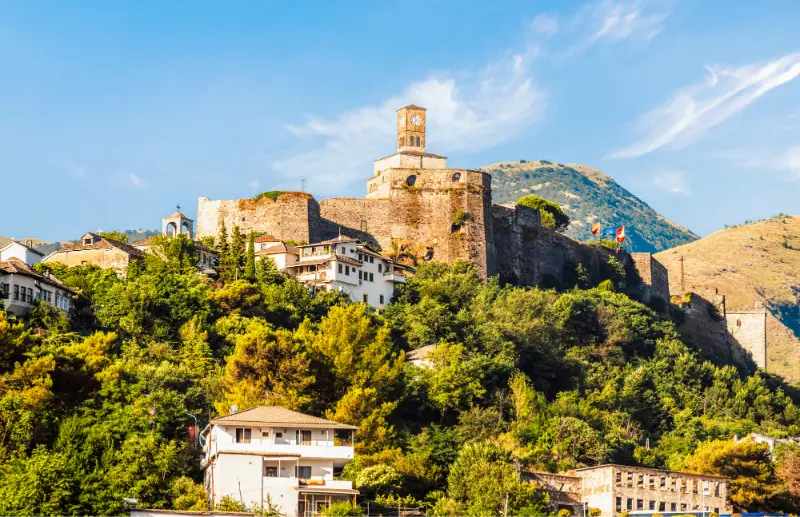
    Clock Tower Castle Gjirokaster Albania View Old 2

    On departure day, separate sightseeing from logistics. Check-out, parking, fuel, intercity terminals and luggage storage can easily consume an hour or more. A final coffee or short walk is a better plan than a major attraction that must be abandoned halfway because the bus or transfer is leaving.

    How much should you actually fit into each day?

    Stone lanes, gradients and old-town vehicle access make distance misleading. Use taxis strategically rather than trying to prove the entire city is walkable with luggage.

    A realistic target is two major anchors plus meals, walking and one or two minor stops. More than that often creates the illusion of seeing more while actually spending the day watching the clock. If you finish early, add a viewpoint, café, market or waterfront walk spontaneously; those are easier to add than to cancel a prepaid excursion.

    What should be booked in advance?

    Book the accommodation first, then any activity that has limited capacity or depends on a specific departure: boat trips, rafting, popular guided excursions or a private driver. Ordinary city walking, viewpoints and most self-guided historic areas do not need a minute-by-minute reservation plan. Keep at least one half day flexible so weather can move the outdoor activity.

    For summer weekends and major event dates, reserve the room and key transport earlier than usual. In quieter months, flexible cancellation can be more valuable than locking the entire trip months ahead. Always confirm current opening information for museums, archaeological sites and seasonal services shortly before travel.

    How this 3-day stop fits into a longer Albania itinerary

    Gjirokastër fits naturally between Berat/Përmet and Sarandë. If the next hotel is on the coast, make the Blue Eye your transfer-day stop instead of driving south and then returning north. If you continue to Përmet, keep the third day focused on the Vjosa direction.

    The best Albania itineraries minimize repeated road sections. Look at the map before finalizing day three: if the excursion lies in the same direction as the next destination, check out in the morning and carry your luggage rather than returning to the same base simply because the first draft called it a ‘day trip’.

    Staying 2 days? Use the dedicated 2-day itinerary for the balanced 48-hour version.

    Not sure how long to stay? Compare 1, 2 and 3 days before choosing this itinerary length.
  • Best Day Trips from Ksamil: Butrint, Blue Eye, Gjirokaster, Saranda and the Riviera

    Best Day Trips from Ksamil: Butrint, Blue Eye, Gjirokaster, Saranda and the Riviera

    Ksamil is famous for beaches, but staying there for several nights gives you access to some of southern Albania’s strongest cultural and nature excursions. Butrint is almost next door, while the Blue Eye, Gjirokastër and the quieter Riviera can all become full day trips.

    The key in summer is traffic. A place that looks close may take far longer in peak periods, so start early and avoid returning exactly when every beach visitor is leaving.

    A good day trip in Albania is not simply a place that looks close on a map. Road type, summer traffic, mountain gradients, parking, boat departures and the amount of walking after arrival can change the real effort of the day. For that reason, I rank these excursions by how naturally they fit the base rather than by fame alone.

    Quick comparison

    Day tripBest forBest transportTime
    ButrintUNESCO archaeologyBus / taxi / carHalf day
    Blue EyeNatural springCar / taxi / tourFull day
    Sarandë & LekuresiCity / viewpointBus / taxiHalf to full day
    GjirokastërUNESCO cityCar / bus + taxiFull day
    Lukovë & BunecQuieter coastCarFull day
    Porto Palermo & QeparoCastle / RivieraCarFull day
    Ksamil Islands by boatWater / islandsBoat / kayakHalf day
    CorfuInternational ferry dayTransfer to Sarandë + ferryFull day

    How I would choose the right day trip

    Start by looking at the rest of your Albania itinerary. If you already have several beach days, choose archaeology, mountains or a village. If you are spending most of the trip in historic towns, use the free day for water, forest or a scenic drive. The best day trip adds contrast instead of repeating what you are already doing.

    I also separate places that are easy without a car from places where independent public transport creates more effort than value. A bus may exist, but if the last connection forces you to leave before the main experience or wait hours for the return, a taxi, driver or organized trip can be the smarter choice.

    The best day trips

    1. Butrint

    Butrint is the easiest and most important excursion from Ksamil. Go early, give the archaeological park enough time and return to the beach later. The shaded setting makes it more comfortable than many ancient sites, but summer mornings are still preferable. Do not combine Butrint, Blue Eye and Gjirokastër in one day simply because tour advertisements sometimes bundle the south aggressively. Read the Butrint guide.

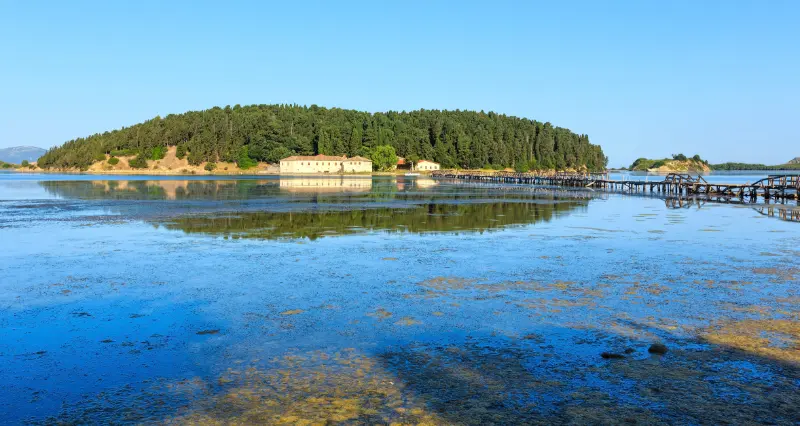
    Butrint Lake And Wetlands Albania

    2. The Blue Eye

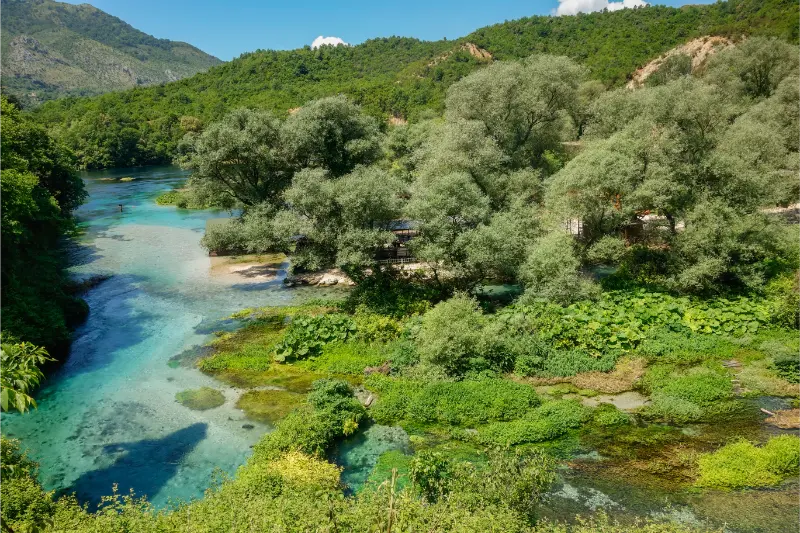
    The Blue Eye gives you a fresh-water nature day away from the beach. It is popular and can be busy, so the benefit comes from timing and patience rather than discovering a secret spring. Current access arrangements should be checked before leaving. Use the Blue Eye guide.

    3. Sarandë and Lekuresi

    Sarandë is useful when you want urban services, a long promenade, shopping or a change from Ksamil’s beach-centered rhythm. Add Lekuresi for a broad view over the bay, preferably later in the day. I would not use a precious day just to sit on another crowded urban beach.

    4. Gjirokastër

    Gjirokastër is the strongest cultural day trip from Ksamil. It is long enough that an early start matters, and the castle plus one traditional house is enough for a first visit. Keep the bazaar and lunch unhurried. If you want a second museum or evening atmosphere, stay overnight. The Gjirokastër travel guide gives you the city plan.

    Zekate House Road Sign Gjirokaster Albania

    5. Lukovë and Bunec

    North of Sarandë, Lukovë and Bunec can feel less compressed than Ksamil during busy periods. This is not a guaranteed empty-beach escape, but it offers a different coast experience. I would choose one beach, eat nearby and make the drive part of the day rather than trying to reach Himarë and back.

    6. Porto Palermo and Qeparo

    This is the ambitious Riviera day. Porto Palermo adds a fortress and dramatic bay, while Qeparo gives you a village or beach stop. Start early and accept that the drive is part of the experience. In peak traffic, the return can take longer than expected. See the Porto Palermo guide and Qeparo guide.

    7. The Ksamil Islands by boat or kayak

    Not every day trip needs a road. A boat or kayak outing around the Ksamil islands can turn the familiar view from shore into a more active half day. Wind, boat traffic and swimming ability matter. Use a reputable operator, wear a life jacket where appropriate and avoid assuming short distances in open water are automatically easy.

    8. Corfu

    Corfu can be visited as an international day trip via Sarandë, but it requires more planning than the distance suggests. You need to reach the ferry terminal, complete border formalities and use a sailing that leaves enough time to return. Passport/ID requirements depend on nationality, and rental cars are irrelevant unless you have specific ferry/insurance arrangements. I would only do this if Corfu itself is a priority, not just to collect another country.

    Can you do these day trips without a car?

    Butrint, Sarandë and local boat trips are straightforward without a car. Blue Eye and Gjirokastër can be reached by taxi, tour or a mix of bus connections. Porto Palermo/Qeparo is much easier with a car or driver. Corfu requires careful ferry timing from Sarandë.

    When I use taxis or private drivers for a full day, I agree on the approximate route, waiting time and total price before departure. For buses, I confirm the return point on the ground because terminals and informal stopping places can be less obvious than in countries with one centralized timetable system.

    Best season

    June and September are especially good because the sea is active while traffic is generally easier than peak August. July and August require very early starts. Spring and autumn are excellent for Butrint, Gjirokastër and the Blue Eye even when beach time is less important.

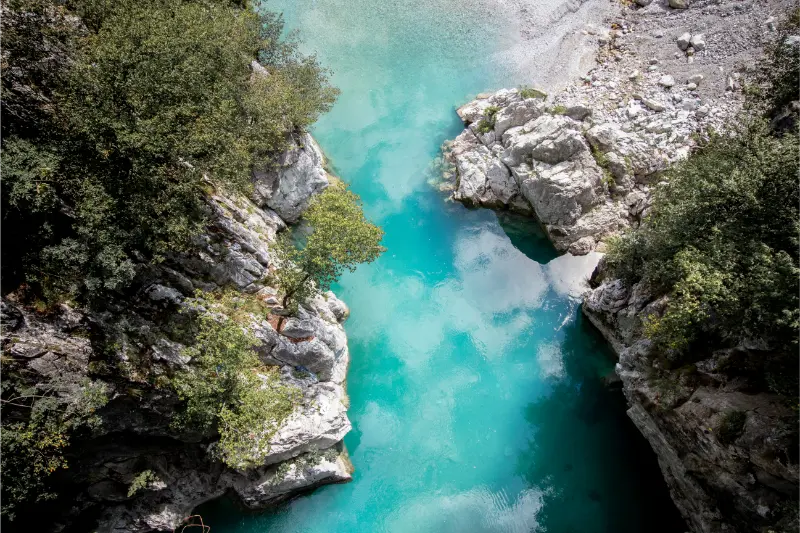
    Blue Eye Water Spring Clear Blue Water View Muzine Vlore Albania

    Weather matters more than the month name. A clear October day can be better for a mountain viewpoint than a stormy July afternoon, while summer traffic can make a normally easy coastal route much slower. Check the forecast the evening before and move weather-sensitive plans when necessary.

    What to take

    • Water, especially for exposed archaeological sites, canyons and mountain roads.
    • Shoes with grip rather than smooth city soles if the day includes trails, castles or wet stone.
    • Sun protection for spring through early autumn.
    • A light layer even in summer if the route gains altitude.
    • Some Albanian lek for parking, small cafés and village businesses.
    • Offline maps and a screenshot of the return route.
    • Swimwear only when the day genuinely includes a beach, spring or thermal stop.

    Common day-trip mistakes

    • Start with the hardest-to-control element. If the day depends on a boat, mountain weather or an archaeological site’s opening hours, solve that first and keep the rest flexible.
    • Do not combine two full day trips into one. Albania rewards slower travel, and an itinerary that technically fits often becomes a sequence of car parks and rushed lunches.
    • Leave a buffer before dinner or an onward transfer. Coastal and mountain roads can take longer than expected even when the distance looks short.
    • Carry some cash. Parking, small cafés, village restaurants and seasonal services can be easier with Albanian lek.
    • Download the route offline. Mobile data is usually useful, but an offline map and a screenshot of your accommodation address remove unnecessary stress.

    Another common mistake is judging a day only by driving time. A two-hour drive followed by four hours in one excellent place can be far more rewarding than three short drives that create six hours of transitions. I plan around the experience in the middle, not around how many pins I can connect.

    Which day trip would I choose first?

    Choose Butrint for the essential cultural trip, Gjirokastër for a complete city day, or the Blue Eye for nature.

    Where to stay before your day trips

    For several excursions, I prefer staying in the same base for at least two or three nights. Check current accommodation on Booking.com. See my area-by-area accommodation guide before booking.

    Useful guides

    Frequently asked questions

    How many day trips should I plan from one base?

    Usually one or two. If you need four separate day trips to see the region, it may be more efficient to move your accommodation once and reduce backtracking.

    Is a rental car necessary?

    Not always. City-to-city routes and some famous attractions can be reached by bus, taxi or tour. A car becomes most useful for rural loops, national parks, villages and days with several small stops.

    Should I book day tours before arriving?

    Book limited-capacity boat trips, rafting, mountain transfers and peak-season private tours earlier. For ordinary taxi days or independent city trips, I prefer keeping more flexibility.

    Are these trips suitable for families?

    Many are, but choose by walking difficulty, heat and transfer length rather than by destination name. A short lake or village day is often better for young children than a long canyon route.

    Can I combine two day trips?

    Only when they sit naturally on the same route and each is a half-day experience. I would not combine two destinations that each deserve a full day just to increase the number of places visited.

    Final advice

    Use the base to simplify the trip, not to create daily commutes. Pick the excursion that adds the most contrast, start early when heat or traffic matters, and give yourself permission to return sooner if one place turns out to be better than the rest of the plan.

  • 1 Day in Permet: Benja Thermal Baths, Langarica Canyon and the Vjosa Valley

    1 Day in Permet: Benja Thermal Baths, Langarica Canyon and the Vjosa Valley

    Përmet is one of the places where a one-day itinerary should be built around nature rather than monuments. Benja Thermal Baths, Kadiu Bridge and Langarica Canyon belong together geographically, while the town itself is best enjoyed later through food, river views and a slower evening.

    Stream Hot Sulfuric Water Thermal Baths Permet Albania Langarica Canyon Kadiut Bridge 3

    I would not add Hotova-Dangëlli, Frashër or Gjirokastër to the same day. Those are separate excursions. One day in Përmet is already full when you give Benja enough time and do not treat the canyon as a quick roadside photo.

    A one-day itinerary works only when the route is selective. I would rather see four places properly than spend the day moving between eight map pins. The plan below is built around geography, heat and energy: the most demanding or time-sensitive stop comes first, lunch is used as a real break, and the late afternoon is reserved for the part of the destination that becomes better when the light softens.

    The times are a planning framework, not fixed opening hours. Museum schedules, archaeological-site access, ferries, seasonal services and weather can change. Check the current opening information for the one attraction you care about most the evening before, then keep the rest of the day flexible.

    One-day itinerary at a glance

    TimeStopWhy it fits
    08:30Permet breakfastBuy water / simple supplies
    09:15Benja Thermal BathsArrive before hottest period
    10:00Kadiu Bridge + LangaricaShort canyon walk to conditions
    12:30Return / lunchPetran or Permet
    14:30RestDo not stack another long excursion
    16:30Permet town + VjosaEasy walking
    18:00Gliko / local productsFood-focused stop
    19:30DinnerSlow finish in town

    Step-by-step itinerary

    08:30–09:15 — Breakfast and supplies in Permet

    Start in town with a simple breakfast, water and anything you need for the nature block. Keep valuables out of the car when you park later and bring shoes that can handle uneven or wet surfaces.

    09:15–12:15 — Benja Thermal Baths and Kadiu Bridge

    Go to Benja Thermal Baths early. The thermal pools and Ottoman-era Kadiu Bridge are part of the same landscape, and morning is more comfortable in warm weather. Do not expect a spa complex; the appeal is the outdoor setting.

    10:15–12:15 — Langarica Canyon according to conditions

    From Benja, explore part of Langarica Canyon only to the extent that water level, weather and your footwear make sensible. The canyon is not a fixed-length attraction. Turn around early if footing becomes uncomfortable. A one-day itinerary does not need to prove how far you walked.

    12:30–14:00 — Lunch

    Return toward Petran or Përmet for lunch. Use the Permet Food Guide to understand gliko, dairy, honey and mountain cooking. Keep lunch lighter if the afternoon is hot.

    14:00–16:00 — Rest

    This is intentional. After water, sun and uneven canyon walking, a long coffee or hotel break improves the evening. Do not use the gap to drive to another remote site.

    16:00–18:00 — Permet town and Vjosa atmosphere

    Walk the compact town, cross or approach the river viewpoints that suit your route and enjoy the slower pace that distinguishes Përmet from Albania’s larger destinations. The Permet Travel Guide gives the wider regional context.

    18:00–19:00 — Gliko and local products

    Try gliko or shop for sealed local preserves and honey. This is one of the easiest ways to make the food tradition part of the itinerary without scheduling a formal tasting.

    19:30 onward — Dinner

    Finish in town. A traditional meal makes more sense here than another transfer because Përmet’s identity is as much food and hospitality as canyon scenery.

    If you start late

    If weather makes the canyon unsuitable, keep Benja only if conditions are safe, then return to town and build the day around food, the Vjosa and nearby easy scenery. Do not substitute a risky mountain drive.

    Can you do this without a car?

    Without a car, arrange a taxi or local excursion to Benja and agree on the return plan in advance. Central Përmet itself is easy on foot.

    If you are traveling with children

    Families should keep the canyon walk short and focus on the bridge, pools and town. Water safety and slippery surfaces need active supervision.

    With children, I protect one anchor activity and remove the weakest secondary stop. A successful family day is one where everyone still has energy for dinner, not one where every attraction was technically completed.

    If the weather changes

    Heavy rain changes canyon conditions, so treat Langarica as optional. This is exactly the kind of place where current conditions matter more than a pre-written itinerary.

    What to pack for the day

    • Comfortable shoes appropriate to the terrain described in the itinerary.
    • Water and sun protection from late spring through early autumn.
    • A light layer outside midsummer or for lake, mountain and evening sections.
    • Some Albanian lek for small purchases, cafés, parking or local transport.
    • Offline maps plus a screenshot of your accommodation address.
    • Swimwear only when the itinerary genuinely includes the beach, lake or thermal water.
    • A compact day bag rather than carrying your full luggage between stops.

    Where to stay for a one-day visit

    For a one-day itinerary, location matters more than room size. Stay close enough to begin the first stop without a long transfer and finish dinner without another complicated drive. Compare current accommodation in Permet on Booking.com.

    Common one-day mistakes

    • Adding a famous excursion simply because it appears close on a map.
    • Scheduling the hardest outdoor stop in the middle of a hot summer day.
    • Entering every museum instead of choosing the one that best matches your interests.
    • Changing parking spaces repeatedly in a compact city or beach resort.
    • Booking a fixed evening activity immediately after a long road transfer.
    • Skipping lunch and then losing the late afternoon to fatigue.
    • Treating travel time as wasted time instead of keeping the route geographically tidy.

    If you have more time

    With another day, choose Hotova-Dangëlli, Frashër, Leskovik or rafting depending season and interests. See Best Day Trips from Permet.

    An extra day should create a different experience rather than a longer version of the same route. Use it for a mountain, lake, boat, village or museum block that did not fit naturally into the first day.

    Useful planning guides

    Frequently asked questions

    Is one day enough for Permet?

    Yes for Benja, part of Langarica and the town. More time is needed for Hotova-Dangelli or Frasher.

    Can I visit Benja without a car?

    Yes by taxi or arranged excursion; confirm the return in advance.

    How far should I walk into Langarica Canyon?

    Only as far as current water, weather, footwear and your experience make comfortable.

    Should I swim in the thermal pools?

    Visitors commonly use the pools, but assess current conditions and avoid treating natural thermal water like a supervised spa.

    What should I try in town?

    Gliko is the signature food tradition, alongside local dairy, honey and mountain dishes.

    Final advice

    A good one-day itinerary should leave you with a clear memory of the destination rather than a list of places you hurried through. Protect the first major stop, keep the route compact and let the late afternoon become slower. If something takes longer because you are enjoying it, remove the next optional stop instead of rushing the experience you are already having.

    How I would pace the day

    I divide the day into three energy levels. Morning is for the demanding or important attraction, midday is for food and the easiest sightseeing, and late afternoon is for the place that benefits from softer light or local evening activity. This simple structure is more reliable than assigning a new attraction to every hour.

    I also keep at least thirty minutes unassigned. That buffer absorbs a slow breakfast, parking search, queue, coffee break or a place that turns out to be more interesting than expected. Without a buffer, one small delay forces the rest of the itinerary into a permanent rush.

    One more planning detail: the first and last hour

    The first hour should never depend on an uncertain transfer if you can avoid it. Sleep close to the first stop, or resolve the taxi, parking or bus plan the night before. The last hour should be even simpler: dinner, a promenade, a café or the walk back to the hotel. Ending a full day with another complicated transfer usually adds stress without adding much travel value.

    If you are continuing to another city that evening, remove the last sightseeing block and leave in daylight whenever the route is unfamiliar. A one-day visit remains successful even when you depart an hour earlier than the theoretical maximum.

    Nature-day safety and pacing

    Benja and Langarica feel informal, but the natural setting should not be treated casually. Water depth, current, slippery rocks and canyon conditions can change after rain. Wear shoes that can handle wet or uneven ground, keep electronics protected and turn around before fatigue makes footing worse. A shorter safe canyon experience is better than pushing deeper only because another traveler posted a longer route online.

    Why the town still matters

    It is easy to describe Përmet only through Benja, but the town is what gives the day balance. The slower streets, food traditions and Vjosa setting are the reason I would return for the late afternoon instead of adding another distant nature stop. Trying gliko, buying a small local product and having dinner in town turns the day from a thermal-spring excursion into an actual visit to Përmet.

    Stream Hot Sulfuric Water Thermal Baths Permet Albania Langarica Canyon Kadiut Bridge

    Staying longer? The 3-day Permet itinerary adds a deeper local day and a regional excursion without rushing.

    Staying 2 days? Use the dedicated 2-day itinerary for the balanced 48-hour version.

    Not sure how long to stay? Compare 1, 2 and 3 days before choosing this itinerary length.

  • Vlorë Motorcycle Day Ride: Narta Lagoon, Zvërnec, Orikum and Bay of Vlorë

    Vlorë Motorcycle Day Ride: Narta Lagoon, Zvërnec, Orikum and Bay of Vlorë

    Vlorë Motorcycle Day Ride is best treated as a touring experience, not a speed challenge. Albania compresses coast, river valleys, plateaus and alpine roads into short map distances, but a motorcycle day can still become long because of bends, village traffic, construction, photo stops and sudden weather changes. This guide is built around a realistic pace: ride the interesting section in daylight, stop often enough to enjoy it, and keep an alternative plan if conditions change.

    I would use this route for riders who already have normal road experience and are comfortable sharing narrow roads with local cars, vans, agricultural vehicles and occasional livestock. The route focuses on established roads and tourist destinations rather than technical off-road riding. Side roads, gravel tracks and mountain shortcuts can change quickly, so they should be optional choices made after a local check, not promises built into the itinerary.

    Quick route overview

    • Start: Vlorë
    • Finish: Vlorë
    • Core route: Vlorë → Narta Lagoon → Zvërnec → return across Vlorë → Radhimë/Orikum → Vlorë
    • Best bases: Vlorë
    • Style: scenic road touring with cultural and nature stops; no off-road ability is assumed.
    • Key rule: use daylight, fuel early, and confirm mountain or ferry conditions before committing.

    Why the Bay of Vlorë works so well by motorcycle

    This is not a high-mileage ride and that is exactly why it works. The north side of Vlorë opens onto Narta Lagoon and Zvërnec, where the tourism authority highlights protected coastal habitat, waterbirds, pine forest and the monastery island. The south side moves through Radhimë toward Orikum, where the bay meets the gateway to Llogara and the Riviera. In one day you get wetland, city, coast and historical stops without committing to a long mountain stage.

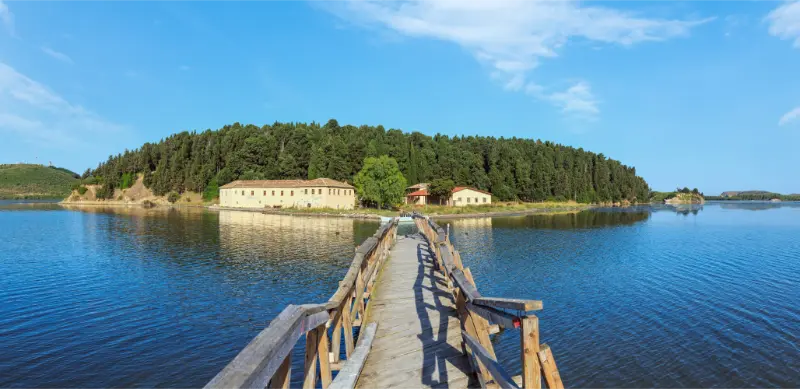
    Wooden Ruined Bridge Isolated Monastery Saint Mary Zvernec Island Narta Lagoon Vlore Albania

    A motorcycle makes the transitions more immediate than a car: temperature changes are obvious, the smell of pine or sea air becomes part of the ride, and small pull-offs can turn into memorable pauses. The downside is that the rider is also more exposed to wind, heat, rain, poor drainage, dust and loose material. The same landscape that makes the route beautiful is exactly why conservative riding matters.

    Route breakdown

    SectionWhy include it
    Narta LagoonA low-speed nature stop that contrasts with the urban waterfront.
    ZvërnecForest, monastery and lagoon scenery; best explored partly on foot.
    Vlorë crossingA chance to refuel and reset between the northern and southern sides of the bay.
    Radhimë–OrikumCoastal riding with sea views and access to a quieter overnight option.

    The section I would plan most carefully

    Nature etiquette matters around Narta. Keep engine noise low, stay on legal roads and parking areas, and do not ride onto saltmarsh, beach vegetation or tracks simply because they appear open. Birdlife is one of the reasons to visit, particularly in quieter seasons. Park and walk for the monastery and forest rather than trying to bring the motorcycle as close as possible to every attraction.

    I never make a motorcycle itinerary depend on an exact average speed. Navigation apps are useful for orientation, but they do not know how long you will spend behind a truck, whether a village street is busy, how many viewpoints you will stop at, or whether a shower has pushed gravel across a bend. Build margin into every stage and decide in advance which stop can be dropped if the day runs late.

    How I would ride the day

    The Orikum side becomes busier in summer because it serves beaches, accommodation and Riviera traffic. Heat can be more tiring than distance, especially in protective gear. I plan a long lunch or shaded stop, hydrate before feeling thirsty and avoid turning the coastal road into a late-afternoon sprint back to Vlorë.

    Adriatic Sea Evening Coastline Top View Orikum Albania

    My preferred rhythm is simple: a proper breakfast, fuel before the scenic section, one meaningful stop every hour or so, and a longer break around lunch. That is usually faster overall than riding until you are dehydrated or mentally tired and then needing an unplanned long recovery. If you are carrying a passenger, double down on comfort breaks and make sure they know when it is safe to get on and off the motorcycle.

    Road surface, corners and changing conditions

    Main intercity roads in Albania can be enjoyable on a road or touring motorcycle, but the experience is not uniform. Fresh asphalt can turn into patched surfaces, roadside works or dusty village sections without much warning. After rain, look for mud, small stones and water crossing the road. In hot weather, expect polished surfaces near busy junctions and fuel stations. None of this is a reason to avoid the ride; it is a reason to keep enough reserve that a surprise does not become an emergency.

    Blind corners deserve special caution because another vehicle may be partly over the center line, a bus may need extra space, or an animal may be standing where you cannot see it. Keep your line, leave margin and do not copy local drivers who overtake where you would not. If the road becomes narrower than expected, slow before the bend rather than trying to fix the situation mid-corner.

    Weather and the best season

    Late spring and early autumn are often the easiest periods for motorcycle touring because the strongest summer heat is less intense and many tourism services are still available. High mountain roads can remain cold or unsettled much later into spring and earlier into autumn than the coast. July and August are possible, but protective gear plus coastal heat and traffic can make short distances exhausting. Winter requires a completely different plan and is not the season to assume mountain routes are rideable.

    Check the forecast for the highest point of the route, not just the overnight town. Wind is especially important on exposed ridges, lake shores and the coast. If thunderstorms are developing, avoid racing the weather; stop somewhere safe, let the worst pass and shorten the route if necessary. A motorcycle holiday is easier to rescue by losing one viewpoint than by forcing a dangerous final hour.

    Fuel, food and water

    I refuel whenever the route leaves a larger town for mountains or a long rural section, even if the tank is not close to empty. Petrol stations are common on major corridors, but remote opening patterns and card acceptance should not be assumed. Carry a payment backup and do not plan to arrive on reserve at a small station that may be closed.

    Water deserves the same discipline. In summer I start the day hydrated and carry enough to get through an unexpected delay. Albania’s cafés and restaurants make food stops easy in towns, but scenic roads are better when lunch is treated as a planned rest rather than something you will find at the exact moment you become hungry.

    Navigation: use maps, but do not obey them blindly

    Download offline maps before leaving your accommodation and save the main stops rather than following a single complicated line. A navigation app may suggest a minor road because it appears shorter; that does not tell you whether the surface suits a loaded touring motorcycle today. When the proposed shortcut looks unexpectedly rough, steep or empty, turning around is often the professional decision.

    For remote mountain stages, ask your guesthouse or a local driver about the current main road. A simple question such as ‘is this the normal paved route today?’ can save a lot of trouble. Keep the phone charged, protect it from heat and rain, and carry a power bank or motorcycle charging solution that you have already tested.

    Motorcycle choice, tires and luggage

    You do not need a large adventure motorcycle for the routes in this cluster. A middleweight road bike, touring motorcycle, scooter of suitable capacity or adventure bike can all work when ridden within their limits. What matters more is reliable tires, brakes, cooling, mirrors and lights. If the motorcycle is rented, inspect it before departure and photograph existing damage.

    Keep luggage narrow and secure. Wide hard cases can make filtering or passing parked cars more awkward, while soft bags need protection from the exhaust and moving parts. Recheck straps after rough pavement and after the ferry if your route includes one. Valuables should come with you during long sightseeing stops; do not make the motorcycle a visible storage locker.

    Parking and sightseeing stops

    The best motorcycle route is ruined if every stop becomes a parking argument. In historic centers, villages and beach areas, use a legal space that does not block doors, pedestrian lanes or local traffic. Cobblestones, gravel shoulders and sloping surfaces can be awkward with a loaded bike, so think about how you will leave the space before putting the side stand down.

    At viewpoints, never stop in the traffic lane or on the outside of a blind corner. If there is no safe pull-off, continue to the next one. For monasteries, archaeological sites, old towns and nature areas, I prefer to park once and walk; it reduces risk, avoids unnecessary engine noise and usually produces a better visit.

    Where to stay on a motorcycle trip

    For the Bay of Vlorë, I would choose accommodation based on secure or sensible overnight parking, not only room price. Message the property before booking if parking is essential and ask whether the motorcycle can be placed inside a courtyard, private area or clearly defined space. You can compare places to stay on Booking.com, then confirm the exact parking arrangement directly with the host.

    Isolated Monastery Saint Mary Zvernec Island Narta Lagoon Vlore Albania

    A central hotel is not always the easiest motorcycle base. In an old town, a property five minutes away on foot may be much simpler than trying to ride into a pedestrian or cobbled core. Conversely, a remote guesthouse can be excellent if the final approach is suitable for your bike. Ask about the last kilometre, especially after heavy rain.

    Safety habits that matter more than riding fast

    • Wear a proper helmet and protective riding gear even when the day is hot.
    • Assume gravel, animals or a slow vehicle may appear beyond any blind bend.
    • Do not ride faster because a local car is following closely; let it pass when safe.
    • Avoid long mountain stages after dark when you do not know the road.
    • Separate alcohol tasting from riding completely.
    • Take a real break when concentration drops; fatigue is a route-planning problem, not a test of toughness.
    • Check the motorcycle each morning: tires, visible leaks, lights, brakes, chain/belt as applicable and luggage security.

    Responsible riding

    Scenic villages and protected landscapes are part of people’s homes and working environments. Keep exhaust noise down, especially early and late in the day. Do not spin wheels on unpaved viewpoints, ride onto beaches or meadows, or use protected land as an off-road playground. If a road is signed closed or access is restricted, respect it.

    Photography should never dictate a dangerous stop. Park safely, switch off the motorcycle and walk to the composition. Drones require separate legal and local checks and are not automatically appropriate in protected areas, near airports, military sites or crowded attractions.

    Tours and organized experiences

    Most riders will do these routes independently, but a local motorcycle tour can be useful if you want a rental, luggage transfer, mechanical support or someone who already knows current road options. Before paying, check the actual motorcycle model, insurance terms, deposit, protective equipment, mileage limits, breakdown procedure and whether the advertised route changes with weather.

    Related Wonderful Albania guides

    Official sources and current-condition checks

    Official tourism pages are useful for understanding destinations and protected landscapes, while ferry operators are the appropriate source for current vehicle reservations and departures. Road works, weather, access rules, opening hours and ferry schedules can change after publication, so recheck the time-sensitive parts shortly before riding.

    Frequently asked questions

    Is this route suitable for a normal road motorcycle?

    Yes for the established main-road version described here, provided conditions are suitable and you avoid unverified side tracks. A road bike does not need to prove anything by following a gravel shortcut.

    Do I need an adventure motorcycle?

    No. An adventure bike adds comfort on imperfect surfaces and luggage capacity, but route choice and riding judgment matter more than styling. Use a motorcycle you can control confidently at low speed and on cambers.

    Should I ride at night?

    I avoid planning unfamiliar mountain or rural sections after dark. Reduced visibility, animals, road debris and unlit vehicles make the experience less enjoyable and less forgiving.

    Can I do the route with a passenger?

    Yes if both rider and passenger are comfortable and the motorcycle is set up for the load. Reduce daily ambitions, use more breaks and keep luggage light enough that low-speed handling remains easy.

    What if the weather turns bad?

    Shorten the route, stay in the nearest practical town or move the ride to another day. Albania has enough attractions that a weather change does not need to become a riding emergency.

    Final perspective

    The best memory from a motorcycle trip through the Bay of Vlorë should be the landscape and the feeling of movement through Albania, not a number on the speedometer. Plan less distance than you think you can cover, protect daylight, keep the bike in good condition and give yourself permission to change the route.

    That approach also makes the article’s route more future-proof: a new tunnel, a resurfaced section, a temporary closure or a ferry change does not destroy the trip. The core experience remains the same — ride between real places, stop often enough to understand them, and treat the road with the respect that mountain and coastal Albania deserve.

  • Best Day Trips from Valbona: Rragam, Kukaj, Cerem, Bajram Curri and Alpine Excursions

    Best Day Trips from Valbona: Rragam, Kukaj, Cerem, Bajram Curri and Alpine Excursions

    Valbona is a long alpine valley rather than a compact resort, so the best day trips are short mountain walks, village transfers and excursions toward Bajram Curri and the surrounding Tropoja region. The biggest planning mistake is treating every place labeled “Valbona” as if it were within an easy walk of your guesthouse.

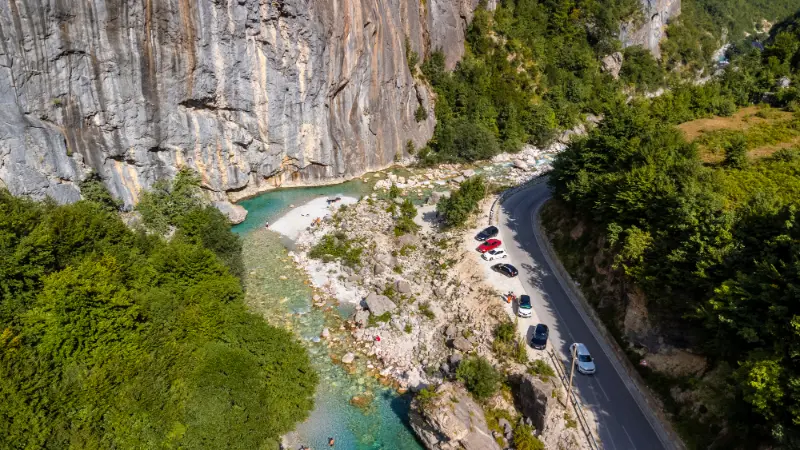
    Aerial Drone View Small Beach Turquoise River Valbona Valley Theth National Park Albanian Alps

    A good day trip should add something your base does not already give you. I prefer one major destination plus at most one small stop, with enough margin for lunch, parking and the return. That is especially important on Albania’s coastal and mountain roads, where a short-looking distance can still consume more time than expected.

    Quick comparison

    Day tripBest forBest transport
    RragamValley scenery and waterfall areaWalking / transfer
    KukajTraditional village atmosphereWalking / local transfer
    CeremMore remote alpine village4×4 / transfer
    Bajram CurriSupplies, cafés and local cultureCar / taxi
    Fierza viewpoint areaDrin valley and reservoir sceneryCar / transfer
    Lower Valbona valleyEasy scenic day without a major hikeCar / walking

    How to choose the right day trip

    Choose by contrast first: culture after several beach days, nature after city sightseeing, or a quiet village after a busy resort. Then check the transport. A destination that is perfect with a car can be frustrating without one if the return bus is uncertain. Finally, look at the weather: mountain hikes, boat trips and exposed archaeological sites need different conditions.

    Rragam and the upper valley

    Rragam is one of the most natural extensions from a Valbona base because it keeps you inside the same mountain system while moving toward the head of the valley. The official tourism portal highlights the Rragam waterfall among Valbona’s natural features. Depending on where you sleep, you can walk part of the route or arrange a transfer and use your energy for the scenic section. Ask the guesthouse about the best current access because river conditions and local tracks can change. This is a strong choice for travelers who want a full mountain day without crossing the Valbona Pass.

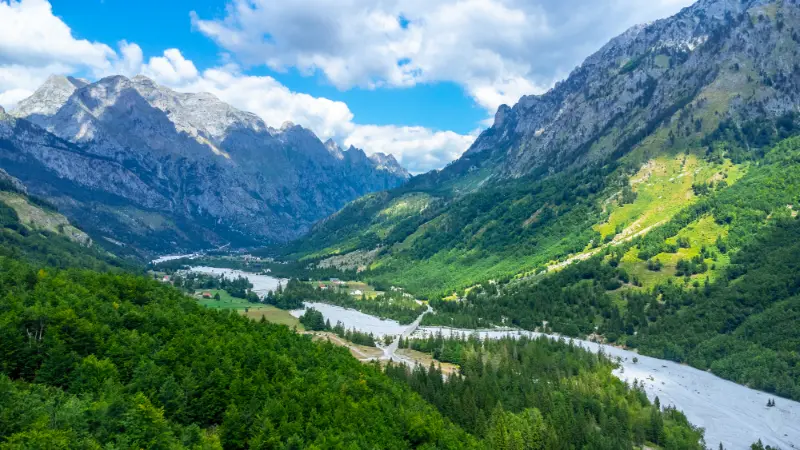
    Panoramic Aerial Drone View Valbona Valley Theth National Park Albanian Alps Albania

    Kukaj village

    Kukaj is a quieter village excursion that works well when you want a less famous objective. The appeal is the valley perspective, traditional settlement pattern and chance to walk without sharing the route with everyone heading for the Theth pass. It can be combined with a picnic or guesthouse meal if arranged. Because trail signage is less standardized than on the most popular route, confirm the path locally and avoid starting late if weather is unstable.

    Cerem

    Cerem is farther and more remote, so I would use a local driver or appropriate vehicle rather than assume a standard rental car is suitable for every approach. The day is about alpine village atmosphere and landscape, not ticking off monuments. This excursion makes most sense for repeat visitors, photographers and hikers who want to see another side of Tropoja. If road conditions are poor, replace it with Rragam or Kukaj rather than forcing the plan.

    Bajram Curri

    Bajram Curri is the practical urban day from Valbona. It is useful for ATMs, pharmacies, supplies and a change from guesthouse life, but it also provides a glimpse of everyday northern Albania. The official Valbona information places the valley about 23 km from Bajram Curri, although your exact guesthouse may be farther along the valley. Combine the town with a local lunch and perhaps a short stop along the Valbona River instead of treating the trip as only an errand run.

    Panoramic Aerial Drone View Valbona Valley Theth National Park Albanian Alps Albania 2

    Fierza and the Drin reservoir landscape

    Fierza is best for travelers interested in the geography behind the Koman–Valbona route. The reservoir, dam area and surrounding mountains explain how the famous ferry journey connects with the valley. This is more of a scenic road day than a traditional attraction checklist. If you will take the Koman ferry on departure, save Fierza for that travel day instead of driving down and back solely for a photograph.

    A slow lower-Valbona valley day

    Not every excursion needs a famous endpoint. One of the best days in Valbona is simply to move through the lower valley, stop by the river where access is safe, walk between guesthouse areas and spend time over lunch. This is particularly good for families, senior travelers and anyone recovering after a demanding hike. The scale of the valley rewards slow travel more than repeated long transfers.

    Do you need a car?

    A car gives freedom in the lower valley and for Bajram Curri, but it becomes awkward if you plan the one-way Valbona–Theth hike. If that trek is central to the itinerary, leaving the car in Shkoder and using the Koman/shuttle system can be simpler.

    If you are driving, save the destination parking pin before leaving and keep the tank comfortably above empty. If you are using buses or shared vans, verify the return service before you depart. For taxis or private transfers, agree the total fare and pickup point in advance rather than negotiating when you are tired at the end of the day.

    Best day trips for families

    Families should prioritize the lower valley, Bajram Curri and short Rragam-area walks. Cerem and long hikes are better only when children are comfortable with mountain roads and extended outdoor days.

    Best time of year

    Valbona’s official tourism information identifies May to September as the main visitation period. Even then, weather changes quickly and high routes require current local information. Shoulder-season road and guesthouse availability should be confirmed directly.

    For weather-sensitive activities, the short-range forecast is more useful than a generic monthly average. In peak summer, leave early to reduce heat and parking pressure; in shoulder season, confirm that seasonal boats, beach venues or mountain transfers are actually operating.

    Where to stay for easy day trips

    Base location matters more when you plan several excursions. Compare current accommodation in Valbona on Booking.com.

    Before booking, use the local Where to Stay guide to check whether your room is close to the road, bus pickup or practical parking. A beautiful property can become inconvenient if every day trip begins with a difficult luggage or vehicle problem.

    Tours and activities

    Organized tours can be useful when the destination is awkward without a car, when you want a guide at a cultural site, or when a boat/mountain transfer needs coordination. Compare the meeting point and total duration before booking; a “full-day” tour that starts far from your accommodation can become a much longer day in practice.

    What I would not force into a day trip

    I would not force an excursion when the transport consumes most of the daylight, when the main activity needs uncertain mountain or sea conditions, or when the destination is clearly better after the day visitors leave. In those cases, one overnight usually produces a better trip than an exhausting there-and-back schedule.

    Common day-trip mistakes

    • Trying to combine too many named stops because they look close on a map.
    • Leaving without checking the return bus, ferry, shuttle or taxi pickup.
    • Driving into a historic center or beach lane without knowing where to park.
    • Planning an exposed hike or boat trip without a weather backup.
    • Assuming every café, beach service or guesthouse operates outside the main season.
    • Returning so late that the next travel day becomes unnecessarily tiring.

    Useful planning guides

    Official destination information

    For stable destination and geography information, see the official Albania tourism page. Re-check current transport, seasonal access and opening information separately before the day trip.

    Frequently asked questions

    What is the easiest day trip from Valbona?

    Bajram Curri or a slow lower-valley day is easiest; Rragam is the classic nature option.

    Can I do Theth as a day trip?

    Not sensibly via the pass. Plan the Theth–Valbona route as a one-way hike with overnight logistics.

    Is Cerem easy with a normal rental car?

    Do not assume it is. Ask locally about current road conditions and use an appropriate transfer when necessary.

    How many days should I stay in Valbona?

    Two nights is a good minimum for one full excursion day; hikers often need longer.

    Is the Koman ferry a day trip?

    It is better treated as part of your arrival or departure route because the connections consume much of the day.

    Final recommendation

    Pick the excursion that gives you the strongest contrast with your base and leave enough margin to enjoy it. One well-chosen day trip with time for lunch, photographs and an unplanned stop is usually more memorable than a checklist of three destinations seen through a car window.

    How to structure the day

    For a full-day excursion, I aim to leave after breakfast, reach the main destination before the busiest middle part of the day, and keep the late afternoon flexible. If the trip includes a castle, exposed old town or hike, I place that first. Lunch then becomes a real break, and the final stop is something easy—waterfront, café, short viewpoint or beach—rather than another demanding attraction.

    This structure also protects the return journey. Albania rewards spontaneity, but a day trip is more enjoyable when you do not spend the final hour checking your watch because the last bus, daylight or hotel dinner is disappearing.

    What to carry

    Carry water, sun protection, a light layer, offline maps and enough cash for small parking areas or cafés that may not accept cards. In mountain areas add proper footwear and a weather layer; for beach/boat days add a dry bag and change of clothes. Keep valuables with you rather than visible in a parked rental car.

    If the weather changes

    Do not treat the original itinerary as a contract. Replace an exposed viewpoint with a town, move a boat day to the clearest forecast, or shorten a hike when clouds build. A flexible second-choice excursion is one of the best ways to protect a multi-day Albania stay from bad weather.

    When an overnight is better than a day trip

    Turn the excursion into an overnight whenever the return journey forces you to leave before the destination becomes enjoyable. This often happens when the best light is late afternoon, when dinner is part of the experience, or when a second attraction would require rushing the first. An overnight also makes sense if the route depends on a single seasonal bus, a mountain transfer, a ferry, or a long summer coastal drive. The extra hotel night can look more expensive on paper, but it often replaces two long transfers, reduces fatigue and gives you a calmer morning. I especially prefer sleeping over when children are involved, when the driver would otherwise face an unfamiliar road after dark, or when weather could delay the return. A day trip should feel like an excursion from your base, not like a full relocation squeezed into twelve hours.

  • 3 Days in Tirana: City Highlights, Dajti and a Smart Day Trip

    3 Days in Tirana: City Highlights, Dajti and a Smart Day Trip

    Three days is enough to see Tirana beyond a quick capital stop: one day for the historic center and Blloku, one for Dajti and eastern Tirana, and one flexible day for Krujë or a nature escape.

    This itinerary is designed for travelers who want to spend three nights or three full sightseeing days in Tirana without turning the trip into a race. The order is deliberate: the first day stays close to the base, the second adds a stronger local experience, and the third is the flexible day for a regional excursion or weather-dependent activity.

    3 days at a glance

    DayPlan
    Day 1Historic center, museums and Blloku
    Day 2Dajti, Bunk’Art 1 and the greener side of Tirana
    Day 3Krujë for history, or Bovilla/Petrela for scenery

    Before you start

    For a first visit, read Tirana Travel Guide and Where to Stay in Tirana before booking. Location has a direct effect on how much of a three-day trip is spent walking versus arranging taxis, parking or luggage transfers.

    If your schedule is shorter, use the 1-day Tirana itinerary instead. Three days should add depth, not simply stretch a one-day checklist across a longer stay.

    For a middle option, the 2-day Tirana itinerary removes the regional third-day excursion while keeping the essential city experience.

    Streets Avenues Center Tirana Albania

    Day 1 — Historic center, museums and Blloku

    Start around Skanderbeg Square before the city becomes busiest. Walk the square, Et’hem Bey Mosque area and central boulevards, then choose one major history museum rather than trying to consume several heavy institutions back-to-back. Bunk’Art 2 or the House of Leaves gives the day context; the New Bazaar adds a lighter food-and-street-life break. In the late afternoon, cross toward the Pyramid and Blloku. Finish with dinner there or around the center. The point of day one is orientation: most stops are walkable, you learn the city’s rhythm and you do not waste time in traffic.

    Keep the first day intentionally compact. Arrival delays, hotel check-in and orientation always consume more time than a map suggests. A strong first day leaves one or two optional stops rather than forcing you to skip lunch or reach the final attraction after closing time.

    Day 2 — Dajti, Bunk’Art 1 and the greener side of Tirana

    Use the second morning for Mount Dajti. The cable-car area and mountain views create a genuine contrast with the dense center. Keep the plan weather-sensitive: if visibility is poor, reverse the day and spend more time at Bunk’Art 1 or another indoor attraction. When conditions are good, allow enough time on Dajti for a walk and lunch instead of treating the mountain as a quick photo stop. Back in town, use the late afternoon for the Grand Park and lake, one of the easiest places to slow down after two museum-heavy days.

    Treat this as the day to understand the destination beyond its postcard view. Start early, protect the middle of the day from unnecessary driving, and leave enough time for food and short unplanned stops. Three-day itineraries work best when one day has room to breathe.

    Day 3 — Krujë for history, or Bovilla/Petrela for scenery

    For a first trip, Krujë is the easiest cultural day trip: the castle, Old Bazaar and Skanderbeg story are distinct enough from Tirana to justify a full day. Travelers who already have several historic towns later in the itinerary may prefer Bovilla Lake, Petrela Castle or another nature-focused excursion. Do not combine Krujë, Bovilla and Petrela merely because they appear near Tirana on a map. Choose one main theme and leave enough time to return for a final evening in the capital.

    The third day is deliberately flexible because weather, season and onward travel often decide what makes sense. If the excursion lies in the same direction as your next destination, consider checking out first and turning the day into a one-way transfer instead of returning to the same hotel.

    If you prefer a slower itinerary

    If museums are a priority, spend more time in central Tirana and make day three a half-day trip only. If nightlife matters, keep the final evening free rather than returning late from a remote excursion. Families can replace one long museum with Grand Park or Dajti.

    Tirana Skyline And Dajti Mountains Albania

    A slower version is not a failed itinerary. Remove one museum, one village or one beach and keep the time for a long lunch, café stop or sunset. Albania often rewards simple geographic grouping more than an aggressive attraction count.

    Getting around

    You do not need a car for the first two days. Taxis are useful for Bunk’Art 1, the cable-car station and early departures, while Krujë can be reached by intercity transport or tour. A car becomes valuable only if day three is a multi-stop nature route.

    When using intercity or seasonal transport, verify the current departure rather than relying on an old timetable. If a taxi or private driver saves two separate connections, compare the total cost for the group rather than only the cheapest single ticket.

    Where to stay for this itinerary

    Compare accommodation in Tirana on Booking.com.

    Use the dedicated accommodation guide to choose the most practical area. For a three-day stay, paying slightly more for a walkable location can be better value than saving on the room and using taxis several times a day.

    Best time for this 3-day plan

    Spring and autumn are easiest for walking. In July and August, shift outdoor sights to morning and late afternoon. In winter, keep Dajti flexible and make museums the weather-proof core.

    Whatever the month, check the short-range forecast before the weather-sensitive day and swap day two/day three if necessary. That is one of the biggest advantages of having three days in one base.

    How to adapt this itinerary without a car

    Keep the first day unchanged. For the regional days, use direct buses where they make geographic sense, otherwise compare a taxi/driver or a small-group excursion. Do not build a day around three uncertain connections just to avoid paying for a straightforward transfer. If public transport would leave you with only two useful hours at the destination, choose a closer excursion.

    How to adapt it for families

    Families should protect the middle of the day in hot weather and avoid making all three days ‘major attraction’ days. Keep one afternoon intentionally light, choose accommodation with easy vehicle or pedestrian access, and treat a beach, park, lake or thermal stop as a real activity rather than a gap between monuments.

    What to do if it rains

    Move museums, historic houses and long meals into the wettest hours, and keep exposed viewpoints, boat trips, canyon walks or mountain drives flexible. A three-day stay gives you enough room to swap the order. Do not force a marine or mountain activity merely because it was originally assigned to day three.

    Common mistakes

    • Trying to visit every museum in one day.
    • Renting a car for central Tirana sightseeing.
    • Scheduling Dajti on a low-cloud day without a backup plan.
    • Turning day three into three separate day trips.
    • Booking a hotel far from the center to save a small amount, then paying for taxis repeatedly.

    Useful planning links

    Frequently asked questions

    Is 3 days too much for Tirana?

    No. Three days works especially well if one day includes Dajti or a nearby excursion.

    Can I do Tirana without a car?

    Yes. The central itinerary is very easy without one.

    Should day three be Kruje or Bovilla?

    Choose Kruje for history and a simple first trip; choose Bovilla for scenery and outdoor time.

    Where should I stay?

    Central Tirana, Blloku or the Skanderbeg Square area are the most practical for a short visit.

    Can I add Berat as a day trip?

    It is possible, but if Berat is important it deserves its own overnight later in the itinerary.

    Final advice

    Three days in Tirana works best when the destination is used as a base rather than a checklist. Keep one day local, one day focused on the area’s defining experience and one day flexible for the wider region. That structure gives you enough depth to understand the place while still making the itinerary practical if weather, transport or energy levels change.

    Arriving and departing: how to protect the three full days

    If possible, arrive in Tirana the evening before day one. That gives you three genuinely useful sightseeing days rather than spending the first morning checking out of another hotel, waiting for transport and storing luggage. If that is not possible, keep day one exactly as written and remove an optional stop instead of pushing the entire schedule later.

    Tirana Artificial Lake And City Skyline Albania

    On departure day, separate sightseeing from logistics. Check-out, parking, fuel, intercity terminals and luggage storage can easily consume an hour or more. A final coffee or short walk is a better plan than a major attraction that must be abandoned halfway because the bus or transfer is leaving.

    How much should you actually fit into each day?

    The capital rewards grouping by neighborhood. Do not cross from Dajti to Blloku to the Grand Park repeatedly; each taxi ride looks short on a map but breaks the rhythm.

    A realistic target is two major anchors plus meals, walking and one or two minor stops. More than that often creates the illusion of seeing more while actually spending the day watching the clock. If you finish early, add a viewpoint, café, market or waterfront walk spontaneously; those are easier to add than to cancel a prepaid excursion.

    What should be booked in advance?

    Book the accommodation first, then any activity that has limited capacity or depends on a specific departure: boat trips, rafting, popular guided excursions or a private driver. Ordinary city walking, viewpoints and most self-guided historic areas do not need a minute-by-minute reservation plan. Keep at least one half day flexible so weather can move the outdoor activity.

    For summer weekends and major event dates, reserve the room and key transport earlier than usual. In quieter months, flexible cancellation can be more valuable than locking the entire trip months ahead. Always confirm current opening information for museums, archaeological sites and seasonal services shortly before travel.

    How this 3-day stop fits into a longer Albania itinerary

    After Tirana, the most natural next stops are Krujë/Shkodër to the north, Berat to the south or Durrës on the coast. If day three is already a day trip in the direction of your next stop, avoid returning to the capital only to repeat the same road the following morning.

    The best Albania itineraries minimize repeated road sections. Look at the map before finalizing day three: if the excursion lies in the same direction as the next destination, check out in the morning and carry your luggage rather than returning to the same base simply because the first draft called it a ‘day trip’.

    Not sure how long to stay? Compare 1, 2 and 3 days before choosing this itinerary length.

  • Motorcycle Road Trip in Albania: Riviera, Mountains and Practical Riding Guide

    Motorcycle Road Trip in Albania: Riviera, Mountains and Practical Riding Guide

    Albania is one of the most tempting motorcycle countries in the Balkans because the scenery changes almost continuously: coastal switchbacks, high passes, river valleys, Ottoman towns and alpine roads can all fit into a short trip. The same qualities that make riding exciting also demand attention. Road surface, livestock, unlit vehicles, aggressive overtaking and sudden village traffic can turn a beautiful route into hard work if you ride it like a closed mountain pass.

    Mountain Landscape Albania Nature Adventure

    For factual background and safety context, I cross-checked the official Albanian tourism page on the Riviera and current Albania road-safety advice. Conditions, operators, access and local rules can change, so verify anything operational close to your travel date.

    What makes this activity work in Albania

    The SH8 through the Riviera is the obvious headline route. It climbs through Llogara and then follows the Ionian coast toward Dhërmi, Himarë, Qeparo, Borsh and Sarandë. It is spectacular, but summer traffic and viewpoints mean constant speed changes. Treat it as a scenic road, not a performance route.

    A second strong riding corridor links Korçë, Përmet and Gjirokastër through the southeast and Vjosa region. It delivers mountain scenery, quieter sections and excellent overnight towns. Combining it with the Riviera creates a loop rather than retracing the same coast.

    Best areas to consider

    • SH8 from Vlorë through Llogara to Himarë and Sarandë
    • Korçë–Përmet–Gjirokastër for a quieter mountain-and-river loop
    • Shkodër and Malësi e Madhe for northern mountain riding
    • Berat and Tomorr region for scenic detours on suitable roads
    • Lake Ohrid and Pogradec for gentler southeastern touring

    Northern riding is more demanding. Shkodër provides a practical base for Malësi e Madhe, while mountain villages such as Tejs are also associated with motorcyclists and rally travelers. Smaller roads can deteriorate quickly, so route confidence should come from recent local information, not satellite imagery alone.

    Current UK travel advice warns that driving in Albania can be hazardous, with aggressive or erratic behavior and poor surfaces especially on rural roads. For motorcyclists, the consequences of potholes, gravel and unexpected overtaking are greater because there is less margin for error.

    How conditions change the experience

    Night riding is best minimized. Street lighting can be limited, roadworks may be poorly marked and animals or pedestrians can appear on rural roads. Plan stages so you reach accommodation before dark rather than stretching the day for one extra pass.

    Albania rewards flexible planning. Mountain weather, river levels, wind, snow, sea state and seasonal access can change faster than a fixed itinerary suggests. Build a backup activity into the same region so a sensible cancellation does not feel like a lost day. A weather-dependent adventure is better planned around a two-night base than a one-hour detour between long transfers.

    Landscape View Gorge Albanian Mountain

    Safety and operator questions

    If bringing your own motorcycle, verify driving-license recognition, insurance and border paperwork for your nationality and vehicle. Some foreign drivers may need an International Driving Permit and proof of insurance such as a green card depending on their country and policy.

    Before paying, ask what is included, who leads the activity, how group size is controlled, what safety equipment is supplied and what the cancellation policy is. For technical or remote activities, also ask how an injury or evacuation would be handled. A confident professional should be able to answer without turning the conversation into vague reassurance.

    What to bring

    • Full protective riding gear despite summer heat
    • Tire-repair kit and basic tools suited to your bike
    • Offline maps and phone mount that does not obstruct controls
    • Rain layer and warmer mountain layer
    • Document copies and insurance evidence
    • Secure luggage and compact lock for overnight stops

    Fuel is widely available on main corridors, but remote detours deserve a conservative fuel range. Do not wait for reserve in mountain districts simply because the map shows a town ahead.

    How to fit it into a trip

    Luggage security matters in cities and beach towns. Hard cases or lockable soft-luggage systems reduce casual theft risk; take documents and electronics into the room rather than leaving them exposed on the bike overnight.

    For a wider planning framework, read Albania Coastal Road Trip: Durres to Vlore, Himare and Saranda. It helps connect this activity with realistic bases, road times and other things to do nearby.

    Resort Town Albania View Departing Ship Houses Mountains Port Town Saranda 2

    If you need accommodation close to the activity area, compare locations on Booking.com rather than choosing only by hotel rating. For adventure trips, being on the correct side of a pass, river or town can matter more than a slightly nicer room.

    Seasonality

    Spring often brings green landscapes, fuller rivers and changeable weather. Summer offers long daylight but can create heat, crowding and dry conditions at lower elevations. Autumn is excellent for cooler outdoor travel, though daylight shortens quickly. Winter opens snow activities in the mountains but can close or complicate roads, trails and services. The ideal season therefore depends on the activity rather than on Albania as a whole.

    Do not rely only on historical monthly averages. A recent forecast, a call to the operator and a message to your accommodation host can be more useful than a generic climate chart, especially for high mountains, rivers and the exposed coast.

    Common mistakes to avoid

    • Treating SH8 as a racetrack
    • Planning long stages that force night riding
    • Trusting every minor road shown online to be paved
    • Skipping insurance and border-document checks
    • Underestimating heat and dehydration in protective gear
    • Parking loaded motorcycles carelessly in busy resort areas

    A broader mistake is treating adventure tourism as a way to “beat” a destination. The best trips leave enough margin to observe weather, listen to local advice and turn back without disappointment. Albania’s landscapes are still rewarding if an activity is shortened or replaced by a walk, village meal or scenic drive.

    Insurance and emergency planning

    Read the wording of your travel insurance rather than assuming every outdoor activity is covered. Technical climbing, paragliding, off-piste skiing, motorcycling, rafting above certain grades and organized competition can be excluded or require an extra policy. Check whether medical evacuation, mountain rescue and repatriation are included.

    Save emergency numbers and your accommodation contact offline. In remote areas, share your route and expected return time with someone who will notice if you are late. A small first-aid kit, charged phone, backup battery and basic weather awareness are more useful than carrying lots of specialist gear you do not know how to use.

    Responsible travel

    Stay on established access where possible, avoid disturbing wildlife, take litter out and follow protected-area instructions. Do not create fire risk in dry months, and keep noise low around villages, livestock and nesting areas. Adventure tourism works best when it supports local guides and guesthouses without turning fragile landscapes into disposable playgrounds.

    If the route crosses private land, grazing areas or a small village, simple courtesy matters. Ask before opening gates, photographing people or using farm infrastructure. Albania’s hospitality is generous, but it should not be treated as unlimited public access.

    A realistic planning checklist

    • Confirm the exact meeting point and road access
    • Check the latest weather or water/snow/sea conditions
    • Tell the provider your real experience level
    • Verify included safety equipment and insurance needs
    • Carry enough water, layers and offline navigation
    • Leave time after the activity instead of booking a tight onward connection

    When these basics are covered, the activity can become one of the strongest memories of an Albania trip precisely because the landscape feels close and varied. The goal is not to maximize risk or distance; it is to choose a setting that fits your skills and experience it with enough time to notice where you are.

    Final thoughts

    Motorcycle Road Trip in Albania works best when it is planned as part of the journey rather than added at the last minute. Choose the right base, keep the schedule flexible, verify local conditions and prioritize experienced operators over the cheapest offer.

    Albania’s advantage is variety. Within one trip you can move from coast to high mountains, from rivers to lakes and from a capital-city base to remote village terrain. That makes it possible to match the adventure to the day instead of forcing the day to match a fixed plan.

    Extra planning notes for independent travelers

    Independent travelers should also think about the hours before and after the activity. Eat enough without arriving uncomfortably full, carry cash in areas where card terminals may be unreliable, and confirm whether changing facilities, showers or secure luggage storage exist. If transport is included, ask whether pickup means your hotel, a town center or a roadside meeting point. Small logistical details can determine whether an adventure day feels relaxed or rushed.

    For multi-day trips, avoid stacking several high-effort activities back to back. A hard mountain day followed immediately by a long drive or another technical excursion increases fatigue and reduces judgment. One demanding day followed by a cultural stop, food experience or shorter walk often produces a better overall itinerary.

    Extra planning notes for independent travelers

    Independent travelers should also think about the hours before and after the activity. Eat enough without arriving uncomfortably full, carry cash in areas where card terminals may be unreliable, and confirm whether changing facilities, showers or secure luggage storage exist. If transport is included, ask whether pickup means your hotel, a town center or a roadside meeting point. Small logistical details can determine whether an adventure day feels relaxed or rushed.

    For multi-day trips, avoid stacking several high-effort activities back to back. A hard mountain day followed immediately by a long drive or another technical excursion increases fatigue and reduces judgment. One demanding day followed by a cultural stop, food experience or shorter walk often produces a better overall itinerary.

    Motorcycle routes around Albania

  • Berat to Osum Canyon by Motorcycle: Çorovodë Road, Viewpoints and Riding Tips

    Berat to Osum Canyon by Motorcycle: Çorovodë Road, Viewpoints and Riding Tips

    Berat to Osum Canyon by Motorcycle is best treated as a touring experience, not a speed challenge. Albania compresses coast, river valleys, plateaus and alpine roads into short map distances, but a motorcycle day can still become long because of bends, village traffic, construction, photo stops and sudden weather changes. This guide is built around a realistic pace: ride the interesting section in daylight, stop often enough to enjoy it, and keep an alternative plan if conditions change.

    I would use this route for riders who already have normal road experience and are comfortable sharing narrow roads with local cars, vans, agricultural vehicles and occasional livestock. The route focuses on established roads and tourist destinations rather than technical off-road riding. Side roads, gravel tracks and mountain shortcuts can change quickly, so they should be optional choices made after a local check, not promises built into the itinerary.

    Quick route overview

    • Start: Berat
    • Finish: Osum Canyon / Çorovodë
    • Core route: Berat → Poliçan area → Çorovodë → selected Osum Canyon viewpoints → return or overnight in Skrapar
    • Best bases: Berat or Çorovodë
    • Style: scenic road touring with cultural and nature stops; no off-road ability is assumed.
    • Key rule: use daylight, fuel early, and confirm mountain or ferry conditions before committing.

    Why Berat and Skrapar works so well by motorcycle

    The Osum route works well on a motorcycle because the destination is linear and the scenery builds gradually. The official tourism description places the canyon south of Çorovodë and emphasizes its limestone walls, waterfalls and dramatic formations along a long river gorge. That makes it tempting to chase every possible viewpoint, but the safest ride is selective: choose a few known stops and leave time to walk rather than constantly mounting and dismounting beside the road.

    A motorcycle makes the transitions more immediate than a car: temperature changes are obvious, the smell of pine or sea air becomes part of the ride, and small pull-offs can turn into memorable pauses. The downside is that the rider is also more exposed to wind, heat, rain, poor drainage, dust and loose material. The same landscape that makes the route beautiful is exactly why conservative riding matters.

    Route breakdown

    StageMotorcycle planning
    Berat exitLeave before city traffic builds and fuel before the rural section.
    Toward ÇorovodëA gradual transition into Skrapar with changing road width and local traffic.
    Canyon viewpointsStop only at established, stable pull-offs; do not park on narrow edges.
    Return/overnightDecide before late afternoon whether to ride back to Berat or stay locally.

    The section I would plan most carefully

    Spring is famous for higher water and rafting, but for riders it can also mean wet surfaces, runoff and debris. Summer brings heat and stronger sun exposure. In every season I separate the riding plan from the river-activity plan: if you book rafting, do not leave valuables loosely on the motorcycle and do not schedule a demanding return ride immediately after a tiring water activity.

    I never make a motorcycle itinerary depend on an exact average speed. Navigation apps are useful for orientation, but they do not know how long you will spend behind a truck, whether a village street is busy, how many viewpoints you will stop at, or whether a shower has pushed gravel across a bend. Build margin into every stage and decide in advance which stop can be dropped if the day runs late.

    How I would ride the day

    A day trip from Berat is realistic only if you are comfortable turning around when the schedule slips. Çorovodë is a sensible lunch and decision point. Riders who enjoy slower travel can stay in Skrapar and use the extra time for short walks or village food instead of racing back through bends at dusk.

    Albanian Old Berat View Berat Castle Walls Tiled Roofs Houses 9

    My preferred rhythm is simple: a proper breakfast, fuel before the scenic section, one meaningful stop every hour or so, and a longer break around lunch. That is usually faster overall than riding until you are dehydrated or mentally tired and then needing an unplanned long recovery. If you are carrying a passenger, double down on comfort breaks and make sure they know when it is safe to get on and off the motorcycle.

    Road surface, corners and changing conditions

    Main intercity roads in Albania can be enjoyable on a road or touring motorcycle, but the experience is not uniform. Fresh asphalt can turn into patched surfaces, roadside works or dusty village sections without much warning. After rain, look for mud, small stones and water crossing the road. In hot weather, expect polished surfaces near busy junctions and fuel stations. None of this is a reason to avoid the ride; it is a reason to keep enough reserve that a surprise does not become an emergency.

    Blind corners deserve special caution because another vehicle may be partly over the center line, a bus may need extra space, or an animal may be standing where you cannot see it. Keep your line, leave margin and do not copy local drivers who overtake where you would not. If the road becomes narrower than expected, slow before the bend rather than trying to fix the situation mid-corner.

    Weather and the best season

    Late spring and early autumn are often the easiest periods for motorcycle touring because the strongest summer heat is less intense and many tourism services are still available. High mountain roads can remain cold or unsettled much later into spring and earlier into autumn than the coast. July and August are possible, but protective gear plus coastal heat and traffic can make short distances exhausting. Winter requires a completely different plan and is not the season to assume mountain routes are rideable.

    Check the forecast for the highest point of the route, not just the overnight town. Wind is especially important on exposed ridges, lake shores and the coast. If thunderstorms are developing, avoid racing the weather; stop somewhere safe, let the worst pass and shorten the route if necessary. A motorcycle holiday is easier to rescue by losing one viewpoint than by forcing a dangerous final hour.

    Fuel, food and water

    I refuel whenever the route leaves a larger town for mountains or a long rural section, even if the tank is not close to empty. Petrol stations are common on major corridors, but remote opening patterns and card acceptance should not be assumed. Carry a payment backup and do not plan to arrive on reserve at a small station that may be closed.

    Water deserves the same discipline. In summer I start the day hydrated and carry enough to get through an unexpected delay. Albania’s cafés and restaurants make food stops easy in towns, but scenic roads are better when lunch is treated as a planned rest rather than something you will find at the exact moment you become hungry.

    Navigation: use maps, but do not obey them blindly

    Download offline maps before leaving your accommodation and save the main stops rather than following a single complicated line. A navigation app may suggest a minor road because it appears shorter; that does not tell you whether the surface suits a loaded touring motorcycle today. When the proposed shortcut looks unexpectedly rough, steep or empty, turning around is often the professional decision.

    For remote mountain stages, ask your guesthouse or a local driver about the current main road. A simple question such as ‘is this the normal paved route today?’ can save a lot of trouble. Keep the phone charged, protect it from heat and rain, and carry a power bank or motorcycle charging solution that you have already tested.

    Motorcycle choice, tires and luggage

    You do not need a large adventure motorcycle for the routes in this cluster. A middleweight road bike, touring motorcycle, scooter of suitable capacity or adventure bike can all work when ridden within their limits. What matters more is reliable tires, brakes, cooling, mirrors and lights. If the motorcycle is rented, inspect it before departure and photograph existing damage.

    Keep luggage narrow and secure. Wide hard cases can make filtering or passing parked cars more awkward, while soft bags need protection from the exhaust and moving parts. Recheck straps after rough pavement and after the ferry if your route includes one. Valuables should come with you during long sightseeing stops; do not make the motorcycle a visible storage locker.

    Parking and sightseeing stops

    The best motorcycle route is ruined if every stop becomes a parking argument. In historic centers, villages and beach areas, use a legal space that does not block doors, pedestrian lanes or local traffic. Cobblestones, gravel shoulders and sloping surfaces can be awkward with a loaded bike, so think about how you will leave the space before putting the side stand down.

    At viewpoints, never stop in the traffic lane or on the outside of a blind corner. If there is no safe pull-off, continue to the next one. For monasteries, archaeological sites, old towns and nature areas, I prefer to park once and walk; it reduces risk, avoids unnecessary engine noise and usually produces a better visit.

    Where to stay on a motorcycle trip

    For Berat and Skrapar, I would choose accommodation based on secure or sensible overnight parking, not only room price. Message the property before booking if parking is essential and ask whether the motorcycle can be placed inside a courtyard, private area or clearly defined space. You can compare places to stay on Booking.com, then confirm the exact parking arrangement directly with the host.

    Albanian Old Berat View Berat Castle Walls Tiled Roofs Houses 12

    A central hotel is not always the easiest motorcycle base. In an old town, a property five minutes away on foot may be much simpler than trying to ride into a pedestrian or cobbled core. Conversely, a remote guesthouse can be excellent if the final approach is suitable for your bike. Ask about the last kilometre, especially after heavy rain.

    Safety habits that matter more than riding fast

    • Wear a proper helmet and protective riding gear even when the day is hot.
    • Assume gravel, animals or a slow vehicle may appear beyond any blind bend.
    • Do not ride faster because a local car is following closely; let it pass when safe.
    • Avoid long mountain stages after dark when you do not know the road.
    • Separate alcohol tasting from riding completely.
    • Take a real break when concentration drops; fatigue is a route-planning problem, not a test of toughness.
    • Check the motorcycle each morning: tires, visible leaks, lights, brakes, chain/belt as applicable and luggage security.

    Responsible riding

    Scenic villages and protected landscapes are part of people’s homes and working environments. Keep exhaust noise down, especially early and late in the day. Do not spin wheels on unpaved viewpoints, ride onto beaches or meadows, or use protected land as an off-road playground. If a road is signed closed or access is restricted, respect it.

    Photography should never dictate a dangerous stop. Park safely, switch off the motorcycle and walk to the composition. Drones require separate legal and local checks and are not automatically appropriate in protected areas, near airports, military sites or crowded attractions.

    Tours and organized experiences

    Most riders will do these routes independently, but a local motorcycle tour can be useful if you want a rental, luggage transfer, mechanical support or someone who already knows current road options. Before paying, check the actual motorcycle model, insurance terms, deposit, protective equipment, mileage limits, breakdown procedure and whether the advertised route changes with weather.

    Related Wonderful Albania guides

    Official sources and current-condition checks

    Official tourism pages are useful for understanding destinations and protected landscapes, while ferry operators are the appropriate source for current vehicle reservations and departures. Road works, weather, access rules, opening hours and ferry schedules can change after publication, so recheck the time-sensitive parts shortly before riding.

    Frequently asked questions

    Is this route suitable for a normal road motorcycle?

    Yes for the established main-road version described here, provided conditions are suitable and you avoid unverified side tracks. A road bike does not need to prove anything by following a gravel shortcut.

    Do I need an adventure motorcycle?

    No. An adventure bike adds comfort on imperfect surfaces and luggage capacity, but route choice and riding judgment matter more than styling. Use a motorcycle you can control confidently at low speed and on cambers.

    Should I ride at night?

    I avoid planning unfamiliar mountain or rural sections after dark. Reduced visibility, animals, road debris and unlit vehicles make the experience less enjoyable and less forgiving.

    Can I do the route with a passenger?

    Yes if both rider and passenger are comfortable and the motorcycle is set up for the load. Reduce daily ambitions, use more breaks and keep luggage light enough that low-speed handling remains easy.

    What if the weather turns bad?

    Shorten the route, stay in the nearest practical town or move the ride to another day. Albania has enough attractions that a weather change does not need to become a riding emergency.

    Final perspective

    The best memory from a motorcycle trip through Berat and Skrapar should be the landscape and the feeling of movement through Albania, not a number on the speedometer. Plan less distance than you think you can cover, protect daylight, keep the bike in good condition and give yourself permission to change the route.

    Berat Historic South Albania Night 2

    That approach also makes the article’s route more future-proof: a new tunnel, a resurfaced section, a temporary closure or a ferry change does not destroy the trip. The core experience remains the same — ride between real places, stop often enough to understand them, and treat the road with the respect that mountain and coastal Albania deserve.

  • Best Day Trips from Velipojë: Shkodër, Shirokë, Shëngjin, Lezhë and Buna Nature

    Best Day Trips from Velipojë: Shkodër, Shirokë, Shëngjin, Lezhë and Buna Nature

    Velipojë is a relaxed beach base at the Buna River end of Albania’s Adriatic coast. Its best day trips move inland to Shkodër and Lake Shkodra or follow the new coastal connection south toward Rana e Hedhun, Shëngjin and Lezhë.

    A good day trip should add something your base does not already give you. I prefer one major destination plus at most one small stop, with enough margin for lunch, parking and the return. That is especially important on Albania’s coastal and mountain roads, where a short-looking distance can still consume more time than expected.

    Quick comparison

    Day tripBest forBest transport
    ShkodërCulture, castle and cafésCar / bus
    Shirokë and Lake ShkodraLake views and fish lunchCar / taxi
    Rana e HedhunDunes and panoramaCar
    ShëngjinBusier resort and waterfrontCar
    Lezhë and Kune-VainHistory plus wetlandsCar
    Buna River areaSlow nature day near VelipojëBike / car / walking

    How to choose the right day trip

    Choose by contrast first: culture after several beach days, nature after city sightseeing, or a quiet village after a busy resort. Then check the transport. A destination that is perfect with a car can be frustrating without one if the return bus is uncertain. Finally, look at the weather: mountain hikes, boat trips and exposed archaeological sites need different conditions.

    Shkodër

    Shkodër is the obvious city excursion. Visit Rozafa Castle, choose one museum and spend time in the pedestrian center rather than trying to see every attraction. The Shkodër Travel Guide explains the city in depth. Because Velipojë is around the wider Shkodër region, this is practical for families and travelers who want a cultural day when the beach weather is poor.

    Tourist Woman Red Dress Hat Enjoying Vacation Walking Streets Shkoder Albania

    Shirokë and Lake Shkodra

    For a slower day, drive through Shkodër to Shirokë on Lake Shkodra. The experience is built around lake views, cycling/walking and a long fish lunch rather than major monuments. It is a good choice after several beach days because the water landscape changes completely. If you want to continue toward Zogaj, check the road and return timing rather than rushing.

    Rana e Hedhun and the Mount Renci viewpoint

    The coastal road south gives you one of the area’s best scenic drives. Stop at the official panoramic balcony above the coast, then continue to Rana e Hedhun. The dunes and hillside make the beach visually very different from flat Velipojë. This is a road-trip day, so use safe designated stopping points and avoid improvised parking on narrow scenic sections.

    Shëngjin

    Shëngjin provides the resort contrast: denser waterfront services, restaurants, port activity and another long sandy beach. Read the Shëngjin guide. I would combine it with Rana e Hedhun or Lezhë rather than travel there solely to sit on a beach similar in character to Velipojë.

    Lezhë and Kune-Vain

    Combine Lezhë with Kune-Vain Lagoon for one of the most balanced full days: history, lunch and protected coastal nature. Start with the city and castle while temperatures are lower, then use the lagoon in the afternoon. Birdwatching is often better when you slow down rather than treating the reserve as a ten-minute photo stop.

    Buna River and the local nature landscape

    You do not always need to leave Velipojë. The Buna River mouth, dunes and surrounding wetlands create a strong local nature day, especially by bicycle or with short drives. The official tourism portal emphasizes Velipojë’s position at the Buna–Adriatic meeting point. Stay on permitted routes, avoid disturbing sensitive habitat and ask locally about safe river access if conditions have changed.

    Do you need a car?

    A car makes the coast and Lezhë combination much easier. Shkodër can also be reached using current public transport, while bicycle use is attractive for local flat-area exploration if heat and traffic are manageable.

    If you are driving, save the destination parking pin before leaving and keep the tank comfortably above empty. If you are using buses or shared vans, verify the return service before you depart. For taxis or private transfers, agree the total fare and pickup point in advance rather than negotiating when you are tired at the end of the day.

    Best day trips for families

    Shkodër, Shirokë and Shëngjin are easy family trips. Rana e Hedhun is memorable for older children. For wetland/nature days, bring sun and insect protection and keep expectations focused on observation rather than playground infrastructure.

    Best time of year

    July and August suit pure beach holidays, while June and September are easier for road trips. Spring and autumn are excellent for Shkodër, Lezhë and wetland excursions even when swimming is not central.

    View Fortress Rozafa Shkoder Albania

    For weather-sensitive activities, the short-range forecast is more useful than a generic monthly average. In peak summer, leave early to reduce heat and parking pressure; in shoulder season, confirm that seasonal boats, beach venues or mountain transfers are actually operating.

    Where to stay for easy day trips

    Base location matters more when you plan several excursions. Compare current accommodation in Velipoje on Booking.com.

    Before booking, use the local Where to Stay guide to check whether your room is close to the road, bus pickup or practical parking. A beautiful property can become inconvenient if every day trip begins with a difficult luggage or vehicle problem.

    Tours and activities

    Organized tours can be useful when the destination is awkward without a car, when you want a guide at a cultural site, or when a boat/mountain transfer needs coordination. Compare the meeting point and total duration before booking; a “full-day” tour that starts far from your accommodation can become a much longer day in practice.

    What I would not force into a day trip

    I would not force an excursion when the transport consumes most of the daylight, when the main activity needs uncertain mountain or sea conditions, or when the destination is clearly better after the day visitors leave. In those cases, one overnight usually produces a better trip than an exhausting there-and-back schedule.

    Common day-trip mistakes

    • Trying to combine too many named stops because they look close on a map.
    • Leaving without checking the return bus, ferry, shuttle or taxi pickup.
    • Driving into a historic center or beach lane without knowing where to park.
    • Planning an exposed hike or boat trip without a weather backup.
    • Assuming every café, beach service or guesthouse operates outside the main season.
    • Returning so late that the next travel day becomes unnecessarily tiring.

    Useful planning guides

    Official destination information

    For stable destination and geography information, see the official Albania tourism page. Re-check current transport, seasonal access and opening information separately before the day trip.

    Frequently asked questions

    What is the best day trip from Velipoje?

    Shkoder for culture, or Lezhe plus Kune-Vain for a mixed day.

    Can I visit Rana e Hedhun?

    Yes; the scenic coastal road makes it a natural road-trip option.

    Do I need a car?

    It is very useful for the coast and wetlands, though Shkoder can work by public transport.

    Aerial Drone View Rozafa Castle Shkoder Walls Albania

    Is Shiroke worth a separate day?

    Yes if you want a slow lake-and-food day.

    Can I combine Shengjin and Lezhe?

    Yes, and adding Rana e Hedhun is possible if you start early.

    Final recommendation

    Pick the excursion that gives you the strongest contrast with your base and leave enough margin to enjoy it. One well-chosen day trip with time for lunch, photographs and an unplanned stop is usually more memorable than a checklist of three destinations seen through a car window.

    How to structure the day

    For a full-day excursion, I aim to leave after breakfast, reach the main destination before the busiest middle part of the day, and keep the late afternoon flexible. If the trip includes a castle, exposed old town or hike, I place that first. Lunch then becomes a real break, and the final stop is something easy—waterfront, café, short viewpoint or beach—rather than another demanding attraction.

    This structure also protects the return journey. Albania rewards spontaneity, but a day trip is more enjoyable when you do not spend the final hour checking your watch because the last bus, daylight or hotel dinner is disappearing.

    What to carry

    Carry water, sun protection, a light layer, offline maps and enough cash for small parking areas or cafés that may not accept cards. In mountain areas add proper footwear and a weather layer; for beach/boat days add a dry bag and change of clothes. Keep valuables with you rather than visible in a parked rental car.

    If the weather changes

    Do not treat the original itinerary as a contract. Replace an exposed viewpoint with a town, move a boat day to the clearest forecast, or shorten a hike when clouds build. A flexible second-choice excursion is one of the best ways to protect a multi-day Albania stay from bad weather.

    When an overnight is better than a day trip

    Turn the excursion into an overnight whenever the return journey forces you to leave before the destination becomes enjoyable. This often happens when the best light is late afternoon, when dinner is part of the experience, or when a second attraction would require rushing the first. An overnight also makes sense if the route depends on a single seasonal bus, a mountain transfer, a ferry, or a long summer coastal drive. The extra hotel night can look more expensive on paper, but it often replaces two long transfers, reduces fatigue and gives you a calmer morning. I especially prefer sleeping over when children are involved, when the driver would otherwise face an unfamiliar road after dark, or when weather could delay the return. A day trip should feel like an excursion from your base, not like a full relocation squeezed into twelve hours.

  • 2 Days in Sarandë and Ksamil: Butrint, Beaches, Blue Eye and Sunset Views

    2 Days in Sarandë and Ksamil: Butrint, Beaches, Blue Eye and Sunset Views

    Two days in Sarande is long enough to see the essential sights without turning the visit into a race. The key is to make the second day feel different from the first: one day for the destination itself, one day for the landscape, beach, village or regional experience that explains why staying overnight is worthwhile.

    This itinerary is designed for a first visit. It assumes you want a realistic pace, time for meals and an evening in the destination—not a schedule that treats every viewpoint, museum and beach as a box to tick.

    2-day itinerary at a glance

    DayMain focusWhy it works
    Day 1Core destinationSee the essential sights while your energy is highest
    Day 2Regional / slower experienceAdd nature, coast, villages or an excursion instead of repeating day one

    Day 1: the essential experience

    Start at Butrint before the hottest part of the day, then move to Ksamil for a slower afternoon by the water. Trying to fit several separate Ksamil coves after the archaeological park usually wastes time in parking and transfers, so choose one beach zone and stay there. Return to Sarandë for the promenade, dinner and sunset; use Lekuresi only if the weather is clear and the extra transfer still feels enjoyable.

    Aerial View Of Ksamil Beach And Islands Albania

    How to pace day one

    Start with the stop that is most exposed, steep or important, then make lunch a real break. I keep the late afternoon deliberately looser because that is when delays, heat or an unexpectedly interesting place usually change the plan. If you are enjoying one neighborhood, beach or museum, remove the weakest later stop rather than rushing the experience in front of you.

    Day 2: go beyond the first-day checklist

    Make the Blue Eye the main inland stop, preferably early enough to avoid turning the entire day into a queue-and-transfer exercise. Return toward Sarandë for a second beach, Monastery Beach or a relaxed city afternoon. In summer, a boat trip can replace the Blue Eye if sea conditions are good and you prefer a fully coastal itinerary.

    The second day is also your weather buffer. If rain, wind or heat makes the planned excursion unattractive, swap the order, use indoor/cultural stops earlier or keep the day local. Two nights create enough flexibility that you do not need to force an outdoor activity in poor conditions.

    Do you need a car?

    A car gives flexibility but is not essential if you use taxis and tours strategically. In peak summer, parking around Ksamil can remove much of the theoretical advantage of driving yourself.

    Closed Beach Umbrellas in Ksamil Low Season Albania

    If you rent a car, check parking before arrival and leave it parked while exploring compact historic centers. If you travel without a car, use taxis or one organized excursion strategically; paying for one well-chosen transfer can be more efficient than renting a vehicle for two days.

    Where to stay for two nights

    For a short stay, location matters more than room size. Read the local Where to Stay guide before booking, then compare current accommodation in Sarande on Booking.com. I prefer accommodation that reduces the hardest daily transfer—an old-town climb, a beach road, or a long walk to the bus stop.

    Arriving on day zero or the first morning

    If possible, arrive the evening before the itinerary begins. That gives you two complete days and lets you enjoy dinner and an orientation walk without sacrificing the first major attraction. If you arrive on the first morning, protect only the main day-one anchor and accept that the schedule may start later than planned.

    A slower version for families

    Families should do Butrint early, keep one beach for several hours and avoid stacking Blue Eye, Butrint and multiple coves into the same day.

    With children I reduce the number of formal attractions, protect a long lunch and keep one open block each afternoon. A beach, river, park, thermal area or guesthouse garden counts as a real activity; it does not need to be filled with another ticketed sight.

    If you are traveling without a car

    Base yourself within walking distance of the evening area, because that removes the need to solve transport twice every day. For the regional second day, ask your accommodation about current buses, taxis, shared transfers or tours. Avoid building an itinerary around an old timetable screenshot: local transport and seasonal services can change.

    Best time for this 2-day itinerary

    Late spring and early autumn are the easiest all-round periods for most Albanian destinations because walking and road travel are more comfortable. Coastal destinations are at their most active in summer, while mountain itineraries depend on current trail and road conditions rather than a fixed calendar date. In winter, shorten daylight-dependent excursions and give more time to food and culture.

    How much should you book in advance?

    In July and August on the Riviera and during the main Alps hiking season, reserve the accommodation that solves your location or transport problem before arrival. Outside peak periods I keep the second-day activity flexible unless it depends on a boat, guide or fixed transfer. That balance protects you from both sold-out essentials and unnecessary overplanning.

    What to pack for 48 hours

    • Comfortable walking shoes appropriate to cobbles, hills or trails.
    • A compact rain layer and one warmer layer outside peak summer.
    • Sun protection and water for exposed castle, beach or mountain days.
    • Some Albanian lek for small purchases, parking, cafés or local transport.
    • Offline maps and screenshots of the accommodation and transport pickup points.
    • Swimwear only when the itinerary genuinely includes water; do not carry beach equipment through a museum day.

    Common mistakes

    • Treating two days as two one-day itineraries stacked together.
    • Changing hotels after only one night and losing the benefit of a two-day base.
    • Using the car for every short movement inside a compact historic center.
    • Scheduling the hardest outdoor activity after lunch in midsummer.
    • Assuming a seasonal boat, shuttle or high trail operates every day of the year.
    • Adding a distant famous attraction that turns the second day into mostly driving.

    How this compares with 1 day and 3 days

    If you only have one day, use the dedicated 1-day itinerary and keep the route compact.

    If you can stay longer, the 3-day itinerary adds another regional layer and makes the pace even easier.

    Useful planning guides

    Frequently asked questions

    Are 2 days enough for Sarande?

    Yes for a first visit when you keep day one focused on the destination and use day two for one coherent regional experience.

    Do I need to change hotels?

    No. Keep the same base for both nights unless day two is intentionally a one-way transfer to your next destination.

    Should I rent a car?

    A car gives flexibility but is not essential if you use taxis and tours strategically. In peak summer, parking around Ksamil can remove much of the theoretical advantage of driving yourself.

    Albania Riviera Beach Coast Ionian Sea Ksamil Greece Island Corfu Shpella E Pellumbave Beach 3

    What if it rains?

    Swap the day order, move museums and long meals into the wettest hours and keep exposed mountain, canyon, boat or beach activities flexible.

    Is this itinerary suitable for families?

    Families should do Butrint early, keep one beach for several hours and avoid stacking Blue Eye, Butrint and multiple coves into the same day.

    Final advice

    The best two-day trip feels like one complete stay, not a sprint between two lists. Use the first day to understand the destination, sleep there, then let the second day broaden the story. That rhythm gives you the atmosphere that day-trippers miss while still keeping the itinerary efficient.

    A practical 48-hour rhythm

    I think of the visit as four half-days rather than forty-eight hours to fill. The first half-day establishes the place, the second is the best evening atmosphere, the third holds the major excursion and the fourth stays flexible for the stop you missed, a slower meal or an early departure. This structure absorbs travel delays without making the trip feel incomplete.

    If you are continuing elsewhere on the second evening, move the most important day-two activity into the morning and leave before dark when the road is unfamiliar. An itinerary is successful when you leave with energy and a clear memory of the place, not when you reach the numerical maximum of attractions.

    How to use the two evenings

    The two evenings are one of the main reasons to stay forty-eight hours. On the first evening I keep things local: a promenade, old-town walk, lakefront, guesthouse dinner or one viewpoint close to the accommodation. On the second evening I leave room for the place I liked most, a longer dinner or an early night before the next transfer. I do not book both evenings with fixed activities because weather, fatigue and transport delays are exactly what a two-night stay is supposed to absorb.

    Connecting this stop to your next destination

    Before the trip I decide whether day two ends back at the same hotel or becomes a one-way movement toward the next destination. If the onward route is short and simple, checking out in the morning and carrying luggage in the car can work. If the route involves buses, mountain shuttles, ferries or a long coastal drive, I keep the second night and leave the following morning. That choice protects the itinerary from turning its best afternoon into a race against the last connection.

    Food and meal timing

    I build both days around one proper meal rather than constant snack stops. In historic towns, lunch is a useful break from steep lanes and midday heat; on the coast, a later lunch can bridge the hottest beach hours; in the mountains, guesthouse dinner may be the social center of the stay. Food should support the rhythm of the itinerary, not become another list of places to cross the city for.