Category: Itineraries

Realistic Albania itineraries and road-trip routes designed around travel time, overnight stops and different styles of trip.

  • Tirana to Saranda Road Trip: Best Stops on the Route Through Southern Albania

    Tirana to Saranda Road Trip: Best Stops on the Route Through Southern Albania

    A Tirana-to-Saranda drive can be a simple transfer or one of the best road trips in Albania. The mistake is treating every interesting place between the two cities as a quick stop. Berat, Gjirokaster, the Blue Eye and the Riviera each deserve time, so the route becomes much better when you decide whether you have one day, two days or several nights.

    Aerial Drone View Tirana Albania 2

    There are different ways south depending on priorities. An inland route can connect Berat and Gjirokaster efficiently, while a coastal route through Vlore and Llogara turns the drive into a Riviera journey. If this is your first Albania trip, I would avoid trying to combine both in a single rushed day.

    Three ways to drive south

    • Fast transfer: drive directly with sensible rest stops and save sightseeing for Saranda.
    • Historic route: Tirana → Berat → Gjirokaster → Saranda over two or three days.
    • Coastal route: Tirana → Vlore → Llogara → Himare/Borsh → Saranda, ideally with at least one Riviera overnight.

    Option 1: the direct transfer

    If you simply need to reach Saranda, make the day about arriving safely rather than collecting attractions. Leave with fuel, water and offline navigation, build in a proper meal or coffee stop and expect road conditions or traffic to alter the timing. A direct drive is valuable because it protects the following day for Saranda, Ksamil or Butrint.

    Do not add Berat, Gjirokaster and the Blue Eye to a “direct” day and still expect a relaxed arrival. Each detour includes parking, walking and time inside the attraction. If your accommodation has limited check-in hours, communicate before departure rather than racing the final section after dark.

    Option 2: Tirana to Berat

    Berat is a logical first overnight on a history-focused route. The UNESCO-listed old town, castle and neighbourhoods of Mangalem and Gorica can fill an afternoon and evening without requiring a major detour into the mountains. Staying overnight also lets you experience the town after day visitors leave.

    Read our Berat travel guide before choosing where to sleep. If you drive into or near historic areas, confirm parking with your accommodation because access can be narrow and steep.

    Berat to Gjirokaster

    The second stage links two of Albania’s most important historic towns while passing through increasingly dramatic southern landscapes. Gjirokaster rewards at least one night because the castle, bazaar and steep stone neighbourhoods feel rushed if treated as a lunch stop.

    Arrive early enough to park calmly and explore on foot. The old town is steep, so good footwear matters. Our Gjirokaster guide covers the castle, historic houses and practical accommodation areas.

    Blue Eye on the way to Saranda

    The Blue Eye, Syri i Kaltër, lies between the Gjirokaster region and Saranda and is one of the easiest natural attractions to integrate into this route. The spring is famous for its intense blue water and forested setting. It is also very popular, especially in summer.

    Go earlier if possible, allow time for the approach and walking rather than treating it as a ten-minute photo, and respect barriers around the spring. Current access arrangements can evolve, so check practical details shortly before visiting. Our Blue Eye guide has more detail.

    Option 3: Vlore and the Llogara Pass

    The coastal route begins by heading to Vlore, then climbs toward Llogara before descending into the Ionian Riviera. The scenery is the reason to choose it. Mountain viewpoints, sharp bends and changing sea perspectives turn a transfer into a full travel day even before you stop in Dhermi or Himare.

    Do not plan the same driving speed as on a motorway. Stop only where parking is safe and legal, and avoid photographing views from the road itself. If you have time, spend a night in Vlore or on the Riviera rather than driving all the way to Saranda after a long sightseeing day.

    Dhermi, Himare or Borsh as an overnight

    Dhermi suits travellers who enjoy a livelier summer atmosphere, Himare is a versatile base with beaches and old-town access, and Borsh offers a longer, more spacious coastline. Any of the three can break the drive and give you a genuine Riviera evening rather than a sequence of roadside stops.

    Choose one base rather than checking into multiple coastal towns on consecutive nights. Use our Dhermi, Himare and Borsh guides to match the atmosphere to your trip.

    Porto Palermo and small coastal stops

    Porto Palermo is a natural pause between Himare and the southern Riviera, combining a sheltered bay with the castle associated with Ali Pasha. Smaller villages and viewpoints also appear along the route, but stopping at every one quickly turns a travel day into an exhausting schedule.

    Pick two or three priorities before leaving. If traffic or heat slows the day, skip the lowest-priority stop rather than arriving in Saranda tired and frustrated. A road trip should create freedom, not a checklist that forces you to drive at unsafe speeds.

    Arriving in Saranda

    Saranda can feel intense after quiet road-trip sections, especially in summer. Know where your accommodation is before entering the city because steep streets, one-way systems and limited parking can complicate the final kilometre. A hotel described as “near the centre” may still sit on a hill.

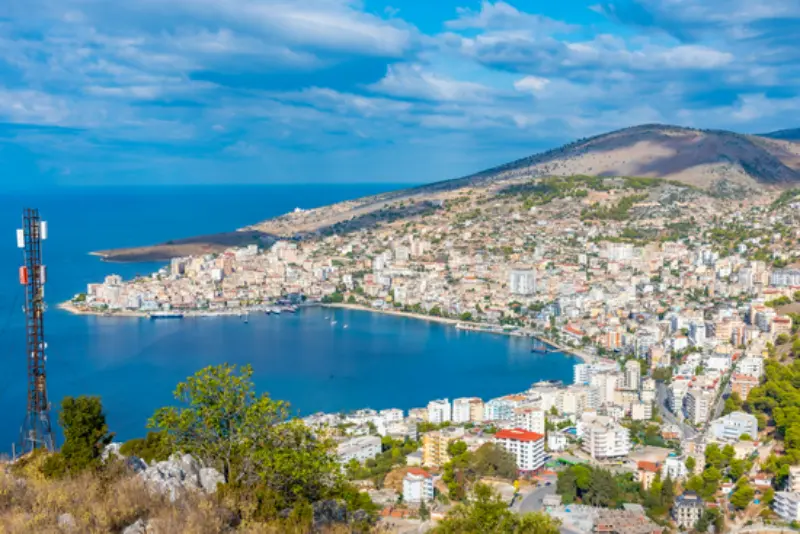
    Panoramic View Saranda Beach Cityscape Albanian Riviera Coast

    If you plan to keep the car, confirm parking. If the vehicle will sit unused while you take boats or walk the promenade, compare whether returning it earlier makes sense. Our Saranda and Ksamil guide helps with the next stage.

    How many days should the road trip take?

    One day works only as a transport day. Two days can include one major overnight stop. Three days allows Berat and Gjirokaster, while four or more days gives you space for a proper Riviera overnight or two. The route becomes better—not worse—when you deliberately leave something for another trip.

    For a first visit, I would choose either the historic inland route or the coastal route based on what comes later in your itinerary. If you will already spend several nights on the Riviera, the inland journey via Berat and Gjirokaster adds more variety.

    Driving and safety basics

    Use seat belts, avoid phone use while driving, never assume another vehicle will behave predictably and be conservative on unfamiliar mountain roads. Night driving is less pleasant on winding sections, so schedule the most complex roads in daylight. Fuel up before remote stretches rather than waiting for the tank to become a problem.

    Rental contracts matter as much as road rules. Check insurance, deposit, roadside assistance and whether you may cross international borders. Our renting a car in Albania guide covers the practical details.

    Where to stay

    Accommodation changes quickly by season, so compare location, recent reviews, parking or transfer needs and cancellation terms before booking. Check current places to stay on Booking.com. If you are moving between several bases, reserving the hardest nights first usually gives you more flexibility for the rest of the route.

    A final planning note

    Before you travel, recheck the few details that can change close to departure: weather, road or trail conditions, seasonal transport, accommodation access and opening patterns for any attraction that is essential to your day. Albania is developing quickly as a destination, and a practical plan should allow local information to override an old screenshot or timetable.

    Keep important confirmations available offline and leave enough time between activities that one delay does not damage the rest of the itinerary. The strongest trips combine preparation with flexibility: know where you are sleeping and how you are moving between regions, but allow local advice to improve the details once you arrive.

    How to keep the trip realistic

    When several places look close together on a map, remember that parking, meals, viewpoints, check-in and walking time are part of the journey. Build days around one major experience plus smaller stops rather than three major attractions. This is especially important on the Riviera, in UNESCO old towns and in mountain regions, where access can be slower than a simple distance figure suggests.

    If you are travelling in July or August, start important sightseeing earlier and protect the middle of the day for lunch, swimming or rest. In spring and autumn, use the same flexibility for rain or changing mountain weather. A slower schedule is not wasted time; it is what lets you notice local food, small villages and landscapes between the famous places.

    Booking, timing and local flexibility

    Reserve the parts of the trip that are genuinely difficult to replace, then keep the rest flexible. In peak summer that usually means the most important accommodation, a rental car if supply is limited, and any boat trip or specialist activity that is central to your plans. Outside peak season, the bigger issue can be reduced frequency or seasonal opening, so confirming the next day with your host is often more useful than relying on an old timetable.

    Allow extra time for parking, finding a bus departure point, walking through steep historic streets and checking into small guesthouses. These details rarely appear in route planners but they determine whether a day feels relaxed or rushed. If local advice conflicts with an old blog post, use the current local information. Albania changes quickly, and flexibility is one of the most useful travel skills you can bring.

    Finally, keep one low-pressure period in every two or three days. It might be a long lunch, a beach afternoon, a café break or an early hotel check-in. That space gives you room to absorb delays without cancelling the experience you cared about most, and it usually creates better memories than adding one more distant stop simply because it looked close on the map.

    My preferred first-time route

    With three days, I would drive Tirana → Berat → Gjirokaster → Blue Eye → Saranda. It creates a strong progression from capital to UNESCO towns to nature and finally the Ionian coast. If you have already seen Berat and Gjirokaster, take the coastal road instead and give Llogara, Himare and the Riviera the time they deserve.
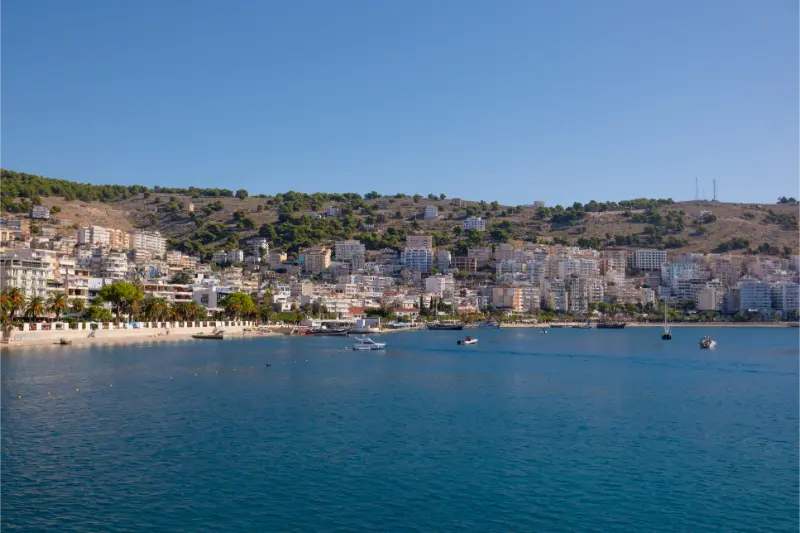
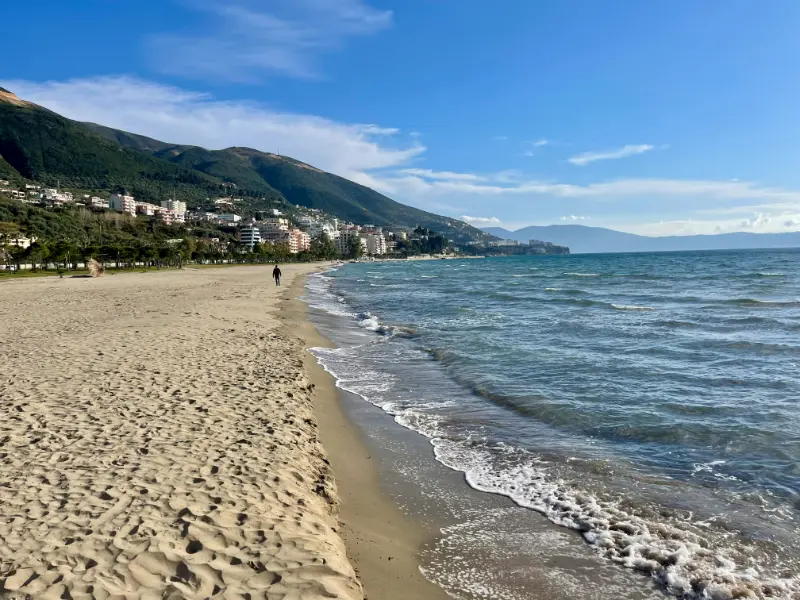
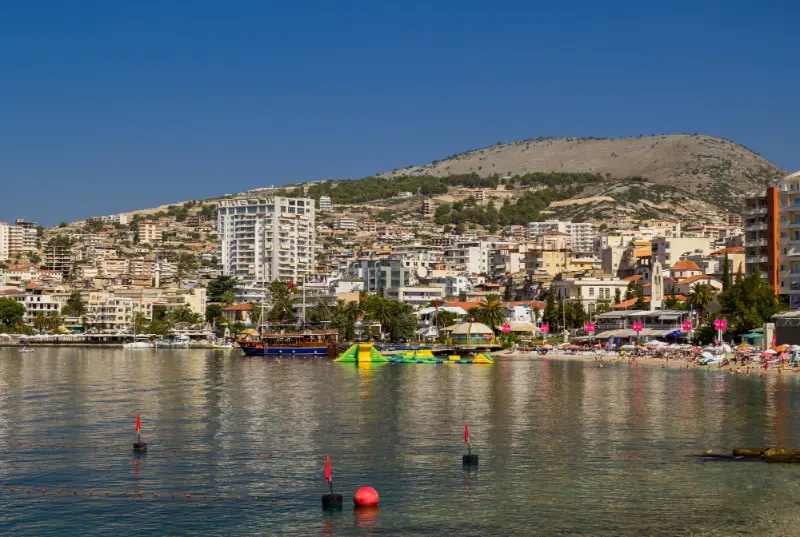
    Resort Town Albania View Departing Ship Houses Mountains Port Town Saranda

    Landing at TIA? Use the Tirana Airport route guide instead of assuming the city-center departure works the same way.

  • 1 Day in Saranda and Ksamil: Butrint, Beach Time and a Sunset Promenade

    1 Day in Saranda and Ksamil: Butrint, Beach Time and a Sunset Promenade

    With only one day in the Sarandë–Ksamil area, I would build the itinerary around three things: Butrint, one proper beach block and the Sarandë waterfront at sunset. I would not add the Blue Eye, Gjirokastër and multiple beaches. That kind of day looks impressive on a booking page and feels exhausting in real life.

    Butrint is the non-negotiable cultural stop because it gives the region historical depth. Ksamil supplies the swimming. Sarandë supplies the urban evening and practical dinner options.

    A one-day itinerary works only when the route is selective. I would rather see four places properly than spend the day moving between eight map pins. The plan below is built around geography, heat and energy: the most demanding or time-sensitive stop comes first, lunch is used as a real break, and the late afternoon is reserved for the part of the destination that becomes better when the light softens.

    The times are a planning framework, not fixed opening hours. Museum schedules, archaeological-site access, ferries, seasonal services and weather can change. Check the current opening information for the one attraction you care about most the evening before, then keep the rest of the day flexible.

    One-day itinerary at a glance

    TimeStopWhy it fits
    08:00Leave Saranda / KsamilBeat some heat and traffic
    08:30ButrintMain cultural stop
    11:30KsamilLunch and one beach area
    12:30–16:30Beach / islandsDo not drive between multiple bays
    17:00Return to SarandaAllow traffic buffer
    18:00PromenadeEasy sunset walk
    19:30DinnerSeafood or southern Albanian dishes

    Step-by-step itinerary

    08:00–11:15 — Butrint first

    Go directly to Butrint before the main beach part of the day. The archaeological park combines Greek, Roman, Byzantine and Venetian layers inside a wooded landscape, and it needs more than a quick photo at the theater. Allow roughly two hours of unhurried walking, more if archaeology is a major interest. The official tourism material identifies Butrint as a UNESCO World Heritage site and one of Albania’s key archaeological destinations.

    11:30–12:30 — Ksamil lunch

    Return toward Ksamil and eat before settling on the beach. This is the moment to choose your beach area rather than wandering by car. In high season, parking and access can turn an apparently short search into a major part of the afternoon. The Driving and Parking in Ksamil explains why one good parking decision matters.

    12:30–16:30 — One beach, not five

    Spend the middle of the day at one Ksamil beach area. Swim, rent a kayak or take a short local boat if conditions and operators suit you, but do not spend the afternoon moving the car from bay to bay. Ksamil’s beauty is the water, not the number of beach names you collect. If the sun is very strong, use shade and take a proper break after lunch.

    17:00–18:00 — Return to Saranda

    Leave a generous buffer in summer. The road is short, but peak-season traffic can be slow. Check in, shower or simply park and leave the car. Central Sarandë is easier on foot.

    18:00–19:30 — Saranda Promenade

    Walk the Saranda Promenade as the light softens. The waterfront is the social center of the city and gives you a different atmosphere from Ksamil. If you want a higher sunset viewpoint, Lekuresi is possible by taxi, but I would only add it if energy is still good.

    Saranda Bay And City Albania

    19:30 onward — Dinner

    Finish with seafood, Butrint-area mussels or another southern dish. The Saranda Food Guide explains what to look for and how to order fish without relying on one fixed restaurant list.

    If you start late

    If you arrive after midday, choose between Butrint and the beach rather than doing both badly. For a culture-first day, visit Butrint and spend the evening in Sarandë. For a beach-first day, stay in Ksamil and save Butrint for the next morning.

    Can you do this without a car?

    Without a car, Butrint and Ksamil can still be combined by local bus, taxi or tour. The key is to confirm the return options and avoid building the schedule around a connection you have not checked locally.

    If you are traveling with children

    Families should keep the beach block longer and Butrint slightly shorter. Bring water for the archaeological park and avoid making children do a second major excursion in the evening. See Saranda and Ksamil with Kids.

    With children, I protect one anchor activity and remove the weakest secondary stop. A successful family day is one where everyone still has energy for dinner, not one where every attraction was technically completed.

    If the weather changes

    In poor beach weather, keep Butrint if conditions are safe, then spend more time in Sarandë and consider a museum, café or a drive to another cultural stop. Do not force a Blue Eye detour just because swimming is canceled.

    What to pack for the day

    • Comfortable shoes appropriate to the terrain described in the itinerary.
    • Water and sun protection from late spring through early autumn.
    • A light layer outside midsummer or for lake, mountain and evening sections.
    • Some Albanian lek for small purchases, cafés, parking or local transport.
    • Offline maps plus a screenshot of your accommodation address.
    • Swimwear only when the itinerary genuinely includes the beach, lake or thermal water.
    • A compact day bag rather than carrying your full luggage between stops.

    Where to stay for a one-day visit

    For a one-day itinerary, location matters more than room size. Stay close enough to begin the first stop without a long transfer and finish dinner without another complicated drive. Compare current accommodation in Sarande on Booking.com.

    Common one-day mistakes

    • Adding a famous excursion simply because it appears close on a map.
    • Scheduling the hardest outdoor stop in the middle of a hot summer day.
    • Entering every museum instead of choosing the one that best matches your interests.
    • Changing parking spaces repeatedly in a compact city or beach resort.
    • Booking a fixed evening activity immediately after a long road transfer.
    • Skipping lunch and then losing the late afternoon to fatigue.
    • Treating travel time as wasted time instead of keeping the route geographically tidy.

    If you have more time

    With three days, add the Blue Eye, another beach area and a slower Sarandë day. Use 3 Days in Saranda and Ksamil.

    Aerial View Of Ksamil Coast Albania

    An extra day should create a different experience rather than a longer version of the same route. Use it for a mountain, lake, boat, village or museum block that did not fit naturally into the first day.

    Useful planning guides

    Frequently asked questions

    Can I see Saranda and Ksamil in one day?

    Yes if you keep the plan selective: Butrint, one Ksamil beach and the Saranda promenade.

    Should I add the Blue Eye?

    Not on this one-day route. It creates too much transfer time.

    Is Butrint worth giving up beach time?

    Yes for a first visit because it adds one of Albania’s most important cultural experiences.

    Do I need a car?

    No, but a car or taxi makes the sequence easier. Public transport can work if you confirm current connections.

    Where should I stay?

    Saranda is more practical for services; Ksamil is better if beach access is the priority.

    Aerial View Of Saranda Bay Albania

    Final advice

    A good one-day itinerary should leave you with a clear memory of the destination rather than a list of places you hurried through. Protect the first major stop, keep the route compact and let the late afternoon become slower. If something takes longer because you are enjoying it, remove the next optional stop instead of rushing the experience you are already having.

    How I would pace the day

    I divide the day into three energy levels. Morning is for the demanding or important attraction, midday is for food and the easiest sightseeing, and late afternoon is for the place that benefits from softer light or local evening activity. This simple structure is more reliable than assigning a new attraction to every hour.

    I also keep at least thirty minutes unassigned. That buffer absorbs a slow breakfast, parking search, queue, coffee break or a place that turns out to be more interesting than expected. Without a buffer, one small delay forces the rest of the itinerary into a permanent rush.

    One more planning detail: the first and last hour

    The first hour should never depend on an uncertain transfer if you can avoid it. Sleep close to the first stop, or resolve the taxi, parking or bus plan the night before. The last hour should be even simpler: dinner, a promenade, a café or the walk back to the hotel. Ending a full day with another complicated transfer usually adds stress without adding much travel value.

    If you are continuing to another city that evening, remove the last sightseeing block and leave in daylight whenever the route is unfamiliar. A one-day visit remains successful even when you depart an hour earlier than the theoretical maximum.

    Want more options? See the complete things-to-do guide for attractions and activities that do not fit this one-day route.

    Staying 2 days? Use the dedicated 2-day itinerary for the balanced 48-hour version.

  • 3 Days in Vlore: Old Town, Zvernec and Karaburun or Llogara

    3 Days in Vlore: Old Town, Zvernec and Karaburun or Llogara

    Three days in Vlorë lets you see the city, lagoon landscapes and one major marine or mountain excursion. It is enough to understand why Vlorë is more than a beach stop on the way to the Riviera.

    This itinerary is designed for travelers who want to spend three nights or three full sightseeing days in Vlore without turning the trip into a race. The order is deliberate: the first day stays close to the base, the second adds a stronger local experience, and the third is the flexible day for a regional excursion or weather-dependent activity.

    3 days at a glance

    DayPlan
    Day 1Historic Vlorë and the Lungomare
    Day 2Zvërnec, Narta Lagoon and a slower coastal afternoon
    Day 3Karaburun-Sazan by boat, or Llogara/Radhimë by road

    Before you start

    For a first visit, read Vlore Travel Guide and Where to Stay in Vlore before booking. Location has a direct effect on how much of a three-day trip is spent walking versus arranging taxis, parking or luggage transfers.

    If your schedule is shorter, use the 1-day Vlore itinerary instead. Three days should add depth, not simply stretch a one-day checklist across a longer stay.

    For a middle option, the 2-day Vlore itinerary removes the regional third-day excursion while keeping the essential city experience.

    Day 1 — Historic Vlorë and the Lungomare

    Begin with the historic center and Independence-related core, then move gradually toward the waterfront instead of crossing the elongated city repeatedly. Use the afternoon for the Lungomare and Uji i Ftohtë side, where the coast becomes the focus. A sunset walk and dinner by the water is a better ending than trying to drive to a distant beach after a full sightseeing morning.

    Keep the first day intentionally compact. Arrival delays, hotel check-in and orientation always consume more time than a map suggests. A strong first day leaves one or two optional stops rather than forcing you to skip lunch or reach the final attraction after closing time.

    Day 2 — Zvërnec, Narta Lagoon and a slower coastal afternoon

    Drive or take a taxi toward Zvërnec and Narta. The monastery setting and lagoon landscape show a quieter side of Vlorë and work particularly well for nature and photography. Return through the northern/western side of the city, then give the afternoon to one beach rather than multiple stops. This is also a good day for families because it mixes short walking with open landscapes.

    Aerial View of Vlore City and Mosque Albania

    Treat this as the day to understand the destination beyond its postcard view. Start early, protect the middle of the day from unnecessary driving, and leave enough time for food and short unplanned stops. Three-day itineraries work best when one day has room to breathe.

    Day 3 — Karaburun-Sazan by boat, or Llogara/Radhimë by road

    Choose the sea when conditions are calm and you want caves, coves and a full marine day. Choose the road when wind or season makes boating less attractive: Radhimë, Orikum and Llogara create a strong alternative. Do not combine the full boat excursion with Llogara in the same day. Each deserves daylight and flexibility.

    The third day is deliberately flexible because weather, season and onward travel often decide what makes sense. If the excursion lies in the same direction as your next destination, consider checking out first and turning the day into a one-way transfer instead of returning to the same hotel.

    If you prefer a slower itinerary

    If the boat day is the main reason for visiting, keep day two flexible so weather can force a swap. Travelers continuing to Himarë can turn the Llogara option into the transfer south rather than returning to Vlorë.

    A slower version is not a failed itinerary. Remove one museum, one village or one beach and keep the time for a long lunch, café stop or sunset. Albania often rewards simple geographic grouping more than an aggressive attraction count.

    Getting around

    The city itself can be managed by walking and taxis if you choose your base well. A car is valuable for Zvërnec, Radhimë and Llogara. Karaburun is primarily a boat-access experience.

    When using intercity or seasonal transport, verify the current departure rather than relying on an old timetable. If a taxi or private driver saves two separate connections, compare the total cost for the group rather than only the cheapest single ticket.

    Where to stay for this itinerary

    Compare accommodation in Vlore on Booking.com.

    Vlore Albania Ferris Wheel Night Light Searchlight

    Use the dedicated accommodation guide to choose the most practical area. For a three-day stay, paying slightly more for a walkable location can be better value than saving on the room and using taxis several times a day.

    Best time for this 3-day plan

    June and September are excellent for mixed city/sea travel. July and August have the fullest marine schedule and most traffic. Spring and autumn favor lagoon and road-trip days.

    Whatever the month, check the short-range forecast before the weather-sensitive day and swap day two/day three if necessary. That is one of the biggest advantages of having three days in one base.

    How to adapt this itinerary without a car

    Keep the first day unchanged. For the regional days, use direct buses where they make geographic sense, otherwise compare a taxi/driver or a small-group excursion. Do not build a day around three uncertain connections just to avoid paying for a straightforward transfer. If public transport would leave you with only two useful hours at the destination, choose a closer excursion.

    How to adapt it for families

    Families should protect the middle of the day in hot weather and avoid making all three days ‘major attraction’ days. Keep one afternoon intentionally light, choose accommodation with easy vehicle or pedestrian access, and treat a beach, park, lake or thermal stop as a real activity rather than a gap between monuments.

    What to do if it rains

    Move museums, historic houses and long meals into the wettest hours, and keep exposed viewpoints, boat trips, canyon walks or mountain drives flexible. A three-day stay gives you enough room to swap the order. Do not force a marine or mountain activity merely because it was originally assigned to day three.

    Common mistakes

    • Crossing Vlorë from north to south several times each day.
    • Booking a boat day without a weather backup.
    • Trying Karaburun and Llogara on the same day.
    • Staying far from the area you plan to use most.
    • Ignoring summer traffic when returning from beaches.

    Useful planning links

    Frequently asked questions

    Are 3 days enough for Vlore?

    Yes for the city, Zvernec and one major boat or road excursion.

    Karaburun or Llogara?

    Choose Karaburun for a marine day; Llogara for road-trip scenery and mountain views.

    Do I need a car?

    Not for the central city, but it is very useful for day two or the road version of day three.

    Where should I stay?

    Lungomare/Uji i Ftohte for sea access; the historic center for culture and shorter old-town walks.

    Can I continue to Himare on day three?

    Yes. Llogara can become part of a one-way transfer south.

    Final advice

    Three days in Vlore works best when the destination is used as a base rather than a checklist. Keep one day local, one day focused on the area’s defining experience and one day flexible for the wider region. That structure gives you enough depth to understand the place while still making the itinerary practical if weather, transport or energy levels change.

    Arriving and departing: how to protect the three full days

    If possible, arrive in Vlore the evening before day one. That gives you three genuinely useful sightseeing days rather than spending the first morning checking out of another hotel, waiting for transport and storing luggage. If that is not possible, keep day one exactly as written and remove an optional stop instead of pushing the entire schedule later.

    Vlore Albania Resort Town Hotels Palm Trees Cars Highway

    On departure day, separate sightseeing from logistics. Check-out, parking, fuel, intercity terminals and luggage storage can easily consume an hour or more. A final coffee or short walk is a better plan than a major attraction that must be abandoned halfway because the bus or transfer is leaving.

    How much should you actually fit into each day?

    Vlorë is elongated. Group the historic center, Lungomare and southern beaches instead of treating them as one compact pedestrian district.

    A realistic target is two major anchors plus meals, walking and one or two minor stops. More than that often creates the illusion of seeing more while actually spending the day watching the clock. If you finish early, add a viewpoint, café, market or waterfront walk spontaneously; those are easier to add than to cancel a prepaid excursion.

    What should be booked in advance?

    Book the accommodation first, then any activity that has limited capacity or depends on a specific departure: boat trips, rafting, popular guided excursions or a private driver. Ordinary city walking, viewpoints and most self-guided historic areas do not need a minute-by-minute reservation plan. Keep at least one half day flexible so weather can move the outdoor activity.

    For summer weekends and major event dates, reserve the room and key transport earlier than usual. In quieter months, flexible cancellation can be more valuable than locking the entire trip months ahead. Always confirm current opening information for museums, archaeological sites and seasonal services shortly before travel.

    How this 3-day stop fits into a longer Albania itinerary

    Vlorë is the natural gateway to the Albanian Riviera. If Himarë or Dhërmi is next, use Llogara, Radhimë and Orikum on the transfer day. If you are returning toward Tirana, keep Karaburun as a round-trip boat day and leave the final morning simple.

    The best Albania itineraries minimize repeated road sections. Look at the map before finalizing day three: if the excursion lies in the same direction as the next destination, check out in the morning and carry your luggage rather than returning to the same base simply because the first draft called it a ‘day trip’.

    Not sure how long to stay? Compare 1, 2 and 3 days before choosing this itinerary length.

  • Albania Photography Road Trip: 10 Days of Cities, Coast and Mountains

    Albania Photography Road Trip: 10 Days of Cities, Coast and Mountains

    Albania is easy to overshoot as a photographer. The dramatic places—stone towns, alpine valleys, castles and Ionian bays—encourage a schedule full of sunrise drives and sunset viewpoint sprints. The result can be ten days spent moving gear instead of making thoughtful photographs.

    This route uses longer bases and mixes architecture, street scenes, landscapes and coast. It is designed for photographers who still want a holiday, not a production schedule. The best light matters, but so do weather, access, local privacy and the fact that many beautiful streets and villages are people’s homes.

    Drone users should read the dedicated drone guide before flying. Airspace, registration, protected areas, privacy and local restrictions require separate planning; do not assume a remote-looking beach or archaeological site is automatically legal for flight.

    At a glance

    DaysBasePhotography focus
    1–2TiranaStreet, architecture, blue hour
    3ShkodërOld town, lake, Rozafa
    4–5ThethAlpine valley, village, night sky
    6BeratOttoman quarters, river reflections
    7GjirokastërStone roofs, castle, bazaar
    8–10Himarë / RivieraCoast, villages, coves, sunsets

    Days 1–2: Tirana street and architecture

    Use the first day for location scouting rather than trying to make every final image immediately. Skanderbeg Square, the Pyramid, Blloku, New Bazaar and the central boulevards change character between morning, rush hour and blue hour. Look for the contrast between socialist-era structures, colourful façades and contemporary city life.

    Keep one camera setup light enough for street photography. Constant lens changes and a visible bag full of equipment make you slower and less responsive. For people-focused images, ask when the portrait is close or personal; not every market stall or café table is a public performance.

    Day 3: Shkodër and the lake

    Travel north and shoot Shkodër as both city and gateway to water. The pedestrian centre works well in late afternoon, while Rozafa Castle offers broad views when visibility is good. Lake Shkodra, Shirokë and Zogaj add reflections and a quieter landscape language.

    Do not spend sunset stuck in traffic between the castle and lake. Choose one primary evening location based on weather, then save the other for morning or a future trip.

    Days 4–5: Theth

    Theth deserves two nights because mountain weather can change the whole photographic plan. Use the first afternoon to walk the village and understand how the church, fields, guesthouses and valley align with light. The second day can be a waterfall or Blue Eye hike if you are comfortable carrying equipment on the route.

    For night photography, check moon phase, cloud and guesthouse lighting rather than assuming every mountain night is dark. Keep warm layers and a headlamp, and avoid setting tripods where they obstruct paths or disturb other guests.

    Day 6: Berat

    Berat is strongest when you photograph relationships: Mangalem across the river, Gorica from the opposite bank, castle walls above houses and windows changing with direction of light. A long lens can compress the hillside, while a wider lens works better inside narrow lanes.

    Stay through blue hour. Day-trippers often leave before the city lights and river reflections become interesting. Avoid climbing private terraces or rooftops for a better angle unless access is explicitly offered.

    Day 7: Gjirokastër

    Gjirokastër’s stone roofs and steep geometry create different compositions from Berat. The castle provides elevated context, while the bazaar and residential lanes offer details, doors and textured walls. Morning light can be especially useful before the main streets fill.

    Rain is not automatically a failed photography day here. Wet stone, low cloud and interior house museums can create a stronger visual story than another clear-sky panorama.

    Days 8–10: Himarë and the Riviera

    Use Himarë as the base for three nights and choose one coastal objective per day: village architecture at Qeparo or Vuno, Porto Palermo and its bay, or a beach/cove with access you can manage safely. Scout sunset direction before committing to a long walk with a tripod.

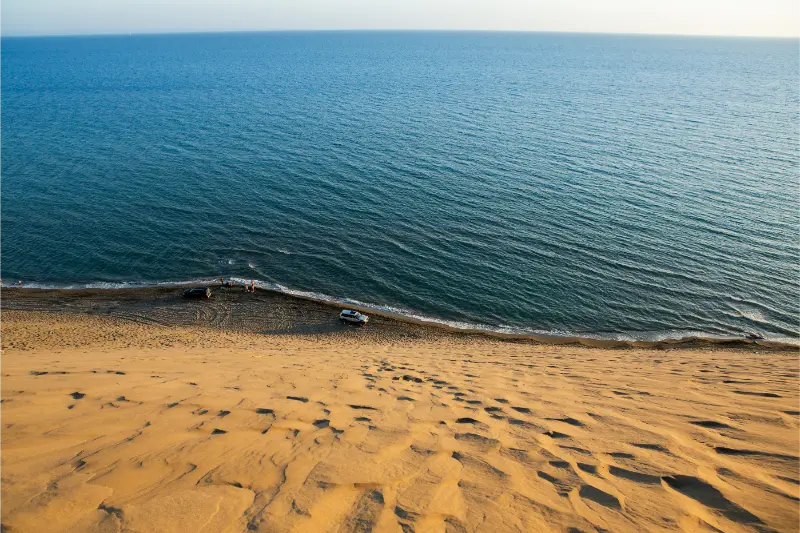
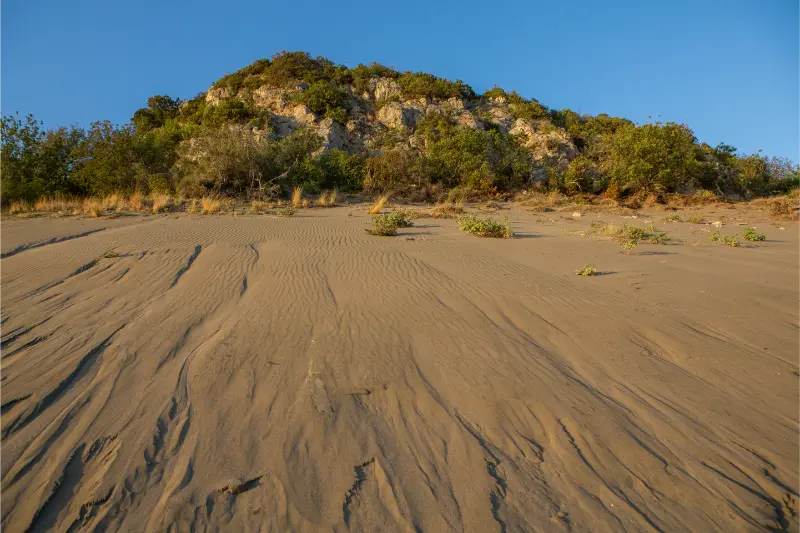
    Beach Albania Sand Dunes Coast Adriatic Sea Rana E Hedhun 2

    Boats can open views that are impossible from the road, but salt spray and movement change equipment needs. Carry a simple protective cloth, keep the camera secured and avoid changing lenses in spray. If you hike to Gjipe or another remote location, prioritize footwear, water and return time over carrying every lens you own.

    Gear: bring less than you think

    A versatile standard zoom, one wider or longer option, spare battery, compact tripod and weather protection cover most travellers. Heavy specialist kits become a burden on castle climbs, cobbles and mountain paths. If photography is not paid work, ask whether each item will genuinely change the images you make.

    Back up photographs regularly. Use two cards, a small SSD or cloud upload when Wi-Fi allows, and keep the backup separate from the camera bag.

    Sunrise, sunset and sleep

    Do not schedule both every day. Pick the locations where early or late light genuinely matters, then allow normal mornings elsewhere. A tired driver with expensive equipment is a worse outcome than missing one sunrise.

    Use weather forecasts for cloud and wind, not just rain probability. A dramatic cloudy day can be better for stone cities, while calm conditions matter more for reflections and boat plans.

    Drone planning

    A drone is a separate aviation and privacy problem, not simply another camera. Read Drone Photography in Albania and verify current restrictions before travel. Archaeological sites, airports, military zones, protected areas and crowds require particular caution.

    Even where flight is permitted, avoid hovering over people, homes or beachgoers. The best aerial image is not worth creating conflict with residents.

    Photography ethics in villages and markets

    Ask before close portraits, especially with children. Do not push a lens through open doorways, photograph inside active worship without permission or block narrow lanes with tripods. Buy something or engage normally at a market rather than treating vendors as visual props.

    These behaviours make better travel photography because they keep you present and create genuine interactions.

    File management on the road

    Create one folder per day or destination and back it up before formatting cards. Add a few keywords or star ratings each evening while you still remember the location. After ten days, “IMG_6842” is not enough to distinguish one stone village from another.

    Keep original files until you are home. Travel is the wrong time to make aggressive deletion decisions on a small screen after a long driving day.

    Building a varied Albania photo story

    A strong set should not be only blue beaches and sunset viewpoints. Photograph morning markets, bus stations, café rituals, mountain guesthouses, old doors, agricultural landscapes and the transitions between regions. Wide establishing frames explain place; medium scenes show human scale; details such as stonework, food or signage add texture.

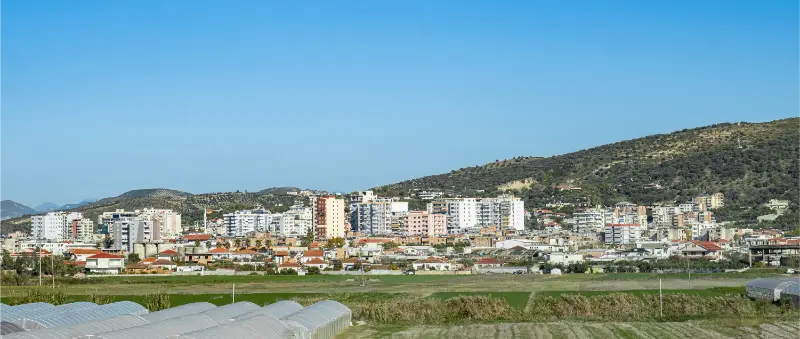
    Small Town Rural Albania Modern Buildings Old Houses Orange Rooftops Against Mountains

    Return to a few locations at different times instead of constantly chasing new viewpoints. Soft morning light in Gjirokastër, late light above Berat or changing weather in the Alps can produce a more coherent story than a frantic checklist of famous Instagram spots. Always ask permission when a person is clearly the subject rather than incidental background.

    Where to stay

    Stay where you can walk to morning or evening locations. A slightly more expensive central room can save repeated parking and let you photograph blue hour without driving afterward.

    Compare accommodation in Himarë on Booking.com for the coast section.

    Beach Albania Sand Dunes Coast Adriatic Sea Rana E Hedhun

    Tours and activities

    Photography-specific tours are not essential, but local guides can improve access and timing for villages, boats, archaeological sites or mountain routes. Explain that you need time to stop, not a normal sightseeing pace.

    Official information to check before you go

    Use the official Albania tourism portal for destination information and verify site-specific photography or drone restrictions directly where relevant.

    Useful related guides

    Common mistakes

    • Packing so much equipment that every walk becomes a transport exercise.
    • Scheduling sunrise and sunset every day and becoming too tired to drive safely.
    • Flying a drone without checking current airspace and local restrictions.
    • Photographing people or private homes intrusively.
    • Changing lenses in beach spray or dusty roadside conditions without care.
    • Racing between two sunset locations instead of committing to one composition.

    Frequently asked questions

    What is the best photography season in Albania?

    May, June, September and October offer a strong balance of light, landscapes and manageable crowds. Winter is excellent for atmospheric cities; summer is best for reliable coastal conditions but has stronger midday light.

    Do I need a drone?

    No. Albania is highly photogenic from ground level, and drones add legal, privacy and equipment complexity.

    Where should I spend the most nights?

    Theth and Himarë benefit most from weather flexibility and changing light.

    Is Berat better at sunrise or sunset?

    Both can work. The best side depends on the view you want; scout the riverbanks and castle position before committing.

    Can I photograph inside churches and museums?

    Rules vary. Look for signs and ask staff; flash and tripod use may be restricted even when handheld photography is allowed.

    Final recommendation

    A photography road trip succeeds when the route protects time rather than filling it. Scout, return to a scene when light changes, keep the kit manageable and respect the people who live inside the landscapes you came to photograph. Ten days is enough for a strong visual story when every day is not a race.

    For city-by-city planning, use the new destination photography guides linked from Best Photography Spots in Albania. They add exact light, street-photography and bad-weather strategies for the main bases on this route.

  • 3 Days in Theth: Waterfalls, Blue Eye, Village Life and a Realistic Hiking Plan

    3 Days in Theth: Waterfalls, Blue Eye, Village Life and a Realistic Hiking Plan

    Three days in Theth gives the valley enough room to breathe. Many itineraries compress the village, Grunas Waterfall and the Blue Eye into one exhausting day, then leave immediately for Valbona. That can work for strong hikers, but it misses the slower experience of staying in an alpine guesthouse, eating where you sleep and watching weather move through the valley.

    This plan assumes two or three nights in Theth and does not automatically include the Valbona Pass. If the pass is your main objective, the third day changes completely and your luggage logistics need to be organized before arrival. Start with my Theth and Albanian Alps guide for access and seasonal context.

    Aerial Drone View Rustic Homes Hotels Theth National Park Albania Albanian Alps 2

    Quick itinerary at a glance

    DayMorningAfternoonEvening
    Day 1Arrival and guesthouse check-inChurch, village lanes and easy orientationEarly dinner and weather check
    Day 2Nderlysa and Blue EyeLong hiking/swimming blockReturn and rest
    Day 3Grunas Waterfall and canyonVillage lunchDepart or prepare for Valbona

    How to use this itinerary

    The schedule below is built around energy, heat and geography rather than a target number of attractions. I would rather see fewer places at the right time of day than collect more names while constantly looking for parking or the next bus. Use the sequence as a framework, then adjust it for weather, opening hours and the pace of the people traveling with you.

    For any time-sensitive element—museum hours, boat departures, mountain access, road works or seasonal transport—check the current information close to your travel date. Albania is developing quickly as a destination, and a timetable or access rule that was correct last season should not be treated as permanent.

    Day 1: arrival is part of the itinerary

    Do not schedule a major hike immediately after the transfer

    The road into Theth is scenic but still requires attention and time, whether you arrive by shared transfer or car. Check in, eat and let the first afternoon stay close to the village. Mountain trips become harder when you begin already tired.

    Walk to the church and around the central valley

    Use the first hours for the church, nearby traditional houses and a gentle orientation walk. This gives you a sense of where the river, guesthouses and trail directions sit relative to your accommodation. The church is famous photographically, but the value of the first day is not a single image; it is understanding the valley.

    Evening: confirm tomorrow with your host

    Ask about weather, trail conditions, transport to Nderlysa if you plan to use it, meal times and any local changes. Guesthouse owners often have more useful current information than an old online route description. Go to bed early rather than treating the mountains like a nightlife destination.

    Day 2: Blue Eye as a full active day

    Morning: reach Nderlysa early

    Depending on your hiking plan, walk or arrange transport toward Nderlysa and begin the Blue Eye route before the hottest part of the day. The exact effort depends on where you start, so do not quote one universal hiking time to everyone in your group. Use my Blue Eye of Theth guide for route-planning details.

    Midday: the Blue Eye is not a swimming pool itinerary

    The water is famously cold and the area can be busy in season. Give yourself time to rest, eat and enjoy the setting rather than measuring success by whether you swim. Carry water, sun protection and footwear suitable for uneven trail surfaces.

    Afternoon: return with margin

    Build enough margin to get back before late-day fatigue or weather changes become a problem. If you arranged a pickup, confirm where and when. The best mountain itinerary feels conservative at the end of the day, not desperate.

    Day 3: Grunas Waterfall, canyon and decision day

    Morning: Grunas Waterfall

    Use the final morning for Grunas Waterfall and nearby canyon scenery. It is a classic Theth walk and fits well after the longer Blue Eye day because you already understand the valley and can adjust the distance to your energy. See my Grunas Waterfall guide for the route context.

    Lunch: return to the village

    Have lunch at your guesthouse or in the village before departure. This is intentionally unambitious. Mountain transfers and hikes are easier when you are not trying to squeeze another viewpoint into the last hour.

    If you are crossing to Valbona

    If the Theth–Valbona hike is next, day three is not a waterfall day: it becomes the pass crossing. Start early, check weather, pack only what you can carry comfortably and arrange luggage transfer if desired. My Theth to Valbona hiking guide covers that plan separately.

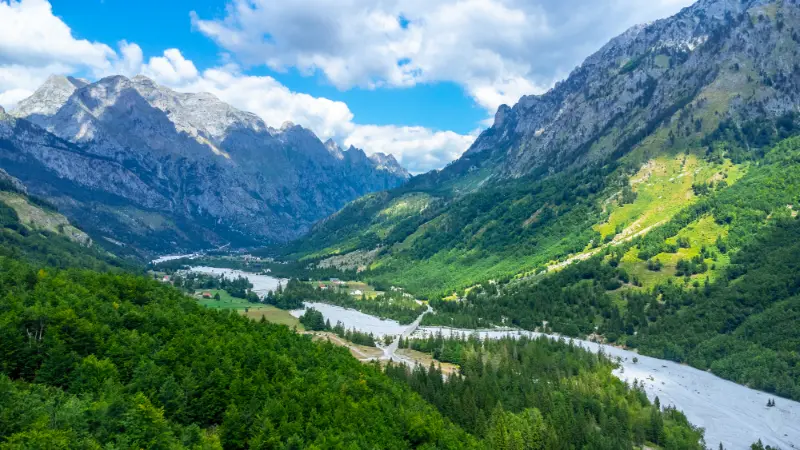
    Panoramic Aerial Drone View Valbona Valley Theth National Park Albanian Alps Albania 2

    Getting around

    Once in the valley, walking is the main transport. Shared transfers from Shkodër are common in season, and private transfers can simplify timing. A car is not necessary for a classic Theth stay, and mountain roads or weather should be checked close to travel dates.

    I also leave a buffer between the last substantial activity and any fixed onward transfer. A short distance on the map can hide summer traffic, a steep approach, a slow parking search or a road that is simply tiring after a full day. That buffer is particularly valuable when the next step is a ferry, airport transfer or mountain pickup that you cannot easily replace.

    Where to stay for this itinerary

    The central village is easiest for first-time visitors; Gjelaj can feel quieter; Nderlysa suits travelers whose priority is the Blue Eye area. Guesthouse meal arrangements matter almost as much as the room. Compare locations in Where to Stay in Theth. When you are ready to compare live availability, check accommodation in Theth on Booking.com.

    Aerial Drone View Rustic Homes Hotels Theth National Park Albania Albanian Alps

    For a short itinerary, location is usually worth more than a slightly larger room far away. Check the real walking route, not only the straight-line distance. In old towns and coastal destinations, hills, stairs, pedestrian streets and limited parking can turn a cheap room into repeated daily inconvenience.

    Best time to follow this plan

    Late spring through early autumn is the normal hiking window, but conditions vary by year and altitude. Snow, storms and heat can all change trail difficulty. Do not treat a calendar month as a safety guarantee; ask locally and check the forecast.

    Whatever the month, I would check the forecast again the evening before any outdoor-heavy day. That simple habit lets you swap a museum morning with a beach afternoon, move a castle visit away from peak heat or postpone a mountain hike when conditions are not worth forcing.

    Traveling with children or at a slower pace

    Families should choose hikes based on the youngest capable walker rather than adult ambition. The village and Grunas area can be easier to adapt than the full Blue Eye day. For reduced mobility, Theth is challenging because surfaces are uneven and many guesthouses sit on sloping ground.

    The easiest way to adapt the itinerary is to protect one anchor experience per day and remove the weakest secondary stop. That keeps the trip recognizable without making children, older travelers or anyone with limited stamina feel as if they are failing to keep up with a schedule designed for someone else.

    What to verify or book before arrival

    • Accommodation in the right part of town, especially in July and August or during major events.
    • Any fixed boat trip, mountain transfer or activity that has limited departures.
    • Current opening information for the one museum or archaeological site you most care about.
    • Parking instructions if your hotel is in an old town, beach zone or pedestrian area.
    • Your next-day transfer before dinner if you have an early bus, ferry or hiking pickup.

    Common mistakes that make a short stay worse

    • Planning by map distance alone. In Albania, traffic, mountain roads, summer congestion and parking can make a short-looking transfer take more energy than expected. Build the day around usable sightseeing time, not the theoretical distance.
    • Putting every famous sight into the same day. A strong itinerary leaves enough time for lunch, a coffee, a swim or simply walking without checking the clock every ten minutes.
    • Ignoring the hottest part of the afternoon. In summer, exposed castles, cobbled old towns and beaches can be far more enjoyable early or late in the day.
    • Assuming opening times and transport never change. Seasonal services, museum hours and boat departures can vary. Recheck the details that would break the day if they changed.
    • Choosing accommodation only by price. A cheaper room can cost you time every morning and evening if it is uphill, far from the old town, or awkward for parking and luggage.

    If you have more or less time

    With two days, choose either the Blue Eye or Grunas as the main hike and keep the other day for arrival/departure. With four days, add a genuine rest day, another local walk or the Valbona crossing rather than trying to increase daily mileage.

    I would not add a night simply because accommodation is inexpensive. Add it when the extra day creates a different experience: a real beach day, a village excursion, a mountain hike or enough time to see the destination after day-trippers leave. Likewise, if you cut a night, remove an entire excursion rather than compressing every remaining stop.

    Useful related guides

    Frequently asked questions

    Are three days enough for Theth?

    Yes. Three days is a very good first stay for the village, Blue Eye and Grunas without turning every hour into hiking.

    Do I need a car?

    No. Most classic activities are on foot, and shared transfers connect Theth with Shkoder in season.

    Can I hike to Valbona on day three?

    Yes if that is your onward route, but it replaces the local waterfall day and requires an early start plus proper luggage planning.

    Is the Blue Eye suitable for everyone?

    No. The route involves uneven terrain and can be demanding in heat. Choose it according to fitness, weather and current trail conditions.

    Should I book a guesthouse with meals?

    Usually yes, especially if you are outside the most central area. Meal availability simplifies mountain logistics and is part of the Theth experience.

    Final advice

    The best short itinerary is not the one with the most pins on a map. It is the one that gives each day a clear shape, leaves enough room for the place to surprise you and finishes before fatigue starts making every decision harder. Use this plan as a realistic first version, then remove anything that competes with the experience you personally came for.

    Staying 2 days? Use the dedicated 2-day itinerary for the balanced 48-hour version.

  • 3 Days in Shkoder: Old Town, Lake Shkodra and an Alps Day

    3 Days in Shkoder: Old Town, Lake Shkodra and an Alps Day

    Three days in Shkodër works especially well because the city, lake and Albanian Alps offer three different experiences. Keep the city compact and use only one mountain excursion unless you have more time.

    This itinerary is designed for travelers who want to spend three nights or three full sightseeing days in Shkoder without turning the trip into a race. The order is deliberate: the first day stays close to the base, the second adds a stronger local experience, and the third is the flexible day for a regional excursion or weather-dependent activity.

    3 days at a glance

    DayPlan
    Day 1Old town, Marubi and city culture
    Day 2Rozafa Castle and Lake Shkodra
    Day 3Theth or Lake Koman, not both

    Before you start

    For a first visit, read Shkoder Travel Guide and Where to Stay in Shkoder before booking. Location has a direct effect on how much of a three-day trip is spent walking versus arranging taxis, parking or luggage transfers.

    If your schedule is shorter, use the 1-day Shkoder itinerary instead. Three days should add depth, not simply stretch a one-day checklist across a longer stay.

    For a middle option, the 2-day Shkoder itinerary removes the regional third-day excursion while keeping the essential city experience.

    Day 1 — Old town, Marubi and city culture

    Start in the pedestrian center and Gjuhadol, then make the Marubi photography museum the cultural anchor. Shkodër’s value is not a checklist of monuments but its streets, cafés, religious architecture and long civic history. Add the Site of Witness and Memory or another indoor museum if modern history matters to you, then rent a bicycle or simply walk in the late afternoon. This day is intentionally light because days two and three involve more movement.

    Keep the first day intentionally compact. Arrival delays, hotel check-in and orientation always consume more time than a map suggests. A strong first day leaves one or two optional stops rather than forcing you to skip lunch or reach the final attraction after closing time.

    Day 2 — Rozafa Castle and Lake Shkodra

    Visit Rozafa Castle early, when the panoramic views over the lake and rivers are easiest to appreciate. Continue to Shirokë for lunch and a lakeside afternoon. Cycling is possible for confident riders in suitable weather; otherwise take a taxi or drive. Do not rush back to the center if the lake is the reason you came—Shirokë and Zogaj reward a slower pace, especially around sunset.

    Treat this as the day to understand the destination beyond its postcard view. Start early, protect the middle of the day from unnecessary driving, and leave enough time for food and short unplanned stops. Three-day itineraries work best when one day has room to breathe.

    Day 3 — Theth or Lake Koman, not both

    Theth gives you the strongest mountain contrast, while Lake Koman creates a ferry-and-landscape day. Both involve logistics and early starts, so choose one. A day trip to Theth is best for valley scenery and short walks, not for pretending you have completed a multi-day hiking itinerary. Lake Koman works when ferry connections align. If mountain weather is poor, keep day three local with Mesi Bridge, villages and more lake time.

    The third day is deliberately flexible because weather, season and onward travel often decide what makes sense. If the excursion lies in the same direction as your next destination, consider checking out first and turning the day into a one-way transfer instead of returning to the same hotel.

    If you prefer a slower itinerary

    If Theth is a major goal, stay overnight there rather than compressing it into day three. If you are traveling in winter or outside the main mountain season, keep the third day around Shkodër and the lake.

    Aerial Drone View Shiroka Lake Sunset Shkoder Albania

    A slower version is not a failed itinerary. Remove one museum, one village or one beach and keep the time for a long lunch, café stop or sunset. Albania often rewards simple geographic grouping more than an aggressive attraction count.

    Getting around

    Central Shkodër is easy without a car. Taxis or bicycles work for the lake. Mountain shuttles often make more sense than a rental car if you are doing a one-way hiking route.

    When using intercity or seasonal transport, verify the current departure rather than relying on an old timetable. If a taxi or private driver saves two separate connections, compare the total cost for the group rather than only the cheapest single ticket.

    Where to stay for this itinerary

    Compare accommodation in Shkoder on Booking.com.

    Use the dedicated accommodation guide to choose the most practical area. For a three-day stay, paying slightly more for a walkable location can be better value than saving on the room and using taxis several times a day.

    Best time for this 3-day plan

    Late spring to early autumn is easiest for combining city, lake and Alps. Shkodër itself works year-round; mountain access and ferry/shuttle operations need separate seasonal checks.

    Shkoder Town Aerial Panoramic View Albania

    Whatever the month, check the short-range forecast before the weather-sensitive day and swap day two/day three if necessary. That is one of the biggest advantages of having three days in one base.

    How to adapt this itinerary without a car

    Keep the first day unchanged. For the regional days, use direct buses where they make geographic sense, otherwise compare a taxi/driver or a small-group excursion. Do not build a day around three uncertain connections just to avoid paying for a straightforward transfer. If public transport would leave you with only two useful hours at the destination, choose a closer excursion.

    How to adapt it for families

    Families should protect the middle of the day in hot weather and avoid making all three days ‘major attraction’ days. Keep one afternoon intentionally light, choose accommodation with easy vehicle or pedestrian access, and treat a beach, park, lake or thermal stop as a real activity rather than a gap between monuments.

    What to do if it rains

    Move museums, historic houses and long meals into the wettest hours, and keep exposed viewpoints, boat trips, canyon walks or mountain drives flexible. A three-day stay gives you enough room to swap the order. Do not force a marine or mountain activity merely because it was originally assigned to day three.

    Common mistakes

    • Trying to do Theth and Koman in one day.
    • Driving a rental car into a one-way mountain itinerary without a retrieval plan.
    • Leaving Rozafa until midday in summer.
    • Spending no time by the lake despite staying three days.
    • Treating Shkodër only as a transit stop to the Alps.

    Useful planning links

    Frequently asked questions

    Are 3 days enough for Shkoder?

    Yes for the city, lake and one major northern excursion.

    Theth or Koman for day three?

    Choose Theth for mountains and village scenery; Koman for the ferry landscape.

    Can I stay without a car?

    Yes. The city is walkable and mountain transfers are widely used.

    Where should I stay?

    Around the pedestrian center/Gjuhadol for the easiest evenings and departures.

    Should I cycle to Shiroke?

    It can be enjoyable in good weather if you are comfortable riding in local traffic.

    Final advice

    Three days in Shkoder works best when the destination is used as a base rather than a checklist. Keep one day local, one day focused on the area’s defining experience and one day flexible for the wider region. That structure gives you enough depth to understand the place while still making the itinerary practical if weather, transport or energy levels change.

    Arriving and departing: how to protect the three full days

    If possible, arrive in Shkoder the evening before day one. That gives you three genuinely useful sightseeing days rather than spending the first morning checking out of another hotel, waiting for transport and storing luggage. If that is not possible, keep day one exactly as written and remove an optional stop instead of pushing the entire schedule later.

    Landscape View Shkoder Albania

    On departure day, separate sightseeing from logistics. Check-out, parking, fuel, intercity terminals and luggage storage can easily consume an hour or more. A final coffee or short walk is a better plan than a major attraction that must be abandoned halfway because the bus or transfer is leaving.

    How much should you actually fit into each day?

    The center is compact, but the lake and Rozafa create separate geographic zones. Plan one outward movement per half day rather than bouncing between them.

    A realistic target is two major anchors plus meals, walking and one or two minor stops. More than that often creates the illusion of seeing more while actually spending the day watching the clock. If you finish early, add a viewpoint, café, market or waterfront walk spontaneously; those are easier to add than to cancel a prepaid excursion.

    What should be booked in advance?

    Book the accommodation first, then any activity that has limited capacity or depends on a specific departure: boat trips, rafting, popular guided excursions or a private driver. Ordinary city walking, viewpoints and most self-guided historic areas do not need a minute-by-minute reservation plan. Keep at least one half day flexible so weather can move the outdoor activity.

    For summer weekends and major event dates, reserve the room and key transport earlier than usual. In quieter months, flexible cancellation can be more valuable than locking the entire trip months ahead. Always confirm current opening information for museums, archaeological sites and seasonal services shortly before travel.

    How this 3-day stop fits into a longer Albania itinerary

    Shkodër naturally precedes Theth, Lake Koman/Valbona or Montenegro. If the mountains are your next overnight destination, day three should become the transfer rather than a return day trip. That reduces duplicate road time and makes the trip feel much less compressed.

    The best Albania itineraries minimize repeated road sections. Look at the map before finalizing day three: if the excursion lies in the same direction as the next destination, check out in the morning and carry your luggage rather than returning to the same base simply because the first draft called it a ‘day trip’.

    Not sure how long to stay? Compare 1, 2 and 3 days before choosing this itinerary length.

  • Gjirokaster Self-Guided Walking Tour: Bazaar, Stone Houses and the Castle

    Gjirokaster Self-Guided Walking Tour: Bazaar, Stone Houses and the Castle

    Gjirokastër is made for walking and equally good at punishing anyone who underestimates hills. The old town climbs sharply below the castle, so the best route follows one coherent loop instead of bouncing up and down between museums.

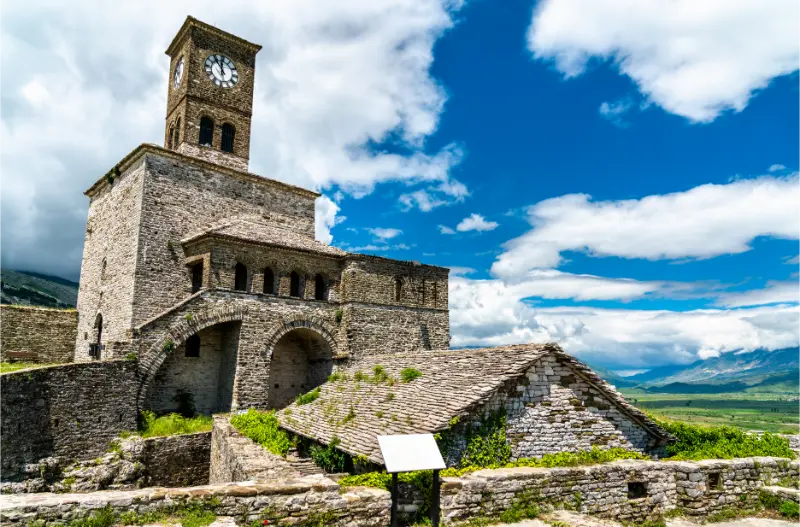
    Clock Tower Castle Gjirokaster UNESCO World Heritage Albania 2

    The core route takes 3–4 hours excluding long museum visits and uses steep polished cobbles and repeated elevation changes. The best timing is morning or late afternoon, especially in summer. The estimate does not include a long museum visit or a full restaurant meal.

    Route at a glance

    QuestionAnswer
    Core walking time3–4 hours excluding long museum visits
    Terrainsteep polished cobbles and repeated elevation changes
    Best timingmorning or late afternoon, especially in summer
    NavigationEasy with an offline map
    Best forFirst-time visitors who want to understand the city at street level

    Before you start

    Save the next few stops offline before leaving the hotel. A self-guided route is most enjoyable when you are not staring at the phone at every corner. Wear shoes that match the surface: polished stone, cobbles and steep castle lanes matter more than distance in several Albanian historic towns.

    Treat the route as a framework rather than a contract. If one museum becomes unexpectedly interesting, stay longer and remove a weaker later stop. The aim is to understand the destination, not to complete a list.

    Step-by-step walking route

    1. Old Bazaar

    Begin in the historic commercial center. Walk once through the core without shopping so you understand how the main lanes branch toward the castle and traditional-house neighborhoods. Return later for coffee and crafts when you are no longer carrying them uphill.

    2. Bazaar Mosque

    Stop at the Bazaar Mosque. It sits directly inside the commercial fabric and helps explain the Ottoman-era urban structure. Keep the visit respectful and proportional to your interest.

    3. Skenduli House

    Climb toward Skenduli House. One traditional house in depth is more useful than racing through several. Pay attention to guest rooms, defensive design, storage and decorative interiors.

    4. Ethnographic Museum area

    Continue toward the Ethnographic Museum area. If you already toured Skenduli House, decide whether a second interior adds enough value. The surrounding Palorto streets themselves are worth the effort.

    5. Return toward the bazaar before the castle climb

    Reset the route by returning toward the central bazaar. Stop for water or coffee before the separate climb to the fortress. This avoids wandering across the slope and losing energy on unnecessary elevation changes.

    6. Gjirokaster Castle

    Enter Gjirokastër Castle. Walk the ramparts, look across the Drino Valley and choose museum sections according to your interests. The wide view is the clearest explanation of the city’s difficult topography.

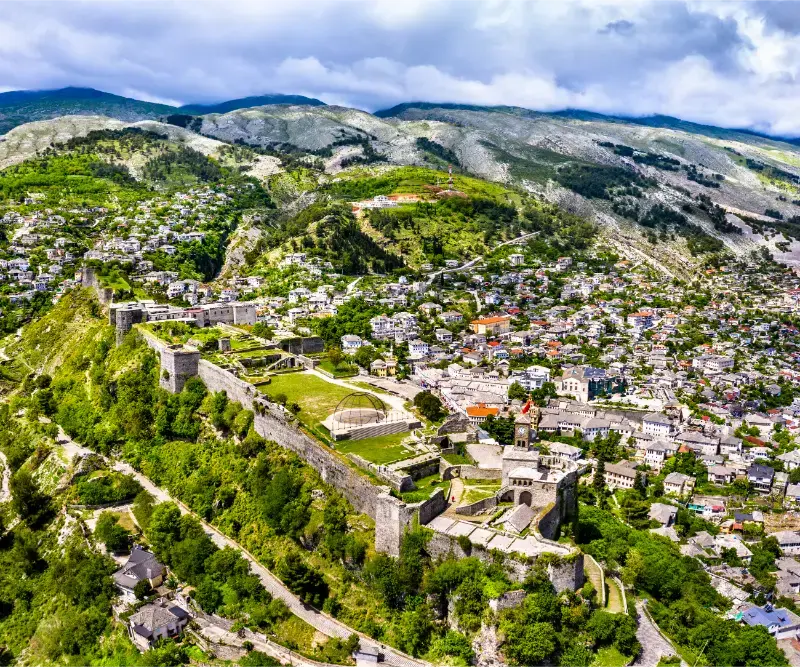
    Aerial View Of Gjirokaster Fortress Albania

    7. Optional Cold War Tunnel

    If twentieth-century history is a priority, add the Cold War Tunnel when access and time fit. If you already spent a long time inside house museums, keep the rest of the day outdoors instead.

    8. Return to the Old Bazaar

    Descend carefully and finish where you began. This is the right time to shop, eat and revisit the most interesting side lane because there is no longer another hill ahead.

    Easier version

    Take a taxi to the castle first, explore the fortress, then walk downhill to the bazaar and choose one traditional house. This removes the hardest ascent.

    Short version

    For about two hours, do the bazaar, mosque, one traditional house and a short old-town loop. Visit the castle separately by taxi.

    How to extend the walk

    Use extra time for quieter Palorto or Dunavat lanes rather than adding a distant attraction. Antigonea and the Blue Eye belong to separate day trips.

    Where to stop for food and coffee

    The bazaar is the natural place to eat once the steep walking is finished. Try qifqi or another regional dish using the Gjirokastër Food Guide as a reference.

    Pacing the walk

    A good rhythm is forty to sixty minutes of sightseeing followed by a short seated break. This is particularly important in summer and in steep towns. A ten-minute coffee or water stop often improves the final hour more than trying to walk continuously.

    If you start later than planned, remove an indoor stop instead of speeding up every street. Museums can be visited another time; the atmosphere of a neighborhood is easy to miss when you are checking the clock every few minutes.

    Heat, rain and seasonal adjustments

    In July and August, exposed squares and castle approaches are much more comfortable early or late. Spring and autumn usually support a continuous half-day walk. After rain, polished stone and cobbles can become slippery, so reduce speed and avoid unnecessary shortcuts on stairs.

    Winter walking is often excellent in year-round cities, but shorter daylight means I prefer to finish the route before dark unless the final section is a well-lit promenade or pedestrian center.

    What to carry

    • Comfortable shoes with grip.
    • Water, especially from late spring through early autumn.
    • Sun protection for exposed squares, castles and waterfronts.
    • A light layer outside summer or when the route ends after sunset.
    • Some Albanian lek for cafés, museums and small purchases.
    • An offline map plus your accommodation address.
    • A compact bag rather than heavy shopping or luggage.

    Navigation strategy

    I save only the next two stops rather than every turn. That leaves room to take a pleasant side street without feeling that I have gone off-plan. When a landmark is visible—a castle above you, a cathedral, the sea or a major square—I use the city itself for orientation before checking the phone again.

    Avoid blindly following the shortest digital route if it sends you onto a traffic-heavy road or a very steep staircase. A slightly longer pedestrian street is usually the better travel experience.

    Common mistakes

    • Starting the hardest uphill section at midday in summer.
    • Entering every museum simply because it appears on the route.
    • Wearing smooth-soled city shoes on polished stone.
    • Adding a distant viewpoint and turning a compact walk into a roadside hike.
    • Shopping heavily at the beginning and carrying purchases for the rest of the route.
    • Ignoring opening or worship conditions at religious buildings.

    Photography without slowing the whole walk

    Take one wide establishing frame, one detail and one second composition if the light is genuinely good, then keep moving. Repeating the same photo from ten nearby positions can turn a three-hour city walk into a full-day project for everyone traveling with you.

    Early morning gives cleaner streets and softer light in historic centers; late afternoon is usually stronger for promenades and viewpoints. Inside museums and religious buildings, follow the local photography rules rather than assuming a phone camera is permitted.

    Where to stay for this walk

    For a short stay I prefer a walkable base so the route can begin at the hotel and end near dinner. Check current accommodation in Gjirokaster on Booking.com.

    Clock Tower Castle Gjirokaster UNESCO World Heritage Albania

    Useful related guides

    Frequently asked questions

    Do I need a professional guide?

    No for navigation. A professional guide can add historical depth, but the route is deliberately simple enough to follow independently.

    Should I buy museum tickets in advance?

    For ordinary city museums, check current official information close to your visit rather than assuming advance booking is required. Time-sensitive rules can change.

    Can I do the walk with children?

    Usually yes if you reduce museum time and choose the easier version in steep towns. Heat and cobbles often matter more than distance.

    What if it rains?

    Move an indoor stop earlier, shorten exposed sections and slow down on polished stone. Do not force a castle climb in slippery conditions simply because it was on the plan.

    Can I split the route over two days?

    Yes. A slower route often works better if you also want museums, shopping and long meals.

    Final advice

    The best self-guided walk keeps the interesting walking and removes the boring walking. Use a taxi when it eliminates an unpleasant hill or long traffic corridor, then spend the saved energy inside the historic center, on the promenade or at the viewpoint you actually came to see.

    How to make the route feel less like a checklist

    I leave one twenty- to thirty-minute block completely unassigned. It can become a café, a small side street, a bench, a shop or extra museum time. This unplanned block is often where the city starts to feel personal rather than pre-programmed.

    I also decide in advance which stop I am willing to remove. That sounds negative, but it prevents the weakest attraction from controlling the pace of the entire day. If the weather is excellent, I usually protect outdoor streets and viewpoints; if it rains, I protect the best museum instead.

    Arrival and departure logistics

    Do not carry large luggage through the route. Leave bags at your hotel or a legitimate storage option and begin walking only after check-in logistics are solved. On departure day, finish the route with enough buffer to retrieve luggage without racing through traffic.

    If you are moving to another city immediately afterwards, eat before the transfer or carry a simple snack. A delayed bus or road segment feels much less stressful when you are not trying to solve food, tickets and luggage at the same time.

  • 1 Day in Himare: Beach Time, Porto Palermo and Old Himara at Sunset

    1 Day in Himare: Beach Time, Porto Palermo and Old Himara at Sunset

    Himarë is the Riviera base where one day can feel complete without driving very far. You have an easy central beach, Porto Palermo close to the south and the old village on the hill above town. That combination gives you sea, history and sunset without turning the day into a coastal marathon.

    I would not use a one-day visit to chase Gjipe, Dhërmi, Borsh and Qeparo as well. Those are excellent excursions when you have more nights. With one day, the best choice is to stay close to Himarë and actually enjoy the water.

    A one-day itinerary works only when the route is selective. I would rather see four places properly than spend the day moving between eight map pins. The plan below is built around geography, heat and energy: the most demanding or time-sensitive stop comes first, lunch is used as a real break, and the late afternoon is reserved for the part of the destination that becomes better when the light softens.

    The times are a planning framework, not fixed opening hours. Museum schedules, archaeological-site access, ferries, seasonal services and weather can change. Check the current opening information for the one attraction you care about most the evening before, then keep the rest of the day flexible.

    One-day itinerary at a glance

    TimeStopWhy it fits
    08:30Spile or PotamMorning swim
    10:30Coffee / changeKeep the morning slow
    11:15Porto PalermoCastle and bay
    13:30LunchHimare or Qeparo direction
    15:00Rest / second swimDo not add a distant beach
    17:30Old HimaraVillage and castle area
    19:30Dinner in SpileWalkable finish

    Step-by-step itinerary

    08:30–10:30 — Morning swim in Spile or Potam

    Start with the sea before the day becomes hot and busy. Spile is central and convenient; Potam is a good alternative if you are staying nearby. The official tourism site describes Himarë Beach as a popular central Riviera beach with clear water and nearby visitor services. Use the morning for swimming rather than a long breakfast.

    Himare Beach Sunny Albanian Riviera Coastline 2

    10:30–11:15 — Coffee and transition

    Return to the room, change and have coffee. This short reset keeps the rest of the itinerary from feeling like you are carrying beach equipment through a castle.

    11:15–13:15 — Porto Palermo

    Drive or take a taxi south to Porto Palermo. Visit the fortress and look across the bay. Porto Palermo works perfectly in a one-day Himarë itinerary because it adds history without a long transfer. Do not add Qeparo automatically unless you are deliberately replacing the afternoon rest.

    13:30–15:00 — Lunch

    Eat back in Himarë or along the route. If food is a priority, use the Himare Food Guide to balance seafood with the mountain and village side of local cuisine. A long lunch is not wasted time on the Riviera; it is what makes the afternoon manageable.

    15:00–17:00 — Rest or second swim

    Choose rest, a second central swim or a slow waterfront walk. This is the part many itineraries incorrectly fill with another beach drive. Himarë is more enjoyable when one day includes a period where nothing has to be achieved.

    17:30–19:00 — Old Himara

    Go uphill to the old village and castle area as the light improves. The official tourism agency highlights Himarë’s old settlement and surviving castle walls as part of the destination’s historic identity. Walk the lanes, visit respectfully around churches and use the elevated setting for the best end-of-day views.

    19:30 onward — Dinner in Spile

    Return to the center, park and leave the car. Dinner near the waterfront is the natural finish. If you have only one night, this is also when Himarë feels most like a real base rather than a beach stop.

    If you start late

    If you arrive late, skip Porto Palermo and keep the day in Himarë: beach, late lunch, old village and dinner. Do not rush the castle visit at closing time simply to say you saw it.

    Can you do this without a car?

    Without a car, Himarë still works. Use a taxi for Porto Palermo and Old Himarë or negotiate a simple round-trip transfer. Central Spile and Potam are walkable from many accommodations.

    If you are traveling with children

    Families can skip the old-village hill if children are tired and stay on the waterfront instead. The Albanian Riviera with Kids gives broader family advice.

    With children, I protect one anchor activity and remove the weakest secondary stop. A successful family day is one where everyone still has energy for dinner, not one where every attraction was technically completed.

    If the weather changes

    If swimming is canceled by weather, use Porto Palermo and Old Himarë as the main stops, have a long lunch and explore nearby village streets. Avoid a long coastal drive in poor visibility simply to replace beach time.

    Himare Beach Sunny Albanian Riviera Coastline

    What to pack for the day

    • Comfortable shoes appropriate to the terrain described in the itinerary.
    • Water and sun protection from late spring through early autumn.
    • A light layer outside midsummer or for lake, mountain and evening sections.
    • Some Albanian lek for small purchases, cafés, parking or local transport.
    • Offline maps plus a screenshot of your accommodation address.
    • Swimwear only when the itinerary genuinely includes the beach, lake or thermal water.
    • A compact day bag rather than carrying your full luggage between stops.

    Where to stay for a one-day visit

    For a one-day itinerary, location matters more than room size. Stay close enough to begin the first stop without a long transfer and finish dinner without another complicated drive. Compare current accommodation in Himare on Booking.com.

    Common one-day mistakes

    • Adding a famous excursion simply because it appears close on a map.
    • Scheduling the hardest outdoor stop in the middle of a hot summer day.
    • Entering every museum instead of choosing the one that best matches your interests.
    • Changing parking spaces repeatedly in a compact city or beach resort.
    • Booking a fixed evening activity immediately after a long road transfer.
    • Skipping lunch and then losing the late afternoon to fatigue.
    • Treating travel time as wasted time instead of keeping the route geographically tidy.

    If you have more time

    With three days, add Gjipe/Vuno in one direction and Qeparo/Borsh or a boat day in the other. See 3 Days in Himare.

    An extra day should create a different experience rather than a longer version of the same route. Use it for a mountain, lake, boat, village or museum block that did not fit naturally into the first day.

    Useful planning guides

    Frequently asked questions

    Is one day enough for Himare?

    Yes for the town, one beach block, Porto Palermo and Old Himara.

    Which beach should I choose?

    For one day, use the most convenient good beach near your accommodation rather than driving far.

    Do I need a car?

    No, but a car or taxi simplifies Porto Palermo and the old village.

    Should I add Gjipe?

    Not to this one-day route. Gjipe deserves a separate half or full day.

    Where should I stay?

    Spile is best for walkability; Potam is a useful quieter beach-oriented alternative.

    Final advice

    A good one-day itinerary should leave you with a clear memory of the destination rather than a list of places you hurried through. Protect the first major stop, keep the route compact and let the late afternoon become slower. If something takes longer because you are enjoying it, remove the next optional stop instead of rushing the experience you are already having.

    How I would pace the day

    I divide the day into three energy levels. Morning is for the demanding or important attraction, midday is for food and the easiest sightseeing, and late afternoon is for the place that benefits from softer light or local evening activity. This simple structure is more reliable than assigning a new attraction to every hour.

    I also keep at least thirty minutes unassigned. That buffer absorbs a slow breakfast, parking search, queue, coffee break or a place that turns out to be more interesting than expected. Without a buffer, one small delay forces the rest of the itinerary into a permanent rush.

    One more planning detail: the first and last hour

    The first hour should never depend on an uncertain transfer if you can avoid it. Sleep close to the first stop, or resolve the taxi, parking or bus plan the night before. The last hour should be even simpler: dinner, a promenade, a café or the walk back to the hotel. Ending a full day with another complicated transfer usually adds stress without adding much travel value.

    If you are continuing to another city that evening, remove the last sightseeing block and leave in daylight whenever the route is unfamiliar. A one-day visit remains successful even when you depart an hour earlier than the theoretical maximum.

    How to keep the Riviera day relaxed

    The biggest advantage of a one-day Himare itinerary is that the distances can stay short. I would not use the spare hour created by an early start to add another village automatically. Keep that margin for a longer swim, a slower lunch or a second stop at the hotel before sunset. On the Riviera, repeated changes of clothes, parking searches and beach-access roads can consume more time than the map suggests. A day that looks less ambitious on paper often feels much richer in practice.

    Panoramic Jale Beach Himare Albanian Riviera Resorts Construction Background

    Parking and beach logistics

    If you have a car, secure a legitimate parking space and avoid moving it for every short waterfront stop. In high summer, the value of a good space is higher than the value of seeing one more nearby beach. If your accommodation is in Spile or Potam, ask whether you can leave the car there after checkout or before check-in; even when the answer is no, knowing the rule in advance lets you plan Porto Palermo and the old village without improvising.

    Want more options? See the complete things-to-do guide for attractions and activities that do not fit this one-day route.

    Staying 2 days? Use the dedicated 2-day itinerary for the balanced 48-hour version.

  • Berat to Çorovodë and Osum Canyon Scenic Drive

    Berat to Çorovodë and Osum Canyon Scenic Drive

    The drive from Berat toward Çorovodë and Osum Canyon is one of central Albania’s most satisfying day trips because the road gradually exchanges UNESCO streets for river valleys, villages and dramatic limestone scenery.

    Osum Canyon lies near Çorovodë and stretches for roughly 26 km, with steep limestone walls, waterfalls and unusual formations. Albania’s tourism authority classifies it as a natural monument and highlights both rafting and hiking. The scenic-drive version is about reaching viewpoints and understanding the Skrapar landscape without pretending the canyon can be experienced entirely from a car.

    Route at a glance

    Best baseBerat
    Best forRoad trips, photography, landscapes and slow travel
    Ideal timeHalf day to one full day; longer when an overnight is recommended
    VehicleNormal rental car for the main route in suitable conditions; check side roads separately
    Key ruleUse current road signs and local advice rather than old route descriptions

    Why drive the Berat to Osum Canyon scenic drive?

    The journey follows the Osum system inland, passing cultivated valleys and increasingly rugged terrain. Çorovodë is the practical service center, while the canyon south of town becomes the visual climax. In spring, water makes the gorge more dramatic; in drier periods, geological shapes are easier to study from some viewpoints.

    Start early from Berat, make Çorovodë your lunch or coffee anchor and decide whether the day is primarily sightseeing or a booked rafting activity. Do not combine a fixed rafting departure with a long list of roadside stops unless the operator has given you a clear meeting time and location.

    Best direction and route logic

    Out-and-back from Berat is the normal pattern. The outward drive builds toward the canyon; the return is easier psychologically because you already know the road and can skip stops that were better in morning light.

    Berat Historic South Albania Night

    This is a regional road used by local traffic, not a continuous tourist boulevard. Expect changing road width and settlement speed zones. Canyon viewpoints can have limited parking, so arrive early and never leave the car where it blocks a bend or access road.

    The stops I would prioritize

    Berat

    Leave after breakfast and keep your UNESCO sightseeing for a separate block of time. Starting the road trip with a rushed castle visit usually makes the entire day late.

    Osum valley villages

    Use one village or roadside café stop to break the drive and observe the agricultural landscape. You do not need to stop at every viewpoint.

    Çorovodë

    The town is the practical hub for food, fuel, guides and rafting operators. It also has the nearby historic Kasabashi Bridge.

    Osum Canyon viewpoints

    Choose established public viewpoints and remain behind barriers or safe edges. The canyon walls can be very high and photographs can distort the sense of distance.

    Rafting or short walk

    If you have a booked activity, let that be the day’s main event. If not, take a short walk from a safe access point and enjoy the geology without forcing a river-level descent.

    Best time of year

    Spring is the classic season for higher water and rafting, while late spring and autumn are excellent for hiking and viewpoint travel.

    Summer can be very hot in exposed canyon areas. Start early, carry substantial water and avoid long midday walks with children or older travelers.

    Rain can make canyon paths and roadside surfaces slippery. After storms, do not descend toward the river without current local advice.

    How I plan fuel, navigation and rental-car details

    A scenic drive is not the same thing as the fastest route. I plan these days with generous margins, because the point is to stop at viewpoints, walk through a village, have coffee, photograph the landscape and change the plan if weather or traffic make one section less appealing. If a navigation app suggests a shortcut that leaves the main road, I compare it with recent satellite imagery or local advice before following it.

    Fuel planning is simple on the main corridors but becomes more important in mountain districts. I start rural driving days with more than half a tank, carry water and a basic snack, and avoid depending on one small filling station remaining open late. The same logic applies to cash: cards are increasingly common, but small cafés, parking areas and village businesses may still be easier with lek notes.

    For rental cars, the contract matters more than the vehicle badge. Check whether unpaved roads are excluded, what the tyre and windscreen policy covers, and whether cross-border driving requires written permission. Do not choose a rough detour simply because the car has high ground clearance. Insurance exclusions can turn a minor road mistake into an expensive problem.

    For the wider driving basics, read Renting a Car in Albania and Fuel and Petrol Stations in Albania. If your route includes faster new roads or tunnels, also check Albania Road Tolls and Vignettes before departure.

    Photography without unsafe roadside stops

    The best road-trip photographs usually come from places where you can leave the vehicle completely out of the traffic lane. I would rather miss one dramatic angle than stop on a blind bend, reverse unexpectedly or stand beside moving traffic. Use village walks, established viewpoints and restaurant terraces to photograph the landscape more safely.

    Morning and late-afternoon light are useful not only for color but also for comfort. In summer, soft light reduces heat at exposed viewpoints; in autumn and winter, however, the same late light can tempt you into driving the final mountain section after dark. Protect daylight first and photography second.

    Families, older travelers and motion sickness

    Families can enjoy the drive and viewpoints, but canyon edges demand close supervision. Rafting suitability depends on current water, operator rules, age and equipment; confirm directly rather than assuming a generic family rating.

    Older travelers can enjoy scenic-drive days very well when stops are chosen for easy parking and short walks. The practical questions are toilets, shade, stable surfaces and how often you need to get in and out of the car. Do not build the itinerary around steep viewpoints if someone in the group would be happier with a café terrace and a broad landscape view.

    Winding roads can cause motion sickness even for people who are comfortable on motorways. Sit where the passenger can see forward, keep the cabin cool, avoid heavy meals before the bendiest section and stop before symptoms become severe.

    Campervans and motorcycles

    A campervan is fine for the main transfer, but large vehicles need extra care at small viewpoint parking areas. Avoid trying to turn around on narrow canyon roads after passing a safe parking place.

    Motorcyclists get exceptional visibility on these routes but are more exposed to gravel, wind, heat and sudden weather. Protective gear, conservative cornering and avoiding late-afternoon fatigue matter more than maximizing the number of stops.

    Where to stay

    Berat remains the strongest base for most visitors, while Çorovodë is better if rafting starts early or you want a quieter Skrapar overnight.

    For current availability, map location and cancellation terms, compare accommodation around Berat on Booking.com. I check parking details in the property description and then message the accommodation when the final access is in an old town, beach lane or mountain village.

    Berat Castle Church And Valley Albania

    A realistic one-day plan

    Leave Berat in the morning, reach Çorovodë before lunch, then spend the afternoon on the canyon according to season: viewpoints and walking, or a pre-booked rafting experience. Return before darkness unless you are staying locally.

    If you have a second day

    Use a second day for Bogovë, Mount Tomorr or a deeper Skrapar village route. Separating them gives you more time and less pressure to drive mountain roads late.

    Bogovë Waterfall and Mount Tomorr are important attractions in the wider region, but each adds substantial time. I would not combine both with Osum Canyon in one day from Berat.

    Common mistakes to avoid

    • Trying to visit Berat Castle, Osum Canyon, Bogovë and Tomorr in one day
    • Parking on blind bends near canyon viewpoints
    • Walking toward the river after heavy rain without local advice
    • Assuming rafting runs the same way in every season
    • Returning to Berat after dark simply to avoid one overnight

    Road safety and weather checks

    Albania’s landscapes change quickly with elevation. A sunny start near the coast or in a valley does not guarantee the same conditions on a pass two hours later. Check the forecast for the highest point of the route, not only the starting city, and take local advice seriously after heavy rain, snow or wildfire warnings.

    If a road is closed, damaged or controlled by police or road workers, turn the scenic drive into a shorter day. Do not try to bypass barriers on minor roads. The purpose of these routes is to enjoy Albania, not to prove that a saved itinerary can be completed regardless of conditions.

    Official information and route context

    For destination and landscape context, consult Albanian National Tourism Agency – Osum Canyon. Official tourism pages are useful for geography and heritage, while live road conditions still need to be checked close to departure.

    For destination and landscape context, consult Albanian National Tourism Agency – Skrapar. Official tourism pages are useful for geography and heritage, while live road conditions still need to be checked close to departure.

    Useful Wonderful Albania guides

    Tours and activities

    A private driver can be useful when nobody in your group wants to drive mountain roads, while a guided activity is valuable when the main experience is rafting, birdwatching or a protected site rather than the road itself. Compare the exact itinerary and cancellation policy before booking; a generic regional tour does not automatically follow the scenic route described here.

    Frequently asked questions

    How far should I plan beyond Çorovodë?

    Plan by the viewpoint or activity you actually want, not by a vague “drive the whole canyon” goal. Confirm the current access point locally.

    When is rafting season?

    Higher spring water is commonly associated with rafting, but exact operations depend on current river conditions and the operator.

    Can I visit Osum Canyon without rafting?

    Yes. Viewpoints and short walks can make a very good day trip.

    Is it realistic as a day trip from Berat?

    Yes, especially if you start early and make the canyon the main attraction rather than stacking several remote detours.

    Final thoughts

    The Berat to Osum Canyon scenic drive works because the road connects landscapes that are worth stopping for, not because the route is difficult or famous. Build enough time into the day to leave the car, walk, eat and change the plan when the weather tells you to.

    Albanian Old Berat View Berat Castle Walls Tiled Roofs Houses 7

    That slower approach is also safer. Albania’s most memorable driving days are rarely the ones with the highest average speed or the most pins saved on a map; they are the ones where the road itself becomes part of the travel experience.

    Motorcycle route: Berat to Osum Canyon by Motorcycle: Çorovodë Road, Viewpoints and Riding Tips.

  • Tirana to Krujë & Qafë Shtamë by Motorcycle: Easy Mountain Day Ride

    Tirana to Krujë & Qafë Shtamë by Motorcycle: Easy Mountain Day Ride

    Tirana to Krujë & Qafë Shtamë by Motorcycle is best treated as a touring experience, not a speed challenge. Albania compresses coast, river valleys, plateaus and alpine roads into short map distances, but a motorcycle day can still become long because of bends, village traffic, construction, photo stops and sudden weather changes. This guide is built around a realistic pace: ride the interesting section in daylight, stop often enough to enjoy it, and keep an alternative plan if conditions change.

    I would use this route for riders who already have normal road experience and are comfortable sharing narrow roads with local cars, vans, agricultural vehicles and occasional livestock. The route focuses on established roads and tourist destinations rather than technical off-road riding. Side roads, gravel tracks and mountain shortcuts can change quickly, so they should be optional choices made after a local check, not promises built into the itinerary.

    Quick route overview

    • Start: Tirana
    • Finish: Tirana
    • Core route: Tirana → Krujë → Qafë Shtamë National Park → Krujë/Tirana return
    • Best bases: Tirana
    • Style: scenic road touring with cultural and nature stops; no off-road ability is assumed.
    • Key rule: use daylight, fuel early, and confirm mountain or ferry conditions before committing.

    Why Tirana, Krujë and Qafë Shtamë works so well by motorcycle

    This is the most accessible motorcycle day ride in the cluster because it starts from Albania’s main transport hub and combines a major cultural stop with a mountain landscape. Krujë gives the day a clear purpose even if weather prevents the higher extension: the castle and old bazaar can fill several hours, while Qafë Shtamë adds forest, mountain air and views when conditions are good.

    Aerial Drone View Kruja Castle Fortress Inside Kruja Tower Mountains Background Albania 2

    A motorcycle makes the transitions more immediate than a car: temperature changes are obvious, the smell of pine or sea air becomes part of the ride, and small pull-offs can turn into memorable pauses. The downside is that the rider is also more exposed to wind, heat, rain, poor drainage, dust and loose material. The same landscape that makes the route beautiful is exactly why conservative riding matters.

    Route breakdown

    StageBest approach
    Tirana departureLeave outside peak traffic if possible and start with a full tank.
    KrujëPark before the most congested old-bazaar lanes and explore on foot.
    Qafë ShtamëTreat the mountain road as a weather-dependent extension rather than an obligation.
    ReturnCome back before darkness if you are unfamiliar with the road.

    The section I would plan most carefully

    The official tourism page describes Qafë Shtamë as a forested mountain park near Krujë, suited to nature walks and photography. That does not mean every road or side track inside the wider area is appropriate for every motorcycle. Stay on the route that matches your bike and skill level, and do not interpret a map line as proof of a maintained paved road. After rain, ask locally before taking any optional unpaved branch.

    I never make a motorcycle itinerary depend on an exact average speed. Navigation apps are useful for orientation, but they do not know how long you will spend behind a truck, whether a village street is busy, how many viewpoints you will stop at, or whether a shower has pushed gravel across a bend. Build margin into every stage and decide in advance which stop can be dropped if the day runs late.

    How I would ride the day

    Krujë is easiest when you stop riding and become a pedestrian. The historic area can be crowded, steep and awkward for a loaded bike. Choose secure, legal parking and carry only valuables with you. If you are returning to Tirana late, remember that the final urban traffic may be the most tiring part of the day even though the mountains were more dramatic.

    Traditional Ottoman Market Kruja Tirana Flea Market Albania

    My preferred rhythm is simple: a proper breakfast, fuel before the scenic section, one meaningful stop every hour or so, and a longer break around lunch. That is usually faster overall than riding until you are dehydrated or mentally tired and then needing an unplanned long recovery. If you are carrying a passenger, double down on comfort breaks and make sure they know when it is safe to get on and off the motorcycle.

    Road surface, corners and changing conditions

    Main intercity roads in Albania can be enjoyable on a road or touring motorcycle, but the experience is not uniform. Fresh asphalt can turn into patched surfaces, roadside works or dusty village sections without much warning. After rain, look for mud, small stones and water crossing the road. In hot weather, expect polished surfaces near busy junctions and fuel stations. None of this is a reason to avoid the ride; it is a reason to keep enough reserve that a surprise does not become an emergency.

    Blind corners deserve special caution because another vehicle may be partly over the center line, a bus may need extra space, or an animal may be standing where you cannot see it. Keep your line, leave margin and do not copy local drivers who overtake where you would not. If the road becomes narrower than expected, slow before the bend rather than trying to fix the situation mid-corner.

    Weather and the best season

    Late spring and early autumn are often the easiest periods for motorcycle touring because the strongest summer heat is less intense and many tourism services are still available. High mountain roads can remain cold or unsettled much later into spring and earlier into autumn than the coast. July and August are possible, but protective gear plus coastal heat and traffic can make short distances exhausting. Winter requires a completely different plan and is not the season to assume mountain routes are rideable.

    Check the forecast for the highest point of the route, not just the overnight town. Wind is especially important on exposed ridges, lake shores and the coast. If thunderstorms are developing, avoid racing the weather; stop somewhere safe, let the worst pass and shorten the route if necessary. A motorcycle holiday is easier to rescue by losing one viewpoint than by forcing a dangerous final hour.

    Fuel, food and water

    I refuel whenever the route leaves a larger town for mountains or a long rural section, even if the tank is not close to empty. Petrol stations are common on major corridors, but remote opening patterns and card acceptance should not be assumed. Carry a payment backup and do not plan to arrive on reserve at a small station that may be closed.

    Water deserves the same discipline. In summer I start the day hydrated and carry enough to get through an unexpected delay. Albania’s cafés and restaurants make food stops easy in towns, but scenic roads are better when lunch is treated as a planned rest rather than something you will find at the exact moment you become hungry.

    Navigation: use maps, but do not obey them blindly

    Download offline maps before leaving your accommodation and save the main stops rather than following a single complicated line. A navigation app may suggest a minor road because it appears shorter; that does not tell you whether the surface suits a loaded touring motorcycle today. When the proposed shortcut looks unexpectedly rough, steep or empty, turning around is often the professional decision.

    For remote mountain stages, ask your guesthouse or a local driver about the current main road. A simple question such as ‘is this the normal paved route today?’ can save a lot of trouble. Keep the phone charged, protect it from heat and rain, and carry a power bank or motorcycle charging solution that you have already tested.

    Motorcycle choice, tires and luggage

    You do not need a large adventure motorcycle for the routes in this cluster. A middleweight road bike, touring motorcycle, scooter of suitable capacity or adventure bike can all work when ridden within their limits. What matters more is reliable tires, brakes, cooling, mirrors and lights. If the motorcycle is rented, inspect it before departure and photograph existing damage.

    Keep luggage narrow and secure. Wide hard cases can make filtering or passing parked cars more awkward, while soft bags need protection from the exhaust and moving parts. Recheck straps after rough pavement and after the ferry if your route includes one. Valuables should come with you during long sightseeing stops; do not make the motorcycle a visible storage locker.

    Parking and sightseeing stops

    The best motorcycle route is ruined if every stop becomes a parking argument. In historic centers, villages and beach areas, use a legal space that does not block doors, pedestrian lanes or local traffic. Cobblestones, gravel shoulders and sloping surfaces can be awkward with a loaded bike, so think about how you will leave the space before putting the side stand down.

    At viewpoints, never stop in the traffic lane or on the outside of a blind corner. If there is no safe pull-off, continue to the next one. For monasteries, archaeological sites, old towns and nature areas, I prefer to park once and walk; it reduces risk, avoids unnecessary engine noise and usually produces a better visit.

    Where to stay on a motorcycle trip

    For Tirana, Krujë and Qafë Shtamë, I would choose accommodation based on secure or sensible overnight parking, not only room price. Message the property before booking if parking is essential and ask whether the motorcycle can be placed inside a courtyard, private area or clearly defined space. You can compare places to stay on Booking.com, then confirm the exact parking arrangement directly with the host.

    Kruja Castle Fortress Seen Aerial Drone View Tower Kruja Mountains Background Albania

    A central hotel is not always the easiest motorcycle base. In an old town, a property five minutes away on foot may be much simpler than trying to ride into a pedestrian or cobbled core. Conversely, a remote guesthouse can be excellent if the final approach is suitable for your bike. Ask about the last kilometre, especially after heavy rain.

    Safety habits that matter more than riding fast

    • Wear a proper helmet and protective riding gear even when the day is hot.
    • Assume gravel, animals or a slow vehicle may appear beyond any blind bend.
    • Do not ride faster because a local car is following closely; let it pass when safe.
    • Avoid long mountain stages after dark when you do not know the road.
    • Separate alcohol tasting from riding completely.
    • Take a real break when concentration drops; fatigue is a route-planning problem, not a test of toughness.
    • Check the motorcycle each morning: tires, visible leaks, lights, brakes, chain/belt as applicable and luggage security.

    Responsible riding

    Scenic villages and protected landscapes are part of people’s homes and working environments. Keep exhaust noise down, especially early and late in the day. Do not spin wheels on unpaved viewpoints, ride onto beaches or meadows, or use protected land as an off-road playground. If a road is signed closed or access is restricted, respect it.

    Photography should never dictate a dangerous stop. Park safely, switch off the motorcycle and walk to the composition. Drones require separate legal and local checks and are not automatically appropriate in protected areas, near airports, military sites or crowded attractions.

    Tours and organized experiences

    Most riders will do these routes independently, but a local motorcycle tour can be useful if you want a rental, luggage transfer, mechanical support or someone who already knows current road options. Before paying, check the actual motorcycle model, insurance terms, deposit, protective equipment, mileage limits, breakdown procedure and whether the advertised route changes with weather.

    Related Wonderful Albania guides

    Official sources and current-condition checks

    Official tourism pages are useful for understanding destinations and protected landscapes, while ferry operators are the appropriate source for current vehicle reservations and departures. Road works, weather, access rules, opening hours and ferry schedules can change after publication, so recheck the time-sensitive parts shortly before riding.

    Frequently asked questions

    Is this route suitable for a normal road motorcycle?

    Yes for the established main-road version described here, provided conditions are suitable and you avoid unverified side tracks. A road bike does not need to prove anything by following a gravel shortcut.

    Do I need an adventure motorcycle?

    No. An adventure bike adds comfort on imperfect surfaces and luggage capacity, but route choice and riding judgment matter more than styling. Use a motorcycle you can control confidently at low speed and on cambers.

    Should I ride at night?

    I avoid planning unfamiliar mountain or rural sections after dark. Reduced visibility, animals, road debris and unlit vehicles make the experience less enjoyable and less forgiving.

    Can I do the route with a passenger?

    Yes if both rider and passenger are comfortable and the motorcycle is set up for the load. Reduce daily ambitions, use more breaks and keep luggage light enough that low-speed handling remains easy.

    What if the weather turns bad?

    Shorten the route, stay in the nearest practical town or move the ride to another day. Albania has enough attractions that a weather change does not need to become a riding emergency.

    Final perspective

    The best memory from a motorcycle trip through Tirana, Krujë and Qafë Shtamë should be the landscape and the feeling of movement through Albania, not a number on the speedometer. Plan less distance than you think you can cover, protect daylight, keep the bike in good condition and give yourself permission to change the route.

    That approach also makes the article’s route more future-proof: a new tunnel, a resurfaced section, a temporary closure or a ferry change does not destroy the trip. The core experience remains the same — ride between real places, stop often enough to understand them, and treat the road with the respect that mountain and coastal Albania deserve.