Tag: Family Travel

Practical articles about travelling in Albania with children and families.

  • Berat with Teenagers: Castle, Rafting, Old Town and Active Family Travel Tips

    Berat with Teenagers: Castle, Rafting, Old Town and Active Family Travel Tips

    Berat with teenagers can be one of the easiest ways to experience this part of Albania because older children can handle longer days, understand the history and participate in more active experiences than very young kids. Berat can work very well with teenagers if you avoid presenting it only as a pretty UNESCO town. The castle is a lived-in hilltop area to explore, the river divides two photogenic quarters, and the wider region opens the door to seasonal rafting, canyon scenery, waterfalls and countryside experiences. The key is to balance cobbled history with movement.

    Albanian Old Berat View Berat Castle Walls Tiled Roofs Houses 10

    This guide is designed for roughly secondary-school-age travellers, not for a specific legal age. Interests vary much more than birthdays. For a broader overview, start with Albania with Teenagers, then use this local guide to shape the days in Berat.

    Why Berat works with teenagers

    For active teens, an Osum Canyon rafting trip can be a standout when seasonal conditions and licensed operators make it appropriate. Outside rafting conditions, viewpoints, countryside walks and Bogovë can provide the outdoor counterweight to the old town. Check current conditions and safety rather than assuming an adventure product runs identically all year.

    Teenagers usually enjoy a trip more when they have some control over it. Give them one decision each day: the lunch stop, the order of two attractions, the beach, the soundtrack in the car or the evening dessert place. Albania is well suited to this because many days can be built around short drives, outdoor stops and informal meals rather than timed reservations. The aim is not to make the holiday child-centred; it is to give older children enough agency that the family travels as a small team.

    The best teen-friendly activities

    • Choose one active highlight: For active teens, an Osum Canyon rafting trip can be a standout when seasonal conditions and licensed operators make it appropriate. Outside rafting conditions, viewpoints, countryside walks and Bogovë can provide the outdoor counterweight to the old town. Check current conditions and safety rather than assuming an adventure product runs identically all year.
    • Use a challenge: give the teen a photo theme, navigation task, food mission or viewpoint to find.
    • Leave genuine free time: a swim, café stop or hour back at the hotel is part of the itinerary, not wasted time.
    • Let interests lead: choose photography, sport, food, history or nature rather than forcing the same activity mix on every teenager.

    For a wider activity list, compare the best things to do in Berat. The useful family trick is to shortlist five ideas, then let the teenager choose two of them. That keeps parents in control of logistics while giving older children real influence.

    Making history interesting instead of exhausting

    The castle is more engaging when teenagers are allowed to explore it as a neighbourhood and fortress rather than being marched through a list of churches. Give them a photography challenge, a viewpoint target or a short story about how people still live inside the walls. Mangalem and Gorica then make sense as living quarters below rather than “more old streets.”

    Before a historical visit, give just enough context to create curiosity. A two-minute story in the hotel can be more effective than reading an entire guidebook aloud at the gate. During the visit, let the teen photograph details, search for the best viewpoint or choose one object to investigate. Afterwards, move to food, water or a café so the day changes gear.

    Adventure, swimming and outdoor time

    Teenagers often need more movement than adults expect. Even a culturally rich itinerary benefits from a swim, bike ride, hike, boat ride or long walk. Check weather, sea conditions, operator safety and the actual difficulty of an activity. Online videos can make cliff paths, canyon swims or mountain trails look easier than they are. If a commercial adventure is involved, ask about minimum ages, equipment, insurance and cancellation rules directly with the operator.

    Summer heat changes family dynamics. A teenager who is bored may actually be dehydrated, hungry or exhausted after a late night. Put the most demanding activity in the morning, use the hottest hours for lunch, shade or a rest, and return outside later. On beaches, sun protection and water matter even when teens resist reminders. On mountain trips, the opposite problem can occur: weather changes quickly and a hot city morning does not guarantee warm conditions at altitude.

    Food with teenagers: give them ownership

    Albanian food is relatively easy to explore with teenagers because casual dishes can sit alongside more traditional meals. Byrek, grilled meat, pizza, pasta, salads, qofte, seafood, pastries and ice cream give cautious eaters a bridge, while adventurous teens can try regional dishes. Letting them order in a café or pay a small bill in lek is also a low-stakes way to build confidence. If allergies or strict diets matter, plan them separately rather than assuming a teen-friendly menu is medically suitable.

    Use the main Berat travel guide to understand neighbourhoods and the local rhythm, then avoid over-planning restaurants. A useful pattern is one meal chosen by parents for regional food and one chosen by the teenager for pure preference. That compromise tends to work better than making every meal a cultural lesson.

    Phones, Wi-Fi, photography and staying connected

    Phones are useful tools rather than automatic enemies on a teen trip. Download offline maps before road days, save hotel addresses, keep screenshots of tickets and agree how much battery must remain before anyone separates from the group. A portable battery is one of the simplest family-travel upgrades. If your teen wants to photograph or post constantly, set a few phone-free moments—perhaps at meals or during a short museum visit—instead of fighting over the device all day.

    For current festivals, concerts and temporary activities, check the official TEA Events platform shortly before the trip. Events can transform a quiet evening into the highlight of a teen stay, but schedules change, so live information is more useful than an old blog calendar.

    Evenings in Berat with teenagers

    Berat is quieter after dark than Tirana or Sarandë, which can be a strength. A riverside walk, dinner and dessert create a relaxed evening after a physically hotter day. Older teens may enjoy the freedom of walking a familiar riverside section while parents sit nearby, but the steep castle route is not the place for unsupervised wandering at night.
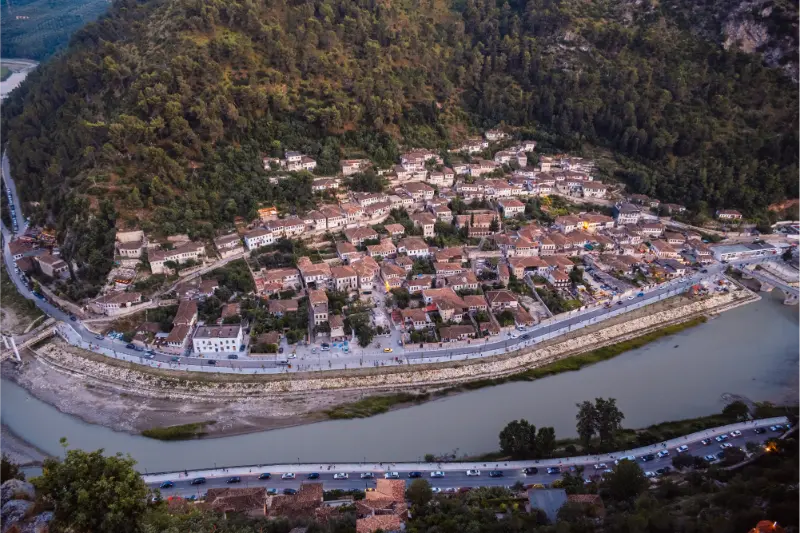
    Albanian Old Berat View Berat Castle Walls Tiled Roofs Houses 6

    Do not confuse “teen-friendly evening” with adult nightlife. In many Albanian destinations the best family evening is public: promenades, pedestrian streets, cafés, live events and late dinners. If an older teenager wants more independence, agree where they may go, how long they may stay and exactly where the family reconnects.

    Safety and independence

    Older children need different safety rules from toddlers. Agree what happens if the group is separated, which adult carries documents, whether the teen may take a taxi alone, and what time everyone meets at the hotel. Road safety deserves attention: pavements can be inconsistent, scooters and cars may appear quickly, and a confident teenager still needs to look carefully before crossing. Around water, cliffs and mountain paths, do not let social-media confidence replace local conditions or basic caution.

    A useful rule is that independence expands after the family has learned the area together. On the first evening, walk the route. On the second, an older teen might buy a snack or take a short promenade loop alone or with a sibling. The goal is confidence, not testing limits in an unfamiliar environment.

    Getting around Berat with older children

    Teenagers can usually handle public transport and walking better than small children, but that does not make every transfer efficient. Read how to get around Berat without a car and the local taxi and transfer guide. Decide each day whether walking, bus, taxi or car protects the family’s energy best.

    On road trips, give teens a role: navigation backup, playlist, photo stops or choosing the next break. It reduces the sense of being transported between adult decisions. Seat belts matter on every journey, and parents should not accept unsafe driving simply because a transfer is short.

    A day trip that actually suits teenagers

    Osum Canyon and the wider Skrapar direction are the main adventure extension. Wine/agritourism can also work with teenagers if the focus is food, countryside and production rather than an adult tasting itinerary. One outside excursion plus one full Berat day is usually enough for a short family stay.

    When choosing an excursion, ask whether the teen would still want to do it if no one could post a photo. That question separates genuine interest from checklist travel. One meaningful day trip is usually enough for a short stay; repeated early departures can make teenagers dislike a destination they barely experienced.

    Where to stay with teenagers

    Mangalem is atmospheric but can involve steps and uneven lanes; Gorica can be quieter; the flatter central area is easier for logistics. With teenagers, think about whether they can return independently from dinner or a riverside walk. A beautiful hillside guesthouse may be less convenient if every outing begins with a steep climb.

    For current options, compare hotels and apartments in Berat on Booking.com. Then confirm the exact bed setup, Wi-Fi, air-conditioning/heating and check-in rules directly with the property. With teens, two sleeping zones can improve the whole trip more than a luxury lobby.

    Budget and spending money

    A daily teen budget can reduce friction. Give older children a fixed amount for snacks, souvenirs or optional activities and let them decide how to use it. This also teaches the value of lek without requiring parents to approve every coffee or bracelet. Keep larger payments, transport and accommodation under adult control, and remember that card acceptance varies more outside the biggest cities.

    Agree in advance what the teen budget covers. If parents pay for lunch and transport, the teen can manage souvenirs and snacks. If the daily amount disappears by noon, resist immediately replacing it unless there is a genuine need. The small lesson is part of the travel experience.

    How fast should you travel?

    Avoid the adult temptation to prove that the family ‘saw everything.’ Teenagers often remember one strong activity, one funny meal and one sunset better than eight monuments. A useful rhythm is one anchor activity in the morning, one flexible block in the afternoon and an enjoyable evening. If the family has travelled hard for several days, schedule a slow morning before enthusiasm collapses.

    If you are moving through Albania, two or three nights in a base generally work better with teenagers than a sequence of one-night stops. Packing every morning removes the autonomy that older children value. Longer bases also let a family change plans if weather, energy or a new idea makes the original itinerary less appealing.

    A realistic 2-day plan for Berat with teenagers

    Day 1 — understand the place, then let the evening breathe

    Start with the main sights from the Berat things-to-do guide, but choose only two or three. Put the most important cultural stop before lunch, add a long food break, then use the afternoon for an outdoor or flexible activity. In the evening, follow the local rhythm rather than scheduling another formal visit.

    Day 2 — one memorable experience

    Use the second day for the experience that makes Berat different from the previous stop: a boat, beach, bike ride, mountain excursion, castle, lake or day trip depending on the destination. Keep the return time loose enough for the teen to choose the final meal or sunset stop.
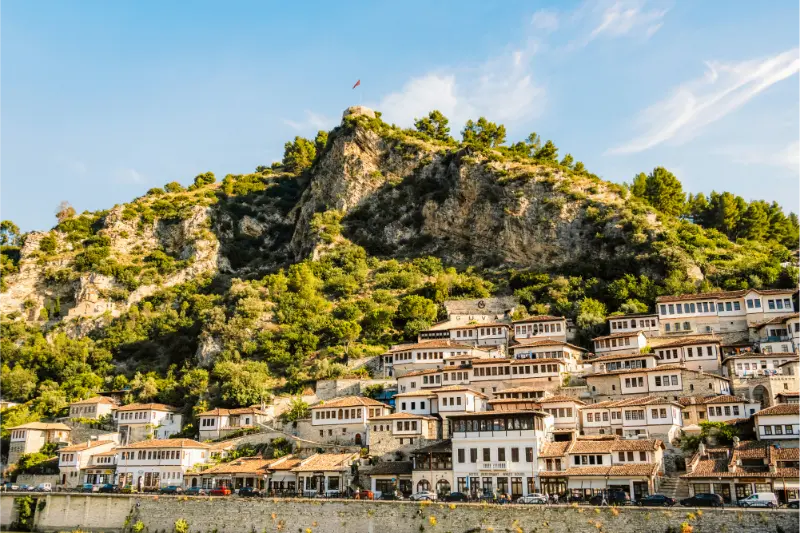
    Albanian Old Berat View Berat Castle Walls Tiled Roofs Houses 8

    What changes compared with travelling with younger kids?

    The existing Berat with kids guide focuses more on easier pacing and child-friendly logistics. With teenagers, you can walk farther and stay out later, but you also need to negotiate independence, interests and screen time. Do not simply use a children’s itinerary and make it longer; rebuild it around choice and more challenging experiences.

    Common mistakes families make with teenagers

    • Planning every hour and leaving no time for the teenager to make a choice.
    • Assuming a physically capable teenager automatically enjoys long museum days.
    • Booking the cheapest family room without checking privacy and bed configuration.
    • Turning every meal into a lesson about traditional food instead of allowing familiar choices too.
    • Using late nights every day and then expecting enthusiasm for 07:00 departures.
    • Treating phones only as a problem instead of using them for maps, tickets and photography.
    • Allowing risky swimming, cliff access or road behaviour because the teenager appears confident.

    Useful official resources before you go

    For national destination information, use the official Albania tourism portal. For current events and temporary experiences, check TEA Events. Re-check opening hours and transport shortly before the day itself because seasonal schedules can change.

    FAQ

    Is Berat a good destination for teenagers?

    For most families, Albania is easiest with teenagers when the itinerary mixes cities, water and at least one outdoor or adventure component. The exact balance depends on the teenager. A history-focused teen may love castles and communist-era sites; a sporty teen may care far more about hiking, rafting or swimming; a food-focused teen may remember markets and cafés.

    Do we need a rental car?

    Public transport can work between major cities, but a car often increases flexibility for family days outside urban centres. Do not rent automatically: in places with difficult parking, a bus plus occasional taxi can be easier. Compare the local no-car and taxi guides before deciding.

    Can older teenagers have some independence?

    For older teens, supervised independence is realistic in compact central areas once the family understands the neighbourhood. Start small: a café next door, a short promenade loop or ten minutes in a shop. Set a meeting point, keep phones charged and do not use a new city as the first place to test completely unrestricted independence.

    Final tips

    The best trip to Berat with teenagers is not the one with the longest sightseeing list. It is the one where the family shares a few strong experiences, gives older children meaningful choices and keeps enough flexibility for energy and weather. Use Berat as a place to travel with your teenager rather than simply bringing them along.

  • Borsh with Kids: Long Beach, Castle and Relaxed Riviera Family Travel

    Borsh with Kids: Long Beach, Castle and Relaxed Riviera Family Travel

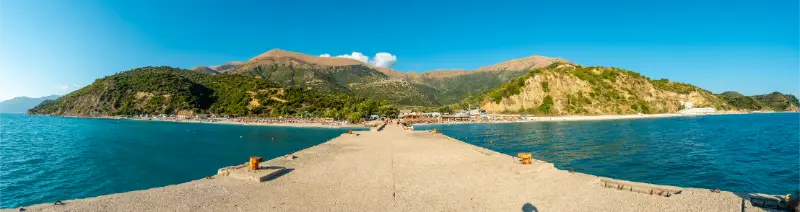
    Borsh is one of the best Riviera choices for families who want space rather than a dense resort center. Its very long shoreline spreads visitors across several kilometers, while the village, spring and hilltop castle add enough variety for a family that does not want every day to be only beach time.

    It suits families with a car particularly well because accommodation, restaurants and beach sections are spread out. It is calmer than some Riviera hotspots, but the shore is primarily pebble/stone rather than the fine sand families may expect from Adriatic resorts.

    Is this a good family destination?

    QuestionFamily answer
    Best forFamilies who want a manageable base with a mix of easy activities and one or two stronger excursions
    Car needed?Not always; see the transport section below
    Stroller?Useful in flatter built-up areas, but a carrier is important for historic/natural terrain
    Ideal stayUsually 2–4 nights depending on whether this is a beach/nature base or a short cultural stop
    Best family paceOne main activity in the morning, a real midday break, then one easy late-afternoon block

    Best things to do with kids

    Borsh Beach

    Best for space and simple beach routines. The beach is exceptionally long, so choose your section according to accommodation and services. The official tourism agency describes Borsh as the longest beach on the Riviera and a quieter alternative to mass tourism. Water shoes can make pebble entry easier for children.

    Albania Riviera Beach Coast Ionian Sea Lukove Greece Island Corfu Borsh Beach 3

    Borsh spring / village stop

    Best easy change from the beach. The village’s water and green setting provide a pleasant break from the coast. Keep it simple: a short stop and meal can be more enjoyable for children than a long sightseeing circuit.

    Borsh Castle

    Best for older children who enjoy ruins and views. The Borsh Castle Guide covers the hilltop site. The climb, rough surfaces and exposed ruins make it better for school-age children and teenagers than for stroller-dependent families.

    Qeparo

    Best nearby half-day. Qeparo is only a short road-trip step away and combines a quieter beach with an old hillside village. With young children, choose either beach time or Old Qeparo rather than trying to do both plus Borsh Castle in one afternoon.

    Porto Palermo

    Best history-plus-swim excursion. Porto Palermo gives families a compact castle and bay combination north of Borsh. It adds variety without requiring a full-day transfer. Use the Porto Palermo Guide.

    Bunec Beach

    Best quieter southern beach outing. Bunec is another low-key coastal option and works well for families who want to explore south without entering the busiest Sarande/Ksamil zone. See the Bunec Beach Guide.

    Getting around as a family

    A car is highly useful because Borsh Beach is long and the village/castle sit away from many beachfront accommodations. Pick a property with parking and avoid repeated midday drives in summer heat.

    With children, I calculate the whole movement rather than only the driving distance: loading the car, finding parking, walking from the parking area and returning for naps can turn a “10-minute trip” into an hour of effort. Whenever possible, cluster activities by area.

    Stroller or carrier?

    A stroller works around flatter accommodation/beach areas but not for the castle. Pebbles can also make pushing difficult right on the shore, so a carrier helps with toddlers.

    A lightweight stroller is still useful for airports, promenades and flatter streets. A carrier is better for cobbles, castle paths, steps, beach stones and natural terrain. Families with babies often get the most flexibility by bringing both.

    Where to stay with children

    For family trips, location matters more than a small difference in room price. I prioritize a short walk to the main daily activity, reliable air-conditioning or heating, a fridge, quiet sleeping conditions, and parking if I have a car. Read the local Where to Stay guide before booking.

    Compare family accommodation in Borsh on Booking.com.

    Food, snacks and meal timing

    Albanian restaurants are generally easy to use as a family, but long summer dinners can be tiring for small children. I keep breakfast simple, carry water and a small snack, plan one proper sit-down lunch or dinner, and avoid scheduling a museum or long drive exactly when children normally eat or sleep.

    Ask about portions rather than automatically ordering a full main course for every child. Grilled meat, potatoes, rice, soups, yogurt, bread, fruit and simple pasta-style dishes are often easy choices, while regional specialties can be introduced as shared plates.

    Best time to visit with kids

    June and September are excellent for families. July/August are busier but the length of the beach helps distribute people. Spring and October are better for road trips and outdoor sightseeing than guaranteed beach routines.

    What to do if it rains

    In rain, avoid the exposed castle approach and slippery ruins. Use food, a slow village drive and your accommodation, then return to beach/castle plans when surfaces are dry.

    Traveling with babies, school-age kids and teenagers

    Toddlers benefit from the spacious beach if you choose accommodation close to the water. School-age children can add Porto Palermo and easier castle exploration. Teenagers can handle the Borsh Castle climb and longer coastal excursions more comfortably.

    Borsh Beach Albanian Riviera

    Family safety: the practical issues

    • Keep children close around castle walls, cliff edges, rivers and unsupervised natural swimming areas.
    • Never assume a beach or river has a lifeguard just because it is popular.
    • Use appropriate child restraints in rental cars and arrange seats before arrival.
    • Protect the midday period from extreme summer heat; shade and hydration are part of the itinerary.
    • On pebbly beaches, water shoes can make entry easier and reduce slipping.
    • Do not turn a mountain, canyon or boat activity into a family outing without checking weather and age suitability.

    A realistic 2-day family plan

    • Day 1: choose one Borsh Beach section and make it a true slow beach day with a long lunch.
    • Day 2: do Borsh Castle early with older children or Porto Palermo/Qeparo as a more flexible family excursion.

    If you only have one day

    Use the 1 Day in Borsh itinerary as the base, then remove one stop rather than adding more. Family travel improves when the schedule has space for snacks, toilets, naps and an unplanned break.

    Best family day trips

    For a wider regional plan, see the best day trips from Borsh. With younger children, I usually choose the closest high-value excursion rather than the most famous one on the map.

    What to pack for this destination

    • Sun hats, high-SPF sunscreen and refillable water bottles in warm months.
    • A lightweight rain layer in shoulder season.
    • Comfortable shoes with grip for old towns, castles and nature areas.
    • Water shoes for pebble/stone beaches or natural bathing areas where useful.
    • A compact stroller plus carrier if traveling with a baby or toddler.
    • Basic medication, plasters and any child-specific items you do not want to search for late at night.

    Book family activities selectively

    Tours can be useful when they replace difficult transport or give a child-friendly structure to a complex site. I would not book every day in advance; leave free time for weather, tiredness and beach conditions.

    Useful related guides

    Official tourism information

    For current destination descriptions and official attraction information, see the Albania National Tourism Agency. For opening hours, tickets, beach management and seasonal transport, verify the current information again close to your travel date.

    Common family mistakes

    • Changing accommodation every night instead of using two- or three-night bases.
    • Planning long sightseeing blocks during the hottest hours of summer.
    • Assuming a stroller works on cobbles, ruins, dunes or canyon paths.
    • Choosing accommodation by price without checking the actual walk to the beach or parking.
    • Treating natural water—sea, river, spring or canyon—as if it were a supervised pool.
    • Adding several day trips because the map distances look short.

    Frequently asked questions

    Is Borsh good for families?

    Yes, especially for families who want space and a quieter Riviera base.

    Is the beach sandy?

    It is mainly pebble/stone, so water shoes can help children.

    Do we need a car?

    A car is strongly recommended for most family stays.

    Is Borsh Castle easy with toddlers?

    No; it is better for older children due to the hill and rough surfaces.

    How many nights?

    Three or four nights work well for a relaxed family stay.

    Final family advice

    The best family version of Borsh is usually slower than an adults-only itinerary. Choose the right base, protect the midday rest, make one activity the priority of each half-day and keep a backup plan for weather. Children remember swimming, food, castles, animals and small discoveries more than the number of attractions you managed to tick off.

    Albania Riviera Beach Coast Ionian Sea Lukove Greece Island Corfu Borsh Beach 4

    How to keep the family day realistic

    I use a simple rule: one fixed morning plan, one guaranteed rest block and one optional late-afternoon activity. If the morning takes longer, I drop the optional stop instead of pushing dinner and bedtime later. This is especially important on Albanian road trips, where parking, traffic and mountain/coastal roads can make short distances take longer than expected.

    If a child is tired, the nearest beach, park, promenade or café break is often a better decision than completing the checklist. Build the trip around energy rather than trying to make every family member follow the pace of an adult sightseeing itinerary.

  • Gjirokaster with Kids: Castle Adventures, Old Bazaar and Family Travel Tips

    Gjirokaster with Kids: Castle Adventures, Old Bazaar and Family Travel Tips

    Gjirokastër with kids can be one of the most memorable cultural stops in Albania because the city already looks like an adventure: stone roofs, steep lanes, a huge castle and a lively old bazaar. The same features that make it exciting also require planning, especially with toddlers or in hot weather.

    I would centre the family visit on the castle, keep the old-town walk short and choose only one house museum if children are genuinely interested. Everything else can remain optional. This makes Gjirokastër feel like discovery rather than a history lesson.

    Gjirokaster Castle Clock Tower And Old Town Albania

    Start with the practical reality of the hills

    Our full Gjirokastër guide explains the main sights. For families, the first issue is terrain: streets can be steep, cobbled and slippery. Good shoes matter more than dressing for a perfect photo.

    A stroller may be difficult on the steepest old-town sections. With a baby or toddler, a carrier is often easier.

    The castle as the family highlight

    The fortress is the natural centrepiece. Children can understand walls, towers and big views more easily than abstract historical timelines. Give them simple things to notice: the shape of the valley, old stone, defensive positions and how high the city sits.

    Keep children close at edges and on uneven surfaces. Weather changes how safe stone feels, so take extra care after rain.

    Old Bazaar without exhausting everyone

    Walk the bazaar slowly and use it as the flexible part of the day. Stop for a drink, browse craft shops and leave when energy drops. You do not need to cover every lane.

    If you want souvenirs, involve children by setting a small budget or asking them to choose one locally made item rather than turning shopping into another adult task.

    House museums: choose one

    Traditional houses can help older children understand how families lived in a very different architectural setting. Pick one house museum rather than visiting several similar interiors in succession.

    Ask at the entrance about stairs and access. Very young children may enjoy the courtyard and structure more than detailed explanations.

    Heat management

    Gjirokastër can be demanding in summer because steep streets add effort to already hot conditions. Plan the castle early, take a real midday break and return outside in late afternoon.

    For broader seasonal planning, read our summer guide.

    Where to stay with children

    A central guesthouse has atmosphere, but access may involve steep lanes or stairs. If convenience matters, confirm exactly how you reach the property with luggage and whether parking is nearby.

    Compare family accommodation in Gjirokaster and prioritise air-conditioning, breakfast and practical access.

    Food and easy meals

    Grilled dishes, bread, yoghurt, rice, potatoes and pies make it easy to find simple food. Use our Albanian food guide for ideas adults may want to try as well.

    Carry water and a small snack during castle visits. Waiting until everyone is hungry is one of the easiest ways to make a cultural day harder than necessary.

    Combine Gjirokastër with the Blue Eye

    The Blue Eye is a natural contrast to the stone city, but do not combine too many major stops if children are young. A separate half-day or an onward stop can work better than squeezing everything between check-out and dinner.

    Use our Blue Eye guide for access and practical planning.

    One-night versus two-night stay

    One night works on a faster family road trip if you arrive early enough to see the castle. Two nights are much better in summer because you can avoid rushing the hottest hours.

    If your child needs an afternoon nap or predictable bedtime, the second night can improve the entire family trip more than adding another destination.

    A relaxed family plan

    Day one late afternoon: bazaar and dinner. Day two morning: castle, then one museum or house if interest remains. After lunch, rest or continue toward the Blue Eye or coast.

    This plan lets Gjirokastër keep its dramatic identity without making children climb steep lanes for an entire day.

    Final planning tips

    For a full-country route, combine this page with our Albania with kids guide and keep driving days realistic.

    Family travel in Gjirokastër is mostly about pacing. The city does not need extra entertainment added to it; the castle, stone streets and views are already unusual enough when children have the energy to enjoy them.

    Clock Tower Castle Gjirokaster Albania Souvenir Shops Old Town Gjirokaster 2

    Extra practical advice

    For a trip centred on Gjirokaster with kids, the final improvement is usually not another attraction but better pacing. Keep addresses, reservation details and the most important route notes available offline, and avoid planning a major transfer immediately after the most demanding sightseeing block of the day. Albania is compact, but road conditions, parking, summer traffic and mountain geography can make short distances take longer than expected. I also recommend leaving at least one flexible period in every two or three days. Use it for weather changes, a beach you unexpectedly love, a long lunch, laundry, a child or travel companion who needs rest, or simply a slower morning. That margin makes the itinerary more resilient and prevents small delays from affecting several days in a row. For services that matter to the whole day—museum access, ferries, mountain transfers, guided activities or a hotel with a specific accessibility requirement—confirm details close to travel. For ordinary cafés, viewpoints and short walks, keep some spontaneity. This balance between preparation and flexibility is one of the easiest ways to make an Albania trip feel comfortable rather than over-managed.

    Keep the day flexible enough to respond to weather, traffic and local advice. Confirm any service that would materially affect the itinerary, carry water and offline directions, and avoid adding a second major stop simply because the driving distance looks short on a map.

    Keep the day flexible enough to respond to weather, traffic and local advice. Confirm any service that would materially affect the itinerary, carry water and offline directions, and avoid adding a second major stop simply because the driving distance looks short on a map.

    Keep the day flexible enough to respond to weather, traffic and local advice. Confirm any service that would materially affect the itinerary, carry water and offline directions, and avoid adding a second major stop simply because the driving distance looks short on a map.

    Keep the day flexible enough to respond to weather, traffic and local advice. Confirm any service that would materially affect the itinerary, carry water and offline directions, and avoid adding a second major stop simply because the driving distance looks short on a map.

    Keep the day flexible enough to respond to weather, traffic and local advice. Confirm any service that would materially affect the itinerary, carry water and offline directions, and avoid adding a second major stop simply because the driving distance looks short on a map.

    Keep the day flexible enough to respond to weather, traffic and local advice. Confirm any service that would materially affect the itinerary, carry water and offline directions, and avoid adding a second major stop simply because the driving distance looks short on a map.

    Keep the day flexible enough to respond to weather, traffic and local advice. Confirm any service that would materially affect the itinerary, carry water and offline directions, and avoid adding a second major stop simply because the driving distance looks short on a map.

    Keep the day flexible enough to respond to weather, traffic and local advice. Confirm any service that would materially affect the itinerary, carry water and offline directions, and avoid adding a second major stop simply because the driving distance looks short on a map.

    Keep the day flexible enough to respond to weather, traffic and local advice. Confirm any service that would materially affect the itinerary, carry water and offline directions, and avoid adding a second major stop simply because the driving distance looks short on a map.

    Keep the day flexible enough to respond to weather, traffic and local advice. Confirm any service that would materially affect the itinerary, carry water and offline directions, and avoid adding a second major stop simply because the driving distance looks short on a map.

    Keep the day flexible enough to respond to weather, traffic and local advice. Confirm any service that would materially affect the itinerary, carry water and offline directions, and avoid adding a second major stop simply because the driving distance looks short on a map.

    Keep the day flexible enough to respond to weather, traffic and local advice. Confirm any service that would materially affect the itinerary, carry water and offline directions, and avoid adding a second major stop simply because the driving distance looks short on a map.

    Keep the day flexible enough to respond to weather, traffic and local advice. Confirm any service that would materially affect the itinerary, carry water and offline directions, and avoid adding a second major stop simply because the driving distance looks short on a map.

    Keep the day flexible enough to respond to weather, traffic and local advice. Confirm any service that would materially affect the itinerary, carry water and offline directions, and avoid adding a second major stop simply because the driving distance looks short on a map.

    Travelling with a baby or toddler

    For naps, strollers, carriers, baby supplies and a slower daily rhythm, see the Gjirokastër with a baby or toddler guide.

    Travelling with older children? See Gjirokastër with Teenagers: Castle, Bazaar, Stone Houses and Family Adventure Tips for teen-focused activities, independence, evenings and family pacing.

    Clock Tower Castle Gjirokaster Albania Souvenir Shops Old Town Gjirokaster 3
  • Albanian Riviera with Kids: Best Bases, Family Beaches and Road-Trip Tips

    Albanian Riviera with Kids: Best Bases, Family Beaches and Road-Trip Tips

    The Albanian Riviera with kids is not one single type of holiday. You can build a resort-style beach break, a slow road trip between villages, or a mixed trip with castles, boat rides and short nature stops. What makes the Riviera spectacular—mountain roads dropping to small bays—also creates the main family challenge: travel times and access can be harder than the distance on a map suggests.

    Adriatic Sea Coast Beach Lukove Komuna Albania View Mountain Pass People Unrecognizable

    I would plan a family Riviera trip around fewer bases than an adults-only road trip. Use the Albanian Riviera road-trip guide for the full route, then simplify it using the principles below. If you are travelling without a car, also read the Riviera without a car guide.

    Choose the base before choosing the beaches

    The most important family decision is not which beach is most beautiful. It is where you will sleep. A good base reduces the number of mountain-road transfers, gives you access to food and groceries, and makes it realistic to return for a midday rest. Himarë is usually the most flexible all-round base because it has a town beach, restaurants and access to several nearby bays. Dhërmi feels more spread out between the old village and coast, while Qeparo and Borsh can suit families looking for a quieter rhythm.

    Compare family stays in Himarë, accommodation in Dhërmi and places to stay in Borsh before deciding. Check the exact map position: “near the beach” can still mean a steep road, and a property in an old hillside village may be beautiful but impractical with a stroller.

    Greek Style Village Dhermi Coastal Road Albania

    Himarë: the easiest first Riviera base for many families

    Himarë gives families a balance of convenience and scenery. The official tourism portal describes Himara Beach as centrally located with clear water and access to bars, restaurants and activities. See the official Himara Beach page for destination context.

    The advantage is not that the town beach is automatically the “best” beach. It is that you can have a satisfying beach day without getting into the car. That matters after a driving day, with toddlers who nap, or when an older child simply wants to swim again instead of visiting another village.

    Dhërmi: beautiful, but understand the geography

    Dhërmi combines a historic hillside village with a famous coastline. The official tourism portal notes that the village sits along the Ionian coast and connects with beaches and nearby attractions including Gjipe and Grama. See the official Dhërmi tourism page.

    Families should look closely at where an accommodation is located because the old village and beach area are not the same experience. A beautiful room high above the sea can mean repeated car journeys. If the goal is a simple beach holiday, staying close to the water may be more useful than staying in the most atmospheric part of the village.

    Borsh and Qeparo for a slower family trip

    Borsh and Qeparo can work well for families who value space and a quieter evening over nightlife. Borsh has a long beach and room to spread out compared with tiny coves. Qeparo offers a beach settlement and an older village above the coast, so again, the exact location of your accommodation matters.

    The trade-off is that a quieter base may have fewer services within a short walk. Families should check access to a supermarket, pharmacy, breakfast and dinner options rather than assuming a peaceful village will function like Saranda.

    Do not turn the Riviera into a daily beach hunt

    One of the least relaxing ways to travel with children is to spend every morning packing the car, looking for parking and walking down to a new bay because a list says it is “must-see.” Pick two or three beaches close to your base and return to the ones that work. Familiarity helps children, and adults waste less time on logistics.

    For specific beaches, the site already has guides to Livadhi, Llamani, Bunec, Aquarium Beach and Gjipe. Read access notes before choosing; the most spectacular beach is not always the easiest family beach.

    Gjipe with children: treat access as the main question

    Gjipe is visually memorable, but families should evaluate the approach, heat and children’s walking ability before deciding it belongs in the itinerary. A destination can be famous and still be a poor choice for a particular child on a particular day. If the hike or access feels too demanding, choose an easier beach and keep Gjipe for another trip.

    This is a broader rule for the Riviera: do not let a saved photo overrule current conditions. Road works, parking arrangements, boat access and beach infrastructure change. Ask locally and be ready to substitute one bay for another.

    Boat trips: shorter is often better

    The Riviera is excellent for exploring from the water, and the Riviera by boat guide explains the main areas. With children, I would ask the operator about shade, life jackets in appropriate sizes, boarding method, toilet availability, total time on the boat and how many swimming stops are planned. A four-hour trip that sounds exciting to adults can feel very long to a toddler.

    Sea conditions matter. If the operator changes the route or cancels because of wind, accept the decision. A family boat day should not depend on reaching one specific cave or bay.

    Driving the coastal road with children

    The coastal road is part of the experience, but it includes curves, elevation changes and slower sections. A child who is comfortable on motorways may feel differently on mountain roads. Build in stops, carry motion-sickness supplies if relevant and avoid scheduling a long drive immediately after a heavy meal.

    Llogara National Park can be a useful break between Vlorë and the central Riviera. Rather than racing through the pass, allow time for viewpoints and a meal. If conditions are foggy or windy, prioritize safe driving over scenic stops.

    Llogara Pass View Serpentine Road Ionian Sea Coast Albania

    Sun, stones and water shoes

    Many Ionian beaches are pebbly or mixed rather than soft sand. Water shoes can make entries more comfortable, but they do not replace supervision on slippery rock. In July and August, shade matters as much as the beach itself. If your accommodation does not provide beach equipment, ask what is available locally instead of bringing bulky gear from home.

    Start early, use the middle of the day for food or rest, then return to the sea later. This rhythm often suits the Riviera better than remaining on an exposed beach from late morning through mid-afternoon.

    Food with children

    The Albanian Riviera food guide covers seafood, olive oil and regional flavors. For children, simple grilled food, bread, pasta, potatoes, yogurt and fruit are usually easy to find. If a child has a serious allergy, learn the relevant Albanian wording and communicate it clearly rather than assuming staff will infer the risk from a translated menu.

    A family-friendly six-night Riviera structure

    NightsBaseFocus
    3HimarëTown beach, Livadhi/Llamani, one boat or castle outing
    3Borsh or QeparoSlower beach time, old village, southern coast without constant hotel changes

    Another good option is to spend all six nights in one base and make only two day trips. That may sound less ambitious, but it usually gives children more beach time and adults more actual holiday time. If your larger Albania itinerary already includes Berat, Gjirokastër, Tirana and the Alps, the Riviera does not need to become another road-trip sprint.

    Final planning advice

    For a family Riviera holiday, I would prioritize accommodation location, shade, easy meals and realistic drive times over collecting famous beaches. Save a few alternatives in case parking or sea conditions make the first plan inconvenient. The coast rewards flexibility: a simple morning swim near your hotel can be more memorable than an hour in the car to reach a bay everyone is too tired to enjoy.

    How many Riviera bases are enough?

    For a one-week family coastal holiday, one or two bases are usually enough. Three bases can work for older children who travel well, but every move costs part of a day in packing, check-out, parking and settling into a new room. If the wider Albania trip already changes hotels frequently, I would make the Riviera the place where the family stops moving.

    A useful rule is to ask whether the next hotel gives you a genuinely different experience. Moving from Himarë to a nearby beach only to save fifteen minutes of driving may not be worth the disruption. Moving from Himarë to Saranda can make sense if you want Butrint, Ksamil and easier access to southern excursions.

    Beach clubs, public space and family expectations

    Some popular beaches use sunbeds and umbrellas extensively during the summer season. Prices and arrangements can change, so I would not publish or rely on an old fixed price. Ask before sitting down, confirm what is included and keep enough cash available if card payment is not offered. Families who dislike organized beach setups should research quieter bays and public sections before arrival.

    Do not assume a paid sunbed area includes lifeguard supervision, secure storage or child facilities. Treat the equipment as shade and seating unless the operator clearly provides additional services.

    Motion sickness and road planning

    The road between Vlorë, Llogara and the Riviera contains long winding sections. If a child is prone to motion sickness, place the most scenic stop before symptoms begin rather than after. Keep the car cool, avoid heavy meals immediately before the drive and carry whatever supplies your family normally uses. Do not schedule a boat excursion immediately after a difficult road journey.

    If one parent is driving, the other can use offline maps to anticipate bends, parking and stops. That reduces last-minute instructions and makes the drive calmer.

    When a pool matters more than the beach

    A hotel or apartment pool can be useful on days when the sea is rough, the beach is crowded or children want a short swim before dinner. However, parents should inspect pool depth, barriers and supervision themselves. A pool is a convenience, not a safety feature.

    For families with very young children, a small pool and easy room access can sometimes be more valuable than a dramatic cliffside sea view. Choosing accommodation around the family’s real daily routine usually produces a better holiday than choosing it around photographs.

  • Berat with Kids: A Family Guide to the Castle, Old Town and Easy Activities

    Berat with Kids: A Family Guide to the Castle, Old Town and Easy Activities

    Berat with kids works best when you stop trying to see the city like an adult on a fast cultural tour. The castle, white hillside houses and river views are memorable for children too, but steep cobbles, summer heat and long museum explanations can quickly turn a good day into a tiring one.

    Berat Old Town And Osumi River Albania

    The solution is simple: keep the schedule short, use the cooler parts of the day, make the castle the main adventure and leave room for snacks, river walks and an early return to the hotel. Berat is compact enough that a family can see its character without filling every hour.

    Is Berat good for families?

    Yes, especially for families who enjoy old towns and walking. Our main Berat guide covers the city in more detail; this version focuses on pacing, safety and what tends to work better with children.

    The historic areas have slopes, steps and uneven stone, so a stroller is not ideal everywhere. A baby carrier can be more practical for the castle and steeper lanes.

    Make the castle the main event

    Children often respond better to walls, gateways and viewpoints than to a long sequence of formal interiors. Treat Berat Castle as the day’s big exploration and stop when attention drops.

    Albanian Old Berat View Berat Castle Walls Tiled Roofs Houses 3

    Use closed shoes with grip. Hold younger children close near edges and on polished stone, particularly after rain.

    Mangalem and Gorica at a slower pace

    You do not need to cover every lane. Choose a short walk through Mangalem, cross toward Gorica and enjoy the view back across the river. The visual contrast is enough to make the old town memorable.

    In summer, move these walks to morning or late afternoon. Midday can be used for lunch, rest or an indoor break.

    Heat and hydration

    Berat can feel very hot in summer, especially on exposed climbs. Carry water for everyone, use hats and sun protection, and do not wait until children complain before taking a break.

    Read our Albania summer guide if your family trip falls in July or August.

    Choosing family accommodation

    Look for air-conditioning, easy access, breakfast options and practical parking if you have a car. A beautiful historic room at the top of a steep lane may be less convenient with luggage and small children.

    Compare family-friendly places to stay in Berat and read recent reviews specifically from families.

    Food with children

    Albanian meals are generally easy to adapt for children: grilled meats, bread, potatoes, rice, yoghurt, pies and simple salads give plenty of familiar options. See our food guide for regional ideas.

    Carry one emergency snack during sightseeing, especially if your child eats at fixed times. Do not rely on finding the exact food you want inside every heritage area.

    Museums without overload

    Choose one museum or cultural interior rather than trying to visit everything. Explain one simple story before entering so children have something to look for, then leave while the experience is still positive.

    Opening hours can change, so check on the day if a specific museum matters. Family travel improves when one closed door does not destroy the itinerary.

    One day or two?

    One full day is enough for a family introduction if Berat is part of a longer route. Two nights are better in summer because you can divide the castle and lower town between cooler periods.

    A second night also reduces the pressure to drive onward when everyone is tired. That matters more than adding one extra attraction.

    Family road-trip connections

    Berat combines well with Tirana, Gjirokaster or the coast. Use our complete Albania with kids guide to decide how many long transfers are realistic for your family.

    Avoid stacking Berat Castle, a long drive and another major sight into one day with young children. Choose one anchor activity and one optional stop.

    Simple family itinerary

    Morning: castle before the strongest heat. Lunch and rest. Late afternoon: Mangalem, the river and Gorica. Evening: relaxed dinner. This plan gives the city structure without turning the day into a checklist.

    With older children, add a museum or longer walk based on interest rather than obligation.

    Final planning tips

    The official tourism portal identifies Berat’s historic quarters and castle area as core elements of the UNESCO-listed city; use current local information for opening details. Official Berat tourism page.

    The best family visit is not the one that sees every church or lane. It is the one where children still have energy to enjoy the view, dinner and the next day of the trip.

    Extra practical advice

    For a trip centred on Berat with kids, the final improvement is usually not another attraction but better pacing. Keep addresses, reservation details and the most important route notes available offline, and avoid planning a major transfer immediately after the most demanding sightseeing block of the day. Albania is compact, but road conditions, parking, summer traffic and mountain geography can make short distances take longer than expected. I also recommend leaving at least one flexible period in every two or three days. Use it for weather changes, a beach you unexpectedly love, a long lunch, laundry, a child or travel companion who needs rest, or simply a slower morning. That margin makes the itinerary more resilient and prevents small delays from affecting several days in a row. For services that matter to the whole day—museum access, ferries, mountain transfers, guided activities or a hotel with a specific accessibility requirement—confirm details close to travel. For ordinary cafés, viewpoints and short walks, keep some spontaneity. This balance between preparation and flexibility is one of the easiest ways to make an Albania trip feel comfortable rather than over-managed.

    Keep the day flexible enough to respond to weather, traffic and local advice. Confirm any service that would materially affect the itinerary, carry water and offline directions, and avoid adding a second major stop simply because the driving distance looks short on a map.

    Keep the day flexible enough to respond to weather, traffic and local advice. Confirm any service that would materially affect the itinerary, carry water and offline directions, and avoid adding a second major stop simply because the driving distance looks short on a map.

    Keep the day flexible enough to respond to weather, traffic and local advice. Confirm any service that would materially affect the itinerary, carry water and offline directions, and avoid adding a second major stop simply because the driving distance looks short on a map.

    Keep the day flexible enough to respond to weather, traffic and local advice. Confirm any service that would materially affect the itinerary, carry water and offline directions, and avoid adding a second major stop simply because the driving distance looks short on a map.

    Keep the day flexible enough to respond to weather, traffic and local advice. Confirm any service that would materially affect the itinerary, carry water and offline directions, and avoid adding a second major stop simply because the driving distance looks short on a map.

    Keep the day flexible enough to respond to weather, traffic and local advice. Confirm any service that would materially affect the itinerary, carry water and offline directions, and avoid adding a second major stop simply because the driving distance looks short on a map.

    Keep the day flexible enough to respond to weather, traffic and local advice. Confirm any service that would materially affect the itinerary, carry water and offline directions, and avoid adding a second major stop simply because the driving distance looks short on a map.

    Keep the day flexible enough to respond to weather, traffic and local advice. Confirm any service that would materially affect the itinerary, carry water and offline directions, and avoid adding a second major stop simply because the driving distance looks short on a map.

    Keep the day flexible enough to respond to weather, traffic and local advice. Confirm any service that would materially affect the itinerary, carry water and offline directions, and avoid adding a second major stop simply because the driving distance looks short on a map.

    Keep the day flexible enough to respond to weather, traffic and local advice. Confirm any service that would materially affect the itinerary, carry water and offline directions, and avoid adding a second major stop simply because the driving distance looks short on a map.

    Keep the day flexible enough to respond to weather, traffic and local advice. Confirm any service that would materially affect the itinerary, carry water and offline directions, and avoid adding a second major stop simply because the driving distance looks short on a map.

    Keep the day flexible enough to respond to weather, traffic and local advice. Confirm any service that would materially affect the itinerary, carry water and offline directions, and avoid adding a second major stop simply because the driving distance looks short on a map.

    Keep the day flexible enough to respond to weather, traffic and local advice. Confirm any service that would materially affect the itinerary, carry water and offline directions, and avoid adding a second major stop simply because the driving distance looks short on a map.

    Keep the day flexible enough to respond to weather, traffic and local advice. Confirm any service that would materially affect the itinerary, carry water and offline directions, and avoid adding a second major stop simply because the driving distance looks short on a map.

    Travelling with a baby or toddler

    For naps, strollers, carriers, baby supplies and a slower daily rhythm, see the Berat with a baby or toddler guide.

    Travelling with older children? See Berat with Teenagers: Castle, Rafting, Old Town and Active Family Travel Tips for teen-focused activities, independence, evenings and family pacing.

    Aerial View Of Berat Old Town
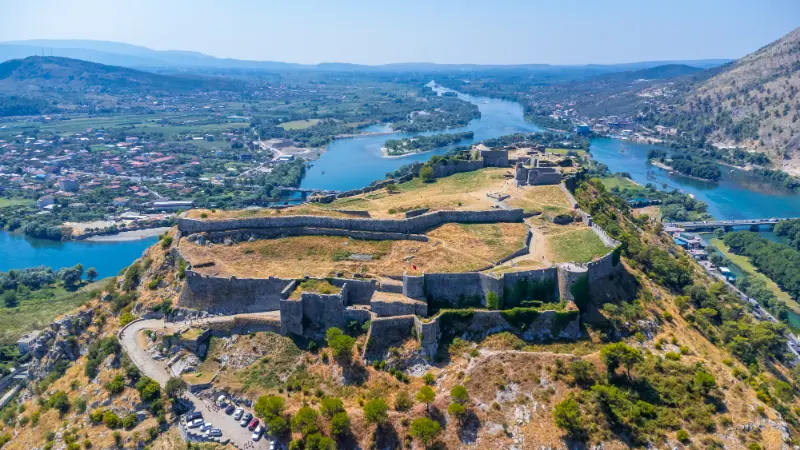
  • Shkoder with Kids: Rozafa Castle, Lake Shkodra and Family Travel Tips

    Shkoder with Kids: Rozafa Castle, Lake Shkodra and Family Travel Tips

    Shkodër with kids is a strong choice because the city can be both a destination and a practical gateway to northern Albania. Families can explore a castle, cycle or walk near the lake, enjoy a pedestrian center and then decide whether the children are ready for Theth, Lake Koman or a longer mountain route. I would give Shkodër at least one full day instead of treating it only as a place to sleep before the Alps.

    For general sightseeing use the main Shkodër travel guide. This family version focuses on what is easiest with children, how to pace Rozafa Castle, where the lake fits into the day and why an extra night in the city can make a northern itinerary much less rushed.

    Why Shkodër works well for families

    The center is easier to explore casually than Albania’s steepest historic towns, and the city has the everyday services families need before heading into the mountains: supermarkets, pharmacies, restaurants, bike rentals, guesthouses and a wide choice of accommodation. It is also a good place to reorganize luggage, leave unnecessary beach gear behind and prepare smaller bags for Theth or the Lake Koman route.

    The official tourism portal presents Shkodër as a city where history, Lake Shkodra and the nearby Albanian Alps come together. It highlights Rozafa Castle, Marubi photography museum and the lake as major attractions. See the official Shkodër tourism page for current destination context.

    Aerial Drone View Rozafa Castle Shkoder Walls Albania 2

    Rozafa Castle: the main family adventure

    Rozafa Castle is the obvious family centerpiece. The hilltop setting, walls and wide views are more immediately engaging for children than a sequence of indoor exhibits. The practical issue is the surface: parts of the approach and interior are uneven, so sturdy shoes are more useful than a stroller.

    With younger children, keep a close hand near high edges and do not let the visit become a running game on stone surfaces. With older children, tell the castle’s story in a simple timeline and use the viewpoint to identify the lake and rivers. That connects the monument to the geography of the whole region rather than turning it into isolated ruins.

    Lake Shkodra: use it for the slower half of the day

    After the castle, the lake is where I would reduce the pace. The Lake Shkodra guide and the village guides to Shirokë and Zogaj explain the area in more detail. The official tourism portal describes Lake Shkodra as a major natural and cultural destination with lakeside villages, birdlife and opportunities for boating and other outdoor activities.

    Families do not need a formal activity to enjoy the lake. A simple late-afternoon meal in Shirokë, a walk by the water or a short bicycle outing can be enough. If you rent bikes, check child-seat or child-bike availability in advance and choose a route that matches the least experienced rider, not the strongest adult.

    Marubi Museum for school-age children and teenagers

    The Marubi National Museum of Photography can work particularly well with older children because photographs give them direct visual evidence of how people dressed, worked and lived. Instead of asking children to read every label, choose a small number of images and compare them with modern Shkodër outside the museum.

    For toddlers, the museum may be less useful than extra outdoor time. This is exactly the kind of attraction to make optional: one parent can visit while the other takes younger children for a snack or walk if the family’s interests differ.

    Pedestrian streets and evening rhythm

    Central Shkodër has a social evening atmosphere that can be easier with children than another formal attraction. Use the pedestrian areas for an unstructured walk, dinner and dessert. Northern itineraries often involve early transport or mountain drives, so I would not turn every evening into a late night simply because the center is lively.

    Where to stay with children

    For one or two nights, I would stay close enough to the center that you can walk to dinner. Compare family accommodation in Shkodër and check whether the property can store luggage if you are doing the Theth–Valbona route or another multi-day mountain section. Luggage storage can be more important than a pool for this particular city.

    If you have a car, ask about parking and access. Some central streets are pedestrianized or busy, and “parking nearby” may not mean directly at the entrance. If you are returning from the mountains, a hotel with easy vehicle access and laundry options can make the final night much more practical.

    Should you take children to Theth from Shkodër?

    That depends on the child and the family’s mountain experience. The site’s Theth with kids guide focuses on realistic activities rather than assuming every family should hike the Valbona Pass. Shkodër is the place to make the final decision because you can check weather, road conditions and how everyone feels before committing.

    A day trip can involve a significant amount of travel, while an overnight stay gives the village more time to justify the journey. Families with toddlers or children prone to motion sickness may prefer a slower northern plan with two nights rather than rushing in and out.

    Lake Koman and Shala River: beautiful but long days

    Lake Koman and Shala River are among northern Albania’s most photogenic trips, but families should examine departure times, transfers, boat conditions and total day length before booking. A child who enjoys boats may love the experience; a toddler who hates early mornings and long transfers may not.

    Ask the operator exactly what is included, whether suitable life jackets are available for children, how much waiting time is involved and whether the return timing is fixed. Never choose the longest excursion simply because it includes more scenery.

    Food and supplies before the mountains

    Shkodër is a smart place to buy snacks, water, sunscreen, basic medicines and anything you forgot before moving into smaller villages. Do not overpack food for mountain guesthouses, where meals are often part of the experience, but bring the specific child products you cannot easily substitute.

    At restaurants, grilled meat, soups, bread, potatoes, pasta, cheese and simple salads make family meals manageable. If children are tired after a mountain transfer, use the city’s casual food options rather than insisting on a long traditional dinner.

    A two-day family plan

    DayMorningAfternoonEvening
    1Rozafa CastleLake/Shirokë or hotel restPedestrian center and dinner
    2Marubi or another short cultural stopBike ride, lake or relaxed city timePrepare for Theth/Koman or onward travel

    If you are continuing to Theth, I would keep day two especially light. If Shkodër is the northernmost point of your trip, use the second afternoon for the lake and allow children to set the pace.

    Strollers and practical mobility

    A stroller can be useful in central Shkodër but is not the right tool for Rozafa Castle or rough lakeside paths. A compact stroller plus carrier gives parents more flexibility. In summer, shade and water become important quickly; the castle can feel much hotter than the pedestrian streets below.

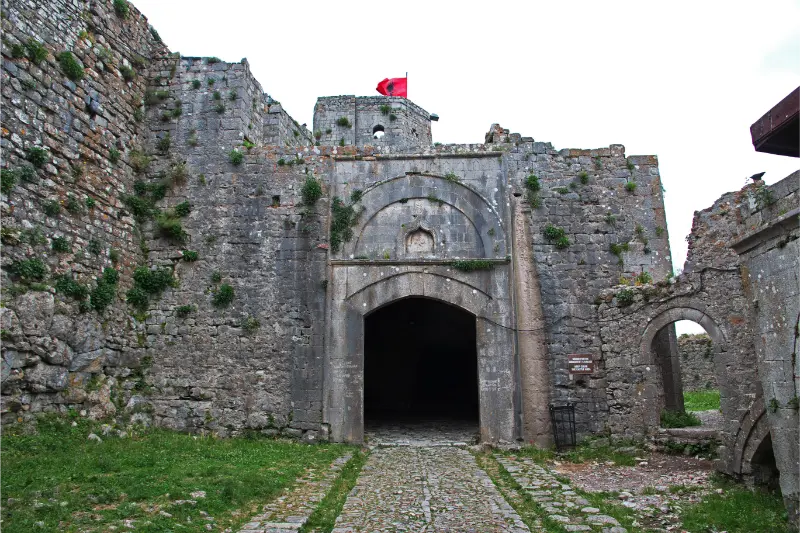
    Rozafa Castle Entrance Shkoder Albania

    Final family advice

    Think of Shkodër as the decompression chamber between urban Albania and the mountains. It lets you slow down, buy supplies, check conditions and decide how ambitious the northern part of the trip should be. That is more valuable than adding another rushed attraction. A family that leaves Shkodër rested will enjoy Theth, Koman or the onward drive much more.

    Should you rent bikes with children?

    Shkodër has a strong cycling culture and flat sections around the city and lake can make cycling attractive, but family cycling requires more planning than adult bike hire. Ask whether the rental company has helmets in children’s sizes, child seats, trailers or appropriately sized bikes. Test brakes and saddle height before leaving and avoid busy roads if the children are inexperienced.

    A short ride toward the lake can be more successful than a long loop. The family should be able to turn back easily if heat, wind or traffic makes the route uncomfortable.

    Using Shkodër as a luggage base

    One practical advantage of staying in the city before and after the Alps is the possibility of leaving large suitcases behind. Ask the hotel or guesthouse whether luggage storage is available and whether it is secure. Travelling to Theth or Lake Koman with only the bags you need makes transfers much easier, especially when children already require extra clothing or snacks.

    Label bags clearly and keep passports, medicines, electronics and essential child items with you. Luggage storage is for convenience, not for irreplaceable valuables.

    Hot-weather strategy at Rozafa Castle

    The exposed stone surfaces around the castle can feel much hotter than the city streets below. In summer, I would visit early, use hats and water, and avoid turning the visit into a midday endurance test. There is no benefit in keeping a tired child on the hill simply because the ticket has been paid.

    Photographs and views are often better when the family has enough energy to stop and look. A shorter visit with good attention can be more memorable than a complete circuit done in heat and frustration.

    When Shkodër deserves three nights

    Three nights make sense if you want one city day, one lake or cycling day and one flexible day before the mountains. The extra night is also useful when weather around Theth is uncertain because it gives you room to move the mountain segment without rebuilding the entire trip.

    Families who are not going into the Alps can still justify two or three nights by using the lake, castle and city as a slow northern stop. Shkodër does not need to be only a gateway.

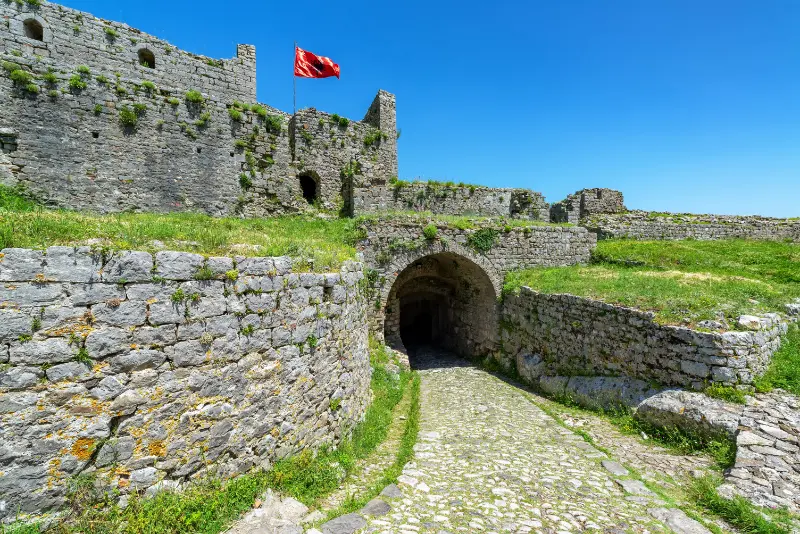
    Rozafa Castle Gate Shkoder Albania

    Travelling with a baby or toddler

    For naps, strollers, carriers, baby supplies and a slower daily rhythm, see the Shkodër with a baby or toddler guide.

    Travelling with older children? See Shkodër with Teenagers: Cycling, Rozafa, Lake Shkodra and Albanian Alps Tips for teen-focused activities, independence, evenings and family pacing.

  • Vlore with Kids: Beaches, Lungomare, Zvernec and Family Travel Tips

    Vlore with Kids: Beaches, Lungomare, Zvernec and Family Travel Tips

    Vlorë with kids is a practical choice for families who want a real city, an evening promenade and access to beaches and nature without committing immediately to the steeper central Riviera. It can be a two-night road-trip stop, a longer coastal base or the transition point between Tirana and Himarë. The city works best when you separate “Vlorë itself” from the longer boat and Riviera excursions that leave from the area.

    Use the main Vlorë travel guide for the destination as a whole. This family guide focuses on the Lungomare, swimming, Narta and Zvërnec, boat decisions, where to stay and how to keep the itinerary manageable in summer.

    Why Vlorë can be easier than a small Riviera village

    Families have access to supermarkets, pharmacies, restaurants, apartments and urban services, while still being close to the coast. That combination is useful with babies, selective eaters or children who need predictable routines. If the weather changes, you are not dependent on one beach or boat trip for the day to work.

    The official tourism portal describes Vlorë as a destination where beaches, lagoons, mountains, history and active tourism meet. See the official Vlorë tourism page for current destination context.

    Lungomare: build evenings around it

    The Vlorë Lungomare is one of the city’s best family assets. The official tourism portal describes it as a major seaside public space for walking, relaxation, dining and recreation. That makes it ideal after a beach or driving day when the family wants activity without another formal attraction.

    Stay close enough that you can walk there if evening strolls matter to you. With younger children, a central apartment near the promenade can be more valuable than a larger property that requires a car for every dinner.

    Which beach day?

    The Vlorë coast changes as you move south, so families should not expect every beach to have the same surface or depth profile. Choose according to access, shade and children’s comfort rather than chasing the most dramatic water color. Radhimë and Orikum can be useful alternatives when you want a different coastal setting, but they also change the transport equation.

    Read Radhimë and Orikum before choosing where to spend a full day. If you are staying in central Vlorë, factor in the return journey rather than treating each beach as if it were in the same neighborhood.

    Zvërnec and Narta Lagoon: a different kind of family outing

    Zvërnec and Narta Lagoon give children a break from beach repetition. The official tourism portal highlights the lagoon and monastery as a combination of protected nature and cultural heritage, while the monastery is reached across a wooden bridge. See the official Zvërnec Island page.

    With children, the main attractions are the change of landscape, bridge, woodland and birdlife rather than a long religious-history explanation. Stay respectful around the monastery, keep voices lower and dress appropriately for a sacred site.

    Sazan and Karaburun boat trips: ask family questions before booking

    Sazan Island and Karaburun Peninsula are among the most exciting excursions from Vlorë, but a family boat day should be judged by the boat and itinerary, not only the destination names. Ask about shade, toilets, life jackets for the child’s size, boarding, sea conditions and total duration.

    The official tourism portal identifies Karaburun–Sazan as Albania’s first marine park and a major area for boating, diving and coastal exploration. That does not mean every trip is suitable for every age. A shorter coastal excursion can be a better first boat experience than an all-day itinerary with multiple swimming stops.

    Old Vlorë and national history

    Families with school-age children can include the National Museum of Independence or a short walk through the historic areas connected with Albania’s declaration of independence in 1912. Keep the story simple: Vlorë is important not only as a beach city but as a place central to the creation of the modern Albanian state.

    If the children are not interested, do not force a long museum visit. A short cultural stop before lunch is enough to give context to the city.

    Where to stay with children

    Compare family accommodation in Vlorë and decide whether you want the historic center, Lungomare or a more beach-focused property farther south. Read the map carefully: a listing marketed as “Vlorë” can be several kilometers from the central promenade.

    Panoramic Beach Albanian Riviera Vlore Holidays Albania

    Check lift access, parking, kitchen facilities and noise. In summer, an apartment with a washing machine can be more useful than a hotel facility the family never uses.

    Do you need a car in Vlorë?

    For the central city and promenade, no. For repeated beach trips south, Llogara, Orikum or flexible access to nature areas, a car is helpful. Families without a car can use taxis and organized excursions, but should calculate the real cost and waiting time rather than assuming every destination will have frequent public transport.

    Read the rental car guide before deciding. If you have a car, confirm parking at the accommodation; central summer parking can influence your day more than the nominal drive time.

    Food and easy family meals

    Vlorë gives families a broad mix of seafood, grilled dishes, pizza, pasta, bakeries and cafés. A long promenade means you can change plans quickly if the first restaurant feels too formal or busy. Adults interested in the coast’s food traditions can use the seafood and Riviera food guides, while children can stay with simpler choices.

    A three-night family plan

    DayMain plan
    1Arrive, easy beach or rest, Lungomare in the evening
    2Morning beach, long lunch/rest, historic Vlorë or promenade
    3Choose Zvërnec/Narta or a family-suitable boat excursion

    If you continue to Himarë, make day four the scenic driving day through Llogara rather than adding a major excursion before departure. Children often enjoy the coast more when adults are not trying to squeeze in “one last thing.”

    Summer heat and beach safety

    Use shade, sunscreen and water consistently. If the beach has water-sport activity, supervise children closely and pay attention to designated swimming zones. On boat days, reapply sun protection because wind can disguise how intense the exposure is.

    Final advice

    Vlorë is strongest for families who value options. You can have a simple promenade day, a beach day, a lagoon outing or a boat day without changing hotels. Use that flexibility instead of overplanning it. If the children wake up tired, skip the long excursion and stay local; the city still gives you a complete day.

    Choosing between central Vlorë and the coast south of the city

    Central Vlorë is better for evening walks, restaurants and everyday services. Staying farther south can give families quicker access to clearer coastal water and beach-focused accommodation, but it may require more driving for groceries or city sightseeing. Look at the trip as a daily routine: where will breakfast happen, where will the child nap and how will you reach dinner?

    A property with a beautiful sea view can still be inconvenient if every outing starts with loading the car. Families should choose the location that reduces friction, not simply the one with the highest balcony.

    Llogara as a family road-trip stop

    If Vlorë is the beginning of a Riviera road trip, Llogara National Park can break the journey toward Dhërmi or Himarë. The elevation and viewpoints create a dramatic transition between the city and Ionian coast, but mountain weather can be different from Vlorë. Carry a light layer even in warm seasons and stop only where parking is safe.

    Adriatic Sea Coast Vlore Albania View Mountain Pass

    Children prone to motion sickness may need a break before or after the curviest sections. Do not make lunch at a scenic stop dependent on everybody feeling well.

    Boat-trip sun exposure

    Parents often focus on swimming safety and underestimate sun exposure on boats. Wind makes the heat feel weaker while reflected light increases exposure. Use hats that will stay on, protective clothing and repeated sunscreen application. Bring water even if the operator says drinks are available.

    A child who becomes tired or seasick may not enjoy multiple remote swimming stops. Ask whether there is an option to remain aboard comfortably and whether shade is guaranteed throughout the trip.

    A practical shopping and laundry reset

    Vlorë can be a useful place to restock before heading south. Families can buy snacks, diapers, toiletries and beach supplies more easily than in smaller Riviera villages. If the apartment has a washing machine, use the stop to reduce the amount of clothing you carry through the next part of the trip.

    Sunset Beach Vlore Albania Sunset Sky Beach

    This kind of practical reset is one reason not to fill every hour with sightseeing. A well-organized half-day can make the following week of travel much easier.

    When Vlorë is better than changing base again

    If your wider trip already includes several hotels, Vlorë can absorb an extra night instead of adding another coastal stop. Families can day-trip selectively and keep the same room, breakfast routine and parking arrangement. Reducing one hotel change often improves the trip more than adding one more beach town.

    This also gives the family a useful buffer if traffic, heat or weather changes the original plan.

    Travelling with a baby or toddler

    For naps, strollers, carriers, baby supplies and a slower daily rhythm, see the Vlorë with a baby or toddler guide.

    Travelling with older children? See Vlorë with Teenagers: Boat Trips, Beaches, Lungomare and Riviera Family Tips for teen-focused activities, independence, evenings and family pacing.

  • Tirana Grand Park Guide: Artificial Lake, Walking, Running and a Green City Break

    Tirana Grand Park Guide: Artificial Lake, Walking, Running and a Green City Break

    Tirana Grand Park and the Artificial Lake are where the capital changes pace. After the traffic, museums and dense central streets, the park gives you broad promenades, mature greenery, running routes, playgrounds, cafes and water views within the urban area. The lake was created in the 1950s as part of a flood-control project and today sits at the center of one of Tirana’s most-used recreational spaces.

    Streets Avenues Center Tirana Albania

    I like the park most as a piece of everyday Tirana rather than as a checklist attraction. Come early and you will share the paths with runners and walkers; arrive before sunset and the lake edge becomes a social space for families, couples and groups of friends. It is also a useful reset on a longer city itinerary, particularly if you have already spent several hours underground at the bunker museums or inside galleries.

    Albania’s official tourism portal is the main reference used for the core historical and location facts in this guide. I still recommend checking current opening arrangements, ticketing, local access and any temporary restrictions close to your travel date, because those details can change faster than the heritage itself.

    Why this place is worth adding to your Albania trip

    Tirana Grand Park earns its place in an itinerary because it adds a layer that broad destination guides often miss. Instead of collecting another famous viewpoint, you get a more specific understanding of southern central Tirana: how people lived, moved, worshipped, worked, relaxed or understood power in that setting. I would choose this stop when you have enough time to look closely rather than squeezing it into the final twenty minutes of a crowded day.

    One of the best habits when travelling in Albania is to separate distance from travel time. A place can look close on the map but still require slow urban traffic, steep walking, village roads or time to find parking. Build a buffer into the day and keep one optional stop rather than making every stop compulsory. This is especially valuable in historic centers, where the walk between two attractions may be short in kilometres but demanding in heat or on stone paving.

    Historical and cultural context

    The Artificial Lake dates from the 1950s and covers roughly 55 hectares according to the national tourism authority. Around it, the Grand Park developed into a major green and recreational zone. Its importance is social as much as scenic: this is a place used daily by Tirana residents for exercise, walking, family time and informal meetings, which makes it a good counterpoint to the monumental center.

    Context matters because Albanian heritage is layered. Ancient, Byzantine, Ottoman, royal, communist and contemporary periods often occupy the same small area. Try not to force every building into a single national story. Ask what function the site had at the time, who used it, what changed later and why it survived. That approach produces a much more accurate travel experience than repeating a legend without distinguishing it from documented history.

    What to notice during your visit

    Walk the lake edge

    Do not worry about completing every path. A partial loop is enough to understand the scale and enjoy the water. Choose the side that best fits your next stop and use the park as a flexible part of the day rather than a race around the shoreline.

    Run or cycle

    The park is one of the easiest places in Tirana to exercise away from busy traffic. Early morning is especially pleasant in warm months. Cyclists should still ride considerately because many paths are shared with walkers, children and dogs.

    Family time

    Playgrounds, open space and broad promenades make this one of the easiest central areas for a family break. It works well after a museum morning because children can move freely without the logistics of a full day trip outside the city.

    Cafes and slow time

    Use a lakeside or park cafe as a pause, not as the only reason to come. The best experience is combining a drink with a walk and watching the rhythm of local life change through the day.

    How much time to allow

    For Tirana Grand Park, I would protect at least 60 to 90 minutes in the schedule unless you already know the visit is very short. That gives you time to orient yourself, read interpretation, take photographs without blocking other visitors and notice details that are invisible on a quick pass. If the place includes steep walking, a museum interior or a guided component, allow longer. The goal is not to manufacture a fixed duration but to avoid turning a meaningful site into a rushed checkbox.

    If you are travelling in summer, the useful day is often split into a cooler morning, a slower middle of the day and a second active period later in the afternoon. Museums can be ideal in the heat, while exposed bridges, castle lanes and rural churches are usually more pleasant outside the strongest sun. In winter, daylight becomes the limiting factor instead, especially if you still need to drive on unfamiliar roads.

    A realistic way to combine it with nearby sights

    From the center, I would pair the Grand Park with Blloku or the Pyramid area rather than trying to combine it with a distant day trip. Walk south from the central districts, spend one to two relaxed hours around the lake, then return through Blloku for dinner. If you want more nature, keep Dajti or Bovilla for a separate half-day because both deserve more time than a rushed extension.

    I prefer geographic clustering to zigzagging. Two or three related stops in one district usually produce a better day than five famous places scattered across the map. Keep food, coffee and unplanned discoveries inside the itinerary rather than treating them as delays. In Albania, the unscheduled bakery, viewpoint, market stall or conversation can be as memorable as the attraction you planned six months earlier.

    Getting there and moving around

    Use Tirana as the practical reference point for this visit. In a city, walking is often the best final approach because parking and one-way streets add unnecessary stress. For rural or regional sites, a rental car, driver or carefully arranged taxi gives more control, but always confirm the return plan before setting off. Public transport can work well between major towns, yet the last few kilometres to a village, monastery or trailhead may require a separate solution.

    Tirana City Skyline Albania

    Download the destination and surrounding streets for offline use. Mobile data coverage is generally useful but should not be your only navigation plan, particularly underground, inside thick stone buildings or in rural valleys. If you drive, avoid assuming that the fastest-looking road on a map is the best route. Ask your accommodation about current road conditions when the final approach is minor or mountainous.

    Best time of day and season

    Spring and autumn are especially comfortable for cultural sightseeing because walking temperatures are usually easier and the strongest summer crowds are reduced. Summer gives long daylight but can make stone cities and exposed sites very hot around midday. Winter is often quiet and atmospheric, though shorter days, rain, snow at elevation and reduced seasonal services can change plans. There is no single perfect month; match the season to the kind of experience you want.

    For photography, early morning and late afternoon usually provide softer light, but museums and interiors depend more on opening hours than golden hour. If your priority is an uncrowded experience, arriving near opening time is often more effective than searching for a supposedly secret season. Always respect any local rule that restricts tripods, flash or photography of sacred objects.

    Where to stay

    Tirana is the logical base for most travellers visiting Tirana Grand Park. Check accommodation in Tirana. When choosing a property, read the most recent comments about location, parking, stairs, noise, heating or air conditioning rather than relying only on the overall score. In historic areas, a hotel that looks very close on the map can still involve a steep climb with luggage.

    Food, coffee and local rhythm

    Do not over-plan meals. If you are in a major city, save a few promising places but choose according to where you actually are when hungry. In rural areas, meal times and seasonal opening patterns can be less predictable, so ask hosts for current recommendations. Carry some cash in lek for small purchases. Card acceptance has expanded, but it is still sensible not to depend on a single payment method.

    Coffee is part of the travel rhythm in Albania rather than merely fuel. A short stop can become a useful planning reset: check the next opening time, review your walking route, drink water and decide whether another attraction will improve the day or simply make it busier. This is particularly important in places with emotionally heavy history, where a pause between museums can help you process what you have seen.

    Families, older travellers and accessibility

    Tirana Grand Park may be interesting for families, but the experience depends on age and attention span. Children often engage better when adults turn details into questions—how a room was used, why a wall is so thick, how a bridge carries water around its piers—rather than expecting them to read every label. For older travellers, reduce the number of stops and prioritize shade, seating and easy transport between neighborhoods.

    Accessibility in Albania varies greatly. Historic houses can have narrow stairs, castles have uneven stone, rural churches can lack step-free entrances and underground museums may have confined passages. If mobility is a decisive issue, contact the attraction directly before visiting. A private driver can be a worthwhile upgrade because it reduces walking between transport nodes even when the attraction itself is not fully accessible.

    Photography and respectful behaviour

    Take photographs in a way that does not turn the site into a stage set. Do not climb walls, sit on fragile structures, move objects, block narrow circulation or photograph people closely without permission. At religious sites, modest dress and quiet behaviour matter even when no service is taking place. At places connected with dictatorship or persecution, avoid playful bunker poses that trivialize the experiences being documented.

    A useful photography strategy is to make three kinds of image: one establishing view showing the setting, one architectural or object detail, and one image that records how the place relates to the surrounding city or landscape. That small discipline usually creates a stronger travel record than taking fifty nearly identical wide shots.

    Safety and practical details

    The park is free-form urban space rather than a controlled attraction, so facilities and path conditions can change. In summer, use the cooler morning or late-afternoon hours and carry water. After rain, shaded sections can stay damp. At night, stick to well-used, well-lit routes and use normal city awareness with valuables.

    • Check current information: opening hours, tickets and temporary closures can change.
    • Carry some cash: small sites and local services may not always accept cards.
    • Wear suitable shoes: stone, stairs, polished floors and uneven lanes can be slippery.
    • Save maps offline: useful in bunkers, thick buildings and rural areas with weak signal.
    • Keep the day flexible: leave room for traffic, weather, queues or a slower visit than expected.
    • Respect the site: follow photography, dress, touching and access rules even when enforcement looks informal.

    Useful related Wonderful Albania guides

    Continue planning with our Tirana travel guide, Farka Lake guide, Mount Dajti guide, best day trips from Tirana. These articles are designed to work as a cluster, so you can move from the specific attraction to accommodation, transport, food and wider regional planning without rebuilding the itinerary from scratch.

    Tirana Skyline And Dajti Mountains Albania

    Final thoughts

    Tirana Grand Park is most rewarding when you give it enough time to explain something about Albania rather than using it only as a backdrop. Look closely, separate documented history from legend, ask practical questions and connect the site to the surrounding neighborhood or landscape. That slower approach produces a richer trip and is also more respectful to the people and institutions preserving the place for future visitors.

  • Himarë with Teenagers: Beaches, Gjipe, Porto Palermo and Riviera Family Tips

    Himarë with Teenagers: Beaches, Gjipe, Porto Palermo and Riviera Family Tips

    Himarë with teenagers can be one of the easiest ways to experience this part of Albania because older children can handle longer days, understand the history and participate in more active experiences than very young kids. Himarë suits teenagers who prefer a smaller beach town to a large resort. The appeal is the freedom to move between swimming, promenade evenings, nearby coves and short adventures such as Old Himarë, Porto Palermo or a Gjipe outing. It feels more independent than a child-focused resort, but parents still need to plan transport because the best beaches are spread along the coast.

    Filikuri Beach Hidden Wild Beach Himare Albanian Riviera

    This guide is designed for roughly secondary-school-age travellers, not for a specific legal age. Interests vary much more than birthdays. For a broader overview, start with Albania with Teenagers, then use this local guide to shape the days in Himarë.

    Why Himarë works with teenagers

    A Gjipe day can be memorable for active teens, but choose the access method that matches heat, fitness and footwear. A boat outing can turn the coastline into an adventure without the road logistics. Livadhi, Potam and other nearby beaches also make it easy to change scenery rather than returning to the same stretch of sand every day.

    Teenagers usually enjoy a trip more when they have some control over it. Give them one decision each day: the lunch stop, the order of two attractions, the beach, the soundtrack in the car or the evening dessert place. Albania is well suited to this because many days can be built around short drives, outdoor stops and informal meals rather than timed reservations. The aim is not to make the holiday child-centred; it is to give older children enough agency that the family travels as a small team.

    The best teen-friendly activities

    • Choose one active highlight: A Gjipe day can be memorable for active teens, but choose the access method that matches heat, fitness and footwear. A boat outing can turn the coastline into an adventure without the road logistics. Livadhi, Potam and other nearby beaches also make it easy to change scenery rather than returning to the same stretch of sand every day.
    • Use a challenge: give the teen a photo theme, navigation task, food mission or viewpoint to find.
    • Leave genuine free time: a swim, café stop or hour back at the hotel is part of the itinerary, not wasted time.
    • Let interests lead: choose photography, sport, food, history or nature rather than forcing the same activity mix on every teenager.

    For a wider activity list, compare the best things to do in Himarë. The useful family trick is to shortlist five ideas, then let the teenager choose two of them. That keeps parents in control of logistics while giving older children real influence.

    Making history interesting instead of exhausting

    Porto Palermo is a good history stop because the fortress, bay and road trip work together visually. Old Himarë offers another compact dose of history and views. Teens who dislike formal museums often engage more with places where they can walk, climb and photograph while learning the story in smaller pieces.

    Before a historical visit, give just enough context to create curiosity. A two-minute story in the hotel can be more effective than reading an entire guidebook aloud at the gate. During the visit, let the teen photograph details, search for the best viewpoint or choose one object to investigate. Afterwards, move to food, water or a café so the day changes gear.

    Adventure, swimming and outdoor time

    Teenagers often need more movement than adults expect. Even a culturally rich itinerary benefits from a swim, bike ride, hike, boat ride or long walk. Check weather, sea conditions, operator safety and the actual difficulty of an activity. Online videos can make cliff paths, canyon swims or mountain trails look easier than they are. If a commercial adventure is involved, ask about minimum ages, equipment, insurance and cancellation rules directly with the operator.

    Summer heat changes family dynamics. A teenager who is bored may actually be dehydrated, hungry or exhausted after a late night. Put the most demanding activity in the morning, use the hottest hours for lunch, shade or a rest, and return outside later. On beaches, sun protection and water matter even when teens resist reminders. On mountain trips, the opposite problem can occur: weather changes quickly and a hot city morning does not guarantee warm conditions at altitude.

    Food with teenagers: give them ownership

    Albanian food is relatively easy to explore with teenagers because casual dishes can sit alongside more traditional meals. Byrek, grilled meat, pizza, pasta, salads, qofte, seafood, pastries and ice cream give cautious eaters a bridge, while adventurous teens can try regional dishes. Letting them order in a café or pay a small bill in lek is also a low-stakes way to build confidence. If allergies or strict diets matter, plan them separately rather than assuming a teen-friendly menu is medically suitable.

    Use the main Himarë travel guide to understand neighbourhoods and the local rhythm, then avoid over-planning restaurants. A useful pattern is one meal chosen by parents for regional food and one chosen by the teenager for pure preference. That compromise tends to work better than making every meal a cultural lesson.

    Phones, Wi-Fi, photography and staying connected

    Phones are useful tools rather than automatic enemies on a teen trip. Download offline maps before road days, save hotel addresses, keep screenshots of tickets and agree how much battery must remain before anyone separates from the group. A portable battery is one of the simplest family-travel upgrades. If your teen wants to photograph or post constantly, set a few phone-free moments—perhaps at meals or during a short museum visit—instead of fighting over the device all day.

    For current festivals, concerts and temporary activities, check the official TEA Events platform shortly before the trip. Events can transform a quiet evening into the highlight of a teen stay, but schedules change, so live information is more useful than an old blog calendar.

    Evenings in Himarë with teenagers

    The waterfront is relaxed rather than metropolitan, which is often ideal for families with teens. Let older children choose a café, dessert or short walk while parents stay nearby. In high season, agree on a clear return time because the promenade becomes much busier and phone reception can vary at more isolated beaches.

    Do not confuse “teen-friendly evening” with adult nightlife. In many Albanian destinations the best family evening is public: promenades, pedestrian streets, cafés, live events and late dinners. If an older teenager wants more independence, agree where they may go, how long they may stay and exactly where the family reconnects.

    Safety and independence

    Older children need different safety rules from toddlers. Agree what happens if the group is separated, which adult carries documents, whether the teen may take a taxi alone, and what time everyone meets at the hotel. Road safety deserves attention: pavements can be inconsistent, scooters and cars may appear quickly, and a confident teenager still needs to look carefully before crossing. Around water, cliffs and mountain paths, do not let social-media confidence replace local conditions or basic caution.

    A useful rule is that independence expands after the family has learned the area together. On the first evening, walk the route. On the second, an older teen might buy a snack or take a short promenade loop alone or with a sibling. The goal is confidence, not testing limits in an unfamiliar environment.

    Getting around Himarë with older children

    Teenagers can usually handle public transport and walking better than small children, but that does not make every transfer efficient. Read how to get around Himarë without a car and the local taxi and transfer guide. Decide each day whether walking, bus, taxi or car protects the family’s energy best.

    On road trips, give teens a role: navigation backup, playlist, photo stops or choosing the next break. It reduces the sense of being transported between adult decisions. Seat belts matter on every journey, and parents should not accept unsafe driving simply because a transfer is short.

    A day trip that actually suits teenagers

    Dhërmi, Jalë, Gjipe and Porto Palermo are obvious choices, but do not turn a Himarë stay into a daily road expedition. Teenagers often prefer one or two ambitious days and then a day where they can sleep later, swim, eat and decide plans as they go.

    When choosing an excursion, ask whether the teen would still want to do it if no one could post a photo. That question separates genuine interest from checklist travel. One meaningful day trip is usually enough for a short stay; repeated early departures can make teenagers dislike a destination they barely experienced.

    Where to stay with teenagers

    Central Himarë/Spile makes evening independence easiest; Livadhi offers more beach space but usually requires more transport for town evenings. With teenagers, ask about room configuration, not just occupancy. Two proper beds plus a sofa can feel very different from three adults sharing one tight room.

    Himare Beach Sunny Albanian Riviera Coastline 2

    For current options, compare hotels and apartments in Himarë on Booking.com. Then confirm the exact bed setup, Wi-Fi, air-conditioning/heating and check-in rules directly with the property. With teens, two sleeping zones can improve the whole trip more than a luxury lobby.

    Budget and spending money

    A daily teen budget can reduce friction. Give older children a fixed amount for snacks, souvenirs or optional activities and let them decide how to use it. This also teaches the value of lek without requiring parents to approve every coffee or bracelet. Keep larger payments, transport and accommodation under adult control, and remember that card acceptance varies more outside the biggest cities.

    Agree in advance what the teen budget covers. If parents pay for lunch and transport, the teen can manage souvenirs and snacks. If the daily amount disappears by noon, resist immediately replacing it unless there is a genuine need. The small lesson is part of the travel experience.

    How fast should you travel?

    Avoid the adult temptation to prove that the family ‘saw everything.’ Teenagers often remember one strong activity, one funny meal and one sunset better than eight monuments. A useful rhythm is one anchor activity in the morning, one flexible block in the afternoon and an enjoyable evening. If the family has travelled hard for several days, schedule a slow morning before enthusiasm collapses.

    If you are moving through Albania, two or three nights in a base generally work better with teenagers than a sequence of one-night stops. Packing every morning removes the autonomy that older children value. Longer bases also let a family change plans if weather, energy or a new idea makes the original itinerary less appealing.

    A realistic 2-day plan for Himarë with teenagers

    Day 1 — understand the place, then let the evening breathe

    Start with the main sights from the Himarë things-to-do guide, but choose only two or three. Put the most important cultural stop before lunch, add a long food break, then use the afternoon for an outdoor or flexible activity. In the evening, follow the local rhythm rather than scheduling another formal visit.

    Day 2 — one memorable experience

    Use the second day for the experience that makes Himarë different from the previous stop: a boat, beach, bike ride, mountain excursion, castle, lake or day trip depending on the destination. Keep the return time loose enough for the teen to choose the final meal or sunset stop.

    Himare Beach Sunny Albanian Riviera Coastline

    What changes compared with travelling with younger kids?

    The existing Himarë with kids guide focuses more on easier pacing and child-friendly logistics. With teenagers, you can walk farther and stay out later, but you also need to negotiate independence, interests and screen time. Do not simply use a children’s itinerary and make it longer; rebuild it around choice and more challenging experiences.

    Common mistakes families make with teenagers

    • Planning every hour and leaving no time for the teenager to make a choice.
    • Assuming a physically capable teenager automatically enjoys long museum days.
    • Booking the cheapest family room without checking privacy and bed configuration.
    • Turning every meal into a lesson about traditional food instead of allowing familiar choices too.
    • Using late nights every day and then expecting enthusiasm for 07:00 departures.
    • Treating phones only as a problem instead of using them for maps, tickets and photography.
    • Allowing risky swimming, cliff access or road behaviour because the teenager appears confident.

    Useful official resources before you go

    For national destination information, use the official Albania tourism portal. For current events and temporary experiences, check TEA Events. Re-check opening hours and transport shortly before the day itself because seasonal schedules can change.

    FAQ

    Is Himarë a good destination for teenagers?

    For most families, Albania is easiest with teenagers when the itinerary mixes cities, water and at least one outdoor or adventure component. The exact balance depends on the teenager. A history-focused teen may love castles and communist-era sites; a sporty teen may care far more about hiking, rafting or swimming; a food-focused teen may remember markets and cafés.

    Do we need a rental car?

    Public transport can work between major cities, but a car often increases flexibility for family days outside urban centres. Do not rent automatically: in places with difficult parking, a bus plus occasional taxi can be easier. Compare the local no-car and taxi guides before deciding.

    Can older teenagers have some independence?

    For older teens, supervised independence is realistic in compact central areas once the family understands the neighbourhood. Start small: a café next door, a short promenade loop or ten minutes in a shop. Set a meeting point, keep phones charged and do not use a new city as the first place to test completely unrestricted independence.

    Final tips

    The best trip to Himarë with teenagers is not the one with the longest sightseeing list. It is the one where the family shares a few strong experiences, gives older children meaningful choices and keeps enough flexibility for energy and weather. Use Himarë as a place to travel with your teenager rather than simply bringing them along.
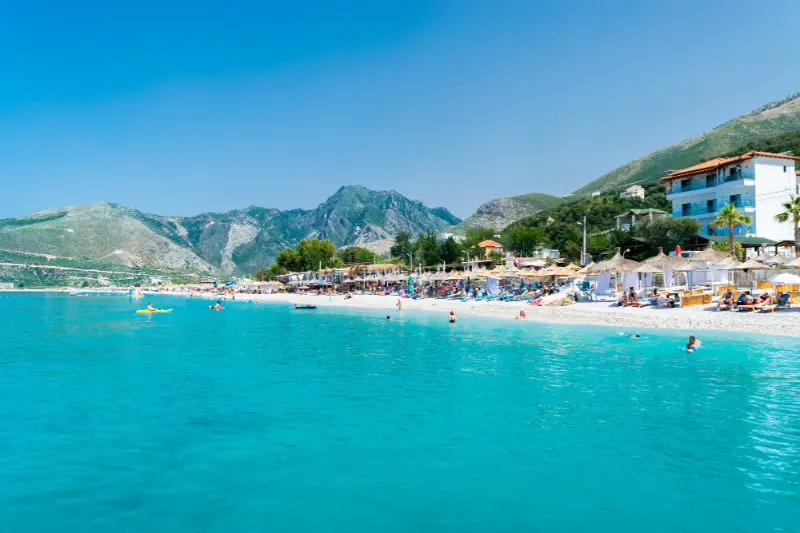
  • Albania with a Dog or Pet: Entry Rules, Ferries, Hotels, Beaches and Road Trips

    Albania with a Dog or Pet: Entry Rules, Ferries, Hotels, Beaches and Road Trips

    Travelling Albania with a dog or pet can work particularly well on a road trip, but the paperwork deserves more attention than the sightseeing. Albania is outside the EU, which matters for travellers entering from an EU country and then returning with a dog, cat or ferret. Airline, ferry, accommodation and border requirements should be checked before booking a non-refundable itinerary.

    This guide focuses on non-commercial travel with companion animals and is not a substitute for veterinary or customs advice. Rules can change, and the exact requirement depends on where the animal normally lives, how you enter Albania and where you travel next. Use it together with our Albania rental-car guide, ferry guide and official EU pet-travel information.

    Quick answer

    QuestionPractical answer
    Is Albania in the EU pet-travel area?No. EU travellers should pay particular attention to the rules for returning to the EU from Albania.
    What documents are normally central to pet travel?Microchip identification, valid rabies vaccination and the correct passport or health documentation; additional testing can apply depending on the route.
    Are pet-friendly hotels common?Many properties accept pets, but policies, fees, size limits and room types vary and must be confirmed.
    Best transport styleA private car usually gives the most control over stops, shade, water and luggage.
    Biggest summer riskHeat. Do not plan long exposed walks or leave an animal in a parked vehicle.

    Paperwork comes before the itinerary

    Pet travel rules should be resolved before you decide which beach to visit. Confirm the animal’s microchip, rabies-vaccination dates and travel document with your veterinarian and the authorities relevant to your route. If you are coming from the EU, ask specifically what you need to re-enter the EU after a stay in Albania, because the return leg can be more demanding than the outbound leg.

    Aerial View Of Spille Beach Albania

    Current EU guidance says dogs, cats and ferrets entering the EU from most non-EU countries may require a rabies antibody titration test unless an exemption applies. The rules changed in 2026, so do not rely on an old blog post or a previous trip. If a titration test is required for your situation, timing can matter by months, not days.

    EU travellers: plan the return before leaving home

    The easiest scenario is often an EU-resident pet whose passport already documents everything required before departure. Current EU guidance explains that a pet returning after a short stay in a non-EU country may use its EU pet passport when the required rabies conditions, including titration where applicable, were completed and recorded before leaving the EU. That can avoid trying to solve paperwork during the holiday.

    Because the rules depend on current country lists and the pet’s status, take the official EU page to your veterinarian and ask them to verify the Albania return route. Do this well before travel. A ferry or hotel booking can be changed; a biological waiting period for rabies documentation cannot be compressed because your holiday starts next week.

    Flights and ferries

    Airlines have their own policies for cabin and hold transport, carrier dimensions, weight limits and breed restrictions. Reserve the animal at the same time as your own ticket rather than assuming space will be available later. At Tirana airport, allow extra check-in time and keep documents accessible instead of buried in checked luggage.

    Ferries from Italy can be attractive for road-trippers with dogs because you keep the car and pet equipment together, but ship policies vary by operator and vessel. Some offer pet cabins, kennels or deck access under conditions. Read the operator rules for the exact sailing, and use our ferries to Albania guide for the route overview before checking the carrier directly.

    Driving with a pet

    A car gives you freedom to stop for water, toilet breaks and shade, but Albanian summer heat makes vehicle safety non-negotiable. Never leave a pet in a closed parked car, even for a short stop. Carry more water than you think you need and plan longer breaks on mountain roads where travel time can exceed the map estimate.

    If you rent a car, tell the company that you are travelling with an animal and ask about cleaning fees or restrictions. Protect upholstery with a cover and secure the animal appropriately. On long Riviera drives, combine fuel stops with short shaded walks rather than waiting until the dog is restless on a narrow section of road.

    Pet-friendly accommodation

    A “pets allowed” filter is only the beginning. Message the property to confirm species, size, number of animals, fee, room restrictions and whether the pet can be left alone in the room. Ask about outdoor space and nearby walking areas if you are staying several nights. A central historic hotel may accept dogs but still have steep stairs and no convenient toilet area.

    Apartments and rural guesthouses can work well because they provide space, but check fences and other animals on the property. Albania has free-roaming dogs in some areas, so a private garden is not automatically an off-leash environment. Keep vaccinations and parasite prevention up to date based on veterinary advice.

    Beaches and summer heat

    Pet access to beaches can vary by municipality, operator and season, and many organized beach clubs do not advertise a clear dog policy. Ask before settling in. Early morning and evening are the most comfortable times for a dog in July and August, while midday sand, asphalt and rocks can become dangerously hot.

    Bring shade, fresh water and a bowl, and prevent the dog from drinking seawater. A quiet beach with no facilities is not automatically better if the approach is exposed and there is no shade. In summer, an apartment near a promenade may provide a safer daily routine than driving to remote coves every day.

    Drymades Beach Rock Arch Albania

    Street dogs and animal interactions

    Free-roaming dogs are visible in parts of Albania. Many are indifferent to people, but travellers should avoid allowing an unfamiliar dog to approach their pet freely, especially around food, territory or packs. Keep your own dog on a lead where encounters are likely and create distance rather than trying to test whether another animal is friendly.

    Discuss rabies vaccination and parasite prevention with your veterinarian before travel. If your pet is bitten or scratched, clean the wound and seek veterinary advice promptly. Save the location of veterinary clinics in your main bases before you need one; Tirana and larger cities offer more choice than remote coastal or mountain areas.

    A pet-friendly Albania route

    A practical first road trip might use Tirana, Shkodër or Lake Shkodra, Berat, Vlorë and one Riviera base, with longer stays and fewer hotel changes. This gives you city services, rural walking and coast without forcing the animal through a new room every night. Avoid scheduling a long ferry, long drive and mountain hike on consecutive days.

    If your dog is nervous around traffic or crowds, skip the busiest central promenades at peak time and choose early walks. If it loves hiking, choose routes appropriate to the animal’s fitness and heat tolerance rather than selecting a trail only because it is famous. The same principle applies to human travel: the best itinerary is the one your actual group can enjoy.

    Where to stay

    Search pet-friendly accommodation in Tirana on Booking.com. After using a pet filter, message the property directly to confirm the current policy and any fee. Repeat this for every stop because a chain or host can apply different rules by room type or season.

    Tours and activities

    Most standard group tours are not designed for pets, so private tours, self-driving days and outdoor sightseeing are usually easier. Before booking a boat trip, castle visit or national-park activity, ask whether animals are allowed and whether the transport itself can safely carry them.

    Useful related guides

    Before you go: a practical checklist

    Ask your veterinarian to review the entire route, not only entry into Albania. Keep digital and paper copies of the pet’s documents, vaccination record and microchip number. Confirm airline or ferry rules for the exact service and reserve pet space early. Pack a lead, secure travel harness or carrier, bowl, water, food, waste bags, towel and any regular medication.

    During the trip, maintain the animal’s normal routine as much as possible. Use mornings and evenings for longer walks in hot weather, check paws after rough trails or hot surfaces, and choose accommodation with predictable access outside. If the animal is stressed by crowds, do not force a busy beach-club itinerary simply because it is popular.

    Current rules and official information

    Use the EU’s official pet-travel guidance to check the latest requirements for entering or re-entering the EU. In 2026 the EU pet-travel legal framework changed, so travellers should verify current rules with an authorised veterinarian and the competent authorities close to departure.

    Common mistakes

    • Checking Albania entry but forgetting the rules for returning to the EU or continuing to another country.
    • Assuming “pets allowed” means no fee, no size limit and permission in every room.
    • Leaving a dog in a parked car during summer, even briefly.
    • Relying on an old forum post for rabies or titration requirements.
    • Allowing uncontrolled greetings with unfamiliar free-roaming dogs.
    • Planning every day around human sightseeing without rest and routine for the animal.

    Frequently asked questions

    Can I take my dog from Italy to Albania by ferry?

    Often yes, but pet cabins, kennels and deck rules vary by operator and vessel. Confirm the exact sailing before booking.

    Do I need a rabies antibody test to return to the EU?

    It can be required depending on current EU rules and the pet’s documentation. Check the official EU country list and ask an authorised veterinarian well before departure.

    Are dogs allowed on Albanian beaches?

    Policies vary by beach, municipality and private operator. Ask locally and favor cooler morning or evening hours in summer.

    Rana E Hedhun Sand Dunes And Adriatic Beach Albania

    Is Albania good for a dog road trip?

    A car can make pet travel much easier because you control stops, luggage and water, but summer heat and road time require planning.

    Are veterinarians easy to find?

    Larger cities offer more options than remote areas. Save clinics in your main bases before the trip, especially if your pet has an existing condition.

    Final recommendation

    A pet-friendly Albania trip succeeds or fails on preparation more than on the destination itself. Solve rabies and re-entry rules first, reserve the animal with the ferry or airline, confirm every hotel and build the road trip around heat, water and rest. Once those basics are handled, Albania’s mix of coast, lakes and countryside can work very well for travellers who prefer to bring their animal rather than leave it at home.

    Dog travel guides by destination

    Local conditions matter when travelling with a dog. These guides cover walks, accommodation, heat, transport, beaches and practical pet routines in Albania’s main bases: