Travelling to Himare with a baby or toddler is very manageable when the itinerary is designed around the child rather than simply shrinking an adult city break. The practical questions are not only which sights are “family-friendly,” but whether the pavement works with a stroller, how quickly you can return for a nap, where to buy diapers and simple food, and whether a beautiful hotel sits at the top of a hill you will climb four times a day.
This guide focuses on those real logistics in Himarë. It is aimed at parents of babies and toddlers who still need naps, feeding breaks, a stroller or carrier and a predictable sleep routine. Older preschool children usually have more flexibility; for broader ideas, use the linked “with kids” guide as well.
Himarë with a baby or toddler at a glance
| Planning point | Practical approach |
|---|---|
| Best base | Stay close to the main daily walking area so room naps remain easy |
| Stroller | Useful on smoother central streets; not suitable for every old-town, beach or archaeological surface |
| Baby carrier | Worth bringing for steps, cobbles, rough paths and short historic-site visits |
| Transport | Use walking for easy sections and pre-arranged taxi/transfer for tiring or steep segments |
| Best rhythm | One main activity in the morning, midday rest, lighter late-afternoon outing |
| Key rule | Choose convenience and shade over trying to complete an adult sightseeing checklist |
Where to stay when naps and short walks matter
Spile is the easiest base when parents want to walk to groceries, restaurants and a town beach without loading the car. Potam can work well for a quieter beach-focused stay if accommodation is genuinely close to the water. Livadhi offers space but may require more transport for everyday errands. Old Himarë is beautiful for an outing, not necessarily the simplest baby base.
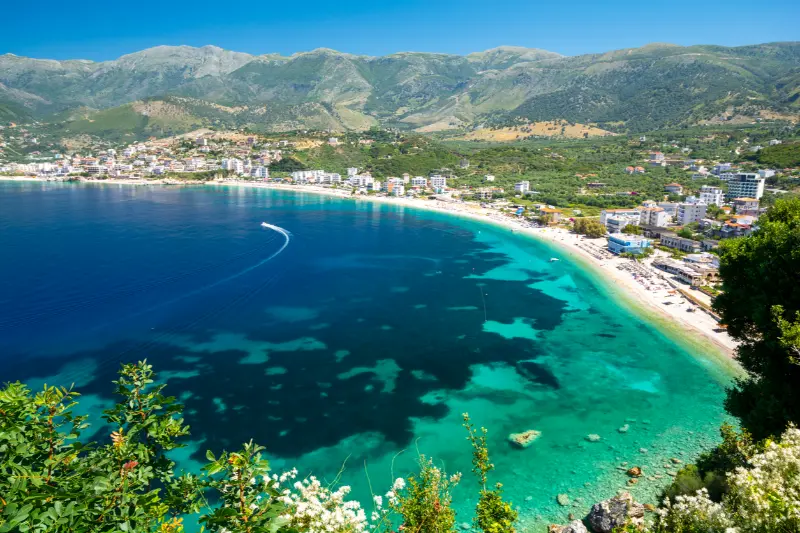
For a family stay, compare family-friendly stays in Himarë. Before booking, read recent room details carefully and ask about lift access, stairs, cot availability, parking or taxi drop-off, and whether the bedroom can be made dark for naps. “Central” on a booking map does not always mean easy with a stroller.
Stroller or baby carrier?
Himarë is spread across beaches and hills rather than functioning like one compact resort. The seafront sections are manageable with a stroller, but side roads, beach gravel and old-village slopes make a carrier useful. Choose the accommodation location with the daily routine in mind; a sea view high above the coast can mean repeated climbs with a sleeping child.
The most flexible setup is usually a lightweight stroller plus a soft structured carrier. The stroller handles naps, airport time and long flat walks; the carrier solves stairs, broken pavement, cobblestones and short attractions where folding the stroller is easier than forcing it through. A large all-terrain stroller can be comfortable but becomes awkward in small taxis, guesthouse stairs and ferries.
What to see without overloading the day
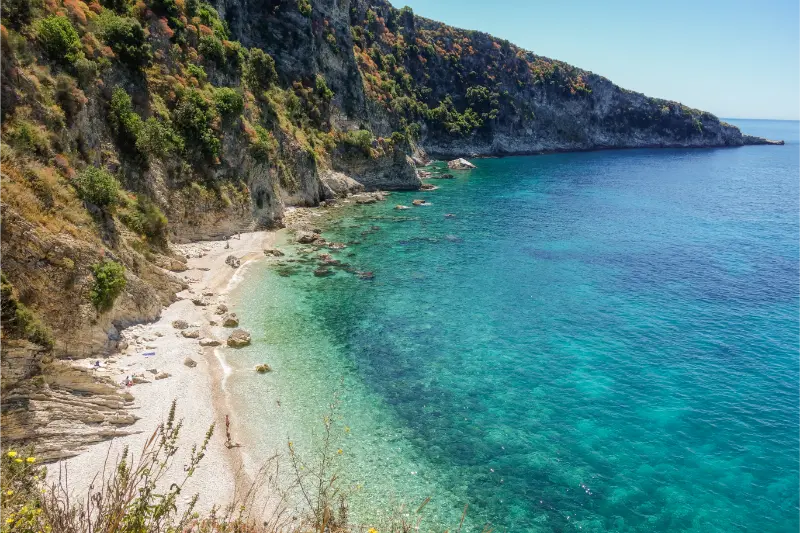
Slow beach mornings, promenade time and a short Porto Palermo visit are more realistic than a full Riviera checklist. Old Himarë can be explored briefly with a carrier. Gjipe is not a stroller outing and requires a much more deliberate access plan, so families with babies should not treat it as an automatic must-do.

With a toddler, one “major” attraction can be enough for the morning. Add unstructured time afterwards: a square, promenade, park, beach or café where the child can move. This does not reduce the quality of the trip. It prevents every museum or viewpoint from becoming a negotiation when the child is hungry or overtired.
Getting around with a small child
A car gives flexibility but parking and summer traffic can erase some of the advantage. Taxis are useful for one-way beach moves when parents do not want to carry gear back uphill. If you are traveling by bus, staying in Spile keeps daily logistics much simpler than a remote beach property.
Do not assume a taxi will automatically have the type of child restraint you use at home. If a car seat is important to your family, request it explicitly when booking an airport transfer, private driver or rental car and confirm the child’s age/size requirements. For buses and minibuses, space for a large stroller can vary, so a compact fold and a separate carrier are useful.
Build the day around the nap, not around opening every attraction
A close-to-beach room is the single biggest convenience. Morning swim, room nap, then late-afternoon beach works far better than keeping the whole family away from accommodation for eight hours. A balcony or shaded terrace is especially useful because adults can still relax while the child sleeps.
Travel naps are unpredictable, so create two workable versions of the day. Version A assumes the child sleeps in the room and keeps the family near the accommodation at midday. Version B assumes a stroller/carrier nap and uses a quiet promenade or café. The mistake is scheduling a non-refundable, transport-heavy activity exactly at the usual sleep window and hoping the child adapts.
Choose one beach base instead of beach-hopping every day
Adults can enjoy driving from bay to bay; babies often experience the same plan as repeated packing, car-seat time and interrupted naps. Pick one beach close to the accommodation for most days and make only one or two deliberate excursions. This reduces gear, parking stress and the temptation to keep a tired toddler moving because the next beach is supposedly “better.”
Food, milk, snacks and supermarket strategy
Himarë has enough supermarkets and mini-markets for ordinary baby/toddler needs, but specialist brands are more predictable in larger cities such as Vlorë or Sarandë. Buy essential formula, allergy-safe foods or preferred diapers before a remote Riviera stay if changing brand would be a problem.
For ordinary toddler meals, Albania is easy to navigate: bread, yogurt, fruit, eggs, rice, potatoes, soups and grilled foods are widely available. Parents dealing with allergies, medical nutrition or a very specific formula should carry a buffer supply and check labels carefully. Larger supermarkets are more reliable for diapers, wipes and branded products than small resort mini-markets.
Diapers, changing and the everyday bag
- Enough diapers for the outing plus a delay buffer
- Wipes and a small changing mat
- One complete clothing change in a sealed bag
- Sun hat and child-safe sun protection appropriate for your family
- Water and familiar snacks
- A thin muslin or lightweight layer for shade/temperature changes
- Small rubbish bags because a changing bin is not guaranteed
- Offline address of the accommodation and a local phone/data connection
Public baby-changing facilities are not as predictable as in large northern-European shopping centers. Parents should be comfortable doing a quick change in the stroller, car or another discreet clean space when necessary. A compact kit is more useful than carrying a full nursery bag through every old town.
Heat, sun and beach days
June and September give the best balance of warm coast and less intense crowding. July and August require early starts and midday rest. The off-season is peaceful, but some restaurants and tourist services reduce hours, so apartment self-catering becomes more useful.
In warm weather, the simplest protection is schedule design: start earlier, seek shade, keep the child hydrated according to their normal needs and avoid long exposed sightseeing in the middle of the day. On beaches, bring or rent reliable shade and keep the nap plan separate from the idea of staying on the sand from morning until sunset.
Swimming and water safety with toddlers
Sea and lake conditions can change by beach and by hour. Assess the exact entry point, waves, boat traffic, depth and underwater surface rather than assuming a destination is safe because it is marketed as “family-friendly.” Stay within arm’s reach of a young child around water and use flotation equipment only as an aid, never as a substitute for direct supervision.
Day trips: choose one reason to travel
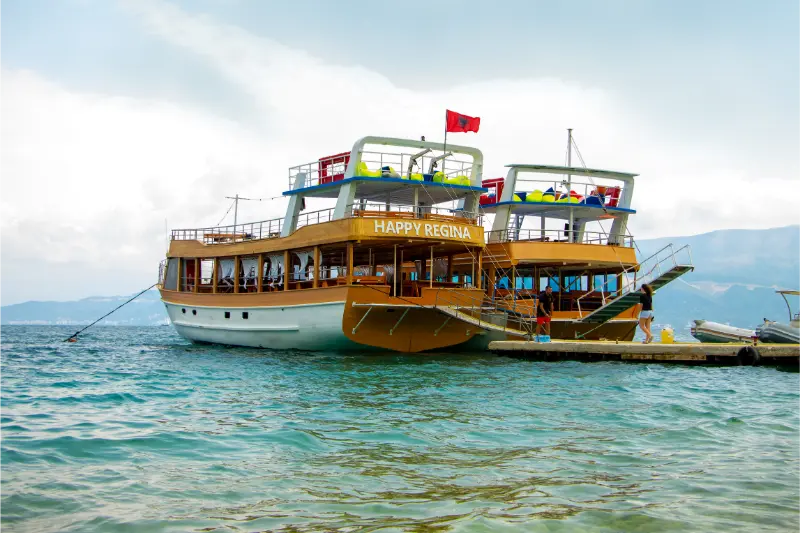
Porto Palermo is compact enough for a half-day with a car, while Borsh and Qeparo can be easy scenic outings if you avoid multiple beach changes. Long boat excursions need careful checking for shade, boarding and child life-jacket availability. Gjipe is better saved for families comfortable with walking access and carrying.
A useful rule is that the travel time, the attraction and the meal together should still leave room for an unplanned stop. If the day only works when every transfer is perfect, it is too fragile for toddler travel. Private transport can sometimes be worth the extra cost because it lets the family stop for feeding, diaper changes or motion sickness without affecting a bus timetable.
Restaurants with a baby or toddler
Albanian restaurants are generally informal and family presence is normal, but equipment varies. Do not assume every restaurant has a high chair, changing table or children’s menu. Eating slightly earlier than the busiest dinner period can produce faster service and more space for a stroller. Choose simple dishes from the normal menu rather than relying on a dedicated kids section.
If your child is a selective eater, keep one familiar snack in the bag so the restaurant meal does not become a crisis. That buffer gives adults the freedom to try local food while the child has something predictable.
Accommodation checklist before you book
- Exact number of stairs between street and room
- Lift availability if the building has several floors
- Cot/crib confirmation rather than assuming “family room” includes one
- Real distance to supermarket, promenade or beach
- Noise from bars, traffic or events after the child’s bedtime
- Fridge and kettle if you need milk or simple meals
- Air-conditioning in summer and heating for winter stays
- Parking or taxi drop-off if the old town restricts vehicle access
- Blackout curtains or shutters if naps are important
Health and medication planning
Bring the child’s usual medicines, prescription copies where relevant and a basic travel-health kit recommended by your own clinician. Do not rely on finding the same brand name abroad. For country-level information on pharmacies, medical care and what to prepare before travel, use the site’s broader health guide and confirm urgent or medical questions with qualified professionals.
What to pack versus what to buy in Albania
Diapers, wipes, bottled water, snacks and ordinary toiletries are easy to buy in major Albanian destinations. Bring from home anything highly specific: a preferred formula, medical food, unusual allergy-safe product, favorite sleep item, travel blackout solution or child medication. The goal is not to transport a supermarket; it is to remove the few substitutions that could genuinely disrupt the trip.
Moving between Albanian destinations with a toddler
Keep transfer days deliberately light. Pack the next meal and diaper change where you can reach them without opening the main suitcase, and avoid scheduling a major castle or beach excursion immediately after a long drive. Albania looks compact on the map, but road traffic, mountain routes, summer congestion and child stops can make a short distance feel much longer.
For families changing bases, two or three nights in one place is usually easier than a different hotel every night. The value of a slower route increases with every item you must repack: stroller, carrier, diapers, snacks, travel cot and beach gear.
Useful related WonderfulAlbania guides
Bookable activities in Himarë
For tours and activities, read the duration, meeting point, transport method and cancellation terms before booking. With a baby or toddler, a shorter private or small-group option can be easier than a full-day excursion, but the right choice depends on the child and the equipment you need to bring.
Frequently asked questions
Is Himarë good with a baby or toddler?
Yes. Himarë can work very well with a very young child when accommodation location and daily pacing are chosen carefully. The main constraints are terrain, summer heat and the need to keep naps and meals realistic.
Should I bring a stroller to Albania?
Usually yes, but choose a lightweight model and also bring a carrier if your child still fits comfortably. Flat promenades and city centers can be easy with a stroller, while castles, cobbles, beaches and archaeological sites often are not.
Can I buy diapers and baby supplies locally?
Yes in major towns and resorts. Larger supermarkets and pharmacies are the most predictable options. Bring enough of any brand-specific or medical product that you would not want to substitute during the first days.
Do taxis have child seats?
Do not assume so. Request a suitable seat in advance from a transfer company, hotel or rental provider if it is important for your family, and confirm the arrangement before the journey.
How many activities should we plan each day?
With a baby or toddler, one main morning activity plus a flexible late-afternoon outing is often enough. The extra time is not wasted: it absorbs meals, naps, diaper changes, heat and unexpected transport delays.
Final practical advice
The best version of Himare with a baby or toddler is not the itinerary that covers the most sights. It is the one where the family can return to the room easily, the stroller is used where it genuinely helps, the carrier solves the difficult surfaces, meals happen before everyone is exhausted and one missed attraction does not feel like failure. Build that margin into the plan and Himarë becomes far easier to enjoy together.