Tag: Family Travel

Practical articles about travelling in Albania with children and families.

  • Saranda and Ksamil with Kids: Beaches, Butrint and Family Travel Tips

    Saranda and Ksamil with Kids: Beaches, Butrint and Family Travel Tips

    Saranda and Ksamil with kids can be an excellent southern Albania beach holiday, but the experience changes dramatically depending on when you travel, where you sleep and how much driving you add. The mistake I would avoid is assuming that clear water automatically makes every beach easy for every age. Summer crowds, steps, pebbles, sun exposure, paid beach setups and busy roads can matter just as much as the view.

    Use this guide together with the main Ksamil and Saranda guide and Albania with kids. Here the focus is on family logistics: choosing between Saranda and Ksamil, planning beach time, visiting Butrint and the Blue Eye without exhausting children, and deciding when a rental car is genuinely useful.

    Saranda or Ksamil: which base is easier for families?

    Saranda is the more urban option. It gives you a long waterfront, supermarkets, pharmacies, restaurants, a broader accommodation supply and easier access to services when the weather changes. Ksamil is closer to the famous beaches and islands, but it is more intensely beach-focused and can become very busy in peak summer. Families staying several nights often benefit from deciding what matters most: daily beach access or the practical convenience of a larger town.
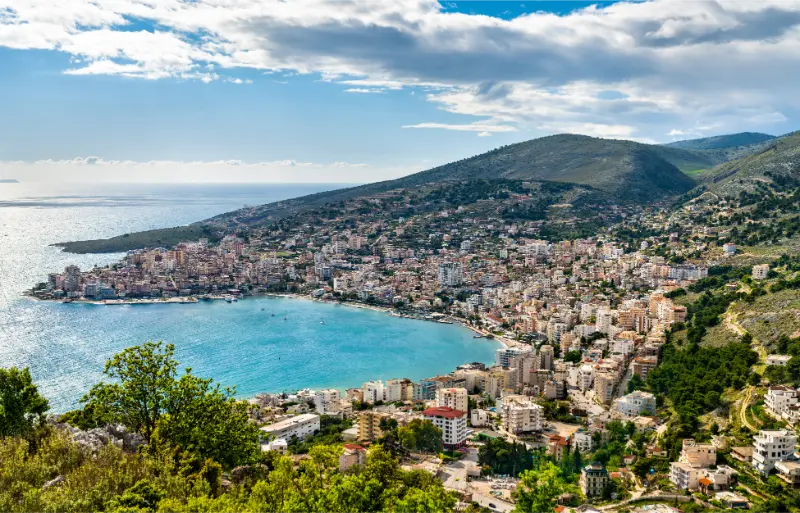
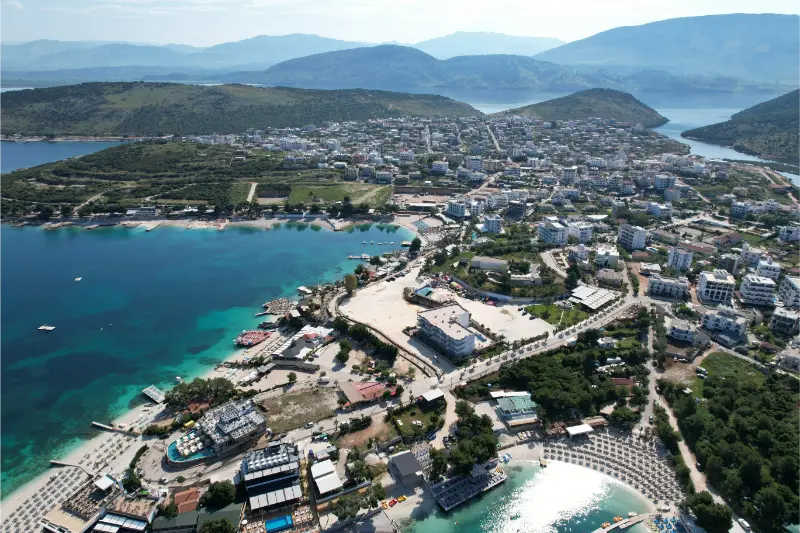
    Aerial View Of Saranda City And Bay Albania

    If you want evening walks, services and a wider choice of apartments, look at family accommodation in Saranda. If waking up close to the water is the priority, compare places to stay in Ksamil. Read recent summer reviews carefully because traffic, noise and beach access can change the real value of a property.

    Why Ksamil appeals to families — and what to check

    The official Albanian tourism portal describes Ksamil Beach as a clear-water destination suitable for families and notes the nearby small islands that can be reached by boat. That is a useful overview, but parents should still judge the exact beach section in front of them. Depth, boat traffic, entry surface and available shade vary from one bay to another. Check the official Ksamil Beach page for destination context, then make decisions on site.

    The Ksamil Islands guide explains the small-island experience in more detail. With children, I would choose a short, calm outing rather than turning a simple paddle or boat ride into a long excursion. Life jackets should fit properly, and adults should ask exactly where a boat stops, how passengers board and what happens if the sea becomes rougher.

    Saranda promenade: an easy evening

    The Saranda promenade is valuable for families because it gives the day a low-effort second act after the beach. You can walk, stop for ice cream, find dinner and let children move without committing to another major attraction. In July and August, the promenade can still be lively and busy, but it is easier to adapt than a fixed excursion.
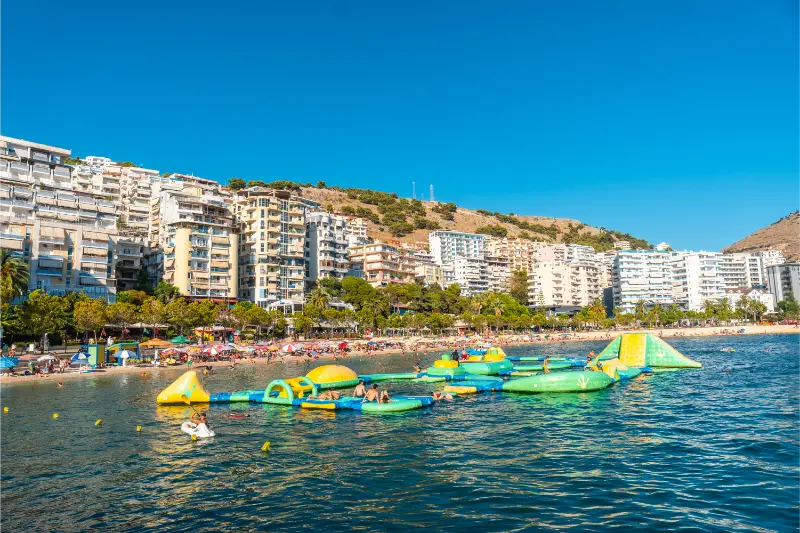
    Children Playing on Inflatable Water Park Saranda Beach Albania

    A central apartment can be especially useful with younger children because you can return for a nap or shower between the beach and evening. Check whether the route from your accommodation to the waterfront involves steep streets; Saranda rises quickly away from the coast, and a short distance on a map can feel very different with a stroller.

    Butrint with children: make the ruins a story

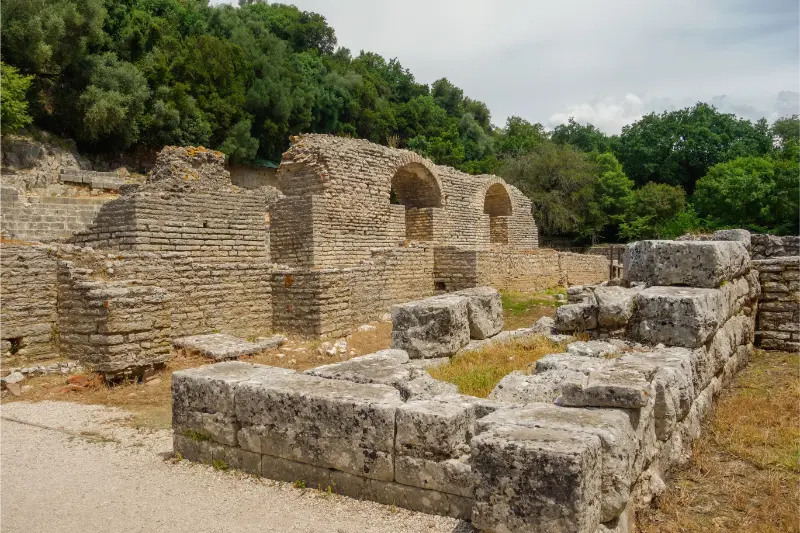
    Butrint is the cultural excursion I would prioritize from this area. The archaeological site combines ruins with a wooded setting and water around the Vivari Channel, which makes it more varied than a museum visit. The official tourism portal describes Butrint as a site with Greek, Roman, Byzantine and Venetian layers, and it has been on the UNESCO World Heritage List since 1992. See the official tourism page for Butrint for current destination information.

    With children, do not try to explain every period. Pick three or four features—the theatre, gates, baptistery area or fortress—and turn the walk into a search for how the city changed over time. Wear shoes suitable for uneven paths, bring water and use shade when available. In hot weather, an early visit is usually easier than arriving after a long beach morning.

    The Blue Eye: beautiful, but not a swimming stop

    The Blue Eye is another popular excursion. The official tourism portal identifies it as a protected natural monument near Muzinë, around 18 km from Saranda, and notes the depth and strong spring flow. Treat it as a nature visit rather than a child-swimming attraction. The official Blue Eye page gives useful background.

    Children may enjoy the color and forest setting, but the practical question is whether the transfer and walking are worth it in the heat. If your family already has a full day at Butrint, I would put the Blue Eye on a different day rather than stacking two excursions because they look close on a map.

    Beach timing matters more than beach ranking

    For families, the “best” beach is often the one you can reach early, leave easily and revisit without a difficult parking search. In peak summer, famous bays can be crowded by late morning. Start earlier, protect children from strong sun and use the middle of the day for lunch, rest or an indoor break. A quieter afternoon at a less famous beach can be more enjoyable than chasing a highly photographed spot at its busiest time.

    If you want alternatives, compare Mirror Beach, Pema e Thatë Beach and the quiet beaches guide. Access conditions can change, so never assume a beach road, parking area or footpath will be identical to what an old video shows.

    Do you need a car?

    A car adds flexibility for Butrint, the Blue Eye and less central beaches, but it also creates parking and traffic problems in the busiest weeks. Families planning mostly around Saranda and organized excursions can manage without one. Families staying outside the center or combining several southern stops may appreciate the freedom. The right answer depends on your accommodation, not on a general rule that “Albania requires a car.”

    If you are considering self-drive, read the Albania rental-car guide and the Riviera without a car guide before booking. Child-seat requirements and availability should be confirmed directly with the rental company in advance.

    Food, groceries and family routines

    Saranda and Ksamil have plenty of restaurants in season, but families often benefit from an apartment with a fridge and a simple breakfast setup. Fruit, yogurt, bread and familiar snacks can make mornings easier. At restaurants, grilled fish, pasta, pizza, potatoes, rice, salads and grilled meats give children several straightforward choices even when adults want seafood or regional dishes.

    For adults interested in local flavors, the Albanian seafood guide and Riviera food guide add more depth. With young children, I would keep lunch flexible and make dinner the relaxed social meal.

    A four-night family plan

    DayMain ideaWhy it works
    1Arrive, promenade and easy beachLow pressure after travel
    2Early Ksamil beach and short island outingBeach-first day without a long transfer
    3Butrint in the morning, rest in the afternoonCulture before the hottest hours
    4Blue Eye or a quieter beach, depending on energyFlexible final day

    This plan deliberately leaves space. Add Lekursi Castle, another beach or a boat trip only if the family is enjoying the pace. The southern coast can tempt you into collecting viewpoints and bays, but children usually remember the swimming, boat ride and evening ice cream more than the number of stops.

    Safety and comfort

    Use sun protection aggressively in summer, especially on boats and beaches where reflected light increases exposure. Never assume beach staff are supervising children in the water. Watch for boat traffic, changing depth and slippery rocks. Carry some cash, but do not bring valuables you will be anxious about leaving near the water.

    For babies and toddlers, ask the accommodation about cot availability, lift access and blackout conditions rather than relying on a generic “family-friendly” label. A compact stroller is useful on promenades, but a carrier can be easier at archaeological sites and beaches with steps.

    Final advice

    Choose Saranda and Ksamil for the trip you want, not because social media says you need to see every famous beach. Families who stay longer in one base, start beach days earlier and separate culture days from swimming days usually get more from southern Albania. If the children are rested, you can always add another stop; if the schedule is already too ambitious, the sea will not make the transfers feel shorter.

    Choosing accommodation by child age

    Families with a baby often need lift access, a cot, reliable air conditioning and enough room to feed or settle the child without sitting in darkness after bedtime. Families with preschool children may care more about a short walk to the beach and a kitchen. With older children, location near the promenade or activities may matter more than extra indoor space. Read property reviews from families travelling in the same season because a quiet street in May can be very different in August.

    In Ksamil, I would pay particular attention to uphill walks, road crossings and the distance to the specific beach you intend to use. In Saranda, a sea-view apartment can sit high above the waterfront, so check elevation and street layout rather than relying on the phrase “500 metres from the beach.”

    Bora Bora Beach Ksamil Albania

    What to pack for southern Albania with children

    Water shoes are useful for pebble or rocky sections, while a lightweight beach shoe that dries quickly can reduce complaints about hot surfaces. Bring a reusable sun hat, swim shirts if your family uses them and a dry bag for boat outings. I would avoid carrying a huge amount of beach equipment through airports unless the accommodation confirms that nothing is available locally.

    A compact first-aid kit, familiar children’s medicines, a power bank and offline copies of booking details are more useful than extra toys. For younger children, one familiar bedtime item can help when the trip involves several hotels.

    Rainy or very hot day alternatives

    A beach destination still needs a backup plan. On an extremely hot day, shorten the outdoor schedule and use the apartment, a long lunch or a shaded promenade period rather than forcing a midday excursion. On a rainy day, choose a café, short museum or simple drive only if conditions are safe. The point is to preserve the trip rather than rescue one specific day.

    Families who build every day around a non-refundable boat trip have less flexibility. I prefer to book only the activities that genuinely need advance reservation and leave ordinary beach days open. This makes it easier to respond to sea conditions, heat and children’s energy.

    Who should choose this area

    Saranda and Ksamil are particularly suitable for families who want warm-season swimming, easy restaurant access and one or two strong cultural excursions. They are less ideal for travellers who dislike summer crowds, want wide sandy beaches everywhere or expect a quiet village atmosphere in peak season. Knowing that in advance makes it easier to choose between southern Albania, Durrës, Pogradec or a mountain-focused route.

    Travelling with a baby or toddler

    For naps, strollers, carriers, baby supplies and a slower daily rhythm, see the Sarandë and Ksamil with a baby or toddler guide.

    Travelling with older children? See Sarandë & Ksamil with Teenagers: Beaches, Butrint, Blue Eye and Family Tips for teen-focused activities, independence, evenings and family pacing.
  • Divjake-Karavasta National Park Guide: Lagoon, Pelicans and Adriatic Nature

    Divjake-Karavasta National Park Guide: Lagoon, Pelicans and Adriatic Nature

    Divjake-Karavasta National Park is one of the easiest places in Albania to combine wetlands, forest and the Adriatic coast in a single day. The landscape is low and open rather than mountainous: lagoon water, reeds, pine woodland, salt-influenced habitats and a long sandy shoreline sit close together. It is a useful counterpoint to the more famous Riviera.

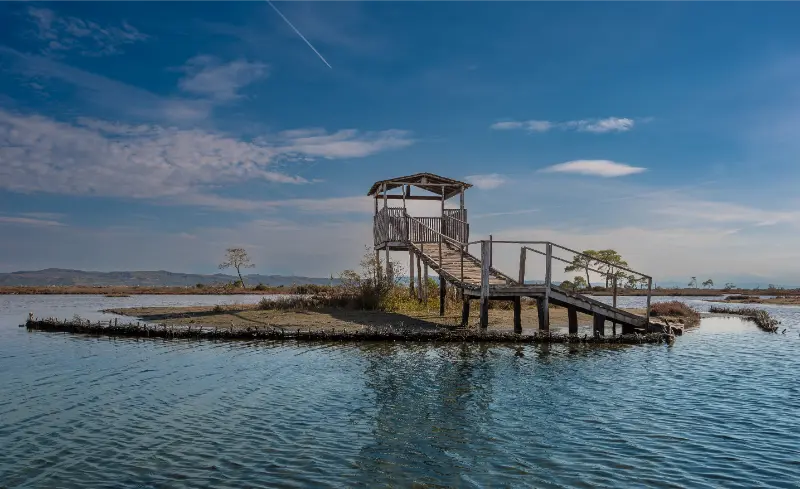
    Divjakekaravasta National Park Albania Landscape

    The official Albanian tourism portal describes Karavasta as the country’s largest lagoon and highlights more than 200 bird species, including the Dalmatian pelican. The area is also recognised under the Ramsar Convention. For travellers, this means the park is not simply a beach with some trees; it is an internationally important wetland that should be visited quietly and respectfully.

    Why visit Divjake-Karavasta

    The park is especially worthwhile for birdwatchers, families who want a gentle nature day and road trippers moving between Tirana, Durres, Berat or Vlore. You can walk in the pine forest, look across the lagoon, climb a panoramic tower where access is available and finish the day near the beach.

    Because the terrain is flatter than Albania’s mountain parks, it can also suit travellers who do not want a strenuous hike.

    The Karavasta Lagoon

    The lagoon is the ecological heart of the park. Water levels, salinity and bird activity change through the year, so every visit is different. Do not expect wildlife to appear on demand at the closest viewpoint; binoculars reward patience.

    Morning and late afternoon are generally more comfortable for observing birds and avoiding harsh summer light. Keep voices low and stay away from nesting or restricted areas.

    Dalmatian pelicans and birdwatching

    The Dalmatian pelican is the emblematic species of Karavasta, but the park’s value goes far beyond one bird. Herons, cormorants, flamingos and migratory species may be present depending on season and conditions.

    Bring binoculars rather than trying to approach birds for phone photographs. A guided nature visit can be worthwhile for serious birdwatchers because local knowledge is far more useful than wandering randomly around a large wetland.

    Pine forest and easy walks

    The coastal pine forest creates shade and makes a pleasant break from the lagoon’s exposed viewpoints. In warm weather, alternate open areas with forest walks rather than staying in direct sun for hours.

    Use marked or established paths and check for any seasonal access restrictions. Wetland and dune systems are easily damaged by vehicles and shortcuts.

    Divjake Beach

    Divjake’s beach is very different from Ksamil or the rocky Ionian coves. It is broad, sandy and backed by the park landscape. Families may appreciate the space, but sea conditions and facilities vary by area and season.

    Treat the beach as one part of the nature day rather than the only reason to visit. If your priority is classic turquoise Riviera scenery, use my Albania beaches guide for comparison.

    A good family day

    Children often enjoy the combination of tower, forest, birds and beach because the day changes setting without requiring long drives between each activity. Bring snacks, water, hats and insect repellent during warmer months.

    Do not promise children that they will definitely see pelicans close up. Wildlife viewing is better framed as exploration than as a guaranteed show.

    How long to spend

    A half day works for a forest walk, lagoon viewpoint and lunch. A full day allows birdwatching, beach time and a slower pace. Travellers interested in photography or ecology can stay overnight and use the cooler morning and evening periods.

    The park is easy to underestimate on a map. Moving slowly is part of the point, so avoid combining it with two major cities on the same day.

    Where to stay and eat

    Divjake has local accommodation and restaurants, while travellers on a broader route may stay in Berat or Durres. Staying locally is better if sunrise birdwatching matters to you.

    Local menus often reflect fish and produce from the surrounding agricultural and coastal area. Ask what is seasonal rather than searching only for one famous dish.

    When to visit

    Spring and autumn are excellent for bird activity and comfortable walking. Summer is useful if you want to combine nature with the beach, but shade, water and insect protection become more important. Winter can be rewarding for dedicated birdwatchers, though services may be quieter.

    Check recent weather before driving onto minor access roads because heavy rain can affect wetland surroundings.

    Photography without disturbing wildlife

    A telephoto lens is more useful than getting physically close. Avoid playback calls, feeding or any behaviour that changes how birds move or feed. If a guide asks you to remain behind a boundary, treat that as part of the experience, not an obstacle to the photograph.

    For landscapes, sunrise and sunset produce softer reflections across the lagoon than midday light.

    Use the official park context

    The official tourism page for Divjake-Karavasta describes the park’s wetland, pine forest and biodiversity. Use it as a current reference rather than relying entirely on old travel posts.

    The best visit is one where you leave with a stronger sense of how coastal Albania functions as an ecosystem, not only a collection of beaches.

    Final planning tips

    Divjake-Karavasta fits naturally between Durres and Berat, or as a nature break on the way south.

    Bring binoculars if you have them, avoid loud behaviour near the lagoon and leave enough time that wildlife observation does not become a rushed stop.

    Extra practical advice

    One final way to improve a trip focused on Divjake-Karavasta National Park is to leave deliberate margin in the day. Albania often looks compact on a map, but mountain roads, seasonal traffic, weather and informal stops can make travel times variable. I prefer to choose one important objective for the day and treat smaller viewpoints, cafés or short walks as optional. That prevents the itinerary from becoming a race and gives you room to follow useful local advice. Keep essential addresses, reservation numbers and route notes available offline. Confirm any service that would cause a major problem if it were unavailable, but avoid over-booking ordinary experiences. Carry water, some cash, a charged phone and a basic layer for changing weather. These small preparations are more valuable than trying to predict every detail weeks in advance. When conditions differ from what an old guide promised, trust current signs, local staff and official information. Protected areas, transport services and seasonal businesses evolve. A flexible traveller usually sees more because a changed plan becomes an alternative experience rather than a failed day.

    National Park Ranger Domesticated Pelican Johnny Divjakekaravasta National Park Albania

    Build extra time into transfers, check current conditions locally, and keep the day simple enough that weather or traffic does not force you to rush. Albania rewards travellers who combine planning with flexibility, especially outside major cities and on mountain or coastal roads.

    Build extra time into transfers, check current conditions locally, and keep the day simple enough that weather or traffic does not force you to rush. Albania rewards travellers who combine planning with flexibility, especially outside major cities and on mountain or coastal roads.

    Build extra time into transfers, check current conditions locally, and keep the day simple enough that weather or traffic does not force you to rush. Albania rewards travellers who combine planning with flexibility, especially outside major cities and on mountain or coastal roads.

    Build extra time into transfers, check current conditions locally, and keep the day simple enough that weather or traffic does not force you to rush. Albania rewards travellers who combine planning with flexibility, especially outside major cities and on mountain or coastal roads.

    Build extra time into transfers, check current conditions locally, and keep the day simple enough that weather or traffic does not force you to rush. Albania rewards travellers who combine planning with flexibility, especially outside major cities and on mountain or coastal roads.

    Build extra time into transfers, check current conditions locally, and keep the day simple enough that weather or traffic does not force you to rush. Albania rewards travellers who combine planning with flexibility, especially outside major cities and on mountain or coastal roads.

    Build extra time into transfers, check current conditions locally, and keep the day simple enough that weather or traffic does not force you to rush. Albania rewards travellers who combine planning with flexibility, especially outside major cities and on mountain or coastal roads.

    Build extra time into transfers, check current conditions locally, and keep the day simple enough that weather or traffic does not force you to rush. Albania rewards travellers who combine planning with flexibility, especially outside major cities and on mountain or coastal roads.

    Build extra time into transfers, check current conditions locally, and keep the day simple enough that weather or traffic does not force you to rush. Albania rewards travellers who combine planning with flexibility, especially outside major cities and on mountain or coastal roads.

    Build extra time into transfers, check current conditions locally, and keep the day simple enough that weather or traffic does not force you to rush. Albania rewards travellers who combine planning with flexibility, especially outside major cities and on mountain or coastal roads.

    Build extra time into transfers, check current conditions locally, and keep the day simple enough that weather or traffic does not force you to rush. Albania rewards travellers who combine planning with flexibility, especially outside major cities and on mountain or coastal roads.

    \n\n

    Related guide: Birdwatching in Albania: Karavasta, Narta, Prespa, Lake Shkodra and More expands this topic with a broader route and practical planning advice.

    \n

    Explore more of Albania beyond the main route

    \n

    Wildlife deep dives: Dalmatian Pelicans in Albania and Flamingos in Albania add species-specific viewing and photography advice.

  • Albania with Teenagers: Beaches, Adventure, Cities and a Family Itinerary

    Albania with Teenagers: Beaches, Adventure, Cities and a Family Itinerary

    Albania with teenagers can be easier than travelling with very young children because the country rewards active days, spontaneous food stops and a mix of beach, city and adventure. The mistake is assuming teenagers automatically want an adult sightseeing itinerary simply because they can physically keep up with it. Castles and museums are more successful when they are balanced with swimming, boats, rafting, hiking, cafés and enough unstructured time.

    A good family route should include some decisions the teenagers help make. Let them choose between a beach day and a canyon trip, pick a food stop or control the playlist on a long drive. This guide complements Albania with kids but focuses on older children who can participate in adventure activities and have stronger opinions about pace, privacy and connectivity.

    Quick answer

    QuestionPractical answer
    Best first baseTirana for food, street life, museums, Dajti and an easy arrival day.
    Best beach basesHimarë for a relaxed Riviera feel; Sarandë/Ksamil for more services and activity; Vlorë for city-and-coast flexibility.
    Best adventure ideasRafting or canyon experiences, hiking, kayaking, boat trips, cycling and mountain guesthouses.
    Biggest itinerary mistakeMoving every day and replacing holiday time with luggage, check-in and car hours.
    Wi-Fi strategyMost teens will use connectivity heavily; keep mobile data active but create a few phone-light activities rather than making the trip a connectivity battle.

    Give the trip contrast, not a checklist

    Teenagers often respond better to contrast than to “important sights.” A morning in Berat Castle followed by rafting or a pool, or a Tirana museum followed by Dajti and dinner in Blloku, creates rhythm. Three historic towns in a row can feel repetitive even when each is objectively worth visiting.

    Build the itinerary around one main experience per day and leave space around it. A two-hour lunch, a swim that runs late or a spontaneous football game in a square can become the memory that survives longer than the monument you were determined to fit in.

    Tirana works well for the first two nights

    Tirana gives teenagers visible energy: cafés, street art, the Pyramid, Blloku, parks and Dajti. Museums covering communist history can be especially effective with older teens when you give them context rather than rushing through displays. The Tirana with kids guide includes family ideas, while the main Tirana guide helps adults plan neighborhoods and evenings.

    Use the capital to solve practical needs at the start: SIM cards, cash, pharmacy items and any equipment you forgot. Then leave for the slower part of the trip. That transition from busy capital to mountains or coast is one of Albania’s strengths.

    Beach days: give older kids some independence

    On a managed beach, teenagers may want a little independence to swim, play sport or buy food without the whole family moving together. Agree a meeting point, time and spending limit. In rocky coves, discuss footwear, jumping from rocks and boat traffic rather than assuming older children understand local hazards automatically.

    Rana E Hedhun Sand Dunes And Adriatic Beach Albania

    Himarë is a strong family base because several beaches and villages are within reach without requiring a full resort environment. Sarandë and Ksamil are busier and offer more commercial activity, while Vlorë has a long promenade and a city feel. Read Albanian Riviera with Kids for beach-by-beach family considerations.

    Adventure activities: choose by maturity, not age alone

    Rafting, canyoning, paragliding, kayaking and longer hikes can transform the trip, but age limits, swimming ability, fitness and confidence vary by operator. Do not book a high-adrenaline activity only because the teenager technically meets the minimum age. Ask what the experience involves, how long it lasts and what happens if somebody changes their mind.

    Osum Canyon, the Vjosa region and the Albanian Alps offer very different adventure styles. Use established operators and confirm insurance, equipment and weather policy. The goal is a positive challenge, not a family argument on a cliff edge.

    Hiking without making it miserable

    Teenagers who do not hike at home rarely become enthusiastic about an eight-hour alpine crossing simply because the scenery is famous. Start with a shorter waterfall, viewpoint or valley walk. If they enjoy it, add a longer route. In Theth, the village itself, guesthouse meals and river scenery can make a mountain stay worthwhile without requiring the hardest trail.

    Carry enough water and snacks and avoid starting late in summer heat. Give teenagers responsibility for part of the navigation or photography so the hike feels participatory. The best hikes in Theth separates easier walks from more demanding routes.

    Food usually works in your favor

    Albanian food is adaptable for teenagers because meals often include familiar formats: grilled meat, potatoes, pizza, pasta, byrek, yogurt, fruit and simple seafood alongside regional dishes. Use local food as an invitation rather than a test. Let everyone choose one new thing for the table instead of insisting that every meal be “authentic.”

    The Albanian food guide is useful for planning. Teenagers with vegetarian diets or allergies need more advance thought, especially in rural guesthouses. Message the property before arrival when a dietary restriction is important rather than negotiating it after a long travel day.

    Phones, Wi-Fi and downtime

    It is unrealistic to expect older children to disconnect completely because the family is on holiday. Mobile data is also useful for maps, translation, music and keeping in touch when family members separate briefly. The better goal is to create activities where the phone becomes a tool—photography, navigation, identifying a viewpoint—rather than the default activity for the entire day.

    Build downtime into the itinerary. A teenager may genuinely need an hour in the room after a hot castle visit before dinner. That pause can make the evening better for everybody. An apartment or family room with enough personal space is often worth paying for on a longer trip.

    A 10-day teenager-friendly route

    Use two nights in Tirana, two in Berat or Gjirokastër, three on the Riviera and two or three in Shkodër/Theth or Pogradec depending on interests. If the family dislikes long drives, choose either the north or the deep south rather than forcing both into ten days. The 10-day Albania itinerary can be adapted by removing one cultural stop and adding an active day.

    For beach-focused teens, stay longer on the coast and add a boat trip. For mountain-focused teens, spend more time in Shkodër and Theth. For history-focused older teens, add Butrint, Bunk’Art and Apollonia. The country offers enough variety that the itinerary can reflect the teenager rather than asking the teenager to fit the itinerary.

    Where to stay

    Compare family accommodation in Himarë on Booking.com. For teenagers, room layout can matter as much as a kids’ club: separate beds, enough charging sockets, Wi-Fi and a location they can walk to for ice cream or a café can reduce friction. Apartments are useful for longer coastal stays.

    Tours and activities

    Teenagers often enjoy tours when there is a clear activity—boat trip, rafting, cooking, kayaking, off-road scenery or a focused city story—more than a long generic excursion. Let them read two or three options and choose one; ownership usually improves the mood before the day even starts.

    Useful related guides

    Before you go: a practical checklist

    Before the trip, agree family basics: how much independent wandering is allowed, how spending money works, what happens if phones lose signal and which activities are non-negotiable for each person. Download maps and keep the hotel address on every phone. Bring water shoes if the route includes rocky beaches and proper footwear for hikes.

    Rocky Beach Crystal Turquoise Water Ionian Sea Albania 2

    During the trip, protect the good parts of the day by dropping weak plans. If everyone is enjoying the beach, you do not need to leave early for a small museum simply because it is on the spreadsheet. A flexible itinerary is not wasted planning; it is the reason the planning works.

    Current rules and official information

    For current destination and attraction information, use the official Albania tourism portal together with operator-specific safety information for adventure activities. Age limits, water conditions and weather policies can change, so confirm them for the exact date.

    Common mistakes

    • Planning the trip as if teenagers are simply taller small children.
    • Scheduling a museum or castle every morning without active contrast.
    • Booking adventure activities by age only, without considering confidence and fitness.
    • Expecting complete phone disconnection instead of creating better alternatives.
    • Using one-night stops that leave no time for swimming, cafés or rest.
    • Ignoring room layout and personal space on a long family trip.

    Frequently asked questions

    Is Albania good for teenagers?

    Yes. The combination of beach, adventure, cities and relatively short distances gives families many ways to vary the trip.

    Aerial Drone View Spille Beach Albania Pine Forest

    What are the best activities for teens?

    Boat trips, rafting, kayaking, mountain walks, beach days, Dajti, street-food stops and photography all work well depending on interests.

    Is the Theth–Valbona hike suitable for teenagers?

    For fit and motivated older teens it can be, but weather, route conditions and hiking experience matter. It should not be treated as a compulsory family activity.

    Where is the best beach base?

    Himarë is balanced and relaxed; Sarandë/Ksamil is busier; Vlorë gives more urban services. Choose by the family’s preferred atmosphere.

    How many places should we visit in 10 days?

    Usually three or four bases are enough. More stops can turn the trip into repeated packing and driving.

    Final recommendation

    Albania works with teenagers because it does not force families into one holiday style. You can combine a capital, a castle, a rafting day, a mountain guesthouse and a beach without crossing a huge country. Give older children some ownership, build in downtime and choose activities by personality rather than by a generic family checklist.

    Albania with teenagers: destination guides

    These local guides adapt the national teen-travel advice to different cities, beaches, mountain gateways and lake destinations.

  • 10-Day Albania Family Road Trip: Beaches, Castles and Easy Stops with Kids

    10-Day Albania Family Road Trip: Beaches, Castles and Easy Stops with Kids

    A family road trip in Albania is most successful when the adults stop measuring success by how many attractions fit into a day. Children usually remember a castle tunnel, a boat, an ice cream beside the sea or an evening square more vividly than a long list of viewpoints. The route therefore needs short driving blocks, flexible afternoons and accommodation that makes daily logistics easy.

    This 10-day itinerary is aimed at families who want a first taste of Albania without combining the far north and far south in the same short trip. It uses Tirana, Berat, Gjirokastër and the Riviera, with enough beach time to recover from cultural sightseeing. Families with toddlers can slow it further; families with teenagers can add rafting, kayaking or longer hikes.

    Car seats, steep streets and summer heat deserve more planning than they do on an adults-only road trip. Bring or reserve an appropriate child seat, avoid leaving luggage visible in the car, and treat midday in July or August as rest time rather than the best hour to climb a stone castle.

    At a glance

    DayBaseFamily focus
    1–2TiranaParks, square, Dajti, easy food
    3–4BeratCastle, river, relaxed old town
    5–6GjirokastërFortress, stone houses, short excursion
    7–9HimarëBeaches, boat option, villages
    10Tirana / airportEasy return and flight buffer

    Days 1–2: Tirana with room to move

    Use arrival day for Skanderbeg Square, a simple meal and perhaps the Grand Park rather than a museum marathon. Central Tirana has enough cafés, bakeries and pedestrian areas to recover from a flight while children reset. If your hotel has parking, leave the car there and walk or use taxis for the centre.

    On day two, Dajti can be a good family outing when weather is clear because the journey itself feels like an activity. Older children may prefer Bunk’Art or a bike ride; younger ones often need a park break between cultural stops. See Albania with Kids for age-specific planning.

    Days 3–4: Berat without overloading the castle day

    Drive to Berat and check in before exploring. The old quarters are atmospheric but cobbled and uneven, so leave the stroller at the hotel if your child can walk or use a carrier for small children. Do not drive deep into historic lanes simply because navigation suggests it; park sensibly and continue on foot.

    Visit the castle early or later in the day to avoid the strongest heat. Children often enjoy the sense of a lived-in fortress more than a formal museum, but the terrain requires supervision. Keep the second day flexible for a slow river walk, a pool, an agritourism lunch or a short countryside outing instead of another long driving loop.

    Days 5–6: Gjirokastër and a slower southern rhythm

    The drive south is manageable when you stop for lunch and avoid turning the transfer into a chain of attractions. In Gjirokastër, choose accommodation carefully: the old town has atmosphere, while lower-road hotels can make parking and luggage easier. Families with pushchairs should expect steps and steep cobbles.

    The castle is the main family sight. Explore it when temperatures are comfortable, then let the bazaar and evening meal complete the day. On the second day, choose one excursion such as Antigonea, Libohovë or a pool/rest afternoon. A family trip improves when one adult is willing to delete a planned stop.

    Days 7–9: Himarë as the family coast base

    Base yourself in Himarë rather than changing beach hotels every night. Livadhi and other nearby beaches give you options if one place is windy, crowded or difficult for parking. Check sea conditions before boat trips and bring shade, water shoes where useful and enough drinking water for children.

    Use one day for a gentle coastal outing such as Porto Palermo and Qeparo, but avoid building a six-village checklist. Another day can be mostly beach with a late-afternoon old-village walk. Teenagers may enjoy kayaking, snorkeling or a boat excursion; younger children usually benefit more from predictable beach access and an early dinner.

    Pulebardha Beach Seagull Beach Albania

    Day 10: return with a real buffer

    If your flight leaves early the next morning, return to Tirana or an airport-area hotel on day ten. Do not schedule a same-day Riviera drive before an international flight unless you have a very generous margin. Summer traffic, roadworks and meal stops can all stretch the journey.

    Use the final evening for a relaxed meal, laundry and repacking rather than one last attraction. Compare family-friendly accommodation in Tirana on Booking.com if you need a practical last night.

    Car seats and driving days

    Reserve child seats in advance with the rental company and confirm the type provided. Families who need a specific fit or safety standard often prefer bringing their own approved seat. Never assume a taxi will automatically have a suitable seat for the age and size of your child.

    Keep driving days short enough that one unexpected stop does not ruin the schedule. Mountain and coastal roads can be slower than their distance suggests, so use realistic travel time rather than kilometres as the planning measure.

    Beaches with children

    A beautiful beach is not automatically a convenient family beach. Look for easy access, shade options, toilets, food and parking before choosing. Pebbles can be excellent for clear water but may require water shoes, while remote coves can be difficult with a stroller, cool box and tired child.

    Beach Crystal Clear Water Albania

    Never rely on a beach bar as your only source of drinking water or child-friendly food. Carry backups and protect the middle of the day in hot weather.

    Food and picky eaters

    Albanian restaurants are generally easy for families because simple grilled meat, rice, potatoes, bread, yogurt, pasta-style dishes and fresh fruit are widely available alongside regional food. Order a few shared dishes and add familiar items rather than forcing every meal to become a culinary lesson.

    For allergies, carry a translated explanation and read our food allergy travel guide if relevant.

    How to adapt for toddlers or teenagers

    With a baby or toddler, spend three nights in fewer bases and prioritize accommodation with easy parking, a lift or ground-floor access, refrigerator and shade. Our Albania with a Baby or Toddler goes into stroller and car-seat details.

    With teenagers, keep the same route but add one high-energy activity such as rafting, kayaking, a boat trip or a longer coastal walk. Albania with Teenagers has ideas by interest.

    Health, sun and rest

    Carry a small family kit with sunscreen, plasters, insect repellent, any regular medication and oral rehydration supplies appropriate for your family. For medical questions or persistent symptoms, use professional care rather than relying on travel advice.

    Build a quiet block into the hottest part of the day in summer. A hotel pool, shaded lunch or nap often makes the late-afternoon castle or promenade much happier for everyone.

    Where to stay

    Family accommodation should reduce friction: parking, breakfast, a practical room layout and walking access to dinner often matter more than a dramatic view. On the Riviera, check the real walking route to the beach because a short map distance can hide a steep road.

    Rocky Beach Crystal Turquoise Water Ionian Sea Albania 3

    Compare accommodation in Himarë on Booking.com for the longest coastal stay.

    Tours and activities

    Choose activities that remove logistics rather than add them. A well-run boat trip, rafting day or private cultural guide can be worthwhile when pickup, equipment and timing are clear for children’s ages.

    Official information to check before you go

    For destination information, use the official Albania tourism portal and verify age, height or equipment rules directly with activity operators before booking children.

    Useful related guides

    Common mistakes

    • Planning adult sightseeing days and expecting children to keep the same pace.
    • Choosing remote beaches without checking access, toilets or shade.
    • Assuming rental-car child seats are identical to the model you use at home.
    • Driving deep into old towns with narrow cobbled streets.
    • Booking one-night stays for most of the trip.
    • Making the final long drive on the morning of the flight.

    Frequently asked questions

    Is Albania good for a family road trip?

    Yes when the route is paced realistically. Beaches, castles, parks and informal restaurants make it easy to mix adult and child interests.

    Do we need a car?

    A car makes family luggage and beach access much easier, but Tirana itself is better explored without driving.

    What is the best family base on the Riviera?

    Himarë is a strong all-round choice because it combines a town, several nearby beaches and day-trip options.

    Can we use a stroller in Berat and Gjirokastër?

    Yes in some lower areas, but steep cobbles and steps make a carrier or walking child much easier in the historic centres.

    How many hotels for 10 days?

    Four bases is a comfortable target. More hotel changes usually create work without adding much value.

    Final recommendation

    A good Albania family road trip is not the adult highlights itinerary with children added afterward. Build the day around shade, meal timing, easy parking and one memorable activity. With four bases in ten days, you still see several sides of Albania while giving the family enough time to enjoy them.

  • Himare with Kids: Family Beaches, Easy Days and Albanian Riviera Tips

    Himare with Kids: Family Beaches, Easy Days and Albanian Riviera Tips

    Himarë is one of the easiest places on the Albanian Riviera to turn into a real family base rather than a daily road trip. Central beaches, a walkable waterfront and short drives to Livadhi, Llamani and Porto Palermo make it possible to balance swimming, history and rest without forcing children into long sightseeing days.

    Porto Palermo Beach Himare Albanian Riviera Panoramic

    It suits families best when you stay near the beach you plan to use most and keep the schedule simple. Toddlers benefit from Spile or Potam because you can return to the room quickly; older children can add castles, short boat trips and more adventurous beaches.

    Is this a good family destination?

    QuestionFamily answer
    Best forFamilies who want a manageable base with a mix of easy activities and one or two stronger excursions
    Car needed?Not always; see the transport section below
    Stroller?Useful in flatter built-up areas, but a carrier is important for historic/natural terrain
    Ideal stayUsually 2–4 nights depending on whether this is a beach/nature base or a short cultural stop
    Best family paceOne main activity in the morning, a real midday break, then one easy late-afternoon block

    Best things to do with kids

    Spile and Potam beaches

    Best for easy family beach days. These are the beaches I would prioritize with younger children because they keep food, toilets, accommodation and evening walks close together. The shore is easier when the hotel is genuinely walkable, so check the map rather than booking from a generic “Himare” label.

    Livadhi Beach

    Best for space and a full beach day. Livadhi is broader and works well when children want more room for swimming and beach games. A car or taxi makes it easier. Use the Livadhi Beach Guide before deciding whether to stay there or visit from town.

    Old Himara and Himara Castle

    Best for history and views with older children. The old settlement sits uphill and includes cobbled lanes, ruins and panoramic views. It is interesting for school-age children, but a stroller is not the right tool for the steeper historic section. A carrier or slower walk is more realistic.

    Porto Palermo

    Best family half-day beyond the town. The sheltered bay and castle create a good history-plus-swim combination. The Porto Palermo Guide helps with access. I prefer it as one focused half-day instead of trying to combine it with several other Riviera beaches.

    Llamani Beach

    Best for a compact bay day. Llamani is a small scenic bay south of Himare. It can work very well with children if you arrive before peak pressure and are comfortable with a more organized beach setup. See the Llamani Beach Guide.

    A short boat outing

    Best for older kids who enjoy the sea. A boat excursion can add variety, but choose duration according to the youngest child. Ask about shade, life jackets, toilet access and sea conditions before booking. Long all-day trips are not automatically more family-friendly than a two- or three-hour outing.

    Getting around as a family

    You can have a good family stay without a car if you sleep centrally and use taxis for one or two outings. A car becomes useful for Livadhi, Porto Palermo and wider Riviera exploration, but summer parking can be more stressful than the short distances suggest.

    With children, I calculate the whole movement rather than only the driving distance: loading the car, finding parking, walking from the parking area and returning for naps can turn a “10-minute trip” into an hour of effort. Whenever possible, cluster activities by area.

    Stroller or carrier?

    Central Himare and the promenade are much easier with a stroller than Old Himara, castle paths or rough beach access. If you have a toddler, a compact stroller plus a carrier gives you the most flexibility.

    A lightweight stroller is still useful for airports, promenades and flatter streets. A carrier is better for cobbles, castle paths, steps, beach stones and natural terrain. Families with babies often get the most flexibility by bringing both.

    Where to stay with children

    For family trips, location matters more than a small difference in room price. I prioritize a short walk to the main daily activity, reliable air-conditioning or heating, a fridge, quiet sleeping conditions, and parking if I have a car. Read the local Where to Stay guide before booking.

    Compare family accommodation in Himare on Booking.com.

    Food, snacks and meal timing

    Albanian restaurants are generally easy to use as a family, but long summer dinners can be tiring for small children. I keep breakfast simple, carry water and a small snack, plan one proper sit-down lunch or dinner, and avoid scheduling a museum or long drive exactly when children normally eat or sleep.

    Ask about portions rather than automatically ordering a full main course for every child. Grilled meat, potatoes, rice, soups, yogurt, bread, fruit and simple pasta-style dishes are often easy choices, while regional specialties can be introduced as shared plates.

    Best time to visit with kids

    June and September are my favorite family months: the sea is part of the trip but roads and beaches are usually easier than in peak August. July and August have the widest seasonal services but more traffic, heat and accommodation pressure.

    What to do if it rains

    Himare has fewer strong indoor attractions than Tirana or Korçë. In rain, use long meals, cafés and short dry-weather windows for town walks. Keep castle stones and exposed coastal roads for safer conditions.

    Panoramic Jale Beach Himare Albanian Riviera Resorts Construction Background

    Traveling with babies, school-age kids and teenagers

    For babies and toddlers, build the stay around one easy beach and accommodation with a fridge, shade and short walking distance. School-age children can handle Porto Palermo, Old Himara and short boat rides. Teenagers usually enjoy adding Gjipe, kayaking or longer coastal activities when conditions are suitable.

    Family safety: the practical issues

    • Keep children close around castle walls, cliff edges, rivers and unsupervised natural swimming areas.
    • Never assume a beach or river has a lifeguard just because it is popular.
    • Use appropriate child restraints in rental cars and arrange seats before arrival.
    • Protect the midday period from extreme summer heat; shade and hydration are part of the itinerary.
    • On pebbly beaches, water shoes can make entry easier and reduce slipping.
    • Do not turn a mountain, canyon or boat activity into a family outing without checking weather and age suitability.

    A realistic 2-day family plan

    • Day 1: Spile or Potam in the morning, a long lunch/rest, then the promenade and an easy sunset walk.
    • Day 2: choose one excursion—Livadhi for a beach-first day or Porto Palermo for history plus swimming—then return to Himare for dinner.

    If you only have one day

    Use the 1 Day in Himare itinerary as the base, then remove one stop rather than adding more. Family travel improves when the schedule has space for snacks, toilets, naps and an unplanned break.

    Best family day trips

    For a wider regional plan, see the best day trips from Himare. With younger children, I usually choose the closest high-value excursion rather than the most famous one on the map.

    What to pack for this destination

    • Sun hats, high-SPF sunscreen and refillable water bottles in warm months.
    • A lightweight rain layer in shoulder season.
    • Comfortable shoes with grip for old towns, castles and nature areas.
    • Water shoes for pebble/stone beaches or natural bathing areas where useful.
    • A compact stroller plus carrier if traveling with a baby or toddler.
    • Basic medication, plasters and any child-specific items you do not want to search for late at night.

    Book family activities selectively

    Tours can be useful when they replace difficult transport or give a child-friendly structure to a complex site. I would not book every day in advance; leave free time for weather, tiredness and beach conditions.

    Useful related guides

    Official tourism information

    For current destination descriptions and official attraction information, see the Albania National Tourism Agency. For opening hours, tickets, beach management and seasonal transport, verify the current information again close to your travel date.

    Common family mistakes

    • Changing accommodation every night instead of using two- or three-night bases.
    • Planning long sightseeing blocks during the hottest hours of summer.
    • Assuming a stroller works on cobbles, ruins, dunes or canyon paths.
    • Choosing accommodation by price without checking the actual walk to the beach or parking.
    • Treating natural water—sea, river, spring or canyon—as if it were a supervised pool.
    • Adding several day trips because the map distances look short.

    Frequently asked questions

    Is Himare good for families?

    Yes. It is one of the Riviera bases where you can keep daily logistics relatively simple.

    Which Himare beach is easiest with children?

    Spile and Potam are the easiest if you stay centrally; Livadhi is excellent with transport.

    Do we need a car?

    No for a central stay, but it helps for wider beach and castle trips.

    Is Himare good with a stroller?

    The waterfront is; Old Himara and rougher beach access are not.

    How many nights with kids?

    Three or four nights work well if you want both easy beach days and one or two excursions.

    Final family advice

    The best family version of Himare is usually slower than an adults-only itinerary. Choose the right base, protect the midday rest, make one activity the priority of each half-day and keep a backup plan for weather. Children remember swimming, food, castles, animals and small discoveries more than the number of attractions you managed to tick off.

    Travelling with a baby or toddler

    For naps, strollers, carriers, baby supplies and a slower daily rhythm, see the Himarë with a baby or toddler guide.

    Travelling with older children? See Himarë with Teenagers: Beaches, Gjipe, Porto Palermo and Riviera Family Tips for teen-focused activities, independence, evenings and family pacing.

    Submarine Tunnel Porto Palermo Beach Himare Albanian Riviera
  • Gjirokastër with a Baby or Toddler: Steep Streets, Carrier Tips, Castle and Naps

    Gjirokastër with a Baby or Toddler: Steep Streets, Carrier Tips, Castle and Naps

    Travelling to Gjirokaster with a baby or toddler is very manageable when the itinerary is designed around the child rather than simply shrinking an adult city break. The practical questions are not only which sights are “family-friendly,” but whether the pavement works with a stroller, how quickly you can return for a nap, where to buy diapers and simple food, and whether a beautiful hotel sits at the top of a hill you will climb four times a day.

    This guide focuses on those real logistics in Gjirokastër. It is aimed at parents of babies and toddlers who still need naps, feeding breaks, a stroller or carrier and a predictable sleep routine. Older preschool children usually have more flexibility; for broader ideas, use the linked “with kids” guide as well.

    Gjirokastër with a baby or toddler at a glance

    Planning pointPractical approach
    Best baseStay close to the main daily walking area so room naps remain easy
    StrollerUseful on smoother central streets; not suitable for every old-town, beach or archaeological surface
    Baby carrierWorth bringing for steps, cobbles, rough paths and short historic-site visits
    TransportUse walking for easy sections and pre-arranged taxi/transfer for tiring or steep segments
    Best rhythmOne main activity in the morning, midday rest, lighter late-afternoon outing
    Key ruleChoose convenience and shade over trying to complete an adult sightseeing checklist

    Where to stay when naps and short walks matter

    The prettiest guesthouse is not always the easiest family base. Old Bazaar and Palorto stays put you inside the atmosphere, but access can involve steep cobbles and stairs. The lower town is more practical for parking, supermarkets and flat access. A good compromise is a property near the bazaar with documented vehicle access and no long staircase to the room.

    For a family stay, compare family-friendly stays in Gjirokastër. Before booking, read recent room details carefully and ask about lift access, stairs, cot availability, parking or taxi drop-off, and whether the bedroom can be made dark for naps. “Central” on a booking map does not always mean easy with a stroller.

    Stroller or baby carrier?

    Gjirokastër is the most demanding of Albania’s major cultural cities for a stroller. The old streets are steep, polished in places and uneven. A stroller can work in the lower town and on selected paved sections, but a carrier is the more reliable tool around the bazaar, castle approaches and historic houses. Shoes with real grip matter for the adult doing the carrying.

    Aerial View Old Castle Fortress Gjirokaster Albania

    The most flexible setup is usually a lightweight stroller plus a soft structured carrier. The stroller handles naps, airport time and long flat walks; the carrier solves stairs, broken pavement, cobblestones and short attractions where folding the stroller is easier than forcing it through. A large all-terrain stroller can be comfortable but becomes awkward in small taxis, guesthouse stairs and ferries.

    What to see without overloading the day

    The castle is the obvious highlight and can fascinate toddlers because of the scale, open spaces and aircraft display, but it still requires supervision around steps, walls and uneven ground. The Old Bazaar works best in short sections. Historic houses are worth choosing one at a time because internal stairs and low railings can turn a cultural visit into constant child management.

    With a toddler, one “major” attraction can be enough for the morning. Add unstructured time afterwards: a square, promenade, park, beach or café where the child can move. This does not reduce the quality of the trip. It prevents every museum or viewpoint from becoming a negotiation when the child is hungry or overtired.

    Getting around with a small child

    Taxis are useful for reducing the climb between lower Gjirokastër and the historic center. Do not assume that a short map distance means a short family walk. If you arrive by bus, consider taking a taxi from the lower arrival area to the accommodation rather than starting the stay by carrying luggage and a child uphill.

    Do not assume a taxi will automatically have the type of child restraint you use at home. If a car seat is important to your family, request it explicitly when booking an airport transfer, private driver or rental car and confirm the child’s age/size requirements. For buses and minibuses, space for a large stroller can vary, so a compact fold and a separate carrier are useful.

    Build the day around the nap, not around opening every attraction

    The combination of heat and steep terrain makes a room-based nap especially valuable. Plan one demanding sight before lunch, return to the accommodation, then do the bazaar slowly in late afternoon when the light is better and the stone streets are less hot.

    Travel naps are unpredictable, so create two workable versions of the day. Version A assumes the child sleeps in the room and keeps the family near the accommodation at midday. Version B assumes a stroller/carrier nap and uses a quiet promenade or café. The mistake is scheduling a non-refundable, transport-heavy activity exactly at the usual sleep window and hoping the child adapts.

    Why a baby carrier matters more here than in most Albanian cities

    In Gjirokastër, a carrier is not only for trails. It solves the ordinary geometry of the city: stairs, steep lanes, narrow turns and historic interiors. A small stroller can still be useful for the lower town or a sleeping child, but parents should be comfortable leaving it at the accommodation for the main old-town exploration.

    Food, milk, snacks and supermarket strategy

    Gjirokastër has plenty of simple foods that work for young children, including yogurt, bread, rice, soups and grilled items. The lower town is the easiest place for a larger grocery shop. If you need diapers or a specific baby product, buy before climbing to the old quarter so you do not repeat the hill with heavy bags.

    Clock Tower Castle Gjirokaster Albania View Old 2

    For ordinary toddler meals, Albania is easy to navigate: bread, yogurt, fruit, eggs, rice, potatoes, soups and grilled foods are widely available. Parents dealing with allergies, medical nutrition or a very specific formula should carry a buffer supply and check labels carefully. Larger supermarkets are more reliable for diapers, wipes and branded products than small resort mini-markets.

    Diapers, changing and the everyday bag

    • Enough diapers for the outing plus a delay buffer
    • Wipes and a small changing mat
    • One complete clothing change in a sealed bag
    • Sun hat and child-safe sun protection appropriate for your family
    • Water and familiar snacks
    • A thin muslin or lightweight layer for shade/temperature changes
    • Small rubbish bags because a changing bin is not guaranteed
    • Offline address of the accommodation and a local phone/data connection

    Public baby-changing facilities are not as predictable as in large northern-European shopping centers. Parents should be comfortable doing a quick change in the stroller, car or another discreet clean space when necessary. A compact kit is more useful than carrying a full nursery bag through every old town.

    Heat, sun and beach days

    April–June and September–October are far easier for carrying a baby uphill. In summer, begin early and use the middle of the day for the room or a long lunch. In wet weather, the main issue is not temperature but slippery stone, so reduce the itinerary rather than rushing.

    In warm weather, the simplest protection is schedule design: start earlier, seek shade, keep the child hydrated according to their normal needs and avoid long exposed sightseeing in the middle of the day. On beaches, bring or rent reliable shade and keep the nap plan separate from the idea of staying on the sand from morning until sunset.

    Swimming and water safety with toddlers

    Sea and lake conditions can change by beach and by hour. Assess the exact entry point, waves, boat traffic, depth and underwater surface rather than assuming a destination is safe because it is marketed as “family-friendly.” Stay within arm’s reach of a young child around water and use flotation equipment only as an aid, never as a substitute for direct supervision.

    Day trips: choose one reason to travel

    Blue Eye and Antigonea can work if you have private transport and keep expectations realistic. Blue Eye still involves walking and busy summer conditions; Antigonea is exposed and archaeological rather than stroller-smooth. A short scenic drive and long lunch may be more successful than two major attractions in one day.

    A useful rule is that the travel time, the attraction and the meal together should still leave room for an unplanned stop. If the day only works when every transfer is perfect, it is too fragile for toddler travel. Private transport can sometimes be worth the extra cost because it lets the family stop for feeding, diaper changes or motion sickness without affecting a bus timetable.

    Restaurants with a baby or toddler

    Albanian restaurants are generally informal and family presence is normal, but equipment varies. Do not assume every restaurant has a high chair, changing table or children’s menu. Eating slightly earlier than the busiest dinner period can produce faster service and more space for a stroller. Choose simple dishes from the normal menu rather than relying on a dedicated kids section.

    If your child is a selective eater, keep one familiar snack in the bag so the restaurant meal does not become a crisis. That buffer gives adults the freedom to try local food while the child has something predictable.

    Accommodation checklist before you book

    • Exact number of stairs between street and room
    • Lift availability if the building has several floors
    • Cot/crib confirmation rather than assuming “family room” includes one
    • Real distance to supermarket, promenade or beach
    • Noise from bars, traffic or events after the child’s bedtime
    • Fridge and kettle if you need milk or simple meals
    • Air-conditioning in summer and heating for winter stays
    • Parking or taxi drop-off if the old town restricts vehicle access
    • Blackout curtains or shutters if naps are important

    Health and medication planning

    Bring the child’s usual medicines, prescription copies where relevant and a basic travel-health kit recommended by your own clinician. Do not rely on finding the same brand name abroad. For country-level information on pharmacies, medical care and what to prepare before travel, use the site’s broader health guide and confirm urgent or medical questions with qualified professionals.

    What to pack versus what to buy in Albania

    Diapers, wipes, bottled water, snacks and ordinary toiletries are easy to buy in major Albanian destinations. Bring from home anything highly specific: a preferred formula, medical food, unusual allergy-safe product, favorite sleep item, travel blackout solution or child medication. The goal is not to transport a supermarket; it is to remove the few substitutions that could genuinely disrupt the trip.

    Moving between Albanian destinations with a toddler

    Keep transfer days deliberately light. Pack the next meal and diaper change where you can reach them without opening the main suitcase, and avoid scheduling a major castle or beach excursion immediately after a long drive. Albania looks compact on the map, but road traffic, mountain routes, summer congestion and child stops can make a short distance feel much longer.

    For families changing bases, two or three nights in one place is usually easier than a different hotel every night. The value of a slower route increases with every item you must repack: stroller, carrier, diapers, snacks, travel cot and beach gear.

    Useful related WonderfulAlbania guides

    Bookable activities in Gjirokastër

    For tours and activities, read the duration, meeting point, transport method and cancellation terms before booking. With a baby or toddler, a shorter private or small-group option can be easier than a full-day excursion, but the right choice depends on the child and the equipment you need to bring.

    Frequently asked questions

    Is Gjirokastër good with a baby or toddler?

    Yes. Gjirokastër can work very well with a very young child when accommodation location and daily pacing are chosen carefully. The main constraints are terrain, summer heat and the need to keep naps and meals realistic.

    Clock Tower Castle Gjirokaster Albania View Old

    Should I bring a stroller to Albania?

    Usually yes, but choose a lightweight model and also bring a carrier if your child still fits comfortably. Flat promenades and city centers can be easy with a stroller, while castles, cobbles, beaches and archaeological sites often are not.

    Can I buy diapers and baby supplies locally?

    Yes in major towns and resorts. Larger supermarkets and pharmacies are the most predictable options. Bring enough of any brand-specific or medical product that you would not want to substitute during the first days.

    Do taxis have child seats?

    Do not assume so. Request a suitable seat in advance from a transfer company, hotel or rental provider if it is important for your family, and confirm the arrangement before the journey.

    How many activities should we plan each day?

    With a baby or toddler, one main morning activity plus a flexible late-afternoon outing is often enough. The extra time is not wasted: it absorbs meals, naps, diaper changes, heat and unexpected transport delays.

    Final practical advice

    The best version of Gjirokaster with a baby or toddler is not the itinerary that covers the most sights. It is the one where the family can return to the room easily, the stroller is used where it genuinely helps, the carrier solves the difficult surfaces, meals happen before everyone is exhausted and one missed attraction does not feel like failure. Build that margin into the plan and Gjirokastër becomes far easier to enjoy together.

  • Berat with a Baby or Toddler: Stroller Reality, Castle Access, Naps and Family Tips

    Berat with a Baby or Toddler: Stroller Reality, Castle Access, Naps and Family Tips

    Travelling to Berat with a baby or toddler is very manageable when the itinerary is designed around the child rather than simply shrinking an adult city break. The practical questions are not only which sights are “family-friendly,” but whether the pavement works with a stroller, how quickly you can return for a nap, where to buy diapers and simple food, and whether a beautiful hotel sits at the top of a hill you will climb four times a day.

    This guide focuses on those real logistics in Berat. It is aimed at parents of babies and toddlers who still need naps, feeding breaks, a stroller or carrier and a predictable sleep routine. Older preschool children usually have more flexibility; for broader ideas, use the linked “with kids” guide as well.

    Berat with a baby or toddler at a glance

    Planning pointPractical approach
    Best baseStay close to the main daily walking area so room naps remain easy
    StrollerUseful on smoother central streets; not suitable for every old-town, beach or archaeological surface
    Baby carrierWorth bringing for steps, cobbles, rough paths and short historic-site visits
    TransportUse walking for easy sections and pre-arranged taxi/transfer for tiring or steep segments
    Best rhythmOne main activity in the morning, midday rest, lighter late-afternoon outing
    Key ruleChoose convenience and shade over trying to complete an adult sightseeing checklist

    Where to stay when naps and short walks matter

    The modern center and lower Mangalem edge are usually easier than sleeping high inside the steep historic lanes. Staying near the river keeps restaurants, shops and evening walks close while reducing the number of uphill trips with a sleeping child. A heritage guesthouse can be atmospheric, but parents should ask about stairs, vehicle access and the exact walking route before booking.

    For a family stay, compare family-friendly stays in Berat. Before booking, read recent room details carefully and ask about lift access, stairs, cot availability, parking or taxi drop-off, and whether the bedroom can be made dark for naps. “Central” on a booking map does not always mean easy with a stroller.

    Stroller or baby carrier?

    Berat is not a stroller-first destination. The riverside and modern streets are manageable, but Mangalem, Gorica and especially the castle involve stone surfaces, slopes and steps. A compact stroller is still useful for flat sections and naps; a baby carrier becomes far more valuable for the castle and old lanes. Trying to force a stroller over every cobble usually creates more work than carrying the child for the difficult section.

    Albanian Old Berat View Berat Castle Walls Tiled Roofs Houses 4

    The most flexible setup is usually a lightweight stroller plus a soft structured carrier. The stroller handles naps, airport time and long flat walks; the carrier solves stairs, broken pavement, cobblestones and short attractions where folding the stroller is easier than forcing it through. A large all-terrain stroller can be comfortable but becomes awkward in small taxis, guesthouse stairs and ferries.

    What to see without overloading the day

    The riverside promenade, Gorica Bridge and lower Mangalem can be enjoyed slowly without turning the visit into a climb. The castle deserves time, but parents should choose a taxi or vehicle-assisted approach when possible and then explore only the parts that suit the day’s energy. Long museum visits are less important than leaving space for shade and a calm lunch.

    With a toddler, one “major” attraction can be enough for the morning. Add unstructured time afterwards: a square, promenade, park, beach or café where the child can move. This does not reduce the quality of the trip. It prevents every museum or viewpoint from becoming a negotiation when the child is hungry or overtired.

    Getting around with a small child

    A taxi is useful in Berat for exactly the sections where the terrain is least stroller-friendly. It can save the uphill effort toward the castle and reduce carrying after a long day. Local buses are less important for a short family stay because the key issue is vertical distance, not crossing a huge city. Confirm car-seat needs in advance if you want a restraint appropriate to your child.

    Albanian Old Berat View Berat Castle Walls Tiled Roofs Houses 5

    Do not assume a taxi will automatically have the type of child restraint you use at home. If a car seat is important to your family, request it explicitly when booking an airport transfer, private driver or rental car and confirm the child’s age/size requirements. For buses and minibuses, space for a large stroller can vary, so a compact fold and a separate carrier are useful.

    Build the day around the nap, not around opening every attraction

    A central hotel or apartment can transform the trip because it allows a real midday reset. In summer, a castle visit early in the morning followed by lunch and an indoor nap is much more comfortable than trying to push through the afternoon heat on exposed stone streets.

    Travel naps are unpredictable, so create two workable versions of the day. Version A assumes the child sleeps in the room and keeps the family near the accommodation at midday. Version B assumes a stroller/carrier nap and uses a quiet promenade or café. The mistake is scheduling a non-refundable, transport-heavy activity exactly at the usual sleep window and hoping the child adapts.

    Castle day or old-town day? Do not force both

    Parents often underestimate how much energy the castle uses once you add carrying, feeding, shade breaks and photographs. Treat the castle as one major block, then let the riverside and lower old town fill the rest of the day. If the child naps well in the room, split the historic center across two shorter outings rather than one marathon loop.

    Food, milk, snacks and supermarket strategy

    Berat is easy for simple family food: bread, yogurt, fruit, rice, grilled dishes and soups are readily available. Supermarkets in the newer town are better for diapers and household supplies than tiny old-town shops. If you stay high in Mangalem, buy heavy items before climbing back to the room.

    For ordinary toddler meals, Albania is easy to navigate: bread, yogurt, fruit, eggs, rice, potatoes, soups and grilled foods are widely available. Parents dealing with allergies, medical nutrition or a very specific formula should carry a buffer supply and check labels carefully. Larger supermarkets are more reliable for diapers, wipes and branded products than small resort mini-markets.

    Diapers, changing and the everyday bag

    • Enough diapers for the outing plus a delay buffer
    • Wipes and a small changing mat
    • One complete clothing change in a sealed bag
    • Sun hat and child-safe sun protection appropriate for your family
    • Water and familiar snacks
    • A thin muslin or lightweight layer for shade/temperature changes
    • Small rubbish bags because a changing bin is not guaranteed
    • Offline address of the accommodation and a local phone/data connection

    Public baby-changing facilities are not as predictable as in large northern-European shopping centers. Parents should be comfortable doing a quick change in the stroller, car or another discreet clean space when necessary. A compact kit is more useful than carrying a full nursery bag through every old town.

    Heat, sun and beach days

    Late spring and early autumn are excellent because the stone city is more comfortable to explore. High summer can be very hot, especially on the castle plateau and sun-exposed lanes. Winter is quieter, but wet cobblestones demand more care when carrying a child.

    In warm weather, the simplest protection is schedule design: start earlier, seek shade, keep the child hydrated according to their normal needs and avoid long exposed sightseeing in the middle of the day. On beaches, bring or rent reliable shade and keep the nap plan separate from the idea of staying on the sand from morning until sunset.

    Swimming and water safety with toddlers

    Sea and lake conditions can change by beach and by hour. Assess the exact entry point, waves, boat traffic, depth and underwater surface rather than assuming a destination is safe because it is marketed as “family-friendly.” Stay within arm’s reach of a young child around water and use flotation equipment only as an aid, never as a substitute for direct supervision.

    Day trips: choose one reason to travel

    Osum Canyon and Mount Tomorr are beautiful, but they are not automatically baby-friendly additions. With a very young child, choose a short countryside lunch, winery stop with appropriate facilities or a scenic drive rather than an adventure excursion built around rafting, rough roads or long exposed walks.

    A useful rule is that the travel time, the attraction and the meal together should still leave room for an unplanned stop. If the day only works when every transfer is perfect, it is too fragile for toddler travel. Private transport can sometimes be worth the extra cost because it lets the family stop for feeding, diaper changes or motion sickness without affecting a bus timetable.

    Restaurants with a baby or toddler

    Albanian restaurants are generally informal and family presence is normal, but equipment varies. Do not assume every restaurant has a high chair, changing table or children’s menu. Eating slightly earlier than the busiest dinner period can produce faster service and more space for a stroller. Choose simple dishes from the normal menu rather than relying on a dedicated kids section.

    If your child is a selective eater, keep one familiar snack in the bag so the restaurant meal does not become a crisis. That buffer gives adults the freedom to try local food while the child has something predictable.

    Accommodation checklist before you book

    • Exact number of stairs between street and room
    • Lift availability if the building has several floors
    • Cot/crib confirmation rather than assuming “family room” includes one
    • Real distance to supermarket, promenade or beach
    • Noise from bars, traffic or events after the child’s bedtime
    • Fridge and kettle if you need milk or simple meals
    • Air-conditioning in summer and heating for winter stays
    • Parking or taxi drop-off if the old town restricts vehicle access
    • Blackout curtains or shutters if naps are important

    Health and medication planning

    Bring the child’s usual medicines, prescription copies where relevant and a basic travel-health kit recommended by your own clinician. Do not rely on finding the same brand name abroad. For country-level information on pharmacies, medical care and what to prepare before travel, use the site’s broader health guide and confirm urgent or medical questions with qualified professionals.

    What to pack versus what to buy in Albania

    Diapers, wipes, bottled water, snacks and ordinary toiletries are easy to buy in major Albanian destinations. Bring from home anything highly specific: a preferred formula, medical food, unusual allergy-safe product, favorite sleep item, travel blackout solution or child medication. The goal is not to transport a supermarket; it is to remove the few substitutions that could genuinely disrupt the trip.

    Moving between Albanian destinations with a toddler

    Keep transfer days deliberately light. Pack the next meal and diaper change where you can reach them without opening the main suitcase, and avoid scheduling a major castle or beach excursion immediately after a long drive. Albania looks compact on the map, but road traffic, mountain routes, summer congestion and child stops can make a short distance feel much longer.

    For families changing bases, two or three nights in one place is usually easier than a different hotel every night. The value of a slower route increases with every item you must repack: stroller, carrier, diapers, snacks, travel cot and beach gear.

    Useful related WonderfulAlbania guides

    Bookable activities in Berat

    For tours and activities, read the duration, meeting point, transport method and cancellation terms before booking. With a baby or toddler, a shorter private or small-group option can be easier than a full-day excursion, but the right choice depends on the child and the equipment you need to bring.

    Frequently asked questions

    Is Berat good with a baby or toddler?

    Yes. Berat can work very well with a very young child when accommodation location and daily pacing are chosen carefully. The main constraints are terrain, summer heat and the need to keep naps and meals realistic.

    Albanian Old Berat View Berat Castle Walls Tiled Roofs Houses 11

    Should I bring a stroller to Albania?

    Usually yes, but choose a lightweight model and also bring a carrier if your child still fits comfortably. Flat promenades and city centers can be easy with a stroller, while castles, cobbles, beaches and archaeological sites often are not.

    Can I buy diapers and baby supplies locally?

    Yes in major towns and resorts. Larger supermarkets and pharmacies are the most predictable options. Bring enough of any brand-specific or medical product that you would not want to substitute during the first days.

    Do taxis have child seats?

    Do not assume so. Request a suitable seat in advance from a transfer company, hotel or rental provider if it is important for your family, and confirm the arrangement before the journey.

    How many activities should we plan each day?

    With a baby or toddler, one main morning activity plus a flexible late-afternoon outing is often enough. The extra time is not wasted: it absorbs meals, naps, diaper changes, heat and unexpected transport delays.

    Final practical advice

    The best version of Berat with a baby or toddler is not the itinerary that covers the most sights. It is the one where the family can return to the room easily, the stroller is used where it genuinely helps, the carrier solves the difficult surfaces, meals happen before everyone is exhausted and one missed attraction does not feel like failure. Build that margin into the plan and Berat becomes far easier to enjoy together.

  • Sarandë & Ksamil with Teenagers: Beaches, Butrint, Blue Eye and Family Tips

    Sarandë & Ksamil with Teenagers: Beaches, Butrint, Blue Eye and Family Tips

    Sarandë & Ksamil with teenagers can be one of the easiest ways to experience this part of Albania because older children can handle longer days, understand the history and participate in more active experiences than very young kids. Sarandë and Ksamil are easy to sell to teenagers because the main attractions are visual and active: clear water, beaches, small islands, boats, Butrint and the Blue Eye. The challenge is not finding things they will enjoy; it is avoiding a schedule that turns every day into the same crowded beach-and-transfer routine in high season.

    Island Beach Relaxation Ksamil Albania

    This guide is designed for roughly secondary-school-age travellers, not for a specific legal age. Interests vary much more than birthdays. For a broader overview, start with Albania with Teenagers, then use this local guide to shape the days in Sarandë & Ksamil.

    Why Sarandë & Ksamil works with teenagers

    Let water time be active when possible—swimming, paddling, a boat outing or exploring different coves—rather than assigning teenagers to a sunbed for six hours. Ksamil is the obvious beach magnet, but changing location can make a big difference. Early starts and late-afternoon swims help in peak summer when the most famous beaches are busiest.

    Teenagers usually enjoy a trip more when they have some control over it. Give them one decision each day: the lunch stop, the order of two attractions, the beach, the soundtrack in the car or the evening dessert place. Albania is well suited to this because many days can be built around short drives, outdoor stops and informal meals rather than timed reservations. The aim is not to make the holiday child-centred; it is to give older children enough agency that the family travels as a small team.

    The best teen-friendly activities

    • Choose one active highlight: Let water time be active when possible—swimming, paddling, a boat outing or exploring different coves—rather than assigning teenagers to a sunbed for six hours. Ksamil is the obvious beach magnet, but changing location can make a big difference. Early starts and late-afternoon swims help in peak summer when the most famous beaches are busiest.
    • Use a challenge: give the teen a photo theme, navigation task, food mission or viewpoint to find.
    • Leave genuine free time: a swim, café stop or hour back at the hotel is part of the itinerary, not wasted time.
    • Let interests lead: choose photography, sport, food, history or nature rather than forcing the same activity mix on every teenager.

    For a wider activity list, compare the best things to do in Sarandë & Ksamil. The useful family trick is to shortlist five ideas, then let the teenager choose two of them. That keeps parents in control of logistics while giving older children real influence.

    Making history interesting instead of exhausting

    Butrint is one of the easiest archaeological sites in Albania to make work with teens because the ruins sit inside a green landscape and the route feels exploratory. Give teenagers a few highlights to find—the theatre, baptistery, walls or views—rather than insisting on reading every panel. The site’s setting often does more than a long history lecture to hold attention.

    Butrint Archaeological Site Ancient Greek Polis Later Roman Ksamil Albania UNESCO World Heritage Site

    Before a historical visit, give just enough context to create curiosity. A two-minute story in the hotel can be more effective than reading an entire guidebook aloud at the gate. During the visit, let the teen photograph details, search for the best viewpoint or choose one object to investigate. Afterwards, move to food, water or a café so the day changes gear.

    Adventure, swimming and outdoor time

    Teenagers often need more movement than adults expect. Even a culturally rich itinerary benefits from a swim, bike ride, hike, boat ride or long walk. Check weather, sea conditions, operator safety and the actual difficulty of an activity. Online videos can make cliff paths, canyon swims or mountain trails look easier than they are. If a commercial adventure is involved, ask about minimum ages, equipment, insurance and cancellation rules directly with the operator.

    Summer heat changes family dynamics. A teenager who is bored may actually be dehydrated, hungry or exhausted after a late night. Put the most demanding activity in the morning, use the hottest hours for lunch, shade or a rest, and return outside later. On beaches, sun protection and water matter even when teens resist reminders. On mountain trips, the opposite problem can occur: weather changes quickly and a hot city morning does not guarantee warm conditions at altitude.

    Food with teenagers: give them ownership

    Albanian food is relatively easy to explore with teenagers because casual dishes can sit alongside more traditional meals. Byrek, grilled meat, pizza, pasta, salads, qofte, seafood, pastries and ice cream give cautious eaters a bridge, while adventurous teens can try regional dishes. Letting them order in a café or pay a small bill in lek is also a low-stakes way to build confidence. If allergies or strict diets matter, plan them separately rather than assuming a teen-friendly menu is medically suitable.

    Use the main Sarandë & Ksamil travel guide to understand neighbourhoods and the local rhythm, then avoid over-planning restaurants. A useful pattern is one meal chosen by parents for regional food and one chosen by the teenager for pure preference. That compromise tends to work better than making every meal a cultural lesson.

    Phones, Wi-Fi, photography and staying connected

    Phones are useful tools rather than automatic enemies on a teen trip. Download offline maps before road days, save hotel addresses, keep screenshots of tickets and agree how much battery must remain before anyone separates from the group. A portable battery is one of the simplest family-travel upgrades. If your teen wants to photograph or post constantly, set a few phone-free moments—perhaps at meals or during a short museum visit—instead of fighting over the device all day.

    For current festivals, concerts and temporary activities, check the official TEA Events platform shortly before the trip. Events can transform a quiet evening into the highlight of a teen stay, but schedules change, so live information is more useful than an old blog calendar.

    Evenings in Sarandë & Ksamil with teenagers

    Sarandë’s promenade is the better base for an evening with older children because there is more movement, food and people-watching after the beaches empty. Ksamil is better treated as the daytime beach zone unless your chosen accommodation gives you a clear reason to stay there for the evening.

    Do not confuse “teen-friendly evening” with adult nightlife. In many Albanian destinations the best family evening is public: promenades, pedestrian streets, cafés, live events and late dinners. If an older teenager wants more independence, agree where they may go, how long they may stay and exactly where the family reconnects.

    Safety and independence

    Older children need different safety rules from toddlers. Agree what happens if the group is separated, which adult carries documents, whether the teen may take a taxi alone, and what time everyone meets at the hotel. Road safety deserves attention: pavements can be inconsistent, scooters and cars may appear quickly, and a confident teenager still needs to look carefully before crossing. Around water, cliffs and mountain paths, do not let social-media confidence replace local conditions or basic caution.

    A useful rule is that independence expands after the family has learned the area together. On the first evening, walk the route. On the second, an older teen might buy a snack or take a short promenade loop alone or with a sibling. The goal is confidence, not testing limits in an unfamiliar environment.

    Getting around Sarandë & Ksamil with older children

    Teenagers can usually handle public transport and walking better than small children, but that does not make every transfer efficient. Read how to get around Sarandë & Ksamil without a car and the local taxi and transfer guide. Decide each day whether walking, bus, taxi or car protects the family’s energy best.

    On road trips, give teens a role: navigation backup, playlist, photo stops or choosing the next break. It reduces the sense of being transported between adult decisions. Seat belts matter on every journey, and parents should not accept unsafe driving simply because a transfer is short.

    A day trip that actually suits teenagers

    The Blue Eye works as a nature contrast; Butrint provides archaeology; a boat or beach day supplies pure holiday time. Those three experiences already create a balanced teen itinerary. Adding Corfu can be exciting, but it also introduces ferry schedules and border formalities, so use it only if the family genuinely wants another travel day.

    When choosing an excursion, ask whether the teen would still want to do it if no one could post a photo. That question separates genuine interest from checklist travel. One meaningful day trip is usually enough for a short stay; repeated early departures can make teenagers dislike a destination they barely experienced.

    Where to stay with teenagers

    Sarandë usually gives teenagers more evening freedom and more practical services, while Ksamil puts the beach on the doorstep. In July and August, walking distance matters because traffic and parking can be frustrating. A central apartment with two sleeping areas can be a better family choice than a prettier property that requires a taxi for every meal.

    For current options, compare hotels and apartments in Sarandë & Ksamil on Booking.com. Then confirm the exact bed setup, Wi-Fi, air-conditioning/heating and check-in rules directly with the property. With teens, two sleeping zones can improve the whole trip more than a luxury lobby.

    Budget and spending money

    A daily teen budget can reduce friction. Give older children a fixed amount for snacks, souvenirs or optional activities and let them decide how to use it. This also teaches the value of lek without requiring parents to approve every coffee or bracelet. Keep larger payments, transport and accommodation under adult control, and remember that card acceptance varies more outside the biggest cities.

    Agree in advance what the teen budget covers. If parents pay for lunch and transport, the teen can manage souvenirs and snacks. If the daily amount disappears by noon, resist immediately replacing it unless there is a genuine need. The small lesson is part of the travel experience.

    How fast should you travel?

    Avoid the adult temptation to prove that the family ‘saw everything.’ Teenagers often remember one strong activity, one funny meal and one sunset better than eight monuments. A useful rhythm is one anchor activity in the morning, one flexible block in the afternoon and an enjoyable evening. If the family has travelled hard for several days, schedule a slow morning before enthusiasm collapses.

    If you are moving through Albania, two or three nights in a base generally work better with teenagers than a sequence of one-night stops. Packing every morning removes the autonomy that older children value. Longer bases also let a family change plans if weather, energy or a new idea makes the original itinerary less appealing.

    A realistic 2-day plan for Sarandë & Ksamil with teenagers

    Day 1 — understand the place, then let the evening breathe

    Start with the main sights from the Sarandë & Ksamil things-to-do guide, but choose only two or three. Put the most important cultural stop before lunch, add a long food break, then use the afternoon for an outdoor or flexible activity. In the evening, follow the local rhythm rather than scheduling another formal visit.

    Day 2 — one memorable experience

    Use the second day for the experience that makes Sarandë & Ksamil different from the previous stop: a boat, beach, bike ride, mountain excursion, castle, lake or day trip depending on the destination. Keep the return time loose enough for the teen to choose the final meal or sunset stop.

    Ksamil Turquoise Bay Albania

    What changes compared with travelling with younger kids?

    The existing Sarandë & Ksamil with kids guide focuses more on easier pacing and child-friendly logistics. With teenagers, you can walk farther and stay out later, but you also need to negotiate independence, interests and screen time. Do not simply use a children’s itinerary and make it longer; rebuild it around choice and more challenging experiences.

    Common mistakes families make with teenagers

    • Planning every hour and leaving no time for the teenager to make a choice.
    • Assuming a physically capable teenager automatically enjoys long museum days.
    • Booking the cheapest family room without checking privacy and bed configuration.
    • Turning every meal into a lesson about traditional food instead of allowing familiar choices too.
    • Using late nights every day and then expecting enthusiasm for 07:00 departures.
    • Treating phones only as a problem instead of using them for maps, tickets and photography.
    • Allowing risky swimming, cliff access or road behaviour because the teenager appears confident.

    Useful official resources before you go

    For national destination information, use the official Albania tourism portal. For current events and temporary experiences, check TEA Events. Re-check opening hours and transport shortly before the day itself because seasonal schedules can change.

    FAQ

    Is Sarandë & Ksamil a good destination for teenagers?

    For most families, Albania is easiest with teenagers when the itinerary mixes cities, water and at least one outdoor or adventure component. The exact balance depends on the teenager. A history-focused teen may love castles and communist-era sites; a sporty teen may care far more about hiking, rafting or swimming; a food-focused teen may remember markets and cafés.

    Do we need a rental car?

    Public transport can work between major cities, but a car often increases flexibility for family days outside urban centres. Do not rent automatically: in places with difficult parking, a bus plus occasional taxi can be easier. Compare the local no-car and taxi guides before deciding.

    Can older teenagers have some independence?

    For older teens, supervised independence is realistic in compact central areas once the family understands the neighbourhood. Start small: a café next door, a short promenade loop or ten minutes in a shop. Set a meeting point, keep phones charged and do not use a new city as the first place to test completely unrestricted independence.

    Final tips

    The best trip to Sarandë & Ksamil with teenagers is not the one with the longest sightseeing list. It is the one where the family shares a few strong experiences, gives older children meaningful choices and keeps enough flexibility for energy and weather. Use Sarandë & Ksamil as a place to travel with your teenager rather than simply bringing them along.

  • Tirana with Kids: Parks, Dajti, Easy Sightseeing and Family Travel Tips

    Tirana with Kids: Parks, Dajti, Easy Sightseeing and Family Travel Tips

    Tirana with kids works better than many parents expect because the capital gives you something that long Albanian road trips often lack: flexibility. You can mix a museum or historic square with a large park, stop for food whenever children need it, return to the hotel for a rest, and still have enough options for the evening. I would not treat Tirana as a city where a family has to “complete” a long sightseeing list. The best family day here is usually a combination of one cultural stop, one outdoor break and plenty of unplanned time.

    Palace Culture Opera Skanderbeg Square Tirana Flag Albania Moving Wind

    For the wider context, start with the main Tirana travel guide and the Albania with kids guide. This article is specifically about pacing the capital for families, including younger children, school-age kids and teenagers who may not want a full day of museums.

    Why Tirana can be a good family base

    Tirana is useful at the beginning or end of a trip because it is easy to reorganize a day when somebody is tired, the weather changes or a flight schedule leaves you with only a few usable hours. Restaurants, supermarkets, pharmacies and accommodation are concentrated in the city, so families do not need to plan every meal or carry supplies for an entire day. That practical convenience is especially valuable after several nights in mountain guesthouses or smaller coastal villages.

    The city is also relatively compact in the central areas. Skanderbeg Square, the New Bazaar, the Pyramid, Blloku and the Grand Park can be combined without constantly getting back into a car. That does not mean every route is stroller-perfect—pavements and crossings vary—but you can build a day with shorter walking segments than in many historic Albanian towns with steep cobbles.

    Start with the Grand Park, not with a museum marathon

    The easiest family win is Tirana Grand Park. The official Albanian tourism portal describes it as one of the capital’s major green spaces, with walking and cycling areas, playgrounds, picnic areas and broad promenades. That makes it a useful reset point when children have already spent time in traffic, airports or museums. You can check the official tourism description of Tirana Grand Park before your visit.

    Football Stadium Tirana Air Albania Stadium

    I would use the park strategically rather than saving it for the end of the day. In warm weather, an outdoor break in the morning or late afternoon can keep the rest of the itinerary manageable. Families with toddlers can let the park be the main activity and treat the city center as the secondary stop. Families with older children can use it between the center and Blloku.

    Skanderbeg Square and the center: keep it visual

    Skanderbeg Square works well with children because it does not require a long explanation to make sense. The open space, surrounding architecture, statue, mosque and clock tower create an easy introduction to the city. From here, you can decide whether the family still has energy for Et’hem Bey Mosque, the clock tower area or a short walk toward the New Bazaar.

    For school-age children, I prefer giving the square a simple story: this is the symbolic center of the capital, and many layers of modern Albanian history sit around it. Teenagers may be more interested in how Tirana has changed since the communist period than in a conventional monument-by-monument tour. If the group is not engaged, move on. Family travel improves when adults stop measuring success by the number of sights entered.

    Modern Buildings Center Skanderbeg Square Tirana Albania

    The Pyramid of Tirana for older children and teenagers

    The Pyramid of Tirana is one of the city’s easiest places to discuss recent history and contemporary change in the same stop. The building began as a museum associated with Enver Hoxha and has since been reimagined as a modern public and educational space. With children, the value is not a long history lecture; it is the contrast between what the building represented and how the city uses it now.

    Supervise younger children carefully around steps, edges and busy public areas. The point of visiting is not to encourage risky climbing or turn architecture into a playground. Families can appreciate the exterior, take photographs and continue along the boulevard without spending a long time there.

    Dajti: the family day that changes the rhythm of the trip

    If everyone needs a break from traffic and central-city sightseeing, combine Tirana with Mount Dajti. The mountain gives families a very different perspective on the capital and can work as a half-day outing rather than a strenuous hike. The Dajti Ekspres cable car guide explains the practical side in more detail.

    Before setting out, check current operating information directly with the cable-car operator because schedules, maintenance closures and ticket conditions can change. If visibility is poor or the weather is unstable, do not force the excursion simply because it was booked into the plan. Tirana has enough alternatives to switch days.

    Museums: choose one according to age and interest

    Tirana has several strong museums, but families rarely benefit from stacking them. Bunk’Art 1, Bunk’Art 2 and the House of Leaves deal with difficult themes connected to dictatorship, surveillance and repression. They can be meaningful for teenagers, but parents should decide whether the subject matter and presentation are appropriate for their children.

    With younger children, I would favor shorter cultural stops and spend more time in public spaces. A museum does not become family-friendly just because children are allowed inside. Think about darkness, confined spaces, graphic descriptions, attention span and whether the visit will make sense without a long historical explanation.

    Where to stay in Tirana with children

    For most families, central Tirana is easier than staying far outside the city to save a small amount of money. Being able to walk back for a nap, change clothes or collect something forgotten can be worth more than a larger room on the edge of town. Compare family accommodation in Tirana and read recent reviews for street noise, lifts, parking and actual bed configuration.

    If you have a rental car, confirm parking before arrival. A property described as having parking may use a nearby garage, limited spaces or street parking rather than a private bay. If you do not have a car, prioritize walking distance to the center or an area where taxis are easy to arrange.

    Eating with kids in Tirana

    Tirana is one of the easiest places in Albania for a flexible family meal because you can choose between bakeries, casual restaurants, pizza, grilled dishes, cafés and more traditional Albanian food. The Tirana food guide is useful if adults want local specialties, while children who prefer simple food can usually find bread, pasta, rice, potatoes, yogurt, cheese, fruit and grilled meat without turning every meal into a negotiation.

    Do not wait until everybody is exhausted before looking for dinner. In summer, a late local dining rhythm can conflict with younger children’s routines. An early meal or substantial afternoon snack often produces a much calmer evening walk. Carry water, but avoid loading the day bag with food you can easily buy in the center.

    Strollers, crossings and taxis

    A stroller is more useful in Tirana than in Berat or Gjirokastër, but it will not glide smoothly everywhere. Curbs, parked vehicles, uneven paving and road crossings can interrupt an otherwise simple route. A compact stroller is easier than a large travel system, and a baby carrier remains useful if you are combining Tirana with hill towns later in the trip.

    For taxis, use clearly identified vehicles or have your hotel or restaurant arrange one when you want to reduce uncertainty. If you are travelling with a child who needs a specific car seat, do not assume every taxi will have the right restraint. Arrange this in advance or travel with an appropriate portable solution that meets your own safety requirements.

    A realistic two-day Tirana plan with children

    DayMorningAfternoonEvening
    1Skanderbeg Square and one short cultural stopGrand Park and downtimeEarly dinner, Blloku or central stroll
    2Dajti or another outdoor excursionHotel rest or New BazaarPyramid/boulevard walk if everyone still has energy

    This is intentionally light. You could add more, but a family plan should have space for delays, snacks, heat and spontaneous stops. If you only have one day, choose the city center plus the Grand Park, or Dajti plus a short evening walk. Trying to combine every major attraction usually creates more transport than enjoyment.

    Best time for a family visit

    Spring and autumn are often comfortable for urban walking, while summer can be hot enough that a midday break becomes important. Winter can work well for a city break because you are not depending on beach weather, but rain changes the value of parks and outdoor time. The broader best time to visit Albania guide explains how the seasons affect a longer trip.

    What I would skip with limited family time

    I would skip attractions that only interest the adults, long cross-city detours for a single photo and any museum that requires children to stay quiet and attentive for hours. Tirana’s advantage is variety. Use that variety to build a day around the family you actually have, not around an adult sightseeing checklist.

    Final family planning tips

    Keep one outdoor option and one indoor option saved for each day. Carry water, sun protection and a small snack, but buy most supplies locally. Confirm special requirements such as cots, parking and car seats rather than assuming the word “family” in a listing covers them. Most importantly, let Tirana be a place to recover between more demanding parts of Albania. A relaxed capital stay can make the mountains, Riviera and historic towns feel much easier afterwards.

    Travelling with a baby or toddler

    For naps, strollers, carriers, baby supplies and a slower daily rhythm, see the Tirana with a baby or toddler guide.

    Travelling with older children? See Tirana with Teenagers: Dajti, Museums, Food, Street Life and Family Travel Tips for teen-focused activities, independence, evenings and family pacing.

  • Tirana with a Baby or Toddler: Strollers, Parks, Dajti, Taxis and Family Travel Tips

    Tirana with a Baby or Toddler: Strollers, Parks, Dajti, Taxis and Family Travel Tips

    Travelling to Tirana with a baby or toddler is very manageable when the itinerary is designed around the child rather than simply shrinking an adult city break. The practical questions are not only which sights are “family-friendly,” but whether the pavement works with a stroller, how quickly you can return for a nap, where to buy diapers and simple food, and whether a beautiful hotel sits at the top of a hill you will climb four times a day.

    This guide focuses on those real logistics in Tirana. It is aimed at parents of babies and toddlers who still need naps, feeding breaks, a stroller or carrier and a predictable sleep routine. Older preschool children usually have more flexibility; for broader ideas, use the linked “with kids” guide as well.

    Tirana with a baby or toddler at a glance

    Planning pointPractical approach
    Best baseStay close to the main daily walking area so room naps remain easy
    StrollerUseful on smoother central streets; not suitable for every old-town, beach or archaeological surface
    Baby carrierWorth bringing for steps, cobbles, rough paths and short historic-site visits
    TransportUse walking for easy sections and pre-arranged taxi/transfer for tiring or steep segments
    Best rhythmOne main activity in the morning, midday rest, lighter late-afternoon outing
    Key ruleChoose convenience and shade over trying to complete an adult sightseeing checklist

    Where to stay when naps and short walks matter

    For most parents, the easiest base is the central zone between Skanderbeg Square, the pedestrian streets and the edge of Blloku. It keeps cafés, pharmacies, supermarkets, parks and major sights within short taxi or walking distances. A very central apartment can be more useful than a larger place far outside the center because returning for a nap becomes realistic rather than a cross-city project.

    For a family stay, compare family-friendly stays in Tirana. Before booking, read recent room details carefully and ask about lift access, stairs, cot availability, parking or taxi drop-off, and whether the bedroom can be made dark for naps. “Central” on a booking map does not always mean easy with a stroller.

    Stroller or baby carrier?

    Central Tirana is much easier with a stroller than Albania’s stone hill towns, but pavement quality changes from block to block. Wide boulevards and pedestrian areas are comfortable; broken kerbs, parked cars and roadworks can interrupt otherwise simple routes. A lightweight stroller handles the city better than a heavy travel system, while a carrier is useful for short stretches and busy crossings.

    The most flexible setup is usually a lightweight stroller plus a soft structured carrier. The stroller handles naps, airport time and long flat walks; the carrier solves stairs, broken pavement, cobblestones and short attractions where folding the stroller is easier than forcing it through. A large all-terrain stroller can be comfortable but becomes awkward in small taxis, guesthouse stairs and ferries.

    What to see without overloading the day

    Skanderbeg Square works well as a spacious first stop, the Grand Park gives toddlers room to move, and the pedestrian streets are useful when parents want a low-stress walk. Dajti can be a good half-day change of scenery, but the cable-car outing should be treated as the main activity rather than squeezed between several museums. Indoor museums are better chosen selectively around the child’s nap and attention span.

    With a toddler, one “major” attraction can be enough for the morning. Add unstructured time afterwards: a square, promenade, park, beach or café where the child can move. This does not reduce the quality of the trip. It prevents every museum or viewpoint from becoming a negotiation when the child is hungry or overtired.

    Getting around with a small child

    Taxis are often the simplest tool for families because they reduce long walks and make it easy to return to accommodation quickly. City buses can work, especially outside peak hours, but boarding with a stroller is less predictable. If a child car seat is essential, arrange it in advance with a transfer provider or accommodation rather than assuming every taxi will carry an appropriate seat.

    Do not assume a taxi will automatically have the type of child restraint you use at home. If a car seat is important to your family, request it explicitly when booking an airport transfer, private driver or rental car and confirm the child’s age/size requirements. For buses and minibuses, space for a large stroller can vary, so a compact fold and a separate carrier are useful.

    Build the day around the nap, not around opening every attraction

    Tirana is one of the easiest Albanian cities for an accommodation-based nap because the main sights are concentrated. A useful rhythm is outdoor sightseeing in the morning, lunch close to the hotel, a rest in the hottest part of the day, then parks or Blloku in the late afternoon.

    Skanderbeg Square Tirana Albania

    Travel naps are unpredictable, so create two workable versions of the day. Version A assumes the child sleeps in the room and keeps the family near the accommodation at midday. Version B assumes a stroller/carrier nap and uses a quiet promenade or café. The mistake is scheduling a non-refundable, transport-heavy activity exactly at the usual sleep window and hoping the child adapts.

    A realistic baby-friendly day in Tirana

    Start around Skanderbeg Square before traffic and heat build, continue through a pedestrian street or short museum visit, and stop for lunch before the child is overtired. Return to the accommodation for a nap, then use the Grand Park or a relaxed Blloku walk later in the day. This schedule leaves enough flexibility for feeding, diaper changes and the inevitable unplanned pause.

    Food, milk, snacks and supermarket strategy

    The capital has the broadest choice for baby food, diapers, familiar snacks and specialist groceries. Larger supermarkets are the easiest place for a full family shop, while bakeries and fruit stores solve quick breakfasts. Restaurants are generally relaxed about children, but a compact folding high chair or disposable bib can still make meals easier because child equipment varies by venue.

    For ordinary toddler meals, Albania is easy to navigate: bread, yogurt, fruit, eggs, rice, potatoes, soups and grilled foods are widely available. Parents dealing with allergies, medical nutrition or a very specific formula should carry a buffer supply and check labels carefully. Larger supermarkets are more reliable for diapers, wipes and branded products than small resort mini-markets.

    Diapers, changing and the everyday bag

    • Enough diapers for the outing plus a delay buffer
    • Wipes and a small changing mat
    • One complete clothing change in a sealed bag
    • Sun hat and child-safe sun protection appropriate for your family
    • Water and familiar snacks
    • A thin muslin or lightweight layer for shade/temperature changes
    • Small rubbish bags because a changing bin is not guaranteed
    • Offline address of the accommodation and a local phone/data connection

    Public baby-changing facilities are not as predictable as in large northern-European shopping centers. Parents should be comfortable doing a quick change in the stroller, car or another discreet clean space when necessary. A compact kit is more useful than carrying a full nursery bag through every old town.

    Heat, sun and beach days

    Spring and autumn are the easiest seasons for long stroller days. July and August require shade, water and a deliberate midday break. Winter can be pleasant for city sightseeing, but rain makes pavement defects more annoying and shorter daylight makes an early dinner schedule more practical.

    In warm weather, the simplest protection is schedule design: start earlier, seek shade, keep the child hydrated according to their normal needs and avoid long exposed sightseeing in the middle of the day. On beaches, bring or rent reliable shade and keep the nap plan separate from the idea of staying on the sand from morning until sunset.

    Swimming and water safety with toddlers

    Sea and lake conditions can change by beach and by hour. Assess the exact entry point, waves, boat traffic, depth and underwater surface rather than assuming a destination is safe because it is marketed as “family-friendly.” Stay within arm’s reach of a young child around water and use flotation equipment only as an aid, never as a substitute for direct supervision.

    Day trips: choose one reason to travel

    For a first trip with a very young child, keep day trips simple. Dajti or a private/short transfer to Krujë is easier than combining several destinations. If you add Durrës, make it a beach-and-promenade day rather than trying to fit archaeological sightseeing, lunch and a long beach session into the same schedule.

    A useful rule is that the travel time, the attraction and the meal together should still leave room for an unplanned stop. If the day only works when every transfer is perfect, it is too fragile for toddler travel. Private transport can sometimes be worth the extra cost because it lets the family stop for feeding, diaper changes or motion sickness without affecting a bus timetable.

    Restaurants with a baby or toddler

    Albanian restaurants are generally informal and family presence is normal, but equipment varies. Do not assume every restaurant has a high chair, changing table or children’s menu. Eating slightly earlier than the busiest dinner period can produce faster service and more space for a stroller. Choose simple dishes from the normal menu rather than relying on a dedicated kids section.

    If your child is a selective eater, keep one familiar snack in the bag so the restaurant meal does not become a crisis. That buffer gives adults the freedom to try local food while the child has something predictable.

    Accommodation checklist before you book

    • Exact number of stairs between street and room
    • Lift availability if the building has several floors
    • Cot/crib confirmation rather than assuming “family room” includes one
    • Real distance to supermarket, promenade or beach
    • Noise from bars, traffic or events after the child’s bedtime
    • Fridge and kettle if you need milk or simple meals
    • Air-conditioning in summer and heating for winter stays
    • Parking or taxi drop-off if the old town restricts vehicle access
    • Blackout curtains or shutters if naps are important

    Health and medication planning

    Bring the child’s usual medicines, prescription copies where relevant and a basic travel-health kit recommended by your own clinician. Do not rely on finding the same brand name abroad. For country-level information on pharmacies, medical care and what to prepare before travel, use the site’s broader health guide and confirm urgent or medical questions with qualified professionals.

    What to pack versus what to buy in Albania

    Diapers, wipes, bottled water, snacks and ordinary toiletries are easy to buy in major Albanian destinations. Bring from home anything highly specific: a preferred formula, medical food, unusual allergy-safe product, favorite sleep item, travel blackout solution or child medication. The goal is not to transport a supermarket; it is to remove the few substitutions that could genuinely disrupt the trip.

    Moving between Albanian destinations with a toddler

    Keep transfer days deliberately light. Pack the next meal and diaper change where you can reach them without opening the main suitcase, and avoid scheduling a major castle or beach excursion immediately after a long drive. Albania looks compact on the map, but road traffic, mountain routes, summer congestion and child stops can make a short distance feel much longer.

    For families changing bases, two or three nights in one place is usually easier than a different hotel every night. The value of a slower route increases with every item you must repack: stroller, carrier, diapers, snacks, travel cot and beach gear.

    Useful related WonderfulAlbania guides

    Bookable activities in Tirana

    For tours and activities, read the duration, meeting point, transport method and cancellation terms before booking. With a baby or toddler, a shorter private or small-group option can be easier than a full-day excursion, but the right choice depends on the child and the equipment you need to bring.

    Frequently asked questions

    Is Tirana good with a baby or toddler?

    Yes. Tirana can work very well with a very young child when accommodation location and daily pacing are chosen carefully. The main constraints are terrain, summer heat and the need to keep naps and meals realistic.

    Sunset Tirana Albania Aerial Panoramic View

    Should I bring a stroller to Albania?

    Usually yes, but choose a lightweight model and also bring a carrier if your child still fits comfortably. Flat promenades and city centers can be easy with a stroller, while castles, cobbles, beaches and archaeological sites often are not.

    Can I buy diapers and baby supplies locally?

    Yes in major towns and resorts. Larger supermarkets and pharmacies are the most predictable options. Bring enough of any brand-specific or medical product that you would not want to substitute during the first days.

    Do taxis have child seats?

    Do not assume so. Request a suitable seat in advance from a transfer company, hotel or rental provider if it is important for your family, and confirm the arrangement before the journey.

    How many activities should we plan each day?

    With a baby or toddler, one main morning activity plus a flexible late-afternoon outing is often enough. The extra time is not wasted: it absorbs meals, naps, diaper changes, heat and unexpected transport delays.

    Final practical advice

    The best version of Tirana with a baby or toddler is not the itinerary that covers the most sights. It is the one where the family can return to the room easily, the stroller is used where it genuinely helps, the carrier solves the difficult surfaces, meals happen before everyone is exhausted and one missed attraction does not feel like failure. Build that margin into the plan and Tirana becomes far easier to enjoy together.

    Tirana Albania Bunkart Bunker