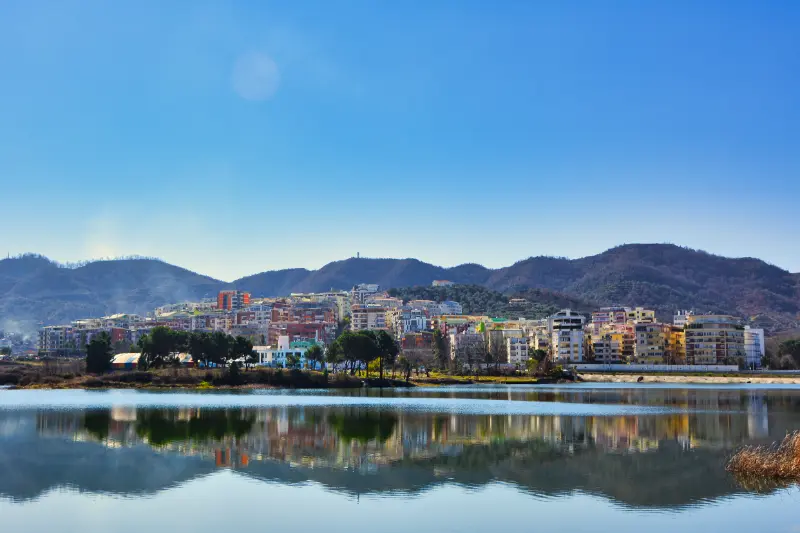
Tirana Grand Park and the Artificial Lake are where the capital changes pace. After the traffic, museums and dense central streets, the park gives you broad promenades, mature greenery, running routes, playgrounds, cafes and water views within the urban area. The lake was created in the 1950s as part of a flood-control project and today sits at the center of one of Tirana’s most-used recreational spaces.
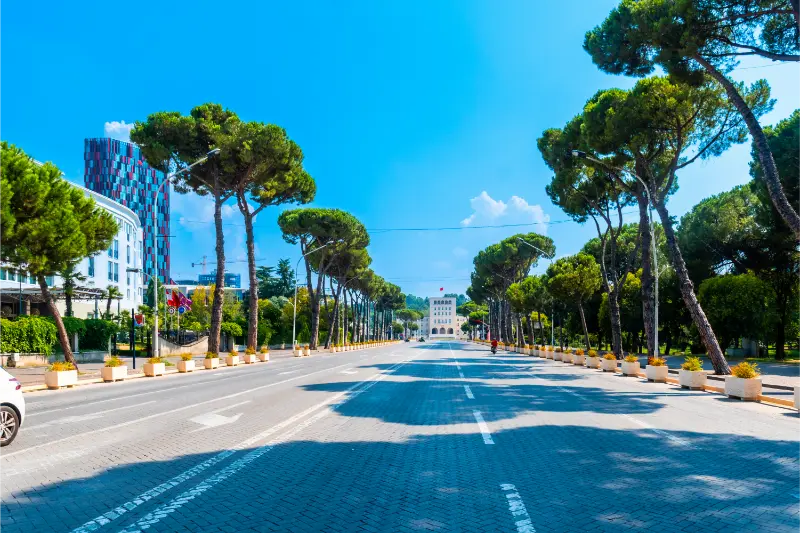
I like the park most as a piece of everyday Tirana rather than as a checklist attraction. Come early and you will share the paths with runners and walkers; arrive before sunset and the lake edge becomes a social space for families, couples and groups of friends. It is also a useful reset on a longer city itinerary, particularly if you have already spent several hours underground at the bunker museums or inside galleries.
Albania’s official tourism portal is the main reference used for the core historical and location facts in this guide. I still recommend checking current opening arrangements, ticketing, local access and any temporary restrictions close to your travel date, because those details can change faster than the heritage itself.
Why this place is worth adding to your Albania trip
Tirana Grand Park earns its place in an itinerary because it adds a layer that broad destination guides often miss. Instead of collecting another famous viewpoint, you get a more specific understanding of southern central Tirana: how people lived, moved, worshipped, worked, relaxed or understood power in that setting. I would choose this stop when you have enough time to look closely rather than squeezing it into the final twenty minutes of a crowded day.
One of the best habits when travelling in Albania is to separate distance from travel time. A place can look close on the map but still require slow urban traffic, steep walking, village roads or time to find parking. Build a buffer into the day and keep one optional stop rather than making every stop compulsory. This is especially valuable in historic centers, where the walk between two attractions may be short in kilometres but demanding in heat or on stone paving.
Historical and cultural context
The Artificial Lake dates from the 1950s and covers roughly 55 hectares according to the national tourism authority. Around it, the Grand Park developed into a major green and recreational zone. Its importance is social as much as scenic: this is a place used daily by Tirana residents for exercise, walking, family time and informal meetings, which makes it a good counterpoint to the monumental center.
Context matters because Albanian heritage is layered. Ancient, Byzantine, Ottoman, royal, communist and contemporary periods often occupy the same small area. Try not to force every building into a single national story. Ask what function the site had at the time, who used it, what changed later and why it survived. That approach produces a much more accurate travel experience than repeating a legend without distinguishing it from documented history.
What to notice during your visit
Walk the lake edge
Do not worry about completing every path. A partial loop is enough to understand the scale and enjoy the water. Choose the side that best fits your next stop and use the park as a flexible part of the day rather than a race around the shoreline.
Run or cycle
The park is one of the easiest places in Tirana to exercise away from busy traffic. Early morning is especially pleasant in warm months. Cyclists should still ride considerately because many paths are shared with walkers, children and dogs.
Family time
Playgrounds, open space and broad promenades make this one of the easiest central areas for a family break. It works well after a museum morning because children can move freely without the logistics of a full day trip outside the city.
Cafes and slow time
Use a lakeside or park cafe as a pause, not as the only reason to come. The best experience is combining a drink with a walk and watching the rhythm of local life change through the day.
How much time to allow
For Tirana Grand Park, I would protect at least 60 to 90 minutes in the schedule unless you already know the visit is very short. That gives you time to orient yourself, read interpretation, take photographs without blocking other visitors and notice details that are invisible on a quick pass. If the place includes steep walking, a museum interior or a guided component, allow longer. The goal is not to manufacture a fixed duration but to avoid turning a meaningful site into a rushed checkbox.
If you are travelling in summer, the useful day is often split into a cooler morning, a slower middle of the day and a second active period later in the afternoon. Museums can be ideal in the heat, while exposed bridges, castle lanes and rural churches are usually more pleasant outside the strongest sun. In winter, daylight becomes the limiting factor instead, especially if you still need to drive on unfamiliar roads.
A realistic way to combine it with nearby sights
From the center, I would pair the Grand Park with Blloku or the Pyramid area rather than trying to combine it with a distant day trip. Walk south from the central districts, spend one to two relaxed hours around the lake, then return through Blloku for dinner. If you want more nature, keep Dajti or Bovilla for a separate half-day because both deserve more time than a rushed extension.
I prefer geographic clustering to zigzagging. Two or three related stops in one district usually produce a better day than five famous places scattered across the map. Keep food, coffee and unplanned discoveries inside the itinerary rather than treating them as delays. In Albania, the unscheduled bakery, viewpoint, market stall or conversation can be as memorable as the attraction you planned six months earlier.
Getting there and moving around
Use Tirana as the practical reference point for this visit. In a city, walking is often the best final approach because parking and one-way streets add unnecessary stress. For rural or regional sites, a rental car, driver or carefully arranged taxi gives more control, but always confirm the return plan before setting off. Public transport can work well between major towns, yet the last few kilometres to a village, monastery or trailhead may require a separate solution.

Download the destination and surrounding streets for offline use. Mobile data coverage is generally useful but should not be your only navigation plan, particularly underground, inside thick stone buildings or in rural valleys. If you drive, avoid assuming that the fastest-looking road on a map is the best route. Ask your accommodation about current road conditions when the final approach is minor or mountainous.
Best time of day and season
Spring and autumn are especially comfortable for cultural sightseeing because walking temperatures are usually easier and the strongest summer crowds are reduced. Summer gives long daylight but can make stone cities and exposed sites very hot around midday. Winter is often quiet and atmospheric, though shorter days, rain, snow at elevation and reduced seasonal services can change plans. There is no single perfect month; match the season to the kind of experience you want.
For photography, early morning and late afternoon usually provide softer light, but museums and interiors depend more on opening hours than golden hour. If your priority is an uncrowded experience, arriving near opening time is often more effective than searching for a supposedly secret season. Always respect any local rule that restricts tripods, flash or photography of sacred objects.
Where to stay
Tirana is the logical base for most travellers visiting Tirana Grand Park. Check accommodation in Tirana. When choosing a property, read the most recent comments about location, parking, stairs, noise, heating or air conditioning rather than relying only on the overall score. In historic areas, a hotel that looks very close on the map can still involve a steep climb with luggage.
Food, coffee and local rhythm
Do not over-plan meals. If you are in a major city, save a few promising places but choose according to where you actually are when hungry. In rural areas, meal times and seasonal opening patterns can be less predictable, so ask hosts for current recommendations. Carry some cash in lek for small purchases. Card acceptance has expanded, but it is still sensible not to depend on a single payment method.
Coffee is part of the travel rhythm in Albania rather than merely fuel. A short stop can become a useful planning reset: check the next opening time, review your walking route, drink water and decide whether another attraction will improve the day or simply make it busier. This is particularly important in places with emotionally heavy history, where a pause between museums can help you process what you have seen.
Families, older travellers and accessibility
Tirana Grand Park may be interesting for families, but the experience depends on age and attention span. Children often engage better when adults turn details into questions—how a room was used, why a wall is so thick, how a bridge carries water around its piers—rather than expecting them to read every label. For older travellers, reduce the number of stops and prioritize shade, seating and easy transport between neighborhoods.
Accessibility in Albania varies greatly. Historic houses can have narrow stairs, castles have uneven stone, rural churches can lack step-free entrances and underground museums may have confined passages. If mobility is a decisive issue, contact the attraction directly before visiting. A private driver can be a worthwhile upgrade because it reduces walking between transport nodes even when the attraction itself is not fully accessible.
Photography and respectful behaviour
Take photographs in a way that does not turn the site into a stage set. Do not climb walls, sit on fragile structures, move objects, block narrow circulation or photograph people closely without permission. At religious sites, modest dress and quiet behaviour matter even when no service is taking place. At places connected with dictatorship or persecution, avoid playful bunker poses that trivialize the experiences being documented.
A useful photography strategy is to make three kinds of image: one establishing view showing the setting, one architectural or object detail, and one image that records how the place relates to the surrounding city or landscape. That small discipline usually creates a stronger travel record than taking fifty nearly identical wide shots.
Safety and practical details
The park is free-form urban space rather than a controlled attraction, so facilities and path conditions can change. In summer, use the cooler morning or late-afternoon hours and carry water. After rain, shaded sections can stay damp. At night, stick to well-used, well-lit routes and use normal city awareness with valuables.
- Check current information: opening hours, tickets and temporary closures can change.
- Carry some cash: small sites and local services may not always accept cards.
- Wear suitable shoes: stone, stairs, polished floors and uneven lanes can be slippery.
- Save maps offline: useful in bunkers, thick buildings and rural areas with weak signal.
- Keep the day flexible: leave room for traffic, weather, queues or a slower visit than expected.
- Respect the site: follow photography, dress, touching and access rules even when enforcement looks informal.
Useful related Wonderful Albania guides
Continue planning with our Tirana travel guide, Farka Lake guide, Mount Dajti guide, best day trips from Tirana. These articles are designed to work as a cluster, so you can move from the specific attraction to accommodation, transport, food and wider regional planning without rebuilding the itinerary from scratch.

Final thoughts
Tirana Grand Park is most rewarding when you give it enough time to explain something about Albania rather than using it only as a backdrop. Look closely, separate documented history from legend, ask practical questions and connect the site to the surrounding neighborhood or landscape. That slower approach produces a richer trip and is also more respectful to the people and institutions preserving the place for future visitors.
Leave a Reply