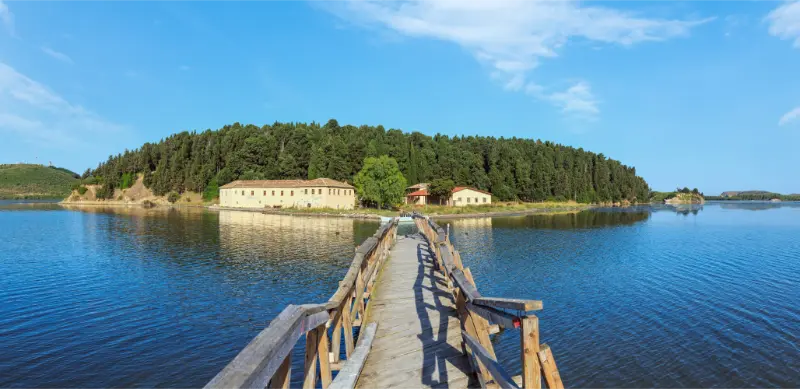
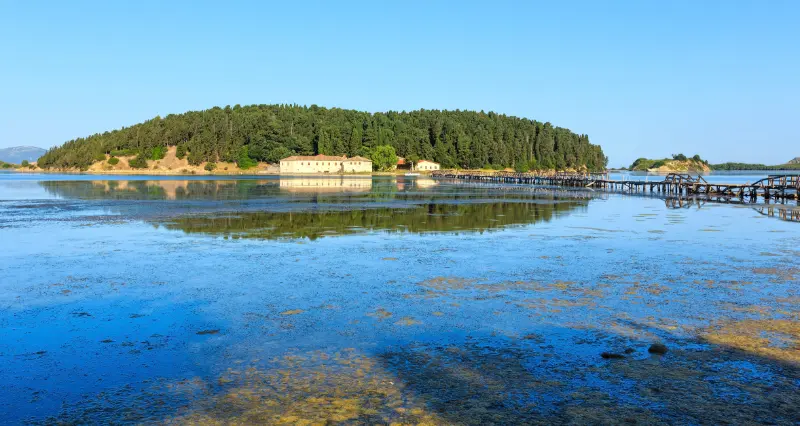
Zvërnec Monastery is one of the most atmospheric cultural stops near Vlorë: a medieval Orthodox monastery on a pine-covered island in the Narta Lagoon, reached by a long wooden footbridge. The approach across the water is as memorable as the church itself, which is why the site works equally well for travellers interested in religious heritage, photography and coastal nature.
This guide focuses on what a traveller actually needs: why the place is worth your time, how to approach it, how long to allow, what can change with weather or season, and which nearby destinations make the trip more coherent. If you are building a broader Albania itinerary, use the internal links below to connect this stop with established regional guides rather than treating it as an isolated pin.
Quick overview
| Best for | Nature, culture and independent travellers who prefer practical planning |
| Recommended time | Half a day to a full day depending on access and nearby stops |
| Best base | Vlorë |
| Transport | Car, taxi/transfer or local arrangement; exact access depends on the site |
| Key rule | Check weather, road/access conditions and local advice before committing |
Why visit Zvërnec Monastery?
The monastery is dedicated to Saint Mary and Albania’s tourism authority dates it to the medieval Byzantine tradition, commonly identifying the church with the 13th century. Visit slowly: notice the lagoon, island vegetation, church proportions and the transition from open water to shaded monastery grounds. This is not just a photo stop; it remains a religious place and deserves the same quiet behaviour you would use inside an active church.
The strongest reason to add this place to an itinerary is context. Albania’s famous cities and beaches are only part of the travel experience; smaller natural and cultural sites show how valleys, villages, rivers, mountains and older routes fit together. Give the place enough time to understand that relationship instead of arriving only for a photograph.
How to get there
From Vlorë, drive or take a taxi toward the Narta/Zvërnec area. The final approach is straightforward in normal conditions, but the wooden bridge is exposed to weather and can become slippery. If strong wind, maintenance or local restrictions affect access, follow on-site instructions rather than trying to bypass barriers.

If you are using a rental car, read the agreement before leaving paved roads and never assume roadside assistance covers rough tracks. If the final access looks worse than expected, park safely and continue only when you are certain that walking is permitted and sensible. For taxis and private drivers, agree the return plan and waiting time in advance because remote locations may not have on-demand transport.
What to do and what to look for
- Walk the wooden bridge slowly and enjoy the lagoon views before reaching the island.
- Visit the church respectfully and look for medieval architectural details.
- Explore the shaded island paths without leaving marked or obvious routes.
- Combine the monastery with birdwatching around Narta Lagoon.
- Return to Vlorë for the old town or Lungomare rather than rushing through multiple remote sites.
Do not measure the quality of the visit by the number of activities. Many of Albania’s best small sites are memorable because the landscape is quiet and the experience is unscripted. Spend time observing how local people use the road, water, forest or religious space, and keep enough flexibility to leave if conditions are not right.
How long should you allow?
For the attraction itself, many travellers will need only one to three hours. The realistic planning unit, however, is usually a half day because the approach, parking, walking, photos and an unhurried meal add time. If the route is mountainous or the site sits far from your base, make it the anchor of a full day rather than squeezing it between unrelated stops.
Start earlier than you think you need to. Morning gives you cooler temperatures in summer, more daylight for route problems and a better chance of speaking with local people before businesses close. It also keeps you out of the common trap of driving unfamiliar rural roads in darkness.
Best time to visit
Spring and autumn are often the easiest seasons for active travel in Albania: temperatures are comfortable, landscapes are greener and roads are generally less congested than in the peak summer holiday period. Summer offers long daylight but can bring heat, crowds on the coast and thunderstorms in the mountains. Winter can completely change access to highland destinations.
Weather matters more than the calendar at caves, canyons, riverbanks and high plateaus. Check the forecast for the wider catchment or mountain area, not only the nearest city. After prolonged rain, wait for local confirmation before visiting places where water, mud or rockfall are relevant.
Safety and access
The main practical concerns are sun, wind, wet wooden surfaces and respectful behaviour at an active religious site. Wear shoes with grip, supervise children on the bridge and avoid drones or intrusive photography without permission. In summer, carry water because shade is limited on the approach.
Travel insurance should match the activity you are actually doing. A policy that covers normal sightseeing may not cover technical caving, off-road driving, climbing or rescue from a remote hiking route. Save the Albanian emergency number 112 and make sure at least one person in your group knows your accommodation and planned route.
Where to stay
Vlorë is the most practical base for this guide because it offers a better mix of accommodation, food, fuel and onward transport than the attraction itself. If you prefer a guesthouse in a village or mountain area, contact the property before arrival and ask about the final road rather than choosing only by distance.
If you want to stay nearby, compare accommodation around Vlorë on Booking.com. For remote nature sites, staying in the nearest practical town or village is usually smarter than choosing a pin that looks closer on the map but has limited road access or services.
Food, water and services
Do not assume a café, toilet, ATM or shop exists at a small attraction. Carry enough drinking water for the whole outing, plus a snack and basic first-aid supplies. On mountain days, add a warm layer even in summer; on exposed coastal or river sites, add sun protection and more water than you would normally carry in town.
Local restaurants and guesthouses are often part of the experience. A simple meal near the destination can add more to the day than driving an extra hour for another attraction. Ask what is available rather than expecting a fixed menu, especially outside July and August.
Responsible travel
Respect private land, livestock and religious or protected sites. Close gates when you find them closed, do not pick plants, avoid loud music and never leave tissues, bottles or food packaging behind. Remote places have fewer waste services, so carrying rubbish back to your base is part of responsible travel.
Drones deserve extra caution. Protected areas, religious sites, villages and wildlife habitats can have restrictions or legitimate privacy concerns even when an app shows no geofence. Ask locally and follow current Albanian aviation and protected-area rules before flying.
Useful nearby guides
Use these guides to build a geographic cluster: choose one base, one main activity and one or two nearby stops. That usually creates a better Albania travel day than zigzagging across the map simply because places look close on a phone screen.
A realistic way to plan the day
Have breakfast at your base, check the local weather and road situation, then travel to the main attraction while you still have plenty of daylight. Spend enough time to understand the place instead of treating it as a photo checkpoint. Afterwards, stop for lunch or coffee in the nearest town or village and decide whether conditions still justify a second activity.
Keep the afternoon flexible. If the first stop takes longer, enjoy it and remove the optional stop. If everything runs smoothly, add a nearby viewpoint, village or museum from the linked guides. The best rural itineraries are designed to absorb small delays rather than punish you for them.
Tours and activities
For regions where organised excursions are available, compare itineraries carefully: a tour that includes transport and a knowledgeable local guide can be more useful than renting a car for one remote stop. The activity widget below is best used to compare broader experiences around the nearest destination; not every small attraction has a dedicated tour.
Official information and further planning
For destination background, check Albanian National Tourism Agency – Zvërnec Monastery. Official pages are useful for geography, heritage and protected-area context, but road conditions, local access, opening arrangements, water levels, weather and seasonal services can change. Recheck time-sensitive details shortly before you travel.
Frequently asked questions
Where is Zvërnec Monastery?
It is on a small island in the Narta Lagoon near Vlorë, connected to the mainland by a wooden bridge.
How old is the monastery?
The church is generally associated with the medieval Byzantine period and is commonly dated to the 13th century.
How long do I need?
Allow 1–2 hours for the bridge, island, church and a relaxed look at the lagoon.
What should I wear?
Modest clothing is appropriate for a religious site, especially if you plan to enter the church.
Can I combine it with Vlorë?
Yes. It is one of the easiest cultural-and-nature excursions from Vlorë.
Is it accessible in bad weather?
Wind and wet surfaces can make the bridge unpleasant or unsafe. Follow local access guidance.
Planning details that make the visit easier
For small Albanian attractions, the most useful planning habit is to separate the map distance from the real travel time. Mountain roads, village lanes, ferry schedules, weather and short unpaved sections can all add time. Build margin into the day instead of scheduling a fixed dinner, bus or flight immediately after the visit.
Cash remains useful outside major towns. Carry small lek notes for coffee, parking, local food or a taxi, and fuel before driving into remote valleys. Download the destination pin and one wider regional map before you lose coverage. If a guesthouse owner or local driver gives you more conservative road advice than an app, take the local advice seriously.
A good Albania itinerary also leaves room for an unplanned stop. The country’s smaller attractions often work best when paired with a slow lunch, a village walk or a viewpoint rather than five more pins. This makes the day more enjoyable and reduces the temptation to take unsafe shortcuts just to stay on schedule.
Final thoughts
Zvërnec Monastery is worth adding when it fits naturally into your route and interests. Go for the landscape, history or local character rather than for a long list of facilities. With realistic timing, conservative access decisions and respect for the place, it can become one of the quieter stops you remember most from Albania.
Leave a Reply