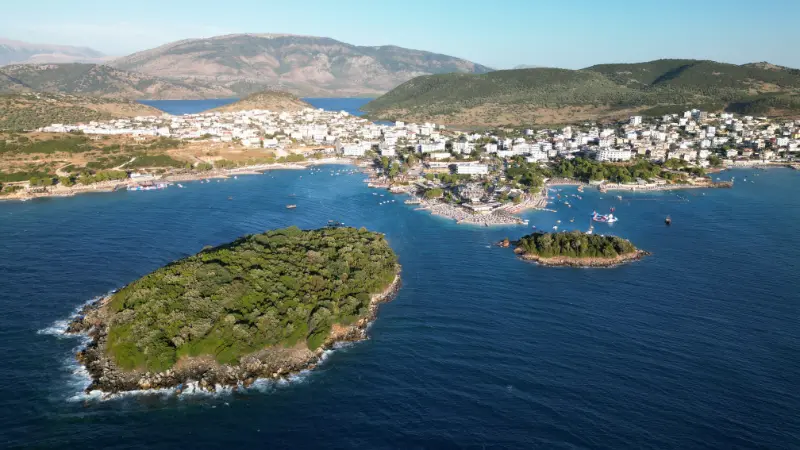
Sarandë and Ksamil can absolutely be done without a car, and in July or August the no-car plan can be less stressful than dealing with traffic and parking. Central Sarandë is walkable; central Ksamil is small; the main challenge is connecting beaches and excursions without wasting time on uncertain transfers.
I would base in Sarandë for restaurants, ferry connections and broader services, or in Ksamil if the beach is the priority. Then use local buses, taxis, organized trips and boats selectively instead of trying to reproduce a road trip without a car.

Quick answer
| Question | Answer | Why |
|---|---|---|
| Car needed in Sarandë? | No | Central waterfront is walkable |
| Car needed in Ksamil? | No if staying centrally | Choose beach-access location carefully |
| Between Sarandë and Ksamil | Local bus / taxi | Confirm current stops and times locally |
| Butrint | Bus / taxi / tour | Straightforward from Ksamil |
| Blue Eye | Tour / taxi / transfer | Less convenient by simple local transit |
Is a car actually useful here?
A car is useful only when it solves a real transport problem. If it spends most of the day parked while you walk a historic center, it is not helping. My car-free strategy is to stay in the right neighborhood, walk the compact core, use public transport for predictable corridors and pay for a taxi or transfer only when it removes a genuinely awkward connection.
For intercity journeys, e-Transport Albania is the national planning reference I check alongside current terminal information and local confirmation. For city transport, use the official/local source linked below and always re-check information close to travel.
Official / local transport information
Official tourism guide to Sarandë
Walking in Sarandë
The promenade, port, central beach and synagogue area fit into a simple pedestrian routine. The Sarandë waterfront walking tour is ideal for arrival day. Hotels high above the waterfront can turn a short distance into a steep walk, so location matters.
Sarandë to Ksamil
Local buses and taxis connect the corridor. I avoid printing a permanent timetable because frequency and stops can change seasonally; confirm the current departure locally. In peak summer, leave extra time because road congestion affects buses too.
Getting around Ksamil
If your hotel is central, walk to one or two beaches and use boats/kayaks for variety. Driving between tiny bays is not necessary. If your chosen beach is outside the walkable center, a taxi can be simpler than renting a vehicle for the day.
Butrint without a car
Butrint is one of the easiest cultural excursions from Ksamil. Use local bus/taxi or a guided trip, then give the site several hours. Do not combine Butrint, Blue Eye and five beaches simply because you are not driving.

Blue Eye without a car
The Blue Eye is less naturally connected to the local coastal bus pattern, so a tour, taxi or transfer is usually the cleanest option. Share a taxi with other travelers only when the return arrangement is explicit.
Boat days
Boats can turn no-car travel into an advantage. From Sarandë or nearby coast bases you can reach swimming spots that are awkward by road. Choose licensed/reputable operators and let sea conditions decide the day.
Corfu ferry
The ferry port is central Sarandë, making a Corfu connection naturally car-free. If you are continuing internationally, stay within easy walking/taxi distance of the port the night before an early sailing.
Where to stay
Stay central in Sarandë for ferries/services or central Ksamil for beaches. Where to Stay in Sarandë and Where to Stay in Ksamil help you avoid an unnecessary daily taxi commute.
A simple car-free itinerary
A strong three-day car-free plan is Sarandë + promenade on arrival, Butrint and one Ksamil beach on day two, then Blue Eye or a boat excursion on day three. This keeps each transport day simple.

Traveling with children
Families should prioritize accommodation close to the beach or promenade. Taxis are useful for excursions because child-seat availability on spontaneous rides can vary; arrange one in advance if required.
Limited mobility and easier routes
Sarandë’s waterfront is relatively easy, but hillside hotels and Lekuresi/40 Saints are not. Choose lower accommodation and use taxis uphill. Ksamil beach access varies by bay, so ask the hotel about steps and surfaces.
Where to stay without a car
Compare current accommodation in Sarande on Booking.com.
The best no-car hotel is not always the prettiest one. I prioritize a location that removes one daily transfer: close to the historic core, promenade, bus connection or beach I expect to use most.
Taxi strategy
Use taxis strategically rather than automatically. I ask the accommodation for a reliable local number, agree the price for longer rural trips and arrange the return before being dropped at a remote site. If a driver is waiting during a visit, clarify whether waiting time is included. For families, ask about child-seat availability before the day of travel.
How to handle intercity buses
Arrive early, confirm the destination with the driver and keep valuables in your hand luggage. Albanian intercity transport is practical, but departure points and schedules can change. I never build an international flight or mountain ferry connection around a bus with only a few minutes of margin.
When a rental car becomes worth it
I would rent a car when the itinerary changes from one base plus one excursion into a chain of rural stops: several beaches in different bays, remote villages, mountain trailheads or small archaeological sites in one day. Even then, consider renting only for that segment rather than keeping the vehicle through an entire city stay.
Common mistakes
- Booking accommodation far from the walkable center because the map distance looks small.
- Assuming every local bus timetable found online is current.
- Trying to reproduce a five-stop road trip with separate taxis.
- Waiting until a remote attraction closes to think about the return ride.
- Carrying large luggage through steep old-town lanes instead of taking one short taxi.
- Renting a car for a destination where parking is harder than public transport.
- Booking two fragile transport connections with no delay buffer.
Useful related guides
- Main destination travel guide
- Where to Stay guide
- Self-guided walking route
- Driving and parking guide
- Albania Without a Car
- Getting Around Albania
Frequently asked questions
Can I visit Saranda and Ksamil without a car?
Yes, especially if you choose a central base.
How do I travel between Saranda and Ksamil?
Use current local bus services or taxis; confirm stops/times locally.
Can I reach Butrint without a car?
Yes from Ksamil by bus, taxi or tour.
How do I visit the Blue Eye?
A tour or taxi/transfer is usually the simplest no-car option.
Is a car useful in August?
It can be useful for remote beaches, but traffic and parking make no-car travel attractive in peak season.
Final advice
A no-car trip works best when you stop treating the rental car as the default definition of freedom. Good location, one reliable bus connection and the occasional taxi can create a more relaxed itinerary than driving, parking and navigating every day. Keep the car-free parts genuinely simple, and pay for a transfer when simplicity is worth more than squeezing every journey into the cheapest possible ticket.
How I would decide before booking
I look at three map points: the arrival stop, the hotel and the first two attractions. If all three sit inside one compact area, I keep the stay car-free. Then I identify the single hardest excursion. If a taxi, tour or shuttle solves that one day, renting a car for the whole stay usually does not make sense.
I also check the departure day. A car-free plan is excellent until an early ferry, airport transfer or mountain shuttle requires a connection that does not exist. Solve the fixed-time departure first; everything else can remain flexible.
Public transport versus taxi: how I split the budget
I use public transport for predictable point-to-point movements and taxis for the awkward edges: luggage, hills, early departures and sites where the return is uncertain. This keeps the budget low without turning every day into a transport puzzle. Two well-chosen taxi rides can be better value than a rental car, fuel and parking for an entire stay.
Night arrivals and early departures
After dark, I become more conservative. I do not learn an unfamiliar local-bus network while carrying luggage if a simple taxi solves the problem. For an early departure, I arrange the transfer the evening before and confirm the pickup point. A car-free itinerary remains easy when the fixed-time journeys are solved in advance.
What to keep offline
Save the hotel address, intercity terminal pin, one taxi contact, current bus information and the name of the destination written clearly on your phone. If mobile data fails, those five items are enough to keep most Albanian car-free journeys moving.
How to keep the day flexible without a car
A car-free itinerary works best when one part of the day remains unscheduled. I avoid stacking a museum, rural excursion, restaurant reservation and last bus into one chain where a twenty-minute delay breaks everything. Instead, I protect the transport that truly matters and leave the rest of the afternoon open. If a bus is late, a museum takes longer or the weather changes, I remove the optional stop rather than spending the rest of the day chasing the clock.
I also separate travel days from sightseeing days whenever possible. Moving between cities with luggage is already an activity; adding a remote attraction before check-in can make a simple public-transport journey feel complicated. After arrival, I walk the immediate neighborhood, eat nearby and start the full itinerary the next morning. That rhythm is especially useful in Albania, where intercity transport is practical but not designed around tightly protected connections.
Leave a Reply