
These Sarandë & Ksamil travel tips are for a first visit: the practical details that are easy to miss when you only read a list of attractions. Ionian beaches, Butrint, nightlife and southern day trips are the main strengths, but the quality of the trip depends heavily on where you sleep, how you move and how much you try to fit into one day.
I have deliberately avoided fragile recommendations such as a fixed taxi fare, a beach-bed price or a bus departure that may change next season. Use this guide for the stable planning decisions, then confirm current schedules, tickets and opening information shortly before travel.
At a glance
| Question | Practical answer |
|---|---|
| Best for | Ionian beaches, Butrint, nightlife and southern day trips |
| First-time stay | Choose a location that minimizes the transport you will repeat every day |
| Car | Useful only when it unlocks regional trips; often unnecessary inside the main center |
| Cash | Carry some lek for small payments even if you also use cards |
| Planning style | Book scarce logistics early, keep ordinary sightseeing flexible |
Sarandë & Ksamil: the most important things to know
1. Sarandë and Ksamil solve different travel problems
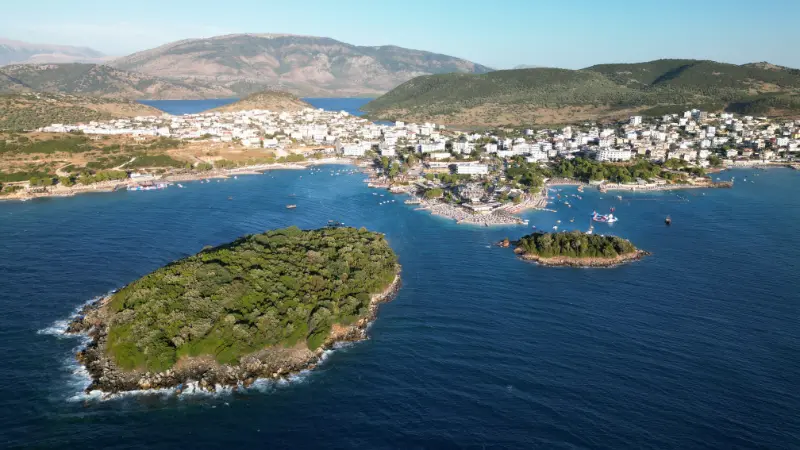
Sarandë is the better transport, restaurant and year-round base; Ksamil puts you closer to small bays and the islands. If your trip is mainly beaches, sleep in Ksamil. If you want day trips, evening choice and easier intercity transport, Sarandë is often the more practical base.
2. July and August require a different strategy
Peak summer is not simply ‘the same trip with more people.’ Parking, beach space, restaurant spontaneity and road travel between Sarandë and Ksamil all become harder. Book the accommodation location carefully, start beach days earlier and avoid driving between small bays at midday searching for an empty place.
3. Butrint deserves a real half-day
Butrint is not a quick photo stop before three beaches. Go early, walk the archaeological circuit properly and use the cooler morning hours. Pair it with one beach afterward rather than turning the day into a checklist.
4. Do not assume every beach is public or free to use with services
Beach management changes by season. Some sections are public, others are organized with sunbeds or private management. Ask the price before using a set and do not rely on a screenshot of last year’s fees.
5. A car is useful but not always pleasant
A rental car opens quieter beaches and regional day trips, but it can be the least convenient object in central Ksamil during peak summer. If you rent, prioritize accommodation with confirmed parking rather than vague ‘parking nearby’ wording.
6. Use boats for coastlines that are awkward by road
A boat trip can be a better way to reach wild bays than forcing a rental car down uncertain access roads. Choose operators based on route, safety and sea conditions rather than only the lowest price or loudest beach-sales pitch.
7. Stay in Sarandë for a winter or shoulder-season trip
Sarandë remains a functioning city when Ksamil becomes much quieter and more seasonal. Outside the main beach months, this makes Sarandë the more dependable base for restaurants, transport and everyday services.

8. The Blue Eye is not on the beach road
The Blue Eye is an inland excursion and should be planned with Gjirokastër or a dedicated half-day/day. Trying to combine Butrint, Ksamil, Blue Eye and a Sarandë sunset in one relaxed day is unrealistic for most visitors.
9. Sunset planning is easy—do not overcomplicate it
Sarandë’s promenade and Lëkurësi area already give strong evening options. You do not need to chase a remote viewpoint every night. Sometimes the better plan is an early dinner reservation or a slow waterfront walk after a full beach day.
10. Corfu changes arrival logistics, not the Albanian itinerary itself
If you arrive by ferry from Corfu, stay aware of port timing and passport formalities, but plan Sarandë/Ksamil according to the same principles as any other arrival: hotel location, beach access and transport to Butrint matter more than the international route used to reach town.

11. Carry some cash without becoming cash-only
Carry some Albanian lek even if you normally travel cash-light. Cards are common in many hotels and larger restaurants, but small cafés, taxis, parking, local buses and family-run places may still be easier with cash. Do not exchange a large amount blindly at the airport: compare rates, use reputable ATMs, and keep smaller notes for everyday purchases.
12. Keep maps and key addresses available offline
Mobile data makes an Albanian trip much easier. Keep offline screenshots of the accommodation address, bus pickup point and the next destination because small intercity stops are not always obvious. Download an offline map before a road trip or mountain day. A phone solves many navigation problems, but it does not replace asking the hotel or driver when the final road, parking area or trail access is unclear.
13. Plan by energy, terrain and heat—not just distance
Do not plan sightseeing from a flat online map alone. Heat, cobbles, hills, beach traffic and museum opening patterns can turn a short-looking route into a tiring day. I build one main anchor into each half-day, then add nearby stops only if energy and weather allow. This keeps the trip flexible and prevents the common mistake of spending more time moving between sights than actually experiencing them.
14. Book the scarce parts, not every hour
Reserve the things that become genuinely scarce, not every minute of the trip. In peak season that usually means the best-located accommodation, a rental car with the equipment you need, popular Riviera rooms, and specific mountain or boat logistics. Restaurants, ordinary city sightseeing and short taxi rides rarely require a rigid itinerary months in advance. Flexibility is useful in Albania because weather, traffic and transport can change the best plan.
15. Ask your hotel specific local questions
Use your accommodation as a local information source. A good host can tell you which road is currently easier, where a bus actually picks up, whether a seasonal restaurant is open and which parking area makes sense that week. Ask specific questions rather than ‘what should I do?’: for example, ‘Can a normal car reach this guesthouse?’ or ‘Where should I ask the bus driver to stop?’ Specific questions produce much better answers.
Where to stay
Compare current accommodation in Sarande on Booking.com.
For neighborhood-by-neighborhood advice, compare the local Where to Stay guide and the local Where to Stay guide.
Useful planning guides
- Sarandë & Ksamil Travel Guide
- Best Things to Do in Sarandë & Ksamil
- Best Time to Visit guide
- Sarandë & Ksamil Without a Car
- Albania for First-Time Visitors
- Albania Travel Mistakes to Avoid
A simple first-visit strategy
For a first trip to Sarandë & Ksamil, I would solve accommodation location first, transport second and attractions third. That order sounds backwards, but it prevents most travel friction. A well-located room can eliminate repeated taxi rides, a clear onward-transport plan protects the final morning, and only then does it make sense to fill the days with sights.
Keep one flexible block in the itinerary. Use it for a place you discovered locally, a weather-dependent excursion, a longer meal or simply a slower afternoon. Albania rewards travelers who leave enough space to adjust rather than treating every destination as a timed attraction circuit.
Final advice
The easiest way to enjoy Sarandë & Ksamil is to make the trip simpler than the internet makes it look. Choose the right base, understand the terrain and transport, then focus on a few experiences that fit the season. Confirm anything time-sensitive close to departure, but do not over-plan the parts that are naturally flexible.
What to confirm the day before arrival
Re-check the weather, your accommodation check-in instructions and the exact point where your bus, shuttle or taxi will leave you. If you are driving, confirm parking and the final approach rather than relying on navigation at the last minute. If you are traveling in peak season, ask whether any local road closure, festival or event changes access around the center.
What not to pack into the first day
Do not make the arrival day carry the whole itinerary. Airport or intercity delays, finding the hotel, withdrawing cash and understanding the neighborhood all consume attention. I prefer one walk, one good meal and perhaps one easy landmark on the first evening. Save the major excursion or long museum block for a day when you can start rested.
How to judge online advice
Prioritize information that explains geography and logistics over posts that promise one ‘secret’ place or exact price. Opening hours, beach management and transport change; the location of a hill, old town, lake or terminal does not. Use recent sources for operational details and stable guides for how the destination fits together.
Arrival-day strategy
On arrival in Sarandë & Ksamil, solve the practical basics before chasing sights: check in, understand the immediate neighborhood, identify the easiest route back to the hotel and confirm the next day’s transport or opening-sensitive activity. If you arrive in the afternoon, one easy walk and dinner are usually better than rushing to a major attraction just before closing.
Keep the first evening geographically simple. This is when travelers are most likely to take an unnecessary taxi, walk uphill with luggage, lose time finding a parking space or sit down in the first tourist-facing restaurant because they are tired. A small amount of orientation makes the rest of the stay much smoother.
Departure-day strategy
Do not schedule the most important excursion on the morning you leave. Keep departure day for a nearby café, market, promenade or short museum only if the transport time is secure. When catching an intercity bus, ferry or flight connection, protect the buffer first; an extra hour in a destination is not worth turning the next leg into a stressful race.
How to handle conflicting travel information
If two websites give different bus times, ticket prices or opening hours, assume the operational detail may have changed. Check the official source where one exists, ask the accommodation, and verify locally on the day. For stable questions—where the old town is, which district is uphill, which village lies along the coast—use maps and destination guides. Separating stable geography from changeable operations is one of the easiest ways to travel confidently in Albania.
A better rule for first-time planning
Plan enough to remove friction, but not so much that one delayed bus ruins the day. Know where you are sleeping, how you are reaching the next base and which one or two experiences are priorities. Leave the rest flexible. That balance works particularly well in Albania, where local advice and weather can improve a plan that looked perfect on paper.
Leave a Reply