
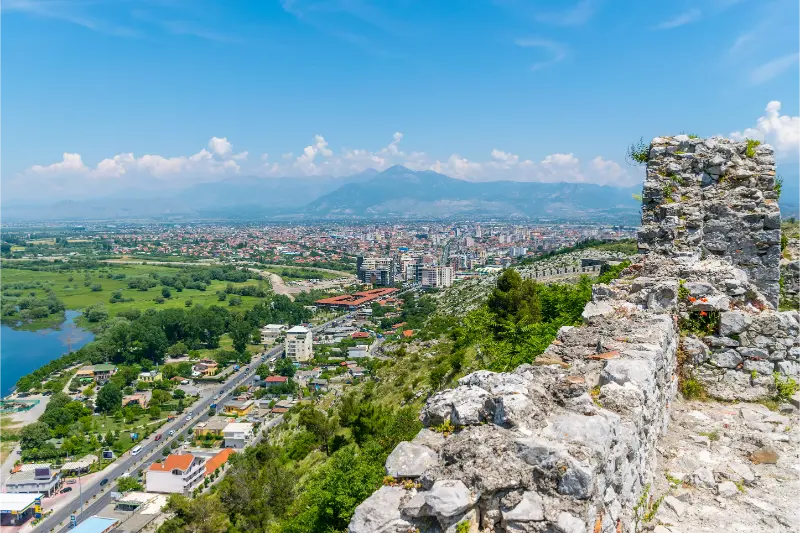
Shkodër is one of Albania’s most varied photography bases because city, lake, rivers and mountains meet within a small area. Rozafa supplies the grand panorama, while Shirokë and Zogaj give long lake horizons, Mesi Bridge adds stone-and-river geometry, and Gjuhadol provides human-scale street scenes. A useful photo itinerary alternates these environments instead of spending the whole day looking for another castle angle.
This guide focuses on places that are useful for both photographers and ordinary travelers who simply want a memorable view. Opening conditions, access rules and weather can change, so ticketed monuments and mountain routes should always be checked locally before you build the whole day around one frame.
Quick comparison
| Location | Best light | Access |
|---|---|---|
| Rozafa Castle | Morning or late afternoon | Taxi, bicycle or drive; final walk uphill |
| Shirokë promenade | Late afternoon and sunset | Bicycle, taxi or car |
| Zogaj village | Sunset and soft afternoon light | Best by bicycle, taxi or car |
| Mesi Bridge | Morning or late afternoon | Taxi, bicycle or car |
| Gjuhadol neighborhood | Morning and early evening | Walkable |
| Lead Mosque with Rozafa behind | Late afternoon | Near castle area |
| Lake Shkodra cycling road | Morning or late afternoon | Bicycle or car |
| Buna river edges near the city | Morning mist or blue hour | Walk/bicycle depending section |
| Marubi and the city’s photographic heritage | Any weather | Central |
| Drisht and the foothills beyond Mesi | Late afternoon | Car/taxi day trip |
The best photo spots, one by one
Rozafa Castle
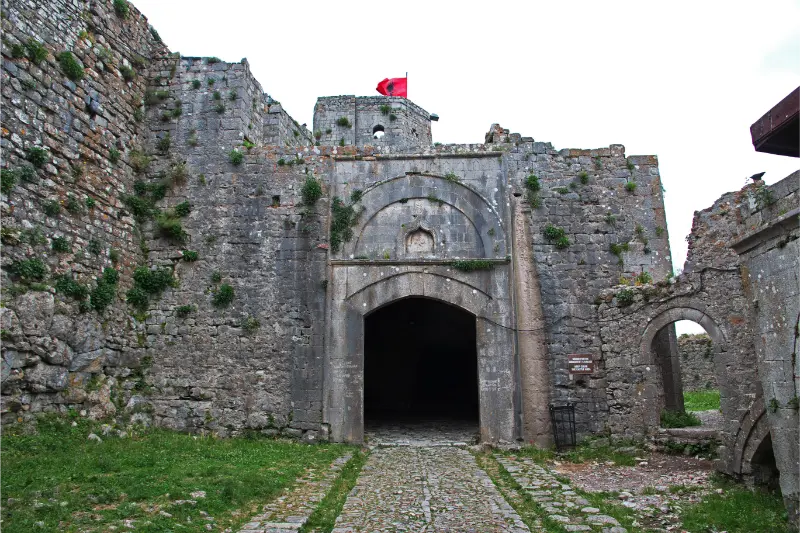
Best light: Morning or late afternoon. Access: Taxi, bicycle or drive; final walk uphill. Rozafa is the defining viewpoint. Official tourism material emphasizes the panorama over Shkodër, Lake Shkodra and the meeting of the Buna, Drin and Kir river systems. The Rozafa Castle guide covers the visit. Use walls, arches and grass as foreground to prevent the wide landscape from feeling distant and empty.

Shirokë promenade
Best light: Late afternoon and sunset. Access: Bicycle, taxi or car. Shirokë is the easiest lake-sunset location near the city. The Shirokë guide explains the village and promenade. A long lens can compress fishing boats against the opposite mountains, while a wide lens works when the lake is calm enough for reflection. Stay through blue hour if your return transport is secure.
Zogaj village
Best light: Sunset and soft afternoon light. Access: Best by bicycle, taxi or car. Zogaj is quieter and more landscape-focused than Shirokë. The Zogaj guide covers the lakeside setting. Look for stone walls, small jetties, boats and mountain layers rather than one famous viewpoint. Because the road hugs the lake, use designated pull-offs and village spaces instead of stopping unsafely for photographs.
Mesi Bridge
Best light: Morning or late afternoon. Access: Taxi, bicycle or car. The Ottoman stone bridge is one of the cleanest architectural-landscape subjects around Shkodër. The Mesi Bridge and Drisht guide gives the trip context. Water level changes the composition substantially: lower water emphasizes the arch and stones, while fuller flow creates stronger reflection and movement.
Gjuhadol neighborhood
Best light: Morning and early evening. Access: Walkable. Gjuhadol is the city’s strongest street-photography area, with historic façades, cafés, bicycles and changing pedestrian life. Photograph details and layers rather than only the straight street view. Early morning is quieter; early evening gives more local activity and warm interior light.
Lead Mosque with Rozafa behind
Best light: Late afternoon. Access: Near castle area. The Lead Mosque is visually strongest when the castle hill is included in the background, connecting religious architecture to the landscape. Use the Lead Mosque guide. Be respectful around worship and avoid photographing people closely during prayer.
Lake Shkodra cycling road
Best light: Morning or late afternoon. Access: Bicycle or car. The lakeside route itself is a photo location: reeds, fishermen, villages and shifting views of the Albanian Alps. The Lake Shkodra guide helps plan the area. A bicycle lets you stop more naturally than a car, but carry only lightweight gear and use a secure bag.
Buna river edges near the city
Best light: Morning mist or blue hour. Access: Walk/bicycle depending section. The Buna gives flatter, quieter compositions than Rozafa: bridges, reeds, boats and reflections. Morning mist can simplify the background beautifully. Choose public riverfront sections and do not step onto unstable banks for a cleaner angle.
Marubi and the city’s photographic heritage
Best light: Any weather. Access: Central. The Marubi National Museum of Photography is not a viewpoint, but it belongs in any Shkodër photo itinerary because it changes how you see the city. Studying historic Albanian portraiture and documentary work can make your own street photography more deliberate. In rain, it is also the best photography-focused indoor stop.
Drisht and the foothills beyond Mesi
Best light: Late afternoon. Access: Car/taxi day trip. Continuing beyond Mesi toward Drisht adds fortress, village and mountain layers to a northern-Albania photography day. Use the same Mesi Bridge and Drisht guide. Protect enough daylight for the return; mountain shadows arrive earlier than a flat-map estimate suggests.
Sunrise, sunset or blue hour?
Sunrise is usually best for quieter streets, calm water and cleaner architectural compositions. Sunset is better for west-facing coastlines, social atmosphere and warm side light on hills. Blue hour is often the most reliable urban period because the sky still holds color while street and building lights have switched on. Do not abandon a location immediately after the sun disappears; some of the strongest travel photographs happen in the following 20–30 minutes.
What to photograph in bad weather
Overcast light is not a failed photography day. It is often better for stone streets, markets, forest, interiors and archaeological details because contrast is lower. After rain, wet paving can add reflections, while broken cloud can make mountains and lake views more dramatic. The only situations that should automatically change the plan are unsafe storms, exposed ridges, slippery steep paths or sea conditions that make boat travel unsuitable.
Phone photography tips
- Clean the lens before every important viewpoint; pocket lenses collect fingerprints quickly.
- Use the 1× lens for the cleanest quality and switch to ultra-wide only when the scene genuinely needs it.
- Tap and reduce exposure slightly for sunsets so the sky keeps color.
- Use a railing, wall or stable surface for blue-hour shots instead of digital zoom.
- Shoot a short sequence when people, boats or bicycles are moving through the frame, then choose the strongest moment later.
Camera and lens strategy
A two-lens travel kit is enough for nearly every location in this guide: a moderate wide-angle zoom for streets and landscapes, plus a short telephoto for compressed roofs, mountains, boats and architectural details. Carrying more equipment can slow you down on cobbles, stairs and beaches. A tripod is useful for deliberate blue-hour work but should never block narrow paths, castle passages or promenades.
Photography etiquette
Historic cities are lived-in places, not film sets. Ask before making close portraits, respect worship, avoid pointing cameras into private courtyards and follow museum or church photography rules. At beaches and swimming areas, be especially careful with identifiable strangers and children. In archaeological and natural areas, remain on marked paths and behind barriers even when stepping over one would improve the angle.
Drone photography
Do not assume a scenic viewpoint is automatically legal for drone flying. Rules can involve aviation restrictions, airports, protected areas, archaeological sites, crowds and local permissions. Check current Albanian aviation and site-specific rules before the trip, and never launch from a castle, beach crowd or protected landscape merely because other visitors have posted drone images online.
Where to stay for early and late light
Compare accommodation in Shkoder on Booking.com. For photographers, location often matters more than a small room-price difference: walking to a sunrise waterfront or old-town blue-hour session is much easier than arranging a taxi every time the light changes.
Use the local Where to Stay guide to compare areas before booking.
Related planning guides
- Main destination travel guide
- Best things to do
- Best Photography Spots in Albania
- Best Time to Visit Albania
A simple one-day photography plan
Start with one quiet street, waterfront or architectural location shortly after sunrise. Use the middle of the day for museums, interiors, food, scouting and travel to the next area. Reserve the final two hours of daylight for the strongest elevated or coastal viewpoint, then stay through blue hour if returning safely is straightforward. This rhythm produces more varied images than spending the whole day chasing viewpoints in harsh midday light.
Common mistakes
- Trying to photograph every viewpoint in one day.
- Arriving at a sunset spot only a few minutes before the sun disappears.
- Using only ultra-wide compositions and losing the sense of scale.
- Ignoring foregrounds such as walls, boats, people or trees.
- Standing in roads, unstable ruins or restricted areas for a cleaner angle.
- Carrying too much gear on steep old-town or mountain routes.
- Treating midday as useless instead of using it for details, interiors and scouting.
Frequently asked questions
Do I need a professional camera?
No. Most locations work extremely well with a recent phone. Light, position and timing matter more than sensor size for travel photography.
Do I need a tripod?
Not for most daytime work. A compact tripod can help at blue hour, but stabilization and a steady surface are often enough. Follow local rules in monuments and do not obstruct paths.
What is the best season for photography?
Spring and autumn usually offer softer light, greener or warmer landscapes and easier walking. Summer gives long days and active coastal scenes but harsher midday contrast. Winter can be excellent for clear air, snow or quiet streets depending on the destination.
Can I photograph churches and mosques?
Exterior photography is generally straightforward from public space, but interiors and services may have their own rules. Ask when uncertain, dress respectfully and do not use flash or photograph worshippers intrusively.
Should I plan around sunset every day?
No. One strong sunrise, one blue-hour city walk and one sunset panorama usually create a more varied set of images than repeating the same west-facing composition every evening.
Final advice
The strongest travel photographs explain the destination rather than simply proving you reached a viewpoint. Use architecture, local life, landscape and changing light together. Pick fewer locations, stay longer, and let the scene develop instead of moving on as soon as you have one wide-angle image.
Leave a Reply