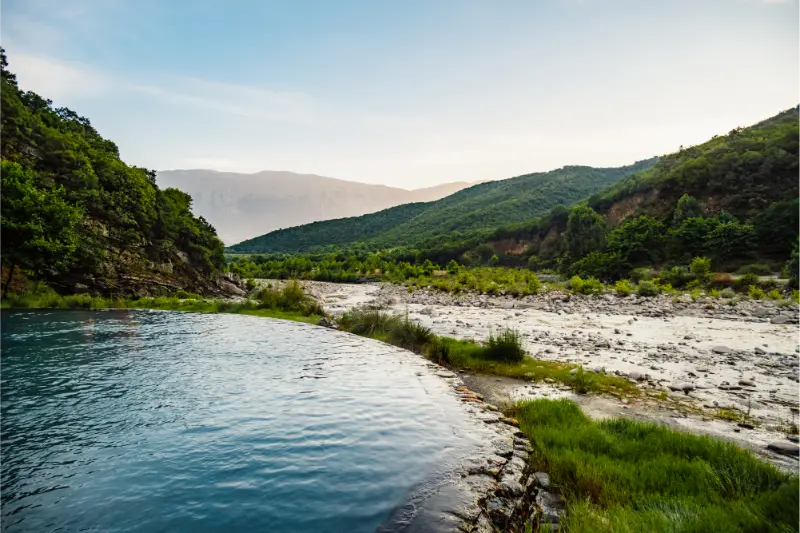
May–June and September–October are my favorite all-round periods for Përmet. The Vjosa Valley is green, temperatures suit walking and canyon exploration, and Bënja can be enjoyed without the strongest midsummer heat.
The right month depends on the reason you are coming. Beach destinations, hill towns, thermal landscapes and inland cultural cities behave very differently even when they are only a few hours apart. I use the calendar as a planning framework, not as a promise of weather.
Always check a short-range forecast before the trip. A week of rain, wind, heat or an early cold spell can matter more than historical averages, especially for boat trips, mountain roads, canyon walking and exposed castle climbs.
Best time at a glance
| Season | Verdict | What it is best for |
|---|---|---|
| Spring | Very good to excellent | Spring transforms the Vjosa Valley. Water, wildflowers and green slopes make the landscape especially attractive, while hiking and thermal-bath days become easier as temperatures rise. River and canyon conditions can vary after rain, so activity operators should be asked about the exact week. |
| Summer | Good to peak season | Summer is excellent for a nature holiday but hot in exposed areas. Bënja and the river are popular, and rafting or outdoor activities are most attractive when conditions suit them. Start canyon walks early, carry water and avoid assuming the thermal pools feel refreshing at the hottest hour. |
| Autumn | Very good to excellent | September is excellent for outdoor activity and warm days, while October shifts toward food, hiking and slower travel. Përmet’s culinary identity is a major reason to visit in autumn, and the surrounding landscapes remain appealing after the summer rush. |
| Winter | Quiet / specialist | Winter is peaceful and can suit travelers interested in food, local life and thermal-water scenery, but outdoor activity choices narrow. Snow or poor weather in higher areas can affect mountain excursions even when the town itself is accessible. |
Month-by-month guide
| Month | Verdict | What to expect |
|---|---|---|
| January | Very quiet | Local life and food; mountain/outdoor options are limited by winter conditions. |
| February | Quiet | Good for a slow stay; keep nature plans flexible. |
| March | Early spring | Green landscapes begin returning; rain can affect river/canyon plans. |
| April | Very good | Strong for scenery, walking and thermal-bath visits. |
| May | Excellent | One of the best months for Bënja, hiking and the Vjosa Valley. |
| June | Excellent | Long days and strong outdoor conditions before peak heat. |
| July | Hot / active | Good for water-based activity; avoid exposed midday hiking. |
| August | Hot / active | Popular nature season; early starts improve canyon and thermal-bath days. |
| September | Excellent | Warm, easier and excellent for mixed outdoor/food travel. |
| October | Excellent | Autumn landscapes, food and comfortable walking. |
| November | Quiet | More rain and shorter days; good for local culture and food. |
| December | Very quiet | A slow winter trip rather than an adventure-sports period. |
Spring
Spring transforms the Vjosa Valley. Water, wildflowers and green slopes make the landscape especially attractive, while hiking and thermal-bath days become easier as temperatures rise. River and canyon conditions can vary after rain, so activity operators should be asked about the exact week.
Spring is also the season when flexibility pays. Accommodation is easier to change than in August, but some seasonal services may still be ramping up. If a specific beach venue, rafting departure, mountain guesthouse or boat operator is essential, confirm it directly rather than assuming that warm weather means full summer operation.
Summer
Summer is excellent for a nature holiday but hot in exposed areas. Bënja and the river are popular, and rafting or outdoor activities are most attractive when conditions suit them. Start canyon walks early, carry water and avoid assuming the thermal pools feel refreshing at the hottest hour.
In July and August I plan the daily rhythm around heat and demand. Start exposed sightseeing early, use lunch as a proper break and return outdoors later. If driving, solve parking before arriving. If staying at the coast, choose accommodation whose actual beach access matches the holiday you want instead of selecting only by sea-view photos.
Autumn
September is excellent for outdoor activity and warm days, while October shifts toward food, hiking and slower travel. Përmet’s culinary identity is a major reason to visit in autumn, and the surrounding landscapes remain appealing after the summer rush.

September deserves special attention in Albania because it often keeps much of summer’s warmth while reducing some pressure on roads and accommodation. October is more variable but can be outstanding for walking, food, culture and photography.
Winter
Winter is peaceful and can suit travelers interested in food, local life and thermal-water scenery, but outdoor activity choices narrow. Snow or poor weather in higher areas can affect mountain excursions even when the town itself is accessible.
Winter is not automatically a bad time; it is a different product. Cities and historic towns remain meaningful, while beach resorts and high outdoor routes become more limited. I would choose winter deliberately for atmosphere, culture, food or nature, not because a hotel price is simply lower.
Best time for the main experiences
The destination is about nature: Bënja Baths, Langarica Canyon, Vjosa, Hotova-Dangëll and villages such as Frashër. Pick the month according to the activity you care about most rather than one generic temperature chart.
Pick the activity that would disappoint you most if it were unavailable. If that is swimming, choose the coastal season. If it is a high walk, choose for trail conditions. If it is museums, food and architecture, shoulder or winter travel may be preferable to peak summer.
Crowds and prices
Peak demand affects more than room prices. It changes parking, restaurant reservations, beach space, road travel and how easy it is to improvise. Shoulder season can therefore feel substantially more relaxed even when accommodation savings are modest.
I avoid promising a fixed percentage saving because rates move with weekends, holidays, events and the individual property. Compare the exact dates you can travel and focus on location and cancellation conditions rather than a generic ‘cheap month’.
Best time for families
Families usually do best in late spring and early autumn. Bënja and easy nature stops are simpler than ambitious canyon or mountain outings; always adapt water activities to current conditions and children’s experience.
For families I prioritize comfortable walking, simple access and predictable meal options over chasing the theoretical best weather. A slightly quieter month can be much easier than peak season when strollers, parking and midday heat are part of every decision.
Events and local atmosphere
Food traditions, gliko and local produce make Përmet interesting beyond summer. Special events can enhance a trip, but the valley’s nature and gastronomy are strong enough that I would not plan solely around an event date.
Event dates, festival programs and venue schedules can change annually. If an event is the main reason for travel, verify the current year’s official program before buying non-refundable transport or accommodation.
Where to stay by season
Compare current accommodation in Përmet on Booking.com.
Use Where to Stay in Përmet to choose the right base. In peak summer I give extra weight to parking or walking distance; in winter I care more about heating, restaurant access and a convenient central location.
Tours and activities
For current activities, guided tours and excursions, compare what is actually operating on your dates rather than assuming the summer catalog runs all year.
How long to stay
For a first visit, the season changes how much time feels useful. Hot summer weather can make a one-day sightseeing plan tiring, while spring/autumn encourage longer walks and day trips. In quiet winter periods, a compact cultural visit may be enough unless the destination is part of a wider road trip.
If you only have one day, use the 1 Day in Përmet itinerary. For the broader destination overview, read the Përmet Travel Guide.
Packing by season
- Spring: layers, compact rain protection and comfortable walking shoes.
- Summer: high-factor sun protection, water, breathable clothing and a light layer for evenings or air-conditioned interiors.
- Autumn: layers, rain protection and footwear suitable for wet stone or natural trails.
- Winter: warmer outerwear, waterproof shoes and a more conservative plan for exposed or higher areas.
What I would book first
In peak summer, book the accommodation feature that removes the destination’s biggest friction: parking, beach access, central walkability or a mountain transfer. In shoulder season, keep more flexibility. For a weather-sensitive excursion, I prefer refundable or late-booking options when possible.
Official destination information
For stable destination information and current tourism updates, see the official Albania tourism page for Përmet.
Useful seasonal planning guides
- Best Time to Visit Albania
- Albania in April
- Albania in May
- Albania in June
- Albania in September
- Albania in October
Frequently asked questions
What is the best month to visit Përmet?
May–June and September–October are my favorite all-round periods for Përmet. The Vjosa Valley is green, temperatures suit walking and canyon exploration, and Bënja can be enjoyed without the strongest midsummer heat.

Is Përmet worth visiting in summer?
Yes, but the best daily schedule depends on heat, crowds and the type of activities you want. Early starts and well-located accommodation make a major difference.
Is Përmet worth visiting in winter?
Winter is peaceful and can suit travelers interested in food, local life and thermal-water scenery, but outdoor activity choices narrow. Snow or poor weather in higher areas can affect mountain excursions even when the town itself is accessible.
Is shoulder season a good idea?
Usually yes. Spring and autumn often combine easier roads, better walking conditions and less pressure on accommodation, but seasonal beach/boat services should be checked.
When should I book accommodation?
Earlier for July–August, major events and small destinations with limited inventory; more flexibly in quieter months.
Final recommendation
May–June and September–October are my favorite all-round periods for Përmet. The Vjosa Valley is green, temperatures suit walking and canyon exploration, and Bënja can be enjoyed without the strongest midsummer heat. Choose peak season when the destination’s seasonal experience is the main reason for the trip; choose shoulder season when comfort, flexibility and easier logistics matter more. Whatever month you choose, adjust the itinerary to the actual forecast rather than forcing a fixed plan.
Leave a Reply