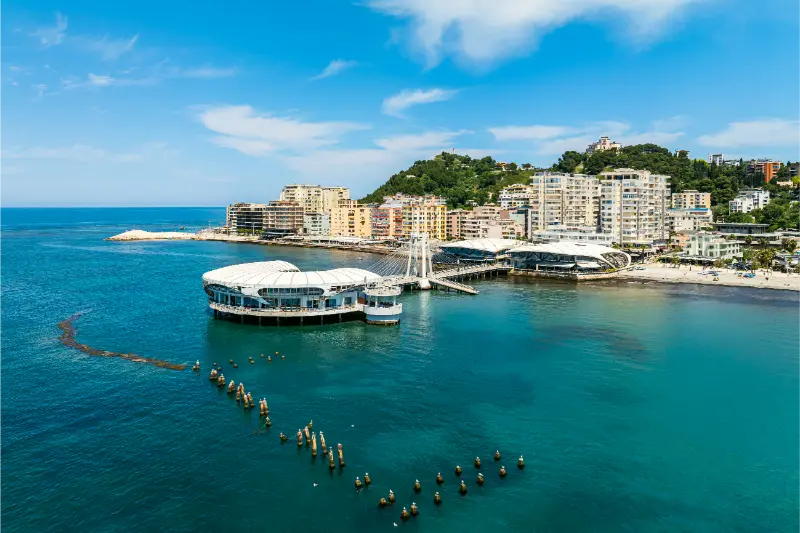
The Bari to Durrës ferry is one of the most useful ways to reach Albania if you are travelling from southern or central Italy, especially when you want to bring a car, motorbike or campervan. The crossing is normally an overnight journey, which means you can leave Italy in the evening, sleep on board and start your Albanian road trip the next morning. I like this route most when the vehicle is part of the trip rather than simply a way to get from A to B.
This guide focuses on the decisions that actually matter: which type of ticket to book, how early to arrive, whether a cabin is worth the money, what documents to keep accessible and how to handle the first hour after disembarkation. For a broader comparison of sea connections, read my ferries to Albania guide as well.
Which companies operate between Bari and Durrës?
The exact sailing pattern changes with season and operational schedules. In 2026, both Adria Ferries and Ventouris publish Bari–Durrës services. I check the operator website for my exact date rather than relying on a third-party timetable copied months earlier. Adria Ferries and Ventouris Ferries publish current route information, while peak-summer capacity can change quickly.
Do not choose purely on the lowest headline fare. Compare the final price after the vehicle, cabin or seat category, port fees and any seasonal supplements are included. Departure time, arrival time and the type of accommodation on board can make a larger difference to your first day in Albania than a small saving.
How long does the crossing take?
Bari–Durrës is typically planned as an overnight crossing. The actual duration depends on the vessel, weather, port operations and the sailing selected. I treat the published arrival time as a planning estimate rather than a guaranteed moment when I will already be driving out of the port. Disembarkation, passport control and vehicle queues add time.
If you have a hotel, tour or long drive booked for the arrival morning, leave a generous buffer. I would not schedule a non-refundable activity immediately after the ferry. A relaxed breakfast in Durrës is a better first commitment than a timed mountain excursion.

Deck ticket, reclining seat or cabin?
For an overnight sailing, the main choice is comfort. A deck ticket is the cheapest option but gives you the least control over where you rest. Reclining seats are more predictable, while a private cabin gives you a bed, a door and usually the best chance of arriving functional. Families, older travellers and anyone driving a long distance after arrival generally get more value from a cabin than backpackers on a tight budget.
If I am driving after Durrës, I prefer a cabin whenever the price is reasonable. Sleep matters on Albanian roads. The saving from a deck place can disappear very quickly if you arrive exhausted and then need to stop for several hours before continuing.
Travelling with a car
Vehicle booking details need to match the vehicle you actually bring. Enter the correct length and height where requested, especially for roof boxes, vans, campers or vehicles carrying bicycles. At check-in, keep the registration document, driver’s licence, insurance papers and booking confirmation easy to reach rather than buried in luggage.
Before the trip, read the Albania car-rental guide if you are collecting a car after arrival instead of bringing your own. If you are driving your own vehicle, also review Albania’s driving rules so the first hour outside the port does not become your first introduction to local road law.
Check-in at Bari port
Vehicle passengers should plan to arrive well before departure because the process is not the same as walking onto a train. You may need to collect or validate boarding documents, queue for port access, pass checks and then wait in the vehicle marshalling area. Summer weekends and holiday periods deserve extra margin.
Keep passports or national identity documents for every passenger in the cabin of the car, not inside a suitcase you cannot reach. I also save the booking confirmation offline on my phone and keep a screenshot of the operator’s port instructions.
What happens to your car during the crossing?
Once the vehicle is parked on the car deck, access may be restricted for much of the voyage. I take everything I will need overnight before leaving the car: documents, medicines, chargers, warm layer, toiletries, water, children’s essentials and valuables. Never assume you can simply go back down to retrieve something after departure.
Switch off alarms if the operator requests it, apply the handbrake and follow crew instructions. Photographing the deck number or nearby marker can help you find the vehicle quickly when disembarkation begins.
What to pack in your overnight bag
- Passport or accepted travel document and ferry confirmation
- Medicines and any medical essentials
- Phone charger and power bank
- Water and a small snack
- Warm layer because indoor areas can feel cool
- Earplugs and sleep mask for light sleepers
- Toiletries and a change of clothes
- Children’s comfort items if travelling as a family
I keep the overnight bag deliberately small. The more bags you carry through stairs and corridors, the more stressful embarkation becomes. A soft backpack is usually easier than a rigid suitcase for one night.
Food, Wi-Fi and life on board
Facilities vary by vessel. Ferries on this route normally have basic food and drink options, but opening hours and choice can be limited compared with a city restaurant. I eat before boarding if the timing suits, then treat anything on board as a convenience rather than the highlight of the trip.
Mobile data may disappear once the ship is away from shore. Maritime roaming can also be expensive depending on your phone plan, so I switch off data roaming if I am unsure. Download maps, hotel details and important messages before departure.
Seasickness and weather
The Adriatic can be calm, but conditions change. If you know you are prone to motion sickness, choose a cabin location according to the vessel layout, avoid a very heavy meal and discuss suitable medication with a pharmacist or doctor before travel. Follow the crew’s advice if outside decks are restricted.
Strong weather can affect schedules. That is another reason I avoid planning a tight connection immediately after arrival. The ferry is part of the journey, not a guaranteed overnight hotel that always opens its doors at the exact published minute.
Arriving in Durrës
Durrës is a working passenger and freight port, so the first view of Albania is practical rather than scenic. Follow lane signs, border-control instructions and port staff. Do not stop inside operational areas to reorganise luggage or set navigation. I wait until I am outside the controlled zone before making the next plan.
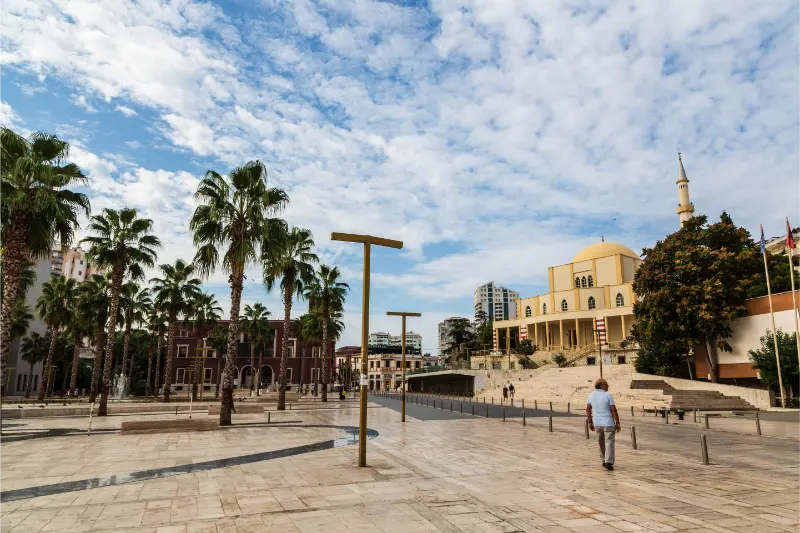
If you are staying locally, compare hotels and apartments in Durrës. The city is worth at least a short stop for the Roman amphitheatre, seafront and an easy first meal. My Durrës travel guide explains what to see if you want to turn the port arrival into part of the holiday.

Driving onward from Durrës
Tirana is the most obvious next destination, while Berat, Shkodër and the Riviera require longer drives. I avoid trying to cross half the country immediately after an overnight ferry unless I slept well and the schedule is comfortable. Albania looks compact on a map, but traffic, road works and slower secondary roads can stretch a day.
For a southbound road trip, an overnight in Durrës or Tirana can make the journey more enjoyable. If your priority is the Ionian coast, read the Albanian Riviera road-trip guide before deciding how far to drive on day one.
Travelling as a foot passenger
The route also works without a vehicle. Pack light, confirm how you will reach Bari port, and have a plan for leaving Durrës port after arrival. Taxis are the simplest option with luggage; for onward public transport, do not assume every intercity bus departs from the immediate ferry terminal.
If you are exploring the country without driving, Albania without a car and the intercity bus guide are useful companions.
Best time to book
July, August, major holiday weekends and dates when many families travel between Italy and Albania are the periods when I book earliest, particularly with a car or cabin. Outside peak season, there may be more flexibility, but fewer sailings can also mean that one cancelled or inconvenient departure affects the itinerary more.
Book the vehicle category correctly from the beginning. Changing dimensions or adding a trailer close to departure can be harder than adjusting a simple passenger ticket.
Tours and experiences after arrival
Once you are settled, Durrës can be used as a base for Tirana, Krujë, Berat or coastal days. I compare organised experiences only after I know how much energy I will have after the crossing.
Frequently asked questions
Is a cabin worth it on the Bari to Durrës ferry?
For overnight travel, I think a cabin is especially worthwhile for families, couples who value sleep and drivers continuing the next day. Budget travellers can save with a seat or deck option, but comfort is the trade-off.
Can I take my car to Albania from Bari?
Yes, car transport is one of the main advantages of this route. Add the vehicle during booking and carry the registration, insurance and driving documents required for Albania.
Should I stay in Durrës after arriving?
It is not compulsory, but it can be a smart first night if the ferry arrives later than expected or you want an easy start. Durrës is also a real destination rather than only a port.
Do ferry times change?
Yes. Seasonal timetables, vessel assignments and operational changes are normal. Recheck the operator website and your booking messages shortly before departure.
Final planning advice
The Bari–Durrës ferry works best when you treat it as part of the road trip. Book the level of comfort you need, keep documents and overnight essentials out of the car deck, arrive early and leave room in the first Albanian morning. That small amount of planning can turn a potentially tiring transfer into one of the easiest ways to begin a trip around Albania.
Leave a Reply