
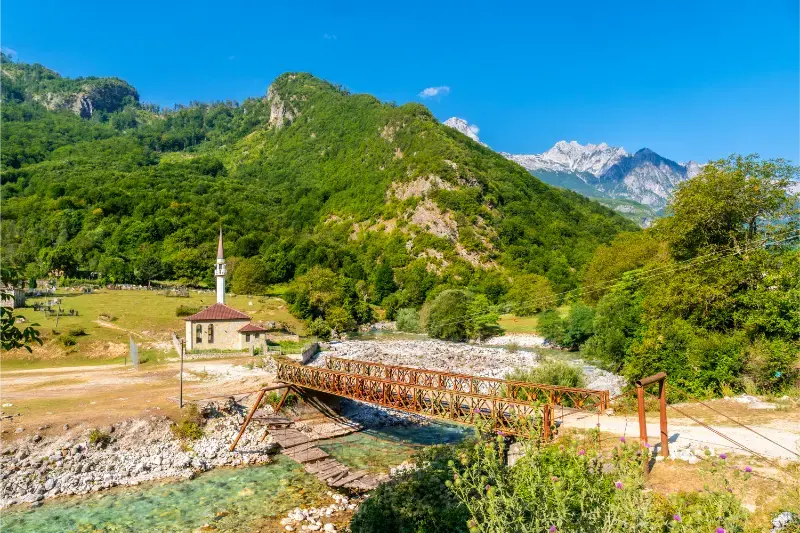
The Blue Eye of Theth is one of the Albanian Alps’ most popular short hiking objectives, but it is important not to confuse it with the famous Blue Eye spring near Saranda. The northern Blue Eye lies in the Theth/Ndërlysaj area and is reached on foot through a mountain landscape of river, rock and forest. The official Albanian tourism itinerary for the Alps describes it as a deep-blue spring and includes it among the natural highlights around Theth. The walk is accessible to many active travellers, yet heat, uneven stone and the final climb mean it deserves proper shoes, water and enough time.
The official Albanian tourism portal is the main public reference I used for the core place facts in this guide. Access, opening arrangements, roads, weather and local services can change, so I still confirm practical details shortly before travelling.
Why add this to your Albania itinerary?
This hike is ideal when you want a full nature experience without committing to the much longer Theth–Valbona crossing. It also pairs well with Ndërlysaj and the river landscape, giving you a different side of the valley from the church, tower and Grunas Waterfall. Because the water colour is the visual reward, good daylight matters more than simply arriving as early as possible.
For a wider route, connect this guide with Theth and Albanian Alps travel guide, Grunas Waterfall guide, Theth to Valbona hike guide. These links are especially useful for deciding whether this stop deserves a half-day, a full day or an overnight rather than adding it simply because it appears close on the map.
How to get there and plan the access
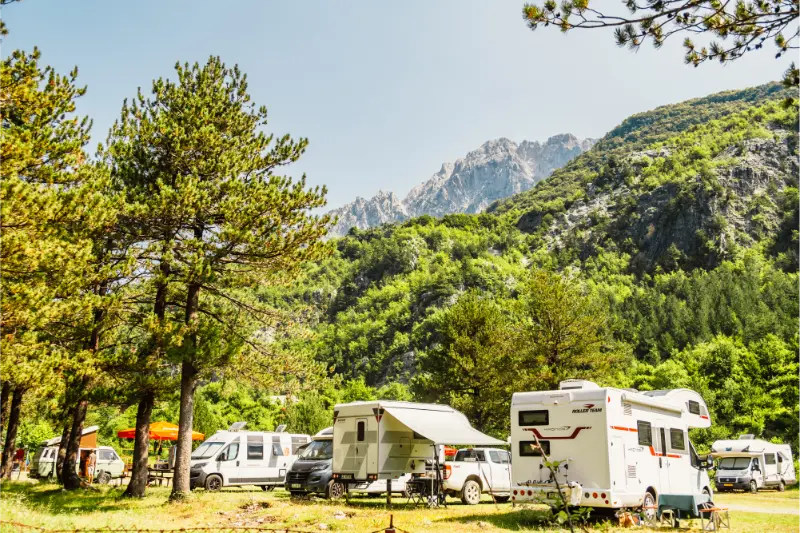
Most visitors start from Theth and reach Ndërlysaj by vehicle, taxi or a longer walk before continuing on foot. The exact road and transfer arrangement should be confirmed with your guesthouse, especially if you do not have a car. Do not build your return around finding an unbooked taxi late in the afternoon. If walking from farther away, add that distance honestly to the day rather than treating the Blue Eye segment as the whole route.
For this alpine day hike, I would leave more time than a navigation app suggests. Albania’s secondary roads, mountain weather, parking, seasonal traffic and short local stops can turn a simple transfer into a longer but more interesting journey. Download offline maps, carry some cash in lek and save the name of your destination in Albanian. If the final approach is uncertain, a current message from a guesthouse or local operator is more useful than an old travel-blog driving time.
What to see and do
Begin from Nderlysa with enough time
The approach landscape is part of the outing. Allow time around the river and rock formations rather than rushing directly to the spring. Starting before the hottest part of the day makes the climb more comfortable and leaves margin for pauses.
Wear shoes for polished rock and loose trail
The route can include uneven stone, roots and steep sections. Trainers with grip or light hiking shoes are far better than sandals. After rain, surfaces can become slippery and the river environment demands more caution.
Expect cold water, not a warm swimming hole
The spring is alpine and the water can be extremely cold. Some visitors enter briefly, but cold-water shock is real. Do not jump blindly, do not pressure children or companions to swim, and remember that enjoying the place from the edge is completely valid.
Manage crowds by timing, not by risky shortcuts
In peak summer the Blue Eye can be busy. Leaving earlier or later helps, but do not leave the established route simply to reach a private viewpoint. The terrain is more important than getting a people-free photograph.
Carry your own water and snacks
Small seasonal facilities may exist along popular routes, but you should not rely on them. A simple packed lunch, water and a small rubbish bag give you independence and reduce pressure on the site.
Return before fatigue changes your footing
The way back can feel easier, which is when people stop paying attention. Keep enough energy and daylight for the descent and transfer back to Theth. If thunderstorms build or someone in the group is struggling, turn around early.
A realistic plan for the day
A good day begins with breakfast in Theth, transfer to Ndërlysaj, a steady hike to the Blue Eye, a long break at the spring and a careful return. Back in Theth, keep the evening simple. If you also want Grunas Waterfall, place it on a different half-day unless your fitness, daylight and logistics make a combined plan genuinely comfortable.
The key is to protect the main experience from unnecessary transfers. I would rather spend an extra hour walking, eating or talking with a host than add a distant attraction that forces you to watch the clock. Albania looks compact, but valleys, winding roads and rural access make travel time more significant than the straight-line distance suggests.
Best time to visit
The main hiking season is generally late spring through early autumn, depending on snow, rain and road access into Theth. July and August are busiest and can be hot on exposed sections. June and September often give a better balance of temperature and visitor numbers. After heavy rain, ask locally about trail and river conditions before starting.
Check the short-range forecast, not only monthly climate averages. Wind, recent rain, river level, cloud, heat and snow can matter more than the season printed on a calendar. In shoulder season, confirm that accommodation, restaurants and activity providers are operating before building the whole day around them.
Where to stay
Theth is the easiest base for most first-time visitors because it combines accommodation, food and transport options with access to the surrounding region. If a rural guesthouse is available closer to your objective, one night can make the experience slower and more atmospheric. Compare accommodation around Theth on Booking.com, then read recent reviews for road access, parking, heating or air conditioning and host communication rather than choosing on rating alone.
Food, water and money
Carry water and a small snack even when the day looks short, because rural cafés and shops may not be exactly where you expect them. Keep some Albanian lek for small restaurants, taxis, parking and guesthouses. In village areas, ask what has been prepared that day; local meals often work better around seasonal ingredients than around a long fixed menu. If you are vegetarian, vegan or have allergies, explain the restriction clearly before food is cooked.
Photography without damaging the experience
Early and late light usually produces better photographs and a calmer visit. Ask before photographing people, religious interiors or private homes. In natural areas, stay on durable ground and do not create a new path to reach a cleaner angle. A wider frame that includes the landscape, trail or village often tells more of the story than a close-up taken from an unsafe position.
Families, older travellers and accessibility
The practical difficulty of this alpine day hike depends less on the headline distance and more on heat, steps, uneven ground, toilet access and transport. Families should build in extra breaks and avoid turning a short outing into a race. Older travellers may find a taxi or private driver worthwhile. Step-free access is inconsistent in rural and historic Albania, so contact accommodation or a local guide directly if mobility requirements are essential.
Safety and responsible travel
Tell someone your plan when heading into the mountains or a quiet natural area, keep enough battery for navigation and do not depend on mobile signal everywhere. Turn back when weather, water, road condition or fatigue makes the original plan less sensible. Leave no rubbish, avoid disturbing wildlife and livestock, respect protected-area rules and never remove stones, plants or archaeological material. Responsible travel here is mostly simple: use existing paths, buy locally and leave the place looking unchanged.
How to combine it with a wider Albania trip
Use this article together with Theth and Albanian Alps travel guide, Grunas Waterfall guide, Theth to Valbona hike guide. I prefer regional clusters: two or three nights in one area, with one demanding day and one lighter day, rather than changing hotels every evening. That approach reduces driving and creates room for the small experiences—coffee, a viewpoint, a village meal or an unexpected conversation—that often become the strongest memories of Albania.

Practical checklist
- Transport: confirm the final road, trailhead or pickup point.
- Weather: check recent rain, heat, wind and mountain conditions.
- Navigation: download offline maps and carry a charged power bank.
- Cash: keep some lek for rural businesses and local transport.
- Footwear: choose grip and comfort over city style.
- Water: carry your own reserve rather than assuming a source is available.
- Timing: leave daylight and a margin for a slower return.
- Respect: follow local, religious, private-property and protected-area rules.
Final thoughts
The best reason to include this alpine day hike is not to collect another pin on a map. It is to understand a different layer of Albania at a pace that suits the place. Confirm the few details that can change, keep the schedule flexible and give the main experience enough time. That usually produces a better trip than trying to fit one more famous stop into an already full day.
Leave a Reply