
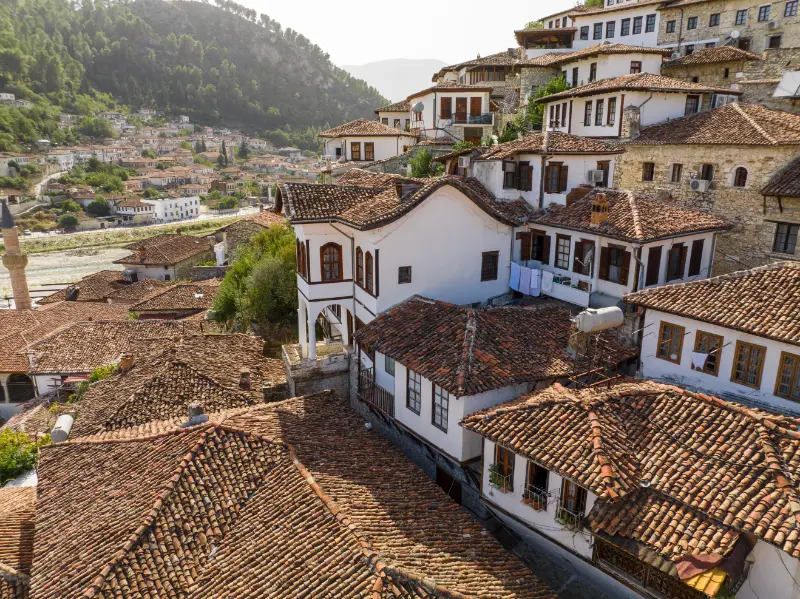
Berat rewards travelers who slow down. Its UNESCO value is tied not only to monuments but to a living historic town where houses, lanes, religious buildings and neighborhoods remain part of daily life. Sustainable travel here means reducing vehicle use in the old quarters, supporting residents and craftspeople, respecting fragile architecture and treating the Osum landscape as more than a backdrop for quick adventure tourism.
This guide is about practical choices rather than perfection. You do not need a zero-carbon holiday to travel more responsibly. The biggest gains usually come from staying longer in each base, reducing unnecessary vehicle trips, respecting protected areas, carrying out waste, using water thoughtfully and directing more of your budget toward local accommodation, food, guides and services. For the country-wide context, start with Sustainable Travel in Albania and then use the Berat travel guide for the normal logistics.
What sustainable travel really means in Berat
The old town is vulnerable to heavy traffic, inappropriate parking, noise and the gradual conversion of residential areas into purely tourist spaces. On busy days, groups can crowd narrow lanes and viewpoints. Outside town, canyon and river trips add transport and waste pressure if poorly managed.
It also means avoiding “green” claims that are impossible to verify. A hotel can ask guests to reuse towels and still waste energy elsewhere; a tour can call itself eco-friendly while using oversized vehicles for tiny groups. Look for specific behavior: refill options, waste separation where local systems support it, local employment, small groups, legal protected-area access, realistic wildlife rules and transparent transport arrangements.
Choose the right base and stay longer
Changing hotels every night increases laundry, cleaning, transfers and the temptation to use private transport simply because you are carrying luggage. In Berat, two or three nights usually create a better rhythm than a rushed day trip. You see the destination early and late, spend money in more than one local business and can cancel one car-based excursion if the weather or crowds make it a poor choice.
Location matters more than a hotel’s sustainability slogan. A modest guesthouse that lets you walk to meals and sights can create a lighter trip than a remote resort requiring multiple taxi rides every day. Compare accommodation in Berat on Booking.com, then check the map, recent guest reviews, heating/air-conditioning practices and whether the property can explain its refill, laundry and transport options.
Getting around with fewer unnecessary car trips
Stay near Mangalem, Gorica or the lower center if you want to walk most places. Use the local bus or a taxi for the castle if the climb is difficult rather than bringing a car into narrow heritage streets. If arriving by bus, there is little need to rent a vehicle just to explore the city itself.
Use Berat Without a Car for the most relevant local transport or nature-planning detail. Walking and public transport are not always possible for every traveler, and sustainability should not become ableism. If mobility, age, heat, luggage or safety makes a taxi the sensible choice, use one. The goal is to eliminate unnecessary driving, not to turn a holiday into a physical endurance test.
Water: save it without making unsafe assumptions
Carry water in summer but refill at your guesthouse when they advise it is appropriate. Old buildings can have different plumbing arrangements, so ask rather than assume. Avoid buying multiple tiny bottles each day when a larger bottle or verified refill solves the same problem.
- Reuse towels for more than one day unless they genuinely need washing.
- Take normal-length showers rather than treating unlimited hot water as part of the room price.
- Report leaking taps or toilets instead of ignoring them.
- Do not use soap, shampoo or detergent in rivers, lakes, springs or the sea.
- Ask your accommodation about local tap-water practice before refilling rather than relying on a generic rule for all Albania.
Waste and plastic: the simple habits that matter
Waste systems differ by municipality and village, so the most reliable strategy is to create less waste in the first place. Carry a reusable bottle where refilling is appropriate, a small tote bag, and a pocket-sized bag for rubbish on hikes or beaches. If a public bin is overflowing, do not balance another cup on top; carry it to the next suitable bin or back to your accommodation.
Recycling availability can be inconsistent. Do not “wish-cycle” by leaving carefully separated rubbish beside a random street bin if there is no collection system for it. Ask the hotel or host what is actually recycled locally. Reduction and reuse are more dependable than assuming every labeled item will reach a recycling facility.
Protected areas, trails and wildlife
For Osum Canyon and surrounding countryside, choose operators that explain safety, access and waste practices rather than selling only an adrenaline image. Water levels and conditions change seasonally. Do not leave picnic waste, carve names into rock or climb barriers for a “better” viewpoint.
The Albanian National Agency of Protected Areas emphasizes conservation, official visitor infrastructure and sustainable use in protected landscapes. That means a marked road or trail is not an inconvenience to bypass. Sensitive habitats often look robust until thousands of visitors copy the same shortcut. Follow current signs and ranger/local instructions even when an older blog post says something different.
- Do not pick flowers, collect stones, shells or archaeological fragments in protected or heritage areas.
- Keep dogs under control and follow local rules; livestock-guardian dogs may also be present in rural areas.
- Do not feed wildlife or street animals at nature sites simply to get a photograph.
- Keep music low on trails and beaches where other visitors are seeking nature and residents live nearby.
- Use established toilets where available; never leave toilet paper beside paths.
Support local businesses without romanticizing them
Historic-house guesthouses, family restaurants, wineries and craft shops keep more tourism income in the region. Ask before photographing artisans at close range and pay for products you genuinely value rather than treating workshops as free photo sets. Local wine and food experiences are more sustainable when they are small-scale and respectful of producers’ time.
“Local” is not automatically sustainable, just as “international” is not automatically harmful. A responsible choice balances distance, working conditions, quality and real community benefit. Look for businesses that employ local staff, explain what they sell honestly and respect protected-area or heritage rules. Pay the stated price when it is fair; aggressive bargaining over a few euros has a different effect on a family guesthouse than on a multinational platform.
Food: reduce waste and eat with the season
Albanian meals can be generous. Order progressively if you are unsure about portion size—one salad, one starter and a main can always be supplemented. Food waste is not more authentic because the table looks abundant. Ask what vegetables, fruit, fish, cheese or meat are genuinely seasonal and local rather than assuming every menu item comes from nearby.
At lake and coastal destinations, responsible seafood choices matter. Ask what the fish is and where it came from, especially when a species is associated with a sensitive ecosystem. You do not need to interrogate the waiter; a simple question signals that sourcing matters. Vegetarian meals based on beans, vegetables, byrek, salads and seasonal produce can also reduce the resource intensity of some meals while fitting local cuisine.
Energy and accommodation
Use air-conditioning and heating for comfort, but close windows and balcony doors while the system is running. Turn it down or off when you leave for several hours unless the property specifically asks otherwise for humidity or technical reasons. In winter, old stone houses may take real energy to heat; choose a smaller room or well-insulated modern property if that suits you better than expecting a centuries-old building to behave like a new apartment.
Daily linen changes are rarely necessary on a multi-night stay. If the hotel automatically changes towels despite a reuse sign, tell reception that you are happy to keep them. Small, polite signals are more useful than criticizing staff for a system they may not control.
When a guided tour is the more responsible choice
For protected areas, complex trailheads, river activities and remote villages, a good guide can reduce mistakes: they know legal access, current conditions, private-property boundaries and where visitors can safely stop. Shared group transport can also replace several cars. Compare group size, route, pickup geography and operator behavior—not just star ratings.
Responsible photography and social media
Do not geotag fragile unofficial swimming holes, archaeological fragments or wildlife locations simply because the place looks “secret.” A social post can send hundreds of visitors to a site with no parking, toilets or waste collection. Photograph people with consent, especially children, shepherds, artisans and worshippers. A village resident is not part of the scenery just because tourism is common there.
If a viewpoint requires crossing a fence, standing on a roof, entering a field or trampling vegetation, skip it. The image is not worth transferring your impact to a resident, farmer or protected habitat.
Best time to visit for lower impact
Spring and autumn reduce heat and crowd pressure. Summer is workable with early starts and a midday pause. Winter offers quiet streets but rain can make stone surfaces slippery and some rural experiences run less frequently.
Traveling outside the absolute peak can spread tourism income across more months and reduce crowd pressure, but do not assume every business wants visitors all winter. Seasonal operators may close to rest, repair or work elsewhere. Confirm accommodation and transport directly rather than expecting full August services in February.
A low-impact two-day plan
Day one: explore Mangalem and Gorica on foot, visit one museum or religious site, then cross the bridge again for dinner. Day two: take the castle slowly in the morning and choose one local experience—wine, cooking or a countryside excursion—rather than stacking three vehicle-based tours.
The point is not to calculate a perfect carbon score. It is to reduce transfers, spend more time in fewer places and leave enough flexibility to respond to weather, crowding or local advice. A two-day itinerary with one meaningful excursion usually creates less pressure—and a better trip—than a checklist of eight sites reached by car.
How to connect Berat with the next stop responsibly
If continuing to Gjirokastër, consider a bus connection or combine the two cities in one car route rather than returning to Tirana between them. For Osum Canyon, join a shared excursion when practical.
For another nearby planning angle, see Osum Canyon Guide. Build a route that moves geographically forward when possible. Backtracking costs time and fuel and often happens because travelers book accommodation first and look at the map later.
Official conservation context
For protected-area, heritage or sustainability context relevant to this destination, consult UNESCO World Heritage Centre – Berat and Gjirokastra. Management plans, visitor rules, access and restoration arrangements can change, so official information should take priority over an old itinerary when the two conflict.

Common responsible-travel mistakes
- Assuming a rental car is automatically necessary for every Albanian destination.
- Buying many small plastic bottles without asking about larger containers or verified refills.
- Leaving rubbish beside a full bin because “at least it is near the bin.”
- Using soap or shampoo in thermal pools, rivers, lakes or the sea.
- Driving onto beaches, riverbanks or mountain tracks because another vehicle has done it.
- Choosing wildlife or boat experiences only by price and social-media photos.
- Entering private homes, gardens, fields or religious spaces for photography without permission.
- Trying to visit too many places in one day and creating unnecessary transfers.
- Confusing “local” with automatically ethical or environmentally sound.
- Expecting rural guesthouses to provide unlimited city-hotel utilities at bargain prices.
FAQ
Is Berat easy to visit without a car?
It depends on the destination and your day trips. The core can usually be explored with much less driving than visitors expect, while remote nature sites may require a shared transfer, taxi, bus or rental car. Use the linked local transport guides to decide route by route.
Should I avoid bottled water to be sustainable?
No. Health comes first. Ask your accommodation about local tap-water practice and safe refill options. If bottled water is appropriate, larger containers shared over several refills generally create less packaging than repeatedly buying small bottles.
Is wild camping a sustainable option?
Not automatically. Land ownership, municipal rules and protected-area regulations matter. In protected areas, camping may be restricted to designated zones. Use official campsites or clearly permitted areas rather than assuming that remote equals legal.
How can I support local communities most effectively?
Stay overnight, eat locally, use licensed or established local guides, buy products you genuinely want and pay fair prices. The highest-value support is normal commerce that respects the seller’s time and dignity, not staged charity.
Are organized tours less sustainable than independent travel?
Not necessarily. A shared minibus replacing several cars, or a guide keeping visitors on legal trails, can reduce impact. Evaluate the actual group size, route, vehicle, waste practices and local employment rather than judging only by whether the experience is a “tour.”
Final advice
The most sustainable version of Berat is usually also the more enjoyable version: fewer transfers, longer stays, more walking, deeper local meals, one good nature experience instead of three rushed ones, and enough flexibility to respect weather and local limits. Responsible travel is not about being a perfect visitor. It is about noticing where your choices create pressure and choosing the simpler, lower-impact option when it is realistic.
Leave a Reply