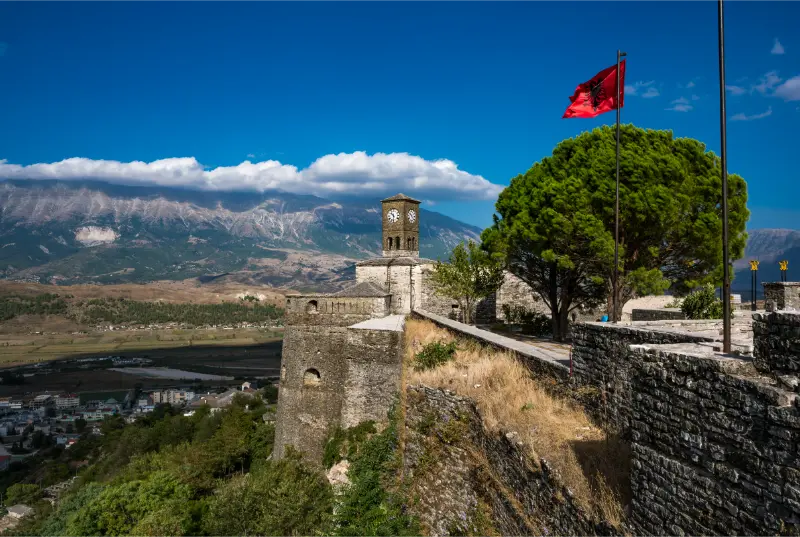
The Weapons Museum gives Gjirokastër Castle a more specific twentieth-century story. Instead of seeing the fortress only as architecture and a viewpoint, the museum places visitors inside former prison spaces filled with military objects connected with independence, occupation, war and the political narratives of the communist period.
Albania’s official tourism portal is the principal reference used for the core historical, archaeological or cultural facts in this guide. Opening hours, access rules, road conditions, worship schedules, restoration work and entrance arrangements can change, so verify practical details shortly before your visit.
Why this place deserves its own guide
Weapons Museum Gjirokaster is more useful when treated as a destination with its own story rather than a line on a checklist. The attraction helps explain a specific layer of Albania—medieval defense, archaeology, religious history, education, minority heritage, landscape or twentieth-century memory—and that context changes what you notice once you arrive.
Before concentrating on details, spend a few minutes reading the setting. Look at the slope, street pattern, neighboring buildings, defensive lines, lake, square or surrounding landscape. In Albania, monuments often make sense through their relationship with roads, trade routes, religious communities and geography. A small ruin can become much more meaningful once you understand why it stands exactly where it does.
Historical and cultural context: the facts that matter
The Weapons Museum opened in 1971 inside a section of the former prison within Gjirokastër Castle.
Its displays cover Albanian military history from the period around independence in 1912 through World War II, with a strong focus on the National Liberation War.
The collection includes weapons used by Albanian partisan units as well as equipment connected with Italian and German occupying forces.
One of the most distinctive spaces is the Artillery Gallery, a long corridor containing cannons and other heavy weapons displayed within the fortress.
The key is not to imagine the site as frozen in one period. Albanian monuments have frequently been rebuilt, adapted, abandoned, restored or reused. Museums have also changed interpretation as scholarship and public memory evolved. Read the visible remains as one stage in a longer sequence rather than as a perfect reconstruction of the past.
What to notice when you arrive
The way former prison architecture shapes the museum experience
Pause and look specifically at the way former prison architecture shapes the museum experience. Compare scale, materials, openings, decorative details and the way the feature relates to the rest of the site. Small differences in stonework, brick, plaster, timber, display design or landscape position often reveal more than a single wide photograph.
Differences between weapons from Albanian, Italian and German wartime contexts
Pause and look specifically at differences between weapons from Albanian, Italian and German wartime contexts. Compare scale, materials, openings, decorative details and the way the feature relates to the rest of the site. Small differences in stonework, brick, plaster, timber, display design or landscape position often reveal more than a single wide photograph.
The long artillery gallery and the scale of heavy objects inside the castle
Pause and look specifically at the long artillery gallery and the scale of heavy objects inside the castle. Compare scale, materials, openings, decorative details and the way the feature relates to the rest of the site. Small differences in stonework, brick, plaster, timber, display design or landscape position often reveal more than a single wide photograph.
How exhibition narratives reflect both military history and the politics of memory
Pause and look specifically at how exhibition narratives reflect both military history and the politics of memory. Compare scale, materials, openings, decorative details and the way the feature relates to the rest of the site. Small differences in stonework, brick, plaster, timber, display design or landscape position often reveal more than a single wide photograph.
How long to allow
For a compact museum or monument, plan around one hour as a starting point. Archaeological sites, castle interiors and places reached by boat or mountain roads need more. The goal is not to stretch a small attraction artificially, but to leave enough time to read interpretation, walk a second circuit after you understand the layout and connect the site with its surrounding district.
If the attraction is part of a larger castle or historic quarter, treat the visit as one element of a half day rather than an isolated stop. In Korçë, Berat, Gjirokastër and Saranda, the most satisfying itineraries usually combine one museum or archaeological site with a neighborhood walk, food stop and one contrasting landmark.
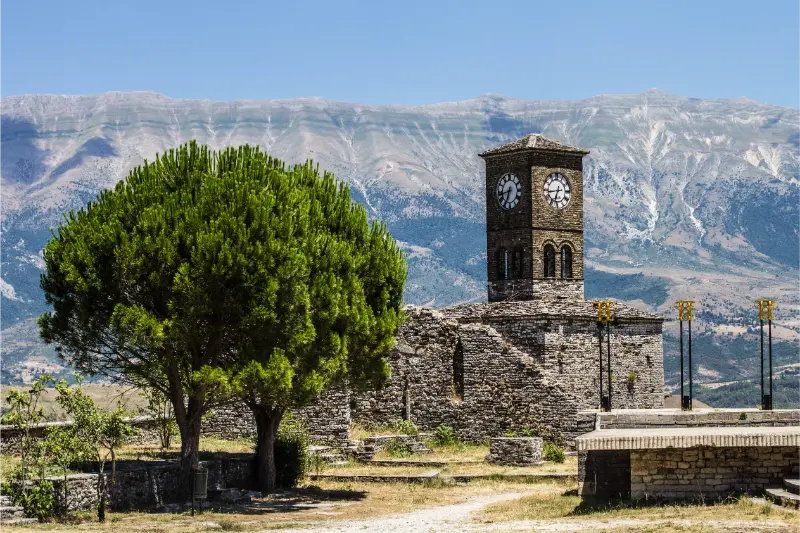
Best time of day and season
Spring and autumn are generally the easiest seasons for cultural exploration because walking temperatures are comfortable and daylight is still useful. In July and August, exposed castles and archaeological sites can become hot, so morning or late afternoon is more pleasant. Museums are useful during midday heat or poor weather, while lake and island excursions depend much more on wind and boat conditions.
Light matters for photography. Stone fortifications and archaeological relief are easier to read when the sun is lower, while museum objects may be under controlled lighting and photography restrictions. On Prespa Lake or high viewpoints, haze and wind can change quickly, so build flexibility into the day rather than tying the visit to one exact photo plan.
Practical access and walking advice
Historic Albania can be physically uneven. Cobbles, broken stone, exposed archaeological ground, steps and steep approaches are common. Wear shoes with grip, carry water in warm weather and avoid assuming that a short map distance means an easy walk. Where a road or trail is under reconstruction, local conditions can change faster than guidebooks.
For museums, check the latest opening information before making a special trip. Small institutions may have seasonal schedules, temporary closures or limited staffing. At active religious sites, services and worship take priority over sightseeing. For boat access such as Maligrad Island, confirm local operators and weather close to the day of travel.
How to combine it with nearby places
Related guide: Gjirokaster Castle. Combining places that explain different periods or landscapes usually creates a stronger itinerary than collecting several similar monuments in a row.
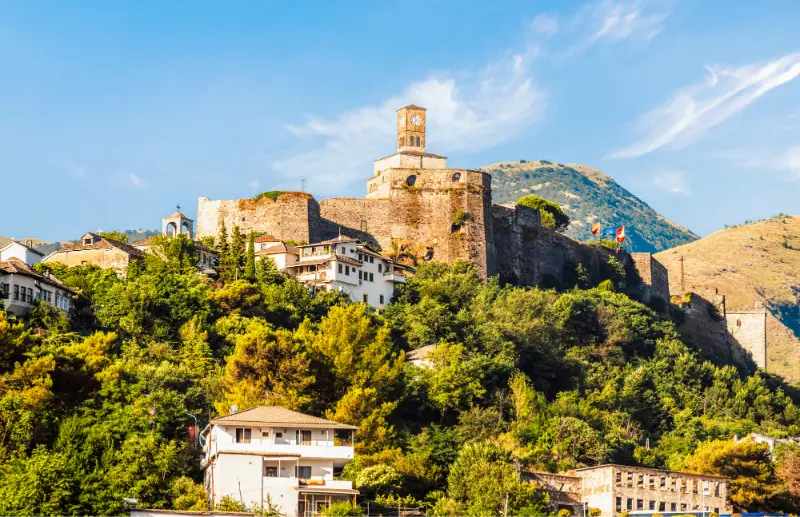
Related guide: Gjirokaster Cold War Tunnel. Combining places that explain different periods or landscapes usually creates a stronger itinerary than collecting several similar monuments in a row.
Related guide: Gjirokaster travel guide. Combining places that explain different periods or landscapes usually creates a stronger itinerary than collecting several similar monuments in a row.
A realistic half-day approach
Begin with the main attraction while your attention is fresh. Then walk or drive to one complementary place rather than trying to fit every nearby sight into the same window. Leave time for coffee or lunch and keep at least thirty minutes unplanned. That flexible time is useful for delays, unexpected closures, conversations or a viewpoint you did not know existed.
If you enjoy history, take a few notes about dates, communities and functions rather than photographing every label. If you travel with children, turn visible features into a simple search—arches, inscriptions, defensive openings, mosaic shapes, boats or objects in display cases. Senior travelers may prefer one substantial site followed by a long break rather than several back-to-back attractions.
Photography and responsible visiting
Photography is part of the pleasure of these places, but not every setting should be treated as a backdrop. Ask before photographing worshippers or private residents, obey museum restrictions and avoid climbing on archaeological walls for a better angle. Drone use can be restricted around cultural monuments, airports, protected areas and borders, so check current rules rather than assuming open space means permission.
At Jewish, Muslim, Christian or Bektashi heritage sites, avoid reducing living traditions to visual exoticism. At military and memorial museums, remember that the history represented may still be personal for families. Responsible tourism means leaving the site physically unchanged and describing its past without turning trauma or belief into entertainment.
Common mistakes to avoid
- Using old opening hours. Verify museums and interiors shortly before the visit.
- Rushing the context. A few minutes understanding the site plan can make the rest of the visit much clearer.
- Ignoring access conditions. Mountain roads, archaeology paths and boat trips can be affected by weather or works.
- Expecting monumental ruins everywhere. Some of Albania’s most important sites survive mainly as foundations, tombs, fragments or museum collections.
- Overloading the day. Two or three meaningful stops are usually better than a long list of rushed attractions.
- Forgetting local etiquette. Active religious sites and small communities deserve the same respect you would expect at home.
Where to stay
Choose accommodation according to the wider route, not just the attraction. Tirana works for Preza and the Bektashi center; Korçë is the logical base for its museums and Kamenica; Saranda for the synagogue; Pustec or Korçë for Prespa; Pogradec for Selca; and the historic cores of Berat and Gjirokastër for castle museums. Check parking, stairs and walking gradients in recent reviews.
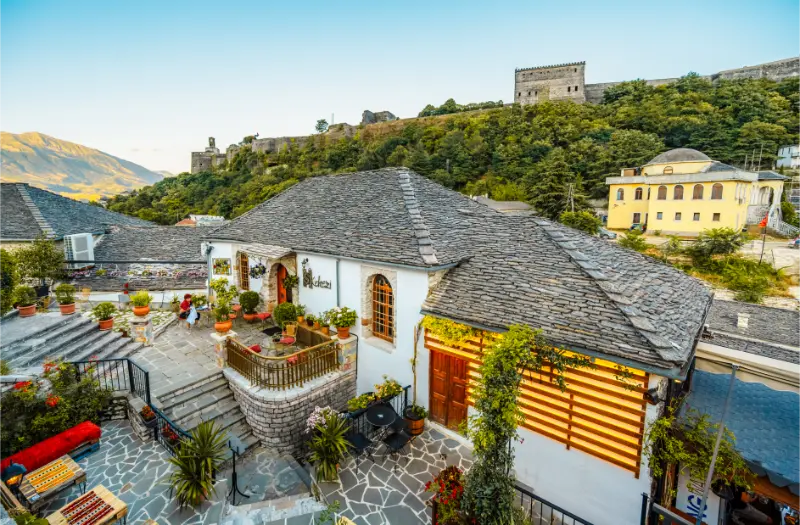
Compare accommodation options in Albania on Booking.com. Use the map view rather than price alone, especially in hilly historic towns where a short distance can involve a steep climb.
Frequently asked questions
Is this worth adding to a first trip to Albania?
Yes when it fits naturally into a destination you already plan to visit. These focused attractions add depth without requiring a completely separate itinerary.
Do I need a guide?
Not always. A knowledgeable guide adds value at complex archaeological and historical sites, but official interpretation and some preparation are enough for many independent visits.
Can I visit with children?
Usually yes. Keep museum visits selective, use visible details as a game and balance indoor history with an outdoor stop afterward.
Is photography allowed?
Outdoor photography is generally straightforward, but museums and active religious sites may have specific restrictions. Follow current signs and staff instructions.
How much time should I plan?
Allow about one hour for a compact museum or monument, and two to four hours when access, a castle, a boat trip or a surrounding archaeological landscape is part of the experience.
Final thoughts
Weapons Museum Gjirokaster adds something specific to an Albania itinerary: a clearer sense of how people lived, worshipped, learned, defended territory or remembered the past. Give the place enough time to become understandable, then connect it with the wider city or landscape rather than treating it as an isolated photo stop.
That approach is what makes small museums, fragmentary ruins and lesser-known heritage sites worthwhile. Albania’s strongest travel experiences often come from seeing connections between landscape, architecture, communities and history—not from simply counting how many attractions you visited.
Leave a Reply