
Vlorë’s most distinctive shopping is tied to the landscape around it: olive oil, local wine, food products from the coast and inland villages, and small cultural souvenirs connected with the city’s independence history. The city also has normal modern retail, but regional food is what makes a Vlorë purchase feel specific to place.
The goal of this guide is not to produce a list of shops that can close or change quickly. It is to show the areas and product categories that make sense, how to recognize a better purchase, and what is practical to carry through the rest of an Albania trip.
Where to shop
| Area | Best for |
|---|---|
| Historic center and Independence area | Best for cultural souvenirs and slow browsing |
| Lungomare | Best for convenient evening shopping |
| Olive-oil producers and specialty shops | Best regional purchase |
| Kanina/Dukat wine and regional producers | Best for wine and a producer story |
Historic center and Independence area
Best for cultural souvenirs and slow browsing. The old-town/Independence area is the natural place to combine history with small gift shops. Look for books, prints and locally themed objects rather than buying the same beach merchandise available all along the coast.
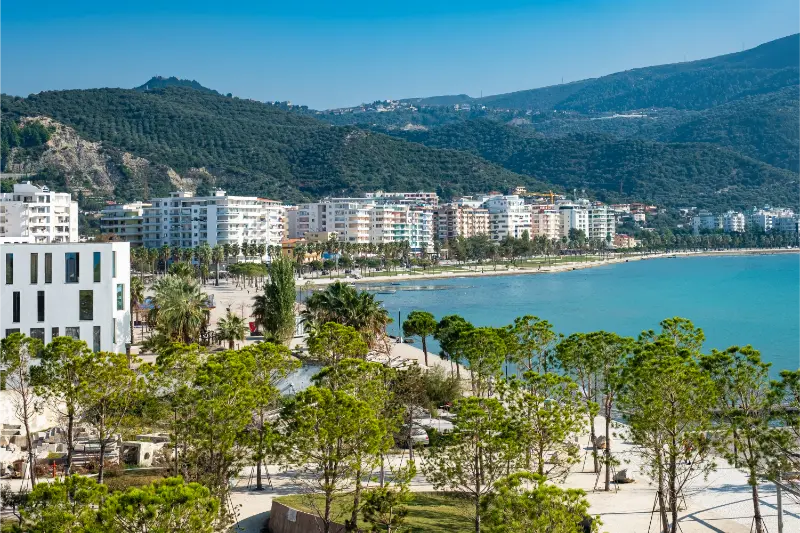
Lungomare
Best for convenient evening shopping. The waterfront has seasonal retail, beach goods and souvenir shops. It is easy but not necessarily where you find the strongest craft provenance. Use it for practical items and last-minute gifts.
Olive-oil producers and specialty shops
Best regional purchase. Official tourism material highlights olive oil production around Vlorë, especially the wider Dukat area. Buy from a producer or specialist who can identify the origin, harvest and bottle rather than choosing solely by packaging.
Kanina/Dukat wine and regional producers
Best for wine and a producer story. The tourism agency describes Kanina and Dukat as areas with artisanal wine production. A tasting or producer visit is a stronger shopping experience than carrying random bottles from the first minimarket.
What to buy
- extra-virgin olive oil with clear producer information
- local wine from Kanina/Dukat or another named producer
- mountain herbs and tea
- packaged Albanian sweets and preserves
- books or objects connected with Vlore independence history
- small contemporary coastal crafts
Food and drink to take home
Vlorë is a place to eat mussels and seafood, but to take home olive oil, wine, herbs and shelf-stable products. Separate “what tastes best here” from “what travels best.”

How to judge authenticity
For oil and wine, labels, harvest/vintage information and named producers are more meaningful than souvenir packaging. For crafts, ask about material and origin. The phrase “local product” should be something a seller can explain.
How to tell handmade from mass-produced
Price alone does not prove authenticity. Look at repetition, finishing and material, then ask a specific question about who made the item and where. A seller who knows the maker can usually describe the technique, material or workshop. Identical “handmade” pieces stacked in large quantities deserve more questions. Small imperfections can be normal in craft work, but poor construction is not the same thing as handmade character.
Should you bargain?
Bargaining is not a universal rule in Albania. In a supermarket, boutique, museum shop or clearly priced artisan store, pay the displayed price unless the seller offers something different. In a bazaar or for a larger craft purchase, there may be room for a polite conversation, but aggressive haggling over a handmade item is not necessary. Ask the price first, compare, and decide whether the object is worth it to you.
Cash or card?
Carry both. Cards are increasingly common in hotels, supermarkets and many urban shops, but small craft sellers and market stalls may prefer cash. Albanian lek is the clearest currency for everyday purchases. If a price is quoted in euros, ask the lek price as well so you understand the conversion. Keep smaller notes for low-value market purchases instead of expecting every stall to change a large banknote.
Food souvenirs and customs
Your destination country decides what food can enter, not Albania. Meat, dairy, fresh fruit, seeds, plants and homemade liquids can be restricted. Before buying, check the customs rules for the country where you will land. For the least complicated flight souvenir, choose factory-sealed or professionally packaged tea, coffee, sweets, honey, olive oil, wine or preserves that meet your destination’s rules.
How to pack fragile purchases
Glass bottles belong in checked baggage unless they meet cabin-liquid rules. Put each bottle in a sealed bag, wrap it in clothing and position it in the center of the suitcase rather than against a hard edge. Ceramics need the same treatment. Rugs and textiles are easier: ask whether they can be rolled tightly and avoid folding delicate embroidery across the same line repeatedly.
What I would not buy
I would avoid anything presented as an archaeological fragment, protected natural specimen, coral, wildlife product or “real antique” without clear legal provenance. Export rules can apply to cultural property, and a tourist should not have to guess whether an object can legally leave the country. I also skip generic items that I can see in identical form in every destination unless I simply need an inexpensive gift.
Shopping with children
Give children a small fixed souvenir budget and let them compare two or three options. This turns shopping into part of the trip rather than a repeated negotiation at every stall. For food markets, let them choose one local snack to try immediately. Keep glass, sharp metalwork and valuable textiles out of the browsing plan if everyone is already tired.
When to shop during the trip
Buy large, fragile or heavy objects close to the end of the itinerary. Buy food after you know which flavors you actually liked. Photograph the label of any wine, oil or craft producer you enjoy so you can remember the source later. If you are crossing borders by bus or continuing through several countries, travel light and prioritize small products over bottles and ceramics.
A simple shopping route
Browse the historic center during sightseeing, leave bottles and food shopping for late afternoon, then finish on the Lungomare. If you are continuing south by car, secure glass bottles inside luggage rather than leaving them loose in a hot vehicle.
Where to stay for easy shopping
Compare current accommodation in Vlorë on Booking.com. A central base is useful because it lets you drop purchases at the hotel instead of carrying them through museums, hills or beaches.
Useful related guides
Official tourism information
For background on the destination and its documented products or market traditions, see the official Vlora tourism page.
Common shopping mistakes
- Buying the first souvenir before seeing what appears elsewhere in the city.
- Assuming a national symbol automatically means the item was made in Albania.
- Buying food without checking whether it can enter the destination country.
- Carrying glass bottles through several more weeks of travel when the same product could be bought later.
- Treating every bazaar like a place where aggressive bargaining is expected.
- Buying an antique-looking or natural object with unclear legal provenance.
- Choosing a large item without measuring whether it fits in checked luggage.
Frequently asked questions
What is the best thing to buy in Vlorë?
The best purchase is one that has a clear connection with the destination and a maker or producer you can identify. Use the local-product suggestions above, but choose something you will still value after the holiday rather than an object bought only because it was displayed near an attraction.
Are souvenirs expensive in Albania?
Small gifts can be inexpensive, while genuine rugs, metalwork, jewelry, wine and high-quality olive oil cost more. Compare like with like: a handmade object should not be evaluated against the price of a factory-made magnet.
Can I pay by card?
Often yes in larger shops, but cash remains useful in markets, bazaars and small workshops. Keep some lek and a card as backup.
Is bargaining normal?
Sometimes for larger purchases in bazaar-style settings, but not everywhere. Be polite and never assume that a fixed-price artisan or boutique expects negotiation.
Can I take Albanian food home?
Usually some sealed shelf-stable products can travel, but your destination customs rules decide what is permitted. Check those rules before buying meat, dairy, fresh produce, plants or homemade liquids.
Final recommendation
Shop slowly and ask questions. Albania’s strongest souvenirs are not necessarily the objects with the biggest flag or eagle; they are the products that retain a connection with a place, craft, ingredient or producer. One well-chosen textile, bottle of oil, jar of preserves or locally made object is a better memory than a suitcase full of generic merchandise.
How much time to allow
For ordinary souvenir shopping, an hour is enough. For a real bazaar or craft district, allow two or three hours because the value comes from comparison and conversation. Never put serious shopping before a fixed bus, ferry or airport departure: packing a rug, wrapping a ceramic or processing a card payment can take longer than expected. If a major purchase matters, return to the shop after you have finished the day’s sightseeing.
Buying gifts for several people
Use one regional specialty as a theme instead of buying unrelated objects for everyone. Tea, small jars, packaged sweets, postcards or modest textiles are easier to divide among friends and family. Keep a note of who each gift is for so you do not overbuy. If baggage allowance is tight, prioritize flat textiles and small packaged food over glass and heavy decorative objects.
Groceries and self-catering
For apartment stays, family travel and day-trip supplies, see the Vlorë supermarkets and grocery-shopping guide.

Leave a Reply