
Berat is a good place to explore Albanian sweets if you approach dessert as part of the day rather than as a checklist of famous pastries. Berat is a particularly natural place to explore gliko, preserved fruit and fig-based hospitality. Gliko is a wider Albanian tradition, not a Berat-only invention, but the city’s guesthouse culture and agricultural surroundings make the small spoon-sweet-with-coffee ritual feel especially at home here.
This guide focuses on how to find and enjoy sweets in Berat: what to try, which parts of the destination are most convenient, how bakery counters differ from cafés and restaurants, what pairs well with Albanian coffee, how season changes the experience, and what travellers with allergies or dietary restrictions should check. For broader planning, keep the Berat travel guide and Berat food guide open.
For national context, start with the Albanian Desserts Guide. It explains the wider repertoire—baklava, kadaif, revani, gliko and other sweets—so this page can concentrate on how that repertoire fits into a real day in Berat. I also cross-checked the regional anchor used here against the official tourism page on Albanian gliko.
Berat desserts at a glance
| Question | Practical answer |
|---|---|
| Best strategy | Try one traditional sweet and one café-style dessert on separate stops instead of ordering a large tasting all at once. |
| Best time | Late morning with coffee or late afternoon/after dinner. In hot weather, avoid the heaviest syrup sweets at the hottest point of the day. |
| Cash or card | Carry some Albanian lek. Larger cafés may accept cards, but small pastry shops and family-run places should not be assumed to. |
| What to ask | Ask what is made today, what is homemade, and whether a dessert contains nuts, dairy, eggs or wheat when that matters. |
| Coffee pairing | A small espresso or macchiato often works better than a sugary drink alongside baklava, revani or another rich dessert. |
| Best travel rule | Freshness and context matter more than chasing a single “famous” address whose quality or opening hours may change. |
What counts as dessert in Albania
Albanian sweet culture sits at the meeting point of home cooking, bakery pastry, Ottoman-era syrup desserts, Balkan café culture and modern patisserie. That means dessert may be a neat slice of cake in a café, a sticky square of baklava after lunch, a spoon of fruit preserve offered with coffee, a homemade sweet in a guesthouse, or simply fruit and honey at the end of a meal. The categories overlap, and that is useful for travellers because you do not need a formal dessert restaurant to taste something memorable.
Baklava and kadaif are built around pastry, nuts and syrup; revani is a softer syrup cake; gliko preserves fruit in a dense sugar syrup and is often served in a very small portion. Trileçe belongs to a more modern café repertoire: a milk-soaked sponge, commonly finished with caramel. None of these should be treated as an everyday requirement. The point is to notice how people serve them, how sweet they are, and where they fit naturally into the day.
What to try in Berat
- Gliko, especially seasonal fruit preserved in syrup.
- Fresh or dried figs and fig-based preserves.
- Baklava, kadaif and revani as traditional restaurant desserts.
- Homemade cake or preserves in guesthouses.
- Coffee served with a small sweet rather than a large plated dessert.
In Berat, ask what is homemade. A jar of house gliko or preserve can tell you more about the season than a dessert menu copied from a larger city.
When a menu has ten or twenty desserts, do not assume the longest list is the best one. Ask which item was made today, which pastry has the freshest texture, or which sweet the staff would choose with coffee. A short answer can be more useful than a social-media ranking because syrup pastry deteriorates when it sits too long, while dairy-based cakes require careful refrigeration.
Best areas for sweets in Berat
Mangalem and the lower old-town lanes
Mangalem and the lower old-town lanes is the first area I would use when sweets need to fit naturally between sightseeing and a normal meal. Look for places with visible turnover rather than choosing only by terrace view. A busy local counter can be a better clue to freshness than elaborate presentation.
Gorica and the riverside
Gorica and the riverside is useful for a slower café stop. This is where cake, trileçe, coffee or ice cream often fits better than a heavy traditional dessert. Check the menu and the display before sitting down, especially when you care more about dessert quality than the view.
the boulevard and newer centre
the boulevard and newer centre works best when the sweet stop is part of a larger walk, meal or excursion. Opening patterns can be more seasonal or dispersed here, so keep a backup rather than driving specifically for one unverified pastry recommendation.
Berat Castle when a guesthouse or traditional meal includes dessert
Berat Castle when a guesthouse or traditional meal includes dessert works best when the sweet stop is part of a larger walk, meal or excursion. Opening patterns can be more seasonal or dispersed here, so keep a backup rather than driving specifically for one unverified pastry recommendation.

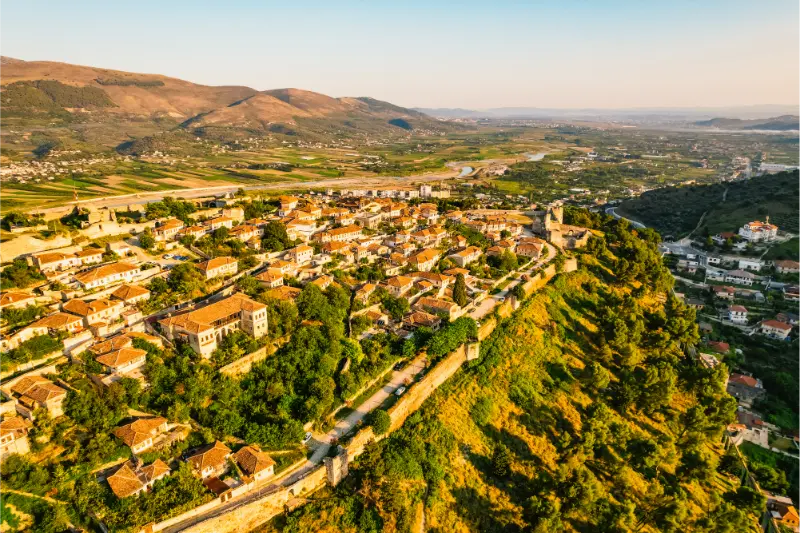
Mangalem is convenient for a sweet after sightseeing, but the steep castle area rewards planning: if you want dessert there, make it part of a meal or guesthouse stay rather than climbing only for cake. The newer centre gives easier access to everyday pastry shops and supermarkets.
Bakery, pastry shop, café or restaurant?
A bakery is usually best for speed, freshness and everyday pricing, but its main business may be savory byrek and bread rather than elaborate desserts. A pastry shop gives you a broader sweet counter, including syrup pastries and cakes. A café is best when atmosphere, coffee and sitting time matter. A traditional restaurant may have only two or three desserts, but one of them can be homemade and more connected to the meal than anything in a glass display.
The practical choice depends on the day. If you have a bus in forty minutes, use a bakery or pastry counter. If you want an hour of shade after sightseeing, choose a café. If a guesthouse owner says the family made gliko, cake or a regional sweet, that is often the moment to stop comparing online ratings and try what is actually being offered.
Coffee and dessert: how locals make the sweet stop work
Albanian café culture rewards small portions and long pauses. The Berat coffee and café guide explains the local coffee rhythm in more detail. With a very sweet dessert, a simple espresso, macchiato or unsweetened coffee usually gives better balance than another sugary drink. Tea can work too, especially with gliko or preserves.
You do not need to order coffee and dessert at the same time. A useful habit is to order coffee first, look at the pastry counter, and then decide whether you actually want something sweet. This prevents “dessert tourism” from becoming constant snacking and lets you notice which places treat sweets as part of hospitality rather than as a display for visitors.
Gliko, preserves, fruit, honey and the lighter side of Albanian sweets
Not every Albanian sweet experience is a slice of cake. Gliko is a traditional preserve in which fruit is cooked and kept in sugar syrup; a spoonful can accompany coffee, tea or hospitality. Jams, honey, fresh fruit, dried fruit and nuts also appear in guesthouse breakfasts and simple desserts. These options are useful when you have already eaten a rich lunch or are travelling in summer heat.
Seasonality matters. A fruit preserve tells you what households wanted to keep beyond harvest time, while fresh fruit tells you what is good now. Buy jars only from places that package them securely if you plan to travel with them, and remember that airline security rules affect liquids and semi-liquid foods in hand baggage.
Breakfast sweets versus dessert
There is deliberate overlap between this guide and the Berat breakfast and bakery guide. Petulla with honey or jam, a sweet pastry, yogurt with honey, or bread with preserves can feel like dessert to one traveller and breakfast to another. The useful distinction is timing and portion, not a rigid category.
If you have an active day ahead, a heavily syruped dessert is rarely the best first food before hiking, cycling, a boat trip or a long drive. Keep breakfast practical, save the richer sweet for later, and carry water. The simplest travel mistake is eating for a checklist rather than for the day you are actually having.
Vegetarian, vegan, gluten-free and allergy planning
Many Albanian desserts are vegetarian, but that does not make them vegan. Butter, milk, cream, eggs and yogurt are common. Baklava recipes may use butter or another fat; trileçe is dairy-heavy; revani normally contains eggs and may contain butter; gliko is often simpler but you should still ask about preparation if an allergy is involved.
Nuts are a major issue in traditional sweets. Walnuts and almonds can appear in baklava, kadaif, revani, halva or garnishes, and cross-contact is likely in pastry shops that handle several nut-based products. For coeliac disease, a visually flourless sweet is not proof of safety: shared counters, utensils, trays and kitchens can create cross-contact. Use the site’s dedicated gluten-free and allergy guides for the destination and communicate severe allergies explicitly rather than relying on translated menu icons.
How to order without over-ordering
Start with one portion for two people if the sweet is syrup-heavy and you have already eaten. Albanian hospitality can make portions feel generous, and the difference between “try” and “finish” matters on a food-focused trip. Pointing at the display is normal in a pastry shop; in a restaurant, ask what dessert is homemade or freshly prepared.
Carry some lek for small purchases. If a menu has prices, use them rather than negotiating. At counters where an item is sold by weight, ask how the price is calculated before ordering a large box. If you are buying a gift, ask for sturdy packaging and keep syrup pastries flat; a beautiful box is not useful if it leaks into your luggage.
Desserts with children
Children often enjoy the visual simplicity of cake, ice cream, petulla or a small pastry, but syrup sweets can be extremely rich. Share portions, keep water available and use fruit or yogurt as the lighter option. If a child has a nut allergy, do not assume that choosing a plain-looking cake solves the problem; pastry kitchens commonly handle nuts throughout the workspace.
A sweet stop can also be a useful pacing tool. Twenty quiet minutes in a shaded café can reset a hot sightseeing day, especially in historic centres where walking surfaces are tiring. Choose the stop because it helps the family day work, not because every member of the family needs a separate dessert.
What sweets make good souvenirs?
Dryer products usually travel better than cream cakes or syrup-soaked pastries. Packaged biscuits, sealed preserves, honey, nuts or commercially boxed sweets are easier than a fragile slice of baklava. Gliko can be an excellent food souvenir when the jar is sealed, but it is heavy and may be treated as a liquid or gel for cabin-baggage purposes.
Check customs rules for your destination country if you are carrying food across borders. Within a road trip, keep jars upright and avoid leaving chocolate, cream cakes or dairy desserts in a hot car. The best souvenir is often something packaged by the producer for travel, not a dessert improvised into a takeaway container five minutes before departure.
Where to stay if food and cafés matter
Choose accommodation near the part of Berat where you expect to spend mornings and evenings, not solely near one pastry shop. Central stays make it easier to compare bakeries, cafés and restaurants on foot. Compare places to stay in Berat on Booking.com, then read recent reviews for breakfast, noise and walking access rather than filtering only by star rating.
Combine sweets with a guided experience
A food tour, walking tour, museum visit, boat trip or day excursion can fit naturally around a pastry stop. If the tour already includes tastings, do not eat a heavy dessert immediately beforehand. If it does not, use dessert as the relaxed part of the day after the timed activity rather than squeezing it into the five minutes before a meeting point.
Seasonal dessert planning in Berat
Late summer and autumn are especially interesting for fruit and preserves, while winter suits syrup pastries and coffee. In very hot weather, avoid scheduling a heavy dessert immediately before climbing to the castle.
Holiday periods can also change what is available. Baklava, revani and other festive sweets may appear more prominently around family celebrations, but exact recipes and timing vary. Do not write off a destination because a particular dessert is absent on an ordinary weekday; traditional food is not a museum collection that must be fully displayed every day.
A relaxed one-day sweet route in Berat
Begin with a normal breakfast rather than dessert. In late morning, choose a bakery or pastry shop near your first sightseeing area and share one traditional item. Have lunch normally. In late afternoon, stop for coffee and either a chilled cake, gliko or fruit-based sweet. If dinner ends with a house dessert, split it instead of ordering another full round. This rhythm gives you three different contexts without making the entire day about sugar.
If you are staying two or more nights, spread the experience out: one day for a traditional pastry, another for a regional specialty or homemade preserve, and a final café stop only if you genuinely want it. The result is usually more memorable than a single “top ten desserts” crawl.
Common mistakes to avoid
- Assuming every dessert labelled “traditional” is unique to this city; many sweets are shared across Albania and the wider Balkans.
- Choosing only by appearance instead of asking what was made recently.
- Ordering several syrup-heavy pastries at once and losing the differences between them.
- Treating a nut-free-looking dessert as safe for a severe nut allergy.
- Expecting summer resort cafés to keep the same hours and menu in winter.
- Driving across town for one social-media recommendation when a good local pastry shop is already nearby.
- Buying cream or dairy desserts before a long, hot road trip without refrigeration.
- Forgetting cash in small bakeries or assuming every counter accepts international cards.
FAQ: sweets and desserts in Berat
What dessert should I try first in Berat?
Start with the most regional option available that day; if nothing local is freshly prepared, choose a well-made Albanian classic such as baklava, kadaif, revani or gliko. In Berat, the specialties listed earlier give you the best shortlist.
Is trileçe a traditional Albanian dessert?
Trileçe is extremely popular in Albania today, but its story is modern and shared across the Balkans. It is still worth trying because food culture is not limited to centuries-old recipes; just avoid presenting it as an ancient uniquely Albanian invention.
Is baklava always made with walnuts?
No. Walnut is common, but recipes can use almonds, pistachios or mixtures. If you have an allergy, ask specifically and assume cross-contact is possible in a pastry shop.
Can I find vegan desserts?
Sometimes, especially fruit, some preserves or intentionally vegan cakes, but traditional pastry often contains butter, milk or eggs. Ask rather than guessing from appearance.
Should I tip in a café?
There is no need to turn a small coffee into a complicated calculation. If service was good, rounding up or leaving a modest tip is appreciated. Check whether service is already included in unusually tourist-oriented venues.
Can I take Albanian sweets home?
Yes, but choose products that travel safely: sealed preserves, packaged biscuits, nuts, honey or commercially boxed sweets. Refrigerated cakes and syrup-heavy pastry are poor choices for a long journey.
Final thoughts on desserts in Berat
The best dessert experience in Berat is not about finding the largest pastry counter. It is about matching the sweet to the place and moment: a regional recipe when it is genuinely available, gliko with coffee, one fresh piece of baklava, a chilled cake after a hot walk, or a homemade preserve in a guesthouse. Use the national dessert guide for vocabulary, then let Berat provide the setting and the local rhythm.
Leave a Reply