
A traditional craft route through Albania works best when you stop treating handicrafts as a final ten-minute souvenir stop. The most interesting objects make sense only after you see the houses, costumes, religious interiors and markets that produced them. Krujë is the obvious gateway because its old bazaar still concentrates wood, copper, silver, rugs and traditional clothing, but Shkodër, Berat, Gjirokastër and Korçë each add a different cultural layer.
This route is designed for travelers who want a practical sequence rather than a shopping list. You can follow it as part of a seven- to ten-day cultural trip, or use individual sections as day-trip ideas. The emphasis is on museums, historic quarters, working bazaars and contemporary craft, with enough time to compare regional styles and ask where objects come from before buying.
How to use this route
Do not try to visit every museum and shop in one day. Craft heritage rewards comparison, and comparison requires time. I would build the route around the cities you already want to see, then add one or two focused stops in each place: an ethnographic museum, a historic house, a bazaar or a workshop that is clearly open to visitors.
Keep opening times flexible. Museums may close on particular weekdays or change seasonal hours, and workshops are businesses rather than permanent demonstrations. If meeting a specific artisan matters, contact ahead. The route remains worthwhile even if you only see the objects in context and buy nothing.
Stop 1: Tirana for orientation
Tirana is a useful starting point because it gives you national context before you encounter regional variations. Museums and cultural institutions can introduce archaeology, costume, twentieth-century history and contemporary design, while city shops provide a first look at modern Albanian craft. I would use Tirana to learn vocabulary rather than make major purchases immediately.
Read our Tirana travel guide and Albanian handicrafts guide. Note the materials you are interested in—silver, wool, copper, wood, ceramics or stone—so you can compare them later.
Stop 2: Krujë for the most concentrated craft experience
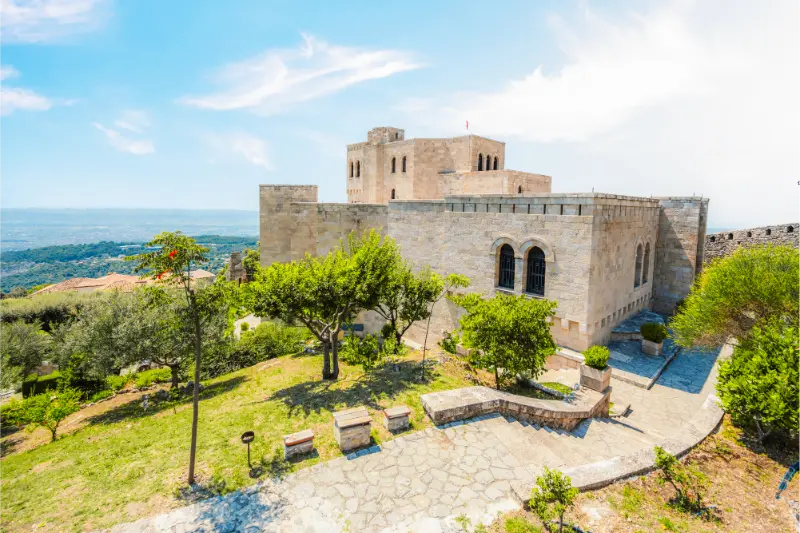
Krujë is the most efficient craft stop in Albania because the old bazaar, castle and ethnographic context sit close together. The national tourism authority specifically associates the bazaar with filigree, woodwork, copper, carpets, traditional clothing and historical souvenirs.

Start with the castle area and Krujë Ethnographic Museum, then browse the Old Bazaar. Seeing household objects before shopping makes it easier to distinguish functional traditions from decorative products created mainly for tourism.
What to look for in Krujë
- Filigree and silver jewelry with clear material information.
- Hand-carved wooden objects, including boxes, utensils and decorative pieces.
- Copper trays, bowls and vessels.
- Rugs, runners and smaller woven textiles.
- Traditional clothing and contemporary textile pieces inspired by regional costume.
- Modern souvenirs that are honest about being modern rather than presented as antiques.
Compare several shops. Ask who made an item and where. The bazaar’s strength is choice, so there is no need to buy the first piece you see.
Stop 3: Shkodër for northern textiles and living culture
Shkodër adds northern cultural context. The city is a gateway to Malësia e Madhe and the Albanian Alps, where wool, highland clothing and the xhubleta tradition belong to a broader pastoral world. The Marubi photography collection also helps you see how dress and urban life changed across generations.
Use our Shkodër guide, wool and shajak guide and xhubleta guide. If you continue into the mountains, remember that villages are living communities, not staged craft parks.
Stop 4: Berat for carved wood, icons and domestic interiors
Berat is especially strong for the relationship between craft and architecture. Historic houses combine timber, stone, plaster and built-in furniture, while Orthodox religious heritage includes carved wood and iconographic traditions. The city therefore shows how artisanship shaped rooms and sacred spaces rather than only portable objects.
Visit the Onufri Museum and Ethnographic Museum if open, and spend time looking at ceilings, cupboards, doors and balconies. Our Berat travel guide and woodcarving guide provide more context.
Stop 5: Gjirokastër for stone, metal and bazaar culture
Gjirokastër is the place where the material of the city itself becomes the craft lesson. Stone roofs, walls, paved lanes and tower houses show masonry skill at a scale that no souvenir can reproduce. The official tourism authority also identifies Gjirokastër among places known for copperwork.
Walk the bazaar, but also visit at least one historic house. Use our Gjirokastër architecture guide, stone craft guide and copperwork guide.
Stop 6: Korçë for ceramics, urban culture and regional costume
Korçë adds a southeastern perspective. The national tourism authority identifies Korçë among traditional ceramic centers, while the city’s museums and cultural institutions provide strong context for costume, religious art and urban history. The restored old bazaar is also an easy place to combine architecture, cafés and shopping.
Do not expect one district to function as a craft theme park. Use the city to compare contemporary products with museum objects and regional food culture. Our Korçë travel guide and ceramics guide help plan the stop.
Optional extensions: Lezhë, Elbasan, Përmet and the mountains
Lezhë is worthwhile for ethnographic clothing from Malësia, Zadrima, Kallmet and Mirdita. Elbasan adds ceramics, metalwork and a different urban history. Përmet and Tepelenë expand the stone-craft story, while mountain regions connect wool and building traditions with pastoral life.
These extensions are best when they fit your route naturally. I would not drive several hours for one craft label if the museum or workshop is not confirmed open. Albania’s strength is that cultural material appears across ordinary travel routes.
A realistic 8-day craft itinerary
- Day 1: Tirana – museum context, city walk and contemporary design shops.
- Day 2: Krujë – castle, ethnographic museum, old bazaar and careful craft shopping.
- Day 3: Shkodër – old town, Marubi, local craft browsing and northern cultural context.
- Day 4: Travel south with a flexible stop in Lezhë or Tirana depending on logistics.
- Day 5: Berat – castle, Onufri, ethnographic museum and historic-house details.
- Day 6: Gjirokastër – bazaar, castle, traditional house and stone architecture.
- Day 7: Korçë – museums, old bazaar, ceramics context and regional food.
- Day 8: Return toward Tirana or continue to Pogradec/Elbasan depending on the wider trip.
This is a framework, not a race. If you already have a beach or hiking itinerary, use two or three of these cities instead of trying to complete the entire route.
Shopping strategy for the route
Keep a note of prices, materials and makers rather than buying everything in the first city. Small differences become easier to recognize once you have seen several regions. For expensive silver, rugs or large craft pieces, ask for receipts and material information.
Use our what to buy in Albania guide and authentic handicrafts buying guide before making a significant purchase.
Driving, buses and luggage
A rental car gives the most flexibility for smaller museums and regional detours, but Tirana, Krujë, Shkodër, Berat, Gjirokastër and Korçë can also be linked with buses and transfers. Public transport works best when you keep the route simple and avoid depending on a workshop appointment immediately after a long intercity journey.

Craft shopping can create luggage problems quickly. Silver is compact; pottery, copper trays and rugs are not. Measure, weigh and think about the final flight before buying large pieces.
Where to stay and how to build this into a trip
If you want to make craft heritage part of a wider itinerary, choose accommodation for the destination first and treat workshops, museums and bazaars as part of the day rather than booking a hotel solely because it is close to one shop. Compare places to stay on Booking.com, then check walking distance, parking and the most recent guest reviews.
Tours and cultural experiences
A private guide, museum tour or city walking tour can add useful context when the craft is tied to architecture, costume or local history. Read the itinerary carefully: a tour that mentions a bazaar does not necessarily include a workshop demonstration, and a craft stop should not be treated as guaranteed unless the operator states it clearly.
Official sources to check
- Albania National Tourism Agency – Crafts and Handicrafts in Krujë
- Albania National Tourism Agency – Folk Crafts and Craftsmanship
- Albania National Tourism Agency – Stone Houses of Gjirokastër and Berat
- Albania National Tourism Agency – Ceramic Works
These sources are useful for cultural and historical context. Opening times, active workshops, prices, demonstrations and the availability of individual artisans can change, so confirm anything that affects a specific visit or purchase close to your travel date.
Frequently asked questions
What is the best city in Albania for traditional craft shopping?
Krujë is the easiest first choice because its old bazaar concentrates several craft types beside major cultural attractions. Other cities are better for seeing specific materials in context.
How many days do I need for a craft route?
A focused route through five major cities works well in about a week, but two or three destinations can be integrated into a normal Albania itinerary without creating a separate trip.
Do I need a car?
No, but a car helps with smaller museums, villages and workshop visits. Major cities are reachable by bus or transfer.
Should I book workshops in advance?
Yes if a demonstration or meeting with a particular artisan is important. Shops and museums may be easier to visit spontaneously, but opening times still need checking.
What is the easiest craft to take home?
Small jewelry, compact textiles and modest wooden objects are usually easier than large rugs, pottery or trays. Choose usefulness and provenance over size.
Final thoughts
Traditional craft is most interesting when you look beyond the souvenir value. Materials, tools, regional habits and the time required to make an object explain much more about Albania than a generic item with a national symbol. A thoughtful purchase can also support the people who keep practical knowledge alive, but the best approach is to ask questions, compare quality and respect the difference between heritage objects, contemporary craft and mass-produced souvenirs.
Leave a Reply