
The Gjirokastër National Folklore Festival is Albania’s flagship folklore gathering, staged periodically at the city’s monumental castle. It brings together music, dance, costume and ritual traditions from different regions. Because it is not an annual event with a fixed permanent date, planning requires more care than booking a standard summer festival.
This guide is based on documented cultural information rather than romanticized folklore. For the core facts, start with the official Albania tourism page for the Gjirokastër National Folklore Festival. For festival dates, workshops, museum access and live performances, always recheck current official information before traveling because living heritage does not follow a permanent tourist timetable.
Why this tradition matters
Living heritage changes. A tradition may be practiced differently by neighboring villages, generations or families, and modern performers can adapt inherited forms without making them less authentic. Avoid looking for one frozen “correct” version.
Albania is often marketed through beaches, castles and mountain scenery, but intangible heritage explains how people have carried memory across generations. Songs, dance, textiles, instruments, pastoral knowledge and festivals connect landscapes with social life. Learning even a small amount before a trip changes what you notice in museums, villages and local events.
Key facts to understand first
- The official tourism portal describes the Gjirokastër National Folklore Festival as the country’s largest folklore event.
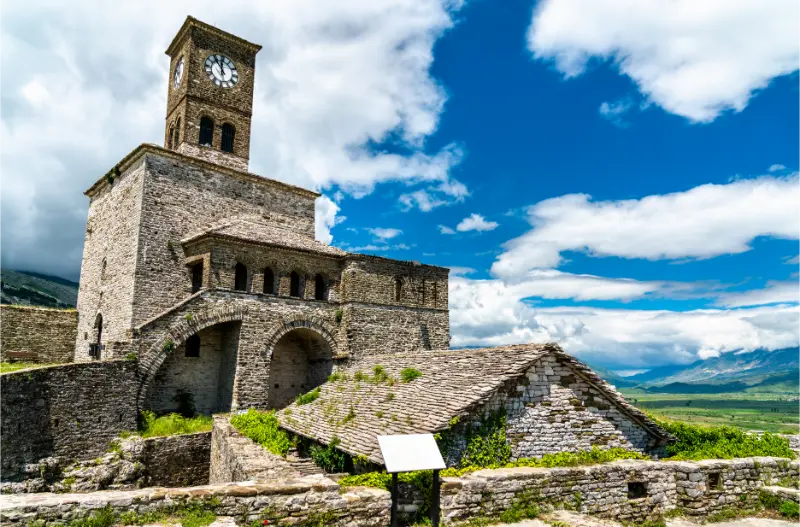
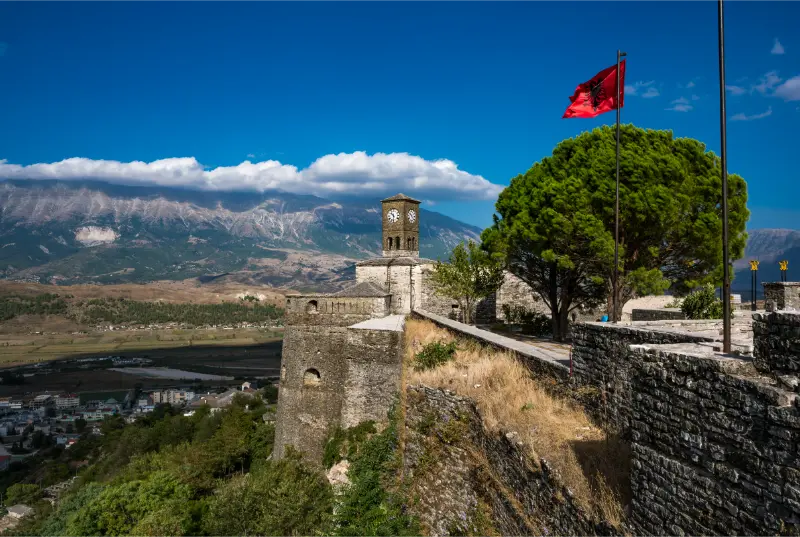
- Performances take place at Gjirokastër Castle, giving the event a setting that is itself part of the city’s cultural heritage.
- The festival gathers groups from across Albania and presents songs, dances, costumes and traditional rites.
- The event is periodic rather than reliably annual; travelers should verify any future edition and exact dates through official tourism or event channels before booking specifically for it.
These facts are a framework, not a complete definition. Heritage terminology can become misleading when it is detached from the people who practice it. Whenever possible, pair UNESCO or museum interpretation with local voices and ask how the practice works today, not only how it supposedly worked in the past.
Where to experience it in Albania
Gjirokastër Castle performance stage
Gjirokastër Castle performance stage is a useful place to understand Gjirokaster National Folklore Festival in context. Build time around the region rather than arriving only for a photograph or a five-minute performance. Combine cultural stops with a local museum, historic quarter, guesthouse, market or landscape so the tradition is connected to everyday geography.

The best cultural encounters usually happen when travelers allow context to lead. A museum label, a local guide, a craftsperson or a performer can explain why a sound, garment or gesture matters in ways that a photo cannot.
Old Bazaar between performances
Old Bazaar between performances is a useful place to understand Gjirokaster National Folklore Festival in context. Build time around the region rather than arriving only for a photograph or a five-minute performance. Combine cultural stops with a local museum, historic quarter, guesthouse, market or landscape so the tradition is connected to everyday geography.
Do not equate UNESCO status with a guarantee that a performance, workshop or event is available every day. These are community practices, and access can depend on season, local calendars, family events and safeguarding programs.
Museum houses and ethnographic context
Museum houses and ethnographic context is a useful place to understand Gjirokaster National Folklore Festival in context. Build time around the region rather than arriving only for a photograph or a five-minute performance. Combine cultural stops with a local museum, historic quarter, guesthouse, market or landscape so the tradition is connected to everyday geography.
Living heritage changes. A tradition may be practiced differently by neighboring villages, generations or families, and modern performers can adapt inherited forms without making them less authentic. Avoid looking for one frozen “correct” version.
Day trips into the Drino Valley and nearby villages
Day trips into the Drino Valley and nearby villages is a useful place to understand Gjirokaster National Folklore Festival in context. Build time around the region rather than arriving only for a photograph or a five-minute performance. Combine cultural stops with a local museum, historic quarter, guesthouse, market or landscape so the tradition is connected to everyday geography.
The best cultural encounters usually happen when travelers allow context to lead. A museum label, a local guide, a craftsperson or a performer can explain why a sound, garment or gesture matters in ways that a photo cannot.
What to listen for, look for or ask about
- Do not plan flights around copied dates from an old article; confirm the specific edition first.
- At performances, balance photography with listening. Continuous phone recording can block views and reduce your own experience.
- Use the festival to identify traditions you want to understand later in their home regions rather than treating every performance as interchangeable.
A simple question such as “Which village or region is this tradition from?” often produces a better conversation than asking whether something is “authentic.” Regional attribution, family history, materials, repertoire and occasion are usually more informative than a yes-or-no authenticity label.
How to plan a cultural itinerary around this theme
Start with one strong geographic base and add one or two day trips. Shkodër works well for northern highland culture; Gjirokastër and Vlorë are useful for southern music and Lab traditions; Tirana has national museums, cultural institutions and easier transport; Korçë provides a different southeastern perspective. If a festival or workshop is the main reason for your trip, confirm it before paying for non-refundable travel.
For a multi-region itinerary, allow travel days. Albania is compact on a map but road conditions, mountains and seasonal traffic can make short distances slower than expected. A cultural route improves when you stay overnight rather than driving several hours for one brief stop.
For accommodation, compare locations on Booking.com and prioritize walkability in historic towns or practical parking in rural regions. Being close to the old center often makes evening events and early museum visits much easier.
When to go
Spring and autumn are comfortable for cultural touring and make it easier to combine museums, historic towns and rural drives. Summer brings more festivals and visitors but also heat and crowded coastal roads. Winter can be rewarding in cities and lower-altitude towns, while snow or short daylight may limit mountain access.
The event calendar matters more than the weather for living traditions. Some practices appear mainly at weddings, community celebrations or periodic festivals rather than on a daily schedule. Do not assume that a village will stage a performance because visitors have arrived.
Museums, festivals and community settings
Museums are often the best first step because they provide names, regions, objects and historical context without intruding on private life. After that, public festivals can show how traditions are performed collectively. Community events can be even more meaningful, but access should come through invitation or a legitimate local host rather than by treating private ceremonies as public attractions.
If a guide offers a workshop, ask who leads it and whether practitioners are paid. Responsible cultural tourism should direct value toward the people maintaining the knowledge, not only toward intermediaries selling an experience.
Photography, recording and etiquette
Ask before taking close portraits of performers, artisans or community members. At public stage performances, wide shots may be expected, but continuous close-up filming can still be intrusive. In museums, follow photography rules; textile, manuscript and icon displays may restrict flash or photography entirely.
Never touch historic garments, instruments or craft objects without permission. If you are invited to handle a reproduction or try on clothing, follow instructions. A fragile textile or instrument can be damaged by oils, tension or incorrect handling even when it looks robust.
Be especially careful around religious or commemorative dimensions. A dance, song or garment may carry meanings that are not obvious to outsiders. Listen to how local practitioners describe it before assigning your own symbolism.
How to avoid superficial “folklore tourism”
- Do not call every traditional-looking performance ancient or unchanged.
- Do not assume all Albanian regions share the same costume, music or dance.
- Do not request a private ceremony solely for a photo opportunity.
- Do not buy an expensive craft object without asking who made it and what materials were used.
- Do not copy old festival dates into a fixed itinerary without confirmation.
- Do not describe a UNESCO inscription as proof that every local version is identical.
The strongest travel writing names uncertainty when it exists. If a date, origin story or interpretation is debated, say so. Heritage becomes more interesting, not less, when travelers understand that communities negotiate and reinterpret tradition over time.
How this guide connects with the rest of Wonderful Albania
Use this article together with the destination guides already on the site. For a broader route, see this related Wonderful Albania guide and then combine it with transport, accommodation and seasonal planning articles.
Internal links are useful here because intangible heritage rarely belongs to one attraction. The same tradition can connect a museum in Shkodër, a mountain village, a national festival and an artisan workshop. Following those links creates a more coherent trip than collecting isolated sights.
Final thoughts
Gjirokaster National Folklore Festival Guide adds a layer of Albania that is easy to miss if a trip is built only around viewpoints and monuments. The most memorable encounters come from understanding who practices a tradition, where it belongs and why it is still meaningful.
Approach living heritage with curiosity rather than entitlement. Verify current information, support practitioners when you can, ask permission before recording or handling objects, and leave space for regional differences. That approach produces better travel experiences and more accurate stories about Albania.