Durrës Amphitheatre is the monument that makes the city’s Roman past tangible in a way no timeline can. Built in the early second century AD, during the period of Emperor Trajan, it belonged to ancient Dyrrachium, a major Adriatic port on the Via Egnatia. The official tourism portal describes it as the largest Roman amphitheatre in the Balkans, with an estimated capacity of roughly 15,000 to 20,000 spectators. What makes the site especially interesting is that later history sits inside the Roman structure: early Christian chapels, surviving mosaics and centuries of urban change turn the amphitheatre into a compact lesson in how Durrës evolved.
Albania’s official tourism portal is the main official reference used for the core facts in this guide. I still recommend checking current opening arrangements, road access, weather or local restrictions shortly before travelling because those practical details can change.
Why this place deserves time in your Albania itinerary
Many travellers use Durrës only for its beach or ferry port, but the amphitheatre is a reason to give the historic centre several unhurried hours. It connects Roman entertainment, early Christianity, earthquakes, medieval reuse and modern archaeology in one place. For first-time visitors, it is also one of the easiest major ancient sites in Albania to fit into a city walk because it lies inside the urban fabric rather than at the end of a rural road.

The most useful way to approach this destination is to decide what kind of experience you want before you arrive. A traveller interested in history will allocate time differently from a family, photographer or hiker. Albania rewards flexible planning: roads may be slower than expected, small museums can change hours, and the best local meal or conversation often happens when the schedule is not packed minute by minute.
How to get there and plan the access
The amphitheatre is in central Durrës and is best approached on foot once you are in the old city. If you arrive by car, park outside the tightest historic streets and walk the final section. From Tirana, Durrës is an easy intercity trip; from the waterfront, the ruins are close enough to combine with the Venetian Tower, archaeological museum area and seafront. Check current opening arrangements shortly before visiting because conservation work and access patterns can change.
I save the destination name and nearby village in both English and Albanian, keep the map available offline and carry some cash in lek. For rural sites, a current message from a guesthouse, museum or local operator is usually more reliable than a several-year-old driving time. If you are using public transport, confirm the final connection rather than assuming an intercity bus stops at the attraction itself.
What to see and do
Read the arena before looking for details
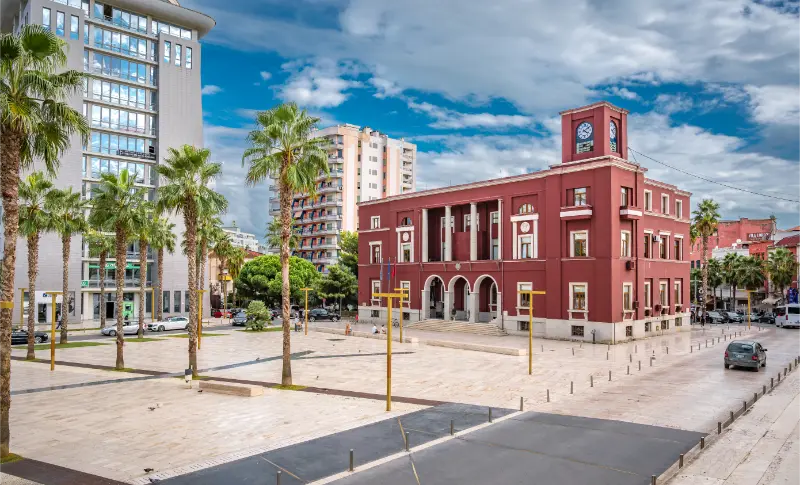
Begin by understanding the amphitheatre’s scale. Follow the curve of the seating and imagine how tens of thousands of spectators moved through corridors and entrances. The relationship between the arena and the surrounding modern neighbourhood is unusual: present-day buildings crowd the ancient monument, making the survival of the site itself part of the story.
Look for the early Christian chapel
One of the most memorable layers is the Christian chapel inserted into the amphitheatre after its original entertainment function declined. Surviving mosaics and fresco traces illustrate a dramatic change in use. Move slowly here and follow any conservation restrictions; the decorative surfaces are far more fragile than the massive Roman walls.
Notice the vaulted corridors
The internal passages help explain Roman engineering better than a distant exterior view. Where access is permitted, look at the vaulting, circulation routes and relationship between support structures and seating. These spaces also make the amphitheatre feel less like a ruin in a square and more like a building that once managed huge crowds.
Connect it to ancient Dyrrachium
The amphitheatre makes more sense when you remember that Dyrrachium was a major port connected to the Via Egnatia. After the visit, walk toward other archaeological fragments and the museum to build a broader picture of the city. Durrës rewards travellers who treat the old centre as an archaeological landscape rather than a single attraction.
See the modern city around the monument
Step back at the end and look at the apartment blocks, streets and everyday life surrounding the ruins. That contrast is not a distraction; it shows how a living city grew over ancient layers. Durrës is one of Albania’s best places to understand archaeology as part of contemporary urban life.
A realistic plan for the visit
Allow at least 60–90 minutes for the amphitheatre itself if you enjoy history, then continue on foot through the old centre. A good half-day route links the amphitheatre, Venetian Tower, main pedestrian streets, waterfront and the archaeological museum when open. Add lunch before moving to the beach rather than attempting to treat the cultural centre and a full beach day as the same experience.
I also build in a buffer of at least an hour on road-trip days. That margin covers parking, a slower final road, coffee, roadworks or simply spending longer somewhere that turns out to be better than expected. The mistake I see most often in Albania itineraries is not choosing the wrong place; it is trying to visit too many good places in one day.
Best time to go
The site can be visited year-round, but spring and autumn are the easiest seasons for combining ruins with a city walk. Summer is busier and hotter, so go earlier in the day and leave the waterfront for later. Rain can make ancient stone slippery, while winter offers quieter streets but shorter daylight.
Regardless of season, check the specific local forecast rather than relying on a national weather icon. Coastal wind, mountain storms, heat in archaeological sites and winter ice can all change the experience within a relatively small country. Daylight matters too: rural roads and unlit paths are much easier when you finish before dark.
Where to stay
Staying centrally makes it easy to see the amphitheatre before day-trippers arrive and enjoy the promenade in the evening. Compare accommodation in Durrës if you want to combine archaeology and the Adriatic coast.
When comparing accommodation, I look beyond the overall score. Check the most recent comments about access, parking, noise, heating or air conditioning, breakfast times and whether the property is actually in the place named in the listing. In rural areas, a beautiful guesthouse ten kilometres away may require far more driving than the distance suggests.
Food and local experience
Central Durrës is one of the easiest places in Albania to pair heritage with a proper meal. Seafood is the obvious coastal choice, but the old city also has bakeries, cafés and restaurants serving broader Albanian dishes. I prefer to eat after the cultural walk, when you can sit down without watching the clock for a museum closure.
A few words of Albanian, patience and curiosity go a long way outside the largest resorts. Menus may be shorter, card payment less dependable and service more informal, but that is often where the trip becomes personal. If you have allergies or strict dietary requirements, communicate them clearly and early rather than assuming a dish is prepared the same way everywhere.
Photography without losing the experience
A wide lens helps with the amphitheatre because surrounding buildings restrict how far back you can stand. Details of brickwork, vaults and the chapel reward a longer focal length. Avoid flash where prohibited and never lean over barriers for an angle; the best images often use the contrast between ancient curves and the modern city.
I try to take a few deliberate photographs, then put the camera away for part of the visit. Ask before photographing people closely, respect signs in museums and religious buildings, and never cross a barrier or damage vegetation for a cleaner frame. A photograph that includes context usually tells more of Albania than an isolated “perfect” view.
Families, older travellers and accessibility
Children who enjoy Roman stories usually find the arena easy to understand, but there are steps, uneven stones and narrow passages. Keep younger children close and do not assume every corridor is stroller-friendly. Travellers with mobility needs should ask at the entrance which sections are currently accessible.
Accessibility varies enormously. Historic stone, village lanes, archaeological ground and natural trails may have steps or rough surfaces even when the distance is short. If step-free access is essential, contact the site or accommodation directly. For older travellers, a private driver can be a worthwhile comfort upgrade because it removes parking stress and allows the day to adapt to energy levels.
Safety and responsible travel
Old masonry becomes slippery when wet, and some edges may have limited barriers. Follow signed routes and conservation closures. In the surrounding city, normal urban precautions are sufficient: watch traffic when crossing and keep valuables secure in busy summer streets.
Responsible travel here is mostly practical common sense: use marked or established routes, do not remove archaeological or natural material, keep noise low near homes and religious sites, and take rubbish away. In protected landscapes, avoid fires and respect any temporary closures. In historic places associated with suffering, responsible travel also means treating memory and testimony with dignity.
How to combine it with a wider Albania trip
Use the amphitheatre together with our Durrës travel guide and archaeological sites guide. If you have a car, Lalëz Bay or Cape of Rodon can become the coastal second half of the day, but keep the morning focused on the city rather than racing through the ruins.

Regional clustering is usually more satisfying than zigzagging across the country. I prefer two or three nights in one area with one major day and one lighter day. That leaves room for weather changes and for the spontaneous village, viewpoint or meal that would otherwise be skipped because a rigid itinerary says you must be somewhere else.
Practical checklist before you leave
- Check access: confirm opening status, road condition or trail information close to the date.
- Carry cash: small businesses, parking and rural services may not accept cards.
- Download maps: save the destination and return route for offline use.
- Dress for the place: comfortable shoes, sun protection and a light layer cover most situations.
- Bring water: never assume a spring, café or shop will be open.
- Protect daylight: leave enough time for the return, especially on secondary roads.
- Respect people and heritage: ask before photographing, follow barriers and leave objects where they are.
- Stay flexible: weather, traffic and local arrangements can change the best plan.
Final thoughts
The strongest Albania trips are rarely the ones with the highest number of stops. Give this place enough time to understand why it matters, verify the few details that can change, and connect it to the wider region rather than treating it as an isolated pin. That slower approach is more useful for travellers and more respectful to the communities, landscapes and heritage that make the destination worth visiting.
\n\nRelated guide: Roman Albania Guide: Dyrrachium, Via Egnatia, Baths, Mosaics and Ancient Roads develops this subject as a dedicated cultural route.
\n