
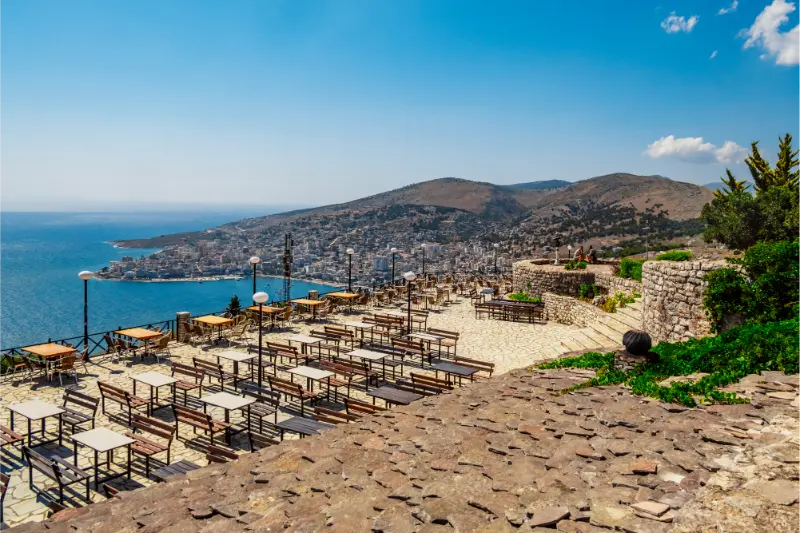
Lëkurësi Castle sits above Saranda in exactly the kind of position that makes sense the moment you arrive: high enough to watch the bay, the coastal routes and the water toward Corfu. It is a compact stop rather than a vast castle complex, but the combination of Ottoman history and panorama makes it one of the easiest ways to add context to a Saranda stay.

The official Albanian tourism portal is a useful reference for the destination and the natural or cultural features described below. I still recommend checking local access, opening arrangements and weather shortly before you travel because practical conditions can change faster than the underlying history or geography.
Why this place or experience is worth adding to an Albania trip
The castle was built in the sixteenth century during the Ottoman period and served a strategic role in controlling routes around Saranda and toward Butrint. Today the walls are only part of the attraction. The viewpoint is the real reason many travellers come, especially late in the day when the light softens over the Ionian Sea and the city below.
For more planning context, pair this guide with our Saranda travel guide, best day trips from Saranda and Ksamil and Saranda guide.
How to get there and plan the approach
The castle is only a short distance from central Saranda, but the climb is significant enough that I normally recommend a taxi, rental car or a planned uphill walk for fit travellers. In hot weather, walking from the waterfront in the middle of the day is unnecessarily tiring. If you drive, expect the final approach to be busier around sunset in high season and allow extra time rather than arriving at the exact moment you want to photograph.

My general rule in Albania is to leave more margin than a navigation app suggests. A road may be perfectly paved yet slow because of traffic, mountain bends, livestock or construction. For rural attractions I also download offline maps and keep the destination name written in Albanian, which makes asking for directions much easier.
What to see and do
Read the defensive setting
Before focusing on the view, look at the castle’s position. From this ridge, movement along the coast and inland corridors becomes easy to understand. That strategic geography is the key to the monument. Even travellers who are not deeply interested in military architecture can appreciate how the landscape explains the fortification better than a long list of dates.
Give this stop enough time to feel the place rather than treating it only as a photograph. I usually build in a little margin for conversation, a short detour or changing conditions. That flexibility is especially valuable outside Albania’s largest cities, where local advice can be more current than a fixed itinerary written months earlier.
Photograph Saranda from above
The panorama over Saranda is broad enough to show how the modern city wraps around the bay. A normal phone camera works well, but a longer lens is useful for details of the port and coastline. If you come for photography, arrive before sunset rather than at sunset; you will have time to choose a position, account for haze and watch the changing light.
Give this stop enough time to feel the place rather than treating it only as a photograph. I usually build in a little margin for conversation, a short detour or changing conditions. That flexibility is especially valuable outside Albania’s largest cities, where local advice can be more current than a fixed itinerary written months earlier.
Look toward Corfu and the Ionian Sea
On clear days, the view across the water adds another layer to the visit. It reminds you how close southern Albania is to the Greek island of Corfu and why maritime routes have mattered here for centuries. This is also a good place to orient yourself before taking a ferry or planning coastal excursions.
Give this stop enough time to feel the place rather than treating it only as a photograph. I usually build in a little margin for conversation, a short detour or changing conditions. That flexibility is especially valuable outside Albania’s largest cities, where local advice can be more current than a fixed itinerary written months earlier.
Stay after the day-trip rush
Many visitors treat Lëkurësi as a fast viewpoint. If your schedule allows, stay a little longer. The atmosphere changes as tour groups leave, the city lights appear and the ridge cools. I prefer that slower rhythm to trying to combine the castle with too many attractions in a single packed evening.
Give this stop enough time to feel the place rather than treating it only as a photograph. I usually build in a little margin for conversation, a short detour or changing conditions. That flexibility is especially valuable outside Albania’s largest cities, where local advice can be more current than a fixed itinerary written months earlier.
Combine the castle with Saranda promenade
A simple plan is an afternoon swim or walk on the waterfront, an early evening transfer to Lëkurësi, then dinner back in town. This keeps logistics easy and avoids turning a viewpoint into a full-day expedition. It also works well on a day when you have already visited Butrint or Ksamil and want something light rather than another major site.
Give this stop enough time to feel the place rather than treating it only as a photograph. I usually build in a little margin for conversation, a short detour or changing conditions. That flexibility is especially valuable outside Albania’s largest cities, where local advice can be more current than a fixed itinerary written months earlier.
Use it as a route-planning viewpoint
From above you can visually connect Saranda with the coast, inland valleys and the direction of Butrint. I find that useful at the beginning of a stay because the geography stops feeling abstract. The next morning, roads and neighbourhoods make more sense after you have seen their relationship from the ridge.
Give this stop enough time to feel the place rather than treating it only as a photograph. I usually build in a little margin for conversation, a short detour or changing conditions. That flexibility is especially valuable outside Albania’s largest cities, where local advice can be more current than a fixed itinerary written months earlier.
Best time to visit
Late afternoon is the classic time, but the best choice depends on your goal. Morning usually means clearer air and fewer people; sunset brings warmer colour and more visitors. July and August can be very busy, so consider shoulder season if photography and atmosphere matter more than nightlife. After rain, stone and uneven surfaces can be slippery.
Whatever month you choose, check the short-range forecast rather than relying only on average climate tables. Wind, recent rain and extreme heat can change a hike, viewpoint, boat trip or rural road much more than the seasonal label suggests. Shoulder season is often my preferred compromise between comfortable weather and lower visitor pressure.
How much time do you need?
For a focused visit, I would normally allow at least half a day. A full day is better when the journey itself includes villages, food stops, viewpoints or walking. If this destination is part of a road trip, resist the temptation to schedule three major attractions on the same day. Albania often looks compact on a map, but mountain geography and summer traffic make travel times more variable than the distances suggest.
Where to stay
Staying in central Saranda makes the visit straightforward, while accommodation toward the southern edge of town can shorten the transfer. If you are choosing a base for several nights, prioritize parking if you have a rental car because summer traffic and street parking can be frustrating. Compare Saranda accommodation on Booking.com.
When comparing accommodation, I pay attention to recent comments about road access, parking, noise and breakfast rather than looking only at the headline score. In rural areas, a responsive host is particularly valuable because they can confirm current road conditions, arrange a driver or guide and explain where to eat when seasonal businesses are closed.
Food, water and practical supplies
Carry drinking water even when your plan includes a café or restaurant. Small businesses may close unexpectedly outside high season, and natural sites rarely have the facilities you would expect in a large resort. I keep some cash in Albanian lek for village cafés, parking and small purchases, while using cards where they are clearly accepted. For food, ask what is seasonal and local rather than assuming a long menu is a sign of quality.
Photography without turning the visit into a photo shoot
Early and late light are usually the most flattering, but the best photographs come from understanding the setting. Include people only with permission, keep drones away from restricted, religious or sensitive areas unless you have confirmed the rules, and never climb fragile ruins or leave marked routes simply for a cleaner composition. A wider landscape image often tells the story better than another close-up selfie.
Travelling with children or older relatives
Families should judge the day by terrain, heat and toilet access rather than by driving distance alone. For older travellers, a private driver and a slower schedule can transform an awkward excursion into an enjoyable one. If someone has limited mobility, contact accommodation or local operators in advance because words such as ‘easy access’ can mean very different things on cobbles, steep paths or rural ground.
Responsible travel and safety
Leave no rubbish, do not remove stones, plants or archaeological material, and keep noise low around homes, wildlife and places of worship. In natural areas, turn back if weather, water level or trail conditions deteriorate. In heritage sites, follow barriers even if other visitors ignore them. Albania’s appeal depends heavily on landscapes and historic fabric that can be damaged quickly by careless tourism.
How to fit it into a wider itinerary
For more planning context, pair this guide with our Saranda travel guide, best day trips from Saranda and Ksamil and Saranda guide.
The most satisfying itineraries alternate intense sightseeing with lighter days. I would use this experience as one anchor in the region, then add a nearby town, beach, meal or scenic drive rather than another distant headline attraction. That approach reduces time in the car and gives you more contact with the part of Albania you actually came to see.
A simple one-day plan
Start early, travel while temperatures and roads are calmer, and spend the first part of the day on the main walk, monument or landscape. Pause for lunch rather than eating in the car. Use the afternoon for a secondary viewpoint, village or short stop, then return with enough daylight to handle an unexpected delay. This loose structure is more reliable than a minute-by-minute schedule.
Practical checklist before you go
- Weather: check the local forecast and recent rainfall or wind.
- Transport: confirm the final access point, parking or return transfer.
- Footwear: choose grip and comfort over fashion for uneven ground.
- Money: carry some lek for small businesses and rural services.
- Water: bring enough for the walk or drive, especially in summer.
- Offline navigation: download maps before leaving reliable mobile coverage.
- Local advice: ask a host, guide or operator about same-day conditions.
- Respect: follow rules at protected, religious and archaeological sites.
Final thoughts
This is the kind of Albania experience that becomes better when you allow room for uncertainty. The practical details matter, but so does curiosity: stop for the view, ask a local question, change the plan if the weather turns and do not measure the day only by how many attractions you completed. That slower approach is often where the most memorable part of the trip begins.
Leave a Reply