
Vuno is one of the Riviera villages that rewards travelers who look uphill as well as toward the sea. Set between Himarë and Dhërmi, it is built into the slope with stone houses, narrow lanes, historic churches and sweeping views toward the Ionian coast. Gjipe and Jale are close enough to give the village a strong connection with two of southern Albania’s best-known coastal landscapes.
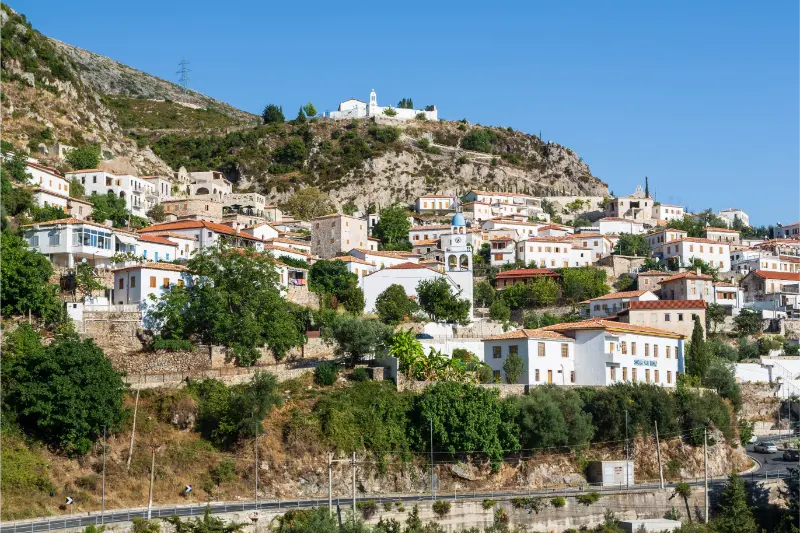
The official Albanian tourism portal describes Vuno as an old coastal village between Himarë and Dhërmi, noted for stone architecture, narrow alleys, historic churches, local traditions and proximity to Jale and Gjipe.
Why Vuno is worth adding to an Albania trip
Vuno adds the village layer that can be missing from a beach-only Riviera trip. Its value is not a single monument but the relationship between architecture, hillside geography, Orthodox heritage and the coast below.
It pairs naturally with our Himarë guide, Dhërmi guide, Gjipe guide and Jale Beach guide.
What to see and experience
Walk the lanes slowly and look at the stone houses, walls, gates and rooflines. The village is compact, but the steepness means you will notice far more if you stop often rather than treating it as a quick photo stop from the road.
Historic churches are an important part of Vuno’s identity. Dress respectfully and follow local rules on access and photography. Even when a church is closed, its position within the settlement helps explain how community life developed on the hillside.
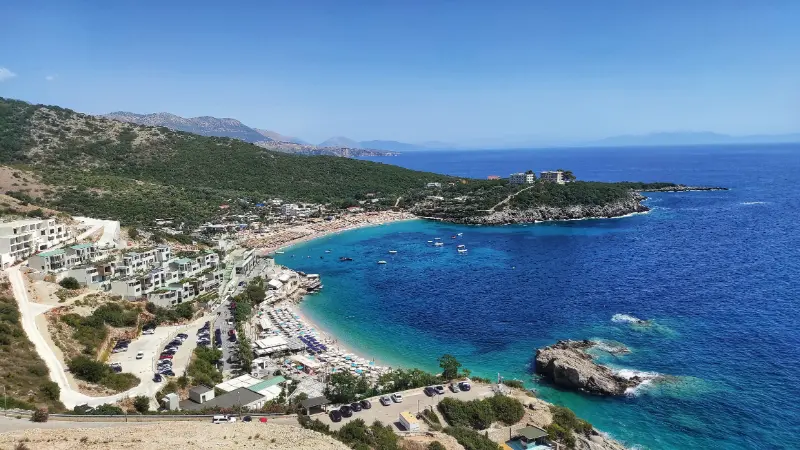
The views toward the Ionian and the proximity to Gjipe and Jale make Vuno a good base for travelers who enjoy combining village mornings with beach afternoons. The contrast is stronger than sleeping directly on the shore.
How much time to allow
Allow two to three hours for the village itself or stay one to three nights if you want a slower Riviera experience. A full day can combine Vuno with one beach, but trying to include both Gjipe and Jale plus the village usually makes the day too rushed.
Albania often looks compact on a map, but a realistic day should include parking, slower local roads, photo stops and time to actually enjoy the place. I prefer one well-chosen regional experience to three rushed attractions connected by constant driving.
Getting there and moving around
Vuno sits on the Riviera road, but parking and access inside the old settlement can be limited. A car is useful for the region, yet be prepared to leave it and walk. Bus connections along the coast may stop on the main road rather than inside the village.
For the bigger picture, use our getting around Albania guide and our car-rental and driving guide. Save an offline map, keep some Albanian lek and avoid depending on a single timetable for a rural connection.
Best time to visit
Spring and autumn are excellent for village walking, while summer lets you combine the visit with swimming. In July and August, explore early or late because the stone lanes can feel hot in midday sun.
Conditions change quickly between the coast and mountains. Recheck weather, road access and seasonal services near departure, especially for exposed beaches, alpine roads, canyon walks and boat-dependent activities.
Where to stay
Guesthouses and small accommodations in or near the village suit travelers seeking atmosphere. Himarë offers a larger choice and easier evening services, while Jale is better if your priority is direct beach access.
Check current accommodation on Booking.com. Always inspect the exact map position and recent reviews rather than relying only on the property name, particularly in rural areas where a listing may use the nearest famous destination.
Food and local atmosphere
Expect simple Albanian and Riviera cooking in the wider area rather than a huge restaurant scene inside the village. Plan one meal in Himarë or Jale if you want more choice, but use local guesthouse breakfasts and home-style dishes when available.
One of the pleasures of Albania is that food can become part of the route rather than a separate attraction. I look for seasonal local dishes, ask what is fresh and leave enough time for a relaxed meal instead of squeezing lunch between two distant sights.
Families, accessibility and comfort
Older children who enjoy exploring can like Vuno, but steep lanes, uneven stone and traffic on the main road require supervision. A stroller is less practical than a carrier in the oldest parts of the settlement.
Travelers with reduced mobility should confirm surfaces, steps, parking distance and toilet access directly with the attraction or accommodation. A destination being reachable by car does not mean the final path, beach access, village lane or viewpoint is step-free.
Safety and responsible travel
Wear shoes with grip on polished or uneven stone, avoid entering abandoned structures and be cautious around unprotected edges. If hiking toward Gjipe, treat that as a separate outdoor activity with water, sun protection and route planning.
Carry water, sun protection, a charged phone and a small first-aid kit. Do not enter unstable structures, damage dunes or vegetation, remove archaeological material or leave rubbish. In quieter places, responsible behavior matters even more because services and conservation staff may be limited.
What to combine with this destination
Spend the morning in Vuno, then choose either Gjipe or Jale. Continue another day toward Himarë or Dhërmi.
The best combinations are regional. A coherent route reduces driving and gives you more time on the ground. If two places look close but require a mountain pass or slow local road, treat the transfer as part of the day rather than an invisible gap between attractions.
A practical day plan
Arrive early, park without blocking local access, walk the old lanes and churches, stop for coffee, then descend toward one beach for the afternoon. Return before dark if your accommodation is elsewhere on the coast.
Keep at least one flexible hour. That margin absorbs traffic, a longer meal, an unexpected viewpoint or changing weather, and it prevents a good day from turning stressful because every stop has been timed to the minute.
Is Vuno worth visiting?
Yes for travelers who want to understand the Riviera beyond beaches. Vuno is small, but its stone architecture, views and living village atmosphere make the coast feel culturally richer.
The answer depends on what you want from Albania. The country works best when you mix headline sights with smaller places that match your interests: villages for slow travel, mountains for hiking, lagoons for nature, archaeology for history and beaches when you simply want time by the water.
Practical details that make the visit easier
Save the exact destination and accommodation offline before setting out. Albania has good mobile coverage in many places, but mountains, lagoons and remote valleys are exactly where a dropped signal becomes inconvenient. I also screenshot parking, meeting points and any message from a host about the final access road.
Carry smaller cash denominations even if you normally pay by card. Guesthouses, rural cafés, parking areas and small local services may not have the same payment options as hotels in Tirana or Saranda. Keep fuel above half a tank on mountain or rural days rather than waiting for the next petrol station.
Costs and booking strategy
Prices change strongly by month and location, so I avoid printing a fixed hotel or taxi price that will age quickly. Compare current rates, read the newest reviews and check whether breakfast, parking, beach equipment, dinner or transfers are included. A slightly more expensive room can be better value when it removes two extra transport problems.
For boat trips, taxis and private transfers, ask whether the quote is per person, per vehicle or for the whole group and whether waiting time or the return leg is included. Clear written confirmation before departure prevents most misunderstandings and is more reliable than assuming a price seen in an old forum still applies.
Photography and respecting local life
Early and late light usually creates stronger photographs and also makes walking more comfortable. In villages, remember that attractive stone houses and courtyards are often private homes. Ask before photographing people closely, do not enter gates without permission and never move objects or climb walls simply to improve a composition.
If you use a drone, check current national and local rules before flying. Protected areas, wildlife, military zones, archaeological sites and crowded beaches may involve restrictions or legitimate privacy concerns. Aerial photography should never come before safety, conservation or respect for residents.
How this stop fits a longer Albania itinerary
The strongest Albania itineraries alternate intensity. After a long mountain drive, choose an easier village or beach day; after several resort nights, add archaeology or nature. This rhythm makes the country feel more varied and reduces the temptation to spend every day chasing distant attractions.
I also avoid changing accommodation every night unless the route truly requires it. Two- and three-night bases create time for weather changes, spontaneous meals and unplanned discoveries. They are especially valuable in Albania, where short map distances can hide slow mountain roads or busy summer traffic.
Practical details that make the visit easier
Save the exact destination and accommodation offline before setting out. Albania has good mobile coverage in many places, but mountains, lagoons and remote valleys are exactly where a dropped signal becomes inconvenient. I also screenshot parking, meeting points and any message from a host about the final access road.