Tag: Muslim Travel

Practical guides for Muslim travelers in Albania, including mosques, halal-food planning, prayer, Ramadan and respectful religious travel.

  • Muslim Travel in Vlorë: Muradie Mosque, Halal Food, Beaches and Prayer Tips

    Muslim Travel in Vlorë: Muradie Mosque, Halal Food, Beaches and Prayer Tips

    Vlorë can work very well for Muslim travelers, but the useful question is not whether a destination can be given a simple “Muslim-friendly” label. What matters is whether you can pray when you need to, find food that matches your own halal standard, choose accommodation in a practical area and enjoy the destination without spending the day solving logistics. A good Muslim-friendly Riviera gateway with an important historic mosque, but less halal certainty than Tirana.

    Start with the country-wide Albania for Muslim Travelers guide. For sightseeing and transport, keep the Vlorë travel guide open as well. Food traditions are covered in the relevant Albania food guide, while Muradie Mosque guide adds historical context.

    Quick Muslim-friendly planning summary for Vlorë

    PrayerGood if you map the mosque you intend to use before starting the day.
    Halal foodPossible, but verify meat sourcing and preparation instead of relying on assumptions.
    AlcoholCommonly served in ordinary restaurants and cafés; choose your venue according to your own comfort level.
    RamadanTourism normally continues during the day; plan iftar and prayer around transport and seasonal crowds.
    Family travelGenerally straightforward, with the main constraints coming from terrain, beaches or day-trip logistics rather than religion.
    Best strategyA good Muslim-friendly Riviera gateway with an important historic mosque, but less halal certainty than Tirana.

    Prayer and mosques in Vlorë

    Muradie Mosque is the key Islamic landmark in central Vlorë and remains part of the city’s living religious landscape. Its position near the historic centre makes it easier to combine prayer with sightseeing than in many resort towns. Once you move south toward Radhimë, Orikum and the Riviera, dedicated prayer spaces become less predictable, so plan before leaving the city.

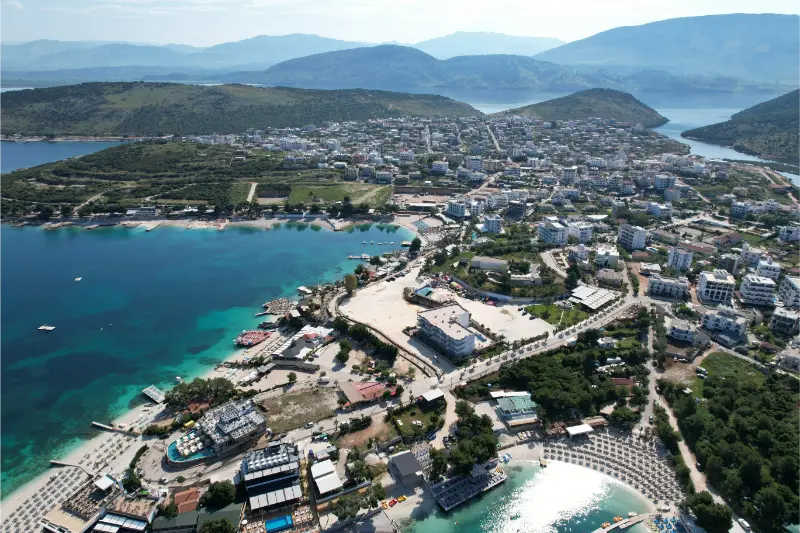
    Adriatic Sea Coastline Top View Orikum Albania

    For a current heritage reference, see Vlorë municipality visitor information on Muradie Mosque. Opening access, prayer times, women’s sections and Friday arrangements can change, so use the source as a location/history reference and confirm worship details locally when they matter to your trip.

    Do not hard-code prayer times into your itinerary

    Prayer times shift every day and vary slightly depending on calculation method. Save a trusted prayer-time app before you travel and compare it with local mosque information when possible. If you are moving between the coast, mountains and inland cities, the time difference is small, but transport delays can be large. Build a little margin instead of planning a bus, museum ticket and prayer to the exact minute.

    Friday prayer needs more margin

    Jumu’ah is the moment when a mosque that feels quiet on a weekday can suddenly become busy. Arrive early, follow local directions for entrances and women’s areas, and avoid assuming there will be easy parking beside the mosque. If you are driving, park legally farther away rather than blocking residents or worshippers.

    Mosque etiquette for visitors

    • Dress modestly. Shoulders and knees should be covered; women should carry a scarf if they intend to enter a prayer area where head covering is expected.
    • Remove shoes where indicated. Follow the local arrangement rather than copying another visitor who may be using a different entrance.
    • Keep photography secondary to worship. Ask before photographing people, especially during prayer.
    • Use the correct prayer area. Women’s sections and ablution facilities vary; ask politely if the layout is not obvious.
    • Do not treat a functioning mosque like a museum set. Wait if a prayer is underway and keep children close without expecting complete silence from the local community.
    • Distinguish active mosques from ruins or monuments. A historic minaret or mosque foundation is not automatically a place where prayer facilities are available.

    Halal food in Vlorë: what “available” really means

    Vlorë is one of Albania’s strongest seafood destinations. Fish, vegetables, bean dishes, rice and salads can be practical choices, but meat should still be verified if you require halal slaughter. Olive oil and herb-based pies are common regional flavors; ask about cheese, butter, lard or meat stock when the ingredient list matters. Restaurants on the Lungomare are used to international visitors, so simple, specific questions usually work better than asking only “Is everything halal?”

    Albania does not have one nationwide restaurant-labeling system that lets a traveler assume every venue using the word “halal” follows the same sourcing and preparation standard. Some places can explain their supplier clearly; others simply mean “no pork.” If the distinction matters to you, ask a specific question about the meat you are ordering and decide according to your own standard.

    Useful questions to ask

    • “Is this meat halal?” Ask about the exact dish rather than the entire restaurant.
    • “Does this contain pork or lard?” Useful for pastries, beans, soups and mixed grills.
    • “Is wine or raki used in the sauce?” Alcohol is part of Albanian restaurant culture and can appear in cooking as well as drinks.
    • “Is it cooked on the same grill?” Important if cross-contact with pork matters to you.
    • “Can you prepare this without meat stock?” Helpful for soups, rice and vegetable dishes.

    Vegetarian food can simplify a meal, but it is not a halal certificate

    Vegetarian dishes remove the meat-sourcing question but can still contain alcohol, animal-derived fats or ingredients you personally avoid. Byrek, pies and pastries often include cheese, butter or other dairy. Soups may use meat stock. Ask concise questions and choose dishes with ingredients you can understand rather than trying to translate an entire menu.

    Where to stay

    For mosque access, the central and historic areas are more convenient than a resort far south on the coast. For beach time, Lungomare and Uji i Ftohtë are more attractive, but you may use taxis to reach central prayer facilities. Decide whether prayer convenience or immediate beach access matters more before choosing accommodation.

    If you want to compare accommodation in the right area, you can compare hotels and apartments on Booking.com. Use Booking as a shortlist, then message the property directly if you need a fridge for suhoor, late check-in after evening prayer, an early breakfast, private parking, or a room layout that gives you enough floor space to pray comfortably.

    Ramadan and Eid travel

    In Ramadan, expect normal daytime tourism rather than a citywide fasting schedule. If you are fasting, summer heat and long beach days are the bigger challenge. Build shade and rest into the afternoon, and do not schedule a late boat return if you want to be back near the city for iftar and evening prayer.

    Because Albania is religiously mixed and secular in everyday public life, visitors should not expect the entire destination to change to a Ramadan timetable. Many cafés serve food and alcohol during fasting hours. This can be convenient for non-fasting companions and may feel unfamiliar to visitors coming from Muslim-majority countries. Around Eid, mosques may be much busier, while tourism businesses generally continue operating unless they announce otherwise.

    Suhoor planning

    Hotels do not universally provide pre-dawn meals. If suhoor is important, book an apartment or a room with a fridge, or buy simple food the evening before. Supermarkets are easier to rely on than expecting a hotel kitchen to open before dawn. Carry water according to your fasting practice and the climate, especially on beach or mountain itineraries.

    Women, families and children

    Muslim families generally do not need special arrangements to travel around Albania, but mosque layouts vary more than hotel layouts. Women’s prayer areas may be upstairs, separate, small or occasionally unavailable at a particular moment. Families should therefore avoid building a tight schedule around an unverified facility. A lightweight prayer mat, scarf and a small bag for shoes solve many practical problems.

    For beach destinations, choose swimwear according to your own preferences and the specific environment. Albania’s public beaches are ordinary European-style beaches, and modest swimwear is a personal choice rather than the local norm. Private hotel pools and quieter beach sections may feel more comfortable for some families, but rules vary by property.

    Transport and day trips

    Start in the old centre with Muradie Mosque and Independence-era sights, then move toward the Lungomare after lunch. For a second day, Karaburun/Sazan boat trips are beautiful but can make prayer timing and fasting logistics harder; a land-based excursion to Zvërnec or Kaninë is easier to control.

    Vlorë is the last large city before many travelers commit to the southern Riviera. If halal food verification, medicine, cash or a specific prayer timetable matters to you, solve those needs here before heading to smaller beach villages.

    Vlore Albania Sea Coast Sunset Landscape

    Rental car vs taxi vs bus

    A rental car gives the most control over prayer stops and food, but parking near historic mosques can be difficult. Taxis are useful for short city transfers and for returning to accommodation before iftar. Buses are cheaper but less flexible: schedules may not line up with prayer, and intercity terminals rarely offer the same facilities as a mosque. Choose transport based on the day’s priorities rather than assuming one method is always better.

    Religious heritage beyond the mosque

    Vlorë’s religious landscape also includes the Bektashi site at Kuzum Baba and Christian heritage around the city and nearby villages. The most rewarding approach is to understand these places within Albania’s history of religious coexistence. At an active mosque, enter quietly, dress modestly, remove shoes where indicated and avoid photographing worshippers without permission.

    Albania’s Muslim traditions include Sunni Islam and Bektashism, and the two should not be treated as identical. A tekke, a Bektashi pilgrimage site and a Sunni mosque have different roles and customs. Travelers interested in religious history should read about the site before visiting and follow local instructions instead of applying mosque etiquette mechanically to every sacred place.

    A realistic Muslim-friendly day in Vlorë

    Begin with breakfast or a simple self-catered meal, then visit the main historical area before tour groups and heat build. Plan one mosque around Dhuhr rather than trying to visit every religious site. Use the middle of the day for a museum, shaded lunch or rest, then continue with the destination’s main secular sights. In the evening, choose a restaurant you have already checked rather than walking hungry from menu to menu asking the same halal question.

    This approach is deliberately simple. A Muslim-friendly trip should still feel like a trip to Albania, not a continuous search for facilities. When prayer locations, food and accommodation are mapped in advance, the rest of the day can be about history, landscapes, cafés, beaches and local life.

    Common mistakes Muslim travelers can avoid

    • Assuming “no pork” means the meat is halal.
    • Choosing a remote hotel and only later checking how far it is from a functioning mosque.
    • Using an old blog post for prayer times instead of a current timetable.
    • Expecting every historic mosque monument or ruin to have prayer and ablution facilities.
    • Planning a long summer excursion while fasting without considering heat, water needs after sunset and the return time.
    • Assuming a Turkish, Arab or kebab restaurant is automatically halal without asking.
    • Expecting Albania to follow a Muslim-majority Ramadan schedule nationwide.
    • Photographing worshippers at close range without permission.
    • Arriving for Friday prayer by car with no parking plan.
    • Trying to make every meal perfectly researched instead of carrying a few reliable snacks for travel days.

    FAQ

    Is Vlorë Muslim-friendly?

    Yes, with realistic expectations. A good Muslim-friendly Riviera gateway with an important historic mosque, but less halal certainty than Tirana. Muslim travelers can practice their faith openly, but the density of halal restaurants, prayer spaces and Ramadan-specific services is not the same as in a Muslim-majority destination.

    Can I find halal meat easily?

    It depends on the city and the restaurant. Tirana offers the widest choice; smaller destinations require more verification. Ask about the specific meat and supplier when halal slaughter matters to you. Seafood and vegetarian food can simplify ordering for some travelers, depending on personal interpretation and dietary needs.

    Can women pray in Albanian mosques?

    Many mosques have a women’s area, but size, entrance and access vary. Do not assume the layout from photos. Ask locally, especially at small historic mosques or during crowded Friday prayers.

    Do restaurants close during Ramadan?

    Most tourist restaurants remain open during the day. Albania does not operate on a nationwide fasting schedule. Iftar can make some restaurants busier in areas with active Muslim communities, so booking helps if sunset timing matters.

    Should I bring a prayer mat?

    A thin travel prayer mat is useful, especially for beaches, road trips, ferry days and mountain excursions. It does not replace checking whether you are in an appropriate, clean and safe place to pray, but it gives you more flexibility when a mosque is not nearby.

    Final advice

    The easiest Muslim trip to Vlorë comes from planning three things before the day starts: where you can pray, what you will eat and how you will get back to your base. Once those are clear, do not let the logistics dominate the destination. Use the mosque as part of the city rather than the only reason to be there, ask precise questions about halal food, and make space for the history and everyday life that make Vlorë worth visiting in the first place.
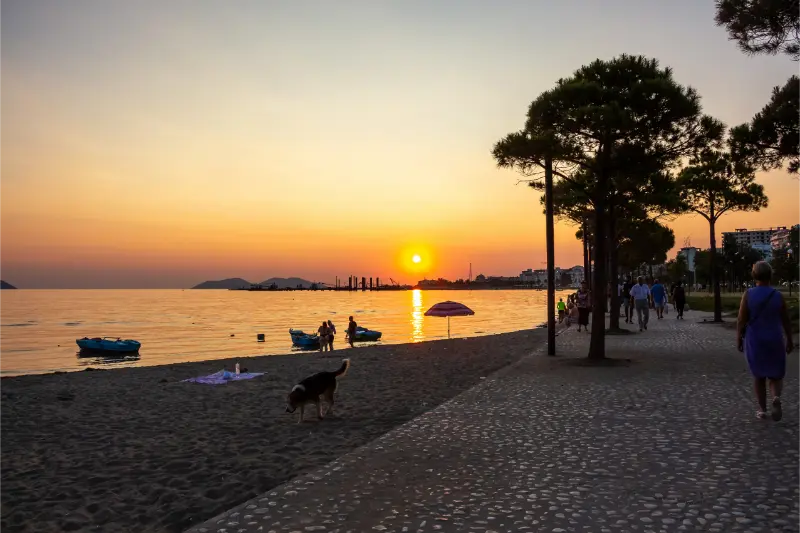
    Vlore Albania Sea Coast Sunset View Dog Beach
  • Muslim Travel in Sarandë & Ksamil: Mosques, Halal Food, Beaches and Practical Tips

    Muslim Travel in Sarandë & Ksamil: Mosques, Halal Food, Beaches and Practical Tips

    Sarandë & Ksamil can work very well for Muslim travelers, but the useful question is not whether a destination can be given a simple “Muslim-friendly” label. What matters is whether you can pray when you need to, find food that matches your own halal standard, choose accommodation in a practical area and enjoy the destination without spending the day solving logistics. Very easy for beach tourism, but prayer and verified halal options require more planning than in Tirana or Shkodër.

    Start with the country-wide Albania for Muslim Travelers guide. For sightseeing and transport, keep the Sarandë & Ksamil travel guide open as well. Food traditions are covered in the relevant Albania food guide, while Religious Heritage in Albania adds historical context.

    Quick Muslim-friendly planning summary for Sarandë & Ksamil

    PrayerGood if you map the mosque you intend to use before starting the day.
    Halal foodPossible, but verify meat sourcing and preparation instead of relying on assumptions.
    AlcoholCommonly served in ordinary restaurants and cafés; choose your venue according to your own comfort level.
    RamadanTourism normally continues during the day; plan iftar and prayer around transport and seasonal crowds.
    Family travelGenerally straightforward, with the main constraints coming from terrain, beaches or day-trip logistics rather than religion.
    Best strategyVery easy for beach tourism, but prayer and verified halal options require more planning than in Tirana or Shkodër.

    Prayer and mosques in Sarandë & Ksamil

    Sarandë has functioning Muslim prayer spaces, and Ksamil also has a mosque, but the network is smaller than in Albania’s larger cities. That means location matters. Save the mosque you intend to use before leaving Wi-Fi and check current access locally, especially for Friday prayer or women’s prayer space. On a Butrint or Blue Eye day, carry a compact prayer mat because the excursion may not line up neatly with a mosque stop.

    For a current heritage reference, see Visit Saranda religious-sites directory. Opening access, prayer times, women’s sections and Friday arrangements can change, so use the source as a location/history reference and confirm worship details locally when they matter to your trip.

    Do not hard-code prayer times into your itinerary

    Prayer times shift every day and vary slightly depending on calculation method. Save a trusted prayer-time app before you travel and compare it with local mosque information when possible. If you are moving between the coast, mountains and inland cities, the time difference is small, but transport delays can be large. Build a little margin instead of planning a bus, museum ticket and prayer to the exact minute.

    Friday prayer needs more margin

    Jumu’ah is the moment when a mosque that feels quiet on a weekday can suddenly become busy. Arrive early, follow local directions for entrances and women’s areas, and avoid assuming there will be easy parking beside the mosque. If you are driving, park legally farther away rather than blocking residents or worshippers.

    Mosque etiquette for visitors

    • Dress modestly. Shoulders and knees should be covered; women should carry a scarf if they intend to enter a prayer area where head covering is expected.
    • Remove shoes where indicated. Follow the local arrangement rather than copying another visitor who may be using a different entrance.
    • Keep photography secondary to worship. Ask before photographing people, especially during prayer.
    • Use the correct prayer area. Women’s sections and ablution facilities vary; ask politely if the layout is not obvious.
    • Do not treat a functioning mosque like a museum set. Wait if a prayer is underway and keep children close without expecting complete silence from the local community.
    • Distinguish active mosques from ruins or monuments. A historic minaret or mosque foundation is not automatically a place where prayer facilities are available.

    Halal food in Sarandë & Ksamil: what “available” really means

    Sarandë and Ksamil have abundant seafood and Mediterranean-style menus. If seafood suits your dietary practice, it can simplify meals; otherwise, verify meat sourcing rather than assuming a grill restaurant is halal. In summer, some places change suppliers or menus frequently, so a recommendation from last year may not answer today’s question. Ask about the specific meat you are ordering, not only the restaurant in general.

    Albania does not have one nationwide restaurant-labeling system that lets a traveler assume every venue using the word “halal” follows the same sourcing and preparation standard. Some places can explain their supplier clearly; others simply mean “no pork.” If the distinction matters to you, ask a specific question about the meat you are ordering and decide according to your own standard.

    Useful questions to ask

    • “Is this meat halal?” Ask about the exact dish rather than the entire restaurant.
    • “Does this contain pork or lard?” Useful for pastries, beans, soups and mixed grills.
    • “Is wine or raki used in the sauce?” Alcohol is part of Albanian restaurant culture and can appear in cooking as well as drinks.
    • “Is it cooked on the same grill?” Important if cross-contact with pork matters to you.
    • “Can you prepare this without meat stock?” Helpful for soups, rice and vegetable dishes.

    Vegetarian food can simplify a meal, but it is not a halal certificate

    Vegetarian dishes remove the meat-sourcing question but can still contain alcohol, animal-derived fats or ingredients you personally avoid. Byrek, pies and pastries often include cheese, butter or other dairy. Soups may use meat stock. Ask concise questions and choose dishes with ingredients you can understand rather than trying to translate an entire menu.

    Where to stay

    Sarandë is the better base if mosque access, transport and supermarket choice matter. Ksamil is better for walking to beaches but is more seasonal and can be crowded. A compromise is to stay in Sarandë and visit Ksamil by bus or taxi; families who want daily beach access may prefer Ksamil but should map prayer options before booking.

    Aerial View Of Ksamil Town And Bay Albania

    If you want to compare accommodation in the right area, you can compare hotels and apartments on Booking.com. Use Booking as a shortlist, then message the property directly if you need a fridge for suhoor, late check-in after evening prayer, an early breakfast, private parking, or a room layout that gives you enough floor space to pray comfortably.

    Ramadan and Eid travel

    If Ramadan overlaps with warm weather, the combination of sun, swimming and long days needs realistic pacing. Restaurants remain open in daylight. Arrange iftar early in peak season because sunset tables can coincide with the normal dinner rush, especially on the Sarandë promenade.

    Because Albania is religiously mixed and secular in everyday public life, visitors should not expect the entire destination to change to a Ramadan timetable. Many cafés serve food and alcohol during fasting hours. This can be convenient for non-fasting companions and may feel unfamiliar to visitors coming from Muslim-majority countries. Around Eid, mosques may be much busier, while tourism businesses generally continue operating unless they announce otherwise.

    Suhoor planning

    Hotels do not universally provide pre-dawn meals. If suhoor is important, book an apartment or a room with a fridge, or buy simple food the evening before. Supermarkets are easier to rely on than expecting a hotel kitchen to open before dawn. Carry water according to your fasting practice and the climate, especially on beach or mountain itineraries.

    Women, families and children

    Muslim families generally do not need special arrangements to travel around Albania, but mosque layouts vary more than hotel layouts. Women’s prayer areas may be upstairs, separate, small or occasionally unavailable at a particular moment. Families should therefore avoid building a tight schedule around an unverified facility. A lightweight prayer mat, scarf and a small bag for shoes solve many practical problems.

    For beach destinations, choose swimwear according to your own preferences and the specific environment. Albania’s public beaches are ordinary European-style beaches, and modest swimwear is a personal choice rather than the local norm. Private hotel pools and quieter beach sections may feel more comfortable for some families, but rules vary by property.

    Transport and day trips

    Use one day for Sarandë, the central mosque area and the promenade, and a second for Ksamil and Butrint. Blue Eye is best treated as a separate half-day. Trying to combine all three while also returning for every prayer at the same mosque can create unnecessary transport stress.

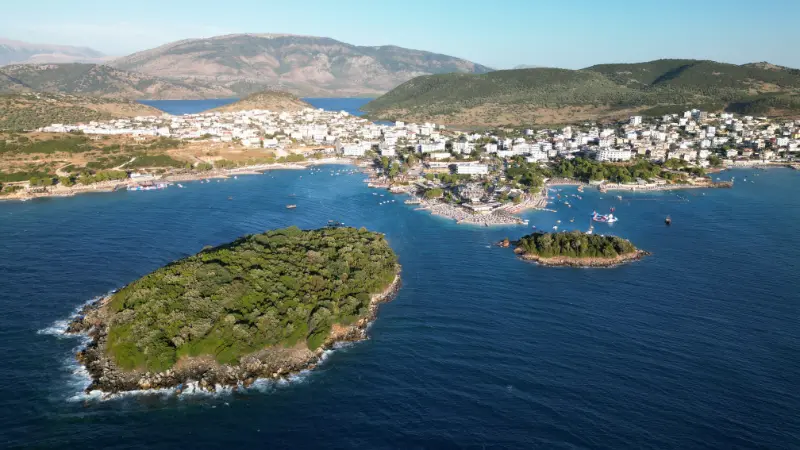
    Drone View Of Ksamil Islands Albania

    Ferry passengers arriving from Corfu should not assume the terminal area is the best place to solve prayer or food needs. Clear immigration, reach your accommodation, then orient yourself. In July and August, traffic between Sarandë and Ksamil can be slow enough to affect prayer and meal plans.

    Rental car vs taxi vs bus

    A rental car gives the most control over prayer stops and food, but parking near historic mosques can be difficult. Taxis are useful for short city transfers and for returning to accommodation before iftar. Buses are cheaper but less flexible: schedules may not line up with prayer, and intercity terminals rarely offer the same facilities as a mosque. Choose transport based on the day’s priorities rather than assuming one method is always better.

    Religious heritage beyond the mosque

    Southern Albania is religiously diverse. Sarandë itself contains the archaeological remains of an ancient synagogue and basilica, while Orthodox monasteries and churches are prominent in the wider region. Muslim heritage continues inland toward Delvinë and Gjirokastër. That diversity makes the area culturally rich, but it also means beach tourism—not religious infrastructure—drives most visitor services.

    Albania’s Muslim traditions include Sunni Islam and Bektashism, and the two should not be treated as identical. A tekke, a Bektashi pilgrimage site and a Sunni mosque have different roles and customs. Travelers interested in religious history should read about the site before visiting and follow local instructions instead of applying mosque etiquette mechanically to every sacred place.

    A realistic Muslim-friendly day in Sarandë & Ksamil

    Begin with breakfast or a simple self-catered meal, then visit the main historical area before tour groups and heat build. Plan one mosque around Dhuhr rather than trying to visit every religious site. Use the middle of the day for a museum, shaded lunch or rest, then continue with the destination’s main secular sights. In the evening, choose a restaurant you have already checked rather than walking hungry from menu to menu asking the same halal question.

    This approach is deliberately simple. A Muslim-friendly trip should still feel like a trip to Albania, not a continuous search for facilities. When prayer locations, food and accommodation are mapped in advance, the rest of the day can be about history, landscapes, cafés, beaches and local life.

    Common mistakes Muslim travelers can avoid

    • Assuming “no pork” means the meat is halal.
    • Choosing a remote hotel and only later checking how far it is from a functioning mosque.
    • Using an old blog post for prayer times instead of a current timetable.
    • Expecting every historic mosque monument or ruin to have prayer and ablution facilities.
    • Planning a long summer excursion while fasting without considering heat, water needs after sunset and the return time.
    • Assuming a Turkish, Arab or kebab restaurant is automatically halal without asking.
    • Expecting Albania to follow a Muslim-majority Ramadan schedule nationwide.
    • Photographing worshippers at close range without permission.
    • Arriving for Friday prayer by car with no parking plan.
    • Trying to make every meal perfectly researched instead of carrying a few reliable snacks for travel days.

    FAQ

    Is Sarandë & Ksamil Muslim-friendly?

    Yes, with realistic expectations. Very easy for beach tourism, but prayer and verified halal options require more planning than in Tirana or Shkodër. Muslim travelers can practice their faith openly, but the density of halal restaurants, prayer spaces and Ramadan-specific services is not the same as in a Muslim-majority destination.

    Can I find halal meat easily?

    It depends on the city and the restaurant. Tirana offers the widest choice; smaller destinations require more verification. Ask about the specific meat and supplier when halal slaughter matters to you. Seafood and vegetarian food can simplify ordering for some travelers, depending on personal interpretation and dietary needs.

    Can women pray in Albanian mosques?

    Many mosques have a women’s area, but size, entrance and access vary. Do not assume the layout from photos. Ask locally, especially at small historic mosques or during crowded Friday prayers.

    Do restaurants close during Ramadan?

    Most tourist restaurants remain open during the day. Albania does not operate on a nationwide fasting schedule. Iftar can make some restaurants busier in areas with active Muslim communities, so booking helps if sunset timing matters.

    Should I bring a prayer mat?

    A thin travel prayer mat is useful, especially for beaches, road trips, ferry days and mountain excursions. It does not replace checking whether you are in an appropriate, clean and safe place to pray, but it gives you more flexibility when a mosque is not nearby.

    Final advice

    The easiest Muslim trip to Sarandë & Ksamil comes from planning three things before the day starts: where you can pray, what you will eat and how you will get back to your base. Once those are clear, do not let the logistics dominate the destination. Use the mosque as part of the city rather than the only reason to be there, ask precise questions about halal food, and make space for the history and everyday life that make Sarandë & Ksamil worth visiting in the first place.
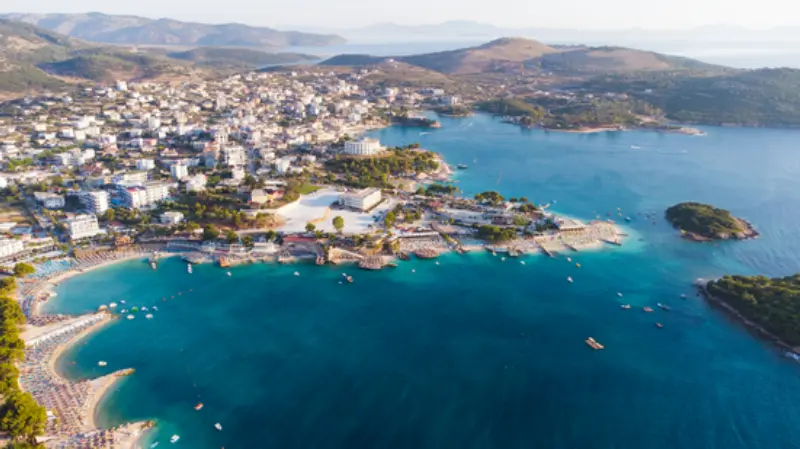
    Aerial View Of Ksamil Islands Albania