
You do not need a rental car to enjoy the Albanian Riviera, but you do need a different style of itinerary. The easiest car-free trip is built around a small number of strong bases such as Vlorë, Himarë and Saranda, using intercity buses for the main moves, taxis for short transfers and boat trips for coves that are naturally easier from the sea. What does not work well is copying a road trip with ten beach stops and expecting public transport to reproduce it.

The official Albanian tourism portal is a useful reference for the place or topic described below. Practical details can change, so I still confirm transport, opening arrangements, weather and local access shortly before travelling.
Why this deserves a place in your Albania plan
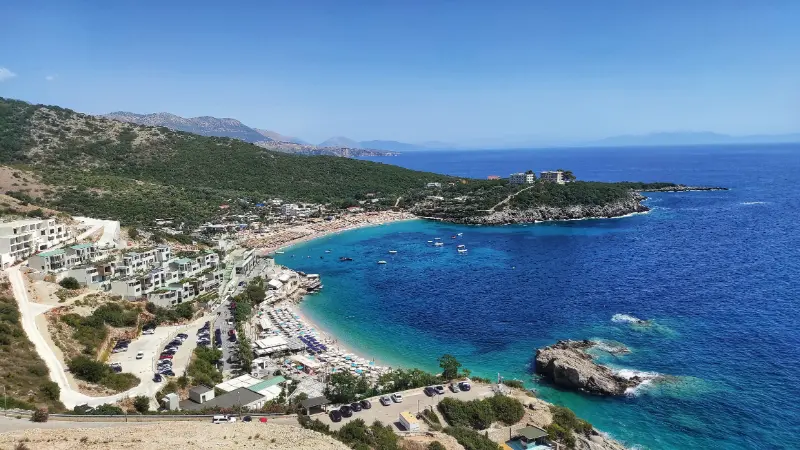
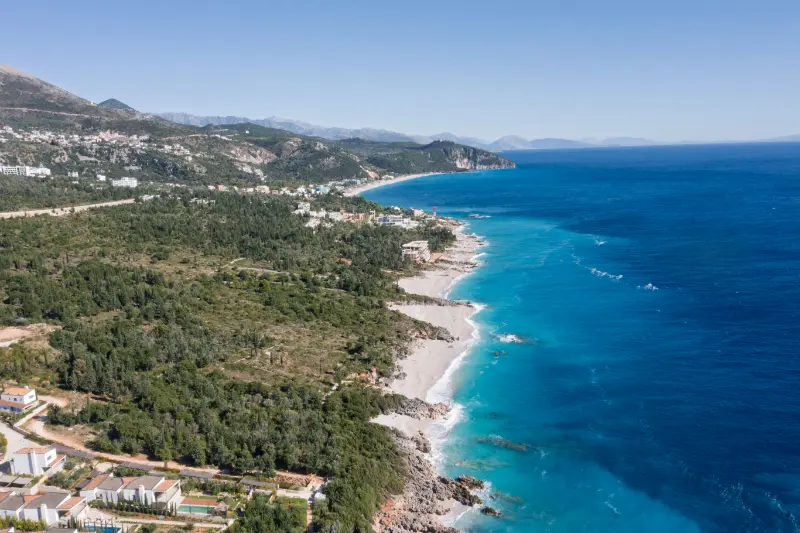
The Riviera is linear on a map but mountainous in reality. Main-road settlements can be connected by bus or minibus, while beaches below cliffs, old villages above the coast and remote coves may sit several kilometres from the drop-off point. That makes base selection more important than timetable obsession. A well-chosen hotel in Himarë can give you several beaches on foot or by short taxi, while a poorly placed stay can turn every day into a transfer problem.
For more planning context, pair this guide with our Albanian Riviera guide, Albania by bus guide and Himare travel guide.
How to plan the logistics
Use eTransport and local confirmation for intercity lines, then ask accommodation hosts where buses actually stop. From Tirana, Vlorë and Saranda are straightforward major destinations; Himarë and Dhërmi require more attention to route and drop-off point. Keep luggage manageable because roadside stops and uphill accommodation are common. When a beach requires a long descent, check how you will return before going down.
My general rule in Albania is to leave more margin than the map suggests. Traffic, mountain roads, weather, seasonal transport and local roadworks can alter a day quickly. Download offline maps, keep some cash in lek and save the name of your accommodation or destination in Albanian so that asking for help is easy.
What to see, do and experience
Start with Vlore if logistics matter
Vlorë is one of the easiest Riviera gateways without a car because it has strong transport links, a long waterfront and boat excursions toward Karaburun and Sazan. You can spend a night here before continuing south, especially if you arrive from Tirana later in the day. It also gives you time to confirm the next bus rather than chaining connections.
Do not schedule this part of the day so tightly that a short delay becomes a problem. I normally leave room for a coffee, a viewpoint, a conversation with a host or a change caused by weather. That flexibility is one of the easiest ways to make independent travel in Albania feel relaxed instead of improvised.
Use Himare as the most flexible coastal base
Himarë works well because the town itself has beaches, restaurants and accommodation, while taxis and boats open up nearby options. You can visit Porto Palermo, Qeparo, Jale or other stops without changing hotels every night. Choose accommodation within comfortable walking distance of the centre if you do not want to depend on taxis after dinner.
Do not schedule this part of the day so tightly that a short delay becomes a problem. I normally leave room for a coffee, a viewpoint, a conversation with a host or a change caused by weather. That flexibility is one of the easiest ways to make independent travel in Albania feel relaxed instead of improvised.
Treat Dhermi as a destination, not a hub
Dhërmi is excellent for a focused beach stay, but the old village and beach zone are separated by elevation and distance. Without a car, check exactly where your accommodation is and how you will handle luggage. If your main goal is nightlife or one particular beach, staying there makes sense; for broader exploration, Himarë may be more practical.
Do not schedule this part of the day so tightly that a short delay becomes a problem. I normally leave room for a coffee, a viewpoint, a conversation with a host or a change caused by weather. That flexibility is one of the easiest ways to make independent travel in Albania feel relaxed instead of improvised.
Finish in Saranda for connections
Saranda has the strongest combination of urban services, buses, taxis, ferries and organized excursions in the far south. Butrint, Ksamil and Blue Eye can be reached without renting a car, although timing and summer crowds require planning. The Corfu ferry also makes Saranda useful for an open-jaw trip that does not return to Tirana.
Do not schedule this part of the day so tightly that a short delay becomes a problem. I normally leave room for a coffee, a viewpoint, a conversation with a host or a change caused by weather. That flexibility is one of the easiest ways to make independent travel in Albania feel relaxed instead of improvised.
Use boats for places that make sense by sea
Grama Bay, sections of Karaburun and some coves are naturally better approached by boat than by trying to solve remote road access. Choose licensed operators, listen to weather decisions and do not book a boat day as an unchangeable connection to a flight or ferry. Sea conditions have the final vote.
Do not schedule this part of the day so tightly that a short delay becomes a problem. I normally leave room for a coffee, a viewpoint, a conversation with a host or a change caused by weather. That flexibility is one of the easiest ways to make independent travel in Albania feel relaxed instead of improvised.
Know when a taxi is worth the money
A short taxi can save an hour of roadside waiting or a punishing uphill walk with luggage. Use taxis strategically for accommodation transfers, nearby castles, beach access and early departures. Ask your host for an approximate fare and local contact, and confirm the price before the journey if the vehicle does not use a meter.
Do not schedule this part of the day so tightly that a short delay becomes a problem. I normally leave room for a coffee, a viewpoint, a conversation with a host or a change caused by weather. That flexibility is one of the easiest ways to make independent travel in Albania feel relaxed instead of improvised.
Best time to go
June and September are especially good for car-free Riviera travel because services are active while peak-season crowding is lower. July and August have the most tourism infrastructure but also traffic, full buses and expensive last-minute rooms. May and October can be lovely, yet some boat services and beach businesses may run reduced schedules.
Check the short-range forecast rather than relying only on monthly averages. Heat, recent rainfall, wind and snow can matter more than the name of the season, especially in mountains, wetlands and coastal areas. Shoulder season is often the best balance between active services, comfortable temperatures and lower visitor pressure.
How much time should you allow?
For a destination-based article, half a day is the minimum and a full day usually gives a better experience; for a travel style or itinerary topic, use the advice here as a framework rather than a minute-by-minute schedule. Albania looks compact, but changing valleys, coastal traffic and limited rural transport mean that fewer well-chosen stops normally produce a better trip.
Where to stay
For most travellers, two or three bases are enough: Vlorë, Himarë and Saranda. If you have only four nights, choose Himarë plus Saranda rather than moving every day. Compare accommodation in Himarë on Booking.com and check the map carefully before booking.
When choosing accommodation, I read recent comments about road access, parking or bus stops, noise, air conditioning or heating and host communication. In smaller places, a responsive host can be more valuable than an extra hotel facility because they can confirm current transport, arrange a local transfer and explain what is actually open.
Food, water and money
Carry water on transfer and outdoor days, and keep some lek for cafés, buses, parking, small bakeries and rural businesses. Card acceptance is improving but should not be assumed everywhere. If you have dietary restrictions, communicate them clearly and early, especially at guesthouses where meals may be prepared for a small number of guests rather than ordered from a long menu.
Photography and local etiquette
Ask before photographing people, private homes, religious activity or interiors where rules are unclear. Do not climb monuments, cross barriers or disturb wildlife for a better angle. Early and late light usually improves photographs anyway, and spending a few minutes understanding the setting produces more interesting images than rushing directly to the most obvious viewpoint.
Families, older travellers and accessibility
Judge the day by terrain, heat, steps, toilet access and transfer complexity rather than by distance alone. A private driver, taxi or central hotel can make an itinerary much easier for families and older travellers. Accessibility varies widely, so contact accommodation and attractions directly if step-free access or other specific requirements are essential.
Responsible travel and safety
Leave no rubbish, stay on durable paths, respect protected-area rules and avoid removing plants, stones or archaeological material. In mountains and wetlands, turn back when conditions deteriorate. On roads, use seat belts and avoid unnecessary night driving on unfamiliar rural routes. Good travel planning is not about eliminating uncertainty; it is about leaving enough margin to respond safely.
How to connect this with a wider trip
For more planning context, pair this guide with our Albanian Riviera guide, Albania by bus guide and Himare travel guide.
I prefer itineraries that alternate demanding sightseeing with lighter days. Use this guide as one anchor in the region, then add nearby food, a village, a beach or a scenic drive rather than another distant headline attraction. That reduces time in transit and gives you more contact with the place you actually came to experience.
Simple planning checklist
- Transport: confirm the exact departure point, final access and return plan.
- Weather: check the local forecast and recent conditions.
- Money: carry some Albanian lek for small payments.
- Navigation: download offline maps before leaving strong mobile coverage.
- Footwear: choose comfort and grip for cobbles, trails or wet ground.
- Food: tell hosts about dietary requirements in advance.
- Timing: leave margin instead of chaining tight connections.
- Respect: follow local, religious, archaeological and protected-area rules.
Final thoughts
The best version of this experience is not the one with the greatest number of stops. It is the one where the logistics are simple enough that you can notice the landscape, food, history and everyday life around you. Use the practical details as a framework, confirm what can change, and leave enough space for Albania to be more than a checklist.