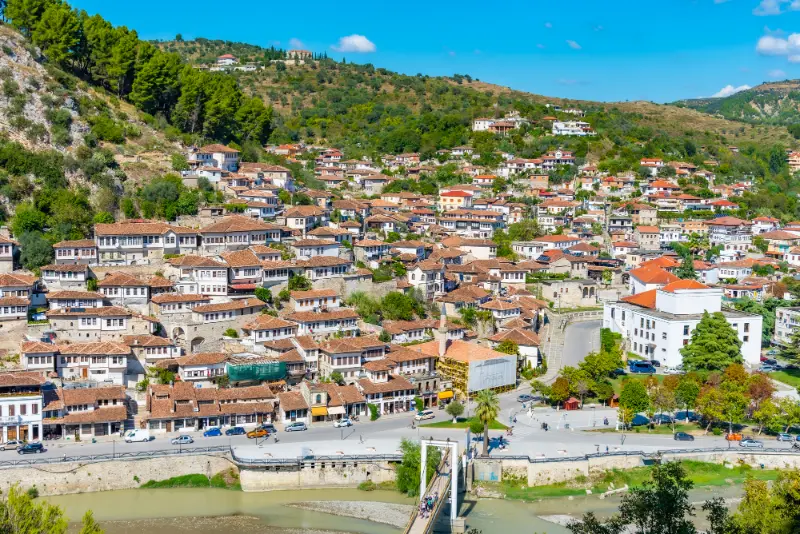
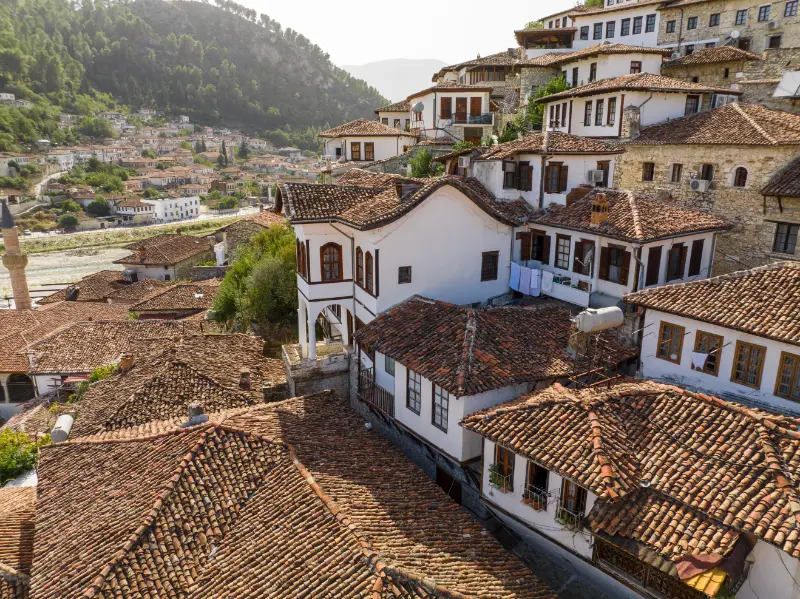
Berat’s Ethnographic Museum is one of the best places to understand the white Ottoman-era houses you see across the historic city from the inside. The museum occupies a representative eighteenth-century house with a courtyard, çardak, fireplaces, carved details and rooms arranged according to domestic function. Rather than presenting architecture as an empty shell, it fills the building with objects connected to family life, crafts and work.
The collection contains around 1,400 artifacts. The lower level recreates aspects of the old bazaar and craft economy, while upper rooms show how a traditional Berat household organized reception, cooking, sleeping and everyday activity. Visit before or after walking through Mangalem and the castle; the museum will make architectural details in the rest of the city much easier to read.
Albania’s official tourism portal is the main reference used for the core historical and location facts in this guide. I still recommend checking current opening arrangements, ticketing, local access and any temporary restrictions close to your travel date, because those details can change faster than the heritage itself.
Why this place is worth adding to your Albania trip
the Berat Ethnographic Museum deserves time because it adds a specific layer to the story of historic Berat. Rather than collecting another famous photo, you can use the visit to understand how architecture, religion, power, domestic life or urban change shaped the place you are seeing. I would include it when the surrounding area is already part of your route, then give it enough time to become more than a checkbox.
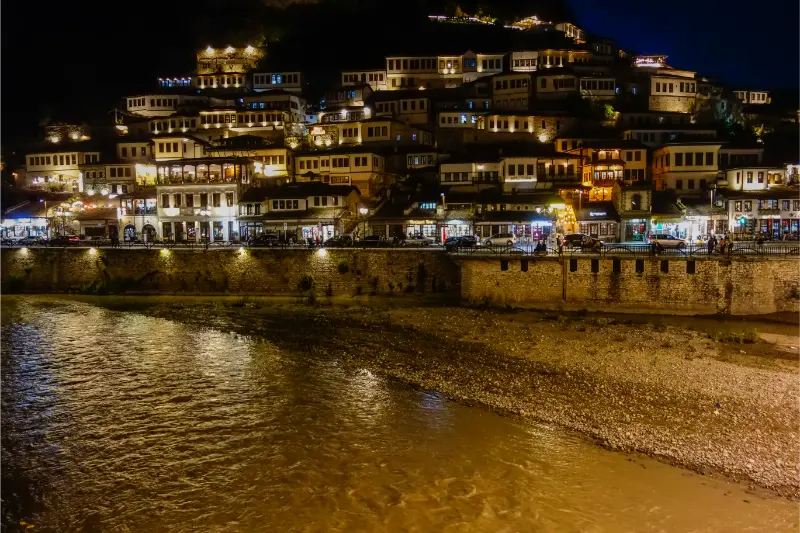
One of the most useful habits in Albania is to separate map distance from real travel time. Central attractions may be close together but still involve traffic, heat or queues, while hilltop sites can demand steep walking even when the road distance is short. Build a buffer into the day, keep one stop optional and avoid planning every hour so tightly that a slow museum visit or an unexpected viewpoint becomes a problem.
Historical and cultural context
The museum is housed in an eighteenth-century residence that represents traditional Berat domestic architecture with Ottoman-period influences. Its collection preserves tools, textiles, clothing, household furnishings and craft objects from Berat and surrounding areas. The display is organized to connect material culture with the functions of the building, turning the visit into an explanation of social life rather than a simple cabinet of antiques.
Albanian heritage is rarely one-layered. Ancient, Byzantine, Ottoman, royal, communist and contemporary histories frequently overlap in the same neighborhood. A useful approach is to ask what the site was created for, who changed it later, what survived and how its meaning shifted. That produces a more accurate visit than treating every structure as if it belonged to one timeless version of Albania.
What to notice during your visit
The çardak and house layout
Study how open and enclosed spaces work together. The house was designed for climate, privacy, hospitality and family organization rather than for museum visitors.
Recreated bazaar life
Tools and craft displays on the lower level help connect the domestic world with Berat’s history as a commercial and artisanal center.
Guest and family rooms
Notice differences in decoration and furnishing between spaces intended for visitors and more practical household use.
Textiles and carved details
Carpets, fabrics, ceilings and wooden elements reward close viewing. They are also useful references when you later see restored houses elsewhere in Berat.
How much time to allow
For the Berat Ethnographic Museum, protect at least 60 to 90 minutes unless you already know the stop is very small. A museum, castle or historic district can easily need longer if you read interpretation, climb viewpoints or photograph details. The point is not to impose an artificial fixed duration but to avoid travelling all the way there and then giving the place fifteen hurried minutes because the schedule contains too many stops.
In summer, organize the day around heat. Exposed squares and fortresses are more comfortable early or late, while museums can work well during the hottest hours. In winter, daylight becomes the main constraint, especially if you still need to drive after the visit. Spring and autumn usually make urban walking easiest, but weather can be changeable, so keep a layer and a compact rain shell in your day bag.
A realistic way to combine it with nearby sights
Pair the museum with a slow walk through Mangalem rather than placing it between two distant excursions. A good day starts at the castle, descends through the historic neighborhoods, visits the ethnographic museum and then crosses the river toward Gorica. If the weather is very hot, use the museum as an indoor break during the middle of the day.
Geographic clustering usually creates a better trip than zigzagging between famous names. Two or three related sights in one district leave space for lunch, coffee and unplanned discoveries. In Albania, the small bakery, viewpoint, workshop or conversation you did not schedule can become more memorable than the attraction you planned months in advance.
Getting there and moving around
Use Berat as the practical base for this visit. In city centers, walking is often easier than driving the final kilometre because parking and one-way streets add stress. For hilltop or regional sites, a rental car, driver or taxi gives more flexibility, but confirm parking and the return plan before setting off. Public transport works best between major towns; the final approach to a castle, village or viewpoint may still require walking or a separate transfer.
Save the relevant map area offline. Mobile data is generally useful, but thick walls, underground rooms and rural terrain can weaken signal. If you drive, do not assume the fastest-looking minor road is automatically the best one. Ask your accommodation about current access when the last section is steep, narrow or affected by construction.
Best time of day and season
Spring and autumn are excellent for culture-focused travel because walking temperatures are usually comfortable. Summer offers long evenings but exposed stone and paving can become very hot around midday. Winter can be quiet and atmospheric, though shorter daylight and reduced seasonal services matter more. There is no universal perfect month: match your timing to whether you care most about museums, photography, beaches, hiking or low crowds.
For photography, early morning and late afternoon usually provide softer light, while interiors depend more on opening hours than golden hour. If an uncrowded experience matters, arriving near opening time is often more effective than searching for a supposedly secret season. Respect any restrictions on flash, tripods, worship spaces or sensitive memorial displays.
Where to stay
Berat is the most practical base for most travellers visiting the Berat Ethnographic Museum. Check accommodation in Berat. Read recent reviews for parking, stairs, noise, heating and air conditioning rather than relying only on the headline rating. In historic districts, a hotel that looks extremely close on the map can still involve a steep climb with luggage.

Food, coffee and local rhythm
Keep meal planning flexible. Save a few good possibilities, but choose according to where you actually are when hungry. In smaller towns, lunch may be easier than a late dinner outside high season. Carry some cash in lek for small purchases. Card acceptance has grown, but a second payment method prevents unnecessary problems in museums, cafés, taxis or family-run businesses.
Coffee is also a useful planning pause. Sit down, drink water, review your next stop and decide whether another attraction will genuinely improve the day. This matters after emotionally heavy museums or when you have already spent hours climbing stone streets. A slower itinerary is not wasted time; it is often what lets a destination feel like a place rather than a list.
Families, older travellers and accessibility
the Berat Ethnographic Museum can work well for families when adults adapt the visit to attention span. Instead of asking children to read every panel, turn the space into simple questions: why are the walls thick, how was a room heated, where would guards watch from, or why does one building face the square? Short focused visits usually work better than forcing a complete museum circuit.
Accessibility varies significantly. Historic houses can have narrow stairs, castles have uneven stones, mosques and churches may include thresholds, and towers may have no lift. If mobility is decisive, contact the attraction before visiting and consider a private driver to reduce the walking required between transport stops, even when the monument itself is not fully step-free.
Photography and respectful behaviour
Photograph the site without turning it into a stage set. Do not climb fragile walls, sit on protected objects, move furniture or block narrow passages for posed images. In active religious buildings, dress modestly and prioritize worshippers. At memorial or repression-related sites, avoid playful poses that trivialize the history being explained.
A simple photography method is to make three different images: one establishing view that shows the setting, one close architectural or object detail, and one frame that connects the site with the surrounding city or landscape. That produces a stronger record than dozens of nearly identical wide-angle photos.
Safety and practical details
Like many historic houses, the museum includes stairs and architectural features created long before modern accessibility standards. Ask about step-free options if needed. Photography rules can vary by room or exhibition, so follow current signs. Do not lean on carved woodwork, textiles or furnishings, even when barriers are minimal.
- Check current information: opening hours, tickets and temporary closures can change.
- Carry some cash: small sites and local services may not always accept cards.
- Wear suitable shoes: stone, stairs, polished floors and uneven lanes can be slippery.
- Save maps offline: useful in thick buildings, historic centers and rural areas with weak signal.
- Keep the day flexible: leave room for traffic, weather, queues or a slower visit than expected.
- Respect the site: follow photography, dress, touching and access rules even when enforcement looks informal.
Useful related Wonderful Albania guides
Continue planning with our Berat travel guide, Berat Castle guide, Onufri Museum guide, Gorica Bridge guide. These guides are designed to work as a cluster, so you can move from the specific attraction to accommodation, transport, food and wider regional planning without rebuilding the itinerary from scratch.
Final thoughts
the Berat Ethnographic Museum is most rewarding when you give it enough time to explain something about Albania rather than using it only as a backdrop. Look closely, separate documented history from legend, ask practical questions and connect the monument to the surrounding neighborhood or landscape. That slower approach creates a richer trip and is more respectful to the people preserving the place.