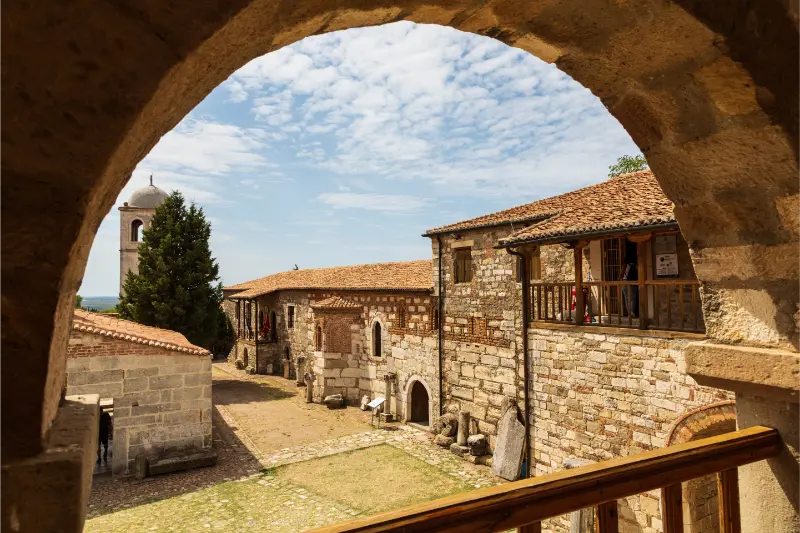
Apollonia parking is the kind of detail that can decide whether a road-trip day feels easy or unnecessarily stressful. Albania is increasingly structured around marked municipal spaces, private lots and hotel parking, but the exact arrangement changes from place to place. The safest approach is to plan one realistic parking option before arrival, keep a second option in reserve and then let the signs at the location override anything you read online.
This guide focuses specifically on Apollonia: how to approach by car, what kind of parking to expect, when crowds or traffic matter, how to handle luggage and rental-car paperwork, and when it is smarter to stop driving and continue on foot. I checked the current public information referenced below on September 21, 2026. Prices, temporary restrictions and access routes can change, so treat the linked operator or authority as the final check for your travel date.
Apollonia parking at a glance
| Question | Practical answer |
|---|---|
| Best general strategy | Use a legal marked or managed space, then walk the compact part of the visit rather than moving the car repeatedly. |
| Best for an overnight stay | Choose accommodation with confirmed parking when the car will remain unused for many hours. |
| Cash or card? | Carry some Albanian lek even when an app, card machine or online booking is available. |
| What to save offline | Your hotel pin, the main parking/entrance pin, the rental-company number and any ticket or vehicle confirmation. |
| What to re-check on arrival | Street signs, seasonal restrictions, opening/closing times, payment instructions and any height or vehicle-size limits. |
Why parking strategy matters in Apollonia
Apollonia is around 12 km from Fier and works well as a half-day road-trip stop. The final approach is rural rather than urban, so save the official site pin offline and avoid blindly following small farm-road shortcuts suggested by a navigation app. The goal is to arrive at the signed archaeological-park entrance, not the nearest coordinate to a ruin.

A common road-trip mistake is to optimize only for the shortest walking distance. The closest space can be the hardest one to enter, the slowest one to leave or the easiest one to misunderstand. I prefer a legal space with a simple exit and a predictable walking route. That matters even more when you have a timed ferry, archaeological-site closing time, hotel check-in or onward mountain drive.
Current official information and what it means
Apollonia Archaeological Park currently publishes seasonal opening hours and tickets on its official site. A recent integrity plan also identifies the lack of a dedicated bus/minibus parking area and proposes a purpose-built parking area in the lower part of the park for the 2025–2027 period. That means visitors should follow current on-site signs rather than assume older arrival arrangements are unchanged. For the latest wording, check the current official information. I would still read the sign or instruction at the exact space when you arrive, because temporary works and seasonal traffic plans can supersede a general web page.

Do not assume that an empty curb is a free parking space. Reserved bays, bus stops, taxi areas, resident zones, delivery access and no-stopping sections can look deceptively ordinary to a visitor. If the rule is not clear, translate the sign or move to a managed lot. A small parking fee is usually cheaper than the time and uncertainty created by a tow, clamp or fine.
How I would approach Apollonia by car
Once you park, expect a walking visit across an archaeological landscape rather than a compact indoor museum. Wear shoes suitable for uneven ground and take water from the car before entering. In hot weather, an earlier visit is easier for both parking and walking.
Before setting off, save the destination pin and at least one fallback parking location. Keep navigation running for the final few kilometres but compare it with physical signs. Albanian road mapping is much better than it once was, yet an app can still favor a narrow lane, construction shortcut or local road that is technically passable but unpleasant in a rental car.
Arriving with luggage or a rental car
If you are checking into accommodation, ask for the arrival procedure before driving into a narrow central street. “Parking available” can mean a private courtyard, a reserved public bay, a nearby garage or simply a suggestion about street parking. Ask whether the space is guaranteed, whether there is an extra charge, whether you can leave and re-enter, and whether a larger SUV or van fits.
Keep passports, medication, cash and electronics with you. If you must leave suitcases in the vehicle during a sightseeing stop, place them out of sight before reaching the parking area rather than rearranging valuable bags after you park. Photograph the car and the surrounding bay if the space is tight, and keep the rental contract and roadside-assistance details accessible offline.
Peak times, seasonality and the best arrival window
Spring and autumn are often the most comfortable seasons, but summer road-trippers add pressure around the entrance. Because the park has fixed last-entry times, leave margin for the drive from Fier instead of arriving at the closing edge and hoping parking will be immediate.
When a destination is busy, I would rather arrive earlier and walk five extra minutes than spend half an hour circling the final block. For beach and nature stops, early morning also reduces heat. For cities, avoiding the strongest commuting or evening restaurant traffic can be more useful. Build the parking buffer into the itinerary instead of treating it as dead time that will somehow disappear.
Parking with children or limited mobility
Families should prioritize a safe unloading point over the absolute closest space. Let children exit on the pavement side, keep them away from reversing vehicles and finish organizing bags before leaving the parking area. A stroller changes what “walkable” means on cobbles, gravel, steep ramps or archaeological paths, so check the route after the car is parked, not only the distance shown on the map.
If step-free access is important, contact the hotel, attraction or transport operator directly and describe the mobility need. A designated parking bay does not automatically mean the full route beyond it is level. In rural Albania, the surface between parking and the attraction can matter more than the number of metres.
If your first parking option is full
Do not keep looping the same congested road. Move to the fallback location you saved before arrival, even if it is farther away. Repeated circling increases fuel use, frustration and the chance of a rushed parking decision. If the destination has a bus, taxi or shuttle alternative, it can be smarter to leave the car at the hotel and use that service on the busiest day.
For the wider destination plan, use Apollonia Albania guide. It helps you see which sights can be grouped on foot and which genuinely require the car. That separation is the core of efficient driving in Albania: use the vehicle for distances, not for every individual attraction.
Where to stay when parking matters
On a driving itinerary, confirmed parking can be worth more than a slightly more central address. You can compare accommodation around Apollonia on Booking.com and then message the property to confirm exactly what the parking description means. This is a sponsored link. Ask for written confirmation if parking is essential to the booking decision, especially with a larger vehicle or a late-night arrival.
If the car will sit unused for two nights, a controlled hotel lot is usually more valuable than free curb parking. If you only need the vehicle for an onward route, consider whether collecting the rental car on departure day would reduce both cost and stress. In larger hubs, delaying pickup can be a better decision than paying to store a car you do not need.
Rental-car safety and documents
- Photograph all sides of the vehicle, wheels and lower bumpers at pickup.
- Keep the rental agreement, roadside-assistance number and insurer instructions available offline.
- Never assume rough-track damage is covered; check the rental conditions before leaving paved or maintained roads.
- Use marked bays rather than squeezing onto pavements, corners or narrow shoulders.
- Take passports and important documents with you instead of hiding them in unattended luggage.
- If the car is damaged, clamped or moved, photograph the scene and contact the rental company before arranging repairs yourself.
Common mistakes to avoid
- Assuming a line of parked local cars proves the space is legal.
- Relying on a parking price from an old review without checking the current sign.
- Following navigation into a narrow shortcut simply because it saves two minutes on the screen.
- Leaving visible luggage in the cabin during a sightseeing stop.
- Arriving at a timed attraction with no buffer for parking or walking.
- Ignoring seasonal traffic plans in summer, on festival days or around major events.
- Choosing a hotel that says “parking nearby” without asking whether a space is actually guaranteed.
A simple parking checklist before you arrive
- Save the main destination and parking pins offline.
- Check the latest official access or parking page when one exists.
- Carry small amounts of Albanian lek even if you expect to pay digitally.
- Keep valuables out of sight before entering the parking area.
- Read the sign at the exact space and photograph it if the wording is unfamiliar.
- Allow time to walk from the car to the attraction or hotel.
- Save a fallback parking option so you do not circle a congested street repeatedly.
- Before leaving, check for closing times, barriers or payment validation.
Tours and activities after you park
Once the vehicle is safely parked, it is easier to enjoy Apollonia without watching the clock or worrying about curb restrictions. If you are comparing guided experiences, transfers or day trips, the GetYourGuide widget below can be useful for seeing what is currently bookable in the area.
Frequently asked questions
Is Apollonia parking usually free?
Do not assume so. Free, paid, private and hotel parking can coexist in the same destination. The sign, barrier or parking operator at the exact location is the best authority for the current rule.
Can I rely only on card payment?
I would not. Digital payment is increasingly common, but a smaller municipal lot, private attendant or rural parking area may still be easier with cash. Carry some Albanian lek in small denominations.
Is it safe to leave luggage in the car?
Visible luggage is never a good idea. Use hotel storage when possible. If bags must remain in the vehicle, keep them out of sight before arrival and take passports, medication, electronics and high-value items with you.
Is Apollonia easy to reach by car from Fier?
Yes. It is close to Fier, but use the signed archaeological-park approach. Do not rely on minor farm-road shortcuts simply because they look shorter on a map.

Should I book accommodation with parking?
If you are traveling by rental car in high season or arriving late, confirmed parking deserves real weight in the hotel decision. Ask whether the space is private, reserved, paid, height-restricted or simply public street parking nearby.
Final planning advice
The easiest way to handle Apollonia parking is to decide where the car stops before the sightseeing starts. Use current official information, read the sign at the space, keep one fallback option and then leave the vehicle alone while you explore on foot. A rental car is most valuable when it connects destinations; it should not become a problem you solve every twenty minutes.